

Key Takeaways
Change the setting or framing before adding another argument.
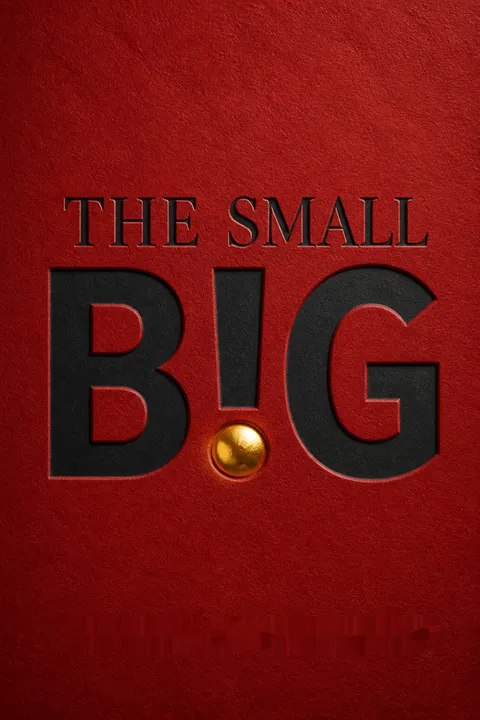
Context can do the persuading. The book’s central idea is the SMALL BIG: a minor, evidence-based change in how a request is presented can produce a much larger shift in behavior. In a British tax-collection pilot, officials added a truthful sentence saying that most citizens paid on time. The letters collected £560 million of £650 million in targeted debt, an 86 percent clearance rate, compared with 57 percent the previous year. The information did not change the debt or the penalties. It changed the social context in which recipients interpreted their choice.
Attention is the scarce resource. People rarely weigh every fact in a message, especially when overloaded. A relevant cue, delivered at the right moment, can shape which facts seem important and what action feels normal. The aim is not to replace sound information, but to make it easier to notice and act on.
The useful shift here is from asking, “What additional evidence should be supplied?” to asking, “What will this audience notice first?” That is a practical form of cognitive design: the same facts can prompt different decisions when attention is directed toward different cues. Yet a persuasive context is not automatically a fair one. A cue can clarify a genuinely common behavior, or obscure relevant costs. The strongest applications make the decision easier to understand without making it harder to refuse.
Show people that their own community already does the right thing.
Similarity strengthens the signal. Social proof is the tendency to use other people’s behavior as evidence about what to do. In the tax-letter work, response improved when recipients learned that people nearby were paying, and rose to nearly 83 percent when the letter named their town. Local examples can feel more relevant than a national average because they connect the desired action to a group the reader recognizes.
Choose the norm carefully. A descriptive norm reports what people commonly do. An injunctive norm reports what people approve or disapprove of. If a desirable behavior is not yet common, a message can emphasize that it is supported or valued rather than falsely claim that most people already do it. Conversely, publicizing frequent no-shows or littering can accidentally suggest that those behaviors are normal.
Social proof works partly as a shortcut for uncertainty, but belonging gives it emotional weight: a local group can tell someone not only what is common, but where they fit. This also explains why an audience may reject a behavior associated with an identity it dislikes. Norm messages therefore need segmentation and care. A true majority claim can still backfire if it points attention toward misconduct, and a group label can feel exclusionary when the audience does not identify with it.
Turn a yes into a written, specific plan owned by the person.
Make agreement active. In health centers, patients who wrote their own appointment details on reminder cards missed 18 percent fewer appointments than those whose cards were completed by staff. Asking patients to repeat the date and time aloud produced a smaller reduction, just over 3 percent. The difference is a reminder that doing a small part of the task can make a commitment feel more like one’s own.
Specify the route to action. Implementation intentions are concrete plans for when, where, and how a person will act. In a voting study, asking people who intended to vote to say when and where they would go increased turnout by more than four percentage points over a no-contact control. A plan anticipates competing demands instead of assuming good intentions will survive them.
This approach connects persuasion with implementation science: behavior often fails not because a person rejects the goal, but because the path from intention to action is underspecified. Writing, scheduling, or rehearsing the next step reduces that gap while preserving agency. The ethical boundary matters. Active participation should clarify a person’s genuine choice, not manufacture a sense of obligation that they did not freely accept.
Clean up visible disorder, but don't let green cues excuse waste.
Environments broadcast rules. In a Dutch field study, 33 percent of shoppers littered a paper advertisement when an alley was orderly; with graffiti present, 69 percent littered. In another test, more pedestrians ignored a barrier when bicycles nearby were visibly locked to it in violation of a sign. Small violations can signal that rules are not being respected, inviting further violations. The book also describes a stronger cue: people littered far less after seeing someone restore order by picking up litter.
Good intentions can license excess. In a study, participants with recycling facilities used nearly three times as much paper as those without them. A restroom recycling bin was followed by an increase of about half a paper towel per visitor, around 12,500 extra towels per year in that one facility. Make responsible action possible, but also make reduced consumption the visible goal.
The environment functions like a quiet policy: it tells people what is tolerated before anyone explains the rules. Visible repair can make a norm credible because it shows that others care enough to uphold it. The recycling result adds an important systems lesson: removing friction from a virtuous act does not guarantee less total consumption. A good intervention measures the outcome that matters, rather than treating participation in the approved process as success.
Put beneficiaries back in view when work starts feeling pointless.
Show the human consequence. In a university call center, employees asked to read stories from scholarship recipients raised more than twice as much money afterward as employees who read about their own job benefits or no stories. Their weekly pledges rose from an average of 9 to 23, while average donations increased from $1,288 to $3,130. The accounts made the result of routine calls visible: a student could pursue an education because someone made the call.
Make impact concrete. A customer story, a patient’s account, or a direct conversation with someone helped by the work can reconnect staff to its purpose. Task significance means the perceived importance of a job’s effect on other people. The point is not to replace fair pay or good management with inspiration, but to keep the real beneficiary from disappearing behind procedures and targets.
Purpose becomes more persuasive when it is specific enough to picture. A named recipient and a credible account can turn an abstract metric into a human consequence, much as individual stories make public problems easier to grasp. That strength also carries a risk: emotionally vivid beneficiaries can crowd out less visible needs. Organizations should use stories honestly and alongside evidence, rather than implying that one compelling case represents every outcome.
Make retirement advice speak to a future person, not an abstraction.
Connect present choices to future identity. In a university study, employees who were asked to consider their responsibility to their future selves increased retirement contributions more than those given a standard appeal to long-term self-interest. A separate experiment showed a similar effect using age-progressed photographs: participants shown an image of themselves at 70 allocated an average of 6.2 percent of earnings to savings, compared with 4.4 percent among those shown a current photograph.
Make tomorrow recognizable. Future lock-in describes gaining agreement to a beneficial action by setting it to begin later, when people can consider its broader value without feeling the immediate cost as sharply. A retirement program that directs part of future raises into savings is one example. These strategies work best when delay is real, transparent, and useful, not a device for hiding costs.
Long-range planning is difficult partly because the future self can feel like a stranger who inherits today’s sacrifices. Making that person vivid gives delayed consequences a more social, almost caretaking quality. This is a powerful way to frame saving, health, and training. Still, moral language should not turn structural problems into individual blame: people cannot save money they do not have, and a vivid future image cannot compensate for inadequate options.
Match the choice architecture to the barrier you need to overcome.
First identify the sticking point. Enhanced Active Choice asks people to choose explicitly between taking an action and declining it, rather than leaving one option as an easy default. In a flu-shot study, 42 percent chose vaccination under a simple opt-in request, compared with 62 percent when asked to choose either “I will” or “I will not.” When the choice also made the costs of declining clear, uptake reached 75 percent.
Design for follow-through too. People redeemed a short-lived bakery certificate five times more often than a certificate with a longer deadline, despite saying they preferred the longer window. In a yogurt loyalty program, flexible purchase order encouraged more sign-ups, while a fixed sequence improved completion. The right design depends on whether the main obstacle is starting, deciding, or finishing.
Choice architecture is most useful when it diagnoses a specific bottleneck instead of applying one favorite nudge everywhere. A deadline may interrupt delay; an active choice may interrupt inertia; a fixed sequence may reduce repeated decisions. These tools should preserve a genuine opt-out and disclose meaningful trade-offs. Otherwise, a design that helps people act can slide into a design that exploits inattention.
Anchor negotiations with a researched, precise first offer.
The opening number sets a reference point. In negotiation experiments, parties who made the first offer often obtained better outcomes because the other side adjusted from that figure rather than starting from an independent valuation. In one factory negotiation, the average agreed price was $19.7 million when buyers opened and $24.8 million when sellers opened. A separate study found that precise offers drew counteroffers about 10 to 15 percent above or below the opening figure, while round-number offers produced a gap greater than 23 percent.
Precision implies preparation. A carefully chosen number can suggest that the offer rests on research, but it still needs a defensible basis. If the other side anchors first, write down an ideal price and the evidence supporting it before responding. That preparation helps prevent the first number from silently becoming the only reference point.
Anchoring reveals how a number can shape the search for reasons, not merely the final arithmetic. The first figure invites a story about why it might be plausible, and those supporting details can narrow later judgments. Precision can signal thoughtfulness, but precision without evidence is theater. The practical advantage belongs to the negotiator who combines an assertive opening with a credible valuation and a clear walk-away point.
Give help first, thank specifically, and make asking feel safe.
Reciprocity needs a clear exchange. In a workplace study, generous employees earned social regard, but those who both gave and received help were also more productive than people who gave constantly without getting assistance back. In experiments, an explicit expression of gratitude more than doubled compliance with a follow-up request. In a fundraising call center, a director’s brief thanks was followed by 50 percent more calls in the next week.
Remove the social cost of asking. People often underestimate how likely others are to say yes because they focus on the helper’s time or effort and overlook how awkward refusal can feel. Helpers, meanwhile, may assume someone will ask if help is needed. Leaders can state plainly that requests are welcome and that seeking assistance is not a failure. Giving is strongest when it creates mutual support, not a permanent debt.
This account broadens reciprocity beyond a simple exchange of favors. Gratitude tells helpers that their effort mattered, while explicit invitations to ask reduce the embarrassment that can block cooperation. Together, these practices build a climate where resources move toward the work that needs them. The caution is to avoid converting every kindness into an invoice. Trust depends on reciprocity feeling relational and fair, not calculated and coercive.
Arrange the room to cue the behavior your meeting needs.
Physical settings shape interpretation. Participants working in a room with a higher ceiling made abstract connections more readily than those in a lower-ceiling room, a result the authors connect to more expansive thinking. Seating also mattered: circular arrangements tended to focus attention on shared goals, while square or angular arrangements favored individual priorities. In contract negotiations, participants assigned to a personalized home office outperformed visitors, apparently because the setting increased residents’ confidence and reduced visitors’ confidence.
Plan the stage, not just the slides. A central seat can carry an impression of importance, and a visible expert credential can influence which advice people remember. These are small contextual cues, not guarantees. Choose a room, seating plan, and introduction that support the task, while making sure expertise and status are genuine rather than merely staged.
A meeting room is an active part of the interaction, not a neutral container. Seating, distance, and visual status can change who speaks, what feels salient, and how confidently people defend a position. This insight is useful precisely because it is inexpensive to test. But contextual effects are not universal laws: a circular table cannot create trust where incentives reward competition, and a prestigious seat cannot make weak expertise sound reliable.
Study other people's failures and your own errors without shame.
Failures can be easier to diagnose than victories. Investor Charlie Munger described consulting a personal list of foolish decisions before making important choices. The logic is that success often depends on many interacting factors, while a single mistake can expose a clear risk. Reviewing others’ errors can also avoid the self-protection that makes people explain away their own bad calls.
Treat mistakes as information. Error Management Training teaches people to attempt tasks, notice where errors occur, and respond to them as part of learning rather than as proof of inability. A review of 24 studies found this approach more effective than training focused only on avoiding mistakes. In live work, the goal is not to invite errors, but to detect them, correct them quickly, and improve the system that allowed them.
A failure list acts as a compact defense against overconfidence: it makes neglected risks easy to retrieve when enthusiasm or sunk costs are pushing in the other direction. Learning from errors also requires psychological safety, meaning people can report problems without expecting automatic humiliation. That does not mean lowering standards. It means distinguishing accountability for preventable harm from curiosity about how a system produced the mistake.
Protect the ending, because people remember the peak and exit.
Memory favors intensity and recency. The peak-end effect describes how people often evaluate an experience largely through its most intense moment and how it ended. In colonoscopy research, patients’ later memories of discomfort were strongly influenced by the peak pain and the final moments, rather than by the procedure’s full duration. Duration neglect describes the tendency to give the length of an experience less weight than its memorable moments.
Design a good final contact. A hotel, clinic, or service provider can make the final interaction clear, considerate, and easy, rather than letting a last-minute inconvenience define the whole visit. The book also describes how timely wording can help positive online reviews seem credible: reviewers who said they had visited that day received more useful votes. A thoughtful ending supports a good experience; it cannot substitute for one.
The peak-end effect matters because people use memory to guide repeat choices, recommendations, and judgments of service. It gives organizations a reason to care about transitions and goodbyes, not only the central transaction. The limitation is equally important: polishing the final moment cannot erase persistent failures, and a memorable ending is not the same as a consistently good experience. The best ending completes a worthwhile interaction rather than disguising a poor one.
Analysis
The book is best understood as a field guide to behavioral context, not a catalogue of clever phrases. Its recurring claim is that choices are shaped by what becomes salient: what peers appear to do, whether a commitment feels personally owned, which number arrives first, or what an environment implies about acceptable conduct. The practical promise is considerable because many interventions described require little time or money, and some are tested in workplaces, clinics, stores, and public settings rather than only in laboratories.
Its most important discipline is empirical humility. The examples are memorable partly because their effects are striking, but a result from one setting does not automatically transfer to another. A norm message depends on which group matters to its audience; a deadline can encourage action or feel like pressure; an active choice can clarify a decision or burden someone already overwhelmed. The strongest use of the book is therefore experimental: identify a behavior, select one plausible lever, test it against a baseline, and measure the outcome that actually matters.
The ethical distinction is not between influence and no influence. Every message already has a context, and defaults or environmental cues shape behavior whether designers acknowledge them or not. The meaningful distinction is between making a beneficial action clearer and easier, versus exploiting confusion or social pressure for the communicator’s advantage. Truthful norms, real choice, and transparent costs preserve the audience’s ability to decide. Applied with those constraints, small changes are not tricks for bypassing judgment. They are ways to help attention and intention meet at the moment action is possible.
Review Summary
The small BIG offers 52 small changes that can have big impacts on persuasion and influence. Readers appreciate its practical tips backed by research, engaging writing style, and bite-sized chapters. Many find it useful for business settings, though some note overlap with previous works. The book covers a wide range of topics, from social proof to seating arrangements. While some reviewers wish for a summary of key points, most find the content valuable and applicable to various aspects of life and work.
People Also Read






Glossary
SMALL BIG
small change, large effectThe book's name for a minor, often inexpensive adjustment to a message, setting, sequence, or interaction that can produce a substantial change in behavior. A SMALL BIG is selected using persuasion research rather than intuition alone, then applied in a suitable context and in an ethical way.
Social proof
others' behavior as evidenceA principle of influence in which people use the actions of others to guide their own choices, especially when uncertain. The effect can be stronger when the people observed seem similar or belong to a group the audience identifies with. Messages should describe real behavior, and should avoid making undesirable behavior look common.
Injunctive norm
what people approveA signal about what people in a setting regard as acceptable or unacceptable, rather than a report of what they commonly do. It can be useful when a desirable behavior is not yet practiced by most people. For example, a message can accurately describe broad support for conservation without claiming that most residents already conserve energy.
Implementation intentions
specific plans for actionConcrete plans that specify when, where, and how someone will carry out an intention. Rather than relying on a general promise, the person anticipates the circumstances of acting and fits the behavior into them. The book describes planning prompts that increased voting, job-search activity, and flu vaccination.
Future lock-in
commit now to act laterA commitment strategy that asks someone to agree to a beneficial change at a specified future time instead of demanding immediate action. The delay can make the proposal easier to evaluate in light of values and long-term goals, before immediate costs become vivid. The strategy is appropriate only when the future commitment and its terms are clear.
Enhanced Active Choice
make both options explicitA choice design that asks people to actively select either a recommended action or its alternative, instead of leaving the decision to a passive default. The method can be strengthened by accurately explaining what a person gives up by declining the recommended option. It is designed to prompt deliberate choice, not eliminate the ability to refuse.
Small-area hypothesis
focus on the smaller gapThe idea that people can be more motivated when attention is directed to the smaller of two quantities: progress already made or effort remaining. Early in a goal, progress made may be the smaller number; near completion, the remaining effort may be smaller. Feedback should shift accordingly rather than using one frame throughout.
Error Management Training
learn through managed errorsA training approach that encourages learners to attempt tasks, recognize mistakes, and treat errors as useful information about what remains to be learned. It also teaches constructive responses to mistakes. The goal is not to seek errors during real service, but to learn safely during training and respond productively when mistakes occur in practice.
Peak-end effect
memory weights peak and endingA pattern in which a person's retrospective evaluation of an experience is strongly shaped by its most intense moment and its final moments. The full duration and every intermediate moment may receive less weight than expected. Service providers can use the insight to improve endings, while still ensuring the overall experience is good.
Duration neglect
underweighting an experience's lengthThe tendency to give the duration of an experience relatively little weight when remembering or evaluating it. In the book's discussion of medical procedures and vacations, memorable intensity and the ending can influence later judgments more than how long the experience lasted. It is a description of memory and evaluation, not a recommendation to ignore actual time or cost.
FAQ
What's The Small Big about?
- Focus on Small Changes: The Small Big by Steve J. Martin, Noah J. Goldstein, and Robert B. Cialdini explores how small changes in approach can lead to significant influence and persuasion outcomes.
- Evidence-Based Insights: The book is grounded in research from psychology and behavioral economics, offering over 50 scientifically proven methods to enhance persuasion.
- Practical Applications: These insights are applicable in various settings, including business, healthcare, and personal relationships, allowing readers to implement strategies immediately.
Why should I read The Small Big?
- Enhance Persuasion Skills: The book provides practical, research-backed strategies to improve your ability to influence others ethically and effectively.
- Understand Human Behavior: It delves into the psychology behind decision-making, helping readers understand why people behave the way they do.
- Learn from Experts: Written by leading experts in persuasion, the book combines academic rigor with real-world applicability.
What are the key takeaways of The Small Big?
- Small Changes Matter: The central theme is that "small changes can lead to big effects," illustrating how minor adjustments can significantly enhance persuasive efforts.
- Social Proof Principle: The book highlights how individuals are influenced by the actions of others, such as increasing compliance by informing people that "most others pay their taxes on time."
- Commitment and Consistency: Emphasizes the power of making commitments, suggesting that asking for verbal or written commitments can lead to higher follow-through rates.
What are the best quotes from The Small Big and what do they mean?
- "Small changes can lead to big differences.": This quote encapsulates the book's main premise, emphasizing that minor adjustments can yield significant results in persuasion.
- "People’s behavior is largely shaped by the behaviors of others around them.": Highlights the social proof principle, indicating that individuals are more likely to act in a certain way if they see others doing the same.
- "It is not information per se that leads people to make decisions, but the context in which that information is presented.": Underscores the importance of framing and context in communication.
What is the concept of "SMALL BIG" in The Small Big?
- Definition of SMALL BIG: Refers to small, cost-effective changes that can lead to significant improvements in influence and persuasion.
- Examples of SMALL BIGs: Includes changing the wording of a message or altering the context in which information is presented.
- Focus on Ethical Influence: The authors stress using these SMALL BIGs ethically to enhance communication and influence.
How can I apply the principles from The Small Big in my daily life?
- Identify Opportunities for Change: Look for areas where small adjustments could improve outcomes, such as in communication with colleagues or family.
- Practice Social Proof: Use social proof by highlighting how others have successfully engaged in the behavior you want to encourage.
- Make Commitments: Encourage others to make verbal or written commitments to increase the likelihood of follow-through.
What are some specific methods or advice from The Small Big?
- Use of Commitment: Advises asking for commitments, such as having patients repeat their appointment details to reduce no-shows.
- Leverage Social Norms: Highlighting what most people do can influence behavior, like informing clients that "most customers choose this option."
- Framing Messages: Suggests framing messages to emphasize positive aspects of compliance or negative consequences of non-compliance.
How does The Small Big address the issue of procrastination?
- Shorter Expiration Dates: Found that offering shorter expiration dates on gift cards led to higher redemption rates, suggesting urgency prompts action.
- Encouraging Immediate Action: Creating a sense of immediacy can reduce procrastination, applicable in setting deadlines or encouraging prompt responses.
- Avoiding Complacency: Emphasizes that longer time frames can lead to complacency, while encouraging quick action helps maintain engagement.
What role does environment play in persuasion according to The Small Big?
- Influence of Physical Space: Discusses how the physical environment can impact decision-making and creativity, like high ceilings promoting creative thinking.
- Seating Arrangements: Highlights how seating arrangements can affect group dynamics, with circular seating fostering collaboration.
- Creating the Right Context: By considering the environment, communicators can enhance their persuasive efforts, aligning venues with meeting goals.
How can I improve my meetings using insights from The Small Big?
- Pre-Meeting Information Submission: Encourages participants to submit ideas beforehand, leading to diverse contributions.
- Leader's Input Timing: Suggests the meeting leader speaks last to avoid influencing group opinions prematurely.
- Use of Checklists: Implementing checklists ensures all necessary topics are covered, maintaining focus.
How can I use humor as a SMALL BIG in negotiations?
- Build Trust and Rapport: Introducing humor can create a relaxed atmosphere, fostering trust and open communication.
- Increase Positive Outcomes: Humor in negotiations can lead to better commercial outcomes by humanizing interactions.
- Use Relevant Humor: Ensure humor is appropriate and relevant to the context to be effective in building rapport.
What is the peak-end effect mentioned in The Small Big?
- Memory of Experiences: Refers to judging experiences based on peak moments and how they end, influencing future decisions.
- Application in Customer Service: Ensuring positive peak moments and a good final interaction can enhance customer satisfaction.
- Duration Neglect: People focus on intensity rather than duration, so creating memorable high points and a strong finish improves evaluations.
About the Author


Download PDF
Download EPUB
.epub digital book format is ideal for reading ebooks on phones, tablets, and e-readers.








