

Key Takeaways
See capitalism as enforced dependence, not merely buying and selling
A market is not the whole system. Markets existed long before capitalism. Capitalism is a system in which productive property is privately owned and most people must sell their ability to work to obtain the necessities of life. The pasta-sauce worker in Sunkara's opening thought experiment can quit a tedious job in theory, but without savings or another source of support, quitting means risking destitution. The employer also faces pressure to hold down costs because competitors can undercut the business. The result is that both worker and boss are constrained, though not equally.
Power follows ownership. A worker may have freedom outside the factory but little say over what happens inside it. The job can be friendly and still leave the worker dependent on decisions made by someone who owns the workplace.
The distinction between voluntary exchange and compelled participation is important because a contract can be formally optional while its alternatives are brutally unequal. Political philosophy often calls this a problem of domination: one person is vulnerable to another's discretionary power, even without overt cruelty. The pasta-sauce example makes the point without requiring a villainous boss. Still, market dependence varies with savings, public services, family support, and labor protections. The argument is strongest when it identifies a structural imbalance, not when it suggests every employment relationship feels equally coercive.
Make economic democracy real by guaranteeing people a genuine exit
Freedom needs material backing. Sunkara distinguishes social democracy, which provides generous public services while leaving private ownership intact, from democratic socialism, which extends democracy into economic life. His imagined Sweden provides health care, education, housing support, and unemployment benefits, so people can leave bad jobs without losing access to basic necessities. His further imagined society adds worker control of firms, elected workplace councils, and public investment banks. It keeps markets for many goods, while replacing private labor and capital markets with collective ownership and social guarantees.
The point is choice. A worker-owned pasta-sauce factory might elect representatives to appoint managers and decide workplace rules. If new machines raise output, workers could choose shorter hours rather than simply producing more. The model is a sketch, not a fixed plan for every future society.
The proposal usefully treats freedom as more than a legal permission: the ability to refuse a job depends on what happens after the refusal. That connects to the idea of a social wage, the services and security people receive apart from their paycheck. The workplace model also makes democratic accountability concrete, rather than equating public ownership with government control. A difficult question remains: how can collective decision-making stay responsive without making every workplace a permanent committee meeting? The book presents institutional possibilities, but the details would need testing and revision.
Remember capitalism was made by history, so it can be remade
Markets did not invent capitalism. Sunkara traces capitalism's origins not to humanity's timeless love of trade, but to a shift in English agriculture. Landlords increasingly leased land to tenants who had to compete and maximize production. Enclosure and legal changes stripped people of customary access to common land, leaving more people dependent on wages. This created both a productive agricultural sector and a growing population of landless workers for factories.
Growth had human costs. Industrial cities such as Manchester gathered workers into factories where long hours, low pay, and dangerous conditions were common. Friedrich Engels, whose family owned a textile mill there, documented the poverty around the city's wealth. Marx and Engels saw workers as potential agents of change because their labor was essential to production and could be organized collectively.
This historical account challenges explanations that treat capitalism as the natural flowering of trade or human nature. Institutions shape what choices people have, and those institutions can change: property law, land access, and public authority helped create wage dependence. That is a powerful corrective to the idea that current economic arrangements are inevitable. The origin story is necessarily selective, however. England's agricultural transformation is a key case, not a complete explanation for capitalism's varied development across the world. Its value lies in showing contingency, not offering one universal sequence.
Reforms last when organized workers can defend them against capital
Voting alone proved insufficient. Germany's Social Democratic Party built a mass movement, but its unions and party bureaucracy grew cautious as they gained members, staff, and concrete benefits to protect. In 1914, most of its parliamentary members supported war funding despite decades of antiwar commitments. The episode shows how institutions can drift from their declared aims when leaders fear losing what they have built.
Sweden shows both reach and limits. Postwar unions and social democrats used centralized bargaining, compressed wage differences, and public services to spread prosperity. The Rehn-Meidner strategy pressured less efficient firms to adapt while helping displaced workers find new jobs. In 1976, unions proposed wage-earner funds that could gradually shift ownership toward workers. Business resistance grew, the governing party did not fully commit, and the plan was weakened. Reforms can improve lives without removing capital's power to resist.
The section connects a familiar organizational problem to political economy: institutions preserve capacity, but professional leadership can become invested in stability more than mobilization. This is not simply a story of bad leaders. Members also value security, and employers can make concessions that reduce the appetite for confrontation. Sweden's experience suggests that equality can be advanced through bargaining and public policy, but such gains remain conditional when private investment decisions stay outside democratic control. The challenge is to build accountability without mistaking constant conflict for a sustainable governing strategy.
Build democratic safeguards before crisis turns socialist power coercive
Good intentions cannot substitute for limits. The Bolsheviks took power amid war, state collapse, and popular demands for peace, land, and food. Civil war and foreign intervention intensified the emergency. The government nationalized industry, imposed strict labor controls, and expanded the secret police. Measures presented as temporary became durable, while independent parties and civil society were suppressed. The book emphasizes that the authoritarian outcome was not the only imaginable socialist path, but it was enabled by weak protections against concentrated power.
China repeats the warning differently. The Communist Party helped rebuild a devastated country and expanded education, health care, and industry. But the Great Leap Forward's unrealistic production drives and weak channels for honest reporting helped turn policy failure into famine. Later, the Cultural Revolution unleashed mass persecution. Progress in development did not make the absence of political freedoms harmless.
The historical cases make a strong institutional point: emergency powers become especially dangerous when leaders can define failure as disloyalty and prevent independent information from reaching decision-makers. Open criticism is not a luxury added after economic planning; it is one way a society detects catastrophic mistakes. The comparison also needs care. Russia's civil war and China's developmental conditions differed, and those contexts shaped what governments did. Context explains pressures, but it cannot erase the importance of rights, pluralism, and public accountability as protections against rulers who claim to act for everyone.
Build American socialism without choosing between isolation and absorption
The United States has a socialist history. In 1912, Eugene Debs won almost a million votes, and socialists held more than a thousand elected offices. The movement weakened through repression, internal purges, and strategic errors. Daniel De Leon's socialist unions isolated themselves from broader labor organizations. Later, some socialists folded their identity into the Democratic Party, while others rejected reforms that workers wanted. Either choice limited their influence.
The two-party system raises the cost of independence. Third parties face restrictive ballot rules and winner-take-all elections, while the major parties have resources and established networks. Sunkara argues for a mass-membership political organization that can build an independent socialist program while running candidates through available electoral routes. Its purpose would be to link campaigns to workplace organizing, not merely to secure a place on the ballot.
The historical record complicates the popular notion that American workers were simply too prosperous or individualistic for socialism. Organization, repression, racial division, and electoral rules mattered. The proposed hybrid strategy recognizes a real institutional trap: an independent party can be marginalized, while working solely inside a major party can dilute its program. This tension resembles coalition politics elsewhere, where access to power often requires compromise. A durable strategy would need transparent rules for accountability, clear measures of success beyond election results, and a way for members to disagree without splintering.
Use elections to build power, not just to win office
A victory can still leave policy powerless. Sunkara's term class-struggle social democracy describes electoral politics that mobilizes people against concentrated economic power, rather than promising cooperation between workers and business. Bernie Sanders's calls for universal health care and a jobs guarantee, and Jeremy Corbyn's proposals for public services and public ownership, made economic demands understandable to broad audiences. Their campaigns also drew people into rallies and organizations.
Office is not control. A left government still depends on an economy in which private firms can delay investment, move capital, and pressure policymakers. The experience of François Mitterrand's government in France illustrates this constraint: capital flight and limits on economic policy helped force a retreat. The book's answer is to combine elections with strikes and public mobilization, so elected leaders and business interests face organized pressure from below.
This approach treats elections as both a route to policy and an organizing infrastructure. Campaigns can translate diffuse frustration into shared demands, while unions and civic groups can keep those demands visible after voting ends. That is a more realistic account of political power than either electoral triumphalism or the claim that elections never matter. Yet confrontation alone cannot solve every governing problem: a movement must also design workable policies, maintain broad legitimacy, and negotiate trade-offs. The key question is whether mobilization can remain democratic and sustained once it moves from protest into administration.
Organize workers where they can disrupt production, and democratize their unions
Workers gain leverage together. Sunkara argues that the working class still matters because employers depend on labor, and organized workers can interrupt production. In 2018, small groups of organizers helped spark teacher strikes in West Virginia and other states. The strikes won public sympathy: a poll found 78 percent of Americans thought teacher salaries were too low. The example shows how a committed minority can help coworkers across political lines take collective action.
Unions need active members. Unions represent only a minority of US workers, but they remain among the few organizations capable of exerting national pressure. Their officials and staff provide expertise, yet bureaucratic structures can leave members passive. Sunkara calls for unions that are both more democratic internally and more capable of organizing workers in expanding sectors such as education, health care, and logistics.
The account links workplace power to civic learning: organizing teaches people how to speak, deliberate, coordinate, and challenge authority. That is a broader democratic benefit than a wage settlement alone. The teacher strikes also show why public support can matter when legal protections are weak. Still, a successful strike does not automatically create lasting organization. Unions need resources, durable membership participation, and strategies for workers who cannot easily stop work without endangering essential services. Internal democracy is not just a moral preference; it helps sustain trust and collective capacity.
Make equality universal, and put climate limits ahead of profit
Shared interests must include unequal harms. Sunkara argues that socialist politics should unite struggles over wages and ownership with fights against racism and sexism. The Movement for Black Lives, for example, connected police violence to demands for material support in black communities. Class politics is not a replacement for confronting prejudice; it can help build coalitions around redistributing power and resources while challenging discrimination within the movement itself.
The ecological clock sharpens the stakes. The book warns that climate disruption threatens livelihoods, food systems, and political stability. It argues that a system requiring firms to pursue endless growth has difficulty respecting environmental limits. Democratic control could make it easier to weigh long-term social costs, while international solidarity matters because poorer countries should not be denied development after richer nations benefited from it.
The universalist ambition is compelling when it means that every person's flourishing counts, not that differences in exposure or power disappear. Racial and gender justice require attention to specific institutions and lived conditions, alongside economic redistribution. Climate politics adds a difficult test: public ownership by itself does not guarantee ecological restraint, as the book's discussion of Soviet and Mao-era industrialization makes clear. The decisive question is whether democratic institutions can place binding limits on production and investment, while sharing the costs fairly across regions, classes, and generations.
Analysis
The book's distinctive achievement is to join three arguments that are often separated. Capitalism is a historical system, not a synonym for markets. Socialism is a project to democratize economic power, not simply expand state ownership. And political change depends on organized people, not the self-executing logic of history. Its opening worker scenario makes structural dependence legible, while the historical chapters show how movements repeatedly confront the tension between building durable institutions and preserving their capacity to challenge the system.
The strongest analytical thread is institutional. German social democracy illustrates how organizations built to represent workers can develop interests of their own. The Soviet and Chinese cases show the opposite danger: a party claiming to represent the people can become unaccountable to them. Sweden offers a more hopeful but bounded example, where unions and social policy made economic outcomes more equal, yet private investment remained a source of political leverage. These cases make democracy both a moral commitment and a practical system for correcting error.
The imagined socialist economy is deliberately modest in one sense: it retains markets for many goods, competition among firms, and incentives. It is radical in another: workers govern enterprises, capital is socially allocated, and basic security makes leaving a job possible. That combination is more useful than a perfect blueprint, but it leaves hard problems open, including investment decisions, workplace efficiency, unequal preferences, and coordination across borders.
The strategy follows from that diagnosis. Elections can amplify a movement, but they cannot by themselves neutralize business power. Unions can counter that power, but only if workers participate and the movement reaches beyond traditional industrial jobs. The book's argument is persuasive when read as a case for building democratic capacity and making reforms cumulatively empower their beneficiaries. Its greatest unresolved test is whether such a movement can retain pluralism, ecological restraint, and broad solidarity while governing through crisis.
Review Summary
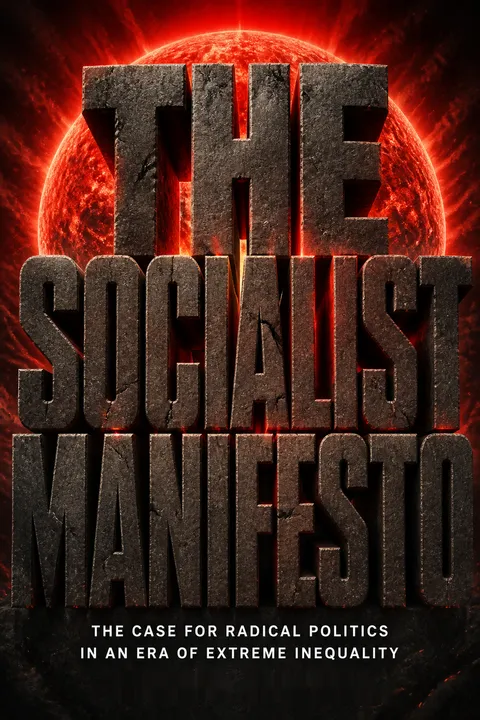
The Socialist Manifesto receives mixed reviews. Some praise its accessible introduction to socialist history and ideas, while others criticize its misleading title and lack of a cohesive manifesto. Readers appreciate the book's balanced approach to socialism's successes and failures, but some find the historical sections dry. The opening chapter and final sections are generally well-received. Critics note the absence of discussion on certain topics like Venezuela and climate change. Overall, the book is seen as a useful primer on socialism, though not without flaws.
People Also Read





Glossary
market dependence
survival through marketsA condition in which people must rely on markets to obtain the necessities of life because they lack independent access to land, productive property, or other means of support. In the book, this distinguishes capitalism from societies where markets existed but most people could still produce directly for their own subsistence.
surplus value
value beyond labor costsA Marxist term for the value produced by workers beyond what is required to pay their wages and other production costs. In the book's pasta-factory example, workers produce more jars than are needed to cover wages and overhead. The surplus supports profit and reinvestment, while competition pressures firms to keep extracting it.
class-struggle social democracy
reform through class mobilizationA political strategy that uses electoral campaigns to build working-class organization and confront economic elites. Unlike social democracy framed as cooperation among business, labor, and government, it treats popular mobilization, strikes, and pressure from below as necessary to win and defend reforms.
Rehn-Meidner plan
equal wages, active adjustmentA Swedish economic strategy developed by union economists Gösta Rehn and Rudolf Meidner. Centralized wage bargaining compressed wage differences and set standards that less efficient firms struggled to meet, encouraging restructuring. Public services and active labor-market policies helped displaced workers move into expanding industries, while productive firms could grow.
wage-earner funds
worker-controlled ownership fundsA Swedish union proposal under which large firms would transfer a portion of annual profits into funds controlled by workers through union boards. The funds would receive shares over time, gradually shifting ownership toward workers. The plan challenged the concentration of private control, but it met strong employer opposition and was substantially weakened.
permanent revolution
linked democratic, socialist revolutionsLeon Trotsky's theory that in a less-developed country, workers and peasants might have to carry out democratic and socialist changes together rather than waiting for a separate capitalist-democratic stage. Because such a country lacked the productive resources for socialism on its own, Trotsky believed the process would depend on revolution spreading internationally.
FAQ
What is The Socialist Manifesto: The Case for Radical Politics in an Era of Extreme Inequality by Bhaskar Sunkara about?
- Comprehensive history and vision: The book traces the history of socialism from its origins to the present, analyzing both its successes and failures across the globe.
- Case for radical politics: Sunkara argues for socialism as a viable and necessary alternative to capitalism, especially in an era of extreme inequality.
- Democracy and empowerment: The manifesto envisions a society where democracy extends into economic and social life, empowering ordinary people to shape their destinies.
- Personal and political journey: Sunkara weaves his own discovery of socialism with broader historical and theoretical analysis, making the case for a pragmatic yet radical approach.
Why should I read The Socialist Manifesto by Bhaskar Sunkara?
- Understanding inequality and capitalism: The book offers a thoughtful critique of capitalism’s failures and addresses the urgent issue of growing inequality.
- Learning from history: Readers gain insight into the history of socialist movements, including their achievements and mistakes, to inform present-day activism.
- Practical guidance for change: Sunkara provides strategies for building socialist politics today, connecting historical lessons to contemporary movements like those led by Bernie Sanders and Jeremy Corbyn.
- Nuanced and accessible: The manifesto avoids simplistic narratives, making complex ideas about socialism accessible and relevant for anyone interested in social justice or political change.
What are the key takeaways from The Socialist Manifesto by Bhaskar Sunkara?
- Socialism requires radical democracy: Genuine socialism is about working-class self-emancipation and democratic control, not just state ownership.
- Learning from past failures: The book argues that twentieth-century socialist experiments were “false starts” that offer important lessons for building a more democratic socialism.
- Class struggle is essential: Mass mobilization, unions, and grassroots participation are necessary for meaningful reform and lasting change.
- Universalism and intersectionality: Socialism must address all forms of oppression—race, gender, sexuality—while maintaining a focus on class struggle and universal dignity.
How does Bhaskar Sunkara define socialism and democratic socialism in The Socialist Manifesto?
- Radical democracy: Socialism is defined as a system where the working class democratically controls the economy and society, emphasizing collective ownership and management.
- Democratic socialism vs. social democracy: Democratic socialism seeks to break with capitalism and expand democracy into workplaces, while social democracy is seen as a reformist compromise that often suppresses class conflict.
- Rejection of authoritarianism: The book critiques Stalinism and Maoism, insisting that socialism must be built from the bottom up with full protection of rights and liberties.
- Universal goals: Sunkara’s vision of socialism is global, aiming to end exploitation and inequality while promoting human dignity and environmental sustainability.
What is the thought experiment about the pasta sauce factory in The Socialist Manifesto and what does it illustrate?
- Capitalist workplace dynamics: The scenario follows a worker at Bongiovi Brand pasta sauce, highlighting wage labor, productivity demands, and power imbalances under capitalism.
- Unionization and struggle: Workers attempt to improve their conditions through unionization, facing resistance from management and market pressures.
- Imagining socialism: The experiment extends to a future where the factory is worker-controlled, profits are shared, and social services support workers, illustrating how socialism could transform workplaces and society.
- Demonstrating exploitation: The example makes clear how surplus value is extracted from workers and how socialism could address this exploitation.
How does The Socialist Manifesto define capitalism and its impact on workers?
- Private ownership and wage labor: Capitalism is described as a system based on private ownership of production and the necessity of wage labor for survival.
- Exploitation through surplus value: Workers produce more value than they receive in wages, with the surplus appropriated by capitalists as profit.
- Power imbalances and alienation: The system creates significant power imbalances, leaving workers with little control over their conditions and leading to alienation.
- Market dependency: Participation in the market is necessary for survival, reinforcing the dominance of capital over labor.
What alternative to capitalism does Bhaskar Sunkara propose in The Socialist Manifesto?
- Worker control and democracy: Sunkara envisions a society where workers collectively own and democratically manage enterprises, replacing hierarchical capitalist management.
- Decommodification and social rights: Essential services like healthcare, education, and housing are guaranteed as social rights, not commodities.
- Democratic planning with markets: While some markets for goods and services remain, labor and capital markets are abolished, and economic planning is conducted democratically.
- Reducing inequality and precarity: The proposed system aims to reduce economic insecurity and create a more just and equitable society.
What lessons does The Socialist Manifesto draw from the history of socialism, including Soviet and Maoist experiences?
- Diverse socialist traditions: The book covers the evolution of socialism from Marx and Engels through social democracy, Bolshevism, and Third World revolutions.
- Failures and authoritarianism: Sunkara critically examines the authoritarian tendencies in Soviet-style socialism and Maoism, highlighting the dangers of revolutions from above.
- Importance of democracy: The manifesto stresses that socialism must be democratic and accountable to avoid repression and excesses.
- Learning from history: Understanding both the achievements and failures of past socialist movements is essential for building a better future.
How does The Socialist Manifesto describe the history and challenges of socialism in the United States?
- Early movements and obstacles: The book traces US socialism from early workers’ parties and utopian communities to the rise and decline of the Socialist Party of America.
- Labor movement connections: US socialism was closely tied to labor organizing but was weakened by internal divisions and external repression.
- Race and socialism: The manifesto highlights the multiracial nature of early socialist movements and the ongoing challenges posed by racism and segregation.
- Recent resurgence: The rise of Bernie Sanders and Democratic Socialists of America signals renewed interest, but institutional barriers remain significant.
What does Bhaskar Sunkara say about social democracy and its decline in The Socialist Manifesto?
- Origins and achievements: Social democracy sought to humanize capitalism through welfare states and public services, achieving significant gains in the mid-20th century.
- Inherent instability: Sunkara argues that social democracy is unstable because it relies on capitalist profitability and is vulnerable to rollback by elites.
- Neoliberal retreat: Since the 1970s, neoliberalism and austerity have eroded social-democratic gains worldwide.
- Need for class struggle: The book calls for a renewal of class-struggle social democracy as a foundation for moving toward democratic socialism.
What political strategies does Bhaskar Sunkara recommend for building socialism today in The Socialist Manifesto?
- Class-struggle social democracy: Sunkara advocates for a politics that embraces class conflict and mobilizes working-class power through both electoral campaigns and mass movements.
- Building mass parties and unions: The manifesto stresses the need for democratic, accountable organizations that unite resistance into a coherent socialist movement.
- Grassroots organizing: Socialists should embed themselves in workplaces and unions to build power from below.
- Moving beyond traditional parties: In the US, Sunkara calls for a new mass-membership party distinct from the Democratic Party’s undemocratic structure.
How does The Socialist Manifesto address the challenges and risks of implementing socialism?
- Political resistance and capital flight: The book acknowledges that capitalists will resist reforms through economic and political means, requiring strong working-class coalitions.
- Democratic governance and accountability: Socialism must be grounded in free civil society, robust democratic institutions, and worker participation at all levels to prevent abuses.
- Ongoing struggles: Even in socialism, social problems and inequalities can persist, necessitating vigilance and continuous democratic engagement.
- Balancing efficiency and social needs: Democratic planning must balance innovation, efficiency, and social goals to avoid new forms of exploitation.
What is the significance of the “dictatorship of the proletariat” in The Socialist Manifesto and how does Sunkara reinterpret it?
- Transitional concept: The term refers to a transitional state where the working class holds political power to dismantle capitalist structures and build socialism.
- Democratic meaning: Sunkara emphasizes that it means rule by the majority class through participatory democracy, not personal dictatorship or authoritarianism.
- Foundation for communism: This phase is seen as laying the groundwork for a future classless, stateless society where the state eventually withers away.
- Safeguard against abuse: The concept is reinterpreted as a safeguard for democracy and mass participation, not as a justification for repression.
Download PDF
Download EPUB
.epub digital book format is ideal for reading ebooks on phones, tablets, and e-readers.








