

Key Takeaways
Treat a tree as a living network, not a solitary organism
Life is made through relationships. A tree is not simply one plant surrounded by other organisms. Its roots, leaves, fungi, bacteria, insects, and birds exchange materials and information, sometimes cooperating and sometimes competing. The book traces this idea from the Gunflint Formation, where fossils show microbial communities building layered structures nearly two billion years ago, to forests today. Those ancient communities already depended on interactions among different kinds of life.
The ceibo makes the network visible. Its crown holds plants, frogs, insects, birds, and pools of water. Leaf-cutter ants depend on cultivated fungi, while bacteria help protect the fungal gardens. These partnerships are not decorative additions to the forest. They are part of what makes each organism able to live.
This view resembles systems biology, which studies how an organism's behavior emerges from interactions among parts rather than from any component alone. It also corrects the tempting picture of nature as a collection of neatly bounded individuals. Yet a network is not automatically a community of mutual benefit. Parasites, predators, and competition are just as real as cooperation. Seeing the relationships clearly makes ecological interdependence more compelling, not more sentimental: belonging means being exposed to other lives as well as supported by them.
Listen closely: a tree's song records relationships you cannot see
Sound reveals hidden structure. In Ecuador's western Amazon, rain falling through a ceibo crown produces different rhythms as it strikes different leaves. The tree rises above a forest where one hectare can contain more than 600 tree species. Bromeliads in its branches hold water and shelter frogs and other small creatures, while birds and insects add their own calls. The soundscape is a record of the many forms of life occupying a single tree.
Listening is also a way of knowing. Waorani people use the ceibo's buttress roots as a resonating signal when someone is lost. Haskell suggests that bodily familiarity with a forest can teach forms of understanding that detached observation misses. His account also links the tree's relationships to political choices: oil roads and drilling can destroy the habitats that make the ceibo a living hub.
Attentive listening is a form of fieldwork, not a substitute for measurement. It can direct attention toward overlooked organisms and prompt better questions about how a place works. The deeper challenge is epistemic: knowledge is shaped by the observer's history, language, and access to a landscape. That makes Indigenous expertise essential in its own right, not simply a poetic illustration of ecological science. Sensory attention can open inquiry, while careful collaboration helps prevent the listener from mistaking interpretation for another person's knowledge.
Recognize intelligence in networks, even when no brain is present
Plants sense and respond. A balsam fir redirects growth toward light, changes its breathing pores as conditions shift, and strengthens chemical defenses after browsing. Its signals move through cells by chemical and electrical processes, far more slowly than animal nerve impulses. The book uses “thinking” broadly for this distributed capacity to register conditions, coordinate responses, and retain effects of past events. It does not mean that a tree thinks like a person.
The forest's knowledge is shared. Chickadees remember where they hide food, and they also learn foraging methods from other birds, passing traditions through a flock. Fir roots exchange chemical signals with fungi and bacteria; fungal connections can carry information about drought or insect attack. A forest's intelligence, in this account, emerges from many kinds of sensing and memory working together.
The useful question is not whether a plant has a humanlike mind, but what capacities the word intelligence is meant to describe. If it means learning, sensing, and adaptive response, plant biology offers rich examples. If it means conscious experience, the evidence in this account does not settle the question. Keeping those meanings distinct preserves the wonder without overstating it. The broader insight is robust: cognition can be distributed across bodies and relationships, as it is in animal groups, human institutions, and ecological communities.
Build for shifting ground instead of mistaking stability for safety
The coast is never fixed. On Georgia's St. Catherines Island, waves and tides steadily erode the shore. The sabal palm survives by growing in a landscape that changes during its lifetime. Its seeds travel by water or animals, its leaves resist salt and drought, and its trunk stores water. Early in life, it grows underground for decades, building reserves before sending a trunk above the sand. This is adaptation to movement, not victory over it.
Hardening can make change more dangerous. As sea levels rise, roads, buildings, dams, and stone barriers interrupt the natural movement of beaches and dunes. The palm's example does not offer a blueprint for people, but it invites a different question: where is resistance useful, and where must communities plan to move? Coastal safety depends on social choices as well as engineering.
Resilience science distinguishes between preserving a particular arrangement and preserving the capacity to adapt. The palm's life history illustrates the second approach: it tolerates disturbance, stores resources, and spreads into new sites. Human settlements face a harder problem because homes, infrastructure, and cultural ties cannot migrate as easily as seeds. That is why flexibility cannot be reduced to individual toughness. Adaptation needs public planning, financial support, and attention to whose homes are exposed, rather than a romantic instruction to simply accept change.
Let fallen trees become habitat before calling them waste
A tree's life continues after falling. When a green ash is blown down in Tennessee, beetles lay eggs in its bark, wrens nest among its broken limbs, and water collects in its hollow trunk. Fungi and bacteria break down the wood, feeding insects that in turn feed birds. Mammals walk along the log, leaving seeds in their droppings. The fallen tree becomes a network of food, shelter, and new growth.
Decay is ecological renewal. At least half of the other species in a forest may use fallen trees for food or habitat. The ash does not pass its former knowledge to a replacement tree; instead, its body creates new opportunities for many organisms. As it breaks apart, nutrients return to the soil and plants take advantage of the canopy opening.
Deadwood makes succession tangible: ecological change is not a clean handoff from one generation to another, but a period when old structures support new combinations of life. This complicates tidy ideas of forest maintenance, especially when fallen trees are treated as clutter. Still, retaining deadwood is not a universal prescription. Risks to people, disease concerns, and local fire conditions matter. The practical lesson is to assess a forest's specific relationships before removing material that may be functioning as habitat.
Follow carbon through soil, not just visible trunks and flames
The unseen ground stores enormous carbon. In the boreal forest, soil holds roughly three times as much carbon as the visible trees, branches, lichens, and other aboveground life combined. Cold, wet conditions slow decomposition, allowing dead needles and other organic matter to accumulate over thousands of years. The book estimates that boreal soils and peatlands hold at least 500 petagrams of carbon.
Disturbance can reverse the flow. Warming and fire release carbon from soil, while heat can also speed microbial decomposition without visible flames. Changes in moss, lichen, and root-fungus relationships affect how quickly carbon returns to the atmosphere. Forest loss is therefore not only a count of missing trees. It can also mean changes in the underground community that determines whether a forest stores carbon or releases it.
This account usefully separates carbon stocks from carbon flows. A large store is not automatically secure: its future depends on temperature, moisture, fire, and the organisms that process dead matter. That distinction matters for climate policy, where visible tree planting can attract attention while soil disturbance receives less notice. The same systems approach also counsels humility. Carbon accounting depends on boundaries and time scales, so precise comparisons require transparent methods. Still, the ecological point holds: the forest's climate role cannot be read from its canopy alone.
Trace energy to its forest before calling it renewable
Fuel connects distant forests to daily life. Ten thousand years ago, people in Scotland used hazel wood for heat and hazelnuts for food. Modern power stations burn coal made from ancient plant matter. Newer wood-pellet plants promise a renewable alternative, but Scotland imports much of its wood from forests in the southeastern United States because local supplies are limited.
The source determines the impact. Pellets made from sawmill waste or plantation thinnings can have a different carbon profile from pellets made from mature native trees. Harvesting can also alter habitat and biodiversity. A fuel's climate and ecological effects cannot be judged by its label alone. The relevant questions include what was cut, how the forest regrows, what was displaced, and how far the fuel travels.
This is a case for life-cycle thinking: evaluate a product across extraction, processing, transport, use, and replacement rather than at the point of consumption. It also exposes a political blind spot. A country can appear greener by moving ecological costs beyond its borders, leaving consumers detached from the people and habitats supplying their energy. Yet local sourcing is not automatically better, and imported biomass is not automatically worse. Comparisons need evidence about particular forests, harvest practices, and carbon timelines.
Treat cities as ecosystems, and public access as part of conservation
Urban life is not outside nature. Denver's cottonwood grows beside a busy river path, where beavers cut its stems and people swim, gather, and sleep. Restoring the river required changes to dams, pollution controls, parks, and public involvement. In Manhattan, street trees intercept rain, filter some pollutants, cool sidewalks, and create places where strangers pause. These are ecological functions within human-built landscapes.
Access shapes who belongs. The book also challenges wilderness ideals that cast cities as unnatural while neglecting the histories of Indigenous removal and racial exclusion in parks and outdoor recreation. Denver's riverfront can support public connection, yet homelessness exposes unequal access to safe shelter and sanitation. Urban conservation must consider both nonhuman habitat and the people who live alongside it.
Urban ecology helps correct a false choice between conserving remote wilderness and accepting degraded cities. Compact urban living can reduce some forms of resource use, while trees and waterways can support both human health and other species. But green space is not automatically equitable. Design, policing, housing, and disability access determine who can use it safely. Conservation succeeds more fully when residents are treated as participants in the urban ecosystem, not as visitors who should disappear from the landscape.
Protect relationships and cultural memory, not only individual trees
Olives bind people to place. Across the Levant, people have cultivated and harvested olive trees for thousands of years. The trees tolerate dry summers, yield energy-rich fruit, and have shaped local food and work. At harvest, families exchange stories as they pick and process the crop. This knowledge lives partly in practice: how to tend a particular grove, judge a tree, and work with neighbors.
Political disruption damages that living knowledge. In the West Bank, barriers and restrictions can prevent farmers from reaching their groves; the book reports harvests falling by an average of 75 percent for groves isolated behind barriers. Fair-trade cooperatives offer one way to rebuild economic cooperation. The point is not that trees resolve conflict, but that people, land, and cultivation are tied together, and breaking those ties harms all three.
The olive case shows that ecological loss can also be cultural and political loss. A tree may remain standing while the relationships that sustain its care, harvest, and meaning are dismantled. Fair-trade cooperation can create practical shared interests, but it cannot by itself correct unequal control over land and water. This distinction matters: cultural continuity deserves respect, while structural causes still require political scrutiny. The strongest conservation strategies protect both the living landscape and people's ability to participate in it.
Practice ecological attention before turning nature into an abstraction
Attention can change what counts as beautiful. Haskell uses the term “ecological aesthetics” for learning to perceive beauty through sustained, embodied attention to the relationships in a particular place. A fire scar may look only like damage until its role in forest renewal becomes visible. A child who notices the forceful sound of wind in a ponderosa is beginning to attend to the tree on its own terms.
Attention can inform ethical judgment. The book argues that repeated contact helps people notice when ecological relationships are coherent or under strain. Its Japanese white pine, cared for by one family for centuries and later presented to the United States, makes human stewardship part of the tree's history. Attention is not a replacement for science or justice, but it can make their stakes harder to ignore.
The proposal connects environmental ethics with trained perception. In mathematics and the arts, experience can teach people to recognize patterns that are difficult to explain at first glance; ecological familiarity can work similarly. The caution is that beauty alone cannot decide what is just. People may admire a landscape while overlooking displacement, labor, or unequal access. Attention is best treated as an opening discipline: it sharpens questions, expands concern, and gives evidence and ethical reasoning more context.
Analysis
The book's method is as important as its thesis. Haskell returns to particular trees, listens to their sounds, and follows connections outward into biology, geology, commerce, culture, and politics. The scale keeps enormous subjects legible: carbon storage becomes fallen needles under a fir, coastal change becomes a palm losing its beach, and urban ecology becomes a cottonwood beside a public river. Sound is not merely atmosphere. It is the narrative device that trains the reader to notice relations that ordinary attention filters out.
The argument's strongest contribution is its refusal to place humans outside nature. Roads, markets, dams, rituals, and conservation policies are all part of ecological systems, though their effects differ profoundly. That distinction matters. Interdependence should not be mistaken for harmony, and describing people as participants in nature does not make every human action ecologically wise. The Amazon's predators, parasites, and oil infrastructure make clear that networks can sustain life or unravel it.
The book also links ecological knowledge to lived experience. This is persuasive when it shows how repeated attention produces detailed understanding, as in farming, forestry, or tree care. It is more complicated when the language of shared belonging risks smoothing over unequal power. The olive groves and urban parks resist that simplification: access to land, water, safety, and decision-making is uneven. A full ecological ethic therefore needs both attentive observation and political analysis.
The result is not a manual for saving trees, but a reorientation of scale. A tree is never just timber, shade, or scenery. It is a temporary body assembled through relationships, and a meeting point where histories and futures become tangible. The reader is asked to notice those connections, then judge human choices by the worlds they maintain or break.
Review Summary
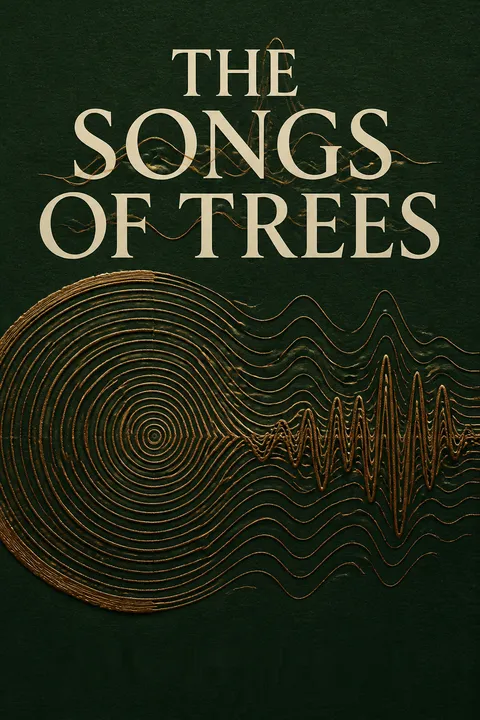
The Songs of Trees is highly praised for its lyrical prose and deep scientific knowledge. Readers appreciate Haskell's ability to connect trees to broader ecological, cultural, and philosophical themes. The book explores various tree species worldwide, examining their relationships with humans and nature. While some found the writing style poetic and insightful, others felt it was occasionally dense or meandering. Many reviewers commend the book for its unique perspective on interconnectedness and its ability to inspire a greater appreciation for trees and their role in ecosystems.
People Also Read





Glossary
Ecological aesthetics
Beauty learned through ecological attentionA way of perceiving beauty through sustained, embodied attention to the relationships within a particular ecosystem. Rather than treating beauty as surface prettiness, it develops through learning how organisms, physical forces, and human activity shape a place. In the book, this trained perception can help people notice ecological damage and inform ethical judgment.
Unselfing
Attention beyond the selfA shift of attention away from personal concerns and toward another being or the wider world. The book uses the term for experiences in which close attention to trees, birds, or other life loosens the sense of oneself as separate. This is not an escape from the body, but a fuller participation in relationships that exceed individual experience.
súmac káusai
Life grounded in reciprocityA Quichua expression presented in the book as a good and harmonious way of living. It refers to a life built through reciprocity and solidarity among people, and between human communities and the biodiversity and spiritual life of the forest. The author describes how the idea entered national political language, where it could become detached from its local relationships.
musha'a
Rotating communal land allocationA Palestinian system of agricultural land management in which a family's assigned acreage reflected its capacity to work the land, with allocations changing as the community changed. The book contrasts this cooperative practice with systems of individual property deeds, which shifted how land ownership and taxation were organized.
quorum sensing
Collective microbial signalingA process in which bacteria exchange chemical signals and respond to the combined activity of a group. These interactions can coordinate changes in behavior and chemistry. The book uses the term to illustrate how decision-making can emerge through a network of organisms rather than from a single central controller.
FAQ
What's The Songs of Trees about?
- Exploration of tree relationships: The book explores the interconnectedness of trees with their environments, showing how they are part of a larger ecological network.
- Focus on twelve trees: David George Haskell examines twelve trees worldwide, using them to discuss ecological themes and human-nature interactions.
- Integration of science and art: Haskell combines scientific observations with lyrical prose, encouraging readers to listen to the "songs" of trees.
Why should I read The Songs of Trees?
- Deep ecological insights: The book provides profound insights into the ecological roles of trees, emphasizing their importance in sustaining life and biodiversity.
- Beautifully written prose: Haskell's writing is both lyrical and informative, making complex scientific concepts accessible and engaging.
- Philosophical reflections: It encourages readers to reflect on their relationship with nature, fostering a sense of belonging within the ecological community.
What are the key takeaways of The Songs of Trees?
- Interconnectedness of life: The book emphasizes that all life forms, including humans, are interconnected, leading to a deeper appreciation of nature.
- Trees as communicators: Haskell illustrates how trees communicate with each other and their environment through complex networks.
- Human impact on ecosystems: It highlights the detrimental effects of human actions on natural networks, advocating for a harmonious relationship with the environment.
What are the best quotes from The Songs of Trees and what do they mean?
- “To listen is therefore to hear our voices and those of our family.”: This quote emphasizes the importance of listening to nature to understand our place within it.
- “Life is embodied network.”: Haskell encapsulates the idea that life is a web of relationships that sustain and support one another.
- “Our ethic must therefore be one of belonging.”: This calls for recognizing our integral role in the ecological community and acting accordingly.
How does David George Haskell illustrate tree communication in The Songs of Trees?
- Chemical signaling: Trees communicate through chemical signals, sharing nutrients and information with neighboring plants and organisms.
- Fungal networks: Mycorrhizal fungi connect tree roots, facilitating communication and resource sharing among trees.
- Sound and vibration: Haskell explores how trees respond to environmental sounds and vibrations, influencing their growth and health.
What role do humans play in the stories of trees in The Songs of Trees?
- Cultural connections: Haskell highlights the historical and cultural significance of trees in human societies.
- Environmental impact: The book addresses the negative consequences of human activities on tree health and ecosystems.
- Call to action: Haskell encourages stewardship and responsibility towards nature, advocating for sustainable practices.
What specific trees does David George Haskell focus on in The Songs of Trees?
- Diverse selection: Haskell examines trees like the Ceibo in Ecuador and Balsam Fir in Canada, each with unique ecological and cultural narratives.
- Symbolic significance: Each tree is chosen for its biological characteristics and symbolic importance in different cultures.
- Ecological stories: The stories reveal themes of resilience, adaptation, and intricate relationships in forest ecosystems.
How does David George Haskell use personal anecdotes in The Songs of Trees?
- Personal connection: Haskell shares his experiences and observations, creating a relatable narrative for readers.
- Emotional resonance: Anecdotes evoke wonder and loss, highlighting nature's beauty and ecosystem fragility.
- Illustrative examples: Personal stories serve as concrete examples of scientific concepts, making them more accessible.
What scientific methods does David George Haskell employ in The Songs of Trees?
- Field observations: Haskell conducts detailed observations in natural settings, documenting tree behaviors and interactions.
- Interdisciplinary approach: The book integrates ecology, biology, and anthropology for a comprehensive understanding.
- Data analysis: Haskell references scientific studies and data to support his observations, grounding his narrative in research.
How does The Songs of Trees address climate change and its effects on trees?
- Impact on ecosystems: Haskell discusses how climate change alters tree growth patterns and forest health.
- Call for awareness: The book emphasizes the need for awareness and action regarding climate change.
- Hope for resilience: Despite challenges, Haskell highlights trees' resilience and adaptability, offering hope for forests' future.
What role do trees play in human culture according to The Songs of Trees?
- Symbols of life and death: Trees represent growth, resilience, and the life cycle in various cultures.
- Inspiration for art and literature: Trees have inspired art, poetry, and philosophy, enriching cultural heritage.
- Community and connection: Trees serve as gathering places, fostering social interactions and connections.
How does David George Haskell's writing style in The Songs of Trees enhance the reader's experience?
- Descriptive and poetic language: Haskell uses vivid imagery and lyrical prose to immerse readers in nature.
- Personal reflections: He shares thoughts and feelings about trees, creating an intimate connection with readers.
- Interweaving science and narrative: By blending insights with storytelling, Haskell makes complex concepts accessible and engaging.
Download PDF
Download EPUB
.epub digital book format is ideal for reading ebooks on phones, tablets, and e-readers.








