

Key Takeaways
A severed fingertip can regrow in young children, revealing healing's developmental roots
Regrowth is possible. Keown opens with a claim that unsettles the idea that human tissue can only mend by scarring: some children under six have regrown an amputated fingertip, including bone, nail, nerves, and blood vessels. He cites a 1970s study of amputations near the fingertip, not evidence that people can regrow whole limbs or that every injury should be left untreated. His own thumb was reattached after an accident, though he believes it might have regrown naturally.
Development meets repair. The book links this limited human ability to the same developmental processes that build an embryo. It then turns to salamander research by Robert Becker, who measured electrical changes after limb injury and investigated how they relate to regrowth. For Keown, healing and development are variations on the body's capacity to organize tissue.
The opening is memorable because it shifts the question from how a wound closes to what information tells tissue what to rebuild. That is a productive research question, especially where regeneration is limited. But one striking biological capacity does not establish the book's broader account of acupuncture or Qi. A narrow fingertip phenomenon can motivate inquiry without proving that electrical currents explain it, or that similar mechanisms can be safely activated in other injuries. The distinction between an intriguing clue and a demonstrated treatment matters whenever a surprising case challenges clinical habits.
Fascia may be the missing bridge between acupuncture channels and anatomy
Follow the connective tissue. Fascia is connective tissue that surrounds, separates, and links muscles, organs, blood vessels, and other structures. Surgeons use fascial planes as routes through the body, and Keown argues that these subtle spaces may also correspond to acupuncture channels. This would explain why anatomists have not found channels as discrete tubes: the proposed pathways are spaces and tissue boundaries, not separate structures waiting to be dissected.
Space has a role. The book emphasizes that the spaces between tissues can guide movement and communication. It interprets the ancient idea of the Triple Burner, an organ described in Chinese medicine as having a name but no fixed form, as the body's fascial compartments and their distinct functions. This is a proposed anatomical translation, not an established equivalence.
The value of this proposal is its attention to anatomy that conventional teaching can treat as mere packaging. Connective tissue has real mechanical and signaling roles, and its planes help explain how forces and fluids move through the body. The difficult step is identifying those planes with a fixed system of acupuncture channels. Similarity in location or function is suggestive, but it does not prove that two maps describe the same structure. The proposal becomes strongest when it generates precise, testable predictions rather than treating every connective-tissue boundary as confirmation.
Read Qi as organized cooperation, not a mysterious single substance
Energy plus coordination. Keown presents Qi not as a measurable fluid or a single chemical, but as the body's organized capacity to function. A cell uses energy to perform its own tasks; an organ coordinates many cell types toward a shared job. The heart, for example, depends on pacemaker cells, conducting cells, muscle cells, and valves working in sequence. In this account, the heart's function is more than the sum of its components.
A broad organizing idea. Keown connects this meaning of Qi to metabolism, development, and communication between cells. His team analogy makes the point: individual players have energy, but their coordinated play produces a team performance. Qi is the name he gives to both individual activity and the cooperation that makes the whole organism work.
This interpretation makes an old medical term easier to discuss alongside physiology. It also foregrounds a real conceptual challenge: explaining how local processes produce coordinated behavior across an organism. The analogy works as a model of emergence, where the whole has properties no single part possesses. Its weakness is breadth. If Qi means energy, communication, development, and coordination at once, it can become difficult to specify what would count as evidence against a Qi explanation. Clear definitions are therefore essential if the term is to guide research rather than merely rename complexity.
Explain development through organizing signals, not genes alone
Local signals direct growth. Genes contain instructions, but Keown argues that development also depends on when and where those instructions are used. He describes organizing centres as groups of cells that influence nearby growth. Morphogens are signaling substances released by such cells; their concentration can help determine how neighboring cells develop. The book points to embryologist Hans Spemann's transplantation experiments, in which moving an organizer could redirect development in an embryo.
A proposed acupuncture link. Building on this biology, Keown discusses Charles Shang's Growth Control Theory of Acupuncture. It proposes that acupuncture points correspond to developmental control nodes, while channels connect them. The model draws on evidence that needling can affect biological signals, but the further claim that acupuncture points are embryological organizers remains a hypothesis, not a settled finding.
The distinction between genetic instructions and the signals that regulate them is a useful way to think about development. It avoids the simplistic picture of DNA as a complete blueprint acting alone. The book's strongest bridge is conceptual: both embryology and acupuncture theory attend to location, signaling, and organized change. The key scientific question is whether the proposed nodes can be identified independently and whether stimulation produces reliable, specific effects. Without that separation, a theory risks labeling any responsive body region an organizer after the fact.
Study the body's electrical signals without mistaking analogy for proof
Tissues have electrical behavior. Keown highlights collagen, the abundant protein in fascia, tendons, and bone. Collagen can generate small electrical charges when deformed, a property called piezoelectricity. He links this to observations that electrical stimulation can influence bone healing and to research on electrical gradients in development and regeneration. These findings make the body's electrical activity relevant to questions about growth and repair.
A larger interpretation. Keown calls biologically informative electrical activity elecQicity and suggests it may be one physical expression of Qi. He also discusses the electrical pulse used to activate Dolly the sheep's reconstructed egg. That pulse helped trigger cell division; it did not create life by electricity alone. The book's central inference, that electrical properties of tissue explain acupuncture channels, goes beyond the evidence it presents.
Bioelectricity offers a promising level of analysis because it connects physical forces with cell behavior, rather than forcing biology into a choice between chemistry and mechanics. The book is right to treat electrical signaling as part of the body's real material processes. Yet a demonstrated electrical effect in bone or an embryo does not establish a body-wide energy network that matches acupuncture maps. The useful discipline is to separate observation from interpretation: measure the signal, identify its source and target, and only then decide whether a traditional concept explains it better than alternatives.
Look for acupuncture points where anatomy changes sharply
Transitions attract attention. Many classical acupuncture points sit near joints, tendons, muscle boundaries, or openings where structures change direction or form. Keown focuses on the five Shu point types, named with water imagery: Well, Spring, Stream, River, and Sea. Most cluster at transitions such as fingertips, wrists, ankles, elbows, and knees. He argues that these are plausible sites for organizing signals because neighboring tissues and functions meet there.
A map, not proof. The same logic helps explain why the face, with its many junctions and openings, contains many points. Keown interprets points as nodal areas in a larger communication network, rather than isolated dots. The practical idea is to attend to anatomical transitions when studying treatment locations, while recognizing that an interesting pattern does not by itself demonstrate a specific therapeutic effect.
This is a useful observational rule because it encourages practitioners and researchers to look closely at local anatomy instead of assuming points are arbitrary. It also offers a way to compare traditional maps with modern descriptions of joints, connective tissue, and tissue boundaries. However, many anatomical transitions exist, and not all are recognized acupuncture points or have the same clinical effect. A good test would compare predicted point locations with matched nearby sites, then measure outcomes beyond expectation and general touch. The pattern should be allowed to fail as well as succeed.
Use Chinese organ patterns as relational maps, not literal organ labels
Functions cross boundaries. Keown argues that Chinese medical organs often describe networks of function rather than Western anatomical structures alone. The Chinese Kidney, for instance, includes ideas associated with water balance, bones, reproduction, fear, and the adrenal glands. The Chinese Spleen includes digestion and the transformation and transport of food, functions Keown links to both the spleen and pancreas. These correspondences make more sense when treated as functional groupings, not one-to-one translations.
Channels describe relationships. The book organizes the body's Yin channels through three broad body compartments, linking organ pairs across the chest, abdomen, and pelvis. Its examples connect the Heart and Kidney through the ShaoYin pattern, and the Liver and Pericardium through JueYin. Embryology and fascial anatomy are offered as ways to understand how those relationships might have formed.
Relational maps can preserve patterns that a list of separate organs misses. They draw attention to feedback between systems, such as how circulation, hormones, digestion, and fluid balance interact. That is a valuable complement to anatomy, provided the map remains a model rather than a substitute for diagnosis. The danger is equivocation: a traditional organ name may resemble a modern organ while referring to a broader set of functions. Explicitly stating which meaning is intended makes comparison possible and prevents an apparent match from doing more work than the evidence supports.
Test individualized acupuncture without assuming sham points are inert
Context complicates trials. Keown argues that a standardized acupuncture protocol may not capture a treatment chosen for a particular patient's pattern. He also questions sham acupuncture, since a needle placed at a supposedly incorrect point may still stimulate tissue and produce an effect. The book's larger message is methodological: researchers should be clear about what their comparison group receives and what a result can establish.
Design the right comparison. The author contrasts drug trials, where an inactive placebo can be straightforward, with complex treatments involving practitioner judgment and touch. He describes this as a problem of knowing what is being measured. For acupuncture, possible questions include whether a treatment package helps, whether specific point choices add benefit, and whether outcomes differ from attention or expectation. Those are related questions, but they are not interchangeable.
The warning about controls is important: a comparison treatment can have effects of its own, so a small difference from a sham does not automatically mean the intervention is useless. At the same time, individualized care does not make controlled evaluation impossible. Pragmatic trials can compare real-world treatment packages, while carefully designed component studies can ask whether point selection matters. Each design answers a different question. The best response is not to discard randomization, but to state clearly what the control isolates and avoid treating one trial format as the final verdict on a complex practice.
Analysis
The book's argument begins with a biological puzzle: if children can sometimes regrow part of a fingertip, what organizes repair? Keown uses that question to build a bridge between acupuncture and modern anatomy. The bridge runs through fascia, embryonic signaling, bioelectricity, and the idea that body-wide coordination cannot be reduced to isolated organs. A doctor's experience in emergency medicine gives the narrative urgency, while the journey from salamander regeneration to the body's six channel families gives it a memorable architecture.
Its most useful contribution is not proof that meridians are fascial planes. It is the insistence that tissue boundaries, developmental signals, and communication between systems deserve serious attention. The book also makes a strong interpretive point: traditional organ names may encode functional relationships rather than literal anatomical equivalents. These ideas can help readers ask better questions about how structure and function interact.
The evidentiary steps, however, are uneven. Collagen's electrical properties, developmental organizing signals, and electrical effects on tissue are empirical subjects. The claim that these phenomena collectively constitute Qi, that acupuncture channels map onto fascial pathways, or that points are embryological control centers requires additional evidence. A possible correspondence is not confirmation, and clinical anecdotes cannot establish that a treatment caused an outcome. The story of an apparent death following an arterial blood test and point manipulation, for example, is not sufficient evidence of causation and should not guide clinical practice.
A rigorous reading therefore treats the book as a generative hypothesis, not a validated biomedical synthesis. Its claims become testable when they specify anatomy in advance, distinguish acupuncture points from nearby control sites, measure proposed signals, and compare clinically meaningful outcomes. The book's most lasting value is the question it makes difficult to ignore: how does a living body coordinate its parts? Its answer is imaginative and often illuminating, but the proposed equivalence between two medical systems remains a research program rather than a settled conclusion.
Review Summary
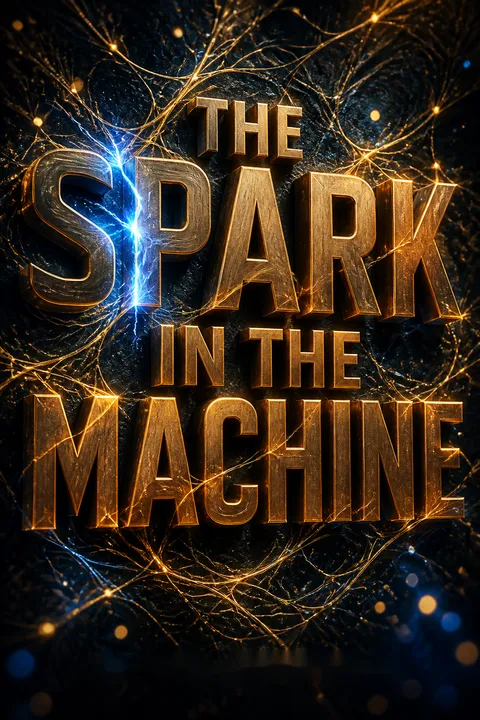
The Spark in the Machine receives mostly positive reviews, praised for its fascinating exploration of connections between Western and Eastern medicine, particularly acupuncture. Readers appreciate the author's ability to explain complex concepts accessibly, though some found parts challenging. The book is lauded for its insights into fascia, embryology, and Qi. While a few criticize the writing style or find certain sections difficult, many recommend it for those interested in holistic health, acupuncture, or bridging Eastern and Western medical approaches.
People Also Read







Glossary
Qi
Organized life activityA central Chinese medical concept that Keown interprets as more than cellular energy or metabolism. In his account, Qi includes the organized activity of cells, communication between tissues, and the coordination that allows organs to function as systems. He proposes links to biological signals and electricity, but Qi is not established as a single measurable substance.
Fascia
Body-wide connective tissueConnective tissue that surrounds, separates, and links muscles, organs, vessels, and other structures. Keown emphasizes the spaces and planes within this tissue, arguing that they may guide movement and communication through the body. He proposes that these planes correspond to acupuncture channels, a claim that is not an established anatomical consensus.
Growth Control Theory of Acupuncture
Acupuncture as developmental signalingA theory associated in the book with Charles Shang. It proposes that acupuncture points correspond to biological organizing centers and that channels link these sites into a signaling network. The theory draws on embryology, morphogens, and electrical properties of tissue to explain how stimulation might affect the body. The proposed correspondence requires further testing.
Morphogen
Signal that directs cell developmentA signaling substance that influences how cells develop according to its location and concentration. In the book's account, morphogens help organize embryonic growth by conveying local instructions between cells. They are part of modern developmental biology; Keown's further proposal that morphogens explain Qi or acupuncture channels is an interpretation, not a standard scientific definition.
Jing
Inherited developmental vitalityA Chinese medical concept Keown describes as inherited constitutional strength that supports growth, maturation, reproduction, and aging. He compares it with genetics but distinguishes it from a list of genes, presenting it instead as a broad capacity of the organism. He links Jing to neural crest cells and developmental organization, rather than identifying it with a specific biological substance.
Triple Burner
Three functional body compartmentsA Chinese medical concept traditionally described as an organ without a fixed physical form. Keown interprets it as the chest, abdominal, and pelvic compartments, along with the distinct processes occurring in each. He connects these spaces to fascia and metabolism. This anatomical interpretation is the author's proposed synthesis, not a universally accepted identification.
elecQicity
Informational biological electricityKeown's term for electrical activity that he believes carries biological information and helps organize growth and communication in the body. He distinguishes it from electricity considered as a physical current alone and connects it with Qi, collagen, embryonic development, and acupuncture channels. The term expresses his explanatory model, rather than an established biomedical category.
FAQ
What's The Spark in the Machine about?
- Exploring Acupuncture and Western Medicine: The book examines how acupuncture can be understood through modern Western scientific principles, aiming to bridge the gap between these two medical paradigms.
- Integration of Knowledge: Dr. Daniel Keown argues that both acupuncture and Western medicine describe the same processes in the human body, suggesting a synthesis that could enhance our understanding of health and healing.
- Focus on Embryology and Organs: The author intertwines concepts of embryology with acupuncture, proposing that the principles of how the body develops can illuminate the mechanisms behind acupuncture's effectiveness.
Why should I read The Spark in the Machine?
- Unique Perspective: Dr. Keown, being both a Western medical doctor and an acupuncturist, provides insights that combine both medical traditions, offering a perspective not commonly found in either field alone.
- Bridging Medical Divides: The book is an invaluable resource for practitioners and anyone interested in understanding how different medical systems can complement each other, potentially leading to better patient care.
- Engaging Writing Style: Keown's engaging and poetic writing makes complex scientific concepts accessible to a broad audience, making it suitable for both medical professionals and the general public.
What are the key takeaways of The Spark in the Machine?
- Understanding Qi: The book emphasizes Qi as the energy produced by each cell and the binding force between them, crucial for understanding how acupuncture works.
- Role of Fascia: Keown highlights fascia as a connective tissue that plays a significant role in both acupuncture and Western anatomy, suggesting it explains acupuncture channels perfectly.
- Embryological Insights: The author connects embryological development to acupuncture, arguing that the channels reflect the body's natural organization and communication systems.
What is Qi, and how does it relate to acupuncture in The Spark in the Machine?
- Definition of Qi: Qi is described as the intelligent force and organization of bodily functions, encompassing both energy and structure.
- Role in Acupuncture: Qi is fundamental to acupuncture practice, believed to flow through channels in the body, influencing health and well-being.
- Connection to Embryology: The book posits that Qi can be understood through modern science, particularly in how cells communicate and organize during embryonic development.
How does Daniel Keown connect embryology to acupuncture in The Spark in the Machine?
- Embryological Organization: The organization of the body during embryonic development mirrors the principles of acupuncture, emphasizing complexity and intelligence.
- Neural Crest Cells: These cells are crucial for development, linked to the concept of Jing, representing innate strength and vitality, exemplifying body organization and communication.
- Acupuncture Points as Organizing Centers: Keown argues that acupuncture points correspond to embryological organizing centers, providing a scientific basis for their therapeutic effects.
What is the significance of fascia in understanding acupuncture in The Spark in the Machine?
- Connective Tissue Role: Fascia is described as the overlooked link between acupuncture and anatomy, facilitating communication between different body parts.
- Electrical Properties: Fascia has unique electrical properties, which may explain how acupuncture can influence bodily functions, aligning with the idea that channels are fascial planes.
- Pathways of Least Resistance: Fascia provides pathways for Qi to flow, allowing for the movement of energy and information throughout the body, validating acupuncture channels scientifically.
How does The Spark in the Machine explain the relationship between the kidneys and the brain?
- Kidneys and Brain Function: The kidneys are believed to "fill" the brain with vital energy, or Jing, essential for cognitive function, suggesting kidney health impacts mental clarity.
- Embryological Development: The kidneys play a crucial role in the early development of the brain and spinal cord, linking their function to foundational aspects of human development.
- Impact of Kidney Failure: Keown highlights that kidney failure can lead to cognitive decline, emphasizing the importance of kidney health for maintaining overall brain function.
What role do the kidneys play in sexual health according to The Spark in the Machine?
- Regulation of Sexual Energy: The kidneys are linked to sexual energy and reproduction, controlling the "Jing" vital for these functions, highlighting their importance beyond filtration.
- Connection to Hormones: The kidneys influence the adrenal glands, which produce sex hormones, illustrating how kidney health impacts hormonal balance and sexual vitality.
- Cultural Perspectives: The text reflects on ancient Chinese beliefs regarding sexual health, emphasizing the need to preserve Jing, showcasing historical understanding of sexual energy management.
How does The Spark in the Machine address the concept of brain wasting?
- Link to Kidney Health: Brain wasting, or cerebral atrophy, is often associated with kidney failure, emphasizing the kidneys' role in cognitive health.
- Irreversibility of Brain Wasting: Brain wasting is an irreversible condition, often seen in dementia, underscoring the importance of maintaining kidney function to prevent cognitive decline.
- Scientific Understanding: Keown points out that the science behind brain wasting is poorly understood in Western medicine, advocating for deeper exploration of kidney-brain connections.
What practical advice does The Spark in the Machine offer for maintaining kidney health?
- Lifestyle Choices: A balanced diet and hydration are crucial for supporting kidney function, avoiding excessive consumption of substances that strain the kidneys.
- Acupuncture and Qi: Acupuncture is advocated as a means to enhance kidney health by promoting the flow of Qi, using specific points related to the kidney channel.
- Regular Check-ups: Monitoring kidney health through regular medical check-ups is encouraged, as early detection of issues can prevent complications and support long-term health.
How does The Spark in the Machine address the relationship between Western and Chinese medicine?
- Common Language: Dr. Keown argues that both medical systems describe the same processes in the human body, despite using different terminologies, suggesting a synthesis of knowledge.
- Research Gaps: The author points out the surprising lack of research examining the relationship of acupuncture to Western medicine, indicating a need for more integrative studies.
- Bridging the Divide: The book aims to help practitioners of both disciplines understand their commonalities, fostering collaboration and improving patient care.
What are the best quotes from The Spark in the Machine and what do they mean?
- "The Spark of Life": This phrase encapsulates the essence of Qi and its role in vitality and health, emphasizing the dynamic nature of life and the energy that sustains it.
- "The body acts like a ‘Web That Has No Weaver’": This quote highlights the complexity and interconnectedness of bodily systems, suggesting inherent intelligence in body organization.
- "Qi is the energy produced by each cell, the binding force between those cells and the work they produce": This definition underscores Qi's fundamental importance in both acupuncture and overall health.
Download PDF
Download EPUB
.epub digital book format is ideal for reading ebooks on phones, tablets, and e-readers.








