

Key Takeaways
Earn trust by letting people witness your character, not hear your assurances
Show, do not certify. A young company leader faced stockholders who suspected he was an inexperienced rich kid. Instead of claiming he was humble, he told how he once dismissed a worker’s warning about his boat plans, only to discover he had reversed port and starboard. The worker’s quick check prevented a costly mistake. A pair of mismatched shoes the crew gave him became a reminder to listen before assuming he was right.
Let listeners decide. The story gave the stockholders evidence of his fallibility and what he had learned. Simmons argues that this kind of firsthand-feeling example builds more trust than assurances because the audience reaches its own conclusion. A story pulls; a claim pushes.
The useful distinction here is between announcing a virtue and supplying evidence from which others can infer it. That resembles how trust develops in ordinary relationships: consistent, observable behavior carries more weight than self-description. A story also makes a person legible without demanding immediate agreement. Still, one anecdote is not proof of a stable character. The strongest use of personal disclosure is an opening for scrutiny, not a substitute for the longer record of decisions that determines whether the apparent humility is real.
Give facts a story-shaped context before asking people to change their minds
Facts need a frame. People interpret information through beliefs they already hold. Simmons illustrates this with a manager advising a colleague about clothing norms during a Japanese business visit. A bare list of restrictions could sound patronizing. A story about a visitor being misread because of her outfit could instead make the advice feel protective and relevant. The underlying information has not changed, but its meaning has.
Change the lens first. A story supplies characters, circumstances, and consequences, helping facts connect to a human situation. Simmons warns that unsupported data may simply be absorbed into an audience’s existing explanation. A useful sequence is to create a context that makes the issue imaginable, then offer evidence that supports it.
This is a strong account of why communication is not merely the transfer of information. People need an interpretive frame, and narrative can make consequences easier to simulate than a table of figures can. That also creates risk: once an audience accepts a story, it may selectively notice facts that confirm the plot. A responsible communicator should therefore use stories to clarify what evidence means, not to shield a preferred conclusion from competing evidence or relevant base rates.
Build a story library for trust, purpose, vision, teaching, values, and objections
Stories do different jobs. Simmons organizes useful workplace and personal stories around six needs. In paraphrase, they help people understand the storyteller, understand the storyteller’s motive, picture a possible future, learn a skill, see a value in action, or hear their own likely objection acknowledged. The categories overlap, but they offer a practical prompt when communication stalls.
Choose for the moment. A software trainer might explain a tool through the story of how it once rescued a tedious task. A leader facing skepticism might tell a story that makes the concern visible before proposing a change. Values such as integrity become clearer through a specific choice and its consequences than through a slogan on a wall. The point is not to force every story into a box, but to select one that answers the audience’s unspoken question.
The framework is most valuable as a retrieval aid, not as a taxonomy of human experience. Under pressure, a speaker can ask what the audience needs to know, feel, or imagine, then choose a story accordingly. Its flexibility is important: the same account may simultaneously show character, teach a principle, and reveal a value. The limitation is that a prepared story can become a canned performance. Listening to the audience should shape which story is told and what it is made to mean.
Listen for the story behind resistance before writing a replacement
Positions hide experience. In one example, an airline employee was furious after a canceled flight. Rather than argue or offer a quick fix, Simmons listened while he described the situation. As he heard himself speak, his anger eased, and he began looking for a way to help. Listening gave him room to revise his own account of what was happening.
Ask for the scene. A person’s conclusion, such as “I hate leases,” may rest on a particular past experience. Questions about when it happened, who was involved, and what happened next invite the person to revisit the underlying story instead of defend a summary. Simmons calls this storylistening: attentive listening that helps people examine their own interpretations. The goal is understanding, not cross-examination.
Listening changes the power dynamic because it treats the other person as a source of knowledge about their own situation. It also resembles procedural fairness: people are more willing to consider an outcome when they feel heard during the process. But listening should not be mistaken for agreement, therapy, or a tactic for making someone talk until they yield. Its value depends on genuine curiosity, clear boundaries, and a willingness for the listener to learn something inconvenient.
Make listeners feel a scene, not merely understand your point
Give the mind something to experience. Simmons describes learning groundwork with an Arabian horse named Meeka. Her instructor told her not to rush or force the animal. She waited, uncomfortable and impatient, until the horse finally moved toward her. By telling the episode with pauses and physical detail, Simmons lets listeners feel the waiting and then share the relief when the horse responds.
Delivery carries meaning. Voice, facial expression, gesture, posture, sensory details, and silence all shape the story. They should support its emotional truth rather than compete for attention. A confident tale told with a fearful tone, or a vulnerable account delivered as a polished performance, creates a mismatch. Practice helps, but authenticity matters more than adopting a generic stage manner.
The scene works because it gives the audience a small simulation, not just an instruction to be patient. In that sense, storytelling can make an abstract lesson available to imagination and bodily feeling. The craft advice is especially sound when it emphasizes congruence over theatrical polish. There is also a practical limit: vividness can amplify a weak or misleading message. Sensory force earns attention, but it does not establish that a story is representative or that its lesson applies in every situation.
Treat resistance as a story about fairness, fear, or lost agency
Resistance has reasons. Simmons cautions leaders against turning opponents into villains. In a manufacturing plant facing major retooling, workers saw the change as the end of familiar jobs and hard-earned expertise. A manager acknowledged the loss while describing the new product as a chance to improve the plant and fix persistent problems. The facts stayed the same; the wider story made extra effort feel less pointless.
Recognize the legitimate concern. Cynicism may call for evidence of follow-through. Resentment may reflect perceived unfairness. Hopelessness may require a believable account of how small actions matter. A story that skips a real injury, however, can sound like spin. The aim is not to deny the other person’s account, but to find a larger view in which their experience still counts.
This approach replaces moral labeling with diagnosis. Asking what a refusal protects, such as dignity, fairness, or control, can reveal options that argument misses. It also connects to conflict resolution: acknowledging each side’s legitimate interests can make joint problem-solving possible. The caution is crucial. A more hopeful frame cannot repair an actual injustice by renaming it. Influence becomes credible when the storyteller can both recognize the harm and offer a future that does not require pretending the harm was acceptable.
Influence lasts only when listeners can carry the story offstage
Agreement is not adoption. A city committee quickly approved a downtown plan, but members faced old community narratives of racial mistrust when they returned to their constituents. They were accused of betraying their own sides, and the plan stalled. The meeting had produced a decision without enough shared understanding to survive outside the room.
Think beyond the meeting. Simmons treats influence as a long process shaped by past relationships, other people’s reactions, and events beyond the speaker’s control. A story must fit the listeners’ world well enough for them to test it, adapt it, and retell it. When people fail to follow through, repeated reminders may not solve the problem. The agreement may have left important fears or competing interests untouched.
The committee example draws an important line between compliance and durable commitment. Organizational change depends on informal networks, local credibility, and the way a decision is explained to people who were not present. That makes communication after the meeting part of the work, not an optional public-relations layer. A useful story cannot guarantee agreement, and no leader can control every retelling. Its contribution is to make the choice understandable enough that people can carry it into their own relationships.
Use story power to invite judgment, never to bypass it
Narrative can serve harm. Simmons examines Hitler as a warning that vivid stories can make false, hateful claims feel emotionally convincing. Storytelling is not ethical simply because it creates connection. A persuasive tale can build solidarity, but it can also narrow empathy and make cruelty seem justified.
Keep the story answerable. The Sunrise senior-living case offers a contrasting example: a manager helped a resident who had Alzheimer’s get dressed by asking for the professor’s advice about what he should wear. The approach preserved the resident’s dignity and demonstrated a service value through action. The test is whether a story respects the audience’s ability to think, reflects behavior the storyteller actually practices, and remains open to questions.
The contrast between manipulative propaganda and dignity-centered care makes ethics central to the craft. Narrative increases attention and emotional involvement, both of which can deepen understanding or suspend skepticism. That is why the storyteller’s accountability matters as much as technique. Audiences should be free to ask what has been omitted, whose perspective is missing, and whether the example is typical. A story deserves influence when it illuminates a choice, not when it makes scrutiny feel disloyal.
Train story-thinking by collecting true moments, not inventing polished slogans
Practice on real experience. Simmons calls story thinking a shift between critical analysis and a subjective, sensory view of events. It means noticing the moments that carry emotion, consequence, or meaning, then shaping them into accounts others can understand. In one Children’s Miracle Network example, a radiothon raised $65,000 using a conventional format. A later event built around patient and family stories raised $326,000, with all proceeds going to the hospital.
Keep discovery alive. The book recommends gathering stories from daily life, recalling turning points, and practicing in low-stakes conversations. It also describes retrospective coherence: the idea that a path may make sense only after its separate experiences connect in hindsight. Do not force every story to prove a predetermined goal. Sometimes the story reveals that the goal itself needs reconsideration.
The radiothon illustrates how specific human accounts can mobilize attention and generosity more powerfully than abstraction alone. It does not isolate storytelling as the sole cause of the fundraising difference, so the figures are best read as an example rather than a controlled comparison. The broader practice of noticing and retelling experience is valuable because it builds a richer library of cases for judgment. Critical thinking remains necessary: stories generate hypotheses about people and systems, while evidence tests them.
Analysis
The book’s central contribution is to treat storytelling as a relationship practice rather than a decorative presentation technique. Its strongest argument is not simply that stories are memorable. Stories let listeners infer character, inhabit a point of view, and connect facts to consequences. This gives the audience a role in making meaning, which can reduce the resistance triggered by direct demands. The six story functions, the emphasis on listening, and the advice to attend to tone all serve that larger claim: influence depends on what people believe about the speaker and the situation, not only on the speaker’s reasoning.
The narrative examples make the method unusually usable. A worker catches a leader’s reversed boat plans; an employee hears a manager frame a plant conversion as a beginning; a committee’s apparent agreement collapses when it meets the community’s older stories. These episodes show that trust and interpretation are built in context, and that influence must survive beyond the moment of telling. The book also usefully rejects the fantasy of guaranteed persuasion. Refusal can contain information, and a lasting relationship may require listening rather than a better pitch.
The argument needs one important guardrail. A vivid story can make a possibility feel typical, or make an emotionally satisfying interpretation seem proven. Anecdotes can illuminate what a statistic leaves abstract, but they cannot establish frequency or representativeness on their own. Simmons recognizes the moral danger in propaganda and spin; the practical implication is that responsible storytelling should be paired with evidence, competing perspectives, and clear acknowledgment of uncertainty. Story should open thought, not close inquiry.
Taken together, the book offers a durable communication ethic: show rather than self-certify, learn the listener’s account before replacing it, and make the storyteller’s conduct consistent with the values the tale conveys. Its emphasis on hope is most persuasive when hope does not erase loss. In that form, storytelling is neither a trick nor a substitute for action. It is a way to help people see why an action matters and decide whether they can make it their own.
Review Summary
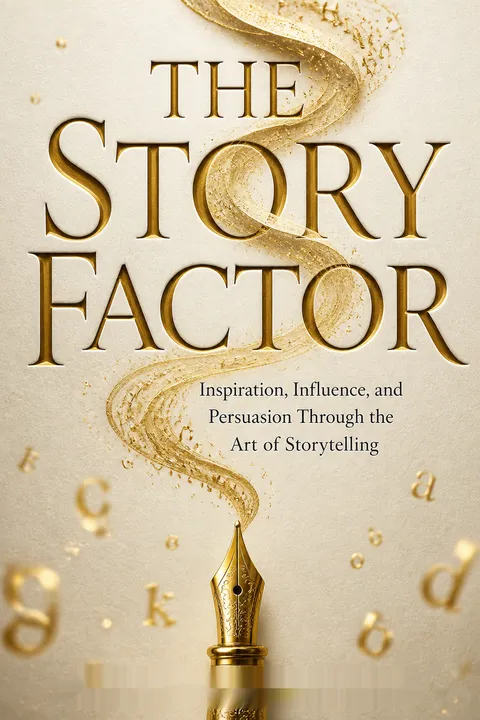
The Story Factor receives mixed reviews, with ratings ranging from 1 to 5 stars. Positive reviews praise its insights on storytelling's power in influencing others and its practical examples. Critics argue it lacks concrete techniques for improving storytelling skills and can be repetitive. Some readers find it inspiring and valuable for business and leadership, while others feel it doesn't deliver on its promises. The book's emphasis on storytelling as a tool for influence and communication resonates with many, but its organization and depth of instruction are points of contention.
People Also Read







Glossary
The Six Stories You Need to Know How to Tell
Six purposes for influential storiesSimmons’s practical grouping of stories by the work they do: establish who the storyteller is, explain why the storyteller is involved, make a desired future imaginable, teach a skill, demonstrate a value through action, or address an audience’s likely concern. The categories are prompts rather than strict boxes, and one story can serve several purposes at once.
Storylistening
Listening that uncovers a person’s storyA form of attentive listening that seeks the experiences and interpretations beneath a person’s conclusions. Rather than argue with a position, the listener invites concrete details about when something happened, who was involved, and what followed. This can help the speaker reconsider the meaning of the experience and can reveal what a more relevant future story would need to address.
Story thinking
Seeing experience through narrativeA way of noticing events through subjective experience, emotion, sensory detail, and consequence, alongside analytical or critical thinking. Story thinking helps people find accounts that communicate why an issue matters and how it feels to those involved. It does not replace analysis; the two modes can work together, with narrative discovery followed by careful review and editing.
Retrospective coherence
Meaning visible in hindsightThe idea that experiences may form a meaningful path only after events have unfolded. A person may not see how an apparently unrelated choice or encounter will matter at the time, but later connections can make its significance clear. Simmons uses the concept to argue against forcing creative storytelling into rigid, predetermined outcomes.
I Was There (Sort Of)
A story felt like personal memorySimmons’s label for the way a powerful story can feel so vivid that listeners may remember it almost as if they witnessed it themselves. Such stories can shape later beliefs and retellings. The concept highlights storytelling’s influence, but also its risk: emotional vividness can make an account feel true without verifying its accuracy.
FAQ
What's The Story Factor about?
- Focus on Storytelling: The Story Factor by Annette Simmons highlights storytelling as a powerful tool for inspiration, influence, and persuasion. It explores how stories connect with people emotionally, making them more effective than mere facts.
- Types of Stories: The book identifies six essential types of stories, such as "Who I Am" and "Teaching" stories, each serving a specific purpose in building trust and conveying messages.
- Psychological Insights: It delves into the psychology behind storytelling, explaining how stories can change perceptions and influence behavior by connecting with listeners' emotions.
Why should I read The Story Factor?
- Enhance Communication Skills: The book offers practical advice to improve storytelling abilities, making communication more engaging and persuasive.
- Understand Human Nature: It provides insights into human psychology, helping readers understand how people think and feel, enhancing influence in personal and professional settings.
- Real-World Applications: The concepts are applicable across various fields, including business, education, and leadership, aiding in achieving goals through storytelling techniques.
What are the key takeaways of The Story Factor?
- Power of Story: Stories are more impactful than facts alone, creating emotional connections and helping listeners relate to the message.
- Types of Stories: Simmons outlines six types of stories essential for effective communication, each serving a unique purpose in influencing others.
- Influence Through Connection: Genuine influence requires establishing a connection with the audience, building trust through personal stories.
What are the best quotes from The Story Factor and what do they mean?
- “To be a person is to have a story to tell.”: This underscores storytelling as intrinsic to human identity, suggesting everyone has experiences worth sharing.
- “People don’t want more information. They want faith—faith in you, your goals, your success, in the story you tell.”: Highlights the importance of trust in communication, implying storytelling can inspire belief and motivate action.
- “A story can transform the impotent and hopeless into a band of evangelists ready to spread the word.”: Illustrates storytelling's transformative power, suggesting a compelling narrative can inspire action and message sharing.
What are the six types of stories mentioned in The Story Factor?
- "Who I Am" Stories: Establish trust by sharing personal experiences that reveal character and values, creating a connection with the audience.
- "Why I Am Here" Stories: Explain purpose and intentions, addressing audience concerns about motivations and why they should care.
- "The Vision" Story: Paints a picture of the future you envision, inspiring others to join in achieving that vision by illustrating potential benefits.
How does storytelling influence people according to The Story Factor?
- Emotional Connection: Storytelling taps into emotions, making messages more relatable and memorable, increasing the likelihood of influence.
- Contextual Understanding: Provides context for facts, helping listeners interpret information meaningfully, seeing its relevance in their lives.
- Overcoming Resistance: Stories bypass resistance from direct confrontation, creating a safe space for exploring new ideas without feeling threatened.
What techniques does Annette Simmons suggest for telling a good story?
- Use of Oral Language: Emphasizes the importance of language in storytelling, suggesting practice with engaging and vivid language.
- Incorporate Gestures: Gestures add visual elements, conveying emotions and actions, making the story more dynamic and engaging.
- Timing and Pauses: Effective use of timing and pauses amplifies emotional impact, allowing listeners to absorb the message and creating anticipation.
How can I apply the concepts from The Story Factor in my professional life?
- Build Trust with Stories: Use "Who I Am" and "Why I Am Here" stories to establish trust with colleagues and clients, fostering collaboration.
- Inspire Teams with Vision Stories: Share a compelling vision story to motivate and align teams towards a common goal, clarifying objectives.
- Enhance Presentations: Incorporate storytelling techniques into presentations, using anecdotes and personal stories to illustrate key points and maintain attention.
What role does psychology play in storytelling according to The Story Factor?
- Understanding Human Behavior: Explores how storytelling taps into human psychology, particularly emotions and motivations, enhancing influence.
- Creating a Safe Space: Storytelling creates a relaxed environment for engaging with messages, crucial for overcoming resistance and fostering communication.
- Memory and Recall: Stories are more memorable than facts, increasing the likelihood of messages being remembered and acted upon.
How does The Story Factor differentiate between sound bites and epic stories?
- Sound Bites are Superficial: Quick, catchy phrases lacking depth and context, grabbing attention momentarily but failing to create lasting influence.
- Epic Stories are Transformative: Rich narratives resonating on multiple levels, engaging emotions, providing context, and inspiring action.
- Long-Term Impact: Epic stories shape beliefs and behaviors over time, creating shared understanding and uniting people around a common cause.
How does The Story Factor define influence?
- Behavior Change: Influence is the ability to change behavior without constant reminders, occurring when people adopt new behaviors based on stories.
- Understanding Resistance: Resistance often stems from underlying stories and beliefs; understanding these helps craft effective stories.
- Emotional Engagement: Influence is rooted in emotional connections, requiring empathy and understanding rather than convincing people they are wrong.
What is the significance of emotional engagement in storytelling as discussed in The Story Factor?
- Connection to Audience: Emotional engagement is essential for creating a connection, emphasizing empathy in storytelling.
- Driving Action: Stories evoking strong emotions inspire action, with positive emotions motivating behavior change.
- Memorable Impact: Emotionally charged stories are more memorable, creating lasting impressions that influence thoughts and actions.
About the Author
Other books by Annette Simmons

Download PDF
Download EPUB
.epub digital book format is ideal for reading ebooks on phones, tablets, and e-readers.








