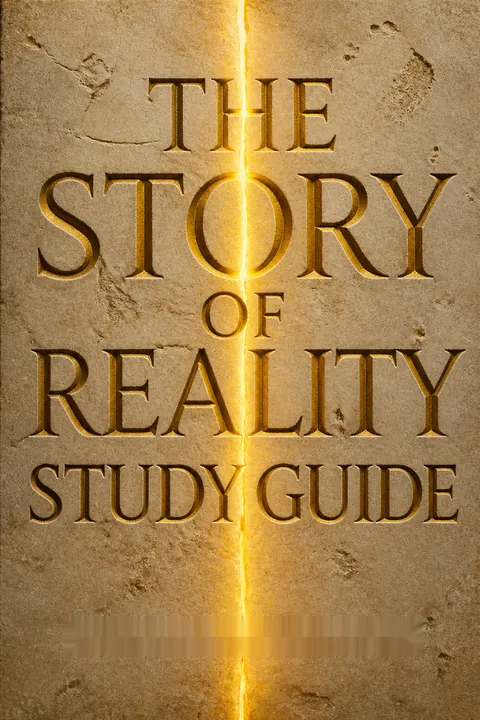


Key Takeaways
Treat Christianity as a claim about shared reality, not private consolation
A public claim. The guide’s starting point is that Christianity is not merely a source of comfort, a moral code, or a personal relationship. It claims to describe the world as it actually is. Koukl’s test is explanatory power: does a worldview make sense of the reality people encounter, including human worth, guilt, evil, and hope?
Use reality as a check. A map is useful because it can be compared with the terrain and judged by whether it guides someone accurately. The guide applies that analogy to beliefs: claims about reality should answer to the world, rather than being insulated as merely true for a particular person. Everyday success with maps shows that some truth is knowable, though it does not by itself establish Christianity’s larger claims.
The strength of this opening is its refusal to treat religion as exempt from ordinary standards of truth. It invites comparison between rival explanations rather than asking readers to accept a private preference. The map analogy also makes skepticism answerable to experience: people rely on knowable facts constantly. Its limit is one of scale. Knowing which road leads home does not settle questions about God, evil, or life after death. Those require distinct arguments and evidence, not just confidence that truth is generally accessible.
Use the four-part worldview and five-word plot to keep the story's pieces aligned
A coherent plot. A worldview is an account of how reality began, what went wrong, how the damage is addressed, and what restoration would mean. The guide names these movements creation, fall, redemption, and restoration. It also compresses Christianity’s central narrative into five linked terms: God, man, Jesus, cross, and resurrection.
Check the fit. Koukl compares a worldview to a puzzle: missing pieces or pieces borrowed from a different picture create confusion. He also compares it to a story, with a beginning, conflict, resolution, and ending. These structures help readers see why isolated beliefs matter. For instance, reincarnation may fit another religious framework, but the guide argues it conflicts with Christianity’s account of judgment and resurrection.
The plot structure is memorable because it connects doctrines to a problem and its resolution, rather than presenting them as a list of disconnected propositions. It also gives readers a practical way to notice when ideas have been combined without examining their underlying assumptions. The story analogy, however, can make coherence feel like proof. A beautifully integrated narrative can still be false. Its value is diagnostic: it clarifies what Christianity claims and where its parts depend on one another.
Test matter-only and all-is-one worldviews by asking whether they can preserve real evil
Two rival pictures. The guide calls the view that only physical reality exists Matter-ism, also known as materialism or naturalism. It calls the view that only one universal, impersonal Mind exists Mind-ism, or monism. In the first, persons and moral judgments ultimately arise from physical processes. In the second, individual distinctions are treated as ultimately illusory.
The moral challenge. Koukl argues that neither picture can account for objective evil: materialism lacks a transcendent standard for how things ought to be, while monism dissolves the distinction between good and evil. The argument asks whether a worldview can explain the felt reality of injustice, not merely describe people’s reactions to it. It is a challenge to these comprehensive philosophies, not a demonstration that every non-Christian lacks moral convictions.
This comparison presses a serious philosophical question: are moral judgments only preferences, or do they refer to standards that hold beyond personal taste? The guide is right that a worldview should explain why cruelty seems wrong, not merely why humans dislike it. But the argument risks treating naturalism as if it automatically denies all moral reasoning. Secular philosophers offer accounts of ethics based on human interests, reason, or social life. The deeper dispute is whether those accounts ground objective obligation, not whether nonbelievers can recognize harm.
Place God, not human preference, at the center of creation's kingdom
A kingdom belongs to its maker. In the guide’s account, God creates everything and is therefore its rightful ruler. The story is not primarily about human plans; human beings are important, but they are not its central character. This kingdom theme runs through the biblical narrative as prophets, Jesus, and the apostles call people back under God’s authority.
Creation is not divine. The guide distinguishes God from the natural world and sees both physical and nonphysical realities as real. It argues that if God can create the universe, miracles such as healing or resurrection are possible within that worldview. This is a theological inference from the kind of creator Christianity posits, not a claim that nature itself is God or that every unusual event is miraculous.
The kingdom idea shifts morality from self-invention toward accountable stewardship: the world is neither ownerless nor simply a resource for individual use. That can support humility and care for other people and the environment. It also gives the guide’s account of miracles internal coherence: a creator is not necessarily limited to the processes of the created order. Still, the universe’s beginning alone does not identify its cause as a personal God, and the possibility of miracles does not establish that any particular miracle occurred.
See every person as God-imaged, valuable, and morally compromised
Worth is not earned. The guide describes humans as embodied creatures with an invisible self, or soul, and as uniquely bearing the image of God. On this account, human dignity does not depend on strength, independence, status, or achievement. The image of God grounds both obligations toward other people and their inherent value.
Freedom went wrong. The first humans, Adam and Eve, are presented as choosing independence after a deceiver persuaded them that God could not be trusted. Their rebellion, called the fall, brings guilt, damaged relationships, and a corrupted human nature the guide calls the flesh. Humans remain valuable, but they are also morally broken and unable to repair their estrangement from God by themselves.
Holding dignity and wrongdoing together is a distinctive strength of this anthropology. It resists both the idea that people are disposable and the flattering belief that they are fundamentally self-sufficient. The image-of-God claim can also support equal moral regard regardless of ability or social rank. Its limitation is that the guide asserts a theological grounding for human rights rather than comparing it in depth with secular accounts. The practical question remains valuable across those disagreements: what protects human worth when usefulness and power are the only measures?
Explain evil through rebellion, without claiming to know why each tragedy happens
A damaged world. The guide locates evil in humanity’s revolt against God, which fractures not only the human relationship with God but also human relationships and the wider world. This explains why suffering and death belong to a world that began good, rather than to creation as God originally intended it.
A limit on explanation. The guide says a good God could permit some evil for a greater purpose, much as a parent may allow a painful medical treatment for a child’s health. It does not claim people can identify God’s reason for every particular loss. Its story is still unfolding, and the final resolution has not arrived. The claim offers a framework for suffering, not a specific explanation for why a particular person suffers.
A narrative of a good beginning, human rupture, and promised repair makes moral evil intelligible without calling it good. It also leaves room for grief rather than pretending every painful event has an obvious lesson. Yet the greater-good answer carries a demanding burden: when suffering is extreme, merely asserting an unseen purpose may feel insufficient or even cruel. The guide acknowledges that human knowledge is limited. That humility is important, but it does not remove the emotional or philosophical force of asking why a good and powerful God permits particular horrors.
Assess Jesus by both his claimed identity and his rescue mission
More than a teacher. The guide’s two questions are who Jesus is and what he came to do. It presents him as fully human, with a body, emotions, and human limitations, and as fully divine. This is the God-man: one person with a human nature and a divine nature. The term kenosis refers to the Son’s humble entry into human life, setting aside divine privileges without ceasing to be divine.
A rescue, not simply a lesson. The guide points to Jesus’ claims to forgive sins, judge humanity, and give life, alongside Gospel accounts of his actions. It identifies his mission as saving sinners and reconciling them to God. His care for the poor matters, but the guide argues that social reform was not the central purpose of his coming. It presents the Gospel record as historically reliable, though this study guide does not fully lay out that case.
This focus prevents Jesus from being reduced to a collection of appealing sayings. Identity and mission are linked: if the claims about him are true, his teaching carries a different authority; if false, admiration alone cannot resolve the problem. The incarnation also makes divine compassion concrete within the guide’s theology. Its sharp distinction between salvation and social reform deserves care. A primary mission need not make other concerns unimportant, and the portrayal of Jesus’ work should not be used to dismiss the ethical consequences of his teaching.
See the cross as God's costly answer to guilt, justice, and mercy
A substitution. The guide understands the cross as more than execution. It describes Jesus as taking the judgment due to human sin, so that those who trust him may receive forgiveness and a right standing with God. Substitutionary atonement is the teaching that Christ bears the penalty of others in their place. Justification is the resulting acceptance of the sinner as righteous, while propitiation means that God’s just anger against sin is satisfied.
Why only Jesus? In this account, Jesus is both truly human and divine: humanity’s representative and the one able to pay a debt no ordinary person could settle. His death is therefore the unique means of salvation. The guide presents the cross as God’s way to uphold justice while extending mercy, not as an excuse to pretend wrongdoing never happened.
The cross gives the guide’s answer to evil a moral center: forgiveness is not cheap because the harm and guilt are taken seriously. The idea that justice and mercy can meet in one act is powerful within the Christian story, especially when forgiveness would otherwise seem to erase accountability. The model also raises questions worth considering, including how punishment can be transferred between persons and how the image of divine anger relates to divine love. Those questions invite careful interpretation rather than reducing the doctrine to a simple payment metaphor.
Put trust in the rescuer, not in faith's emotional intensity
Faith means reliance. The guide rejects the idea that biblical faith is belief without evidence or reason. It defines faith as active trust in Jesus, grounded in claims about who he is and what he did. Its analogy is ordinary reliance: confidence in a means of travel is not the same as actually entrusting oneself to it.
The object matters. Strong conviction cannot make a false belief true. The guide points to the New Testament’s presentation of miracles and resurrection appearances as evidence offered to support belief, and argues that Christianity depends on historical claims that can, in principle, be assessed. Faith itself does not save in this account; Jesus saves those who trust him. The study guide asserts the evidence is persuasive but gives only a brief outline of how to evaluate it.
Separating trust from mere intensity is a useful correction to the idea that belief becomes reliable by being fervent. The same distinction matters in medicine, law, and everyday judgment: confidence should track the quality of the grounds for reliance. The guide’s emphasis on evidence also makes its theology vulnerable to evidence, which is intellectually healthier than insulating it from scrutiny. The crucial work, however, lies in assessing sources and alternative explanations. Calling faith evidence-based is a starting standard, not a substitute for historical argument.
Let final resurrection place present injustice beside lasting accountability
The story ends in judgment. The guide teaches that all people will be raised, and that each faces either justice for wrongdoing or mercy received through Christ. It portrays hell as conscious, lasting separation from God, and describes the Lamb’s Book of Life as the record of those who have accepted pardon.
Restoration is bodily and communal. For the redeemed, the end is not escape from creation but life with God in a restored world, free of sin, harm, grief, and death. This ending gives the five-part plot its final movement: resurrection completes restoration. It also frames the present as an unfinished conflict, where wrongs may go unanswered for now but are not, in the guide’s view, beyond final judgment.
Final judgment addresses a persistent moral intuition: victims deserve recognition, and wrongdoing should not vanish simply because a perpetrator escapes earthly consequences. Restoration also makes hope more than private survival by imagining a world where harm itself is removed. These claims carry enormous emotional and ethical weight, especially the doctrine of everlasting punishment. Their force depends on difficult questions about justice, proportionality, and the nature of the afterlife. The guide states its conclusions firmly; readers still need to distinguish the internal coherence of the account from proof that its future events will occur.
Analysis
The guide is best understood as an apologetic narrative rather than a neutral survey of Christian thought. Its central strategy is cumulative: Christianity is presented as a unified account that explains creation, human dignity, wrongdoing, the cross, and hope after death. The five-word sequence gives that account unusual portability. A reader can remember the plot before mastering its doctrinal vocabulary, while the four movements of creation, fall, redemption, and restoration explain how its pieces relate.
Its most persuasive move is to insist that Christianity makes claims about shared reality. That stance invites scrutiny and rejects the reduction of religion to personal preference. It also makes the guide’s own assertions answerable to evidence. The text, however, often moves from explanatory fit to truth too quickly. Showing that a worldview accommodates moral evil, for example, does not establish that its account of God, the fall, or salvation is historically correct. Nor does identifying a difficulty for materialism prove the Christian alternative. The guide’s contrast between materialism and monism is rhetorically clear, but the range of secular moral philosophies is wider than the presentation suggests.
The treatment of suffering combines a strong narrative resource with an unresolved tension. A good creation damaged by rebellion gives evil a place in the story without calling it part of the original design. The claim that some suffering may serve a greater good can preserve the possibility of divine goodness, but it does not explain particular tragedies. The guide recognizes this limit, and that recognition matters.
Ultimately, its value lies in clarifying Christianity’s distinctive claims and showing their interdependence. Readers can understand what the story says before deciding whether its historical and theological premises hold. That distinction keeps coherence from masquerading as proof, while allowing the narrative’s account of guilt, mercy, and restoration to be considered on its own terms.
People Also Read


Glossary
worldview
an account of realityA worldview is a connected picture of how the world actually is, including its origins, the nature of human beings, what has gone wrong, and what could set things right. In the guide, Christianity is presented as a worldview rather than merely a private belief, ethical program, or route to personal comfort.
Matter-ism
physical reality aloneThe guide’s label for materialism, naturalism, or physicalism: the view that reality consists only of physical things governed by natural processes. The author argues that this view has difficulty grounding objective moral standards, and therefore struggles to explain evil as more than an unwanted human judgment.
Mind-ism
one universal MindThe guide’s label for monism, a view in which only one ultimate, impersonal Mind exists and apparent individual distinctions are ultimately illusory. The author argues that if individuality is not ultimately real, distinctions between good and evil cannot be ultimate either. The term is used for a broad family of views, not one single religious system.
image of God
human likeness to GodThe theological claim that human beings bear a distinctive likeness to God. In the guide, this does not make people divine; it grounds their inherent worth, moral responsibilities toward one another, and capacity for relationship with God. Human value therefore does not depend on a person’s strength, independence, status, or usefulness.
kenosis
Christ's humble self-emptyingA theological term for the Son’s self-humbling in becoming human. The guide explains this as Jesus setting aside divine privileges and taking the condition of a servant, without surrendering his divine nature. The term is associated with the passage in Philippians describing Christ’s humility and obedience.
substitutionary atonement
Christ bears sin's penaltyThe doctrine that Jesus, though sinless, bears the judgment and penalty due to sinners, acting in their place. In the guide’s account, the cross pays the debt of human wrongdoing and makes forgiveness possible for those who trust Christ. The doctrine is central to the book’s explanation of why Jesus is the unique means of salvation.
justification
acceptance as righteousIn the guide, justification is the status granted to a sinner through trust in Christ because of Christ’s work. The person is accepted by God on the basis of Jesus’ righteousness rather than personal moral achievement. It is presented as a result of the cross and the exchange between Christ’s goodness and human guilt.
propitiation
justice satisfied through ChristThe guide uses propitiation for the satisfaction of God’s just anger against sin through Jesus’ death. It describes the cross as addressing wrongdoing rather than ignoring it, so that forgiveness can be offered without treating justice as irrelevant. The term belongs to the guide’s account of how divine judgment and mercy meet.
faith
active trust in ChristThe guide defines biblical faith not as blind belief or confidence without reasons, but as active reliance on Jesus as rescuer. Faith depends on the truth of the claims being trusted; strong conviction cannot make a false claim true. In this account, faith is the means by which a person receives salvation, while Christ is the one who saves.
FAQ
What's "The Story of Reality Study Guide" about?
- Overview of Reality: The book provides a comprehensive overview of the Christian worldview, explaining how the world began, how it ends, and everything important that happens in between.
- Five Key Elements: It focuses on five key elements: God, man, Jesus, the cross, and the resurrection, which form the backbone of the Christian story.
- Purpose of the Guide: The study guide is designed to help readers understand the biblical narrative and the Christian worldview in a clear and structured manner.
- Life-Changing Insights: By understanding these elements, readers can gain insights that may change their lives and help them share the Christian story with others.
Why should I read "The Story of Reality Study Guide"?
- Clarifies Christian Worldview: It offers a clear and thoughtful characterization of the Christian worldview, making complex theological concepts accessible.
- Addresses Big Questions: The guide addresses fundamental questions about Christianity, such as the nature of God, the problem of evil, and the role of Jesus.
- Practical Application: It provides practical tools for understanding and teaching the Christian story, making it useful for personal growth and evangelism.
- Engaging Format: The study guide includes interactive elements like self-assessment quizzes and group study questions to enhance learning.
What are the key takeaways of "The Story of Reality Study Guide"?
- Christianity as Reality: Christianity is presented as a picture of reality, not just a set of beliefs or a moral system.
- Problem of Evil: The guide explains how the Christian story accounts for the existence of evil and offers a solution through Jesus.
- Role of Jesus: It emphasizes the importance of Jesus' identity and mission, focusing on his role in salvation and the significance of the cross.
- Final Resurrection: The book concludes with the promise of resurrection and eternal life, highlighting the ultimate restoration of creation.
How does Gregory Koukl explain the problem of evil in "The Story of Reality Study Guide"?
- Human Rebellion: The problem of evil is rooted in human rebellion against God, which broke the world and introduced suffering.
- God's Allowance: God allows evil for a season to accomplish a greater good, though the specific reasons may be beyond human understanding.
- Atheist's Dilemma: The guide argues that atheists struggle to account for evil within a materialistic worldview, whereas Christianity offers a coherent explanation.
- Evil's Role in the Story: Evil is a central part of the Christian story, and the narrative is about God's plan to address and ultimately resolve it.
What is the significance of Jesus in "The Story of Reality Study Guide"?
- Dual Nature: Jesus is both fully God and fully man, a unique combination necessary for the salvation of humanity.
- Rescue Mission: His primary mission was to save sinners by taking on the punishment for humanity's sins through his death on the cross.
- Substitutionary Atonement: The guide explains the concept of substitutionary atonement, where Jesus takes humanity's guilt and offers his righteousness in return.
- Exclusive Path to Salvation: Jesus is presented as the only way to salvation, as he is the only one who solved the problem of sin.
How does "The Story of Reality Study Guide" define faith?
- Not Blind Faith: The guide emphasizes that biblical faith is not a blind leap but a step of trust based on sound reasons and evidence.
- Active Trust: Faith involves actively trusting in Jesus as the one capable of rescuing humanity, rather than mere intellectual agreement.
- Importance of Evidence: The book highlights the importance of evidence and reason in supporting faith, countering the misconception that faith is irrational.
- Faith's Role in Salvation: While faith itself does not save, it is the means through which Jesus saves, as believers place their trust in him.
What are the best quotes from "The Story of Reality Study Guide" and what do they mean?
- "Christianity is a picture of reality." This quote emphasizes that Christianity is not just a belief system but a comprehensive worldview that explains the nature of reality.
- "The problem of evil is what our story is all about." It highlights that addressing evil is central to the Christian narrative, with Jesus' mission being the solution.
- "Jesus is the God/man." This underscores the unique nature of Jesus, essential for his role in salvation as both divine and human.
- "God is not mad at you anymore." This reassuring statement reflects the concept of propitiation, where God's wrath is satisfied through Jesus' sacrifice.
How does "The Story of Reality Study Guide" address the concept of the resurrection?
- Final Resurrection: The guide explains that all humans will be resurrected, some to eternal life and others to eternal punishment.
- Restoration of Creation: The resurrection is part of God's plan to restore creation to its original goodness, free from sin and suffering.
- Eternal Life with God: Believers will experience eternal life with God, enjoying a perfect world as intended from the beginning.
- Hope and Assurance: The promise of resurrection provides hope and assurance for Christians, affirming the ultimate victory over death and evil.
What interactive elements are included in "The Story of Reality Study Guide"?
- Self-Assessment Quizzes: These quizzes help reinforce key concepts and ensure understanding of the material.
- Group Study Questions: Designed to facilitate discussion and deeper exploration of the topics covered in the guide.
- Reflective Moments: Sections that encourage readers to pause and consider the implications of the material on their own lives.
- Going Deeper Activities: Additional activities for self-study that allow readers to apply what they've learned in practical ways.
How does Gregory Koukl use the concept of a "puzzle" in "The Story of Reality Study Guide"?
- Worldview as a Puzzle: Koukl compares a worldview to a puzzle, where all the pieces must fit together to form a coherent picture of reality.
- Right Pieces Needed: To assemble the puzzle correctly, one must have all the right pieces and avoid mixing in pieces from other worldviews.
- Big Picture View: The guide helps readers see the "cover" of the puzzle, providing a big picture view of the Christian story to avoid getting lost in details.
- Evaluating Worldviews: This analogy challenges readers to evaluate their own worldview and ensure it accurately represents reality.
What are the two major competing worldviews discussed in "The Story of Reality Study Guide"?
- Matter-ism (Materialism): This worldview holds that only physical matter exists, denying the existence of God, souls, and objective morality.
- Mind-ism (Monism): This view posits that only a single, undivided Mind (God) exists, with everything else being an illusion.
- Flaws in Both Views: The guide argues that neither worldview can adequately account for the problem of evil, making them incomplete explanations of reality.
- Christianity's Superiority: By contrast, Christianity offers a comprehensive explanation that addresses both the material and immaterial aspects of existence.
How does "The Story of Reality Study Guide" explain the concept of "substitutionary atonement"?
- Jesus' Sacrifice: Jesus' death on the cross is described as a substitutionary atonement, where he takes on the punishment for humanity's sins.
- The Great Exchange: This concept involves a trade where Jesus takes humanity's guilt, and believers receive his righteousness in return.
- Basis for Justification: Substitutionary atonement is the basis for justification, allowing believers to be declared righteous before God.
- Propitiation: The guide explains that Jesus' sacrifice satisfies God's wrath, offering believers peace and reconciliation with God.

Download PDF
Download EPUB
.epub digital book format is ideal for reading ebooks on phones, tablets, and e-readers.








