

Key Takeaways
Treat the voice in your head as a narrator, not a verdict.
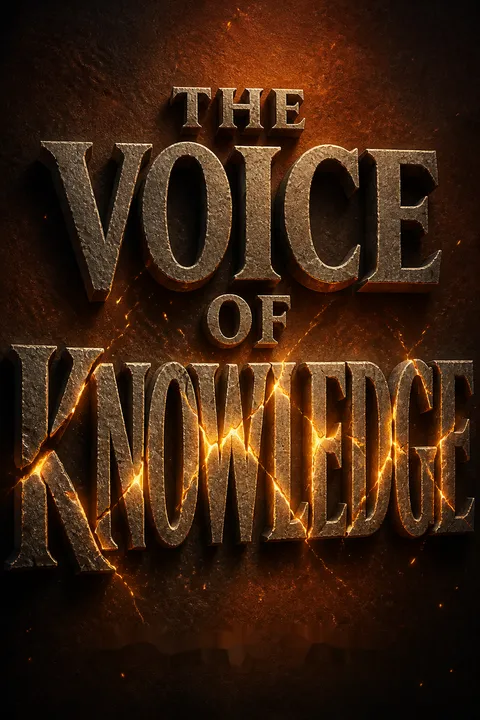
A learned inner narrator. Ruiz reinterprets the story of Adam and Eve as a story about believing inherited ideas, not as a tale about sexual wrongdoing. He calls the internal narrator the Voice of Knowledge: the stream of learned labels, judgments, and opinions that can sound like unquestionable truth. The Tree of Knowledge is his metaphor for the beliefs built from those ideas. Its snake, which he calls the Parasite, represents lies that take hold when people believe them.
Notice the storyteller. Ruiz argues that language and social learning teach people how to describe themselves, then those descriptions can become an identity. The practical invitation is to notice when an inner judgment is speaking, instead of automatically treating it as a fact. The narrator may offer useful information, but its confidence alone does not make it right.
The distinction resembles cognitive defusion, a practice used in acceptance-based therapy: thoughts can be noticed as mental events rather than obeyed as commands. That shift can create room for choice without requiring a person to silence the mind. The metaphor is memorable because it turns self-criticism into something observable. Its limit is that inner speech is not simply false or imposed. It can also support planning, reflection, and accurate self-correction. The useful test is not whether a thought comes from the narrator, but whether evidence and consequences support it.
Stop measuring your worth against an image you inherited.
How inadequacy takes root. Ruiz recalls being a child who played freely, then learning expectations from family, teachers, and media. Messages meant as encouragement, such as working hard to become somebody, could carry a quieter implication: the child is not enough as they are. He calls this the lie of our imperfection, the belief that one must become an idealized version of oneself to deserve approval.
Achievement cannot settle it. Ruiz describes pursuing success, even becoming a surgeon, without satisfying the internal standard. The target kept moving because it was an image, not a reachable state. The alternative is not to abandon effort, but to separate growth from the demand to prove basic worth. A mistake can call for repair or learning without becoming a verdict on a person's value.
This account connects with the psychological idea of conditional regard: when approval feels tied to performance, achievement can become a way to secure acceptance rather than pursue meaningful goals. The distinction between worth and behavior is also central to self-compassion approaches, which allow accountability without humiliation. Ruiz's childhood account is vivid, but it should not be treated as a universal developmental script. Families and schools vary, and encouragement can genuinely empower. The practical question is whether a standard guides useful action or keeps moving the finish line.
Separate what happened from the story you built around it.
A perspective is not the whole event. Ruiz's grandfather challenges him to distinguish truth from the stories people tell about truth. Ruiz later compares each person to an artist making a portrait of what they see. A portrait may express the artist's perspective, but it is not the person depicted. In the same way, people interpret events through memory, beliefs, and mood, then may mistake their interpretation for the only account.
Use the distinction in relationships. Ruiz says people also assign roles and motives to partners, parents, and children, then try to make them fit those imagined parts. Instead, describe what was observed, ask what the other person meant, and leave room for information that changes the interpretation. Respecting someone else's account does not require agreeing with it or giving up one's own boundaries.
This is a useful form of epistemic humility: personal experience matters, but access to it is partial. In conflict, separating observation from interpretation can reduce needless escalation, much as careful interviewing distinguishes what a witness saw from what they inferred. Yet not every disagreement is merely two equally valid stories. Records, corroboration, and power differences matter; some accounts are better supported than others. The insight works best as an invitation to check interpretations, not as a rule that makes facts unknowable or excuses harm.
Let emotions inform you without letting judgments define them.
Feelings are real experiences. Ruiz argues that emotions deserve attention rather than shame. He compares the body to an animal reacting to how it is treated: anger or fear can signal that something feels threatening or painful. In his model, a judgment such as I am worthless can provoke shame, and then a second judgment about feeling shame can deepen the distress.
Question the explanation. The feeling is real, but the story attached to it may be mistaken. Instead of condemning anger or suppressing sadness, notice the emotion, identify what happened around it, and examine the interpretation feeding it. Ruiz's point is not that every reaction is accurate evidence about another person. A feeling can be important information without being a complete account of its cause or a command to act.
Treating emotion as data rather than moral failure has clear value. Contemporary emotion-regulation approaches similarly distinguish noticing a feeling from deciding how to respond. That distinction protects both compassion and responsibility: anger may reveal a boundary, but it does not justify aggression. Ruiz's claim that feelings arise from integrity and that false beliefs explain suffering is too sweeping. Emotions can also reflect sleep, health, trauma, or external conditions. Attending to feelings is a starting point for inquiry, not proof that the problem lies only in one's interpretation.
Question inner and outer claims without shutting down listening.
Skepticism without contempt. Ruiz offers two rules for hearing stories: hold one's own thoughts lightly, and do the same with other people's claims. He does not mean refusing all information. He means listening without instantly agreeing, judging, or taking remarks as personal truth. A comment about someone's appearance, for example, can be considered and checked without becoming a measure of their worth.
Test beliefs in action. Ruiz describes how believing oneself incapable of public speaking can create fear and avoidance, which then appear to confirm the belief. Trying the task gives the belief a real test. Likewise, the idea of being unworthy may shape behavior in ways that invite dismissive treatment. The aim is neither automatic belief nor automatic disbelief, but attention to evidence, consequences, and alternatives.
This stance is close to calibrated trust: claims can be provisionally considered, then updated as evidence arrives. It also interrupts confirmation bias, the tendency to notice information that supports an existing belief while overlooking what challenges it. The practice is especially useful for self-judgments, which can masquerade as settled facts. Taken literally, however, believing nobody risks replacing gullibility with isolation. Human cooperation requires warranted trust, shared evidence, and the ability to rely on others while still asking clarifying questions.
Put attention on beliefs you can test, not fears you rehearse.
Belief directs attention. Ruiz uses faith to mean the force invested in an idea when a person accepts it as true. Attention, in his account, selects which ideas and experiences become prominent. Together, belief and attention can reinforce a personal story: someone expects rejection, notices signs of disapproval, and overlooks signs of welcome. The result can feel like proof even when the starting belief was never examined.
Return to experience. Ruiz tells of a night in the Sonoran desert when the stars seemed to reveal a unity between his body and the wider universe. He describes this as a direct spiritual experience, not a conclusion reached through argument. For readers, the grounded lesson is to pause the familiar narrative and notice immediate experience. A vivid experience can change a person's perspective, though it does not by itself establish a universal explanation of reality.
The attention loop has a strong connection to cognitive science: expectations shape what people notice, remember, and interpret. Testing a belief through experience can therefore loosen a self-reinforcing story. Ruiz's desert account gives the idea emotional force and shows why a shift in perspective can feel more convincing than abstract instruction. The necessary nuance is that attention and faith do not create external facts. Spiritual experiences may be deeply meaningful to the person having them, while remaining personal evidence rather than proof that others must accept.
Practice four agreements that interrupt self-attack and needless conflict.
A practical code for the narrator. Ruiz presents the Four Agreements as tools for changing the stories that govern behavior. In paraphrase, they ask readers to use words without turning them against themselves, avoid treating other people's reactions as definitions of their worth, check assumptions, and bring sincere effort to the task at hand.
Turn principles into habits. The first principle is central in Ruiz's account because language shapes both self-image and relationships. The others support it: checking a guess can prevent avoidable conflict, while doing one's best can reduce hindsight-based self-punishment. Ruiz also recommends practices such as music, meditation, movement, or time outdoors to quiet repetitive inner talk. These are options to explore, not a single prescribed routine.
The framework is effective because it translates a broad spiritual argument into behaviors that can be rehearsed in ordinary conversations. Its combination of careful speech, perspective-taking, inquiry, and effort overlaps with skills used in communication training and mindfulness practice. The final principle benefits from a flexible reading: doing one's best should account for changing capacity, rather than become a new perfectionistic demand. Likewise, restraint in taking things personally should not prevent someone from naming mistreatment. The agreements work as prompts for discernment, not as commands to tolerate harm.
Build relationships from self-respect, not control or emotional need.
Love without possession. Ruiz argues that people often call control, jealousy, or punishment love, even though these behaviors undermine respect. He proposes beginning with self-respect: accept affection without needing it to establish personal worth, and step away from treatment that is abusive. Love, in this framing, is not a demand that another person perform a role in one's story.
Model what children learn. Ruiz emphasizes that children absorb adult behavior as well as adult instructions. A parent who demands honesty while casually lying teaches a different lesson than the words suggest. He therefore places responsibility on adults to practice the respect and integrity they want children to learn. Everyday activities, including eating or walking, can also become moments to notice and appreciate life rather than rush through it.
The strongest part of this argument is its attention to modeling. Social learning research broadly supports the idea that children learn from observed behavior, not only explicit rules. The emphasis on respect also distinguishes care from control, a distinction essential to healthy intimacy. Some of Ruiz's language about people allowing abuse can sound as though responsibility belongs to the person being harmed. That needs care: leaving may be constrained by danger, dependence, or resources. Self-respect can support boundaries, but it must not become blame for circumstances someone cannot safely change.
Make your daily conduct carry more truth and love than fear.
A life becomes its message. Ruiz closes by recasting people as messengers whose words and actions pass beliefs to others. He calls the Tree of Life a symbol of truth and life, in contrast with the Tree of Knowledge as a store of judgments and stories. His spiritual view is that humans, animals, and nature express one underlying force of life. Whether read literally or symbolically, it turns personal awareness into an ethical responsibility.
Choose what to pass on. The book's narrative moves from the Eden story, through Ruiz's encounters with his grandfather and his own spiritual experiences, to a practical question: what kind of story does a person enact? The answer is not to control society, but to change one's own conduct. Speak more carefully, respect other people's agency, and let children see the values adults hope to teach.
The image of a person as a message links private self-talk to public ethics. It captures how habits of contempt or respect can travel through families and communities, while making change feel local rather than abstract. The spiritual claim that all life is one is a metaphysical commitment, not an established empirical conclusion. Its ethical implication can still be compelling without requiring agreement about cosmology: treating other beings as worthy of care is a practical orientation whose value can be judged by its effects.
Analysis
The book's central move is to treat suffering as a problem of mistaken identification: people confuse a learned account of themselves with the living person who experiences it. Its recurring metaphors make that claim easy to carry. The Tree of Knowledge represents accumulated judgments, the inner voice performs those judgments, and storytelling describes how perception turns events into personal meaning. Ruiz's own narrative gives the ideas their sequence: a grandfather punctures intellectual certainty, childhood memories reveal the formation of self-judgment, and extraordinary experiences in the desert and after a car accident make his spiritual interpretation feel immediate.
The most useful psychological translation is not that thought is false, but that thought is not identical to fact. This resembles cognitive defusion and narrative approaches to identity, which help people notice that a self-description is an interpretation rather than an unchangeable essence. The book also offers practical routes into that distance: examine assumptions, avoid making another person's reaction a verdict, and choose language that does not intensify self-contempt. The Four Agreements serve as a compact behavioral guide for these moves.
The argument is less reliable when it presents its spiritual and psychological claims as universal facts. Language and knowledge are not mostly lies; they are also how people coordinate, learn, and correct errors. Emotions are real experiences, but their causes are complex, and strong feelings do not guarantee accurate interpretations. Suffering can arise from illness, trauma, poverty, or abuse, not merely from a person's belief system. The comparison between ordinary inner speech and psychosis also risks collapsing very different experiences. These limits do not erase the book's value. They clarify its best use: as a practice of loosening rigid self-stories, not a complete theory of mental health or a substitute for evidence, care, and social responsibility.
Review Summary
The Voice of Knowledge by Don Miguel Ruiz receives mixed reviews, with an average rating of 4.20 out of 5. Many readers find the book insightful, praising its wisdom on overcoming negative thoughts and false beliefs. Some appreciate Ruiz's concepts of the "storyteller" and personal authenticity. However, critics argue that the book lacks practicality, repeats ideas from his previous works, and uses confusing language. Some readers struggle with the heavy use of religious imagery and the portrayal of knowledge as negative. Despite criticisms, many find the book transformative and recommend it for personal growth.
People Also Read






Glossary
Voice of Knowledge
Learned inner narratorRuiz's term for the ongoing inner commentary made from learned words, judgments, memories, and beliefs. It tells a person who they are and how to interpret events, often presenting interpretations as facts. Ruiz does not argue that all thought is useless; he urges readers to treat this voice as a tool rather than an unquestionable authority.
Tree of Knowledge
Structure of learned beliefsA metaphor for the accumulated concepts, opinions, and judgments that form a person's belief system. In Ruiz's retelling of Eden, eating its fruit symbolizes accepting ideas as truth, including beliefs about good and bad or personal worth. The tree is not knowledge in general, but knowledge entangled with assumptions that a person mistakes for reality.
Parasite
Lie-fed inner storytellerRuiz's metaphor for the false and judgmental voice that takes hold when people believe harmful ideas about themselves and others. He describes it as surviving through attention and belief, then shaping a person's story and reactions. The term is spiritual and figurative in this book, not a medical diagnosis or a literal organism.
mitote
Crowd of inner voicesA Toltec term Ruiz uses for the mental cacophony of competing thoughts, opinions, fears, and judgments. The image conveys how several strands of self-talk can vie for attention at once, making it difficult to perceive immediate experience clearly. Ruiz links quieting this chatter with greater inner peace and more deliberate choice.
human form
Inherited belief structureRuiz's name for the structure of beliefs that defines what a person thinks it means to be human and who they think they are. It is not the physical body. He describes it as reinforced by belief and social learning, and says that loosening it can make space to choose one's beliefs more consciously.
Dream of the Second Attention
Consciously chosen life storyA Toltec phrase Ruiz uses for the story a person creates after becoming aware of inherited beliefs. Rather than accepting the first set of agreements formed in childhood, a person examines those agreements and chooses new ones more deliberately. It remains a dream or interpretation, but one shaped with greater awareness and personal responsibility.
Four Agreements
Four practices for self-masteryRuiz's practical framework for changing how people speak, interpret others, form assumptions, and apply effort. The four principles, paraphrased, are to avoid using words against oneself, not treat others' reactions as personal verdicts, check assumptions, and do one's best. Together they are intended to weaken self-judgment and reduce avoidable conflict.
Tree of Life
Symbol of life and truthIn Ruiz's reading of the Eden story, the Tree of Life represents truth, love, and the life force he believes connects all existence. Its fruit symbolizes direct contact with that reality, rather than reliance on inherited judgments. The image completes his contrast between truth that sustains life and beliefs that obscure it.
lie of our imperfection
Belief of inherent inadequacyRuiz's term for the belief that a person is not good enough as they are and must become an idealized version of themselves to deserve acceptance. He traces it to expectations absorbed from adults and society. The belief can turn achievement into an endless attempt to prove worth, because the imagined standard remains out of reach.
FAQ
What's "The Voice of Knowledge" about?
- Exploration of Inner Peace: "The Voice of Knowledge" by Miguel Ruiz is a guide to achieving inner peace by understanding and transforming the stories we tell ourselves.
- Toltec Wisdom: The book draws on ancient Toltec wisdom, emphasizing the importance of truth and love in overcoming the lies that distort our perception of reality.
- Personal Transformation: It encourages readers to question their beliefs and assumptions, aiming to transform their lives by aligning with their true selves.
- Storytelling and Reality: Ruiz explains how our personal stories shape our reality and how we can rewrite these stories to live more authentically.
Why should I read "The Voice of Knowledge"?
- Self-Discovery: The book offers insights into understanding and overcoming the lies we believe about ourselves, leading to personal growth and self-discovery.
- Practical Guidance: It provides practical advice on how to achieve inner peace and happiness by transforming the way we perceive and interact with the world.
- Universal Wisdom: Drawing from Toltec wisdom, the book presents timeless teachings that are applicable to anyone seeking a more fulfilling life.
- Empowerment: By learning to question and change our stories, readers can reclaim their personal power and live more authentically.
What are the key takeaways of "The Voice of Knowledge"?
- Challenge Your Beliefs: Question the stories you tell yourself and the lies you believe, as they shape your reality and limit your potential.
- Embrace Truth and Love: Align your life with truth and love to overcome fear and achieve inner peace.
- Transform Your Story: You have the power to rewrite your personal story, leading to a more authentic and fulfilling life.
- Awareness and Faith: Cultivate awareness and reclaim your faith from lies to regain control over your life and choices.
How does Miguel Ruiz define "The Voice of Knowledge"?
- Internal Dialogue: The "Voice of Knowledge" refers to the internal dialogue that tells us what we know, often filled with lies and assumptions.
- Source of Suffering: This voice is a source of suffering as it makes us doubt ourselves and go against our true nature.
- Taming the Voice: Ruiz suggests taming this voice by not believing its lies and instead listening to the silent voice of our spirit.
- Tool for Communication: When used correctly, knowledge becomes a tool for communication rather than a tyrant controlling our lives.
What is the significance of the "Tree of Knowledge" in the book?
- Symbol of Lies: The "Tree of Knowledge" symbolizes the lies and false beliefs that contaminate our perception of reality.
- Fall from Paradise: Eating from this tree represents humanity's fall from a state of truth and love into a world of illusion and suffering.
- Personal Belief System: It represents the personal belief system we create, filled with judgments and assumptions that distort our reality.
- Path to Redemption: By recognizing and challenging these lies, we can return to a state of truth and love, akin to paradise.
How can the "Four Agreements" help transform your story?
- Be Impeccable with Your Word: Use your word in the direction of truth and love, avoiding self-judgment and self-rejection.
- Don't Take Anything Personally: Recognize that others' actions are a reflection of their own reality, not yours.
- Don't Make Assumptions: Seek clarity and understanding by asking questions instead of making assumptions.
- Always Do Your Best: Focus on doing your best in every situation, which helps silence the voice of knowledge and reduces self-judgment.
What role does "faith" play in "The Voice of Knowledge"?
- Power of Creation: Faith is the force that gives life to every belief and concept in our mind, shaping our reality.
- Blind Faith vs. Awareness: Blind faith leads us to believe lies, while faith with awareness aligns us with truth and love.
- Reclaiming Faith: By reclaiming faith from lies, we regain personal power and the ability to make conscious choices.
- Foundation of Beliefs: Faith acts as the mortar that holds our beliefs together, influencing how we perceive and interact with the world.
What are the best quotes from "The Voice of Knowledge" and what do they mean?
- "What is truth is real. What is not truth is not real. It’s an illusion, but it looks real." This quote emphasizes the importance of distinguishing between truth and illusion in our lives.
- "Love is real. It’s the supreme expression of life." Ruiz highlights love as the ultimate truth and the foundation for a fulfilling life.
- "The truth will set us free." This quote underscores the book's central message that embracing truth leads to liberation from fear and suffering.
- "You are the author of an ongoing story you tell yourself." It reminds readers of their power to shape their reality by rewriting their personal stories.
How does Miguel Ruiz suggest we achieve inner peace?
- Question Your Beliefs: Challenge the lies and assumptions that create conflict and suffering in your life.
- Embrace Love and Truth: Align your actions and thoughts with love and truth to overcome fear and achieve peace.
- Silence the Inner Critic: Tame the voice of knowledge by not believing its lies and listening to the silent voice of your spirit.
- Live Authentically: By transforming your story and living in alignment with your true self, you can experience lasting inner peace.
What is the "Dream of the Second Attention"?
- Recreating Your Story: The "Dream of the Second Attention" refers to the opportunity to recreate your life story based on truth and love.
- Awareness and Choice: It involves using awareness to make conscious choices about what to believe and how to live.
- Freedom from Lies: By breaking free from the lies that control us, we can live authentically and joyfully.
- Personal Transformation: This concept represents a second chance to align with our integrity and create a life of happiness and fulfillment.
How does "The Voice of Knowledge" relate to other works by Miguel Ruiz?
- Continuation of Toltec Wisdom: Like "The Four Agreements," this book draws on Toltec wisdom to guide readers toward personal freedom and truth.
- Focus on Inner Dialogue: While "The Four Agreements" provides a code of conduct, "The Voice of Knowledge" focuses on transforming the internal dialogue that shapes our reality.
- Complementary Teachings: Both books emphasize the importance of truth, love, and awareness in overcoming fear and achieving happiness.
- Practical Application: "The Voice of Knowledge" offers practical tools and insights to help readers apply the teachings of "The Four Agreements" in their daily lives.
What is the ultimate goal of "The Voice of Knowledge"?
- Return to Truth and Love: The ultimate goal is to help readers return to a state of truth and love, free from the lies that cause suffering.
- Achieve Inner Peace: By transforming the stories we tell ourselves, we can achieve lasting inner peace and happiness.
- Live Authentically: The book encourages readers to live authentically, in alignment with their true selves and the force of life.
- Create a Beautiful Life: Ultimately, the book aims to empower readers to create a beautiful and fulfilling life story, written with love and integrity.
About the Author
Other books by Miguel Ruiz




Download PDF
Download EPUB
.epub digital book format is ideal for reading ebooks on phones, tablets, and e-readers.








