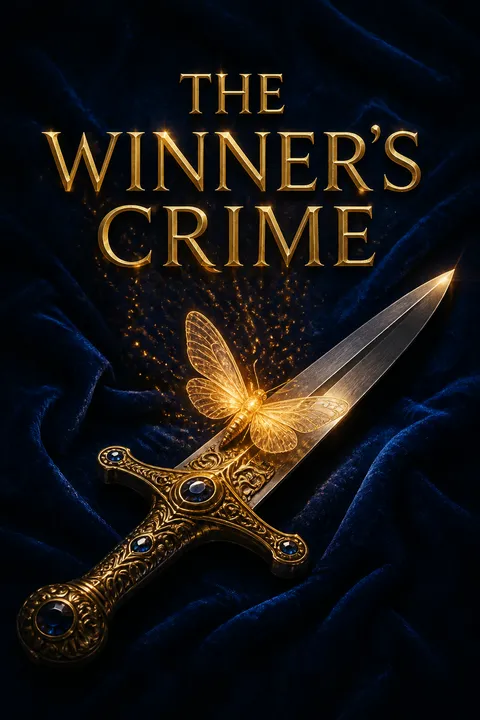


Plot Summary
A Wedding Set by the Emperor
An official letter arrives in Herrani script, and Kestrel, the Valorian general’s daughter, cuts her hand opening it because she hopes it came from Arin. Instead, the new agriculture minister has written.
Kestrel is now imperial ambassador to Herran, the territory she helped free from direct occupation by persuading the emperor to accept self-government. The bargain’s private price was her engagement to Prince Verex, a marriage she hopes to delay. The emperor fixes it for Firstsummer and praises her usefulness, making clear he expects her to help rule.
In Herran, Arin receives an invitation to the engagement ball. Tensen, his agriculture minister and trusted adviser, urges him to attend, both to investigate a silent palace contact and to protect Herran’s vulnerable harvest.
Kestrel’s predicament begins with a bargain that is simultaneously an act of mercy and a tool of statecraft. She has secured a measure of freedom for Herran, but the emperor converts that achievement into personal ownership through her engagement. Her practiced political intelligence cannot protect her from the emotional cost of the deal, especially because Arin does not know what she sacrificed. The emperor’s praise is therefore not simple approval. It is a method of binding Kestrel to his future while testing whether she can become a ruler who treats people as pieces.
Thrynne's Bloodied Warning
The emperor sends Kestrel with the captain of the guard to a prison cell, where a Herrani servant named Thrynne is being tortured for overhearing a private meeting. The captain uses Kestrel’s presence to test whether she can tolerate the violence expected of a ruler. Thrynne recognizes her and tries to pass on an urgent message, but Kestrel cannot understand what he needs Arin to know before he is silenced and dies from his wounds.
The emperor then gives her a coin stamped with the legend of Jadis, a captive warrior who killed her captor with knitting needles. He frames Kestrel as a potential schemer, takes away the dagger her father gave her, and warns her to show no sympathy for Herran or Arin.
The prison turns abstract government into bodily consequence. Kestrel is not merely asked to endorse violence; she is made to watch it and judged for how she responds. Her horror exposes a contradiction in the emperor’s model of leadership: he prizes her intelligence while demanding that she suppress the empathy that gives it moral direction. The Jadis coin offers a seductive lesson in strategic patience, but the emperor controls its meaning. His gift and the confiscated dagger show how he can make apparent favor serve as both instruction and threat.
The Balcony Reunion
Before the ball, Verex resents Kestrel’s place in his father’s plans, yet she helps him practice Borderlands and later guides him to a public victory. At the engagement ceremony, their polite kiss makes the political marriage real.
Kestrel slips away from the celebration and finds Arin waiting on a curtained balcony. He has crossed the sea after nearly staying away, and asks about Thrynne, a missing Herrani servant. Kestrel conceals what happened, afraid the truth would make Arin reject the treaty or expose her bargain.
After Arin leaves, Tensen stops her from returning to the ballroom, recognizing the signs of a compromising encounter. Kestrel tells him about Thrynne and agrees to pass information secretly, using camouflaged moths as signals so her help cannot be traced to Arin.
The ball stages two different kinds of intimacy. Kestrel and Verex perform a public union that neither chose freely, while her meeting with Arin reveals the private attachment the ceremony is meant to bury. She chooses concealment not because she feels nothing, but because she knows Arin would risk the peace to rescue her from the bargain. That judgment is loving and controlling at once. Her alliance with Tensen gives her a route back into political action, but the moth code also makes secrecy the price of helping the person she trusts most.
The Dagger's Red Seal
Tensen tells Arin that Thrynne died after being tortured, but refuses to identify the source of the news. Soon afterward, Arin wanders into a little-used palace corridor and is trapped behind a falling iron gate. A Valorian guard attacks him with a knife and a short sword, slashing his face before Arin kills him with whatever weapons he can seize.
The attacker’s blade is Kestrel’s missing dagger, identifiable by the ruby seal on its hilt. Arin hides the weapon and suspects the emperor arranged the assault, though he tells Tensen nothing about the seal. While Arin recovers from fever and stitches, Tensen hints that his new informant may be Princess Risha, the eastern hostage raised at court.
The attack makes the palace’s political games physically legible. Arin’s scar is inflicted with a weapon that belongs to Kestrel, but the evidence cannot tell him who took it or why. He protects her from suspicion even as he fears she may be implicated, showing how trust persists despite his attempts to discipline it. The face wound also changes his relation to visibility: in the court, he can no longer pass as an unmarked visitor. His injury makes the empire’s violence impossible to keep politely offstage.
The Bookkeeper's Hidden Bets
Kestrel disguises herself as a palace maid and searches the harbor records for the Senate leader’s ship. The ledger says he sailed to the southern isles, but a sailor she beats at cards confirms he also traveled to southern Herran.
Arin separately pays a bookkeeper with his mother’s emerald earring to inspect private wagers on Kestrel’s wedding dress. The Senate leader has bet with unusually precise knowledge, and the palace water engineer has placed a matching wager.
The two clues suggest that the emperor rewards a hidden favor with valuable information. Kestrel’s search leaves her exhilarated by life outside the palace, while Arin’s discovery gives him a reason to believe the court’s apparent frivolities conceal a larger political arrangement.
Both investigators use the court’s appetite for spectacle as cover. Wedding bets seem trivial, and a maid entering the harbor office seems unremarkable, but each provides access to information that formal diplomacy would conceal. Their methods also reveal different costs. Kestrel risks exposure to recover a concrete fact; Arin gives away a treasured family possession because he needs access and certainty. The matching wagers do not solve the conspiracy, but they turn coincidence into structure. In this world, information itself is a form of currency, traded through entertainment and privilege.
The Game Breaks Open
Arin finds Kestrel by a canal after recognizing her servant disguise and the way her hand moves along the railing. He returns her dagger, and she insists she had no part in the attack that scarred him.
They agree to play Bite and Sting for the truth, then move to a crowded tavern where Kestrel can hide from court eyes. Arin proposes that she marry Verex but keep him as a secret lover. She refuses, and he mistakes her answer for rejection of him because of his new face.
During their game, senators celebrate Kestrel’s advice to poison the eastern plainspeople’s horses rather than burn the grasslands. Arin confronts her; she admits it. He calls the deaths caused by the resulting exodus murder, leaves her at the table, and decides to seek an alliance in Dacra.
The game gives their emotional conflict a procedural shape: each move tests what the other is willing to reveal. Yet neither understands the stakes in the same way. Arin hears Kestrel’s admission as proof that she has chosen the empire, while she believes the poisoned horses were the least destructive option available to protect her father and limit civilian deaths. Her refusal of a secret affair is also misread as a judgment of his scar. Their catastrophe comes not from a lack of feeling but from incompatible interpretations of choices made under unequal power.
Arin's Dacran Bargain
Arin enters Dacra illegally, carrying a Valorian dagger, and is captured before he can reach its queen. Her brother Roshar becomes his translator, revealing that the two were enslaved in Valoria at the same time. The queen refuses an alliance until Arin proves Herran can offer more than soldiers.
Roshar explains that their family sent their young sister Risha into the imperial court as a possible weapon, but she has remained there for years. On an expedition to move eastern refugees, a tiger mauls Roshar; Arin saves him and later advises the queen to deny Valoria the plains rather than fight for land the empire can burn again.
Arin builds a portable gun that uses little black powder, demonstrates it, then melts the prototype to force the Dacrans to depend on Herrani production. The queen accepts an alliance.
Arin’s diplomacy succeeds only when he stops asking Dacra to value Herran’s suffering and offers a material reason to cooperate. The portable weapon answers the empire’s advantage in heavy artillery with mobility and scarcity-conscious engineering. At the same time, Roshar’s history complicates the simple opposition between captive and rescuer: both men survived a system that tried to make them instruments. Arin’s counsel about abandoning the plains grows from seeing refugees displaced again. Strategy here is not detached calculation; it is an argument about which losses a people can afford to repeat.
The Cost Comes Home
Kestrel learns that Jess and her brother Ronan never left the capital, despite Jess’s letters claiming the family had gone south. When Kestrel finally confronts her, Jess reveals that she saw Arin leave the engagement ball with glittered lips and understood that Kestrel still loved him.
Ronan, wounded by Kestrel’s earlier choice of Arin over him, joins the military despite her plea that he stay. Meanwhile, General Trajan returns from the eastern front with a grave abdominal wound. Kestrel remains at his bedside, and Verex helps her through the treatment.
The general later asks her to recruit soldiers; Ronan signs her list. He dies in the eastern campaign, and Jess returns Kestrel’s last letter unopened, confirming that their friendship has broken under the weight of what Kestrel concealed.
Kestrel’s losses arrive through relationships that had once made her life feel inhabitable. Jess’s accusation is painful partly because it is accurate: Kestrel’s secrecy has protected her choices while denying her friends the chance to respond to the truth. Ronan’s enlistment turns a signature into a consequence she cannot reverse. At her father’s bedside, she sees tenderness and dependence, but neither repairs the values that keep sending people to war. Verex offers a different form of closeness, grounded in care rather than possession, just as Kestrel’s old bonds fracture.
The Water Turns Against Herran
Kestrel visits the water engineer Elinor and notices her costly hospitality does not match her modest home. The palace physician confirms that Jess uses a dangerous calming medicine, then explains that prolonged exposure can cause shaking.
Later, Arin returns to the capital and tells Kestrel that Herran’s people, including his cousin Sarsine, are growing weak and trembling. Kestrel connects the symptoms to the engineer’s water system and the physician’s medicines: the emperor is poisoning Herran’s water so its people will die before he reclaims the territory.
Arin presses her about the treaty and her choices in the east, but Kestrel cannot answer honestly while her father secretly listens from a hidden chamber behind the music room wall. She denies the bargain and lets Arin leave believing she has rejected him.
The conspiracy becomes visible through a pattern of ordinary details: a wealthy guest, a medicine’s side effects, a familiar symptom reported from Herran. Kestrel’s talent is not simply deduction; it is the capacity to connect administrative systems to lived bodies. Yet the hidden chamber turns the act of knowing into a new danger. Her father’s unseen presence makes her language perform for two audiences, Arin and the state. She sees the truth clearly but chooses another lie, repeating the very strategy that has made her increasingly isolated.
A Letter Written Too Late
After Arin leaves the music room, Kestrel writes a full confession on her sheet music, explaining the treaty, her engagement, and her motives. She gives the letter to Tensen and tells him about the poison in Herran’s water. Her father later assures her that he trusts her, but she cannot know whether he heard everything from the hidden room.
Arin meets Tensen in a coal chamber and learns that Herran must shut off its water and evacuate. Tensen refuses to leave the capital, choosing to keep investigating, while Arin promises to return home and carry the warning. Kestrel goes back to Tensen’s rooms to learn whether he passed on her letter. The emperor opens the door instead, and the captain drags her inside.
The letter is Kestrel’s first attempt to make her inner life legible without managing the listener’s response. It arrives after her spoken denials have already damaged Arin’s trust, which gives the confession a tragic timing: truthful, but unable to repair the moment that required truth. Tensen’s decision to remain in the capital mirrors Kestrel’s earlier choices to accept personal risk for political ends. Arin’s flight is practical rather than romantic. He has to protect Herran before he can settle what Kestrel means to him.
The General's Loyalty
In Tensen’s room, Kestrel sees her father standing beside the dead minister, blood on his sleeve. He has searched Tensen, read her letter, and reported her treason to the emperor. The general says he could not deny what she had done, though Kestrel begs him to remember that she loves him.
The emperor takes her dagger and letter as evidence, then refuses to execute her because he will not punish the daughter of his loyal general in public. Instead, he orders her sent to a labor camp in the northern tundra. He plans to tell the court that Kestrel married Verex in secret, traveled south, and died of an incurable illness. Her father cannot meet her eyes as the captain takes her away.
The betrayal is devastating because it arrives through the relationship Kestrel most hoped would remain exempt from politics. Her father acts according to a hierarchy of loyalties in which truthful service to the empire outweighs private love. The emperor’s sentence makes that hierarchy look merciful while preserving its violence: Kestrel will be erased rather than publicly killed. The false story of her death is not only a cover-up but an attempt to control who may remember her. Her father’s inability to comfort her does not erase his attachment; it shows how thoroughly he has subordinated it.
The Moth Leaves the Wagon
Arin escapes the capital before Valorian warships can trap him. On deck, he throws Kestrel’s dagger into the sea, refusing to carry the weapon that has become a knot of guilt and suspicion, then sails toward Herran with news of the Dacran alliance and the poisoned water.
In a wagon bound north, Kestrel hears a Herrani stable worker outside and slips him one of her hidden masker moths, asking that he deliver it to Arin. Guards catch the worker and search him, but the moth is too ordinary to identify as a message. They question Kestrel, who denies giving anything. She is left shackled and headed for exile, while Arin is already at sea, unaware whether her signal has survived.
The ending withholds reunion and gives each protagonist a different kind of movement. Arin travels toward the political emergency he can still address; Kestrel is transported away from the life she hoped to influence. His discarded dagger marks a refusal to let the emperor’s violence define his bond with her, while her moth preserves a fragile channel of communication. Neither gesture undoes the damage. The novel closes on uncertainty about whether a message can cross the distance between them, leaving the reader with the same problem Kestrel faces: how to act when outcomes cannot be secured.
Analysis
The novel treats political judgment as a problem of incomplete knowledge. Kestrel and Arin are both skilled at reading systems, but their strongest errors occur when they assume that intelligence grants access to another person’s motives. Kestrel hides her sacrifice to keep Arin from destroying the peace she bought; Arin interprets that concealment through the injury of rejection. Each tries to protect the other by controlling what can be known, and each protection becomes a new source of harm.
Power operates through apparently civilized forms: an engagement, a coin, a wedding wager, an engineering contract, a medical dose. These mechanisms allow the emperor to govern bodies without making every act look like force. Herran is first taxed into weakness, then targeted through the infrastructure that should sustain it. Kestrel’s deduction matters because she recognizes that imperial violence can be built into pipes and prescriptions as easily as armies.
The book also complicates the language of honor. Trajan’s code of loyalty is sincere, but it leads him to place the empire above his daughter. Arin’s willingness to sacrifice himself appears morally pure until it risks depriving Herran of its governor and its best chance at alliance. Kestrel’s choices reveal a different danger: she has been taught to calculate the least harmful option, yet the system makes every available choice serve someone’s power. The story does not resolve this tension with a clean victory. It ends with Arin carrying a warning home and Kestrel in chains, still trying to send a message. Their separate movements leave open the central question of whether people can change an unjust order without reproducing its logic.
Review Summary
The Winner's Crime receives mostly positive reviews, with readers praising its political intrigue, character development, and heart-wrenching plot twists. Many find Kestrel's strategic mind and complex decision-making compelling. The romance between Kestrel and Arin is a source of both frustration and anticipation for readers. Some criticize the lack of communication between characters and the abundance of lies. Overall, reviewers consider it a strong sequel that sets high expectations for the final book in the trilogy.
People Also Read








Characters
Kestrel
Strategist under constraintThe daughter of Valoria’s commanding general, Kestrel is trained to read motives, calculate risk, and win without appearing to struggle. Her love of music gives her a private language that resists the military identity her father expects her to adopt. She is neither simply rebellious nor simply compliant: she can make difficult political choices, but often hides their emotional cost behind wit and careful omissions. Her attachment to Arin challenges the hierarchy that shaped her upbringing, while her loyalty to her father keeps pulling her back toward imperial power. Kestrel’s central psychological conflict is whether responsibility means mastering a corrupt system from within or refusing the bargains that make her useful to it.
Arin
Reluctant rebel governorArin governs Herran after years of slavery and rebellion have made both freedom and authority feel compromised. He is intensely loyal to his people, quick to act, and prone to treating self-sacrifice as the cleanest answer to a difficult choice. His history with Kestrel unsettles his political judgment because he trusts her even when evidence and experience tell him to be cautious. A former blacksmith and hidden singer, he carries practical skill alongside a private tenderness he often tries to deny. Arin’s deepest struggle is learning to distinguish loyalty from self-erasure, and hope from the story he wishes were true.
The Emperor
Master of imperial gamesValoria’s emperor rules through ceremony, favors, surveillance, and carefully timed humiliation. He presents himself as a rational steward of the empire, but his generosity is designed to make recipients reveal what they want and what they fear. He values Kestrel’s intelligence because it can strengthen the state, yet expects her to accept cruelty as part of leadership. His treatment of Verex shows that he uses family relationships as instruments of rule. The emperor is dangerous not because he is unpredictable, but because he makes coercion appear reasonable, graceful, and sometimes even affectionate.
General Trajan
Father shaped by warKestrel’s father is Valoria’s celebrated general, a disciplined commander who measures duty through courage, obedience, and military success. He loves his daughter, but has struggled to understand a child whose defining talent is music rather than combat. His approval matters profoundly to Kestrel because he has rarely offered affection in language she can easily trust. Trajan is not merely a soldier who serves the emperor; he has built his identity around an honor code that can conflict with personal tenderness. His relationship with Kestrel reveals how love may be genuine while still being governed by institutions that demand sacrifice.
Verex
Unwanted imperial heirPrince Verex is the emperor’s son and heir, accustomed to being judged as a disappointment beside his father’s authority. His resentment of Kestrel’s political elevation gradually gives way to a guarded, humane friendship. He enjoys games and has a strong interest in medicine, pursuits that expose a gentler self his father has discouraged. Verex recognizes how court power can make a person’s private attachments into liabilities, especially where the eastern princess is concerned. He is neither an easy romantic partner nor a simple political obstacle; his decency offers Kestrel a different model of closeness.
Tensen
Aged Herrani observerTensen is Herran’s elderly agriculture minister, a former actor whose mild manner conceals sharp attention to people and political theater. He advises Arin, understands the empire’s appetite for information, and uses the court’s assumptions about age and rank to his advantage. His humor softens difficult counsel without making him naïve about danger. Tensen believes that loyalty requires taking risks for Herran, but he also sees how Arin’s readiness to sacrifice himself can become destructive. He functions as mentor and strategist, while his own history gives him a practiced understanding of the roles people perform.
Jess
Kestrel's wounded friendJess is Kestrel’s closest friend from their childhood in Herran and Ronan’s sister. She is perceptive, affectionate, and proud of her family’s former home, but her health and memories of the rebellion leave her carrying pain Kestrel cannot simply talk away. Jess wants loyalty to be visible and mutual, not hidden behind political explanations. Her friendship with Kestrel is intimate enough that silence and absence become meaningful acts. She reveals the emotional cost of Kestrel’s secrecy and the difficulty of asking a harmed friend to understand choices made without her.
Ronan
Proud wounded suitorRonan is Jess’s older brother and a young Herrani lord whose affection for Kestrel predates her attachment to Arin. He is witty, capable of warmth, and proud enough to mask hurt with teasing or risky bravado. Kestrel remembers him as someone who once welcomed her into his family, which makes his later distance especially painful. His choices reflect the limited paths available to young Valorians and Herrani nobles under an empire that demands military service. Ronan’s presence links Kestrel’s private romantic decisions to the lives of people around her.
Risha
Eastern court hostageRisha is an eastern princess taken as a child and raised in the Valorian palace, where she has learned to navigate life as both a treasured court figure and a captive. Her closeness to Verex gives her a rare place of personal trust within the imperial household. She is composed and observant, with an identity shaped by the distance between the country she came from and the home she has made in exile. Risha’s presence exposes the empire’s habit of turning people into political leverage, while her quiet choices suggest that survival can require more than simply obeying either side.
Roshar
Scarred Dacran princeRoshar is the Dacran queen’s brother, a prince whose face bears the violence of his captivity in Valoria. He uses humor, threats, and theatrical bluntness to keep others from deciding what his injuries mean. His history connects him to Arin, who was enslaved in the same country, but their shared past does not make them immediately trusting allies. Roshar is protective of his family and resentful of choices made in the name of political necessity. His teasing manner often conceals grief, guilt, and a desire for someone to acknowledge what happened without reducing him to a victim.
Sarsine
Arin's steadfast cousinSarsine is Arin’s cousin and an important presence in Herran’s civic life. She speaks plainly when Arin’s grief or fixation keeps him from attending to the country’s needs. Her concern for him is practical rather than sentimental: she wants him to remain present, make decisions, and understand what his choices cost other people. Through Sarsine, the novel shows the strain of governing a poor territory whose people must keep rebuilding after war and taxation.
Deliah
Herrani palace dressmakerDeliah is a Herrani dressmaker working in the imperial palace after the formal end of slavery. Her skill gives her access to Kestrel’s private surroundings, while her quietness helps her observe without attracting attention. She understands that clothing can carry status, money, and political information, and she is careful about what she shares. Deliah’s work links the intimate world of gowns and fittings to the wider systems of surveillance and allegiance operating through the court.
Thrynne
Palace servant and spyThrynne is a Herrani servant who gathers information inside the imperial palace. His work brings him dangerously close to the emperor’s private business, and his attempt to pass on a warning reveals how much resistance depends on people who are easy for the powerful to overlook.
Elinor
Imperial water engineerElinor is the engineer responsible for major waterworks in Valoria and Herran. Practical and proud of her expertise, she regards imperial infrastructure as evidence of order and civilization. Her professional history in military campaigns has shaped her loyalties and her view of the people the empire conquers.
Cheat
Rebel leader and handlerCheat is a leader in the Herrani resistance who recruits enslaved people for covert work. He spots desire and vulnerability quickly, then turns both into tools for the rebellion. His relationship with Arin mixes mentorship with manipulation, leaving Arin with complicated memories of how loyalty was cultivated under oppression.
Enai
Kestrel's Herrani nurseEnai cared for Kestrel when she was young and introduced her to Herrani stories, gods, and customs. Her lessons survive in Kestrel’s memory as a way of interpreting events that Valorian logic dismisses, including the hidden meanings carried by money, beauty, and chance.
The Palace Physician
Healer to the imperial courtThe palace physician treats members of the imperial household and develops concentrated medicines for specific uses. He is technically skilled and confident in weighing a treatment’s benefits against its risks. His work occupies the boundary where care, authority, and the control of bodies meet.
Maris
Senator's sharp-tongued daughterMaris is the daughter of the Senate leader and a young woman navigating the marriage expectations imposed on Valorian aristocrats. She uses gossip and social performance to protect her status, though she is more observant than her teasing manner first suggests.
Plot Devices
The Jadis Coin
A lesson disguised as favorThe emperor gives Kestrel a coin marked with the sign of Jadis, a legendary captive who used apparent domesticity to conceal a weapon. The coin lets him define Kestrel’s political situation as a test of cleverness and loyalty, while implying that she may be watched for signs of betrayal. Its two-sided design also echoes the hidden meanings attached to money and negotiation in Herrani belief. The device connects political power to narrative control: the emperor does not merely offer Kestrel an object, he supplies a story about what kind of person she should become.
Masker Moths
Messages hidden in plain sightMasker moths change color to blend into their surroundings, even after death. Kestrel uses this natural camouflage to leave signals for Tensen on a painting in the palace gallery, where a courtier is unlikely to see significance in a common pest. She later hides a moth in her sleeve and attempts to send it toward Arin. The insects turn concealment into a communication system, but their usefulness depends on other people overlooking what looks ordinary. The device reflects the danger of covert resistance in a palace where servants and objects are constantly present yet rarely noticed.
Favor-Keeping Threads
A code made from old debtsIn the slave quarters, Herrani laborers once tracked reciprocal favors through colored strands wound into a communal knot. Arin transforms that practice into a coded message system, assigning threads to people and knots to letters so news can travel openly as decorative trim. The method grows from a survival economy in which people who own nothing still depend on one another. It also expresses Arin’s political imagination: a tool used to record vulnerability becomes a way to coordinate resistance across borders. Its apparent simplicity is what allows it to evade the empire’s expectation that messages must look like messages.
Bite and Sting
Strategy played through silenceThe tile game gives Kestrel and Arin a shared language for reading risk, bluff, and intention. Its hidden tiles make every move an interpretation of incomplete evidence, much like their relationship and the political bargains surrounding them. At court, Kestrel uses her understanding of games to help Verex win a public match. Later, she and Arin stake truth on a game, but their personal assumptions distort what each believes the other has revealed. The device is not simply a metaphor for politics. It gives characters a concrete way to act on uncertainty, while showing that intelligence cannot guarantee accurate knowledge of another person.
The Portable Cannon
Small firepower against empireArin’s handmade weapon adapts cannon power to a compact barrel that can be carried and used with far less black powder than Valorian artillery. It is difficult to build accurately, and the first successful shot bruises Arin, but the demonstration proves that Herran can offer Dacra more than manpower. Arin melts the prototype after firing it so the Dacran court cannot copy the design without Herrani knowledge. The weapon converts his practical craft into diplomatic leverage and offers a counter to Valoria’s overwhelming supply of heavy guns. It also changes the alliance from a plea for protection into an exchange of capability.
The Winner's Trilogy Series

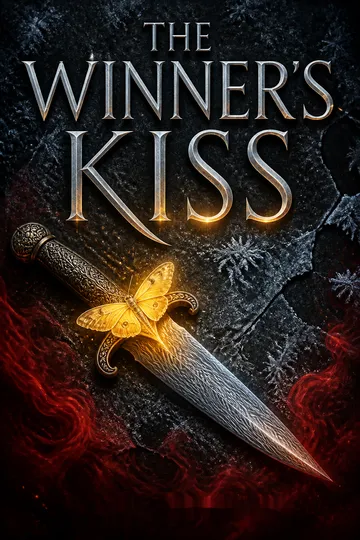
Download PDF
Download EPUB
.epub digital book format is ideal for reading ebooks on phones, tablets, and e-readers.








