

Plot Summary
The Strait Ambush
Arin reaches Herran with evidence that Valoria has poisoned the aqueduct, weakening the city before an invasion. He persuades the Dacran commander Xash to hide the allied fleet around Ithrya Island, where spring currents will drive the Valorian ships into their guns. The ambush succeeds. Arin fights with frightening detachment, then sends the captured captain toward the emperor with a message before killing him anyway.
Victory does not quiet him. He remembers the invasion that killed his parents and sister Anireh, and his childhood failure to leave his locked room to help them. The god of death, whose voice Arin believes he hears, turns that guilt into a promise of revenge, even as Arin struggles to separate the god's will from his own.
Arin's victory is tactical, but its emotional logic is retaliatory. The child who survived by obeying has become a commander who can impose his will on an enemy fleet, yet the transformation does not erase his old helplessness. Instead, he borrows the god of death's voice to make violence feel like destiny rather than choice. His decision to kill the captain after offering mercy shows how thoroughly fear of appearing weak has fused with revenge. The battle establishes both his competence and its cost: control over others cannot give him control over the memory that drives him.
The Northern Sentence
Kestrel travels north in chains after her father discovers the letter in which she confessed to spying for Herran and loving Arin. At the sulfur camp, a guard cuts her dress into makeshift trousers, then drugs the prisoners' meals to make them work by day and sleep at night. Kestrel tries to refuse the doses and save her strength, but hunger, exhaustion, and withdrawal erode her memory.
She draws the Moth symbol in the dirt to remind herself who she is. When Prince Verex secretly sends her a gate key, she waits several days, strangles the guard who opens her cell, and knocks out a sentry. She escapes into the tundra, but guards catch her and whip her until she begs for the drug that will make her forget.
The camp attacks Kestrel by separating bodily labor from conscious consent. The drugs make her productive while hollowing out the very capacities that might let her resist, so survival becomes an exhausting struggle to preserve a self she can no longer reliably recall. Her drawn moth is a small act of authorship, not a practical escape plan, but it gives her a name to return to. Verex's key offers hope without rescue: Kestrel must still decide when to use it and bear the consequences alone. The failed escape shows how a system can punish resistance by making surrender feel like relief.
Allies at Herran's Harbor
After the sea battle, Arin adds the captured ships to his fleet and helps locate the poison device in a mountain tunnel. The city switches to rainwater until the aqueduct clears. His cousin Sarsine, recovering from the poison, agrees to oversee production of his miniature cannon.
Dacran reinforcements arrive with Prince Roshar, who outranks both Arin and Xash and quickly challenges Arin's authority. They debate where the Valorian general will land. Arin suspects the western cliffs, while Roshar favors the broad beach at Lerralen.
A Herrani messenger arrives with a personal message, but Arin dismisses him, believing the war cannot wait. He rides toward the cliffs with a small group of healthy villagers, choosing to risk the Dacran alliance rather than ignore the possibility of an attack.
The alliance gives Herran military strength but introduces a new problem: the people defending the country do not share equal authority or equal knowledge of its terrain. Arin's insistence on the cliffs is strategic, yet it also reflects his need to prove that his judgment matters beside Roshar's rank. The new cannon makes technical invention a form of political leverage, while Sarsine's role shows that recovery need not mean passivity. Arin's dismissal of the messenger is a consequential misreading of priorities. He correctly sees the coming invasion, but treats personal knowledge as irrelevant until the war forces him to reconsider.
Rangers on the Cliffs
The first day at the cliffs brings no ships, but Arin returns the next morning and spots Valorian Rangers climbing in pairs. He waits until their ropes anchor them at the top, then leads the Herrani against them, cutting ropes and killing the climbers before they can flank Roshar's force at Lerralen. The eastern army repels the beach landing, though Roshar berates Arin for arriving late.
Arin finally hears the messenger. A prisoner in a northbound wagon had given him a masker moth and spoken in fluent Herrani. Soon Roshar reports that Kestrel has supposedly died of disease in the southern isles. The false story clashes with the messenger's account, and Arin begins to suspect that the prisoner was Kestrel, still alive in the tundra.
Arin's decision to trust his reading of the cliffs saves the defense from being trapped between two forces, but the victory carries an intimate cost: he has delayed hearing the message that could have changed everything. The messenger's fragment is powerful because it is both inadequate and unmistakable. Language, a hand, and a moth become evidence against an official story of death. Arin's developing suspicion repeats his earlier habit of imagining Kestrel's hidden motives, but this time it leads toward action rather than fantasy. The scene makes attention itself a moral skill: he must learn to hear the person behind the military noise.
A Stranger's Rescue
Arin questions the messenger again and learns that the prisoner wore a blue sleeve and bore a star-shaped mark near her thumb. He concludes that the official report of Kestrel's death is a cover, borrows Roshar's numbing ring, and travels north with the messenger Ilyan. Disguised with sulfur, Arin joins the prisoners in the mines, where the morning drug makes him euphoric and careless.
He resists its pull, finds Kestrel in the women's block, incapacitates guards, and unlocks her cell. Her mind is intact, but she does not recognize him. As they flee, wolves have killed Ilyan and scattered the horses. Arin calls until Kestrel's horse Javelin returns with two mares, giving the pair a chance to cross the tundra.
The rescue reverses the roles that once defined their relationship. Arin can get Kestrel out of the camp, but he cannot give her back the history that would make him familiar. Her amnesia strips away the emotional authority he might have claimed as her rescuer, forcing him to meet her as a person who owes him nothing. The drug also exposes how little Arin's strategic control protects him from the camp's machinery. Javelin's return provides practical salvation and a small continuity that Kestrel can still feel, even when her memories fail. The scene makes rescue a beginning, not a restoration.
Home Without Memory
On the journey south, Kestrel distrusts Arin and blames him for her imprisonment. She knows only that her body recognizes him and that he once owned her, which makes his claim of friendship difficult to trust. When they reach Herran, she accepts care from Sarsine, Arin's cousin, but recoils from Arin and strikes him when he presses her to remember.
Sarsine explains that Kestrel helped the rebellion, negotiated Herran's treaty, and secretly warned Arin's spymaster about the poisoned aqueduct. Arin cleans Kestrel's defiled family villa and reforges his father's sword into a dagger for her. As Kestrel recovers from withdrawal, she begins to recognize that her lost history contains both courage and choices she may not be ready to face.
Kestrel's recovery is not a simple return to a former identity. Other people can tell her what she did, but their accounts cannot make those actions feel like hers. Arin's urgency to restore the past is partly care and partly his wish to be recognized, a desire that risks turning her memory into something he believes he owns. Sarsine's steadier presence allows Kestrel to receive facts without being forced to perform gratitude. Arin's cleaning and the forged dagger are reparative gestures, but neither can undo the violence of the villa or the prison. Material care becomes meaningful precisely because it does not demand immediate emotional repayment.
The Queen's Arrival
As Kestrel regains pieces of her past, she learns that her former friend Jess believes Arin changed her, and that Arin himself carries blame for losses Kestrel cannot yet fully remember. She and Arin begin speaking honestly, but she cannot promise him the love he wants.
Their fragile closeness is tested when Queen Inishanaway arrives to command the Dacran presence in Herran. Kestrel recognizes her as Risha, the eastern princess once held at the Valorian court, and senses that the alliance may cost Herran its independence.
Arin leaves by sea to strike Valorian supply routes. A storm throws him overboard, but he reaches the ship again and captures a Valorian vessel. When he returns, Kestrel urges him to consider marrying the queen for Herran's security; he refuses.
Kestrel's amnesia makes political judgment arrive before emotional certainty. She can see the danger in Dacra's alliance even while she struggles to name what Arin means to her. The queen's arrival makes intimacy inseparable from sovereignty: a private bond between rulers could decide who owns Herran. Arin's refusal to marry for political advantage expresses personal integrity, but it also risks weakening the coalition on which his people depend. His storm crossing sharpens the pattern of his self-endangerment, which Kestrel experiences as both strategic necessity and intimate threat. Neither can yet separate loving someone from trying to protect them.
The House Remembers
Before Arin's army marches south, Kestrel spends the night in her father's empty villa and recovers the truth: General Trajan read her confession to Arin and gave it to the emperor.
She remembers that Arin had visited her music room, where her father was secretly listening, and that she tried to warn Arin without exposing her father's presence. Arin leaves for war before she reaches their meeting place. Kestrel rides after him without supplies, guessing where his forces will go.
She finds him at camp, admits that her father caused her imprisonment, and explains how she recovered the memory. Rather than return to safety, she asks Roshar to enlist her. Arin fears for her, but she insists on making her own choices and takes a place in the campaign.
The villa turns memory into an encounter with material evidence: music, rooms, and familiar smells let Kestrel approach what the prison had made unbearable. Her father's betrayal is especially painful because it joins political judgment to intimate rejection. She does not recover a clean heroic self; she recovers her own complicity, fear, and longing alongside the fact of what was done to her. Riding after Arin without provisions is reckless, but it is also an assertion that protection cannot mean deciding for her. Her enlistment forces both lovers to confront the difference between care and control.
The Errilith Ambush
Near Errilith, Kestrel identifies the Valorian scout network's relay station and proposes impersonating a captured scout. Roshar fakes a torture to make the real scout reveal where she reports. Kestrel reaches the station, but its officer recognizes that her accent does not fit his memory of the local scout.
She breaks his lamp, fights him in the dark, kills him, and sends a coded report using counters she finds in his tent. Arin and Roshar gamble that the general will believe it.
He marches toward Errilith, where Arin has rigged trees with ropes and weakened trunks. When the army enters the road, the trees crash into its ranks and Kestrel's gunners attack. Kestrel leads soldiers to ignite supply wagons, destroying black powder and forcing the Valorians to retreat.
Kestrel wins by turning the enemy's information system against itself, but the plan depends on her willingness to accept uncertainty and violence. Her success at the relay station is not effortless: she kills an officer who had treated the scout as a person, and she must live with that fact even as the mission succeeds. Arin's falling trees convert the landscape into a weapon, while the staged report makes the general choose the route the rebels prepared. The victory is therefore collaborative, not a triumph of one brilliant mind. Kestrel's expertise matters because Arin and Roshar trust her judgment even when the gamble could expose them all.
Lerralen's Costly Loss
The Valorians regroup and attack at Lerralen with a much larger force. Their cannons devastate the Dacran gunners, and the troops that reach shore press the allied line back. Kestrel rides into the fighting to find Arin, but a Valorian officer drags her from Javelin.
She escapes from beneath his body and returns to Arin just as he is struck down. Kestrel kills the attacker and refuses to leave Arin behind, tying herself to him as she gets him onto Javelin. The allies lose the beach and retreat.
While Arin recovers, Kestrel and Roshar learn that the emperor has moved to Sythiah Manor. Kestrel and Arin secretly enter the Valorian camp and ignite the remaining powder stores before escaping with the help of Verex, the prince she was meant to marry.
The defeat at Lerralen dismantles the fantasy that intelligence can always overcome numerical force. Kestrel and Arin survive, but their survival is inseparable from the retreat and its losses. Her refusal to abandon the unconscious Arin repeats his earlier rescue of her, yet now she acts without the certainty that he can repay or even remember it. The later destruction of the powder stores is a tactical answer to the defeat, not a reversal of it. Verex's aid complicates the simple division between enemies and allies: loyalty can persist across national lines, especially when political institutions have failed the people caught inside them.
A Bargain with Risha
After the powder sabotage, Risha arrives from the Valorian court, having escaped her captivity. She offers the emperor's location in exchange for protection for Verex, whom she loves, and reveals that she will not kill him herself. The offer could be a trap, but Kestrel believes the emperor has gone to the luxurious Sythiah estate because its beauty appeals to him.
She persuades Arin and Roshar to take the risk. Kestrel prepares a game of Bite and Sting, marking four tiles with poison from an eastern worm, while Arin arranges a separate ambush for the approaching Valorian army. Roshar assigns Kestrel, Risha, and five Dacran fighters to infiltrate the manor. Arin must remain with the army, trusting Kestrel to carry out the plan.
Risha's bargain puts private attachment at the center of military strategy. She asks for Verex's safety, not power for herself, and her request forces the allies to consider what a victory would mean for the people they claim to protect. Kestrel's estimate of the emperor rests on intimate knowledge of his appetite for beauty and control, a form of intelligence that conventional military reports cannot provide. The plan divides the protagonists between two fronts: Kestrel must gamble inside the manor while Arin holds the field. Their trust is tested not by the absence of fear, but by acting without being able to supervise one another.
Two Traps, One War
At Sythiah, Risha and Kestrel's small team silently reaches the emperor's rooms, where the personal guard attacks them. The emperor recognizes Kestrel and agrees to play Bite and Sting, convinced she has come to kill him.
Across the countryside, Arin and Roshar bait the Valorian army onto a muddy road narrowed by sharpened stakes and prepared powder. Kestrel lets the emperor inspect the tiles, then plays slowly as he taunts her with what he will take if he wins. Arin's forces spring their trap, but the emperor's army remains dangerous, and the game continues as the battle shifts.
Verex is nearly killed in the fighting until Roshar throws himself into the arrow's path. Kestrel's gambit and Arin's defense must hold long enough for the war's two decisive contests to reach their endings.
The parallel structure makes strategic time the central resource. Kestrel prolongs the game to keep the emperor occupied, while Arin's road defenses delay a larger army; each buys the other minutes without knowing whether the other is succeeding. The emperor's taunts are an attempt to regain control by making Kestrel imagine herself as a possession. She answers with patience rather than visible bravado. Roshar's rescue of Verex reveals the emotional cost of the alliance's abstract calculations: even a prince can become a vulnerable body in the mud. The scene asks whether political survival can be won without sacrificing the people who give it meaning.
The Emperor's Last Game
Kestrel loses the game, revealing four spiders against the emperor's four tigers, but the result was never her real wager. He has handled the four marked tiles, and the poison takes hold. As he realizes she has deceived him, Kestrel confirms that she came to kill him.
On the battlefield, Arin defeats General Trajan and severs his sword arm. He raises his blade for the killing stroke, but the memory of Kestrel's love for her father stops him. Instead, Arin uses Trajan's baldric as a tourniquet.
The emperor dies, and the Valorian forces surrender after their command and supply lines collapse. Kestrel's decision to poison the emperor and Arin's decision to spare her father end the war through two different refusals: one of the emperor's control, the other of revenge without limit.
The climax separates victory from moral certainty. Kestrel wins time rather than the game, using the emperor's confidence in his own skill to make him touch the poison. Arin, by contrast, gets the physical victory he has pursued since childhood and then refuses its final, irreversible act. His mercy is not forgiveness, nor does it excuse Trajan's betrayal; it is a limit he chooses to place on his own vengeance. Together, the decisions reject the emperor's logic that people are pieces to be arranged or discarded. Winning the war requires deception and killing, but the survivors still have choices about what kind of power they will exercise.
A Country Kept
After the surrender, Arin finds Kestrel's unsent letter to him in Trajan's belongings. It contains the confession Arin had missed before she was sent north. Kestrel visits her father in the healers' tent, asks why he kept it, and refuses his request for her dagger; she still loves him, but will not pretend his betrayal can be repaired quickly.
Verex and Risha leave to build a life beyond the imperial court. At the victory feast, Roshar publicly acknowledges that Dacran law could give him claim to Arin's possessions and Herran, then renounces that claim before both peoples. The army returns to the city. Kestrel and Arin remain together, and the closing scene brings them to her piano, where she invites him to sing with her.
The resolution refuses to treat political victory as a cure for private injury. Kestrel's letter restores the history Arin lacked, but it cannot restore the moment when he could have understood her before her imprisonment. Her refusal to give Trajan the dagger preserves a boundary while leaving open the possibility of future contact. Roshar's public renunciation matters because Herran's independence is secured through an explicit choice, not merely through gratitude or military necessity. The return to music gives the ending a modest scale: after war has made bodies and countries into instruments, Kestrel and Arin choose a shared act that depends on listening.
Analysis
The novel makes memory a contested territory. Kestrel's drug-induced amnesia does not simply remove information; it separates her bodily knowledge from her conscious account of herself. She can trust a horse, a piano, or the shape of a familiar room before she can trust the stories other people tell about her. That gap complicates the romance: Arin knows the person she was, but his knowledge can become a claim over the person she is now. Their intimacy becomes ethical only when he accepts that remembering cannot be demanded.
The political conflict likewise refuses a clean division between private feeling and public power. Kestrel's father loves her, yet his allegiance to the empire and his own code allows him to betray her. Arin seeks revenge for his murdered family, but Kestrel's history makes killing Trajan more than a military decision. The two protagonists discover that personal injury does not automatically produce moral clarity. Their choices matter precisely because each is made under pressure from grief, loyalty, and the prospect of further violence.
Games and strategies are the book's recurring language for control. The emperor treats people as pieces, Kestrel studies the rules well enough to deceive him, and Arin turns roads, trees, ships, and weather into tactical instruments. Yet the ending distinguishes cleverness from domination. Kestrel wins by exploiting the emperor's certainty, while Arin refuses to make revenge the only possible conclusion. Their victories are not innocent, and the book does not pretend that love repairs what war has damaged. Instead, it locates hope in the smaller acts that follow: a country publicly left its own, a father whose forgiveness cannot be rushed, a friend allowed to leave, and two people choosing to make music together.
Review Summary
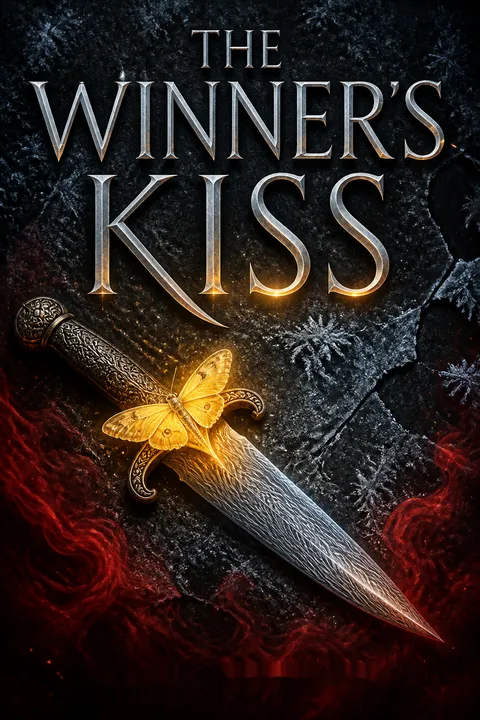
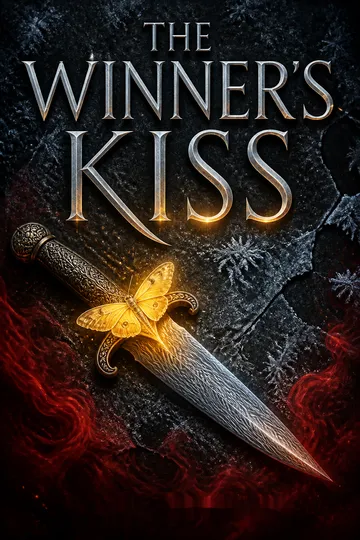
The Winner's Kiss concludes the trilogy with high praise from readers. Many found it a perfect, emotional ending that exceeded expectations. Kestrel and Arin's character development and relationship growth were highlights. The writing style, plot twists, and side characters like Roshar were widely appreciated. Some readers felt the pacing was off or disliked certain plot elements, but overall the book was well-received as a satisfying conclusion to a beloved series.
People Also Read





Characters
Kestrel
The strategist in silkKestrel is a Valorian general's daughter whose sharp intelligence is often mistaken for coldness. She reads people and situations as carefully as she studies a game board, and she is skilled at making an opponent underestimate what she has noticed. Music, especially the piano, gives her a form of expression that does not depend on political performance. Her loyalty is complicated by the empire that raised her and the people it conquered. She wants to choose her own life, yet the costs of those choices are real, and her pride can make self-sacrifice feel like proof of love. Her central tension is between controlling how others see her and risking the vulnerability of being known.
Arin
The rebel with a god's voiceArin is the Herrani leader whose strategic brilliance helps his country resist Valorian rule. As a child, he survived the invasion that killed his family, and the memory leaves him prone to self-blame and drawn to revenge. He believes the god of death speaks to him, a belief that gives his survival a sense of meaning while also making violence feel ordained. His tenderness is expressed through practical acts: repairing, forging, tending animals, and trying to make a home safe. With Kestrel, he must face how easily longing turns into projection. He wants to be trusted and loved, but must learn that devotion does not give him the right to decide what another person should risk.
Roshar
The irreverent eastern princeRoshar is a Dacran prince and Arin's friend, famous for his teasing, theatrical confidence, and scarred face. He uses humor to conceal how much he observes, and his apparent selfishness can serve as both armor and political strategy. As a commander, he understands the value of spectacle and public loyalty, but he also knows that alliances are made from competing interests. His friendship with Arin is unusually candid, though each man sometimes hides fear behind jokes or authority. Roshar's care is practical and sometimes manipulative, which makes him both a source of support and a person Arin must learn to question.
Sarsine
Arin's steady cousinSarsine is Arin's cousin, a survivor of Valorian conquest, and one of the first people in Herran to recover from the poisoned water. She is perceptive about Arin's emotional habits and willing to challenge him when grief makes him reckless. Her care for Kestrel is initially complicated by the history of occupation, but she makes room for Kestrel's recovery without demanding that she feel grateful or remember on command. Sarsine's competence is quiet and practical: she can organize work, tend a sick person, and tell a loved one an unwelcome truth. She represents continuity in a household shaped by loss.
General Trajan
Kestrel's soldier fatherTrajan is the highest-ranking Valorian general and Kestrel's father. He is disciplined, strategically gifted, and devoted to a personal code of honor that can become rigid when his authority is challenged. He has shaped Kestrel's education in military history, tactics, and self-control, while also hoping she will fulfill ambitions he has chosen for her. Their bond carries genuine affection, but it is strained by the distance between his ideal of a dutiful daughter and Kestrel's independent judgment. Trajan is neither simply a father nor simply a military adversary; the tension between those roles is central to how Kestrel understands loyalty.
Verex
The reluctant Valorian princeVerex is the Valorian crown prince once expected to marry Kestrel. He is often underestimated because he appears hesitant and physically unmartial, but he is observant, kind, and capable of quiet acts of courage. His affection for Kestrel is grounded in friendship rather than possession, and he offers help without assuming that she owes him a future. He is also connected to Risha, whose fate complicates his position at court. Verex's decency does not make him politically powerful, but it gives Kestrel a rare relationship in which care is not a demand.
Risha
The eastern princess in exileRisha is Roshar's younger sister, a Dacran princess raised for years at the Valorian court. She is controlled, perceptive, and formidable with a blade, but her self-possession protects old anger at the family decisions that placed her in danger. Her connection to Verex gives her a reason to negotiate across enemy lines, while her relationship with Roshar remains marked by unresolved harm. Risha is not simply a political token or a gifted fighter; she insists on being treated as someone who can choose what risks to take and what loyalties to keep.
Queen Inishanaway
Dacra's commanding queenInishanaway, often called Inisha by those close to her, is Roshar's sister and the ruler of Dacra. She is politically astute and expects an alliance to serve her country, not merely the personal hopes of its partners. Her arrival in Herran makes the imbalance between the allied powers impossible to ignore. She carries authority with a composed reserve, and her relationship with Arin has both political and personal dimensions. Kestrel recognizes that the queen's motives cannot be reduced to romance or conquest.
Emperor Lycian
The empire's game-makerLycian is Valoria's emperor, a patient political operator who enjoys strategy, beauty, and the power to shape other people's choices. He sees courtship, treaties, and war as parts of the same contest, and his manners can make coercion sound like generosity. His longstanding friendship with Trajan gives the emperor influence over Kestrel's family life as well as the empire's military decisions. Lycian's confidence rests on believing that every person can be turned into a piece in a game he controls.
Tensen
Arin's spymasterTensen is Arin's experienced spymaster, a trusted source of information whose choices shape what Arin believes about the imperial court. He values secrecy as a form of protection, especially for informants who could be killed if identified. His judgment is difficult for Arin to assess because loyalty and concealment sometimes point in different directions. Tensen represents the moral cost of intelligence work: a useful secret may save lives while still damaging trust between allies.
Xash
The eastern fleet commanderXash commands the Dacran fleet sent to aid Herran. Experienced and proud of his authority, he doubts Arin's age and naval judgment before seeing the young leader's plan tested. Their early conflict reflects the strain of combining military expertise with political command. Xash is not an enemy of the alliance, but he expects a commander to earn respect through sound decisions.
Ilyan
The road's reluctant messengerIlyan is a Herrani horse keeper who carries news from a prisoner on the road to the tundra. He has no military rank, but his willingness to travel far from home makes his small piece of information consequential. His practical account gives Arin evidence that official reports may be false.
Anireh
Arin's lost sisterAnireh is Arin's older sister, remembered as tall, imperious, and fiercely present during the Valorian invasion. Her final attention to her frightened younger brother becomes part of the memory he revisits when he judges his own courage. She remains a defining presence in his grief.
Jess
Kestrel's estranged friendJess is Kestrel's close friend from Valoria, someone whose trust is damaged by Kestrel's political choices. Her absence weighs on Kestrel as memory returns, because affection does not erase the hurt between them. Jess represents the personal cost of choosing against the empire in which they grew up.
Ronan
A friend lost to rebellionRonan is a friend whose death is connected to the violence of the Herrani rebellion. Kestrel's memory of him returns in fragments, restoring the grief she had already endured. His story reminds her that political victories are made from individual lives.
Cheat
The auctioneer of slavesCheat is the man who controls the slave auction where Kestrel and Arin first encounter one another. He uses the institution of slavery for his own advantage and becomes an early reminder that personal bargains take place inside systems of coercion.
Deliah
The Herrani dressmakerDeliah is a Herrani dressmaker who helps Arin in the Valorian capital. Her work and access place her near the boundary between ordinary survival and political resistance, where small acts of assistance can carry serious risks.
Plot Devices
The god of death
A voice for revengeArin believes the god of death speaks inside his mind, advising him through battle and giving spiritual shape to his survival. The voice can sound protective, intimate, or hungry for violence, and Arin's relationship with it shifts as he confronts his childhood guilt and desire for vengeance. Because the narrative does not settle neatly whether the god is an external presence or Arin's own inner life, the voice functions as both fantasy and psychological mechanism. It lets him interpret extraordinary endurance as meaningful, but also tests whether he can distinguish divine command from a choice he is responsible for making.
The prison drugs
Control through forgetfulnessAt the northern sulfur camp, guards use different drugs to make prisoners energetic during labor and compliant at night. The doses cloud memory, alter mood, create dependency, and make refusal physically painful. Kestrel's struggle to preserve fragments of identity becomes a second survival plot alongside her escape. The drugs also affect Arin when he disguises himself as a prisoner, giving him a brief bodily experience of the camp's control. They are not magical: their force comes from repeated administration, isolation, hunger, and the guards' power to decide when food and water are available.
The masker moth
A signal through captivityThe moth is the code symbol for an anonymous source who sends intelligence to Arin's spymaster. Kestrel uses a dead masker moth to try to pass a message to Arin from her prison wagon. Its changing colors suit the work of concealment, while its small size lets it pass where a letter cannot. The symbol gives Arin a clue but not a complete answer, forcing him to combine the messenger's description, Kestrel's language, and the false report of her death. The moth's importance lies in how a nearly lost object makes private truth legible across a landscape of guards and official lies.
Bite and Sting
A game that hides a weaponBite and Sting is a strategy game Kestrel knows from the Valorian court, where players build hands of animal tiles and try to outplay one another. Its rules give her a reason to sit alone with the emperor, whose confidence in his skill makes him eager to accept the contest. Kestrel prepares marked tiles with a clear eastern poison, turning the game's tactile ritual into a delivery system. The device draws together her history as a court player, her knowledge of the emperor's vanity, and the lethal possibilities of an apparently harmless pastime.
The Errilith battlefield
Terrain becomes a weaponKestrel's false report steers the Valorian army toward Errilith, while Arin uses the local hills and forest to prepare an ambush. He weakens selected trees, secures them with rope, then drops them onto the marching ranks at the signal. Kestrel's gunners attack from cover, and a separate push ignites the supply wagons. The plan works because it coordinates deception, engineering, terrain, and timing rather than relying on a direct contest of troop numbers. Its success also establishes a pattern for the later campaign: the allies must make the general choose the battlefield they have prepared.
The Winner's Trilogy Series
Download PDF
Download EPUB
.epub digital book format is ideal for reading ebooks on phones, tablets, and e-readers.








