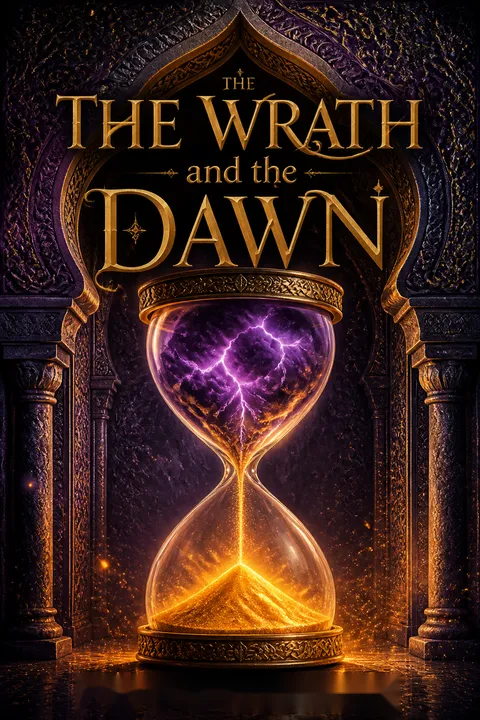


Plot Summary
Prologue
In Rey, rain returns after the Caliph Khalid orders a young bride’s death. General Aref al-Khoury calls the storm proof that the ruler must continue the killings, though his son Jalal fears they will hollow Khalid out.
The rain fills the city’s dry wells while Khalid sits alone, bearing the curse that binds each dawn to a life taken. The opening makes the palace’s apparent cruelty inseparable from a threat to the city, though it withholds the curse’s origin and the choices that created it.
The rain makes political violence visible as a bargain with consequences. The wells refill, but the city’s relief is purchased through a private atrocity, so prosperity and terror arrive in the same weather. Aref treats necessity as a settled fact; Jalal still imagines alternatives. Khalid’s silence places him between those positions, already isolated by the cost of rule. The scene also establishes a crucial tension: the people see rain as hope, while the reader sees how easily hope can be made to depend on someone else’s suffering.
A Bride for Shiva
After her dearest friend Shiva is killed at dawn by the young Caliph of Khorasan, Shahrzad volunteers to become his next bride. She leaves her grieving father, Jahandar, and younger sister, Irsa, with instructions to flee toward Tariq’s family, then enters the palace resolved to survive long enough to kill Khalid herself.
Her former love, Tariq, receives a letter explaining her decision, but cannot stop the wedding. When Khalid visits her chamber, he asks why she chose him. Shahrzad refuses to give him the answer, maintaining the hatred that brought her there even as fear of the coming sunrise threatens to break her resolve.
Shahrzad turns grief into a plan because action feels more bearable than helplessness. Her choice is brave, but it also narrows her world: she measures survival by whether it can serve vengeance. Sending Jahandar and Irsa away reveals that her defiance is not a rejection of family; it is an attempt to protect them by making herself the only target. Khalid’s question unsettles the simple moral arrangement she depends on. He is both the person she blames and the person whose motives she cannot yet read.
Agib Buys a Dawn
Rather than plead, Shahrzad begins a tale about Agib, a thief whose ship is drawn toward a deadly magnetic mountain and whose escape depends on a mysterious chalice. She stops before revealing what emerges from it. Khalid lets her live until the next night, giving her story a practical power: each unfinished ending buys time.
The following day, Despina arrives as her sharp-tongued handmaiden, while Jalal, Khalid’s cousin and captain of the guard, teaches Shahrzad archery. She learns that Khalid is also a formidable swordsman, a fact that complicates her plan to kill him. When he catches her training, he shows curiosity rather than the expected rage.
Storytelling becomes a means of negotiating power without pretending the danger has disappeared. Shahrzad cannot command the king, but she can make him want to hear what happens next. Her choice of a tale about a trapped thief also mirrors her own predicament without reducing the story to a simple allegory. Despina and Jalal complicate the palace’s divisions: both serve Khalid, yet neither behaves like a mere extension of his will. Shahrzad’s discovery that her target is skilled with a sword converts romanticized revenge into a difficult, physical problem.
The Queen Survives Twice
Shahrzad resumes Agib’s adventure, then begins a second tale about Aladdin as morning approaches. When General Aref arrives with guards to take her away, Khalid intervenes and names her his queen, preserving her life for another day. News reaches Tariq, who rides hard for Rey with his friend Rahim.
He finds Shahrzad has survived two sunrises and asks her uncle Reza to help him remove Khalid. Reza agrees to build support among nobles angered by the bride killings, but urges Tariq to wait until they have enough strength. Tariq cannot accept waiting, and sets out to recruit the desert tribes under a new banner.
Survival changes the political meaning of Shahrzad’s presence. She is no longer only a condemned bride; Khalid’s public recognition makes her a visible challenge to the pattern that has governed the palace. To Tariq, however, her survival is not reassurance but a call to intervene. His love and his guilt about failing her before now push him toward action faster than his allies consider wise. Reza sees that a rebellion needs more than personal devotion. Their differing tempos establish the central danger of the resistance: a just cause can still be weakened by impatience.
The White Falcon Rises
At a ruined well near the border, Tariq meets Omar al-Sadiq, the Badawi sheikh who has disguised himself as a helpless old water carrier. Omar hears Tariq’s offer but will not risk his people in a war driven by one man’s love. Reza begins recruiting other emirs and gives Tariq’s cause a public identity as the White Falcon.
Meanwhile, Jahandar and Irsa travel away from Rey. Jahandar secretly takes an ancient locked book from the library and studies its dangerous instructions. He uses his own blood and a dagger to draw power from a hare, gaining strength he hopes will help his children. His effort to become useful begins to resemble the very desperation that has shaped the kingdom’s disasters.
The resistance grows through competing definitions of responsibility. Tariq thinks love obliges him to act; Omar thinks leadership requires protecting people who did not choose the conflict. Reza translates private anger into a public cause, making the White Falcon a political symbol rather than merely a romantic rescue plan. Jahandar’s parallel story darkens the same question of responsibility. His grief makes power feel like a remedy for past failure, yet the ritual he accepts demands harm from the vulnerable. The book’s politics and magic both test whether good intentions can excuse the costs imposed on others.
Sugar, Roses, and Secrets
While Khalid is away in Amardha, Shahrzad discovers that poisoned sugar has been prepared for her tea. A servant has tasted the food but not the sugar, so the palace adds a girl whose sole duty is to sample every tray. Shahrzad suspects Despina, who handled the tea, and the uncertainty damages their fragile trust.
Jalal later introduces Musa Zaragoza, an old tutor of Khalid’s mother. Musa describes the king’s childhood and recognizes a dormant gift in Shahrzad’s blood. He gives her a threadbare carpet that responds to her touch by lifting from the floor. The gift links her to Jahandar’s small abilities, but neither she nor Musa yet understands what she may be able to do.
The poisoned sugar makes danger intimate: a familiar cup becomes a test of whom Shahrzad can trust. Her suspicion of Despina exposes how little friendship can grow under surveillance, even when both women want connection. Musa offers a different kind of evidence, replacing rumor about Khalid with memories of the child he once was. The carpet gives Shahrzad a physical sign that her family history contains more than grief. Yet its promise is deliberately uncertain. In this novel, knowledge does not immediately grant control; it often opens another question that must be carried into danger.
The Souk's Broken Sinew
Shahrzad secretly carries poisoned sugar into Rey’s souk, intending to use it against Khalid during their unguarded outing. But when a drunken merchant insults her, Khalid attacks him, and the pair must flee from the man’s furious companions. Shahrzad buys a child’s crude bow and shoots an arrow through the aggressor’s wrist when he draws a weapon.
The bowstring frays before she can take another shot. Khalid recognizes that her earlier archery miss was deliberate, and she has a clear chance to kill him. Instead, his praise and the force of their attraction overwhelm her resolve, and they kiss in the alley. She leaves the poison unused, with vengeance no longer a simple choice.
The souk strips away royal ceremony and shows what each character does under pressure. Khalid reacts violently to an insult against Shahrzad, while she uses precision rather than panic to stop a threat. Their shared danger creates intimacy, but it does not erase the moral history between them. Shahrzad’s hesitation is not proof that Shiva matters less; it shows that desire has made her original plan emotionally costly. The broken bowstring is a concrete limit on her agency, while the unused poison marks a deeper one: she can still act, but she can no longer act without confronting what she wants.
The Bluebeard Tale
Shahrzad tells Khalid about Tala, a young wife who opens a forbidden cellar and finds the bodies of her husband’s former brides. The story is a pointed demand for the truth about the women killed at dawn. Khalid cannot answer her and leaves, confirming that the subject reaches a wound he will not expose.
Shahrzad recognizes that her growing feelings are making it harder to pursue justice for Shiva, so she resolves to learn the truth rather than mistake attraction for absolution. Later, when Khalid brushes her aside in public, she challenges his belief that love is too changeable to trust. Their growing intimacy remains real, but the locked question between them has not been answered.
The tale lets Shahrzad ask what she cannot yet ask directly, while its cellar turns secrecy into a physical space with human consequences. Khalid’s withdrawal does not clarify whether he is protecting himself, her, or the kingdom; it only sharpens the cost of his silence. Shahrzad’s resolve to seek facts is an important correction to her earlier certainty. She no longer assumes that love excuses him, but neither can she return to treating him as a simple monster. The section frames intimacy as a demand for truth, not as a substitute for it.
A Scarab in the Dark
Fida’i assassins break into Shahrzad’s chamber and kill the guards outside. Khalid, Jalal, and Vikram fight through the attackers while one man holds Shahrzad at knifepoint. Khalid drops his weapon when the assassin threatens her, and Shahrzad bites and elbows her captor long enough for Khalid to pull her free.
The last attacker kills himself before revealing who hired him, but Vikram finds a scarab brand on his arm. Khalid carries Shahrzad to his private room and treats her cut throat. After he leaves, she finds his unsent letters of apology to the families of his dead brides, including Shiva’s. They confirm his responsibility without explaining it.
The attack makes Khalid’s attachment legible through action: he accepts disarmament rather than risk Shahrzad’s life. That does not make him innocent, and the letters prevent the rescue from becoming a moral pardon. His private apologies show that he knows the scale of what he has done, yet remorse has not repaired the damage or given the families answers. The scarab brand adds an external political threat to the intimate crisis. Shahrzad now faces two truths at once: Khalid is capable of risking himself for her, and he remains responsible for the deaths that brought her to him.
The Curse of Ava
Khalid finally tells Shahrzad about Ava, his first wife, whose father cursed him after Khalid failed her in grief. The curse demands one hundred brides’ lives in exchange for the life he took, with drought and mass death threatening Rey if he refuses. Khalid admits he obeyed because the wells dried and people began dying.
The confession explains the killings but does not undo them. Soon after, he learns Shahrzad once loved Tariq and gives her a dagger, a hidden escape route, and permission to leave or kill him. Shahrzad cannot take the offered blade. She chooses to remain with Khalid, acknowledging that revenge cannot restore Shiva, and the two finally surrender to their love.
The curse gives the deaths a mechanism, not an absolution. Khalid’s decision to obey has protected the city at the cost of young women, and his own confession makes clear that he understands the moral injury. By offering Shahrzad the dagger, he refuses to use power to force her loyalty; he grants her the choice he denied the earlier brides. Her decision to stay is therefore not simple forgiveness. It is a conscious act made with knowledge of his guilt, and it shifts their relationship from manipulation toward mutual risk.
A Falcon Among Kings
Khalid invites Khorasan’s emirs to meet Shahrzad, while the Sultan of Parthia, Salim, arrives with his daughter Yasmine. Shahrzad parries Salim’s insinuations and learns that Yasmine once loved Khalid and still hopes he will be understood. Tariq attends under his father’s invitation, having entered the city’s politics as the White Falcon.
He slips Shahrzad a note and meets her secretly on the balcony. They kiss, but the old ease is gone; Shahrzad cannot hide how much she now cares for Khalid. Tariq later sees Khalid protect her and recognizes that their bond is real. He remains committed to rescuing her, while Reza’s rebellion continues gathering soldiers and support.
The court turns private relationships into public evidence. Salim treats Shahrzad as leverage, while she answers by refusing to behave like a possession or a pawn. Yasmine’s feelings complicate the presumed rivalry: she wants Khalid’s good even when she cannot have him. Tariq’s return forces Shahrzad to confront the difference between shared history and present attachment. His recognition of Khalid’s protectiveness is painful, but it begins to loosen his assumption that Shahrzad has simply been conquered. The political and romantic plots converge around the same question: who gets to decide what Shahrzad’s loyalty means?
When Rey Burns
Jahandar sacrifices a horse to the ancient book and summons a storm powerful enough to strike Rey’s palace and set buildings ablaze. Tariq and Rahim approach the gates with a small force, intending to rescue Shahrzad, but the storm destroys the entrance and spreads panic through the city.
In the palace, Shahrzad sends Jalal to find Despina and reveals the handmaiden’s pregnancy; Jalal rushes out to search for her. Tariq reaches Shahrzad, shoots the guards and knocks Vikram down, then tries to carry her away. She refuses to leave without discovering what happened to her father, and the group escapes through Khalid’s hidden passage as the city continues to burn.
Jahandar’s magic fulfills his wish to matter, but its scale turns rescue into collective danger. His power resembles the curse in one crucial way: private pain is converted into a force that ordinary people must endure. Tariq’s assault also shows the limits of romantic heroism. He acts to save Shahrzad, yet his violence against Vikram confirms that love does not guarantee sound judgment. Shahrzad’s disclosure about Despina forces Jalal to face the family he did not know he had. Even amid collapse, she remains oriented toward other people’s safety and her father’s whereabouts.
The Letter Burns
At the stables, Jalal trusts Shahrzad’s account and asks Tariq to take her away, warning him not to bring her back. Shahrzad sees Rey burning and demands that Tariq take her to Jahandar, who is waiting beyond the city. Far away, Reza meets Salim and accepts money and weapons for their shared campaign against Khalid; one of Reza’s men bears the same scarab brand as the assassins.
Khalid, left amid his damaged palace and devastated city, writes Shahrzad a final letter and burns it at sunrise, believing their story has ended. The book closes with Shahrzad separated from him, on her way to her father, while the curse and the political threat remain unresolved.
The ending refuses the comfort of a romantic resolution. Shahrzad and Khalid have chosen each other, but the storm, the rebellion, and the scarab-marked alliance have made that choice vulnerable to forces beyond their private bond. Reza’s negotiation with Salim also makes the resistance morally unstable: opposition to Khalid may depend on a ruler who has threatened the queen and on mercenaries tied to palace violence. Khalid’s burned letter is an act of grief and restraint, but it cannot reach Shahrzad. The sunrise returns as a boundary, not yet a promise.
Analysis
The novel repeatedly asks whether explanation changes responsibility. Khalid’s curse explains why he orders the brides killed, and the drought makes the threat to Rey concrete. Yet the explanation does not return Shiva to Shahrzad or spare the families who lost their daughters. His letters matter precisely because they contain remorse without repair. The book distinguishes understanding a person from absolving him, and Shahrzad’s choice to remain with Khalid carries weight because she makes it after discovering what he did.
Stories work as more than ornament or allusion. Shahrzad’s nightly tales buy time, but they also shape a relationship in which direct speech is difficult and dangerous. She can expose Khalid’s fears through an invented thief or a locked cellar before she can ask him plainly about his past. The stories offer a form of intimacy that does not erase the reality of the palace; they create a narrow space in which each can respond without entirely surrendering control.
The parallel plots test love against political responsibility. Tariq’s devotion initially makes him treat Shahrzad as someone to rescue, while Reza and Omar ask what his cause will demand of others. Jahandar’s magic provides the starkest warning: power gained to correct personal failure can unleash harm on an entire city. By the ending, Shahrzad’s decision to leave is not a verdict on whom she loves. It is a response to a crisis in which family, kingdom, and romance can no longer be kept separate. The final burning letter leaves reconciliation uncertain, while the ruined city makes every private choice public.
Review Summary
The Wrath and the Dawn receives mostly positive reviews, praised for its lush writing, atmospheric setting, and compelling characters. Many readers enjoy the enemies-to-lovers romance between Shahrzad and Khalid, though some find it rushed. The retelling of One Thousand and One Nights is appreciated for its fresh take. Critics note issues with pacing, character development, and love triangle elements. Overall, reviewers find it an enchanting, romantic read with beautiful prose, despite some flaws. The book elicits strong emotional responses from many readers.
People Also Read





Characters
Shahrzad al-Khayzuran
The vengeful storytellerShahrzad is a quick-witted young woman whose courage often takes the form of refusing to be managed. Shiva’s death drives her into Khalid’s palace, where she intends to turn storytelling into survival and revenge. She reads people sharply, uses humor to control fear, and has trained in archery since childhood. Her loyalty to her family and friends is intense, but she is not immune to anger, desire, or doubt. Shahrzad’s central struggle is to learn whether understanding a person can coexist with holding that person accountable. Her gift for stories gives her leverage, while her emerging magic hints that her power may extend beyond words.
Khalid Ibn al-Rashid
The burdened boy-kingKhalid is the eighteen-year-old Caliph of Khorasan, a disciplined ruler with a guarded manner and a reputation for cruelty. He is an accomplished swordsman, a careful observer, and a young man shaped by severe losses and a childhood in which affection was unsafe. His instinct is to bear consequences alone, even when secrecy harms the people closest to him. Shahrzad unsettles that isolation because she challenges him directly and refuses to accept either his authority or his self-image as a monster. Khalid’s struggle is to reconcile duty, remorse, and the possibility of wanting a life beyond punishment.
Tariq Imran al-Ziyad
The first love turned rebelTariq is Shahrzad’s childhood friend and former beloved, the son of a powerful emir. A gifted archer and horseman, he is accustomed to acting decisively and believes loyalty means protecting those he loves. Shiva’s death and Shahrzad’s marriage to Khalid awaken both grief and guilt in him, driving him toward rebellion. Tariq’s devotion is sincere, but it can become possessive when he assumes that their shared past entitles him to choose her future. His political journey asks whether love is a claim on another person or a reason to respect what that person chooses.
Despina
The sharp-eyed handmaidenDespina is Shahrzad’s Greek handmaiden, a self-possessed palace servant who is also expected to observe the new queen. Her wit and vanity conceal a perceptive, resilient mind; she notices emotional changes others would rather hide. As a woman living within a rigid hierarchy, she understands how little safety beauty or charm can provide. Her relationship with Shahrzad shifts from wary service toward genuine trust, though secrets still separate them. Despina’s humor is not merely decoration: it is a survival skill, a way to keep dignity in a world where other people often control her choices.
Jalal al-Khoury
The king's loyal cousinJalal is Khalid’s cousin, Aref’s son, and captain of the royal guard. Sociable and irreverent, he can move easily between courtly duty and personal affection. He remembers the gentler boy Khalid was and wants his cousin to stop carrying every burden alone. His loyalty is active rather than unquestioning: Jalal challenges Khalid, protects Shahrzad, and tries to make room for honesty within a palace built on concealment. His growing attachment to Despina exposes the tension between his position and his private desires.
Jahandar al-Khayzuran
The grieving scholarJahandar is Shahrzad and Irsa’s father, a learned former royal advisor whose grief has damaged his confidence as a parent and courtier. He loves his daughters deeply but has often retreated into books and memory instead of acting decisively. His curiosity about ancient texts and modest magical ability reflects a mind still searching for a way to repair what he could not prevent. Jahandar is driven by the desire to become useful to his children, though his fear of failing them again can make dangerous promises feel like necessary chances.
Rahim al-Din Walad
Tariq's steadfast companionRahim is Tariq’s lifelong friend, a nobleman with a dry wit and a practical sense of danger. He accompanies Tariq through grief and political plotting, questioning plans that Tariq’s urgency makes him overlook. His loyalty extends to Shahrzad and her family, but he is not a blind follower. Rahim’s humor keeps despair from becoming the only language among the rebels.
Irsa al-Khayzuran
Shahrzad's younger sisterIrsa is Shahrzad’s younger sister, still a teenager when their family is forced to leave Rey. She loves her sister fiercely and struggles with the fear and guilt of being sent away while Shahrzad faces the palace alone. Quietly observant, Irsa notices what her father avoids explaining and tries to offer him the comfort she needs herself.
General Aref al-Khoury
The king's wary uncleAref is Khalid’s uncle, the Shahrban of Rey, and Jalal’s father. A practiced general, he believes stability sometimes demands actions he personally finds painful. His protective instincts toward Khalid and the kingdom make him cautious of Shahrzad, whom he sees as a threat to the fragile order he maintains. Aref’s sense of duty can become controlling when he decides that he alone understands the risks.
Vikram
The silent swordmasterKnown as the Rajput, Vikram is Khalid’s imposing personal bodyguard and one of Rey’s finest swordsmen. He speaks little and gives little away, making his presence feel more like a warning than a welcome. His duty is to protect the queen as well as the king, though Shahrzad must gradually learn what his gestures mean.
Reza bin-Latief
The bereaved political strategistReza is Tariq’s uncle and a merchant whose family has suffered devastating loss. He turns private grief into a plan to challenge Khalid’s rule, drawing on his trade connections and political experience. Unlike Tariq, Reza thinks in terms of resources, alliances, and public legitimacy. His readiness to work with powerful figures makes him effective, but also morally difficult to trust.
Omar al-Sadiq
The discerning Badawi sheikhOmar is the sheikh of a respected Badawi family, a clever leader who hides his rank behind a harmless old man’s manner. He enjoys stories and uses them to test the motives of those who seek his help. Omar understands that a leader’s personal devotion cannot justify placing an entire tribe in danger.
Musa Zaragoza
The king's former tutorMusa is a Moorish scholar and former tutor to Khalid’s mother. Warm, perceptive, and steeped in ancient knowledge, he remembers Khalid as a child rather than accepting the king’s public reputation as the whole truth. He recognizes the presence of magic in Shahrzad and offers guidance without pretending to know exactly what she can become.
Salim Ali el-Sharif
Parthia's calculating sultanSalim is the Sultan of Parthia and Khalid’s uncle by marriage. He presents himself as charming and diplomatic, but his questions and compliments often carry political threats. Salim’s interest in the Khorasan throne makes every social exchange with him a contest over legitimacy and leverage.
Yasmine el-Sharif
The poised Parthian princessYasmine is Salim’s daughter and a princess of Parthia. Beautiful and socially skilled, she knows how to use attention as a form of influence. Her history with Khalid gives her an emotional stake in his marriage, but she is more perceptive and generous than Shahrzad initially expects.
Shiva bin-Latief
Shahrzad's murdered best friendShiva is Shahrzad’s closest friend and the daughter of Reza bin-Latief. Her death at the palace gives Shahrzad’s decision to marry Khalid its original force. Remembered for her courage, affection, and laughter, Shiva remains present in Shahrzad’s choices even when the two cannot speak.
Ava
Khalid's first wifeAva was Khalid’s first wife, chosen in a political moment when he was young and unprepared for marriage. Her experience shapes his understanding of duty, intimacy, and the damage caused by emotional neglect. She remains a central part of the past he struggles to discuss.
Plot Devices
The Dawn Curse
A kingdom's deadly clockA curse binds Khalid’s private guilt to the lives of Rey’s people. Its terms demand a hundred brides’ deaths and threaten the city with drought if he refuses. The curse explains why the killings continue, while forcing Khalid to decide whether protecting the kingdom can justify sacrificing its daughters. The rain and drying wells make the magic visible in public life.
Shahrzad's Stories
A tale buys another nightShahrzad tells Khalid unfinished stories at night, stopping at the moment when he most wants to know what happens next. The technique earns her another sunrise and gives the two characters a way to speak around fear, grief, and desire. Her stories also test Khalid’s responses, turning entertainment into both survival strategy and emotional inquiry.
Jahandar's Grimoire
Power demands a living priceThe ancient locked book teaches Jahandar to channel magic through blood and sacrifice. At first its power seems like a way for a grieving father to become useful; its later use affects the whole city. The grimoire connects personal desperation to large-scale harm, showing how the wish to repair one family’s suffering can expose many others to danger.
Musa's Carpet
A hidden gift takes flightMusa gives Shahrzad an old, nearly discarded carpet and hints that it will help her find her way. When she touches it, the rug rises from the floor, revealing that her magic is more than the small ability she has seen in her father. It links her to a power she does not yet understand and gives her a practical object to protect as danger closes in.
The White Falcon
Rebellion gains a public faceReza gives Tariq’s resistance a banner and a name, turning personal opposition to Khalid into a cause that can attract emirs, soldiers, and money. The image of the White Falcon makes Tariq a symbol to people who have never met him. That public identity creates momentum, but it also raises the stakes: a movement built around rescue can become a war with consequences for all of Khorasan.
FAQ
Synopsis & Basic Details
What is The Wrath and the Dawn about?
- Vengeance fuels a marriage: Shahrzad volunteers to marry the murderous Caliph Khalid to avenge her best friend, but her plan is complicated by her growing feelings for him.
- Storytelling as survival: To delay her execution, Shahrzad uses her storytelling skills, weaving tales that captivate Khalid and buy her time.
- Palace intrigue and secrets: The palace is a dangerous place filled with hidden agendas, spies, and a dark curse that threatens to destroy everything.
Why should I read The Wrath and the Dawn?
- Rich cultural tapestry: The novel is set in a vibrant, Middle Eastern-inspired world, with lush descriptions and a strong sense of place.
- Complex characters: The characters are multifaceted, with hidden motivations and internal conflicts that make them compelling and relatable.
- Intriguing blend of genres: The story combines elements of romance, fantasy, and suspense, creating a unique and captivating reading experience.
What is the background of The Wrath and the Dawn?
- Inspired by Arabian Nights: The novel is a reimagining of the classic tales, drawing on their rich storytelling traditions and themes.
- Cultural influences: The setting and characters are influenced by Middle Eastern history and culture, creating a unique and immersive world.
- Political intrigue: The story is set against a backdrop of political tension and power struggles, adding depth and complexity to the narrative.
What are the most memorable quotes in The Wrath and the Dawn?
- "All our lives are forfeit, sayyidi. It is just a question of when. And I would like one more day.": This quote highlights Shahrzad's defiance and determination to survive, showcasing her strength and wit.
- "For love, people consider the unthinkable . . . and often achieve the impossible. I would not sneer at its power.": This quote emphasizes the power of love as a driving force in the story, connecting to the themes of sacrifice and devotion.
- "I understand your points. All of them. Now I need you to understand mine. I know there are other women in the world. I know it's possible for me to find a measure of happiness with another girl. Given time, I suppose anything may happen. But understand this: no matter how many perfect young women you put in my path, there is only one Shahrzad.": This quote reveals Tariq's unwavering love for Shahrzad, highlighting the theme of enduring love.
What writing style, narrative choices, and literary techniques does Renée Ahdieh use?
- Lyrical prose: Ahdieh's writing is characterized by its evocative language and vivid imagery, creating a rich and immersive reading experience.
- Dual perspectives: The story is told primarily from Shahrzad's point of view, but also includes glimpses into Khalid's thoughts and feelings, adding depth to their relationship.
- Foreshadowing and symbolism: The novel is filled with subtle hints and recurring motifs that foreshadow future events and deepen the story's themes.
Hidden Details & Subtle Connections
What are some minor details that add significant meaning?
- The rose garden: Jahandar's rose garden, and the single rose he gives Shahrzad, symbolizes home, love, and the fleeting nature of beauty, contrasting with the palace's coldness.
- The color blue: The color blue is often associated with the magical and the mysterious, appearing in the smoke from the genie's chalice and in Despina's eyes, hinting at hidden depths.
- The recurring mention of "sight": Characters often comment on what they see or fail to see, highlighting the themes of perception, truth, and deception.
What are some subtle foreshadowing and callbacks?
- The Mountain of Adamant: Shahrzad's story about the Mountain of Adamant foreshadows the challenges she will face in the palace, as well as her own strength and resourcefulness.
- The mention of a magic lamp: The reference to Aladdin and the magic lamp foreshadows the magical elements that will become more prominent in the sequel.
- The recurring phrase "My queen": Khalid's use of this phrase, initially as a formal title, evolves to become a term of endearment, reflecting the changing dynamics of their relationship.
What are some unexpected character connections?
- Jalal and Khalid's family ties: Jalal's familial connection to Khalid as his cousin adds a layer of complexity to their relationship and explains Jalal's unique position in the palace.
- Musa and Leila's history: Musa's past as Leila's tutor reveals a deeper connection to Khalid's mother and provides insight into the events that shaped his life.
- Omar and Tariq's shared history: Omar's connection to Tariq's family through the purchase of his horse reveals a hidden link between the two characters.
Who are the most significant supporting characters?
- Despina: As Shahrzad's handmaiden and a spy, Despina plays a crucial role in navigating the palace's intrigues and provides a complex friendship to Shahrzad.
- Jalal: As the captain of the guard and Khalid's cousin, Jalal is a key figure in the palace's power dynamics and a source of both conflict and support for Shahrzad.
- Omar al-Sadiq: As the sheikh of the Badawi tribe, Omar provides Tariq with guidance and support, and his wisdom and knowledge of the desert are essential to the plot.
Psychological, Emotional, & Relational Analysis
What are some unspoken motivations of the characters?
- Khalid's desire for connection: Despite his cold exterior, Khalid longs for genuine connection and understanding, which is why he is drawn to Shahrzad's honesty.
- Shahrzad's fear of vulnerability: Shahrzad's initial focus on revenge masks her fear of vulnerability and her growing feelings for Khalid.
- Jalal's desire for change: Jalal's playful demeanor hides his desire to see Khalid break free from his past and become the king he was meant to be.
What psychological complexities do the characters exhibit?
- Khalid's trauma: Khalid's past trauma and the curse he carries have led to a deep-seated fear of intimacy and a struggle to trust others.
- Shahrzad's internal conflict: Shahrzad's internal conflict between her desire for revenge and her growing feelings for Khalid creates a complex emotional landscape.
- Despina's divided loyalties: Despina's divided loyalties as a spy and a friend create a sense of internal tension and uncertainty.
What are the major emotional turning points?
- Shahrzad's realization of Khalid's humanity: Shahrzad's growing understanding of Khalid's past and his vulnerabilities leads to a shift in her feelings from hatred to compassion.
- Khalid's confession of his curse: Khalid's confession of the curse and his past actions marks a turning point in their relationship, as Shahrzad begins to see him as a victim of circumstance.
- Shahrzad's near execution: Shahrzad's near execution and Khalid's subsequent rescue of her solidify their bond and reveal the depth of their feelings for each other.
How do relationship dynamics evolve?
- Shahrzad and Khalid's relationship: Their relationship evolves from one of animosity and distrust to one of mutual respect, understanding, and love, despite the obstacles they face.
- Shahrzad and Despina's friendship: Their friendship evolves from one of suspicion and mistrust to one of genuine affection and loyalty, despite their differing agendas.
- Tariq and Shahrzad's past love: Their past love is tested by the present circumstances, as Shahrzad's feelings for Khalid grow stronger, creating a love triangle.
Interpretation & Debate
Which parts of the story remain ambiguous or open-ended?
- The nature of the curse: The exact nature of the curse and its origins remain somewhat ambiguous, leaving room for interpretation and further exploration in the sequel.
- The extent of Musa's powers: The extent of Musa's magical abilities and his true motivations remain unclear, adding a layer of mystery to his character.
- The future of Khorasan: The future of Khorasan and the challenges that lie ahead for Khalid and Shahrzad are left open-ended, creating a sense of anticipation for the next installment.
What are some debatable, controversial scenes or moments in The Wrath and the Dawn?
- Khalid's past actions: Khalid's past actions as a murderer are a source of debate, as readers grapple with the question of whether he can be redeemed.
- Shahrzad's growing feelings for Khalid: Shahrzad's growing feelings for Khalid, despite his past actions, are a source of debate, as readers question her loyalty to Shiva.
- The use of magic: The use of magic in the story is a source of debate, as readers question its role in shaping the characters' destinies and the overall narrative.
The Wrath and the Dawn Ending Explained: How It Ends & What It Means
- A fragile truce: The ending sees Shahrzad and Khalid together, but their future is uncertain, with the curse still looming and the kingdom in disarray.
- A promise of change: The ending suggests that Khalid is willing to change and break the cycle of violence, but it remains to be seen if he can truly overcome his past.
- A new beginning: The ending offers a sense of hope for a new beginning, but it also acknowledges the challenges that lie ahead, leaving readers eager for the next chapter.
The Wrath and the Dawn Series
About the Author


Download PDF
Download EPUB
.epub digital book format is ideal for reading ebooks on phones, tablets, and e-readers.








