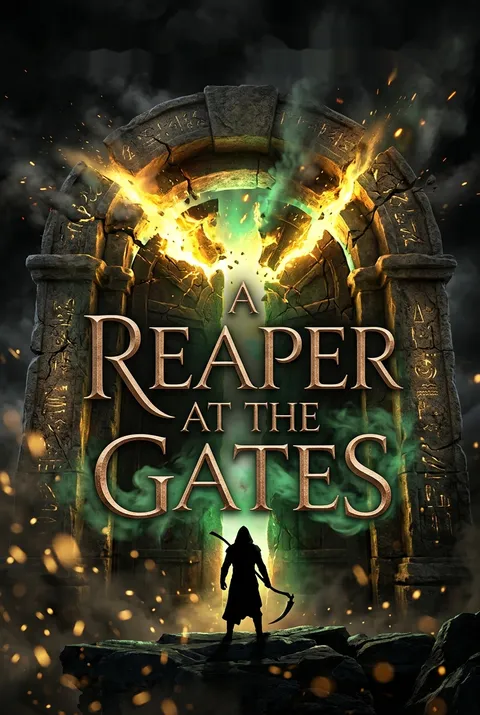


Plot Summary
Prologue
A millennium after the Scholars imprisoned the jinn, the Nightbringer joins Laia’s silver armlet to the Star, the weapon that can release them. He sends a wraith to deliver a secret message to Helene Aquilla, the Blood Shrike, and directs other fey creatures to aid the Karkauns, an enemy gathering against the Martial Empire.
He remembers how his queen once feared the damage his love could cause, then recalls the betrayals he has committed to recover the Star’s pieces. Laia’s armlet has brought him closer to his goal, but her gaze stirred memories of his dead queen. He decides to pursue the final piece, whatever it costs.
The opening makes the Nightbringer more than a distant supernatural villain: his vengeance grows from grief, and his own recollection shows that he recognizes the moral cost of his methods. The Star is both a concrete instrument of liberation and a record of relationships he has manipulated. His grief does not excuse the harm he plans, but it explains why appeals to suffering may reach him even as they fail to stop him. By tying an ancient conflict to Helene and Laia’s present, the prologue makes the past an active force rather than settled history.
Raiders in the Snow
Laia and her brother, Darin, join the Tribal fighter Afya on a raid to free Scholar and Tribal prisoners, including Mamie Rila, who once sacrificed herself to save Elias. The caravan holds a trap instead: Helene Aquilla, the Blood Shrike, has captured Mamie and waits for Elias. He arrives late, having been held back by Soul Catcher Shaeva’s training, and confronts Helene while Laia is bound.
Shaeva suddenly pulls Elias away to the Waiting Place. Helene lets Laia escape after Laia appeals to the shared grief of losing family, and the young Scholar vanishes into the snow. The raid frees some captives, but Mamie remains behind, and the Empire now knows Laia’s resistance cannot stay hidden.
The raid turns private loyalty into a tactical vulnerability. Helene assumes Elias will come for Laia, and she is right, but the plan also exposes her own dependence on the family she is trying to protect. Laia’s escape comes through neither strength nor deception alone: she recognizes grief in Helene and reaches for the person beneath the imperial title. The failed rescue therefore complicates the usual division between captor and captive. Each woman has power over the other, and each is acting under pressure from a larger system.
Shaeva's Last Prophecy
Laia returns to camp, where Darin and Afya report that the freed prisoners are safe, but Elias is missing. The siblings enter the Waiting Place and find the Nightbringer holding Elias helpless while Shaeva kneels before him. He kills the Soul Catcher, whose dying words connect the coming Grain Moon to the Star, the dead, and a threatened child.
Laia discovers that only one piece of the Star remains and resolves to find the Nightbringer before he can free his people. Elias, newly burdened with Shaeva’s duties, escorts Laia and Darin out of the Forest. He and Laia share a painful farewell, then separate, each carrying the promise of a future they cannot yet reach.
Shaeva’s death shifts the supernatural crisis from warning to immediate responsibility. Her prophecy offers information without a usable instruction manual, forcing Laia and Elias to act amid uncertainty. Elias inherits not just authority but an impossible workload, while Laia’s choice to continue is sharpened by guilt over giving the Nightbringer her armlet. Their farewell places emotional intimacy beside incompatible obligations. Neither stops caring; instead, each recognizes that care alone cannot undo the vow or halt the coming danger.
Musa's Price of Freedom
Four weeks later, Laia and Darin reach Adisa, the Mariner capital, seeking a figure Shaeva named as the Beekeeper. King Irmand’s guards bar them from the city, while wanted posters accuse them of rebellion and offer a reward. When Mariner soldiers raid the Scholar refugee camp, Laia and Darin surrender to keep other refugees from being punished for hiding them.
Crown Princess Nikla demands that Darin forge Serric steel for the Mariner army. Musa, a magically gifted Scholar who knows the city’s hidden routes, breaks them out and reveals that he is the Beekeeper. In exchange for leading Laia to the answers she seeks, he requires her help rebuilding the Scholar Resistance and Darin’s promise to try forging weapons.
Laia’s surrender is a deliberate choice to absorb danger rather than let it fall on a vulnerable community. Musa’s rescue immediately complicates the apparent freedom he offers: his help is tied to a political future Laia is reluctant to claim. Darin’s agreement to try forging, after months of silence and fear, marks a small but consequential return of agency. Each character sees survival differently. Laia protects people in front of her, Musa plans for collective power, and Darin must decide whether trauma will dictate what he can do.
An Heir Under Threat
In Antium, Emperor Marcus punishes Helene for failing to destroy Commandant Keris Veturia by breaking Livia’s fingers in front of her. Helene conceals her fury because any resistance could bring worse violence against her sister. In secret, Livia reveals that she is carrying Marcus’s child, an heir who could one day support a regency and stabilize the Empire.
Helene must therefore protect Livia while obeying Marcus’s order to travel south and investigate Keris. At the same time, the Nightbringer tells Helene he knows about the pregnancy, making clear that the jinn’s influence reaches into imperial politics. Helene leaves for Navium with her sister’s future hidden, and her own loyalties increasingly divided.
Helene’s political calculations are inseparable from her love for Livia. She cannot act freely because Marcus has made her sister’s body the price of disobedience. The pregnancy offers a possible constitutional solution, but it also creates a new target for every faction seeking power. Helene’s restraint is not passivity; it is a survival strategy shaped by an intimate knowledge of how rulers weaponize family. The Nightbringer’s knowledge adds a further pressure, making even private hope vulnerable to surveillance.
Ghosts at the Border
Elias visits a Tribal Fakira, Aubarit, hoping to understand why the ghosts are accumulating faster than he can guide them onward. Aubarit explains that Tribal Fakirs help the dead pass peacefully, but several have died or become unable to reach spirits. Back in the Waiting Place, Elias discovers ghosts pressing against its boundary, desperate to escape.
The jinn taunt him, and some spirits break through, possessing Tribal people, including Afya and her brother Gibran. Elias incapacitates the possessed without killing them and briefly draws on Mauth’s power to drive the ghosts back. The effort costs him his sanctuary: efrits burn Shaeva’s cottage. He is left grieving, without a home, and unable to ignore the system’s collapse.
The ghost crisis makes Elias’s supernatural duty measurable through human consequences. When he cannot move spirits on, families suffer, and the dead themselves become agents of new injury. The loss of Shaeva’s cottage compounds that failure by removing the place where Elias could think and grieve safely. His first successful use of Mauth’s power is encouraging but unstable, suggesting that capability alone will not solve the problem. The section asks whether a duty to the dead can be performed without attention to the living who bear its failures.
Library Flames, Stories Survive
At Musa’s forge, Darin begins making Serric steel, while Laia tells her story to Scholars who may join a renewed Resistance. She seeks answers from a Tribal Kehanni, exchanging six newly forged blades for knowledge about the Nightbringer. Before the Kehanni can tell her the crucial story, wraiths attack the camp and leave the storyteller dying.
Her final clue points Laia toward Augur prophecies in Adisa’s Great Library. Laia and Darin return to find the Library burning, with efrits feeding the flames. A Jaduna helps Laia escape and gives her a history of seers and prophets. The Library’s destruction costs the city its central store of knowledge, but the book may hold the clue she needs.
The book contrasts written archives with oral memory without treating either as sufficient on its own. Laia turns to the Kehanni because inherited stories preserve truths that official accounts omit; the Library’s destruction then makes those stories even more urgent. Her exchange of weapons for knowledge also forces a political compromise: Darin’s craft may strengthen people whose purposes Laia cannot control. The Jaduna’s intervention is a rare act of help from someone outside Laia’s cause, underscoring that rescue can create obligations as well as gratitude.
Navium's Vanishing Fleet
Helene reaches Navium as the Karkauns besiege the port and learns that Keris executed its veteran admiral. Overriding the Commandant’s plan, Helene launches the Martial fleet to defend the city. A sudden supernatural storm destroys the fleet at sea, wrecking her standing with the Paters. Helene later finds Keris’s father, Quin Veturius, hiding in the mountains; he warns that his daughter serves her own ambition, not the Empire.
Keris’s scheme becomes clearer when Helene discovers the wreckage ashore came from old shipwrecks, not the fleet. With Quin’s help, Helene reveals the surviving ships, rallies the Plebeians, and defeats the Karkauns at sea. She imprisons Keris, but news arrives that Livia has been poisoned.
Keris weaponizes institutional expectations: Helene is made to look reckless because she accepts responsibility for acting when civilians are in danger. The apparent loss of the fleet is not merely a military setback but a manufactured story that isolates her from the Paters. Helene answers with a counter-story, using evidence and popular support to restore her authority. Her victory is real but incomplete. Livia’s poisoning immediately shows that political success cannot guarantee safety for the person Helene most wants to protect.
The Butcher Bird's Ring
Laia and Musa find a history of Augur prophecies among the books removed from the burning Library. One prophecy links the Butcher to the Lioness’s heir and a piece of the Star. Musa’s reports reveal that Helene wears both her Blood Shrike ring and the Aquilla family ring, given to her by her father before his death.
Laia concludes that the Star’s final piece is concealed in Helene’s family ring, and that the Nightbringer’s presence in Navium was never incidental. Before setting out for Antium, Laia appeals to King Irmand for Scholar protection and military readiness. The king grants the refugees temporary shelter and accepts Darin’s offer to make weapons for Mariners, but orders Laia and Darin to leave the city.
The prophecy gives Laia a target but not certainty; she must combine symbolic language with Musa’s surveillance and her own knowledge of Helene. The King’s limited concessions similarly show political change as negotiation rather than conversion. Laia secures some immediate protection for her people, yet the order to leave makes clear how precarious that protection remains. Her decision to pursue the ring is therefore not a simple heroic quest. It places her personal guilt, her people’s survival, and the trustworthiness of prophecy in direct competition.
Helene Turns the Tide
Keris escapes imprisonment and arranges an attack that leaves Helene bleeding in a Navium street. The Nightbringer carries her to safety and helps her use her healing gift, while Cook warns that the jinn lord is preparing a wider war.
Helene survives and discovers Keris has also killed the officers investigating her northern alliances. As the Karkauns disappear from their usual territory, Helene realizes they may be gathering for a larger strike.
Keris’s return to Antium will be harder to challenge: she has cultivated Plebeian support by recasting her past violence as vengeance against privileged Masks. Helene can expose facts, but she cannot control how the people interpret them, and the coming struggle will test both her authority and her alliances.
The Nightbringer’s rescue destabilizes Helene’s moral categories: an enemy can provide lifesaving aid while pursuing an agenda she does not understand. Cook’s warning broadens the danger from a succession struggle to a conflict capable of consuming multiple peoples. Meanwhile, Keris demonstrates that public legitimacy does not follow evidence automatically. The same act can be read as murder by the powerful and justice by the oppressed. Helene’s challenge is no longer simply to uncover what happened, but to build a credible alternative to the stories Keris tells.
The Jinn City's Memory
Elias forces his way into the jinn grove with salt, summer rain, and a steel axe, hoping to make the jinn reveal what they know about Mauth. They show him a hidden city within the Waiting Place, where jinn and Soul Catchers once lived among their families. The visions reveal that the Scholar king befriended Shaeva, then used her trust to help destroy the jinn and imprison their children.
The betrayal shattered the balance between living and dead, leaving one Soul Catcher to manage a burden meant for many. Elias understands that the jinn were grievously wronged, even as their present vengeance threatens others. When he learns the Tribes are imperiled, he leaves the Forest to help them.
The revelation revises the conflict without absolving the Nightbringer. The jinn were victims of a betrayal that altered the structure of the world, but their pain does not make every retaliatory act just. Elias’s new knowledge also changes his understanding of duty: the Waiting Place is not a neutral institution but the remnant of a social order destroyed by conquest. His response remains divided. He wants to repair the harm, yet the magic demands a distance from the living that he cannot easily accept.
Mirra Behind the Scars
After leaving Adisa, Laia enters the Waiting Place and learns from the jinn that Elias is not there to guide her. Their visions reveal what happened to her family: Keris tortured Mirra, Laia’s mother, and her father and sister Lis in Kauf. Mirra killed her husband and daughter to spare them further torture, then endured Keris’s mutilation and hid her identity as the Cook.
Laia later meets her mother in a village on the road to Antium. Mirra refuses comfort and insists that the person Laia remembers is gone, but she explains that she stayed alive partly to protect Darin and Laia. The reunion offers truth without easy reconciliation, and the two continue toward the besieged capital.
Laia’s discovery replaces an idealized absence with a living person shaped by coercion and survival. Mirra’s actions in Kauf resist simple judgment: she made an unbearable choice under torture, then carried its consequences as shame. Laia’s longing for a mother’s affection meets Mirra’s conviction that she no longer deserves to be a mother. The distance between them is not lack of love but the damage inflicted by an empire that made family bonds instruments of interrogation.
An Army at the Waiting Place
With a Martial force approaching the Tribal gathering, Elias slips into its camp and kills the officers who would lead the attack. He steals a drum tower and sends a false order to delay the army, then discovers the Waiting Place’s borders have weakened. Ghosts escape and possess people in villages and Tribal camps, driving the dead and living into violence.
Elias learns that salt can repel the ghuls holding spirits in the bodies of people who should have died. He uses Mauth’s power to expose the creatures, allowing Tribal Fakirs to perform their rites again. When thousands of Martials threaten the Tribes, Elias returns to the army and prepares to use his lethal Mask training to buy his family time.
Elias’s choice to kill the commanders is both protective and corrosive. He deploys the skills that once made him an instrument of the Empire to prevent that Empire from destroying his Tribal family. The salt solution reveals that knowledge of the supernatural can restore agency to local communities rather than requiring Elias to solve everything alone. Yet the border breach proves that his intervention has limits. His conflict is no longer between violence and peace in the abstract, but between the immediate harm he can prevent and the self he must damage to do it.
Antium's Deadly Siege
Helene returns to Antium as Grímarr’s immense Karkaun army closes in. She suspects Keris arranged the invasion and diverts soldiers to evacuate civilians through hidden routes. On the Grain Moon, Karkaun warlocks sacrifice captives and summon ghosts, whose possession gives the attackers unnatural speed and strength. The assault overwhelms Antium’s defenses.
Meanwhile, Laia and Mirra enter the city in disguise, hoping to reach Helene and the ring. Laia abandons her plan when she sees Scholar children trapped by the bombardment. She tries to lead them toward safety, but a missile explodes nearby. The Nightbringer throws Laia clear of the blast, leaving her injured and more uncertain about the enemy’s intentions.
The siege turns the city’s political divisions into physical exposure: privileged families have fled, while Plebeians and enslaved Scholars remain in the path of the assault. Helene’s evacuation routes are a practical attempt to preserve people even as command structures fail. Laia’s choice to rescue children interrupts her mission, revealing that her Resistance leadership rests on care for individuals, not only strategic outcomes. The Nightbringer’s rescue is unsettling precisely because it is merciful. It gives Laia no stable reason to trust or condemn him.
A Birth Beneath Bombardment
Cook directs Laia to the Black Guard barracks, where she realizes the pregnant woman in labor is Livia, Helene’s sister. Laia delivers the baby while Helene helps, even as Karkaun attacks draw closer. The newborn, Zacharias, survives, and Marcus orders Helene to take Livia and the child through evacuation tunnels.
Helene returns to the burning barracks and finds Marcus mortally wounded by Keris’s forces. He reveals that Keris moved the treasury and records out of Antium before the siege, then asks Helene for a merciful death. She kills him, carrying out his final command and swearing to protect his heir. Laia steals Helene’s rings, believing one contains the Star’s final piece, but the city is lost.
Birth and death share the same collapsing city, forcing Helene to move between care and violence without time to resolve the contradiction. Laia’s medical skill briefly makes her indispensable across enemy lines; her work protects a child whose political significance exceeds his immediate vulnerability. Marcus’s final request complicates Helene’s hatred without erasing his crimes. She gives him the death he asks for, then accepts responsibility for a successor whose future may require rebuilding the Empire from outside its capital.
The Mask's Hidden Shard
Laia learns that the family ring is not the Star’s final piece when the Nightbringer crushes the rings in front of her. The true fragment is hidden in Helene’s Mask, and he has waited for a moment when her love for her people would make her offer it willingly. At Pilgrim’s Gap, Helene’s depleted soldiers hold the Karkauns back so refugees can reach the caves.
With the defenders nearly destroyed, she tears the Mask from her face and gives it to the Nightbringer in exchange for their chance to escape. He accepts the fragment but does not defeat the attackers. Helene collapses, her identity and supernatural protection stripped away, while Laia and Mirra face the Karkauns closing on the pass.
The Star’s last piece is embedded not in a relic Helene can surrender casually, but in the public identity that has shaped her life. Her choice makes sacrifice an act of authorship: she defines herself by the people she protects rather than by the institution that trained her. The Nightbringer’s refusal to save her afterward exposes the limits of the trust he demanded. He honors the condition of willing love, but that does not make him a reliable ally or a benevolent liberator.
Pilgrim's Gap Last Stand
As Helene collapses, Laia reaches her with Mirra, who fights off Karkauns with bow and arrows. Mirra stays behind to hold the attackers back while Laia helps Helene up the Pilgrim Road. Avitas and Dex arrive, and the group reaches the Augurs’ caves before the entrance is sealed. Mirra’s fate is left behind them as the rocks fall.
In Delphinium, Helene wakes without her Mask and learns that thousands of Martials and Scholars escaped, while others remain enslaved or dead. Livia’s son survives, and Livia begins acting as regent. She frees the escaped Scholar refugees. Laia and Helene agree to help one another, recognizing that each needs allies against Keris and the Nightbringer.
The rescue reverses the earlier pattern in which Laia is repeatedly protected by others: here she carries Helene, while Mirra spends her remaining strength to create an opening. Their survival does not cancel the loss, especially because Mirra’s choice leaves Laia with another uncertain separation. The political aftermath is modest but concrete: Livia uses her authority to free refugees, and Laia and Helene form an alliance. Trust emerges not from agreement about the past, but from shared recognition of who is still in danger.
Beloved, and the Coming War
After joining completely with Mauth, Elias loses much of his human attachment and rejects Laia when she asks for help. He passes the ghosts onward, convinced that restoring balance requires the jinn to return. Later, Laia visits him in the Waiting Place, but he tells her she is not welcome and lets her leave with the wooden armlet he once made her.
The Nightbringer then enters the Forest with the completed Star and the Augurs in chains. He releases the imprisoned jinn, destroying the Star and killing thirteen Augurs as their stolen magic returns to its source. Reunited with his children and people, he resumes his true name, Meherya. His liberation arrives with a vision of worldwide destruction and vengeance still to come.
The ending gives liberation and catastrophe the same source. Elias accepts a role that preserves the boundary between life and death, but the cost is his emotional distance from the people he loves. The Nightbringer’s return to his family is a genuine reunion, yet it does not reconcile him with humanity; he interprets restored freedom through the logic of retribution. The book therefore closes not with victory but with a transformed moral landscape. The victims have been freed, and the consequences of their captors’ violence remain unresolved.
Analysis
The novel’s central conflict is not simply whether the jinn should be freed, but who is permitted to define justice after an ancient act of conquest. The Scholars’ betrayal created a real imbalance: the jinn were imprisoned, the dead accumulated, and one Soul Catcher was left to perform work once shared by an entire people. Yet the Nightbringer answers historic violence with present violence, targeting communities whose members did not commit the original crime. The book therefore refuses an easy equation between victimhood and moral innocence.
Its three central figures respond to inherited systems in different ways. Laia tries to protect specific people, even when that choice disrupts strategy. Helene learns to turn military authority toward civilians, then sacrifices the identity that made her powerful to buy those civilians time. Elias attempts to become the perfect guardian by surrendering the attachments that make him human. Their choices reveal that duty can preserve life, but it can also become a language for abandoning it. The most painful tension is not love versus responsibility in the abstract; it is whether responsibility can be practiced without treating loved ones as distractions.
Family is both refuge and instrument of coercion. Marcus uses Livia to control Helene. Keris’s past with Elias and her father complicates her brutality without excusing it. Mirra’s history shows how torture can force a parent into choices that later appear monstrous from outside the prison. Laia’s response to her mother matters because she seeks the truth without demanding that it restore the childhood she lost. Stories and names carry political force throughout. The Library, the Kehannis, the prophecies, and the competing accounts of Keris’s actions all ask who gets to preserve the past and whose version becomes public truth. By ending with the jinn freed but vengeance still looming, the book makes repair an unfinished task. Liberation changes who holds power; it does not, by itself, teach anyone how to stop using power to injure others.
Review Summary
Readers praise A Reaper at the Gates for its gripping plot, intense action, and character development. Many consider it the best in the series so far, with Helene emerging as a favorite character. The book is described as emotional, heartbreaking, and full of unexpected twists. Some criticize the slow start and Elias's storyline, but most applaud the political intrigue, world-building, and Sabaa Tahir's writing style. Fans eagerly anticipate the final installment while expressing anxiety about potential character deaths and heartbreak.
People Also Read




Characters
Laia of Serra
Scholar resistance leaderA young Scholar marked by the Empire’s violence, Laia is driven by fierce attachment to her surviving family and to people with less protection than she has. Her ability to become invisible gives her a practical advantage, but her strongest instinct is to move toward danger when someone is being left behind. She can be impatient, guilt-ridden, and too willing to shoulder responsibility alone. Her relationships with Darin, Elias, Musa, and the hidden history of her mother continually challenge her idea that courage means repeating the Lioness’s choices. Laia’s leadership develops through concrete acts of service, negotiation, and risk, not through an effortless claim to inherited authority.
Elias Veturius
Reluctant Soul CatcherA former Martial Mask raised to obey, Elias is now responsible for guiding the dead through the Waiting Place. He is quick-witted and capable under pressure, yet his loyalty to Laia and his Tribal family repeatedly pulls him away from the discipline his new role demands. That tension makes him a more humane protector and a less dependable custodian of the dead. Elias understands violence intimately and fears how easily he can return to it. His bond with Laia is tender but strained by distance, mortality, and the burden of a vow neither of them can simply set aside.
Helene Aquilla
Empire's Blood ShrikeHelene is a Mask, a military commander, and the last surviving member of her immediate family. Duty gives her a structure for enduring grief, while her fierce love for Livia keeps that structure from becoming mere obedience. She is strategic, disciplined, and often harsh with herself, especially when responsibility turns into guilt. Helene understands that power depends on public belief as much as force, so she must weigh every action against its effect on the people she commands. Her developing connection with Avitas complicates the emotional armor she relies on, even as war and political danger leave little room for private life.
The Nightbringer
Jinn king in exileAn ancient jinn king whose people were imprisoned by the Scholars, the Nightbringer seeks to restore what was taken from them. His grief for his queen and children remains entangled with the vengeance he directs at their enemies. He can manipulate human trust and emotion, yet he also recognizes love as a source of power and sacrifice. This makes him difficult to classify as either a simple monster or a wronged liberator. His history helps explain his purpose, but his willingness to inflict suffering on present-day people leaves the moral burden of his choices intact.
Darin of Serra
Wounded master smithLaia’s older brother, Darin is a gifted maker of Serric steel whose imprisonment left him haunted and uncertain of his own memory. He has lost two fingers on his dominant hand, but the deeper injury is his fear that he can no longer do the work his people need. Darin is quiet, stubborn, and protective of Laia, often resisting her plans because he knows how much they can cost her. His recovery depends not on becoming untouched by trauma but on beginning the work again, with support and with an honest understanding of what he has lost.
Mirra of Serra
The scarred LionessLaia and Darin’s mother, Mirra was once known as the Lioness, a Scholar resistance leader whose courage shaped her children’s sense of justice. Years of captivity and torture have left her physically scarred and convinced that her former self is gone. She survives through practical discipline, secrecy, and a willingness to make painful choices to protect others. Mirra is not easily reconciled with the mother Laia remembers, because she fears tenderness will make her vulnerable or expose those she loves to harm. Her care often appears as distance, preparation, and watchfulness.
Musa of Adisa
Scholar spymasterKnown as the Beekeeper, Musa is a Scholar with a wide information network and magic that can bend lesser creatures to his will. He is clever, theatrical, and more comfortable arranging a plan than explaining the feelings beneath it. His former marriage to Nikla and the loss of his family’s property have left him wary of both intimacy and political power. Musa wants Laia to become a public voice for the Scholars, but he must learn that building a leader cannot mean manipulating her. His loyalty is real, even when his methods strain it.
Keris Veturia
Commandant of BlackcliffThe Commandant is a formidable Martial commander who treats power as the surest protection against vulnerability. Her ambition and strategic patience make her difficult to confront, and she can turn an opponent’s assumptions into weapons. Keris’s past contains losses and attachments she has buried beneath military discipline, but whatever tenderness remains does not make her actions harmless. She represents an order that teaches people to survive by dominating others. Her conflict with Helene is personal, political, and shaped by their shared knowledge of the Empire’s machinery.
Livia Aquilla
Enduring imperial sisterHelene’s younger sister and the Empress, Livia survives court by controlling what others can see. She hides pain beneath composure and uses dignity as political armor, but her concern for Helene and her people remains unmistakable. Livia’s political judgment is often sharper than her position allows her to show. She understands the value of public legitimacy and knows that an heir can matter to the Empire’s stability, even as she resists being reduced to that role.
Shaeva
The former Soul CatcherA jinn woman who has served as Soul Catcher for centuries, Shaeva trains Elias to guide the dead and preserve the Waiting Place. She is demanding, wry, and protective, using practical lessons to prepare him for a burden he would rather postpone. Her own history has taught her that personal attachment can endanger a sacred duty, but she does not mistake emotional numbness for wisdom. Shaeva becomes both mentor and chosen family to Elias, leaving him with instructions that he cannot fully understand until after she is gone.
Afya Ara-Nur
Tribal war leaderA Zaldara, or leader, of Tribe Nur, Afya is a fierce organizer who aids Laia and Darin while resisting Martial expansion into Tribal lands. She values loyalty but does not confuse it with softness. Her bluntness tests Elias and Laia, while her willingness to offer them a place among her people shows how trust can be practical as well as emotional. Afya’s leadership must hold together a community facing military aggression, grief, and supernatural danger.
Avitas Harper
Helene's watchful secondA Black Guard captain and Helene’s second, Avitas is observant, controlled, and skilled at noticing dangers others overlook. His calm exterior hides a complicated family history and feelings he rarely risks expressing. He earns Helene’s confidence by challenging her when necessary, not by simply obeying. His relationship with her grows through shared danger and acts of care, while his connection to Elias adds an unspoken personal dimension to his loyalty.
Emperor Marcus Farrar
Violent Martial rulerMarcus rules the Martial Empire through intimidation and force, keeping Helene obedient by threatening Livia. His cruelty has made him dangerous even to his closest allies, while his growing instability undermines the authority he tries to project. The Emperor is also a product of an imperial system that prizes domination, though that context does not lessen his responsibility for the people he harms. His relationship to his brother’s memory reveals a more complicated interior than his public brutality suggests.
Mamie Rila
Tribal healer and storytellerElias’s Tribal mother and a keeper of stories, Mamie offers care through food, teaching, and the histories she shares with younger listeners. Her bond with Elias gives him a home beyond Blackcliff and the Martial Empire. She has survived the violence directed at her people without losing her capacity to welcome others, though grief and hardship have taken a visible toll.
Aubarit Ara-Nasur
Apprentice Tribal FakiraAubarit is a young Fakira, responsible for preparing the dead and learning the mysteries that help spirits pass onward. Newly appointed and unsure of her authority, she worries that older Fakirs will not listen to her. Elias recognizes her knowledge and encourages her to act on it. Her work reveals how the Tribes’ practices support the balance between the living and the dead.
Princess Nikla
Mariner heirKing Irmand’s daughter and heir, Nikla is accustomed to defending her people’s interests in a court where generosity can feel like a political risk. Ghuls prey on her grief and insecurity, making it harder for her to judge threats clearly. Her estrangement from Musa is rooted in a shared past and diverging ambitions, not merely a clash between a ruler and a rebel.
King Irmand
Ailing Mariner kingThe aging ruler of Marinn, Irmand remembers Laia’s mother as both a friend and a political ally. He wants to preserve peace and leave his kingdom stable, but his caution can become a reason to delay necessary protection. His authority remains meaningful even as his daughter increasingly shapes the kingdom’s direction.
Cain
Augur and former kingAn Augur who can see visions of a person’s darkest future, Cain has a long and morally compromised history with the jinn. He provokes Helene and offers warnings without explaining them plainly, keeping his motives difficult to read. His knowledge connects the ancient conflict to the present political crisis, but he cannot make others choose wisely.
Dex Atrius
Loyal Black Guard captainA capable Martial captain and Helene’s trusted friend, Dex is disciplined and dependable under pressure. His guilt over earlier interrogations weighs on him, and he sometimes conceals private feelings to protect himself in a hostile culture. His care for Helene and his growing attachment to the physician Silvius reveal a gentler self beneath his soldier’s composure.
Plot Devices
The Star and its fragments
A weapon made of trustThe Star is the ancient weapon the Scholars used to imprison the jinn. Its pieces have been recovered through human relationships, making each fragment more than a physical object: someone must give it willingly, often out of love or trust. The Nightbringer’s pursuit of the final piece drives Laia toward Helene, while the revelation that it is hidden in Helene’s Mask makes the climax a choice about identity and sacrifice. The Star’s power also ties the current crisis to the original betrayal that caused it.
The Waiting Place
A failing passage for the deadThe Forest of Dusk is both a sanctuary for ghosts and a boundary separating the living from the dead. A Soul Catcher guides spirits through it, preserving a balance that one person cannot easily maintain alone. As ghosts accumulate, the boundary weakens, letting them possess the living and magnifying the damage of war. The Waiting Place makes Elias’s inner conflict concrete: his human attachments compete with the detachment his role appears to demand.
Shaeva's prophecy
A map without directionsShaeva’s dying prophecy names several figures and events, including the Grain Moon, a child, a Ghost, a Butcher, and the Pearl. Its cryptic language links separate plotlines and gives characters clues they must interpret through stories, history, and observation. The prophecy creates urgency without removing choice: Laia, Elias, and Helene can act on what they understand, but they cannot know in advance what each line will cost.
Healing songs
Care made supernaturalHelene and Laia can heal by finding and singing another person’s inner song. The ability turns empathy into an action with bodily consequences, allowing Helene to save Livia and her child and Laia to deliver a baby safely. Healing is not effortless: it requires attention, drains the healer, and can bind them to the person they help. The gift therefore complicates the distinction between military strength and care without making compassion a simple solution to political violence.
Serric steel
A people's defenseForged by Darin, Serric steel is a weapon capable of resisting Martial blades. Its scarcity leaves Scholars and Tribespeople vulnerable, making Darin’s craft central to several political bargains. The metal represents practical independence rather than symbolic rebellion alone: those who can make and wield it have a better chance of defending themselves. Darin’s difficulty returning to the forge also connects collective survival to the intimate process of recovering from trauma.
FAQ
Synopsis & Basic Details
What is A Reaper at the Gates about?
- Epic fantasy continues: The story follows Laia, Elias, and Helene as they navigate a world on the brink of war, with the jinn unleashed and the Empire crumbling.
- Characters face impossible choices: The characters grapple with their destinies, loyalties, and the consequences of their past actions, forcing them to make difficult sacrifices.
- Power struggles intensify: The political landscape of the Empire is further destabilized by the rise of new threats and the machinations of old enemies, leading to a desperate fight for survival.
Why should I read A Reaper at the Gates?
- Complex characters: The novel features morally gray characters with compelling motivations, making their journeys both relatable and thought-provoking.
- Intricate world-building: The rich and detailed world of the Martial Empire, with its unique cultures and political systems, provides a captivating backdrop for the story.
- High-stakes action and suspense: The fast-paced plot, filled with intense battles and unexpected twists, keeps readers engaged and invested in the characters' fates.
What is the background of A Reaper at the Gates?
- Inspired by ancient Rome: The Martial Empire draws heavily from ancient Roman culture, with its legions, gladiatorial trials, and political intrigue.
- Supernatural elements: The presence of jinn, efrits, and other fey creatures adds a layer of supernatural conflict to the story, blurring the lines between the human and the magical.
- Themes of oppression and resistance: The novel explores the struggles of marginalized groups, such as the Scholars and Tribespeople, against the oppressive forces of the Empire.
What are the most memorable quotes in A Reaper at the Gates?
- "You love too much, my king.": This quote, spoken by the Nightbringer's queen, foreshadows his tragic downfall and the destructive nature of his love.
- "Their lives are nothing against the sweep of time.": Shaeva's words to Elias highlight the burden of his duty as Soul Catcher and the sacrifices he must make.
- "You are all that holds back the darkness.": This quote, often repeated in Helene's mind, underscores her sense of responsibility and the weight of her position.
What writing style, narrative choices, and literary techniques does Sabaa Tahir use?
- Multiple perspectives: The story is told from the viewpoints of Laia, Elias, and Helene, providing a multifaceted understanding of the events and characters' motivations.
- Fast-paced and action-oriented: Tahir's writing style is characterized by its quick pacing, vivid descriptions, and intense action sequences, keeping readers engaged.
- Foreshadowing and symbolism: The novel employs subtle foreshadowing and recurring symbols to hint at future events and deepen the thematic resonance of the story.
Hidden Details & Subtle Connections
What are some minor details that add significant meaning?
- The jinn's names: The jinn's true names, like Meherya, hint at their past and the depth of their suffering, adding layers to their motivations.
- The color symbolism: The use of colors like red, black, and gold throughout the story often symbolizes power, danger, and the characters' inner states.
- The recurring motif of masks: Masks, both literal and metaphorical, represent the characters' hidden identities and the roles they play in the world.
What are some subtle foreshadowing and callbacks?
- The Wisp's words: The Wisp's cryptic statements about her "lovey" and the nature of the Waiting Place foreshadow the events that will unfold.
- The mention of the Beekeeper: The early references to the Beekeeper, a figure shrouded in mystery, foreshadow his later reveal as Musa and his connection to the Scholar Resistance.
- The Commandant's tattoo: The Commandant's tattoo, "Always Victori," foreshadows her ambition and her willingness to do whatever it takes to achieve her goals.
What are some unexpected character connections?
- Avitas Harper and Elias Veturius: The revelation that Avitas Harper is Elias's half-brother adds a layer of complexity to their relationship and their individual journeys.
- Cook and Mirra of Serra: The reveal that Cook is Laia's mother, Mirra of Serra, adds a layer of tragedy and complexity to their relationship and their shared history.
- Musa and Princess Nikla: The reveal that Musa and Princess Nikla were once married adds a layer of political intrigue and personal conflict to their interactions.
Who are the most significant supporting characters?
- Quin Veturius: Elias's grandfather, a former general, provides crucial insights into Keris's past and her motivations, acting as a mentor figure.
- Afya Ara-Nur: The Zaldara of Tribe Nur, a fierce warrior and loyal ally to Laia, plays a key role in the fight against the Empire.
- Mamie Rila: Elias's Tribal mother, whose sacrifice sets the events of the story in motion, continues to influence the characters' actions and decisions.
Psychological, Emotional, & Relational Analysis
What are some unspoken motivations of the characters?
- Helene's desire for control: Helene's ruthless pursuit of power stems from a deep-seated need to control her own fate and protect her loved ones.
- Elias's fear of loss: Elias's struggle with his duty as Soul Catcher is driven by his fear of losing those he loves and his desire to protect them from harm.
- Laia's guilt and responsibility: Laia's actions are often motivated by her guilt over her past mistakes and her sense of responsibility to her people.
What psychological complexities do the characters exhibit?
- The Nightbringer's internal conflict: The Nightbringer's struggle between his desire for vengeance and his lingering love for humanity creates a complex and tragic character.
- Helene's repressed emotions: Helene's stoic exterior hides a deep well of repressed emotions, stemming from the trauma of her past and her fear of vulnerability.
- Elias's struggle with identity: Elias's journey as Soul Catcher forces him to confront his own identity and the sacrifices he must make to fulfill his duty.
What are the major emotional turning points?
- Shaeva's death: Shaeva's death is a major emotional turning point for Elias, forcing him to confront the full weight of his responsibilities and the loss of his mentor.
- Laia's encounter with her mother: Laia's encounter with her mother, Cook, forces her to confront her past and the sacrifices her mother made.
- Helene's betrayal by Marcus: Helene's betrayal by Marcus, and the subsequent attack on Livia, solidifies her resolve to take down the Emperor and the Commandant.
How do relationship dynamics evolve?
- Laia and Elias's love: The relationship between Laia and Elias is tested by their individual duties and the forces that seek to keep them apart, highlighting the sacrifices they must make for their love.
- Helene and Avitas's bond: The relationship between Helene and Avitas evolves from a professional partnership to a deep bond of trust and unspoken affection.
- Laia and Darin's sibling bond: The sibling bond between Laia and Darin is tested by their individual struggles, but their loyalty to each other remains a constant source of strength.
Interpretation & Debate
Which parts of the story remain ambiguous or open-ended?
- The nature of Mauth: The true nature of Mauth, the source of the Soul Catcher's power, remains ambiguous, leaving readers to question its intentions and influence.
- The Nightbringer's ultimate goal: The Nightbringer's ultimate goal, beyond freeing the jinn, remains unclear, leaving readers to speculate about his true motivations.
- The future of the Empire: The future of the Martial Empire, after the fall of Antium and the rise of Keris Veturia, remains uncertain, leaving readers to wonder what will become of the characters and their world.
What are some debatable, controversial scenes or moments in A Reaper at the Gates?
- The Nightbringer's actions: The Nightbringer's actions, particularly his manipulation of Laia and his role in Shaeva's death, raise questions about the nature of good and evil.
- Helene's choices: Helene's ruthless decisions, particularly her willingness to sacrifice others for the sake of the Empire, spark debate about the morality of her actions.
- Elias's transformation: Elias's transformation into the Soul Catcher, and his subsequent loss of humanity, raises questions about the cost of duty and the nature of sacrifice.
A Reaper at the Gates Ending Explained: How It Ends & What It Means
- The jinn are freed: The Nightbringer completes The Star, releasing the jinn from their prison and setting the stage for a new era of chaos and conflict.
- The Empire is fractured: The fall of Antium and the rise of Keris Veturia as Empress mark a significant shift in the balance of power, leaving the Empire vulnerable and divided.
- The characters' fates are uncertain: The ending leaves the characters' fates uncertain, with Laia, Elias, and Helene all facing new challenges and difficult choices in the battles to come.
An Ember in the Ashes Series


About the Author


Download PDF
Download EPUB
.epub digital book format is ideal for reading ebooks on phones, tablets, and e-readers.








