

Key Takeaways
Build a life on truthful service, not the appearance of success
Success starts with responsibility. Hill’s opening lessons make achievement a practice: study seriously, trust your capacity, and turn ideas into work. But he draws a moral boundary around ambition. In business and daily life, misleading people may win a quick advantage, yet lasting success depends on keeping faith with the people who rely on you. He points to retailers whose customers returned because the goods and promises matched. Wealth, education, and status may disappear; the character built through choices remains.
Belief needs behavior. Hill recommends repeating affirmations to strengthen confidence, but insists that mental preparation must lead to practical effort. The book’s recurring test is not whether someone feels successful, but whether their conduct serves others honestly and reliably.
What's striking is the book’s attempt to join personal ambition to a public standard: success must be useful to someone beyond the achiever. That makes its advice more durable than simple positive thinking, since trust is accumulated through repeated, observable behavior. The caution is that integrity alone does not guarantee prosperity. Economic conditions, discrimination, health, and access to opportunity shape outcomes too. Hill’s emphasis on personal agency is most helpful when treated as a source of leverage, not as proof that anyone who struggles has failed morally or wanted success insufficiently.
Finish one chosen aim before scattering yourself across ten
Choose a direction. Hill uses a beach scene to contrast a shepherd dog that repeatedly retrieves a stick with a puppy digging aimlessly in the sand. His point is not that every life needs one unchanging career, but that effort gains force when it serves a defined purpose. He calls that purpose a “Chief Aim in Life”: a principal objective that helps organize daily decisions and persistence.
Concentration makes completion possible. Hill praises business leaders who devoted sustained attention to one field, and describes a capable worker whose many side projects left no single achievement fully developed. His proposed “Great Magic Key” is concentration, supported by desire and ambition. In practical terms, name a goal, decide what progress looks like, and keep returning to the work until it is complete or clearly needs revision.
A clear aim reduces the cost of constant decision-making. Research on goal pursuit broadly supports the value of specific goals, especially when people can monitor progress and adjust their plans. Yet focus is not the same as stubbornness. The puppy story makes distraction vivid, but a person may need to change direction when evidence, responsibilities, or circumstances change. A useful aim is therefore a compass, not a prison sentence. The discipline is to finish meaningful work while remaining willing to reconsider whether the work still matters.
Turn thought into plans by focusing on facts and writing
Give thought a subject. Hill’s account of accurate thinking begins with a concrete question, such as how to plan an advertisement. Gather relevant facts, set aside distractions, and concentrate long enough to understand the problem. He distinguishes useful evidence from information that merely feels persuasive, warning that careless inputs can produce careless decisions.
Make thinking visible. Writing, in Hill’s view, helps sort ideas and move them toward action. He compares an architect’s thoughts becoming a blueprint, then a building: the written plan is an intermediate step between imagining and doing. His recommended practice is to record useful thoughts and organize them into plans. This is more grounded than his claim that thought alone shapes material outcomes. The practical lesson is that attention, evidence, and a written next step give an idea a better chance of becoming real.
This is an early version of a powerful cognitive tool: externalizing thought. Writing makes assumptions inspectable, helps working memory handle complexity, and lets a plan be shared with collaborators. The book’s metaphor of the mind recording everything it encounters is not a reliable account of how memory works, and its claim that thoughts directly produce material reality overreaches. Still, the actionable core survives that correction. Better inputs and deliberate attention improve judgment, while written plans connect intention to observable behavior.
Feed imagination with experience, then recombine what you know
Creativity has ingredients. Hill’s lesson divides imagination into two kinds. Reproductive imagination recalls a past experience; productive imagination rearranges elements of experience into a new combination. His example is an imagined device that could reveal distant places through walls: its parts draw on familiar ideas such as transparent glass and telescopes.
Collect better raw material. Reading, observation, memory, and contact with other people all expand what can be recombined. Hill also offers an imagined visit to his childhood farm, full of remembered smells, sounds, and faces. The scene was invented, not a record of an actual visit. He uses it to show how sensory detail can make writing vivid, and notes that the letter helped sell a correspondence course. Imagination serves invention, communication, and self-understanding, but it works best when connected to knowledge and tested against reality.
The account anticipates a useful modern view of creativity: novelty often comes from combining existing elements in an unfamiliar way. Reading and observing widen the pool of material, while constraints help turn possibility into a workable idea. The lesson also usefully treats imagination as a skill rather than a mysterious gift. Its limitations are visible in the historical examples, which can imply that successful invention is mainly an individual mental achievement. In practice, creative work also depends on collaboration, tools, resources, and whether an idea meets a real need.
Practice confidence, but let evidence and allies strengthen it
Confidence is practiced. Hill suggests repeating written affirmations morning and night, and he treats enthusiasm as something that can be cultivated rather than a fixed personality trait. His “Five-Point Rule” gathers five habits: self-confidence, enthusiasm, a definite aim, service beyond the minimum, and concentration. He also describes a wife who urged her husband to consider a more ambitious career, presenting encouragement from another person as a catalyst.
Make belief specific. Hill’s “Self-Confidence-Building Chart” asks readers to picture a future identity, plan work, and commit to fair dealing and service. Repetition may keep a goal prominent, but it is not a substitute for skills, feedback, or a feasible plan. Confidence becomes more useful when it grows from practice: take a manageable step, learn from the result, and use supportive relationships to sustain effort.
Confidence is often treated as a feeling that must arrive before action. A more useful interpretation is that confidence can grow from evidence: small attempts produce skills, and skills make the next attempt less intimidating. Supportive relationships matter because they can provide encouragement, honest feedback, and practical help. Hill’s affirmations may focus attention, but they cannot guarantee outcomes; repeated statements that contradict experience can become empty or even discouraging. Confidence is strongest when aspiration and reality stay in conversation.
Use setbacks to revise your route, not romanticize the wreckage
A reversal can redirect you. Hill recounts losing his business and money during the 1907 financial panic. He describes finding a half-dollar in his office and realizing that rebuilding might make him more capable and useful. Other stories in the lesson involve people who lost a job or business interest and found a different opportunity afterward. Hill calls such reversals blessings in disguise, because their consequences can open a new path.
Interpretation is a choice. A setback may reveal a weak plan, a bad partner, or an unrecognized skill. Taking inventory of what happened can turn painful experience into information: what was controllable, what was not, and what should change next time. But adversity does not automatically produce growth. Hill’s strongest practical advice is to keep learning and acting, rather than assuming that a loss must have been beneficial.
The useful move is not to declare every hardship secretly good, but to recover agency after an event that may not have been chosen. Psychological research on coping distinguishes between finding meaning and denying pain; the first can help, while forced optimism can silence legitimate grief or anger. Hill’s own account gives the idea emotional weight because he describes a concrete financial collapse, not merely a motivational slogan. A balanced response recognizes loss plainly, then asks what choices remain and what the experience can teach.
Protect time for learning the hard skills that make you valuable
Time builds capability. Hill argues that James J. Hill’s eventual success depended on preparation during years before his railroad career took off. He contrasts jobs that can be learned quickly with a surgeon’s long education, using the comparison to show why specialized skill can command greater value. The lesson is not that everyone must work constantly, but that durable expertise usually costs sustained attention.
Plan time deliberately. Hill asks readers to examine where their waking hours go, reserve time for important work, and use vacations for rest, exercise, reading, and new observation. He warns against confusing busyness with progress. His language sometimes treats leisure as wasted effort and portrays competition as a race in which one person’s gain requires another’s loss. A more practical reading is to invest consistently in skills while preserving recovery, relationships, and health.
The distinction between quick training and deep expertise remains useful: some work becomes valuable precisely because it takes sustained practice to perform well. But the book’s hard-driving tone risks treating rest as indulgence and equating worth with productivity. Modern evidence on learning and performance points toward the opposite balance: focused practice matters, and recovery supports the ability to keep practicing. Time management is not simply squeezing more work into each day. It is choosing what deserves effort, then protecting the conditions that make that effort sustainable.
Earn more by solving more of the customer's real problem
Service is the exchange. Hill’s “Principle of Service” treats useful work as the cause and pay as an outcome. He describes raising his own salary expectations only as he aimed to become more capable and provide greater value. The principle is not simply “work longer for free.” It is to understand what people need, improve the quality or quantity of the help offered, and seek a role where that contribution can be rewarded.
Improve the route to value. Hill points to the Oliver typewriter company, which shifted from selling through agents to selling directly to consumers, lowering its stated price from $100 to $49. He argues that reducing unnecessary distribution costs could benefit buyers and create opportunity. The larger lesson is to notice friction between a product and the person who needs it, then design a more useful way to deliver it.
The service principle is strongest when it describes a mutual exchange: customers receive real value, and the provider earns a sustainable return. Hill’s direct-sales example shows that business innovation can come not only from inventing a new product, but from changing how an existing one reaches buyers. Still, “give more than you are paid for” can be abused when employers rely on unrecognized labor. The fair test is whether added contribution creates a path to compensation, learning, or greater responsibility, rather than becoming a permanent expectation without reciprocity.
Turn public complaints into initiative instead of waiting for luck
Become the person who acts. Hill tells of a commuter who heard passengers complain about poor lighting on their train. Rather than joining the complaint and moving on, the young man organized a citizens’ committee, approached railroad leadership, distributed appeals, and sought help from officials and newspapers. The story illustrates what Hill calls “P-luck”: opportunity created by noticing a problem and taking practical action.
Give cooperation a reason to return. Hill’s “Law of Harmonious Attraction” describes a social principle of reciprocity: offer help and respect, and others are more likely to respond in kind. His story of two boys sharing peanuts and popcorn makes the idea concrete. This is not a guarantee that kindness will always be repaid. Its useful application is to build cooperation through fair dealing, while acting when a solvable problem appears.
The train story turns agency into a public act. A complaint becomes consequential when someone identifies the decision-makers, recruits allies, and keeps pressure on the issue. That pattern resembles civic organizing as much as personal initiative. Reciprocity also helps explain why generosity can build trust, though not every relationship is balanced and not every institution responds fairly. The word “luck” should therefore not obscure structural conditions. Initiative can create openings, but access, power, and collective support influence whether those openings lead to change.
Make trust visible in your words, conduct, and appearance
People read the whole signal. A lesson by Hill’s colleague O. H. Chamberlain argues that posture, clothing, grooming, facial expression, and distracting mannerisms shape a first impression. For a salesperson, the prospect sees and hears the person before evaluating the offer. The point is not expensive dress; it is care, composure, and respect for the other person’s attention.
Sincerity gives presentation substance. Hill argues that persuasive writing and speech must reflect genuine belief and understanding of the audience. He uses the Gettysburg Address as an example of simple language carrying emotional force. The practical test is whether words match conduct. Appearance may open or close a door, but it cannot replace honesty, competence, or a useful offer. Adjust presentation to context without mistaking polished performance for trustworthiness.
First impressions are efficient judgments, and visible cues can affect whether someone grants attention or assumes competence. That makes presentation a practical consideration, especially in sales and other trust-based work. Yet appearance norms are culturally variable and can reproduce bias, so they should not be confused with objective ability. Hill’s more durable point is alignment: a polished introduction creates expectations that later conduct must meet. Sincerity matters not as a mystical signal, but because people notice contradictions between what someone says, does, and promises.
Analysis
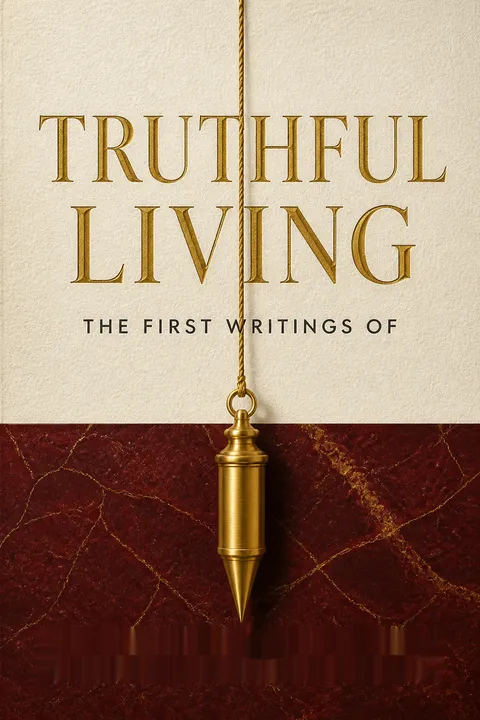
Truthful Living presents success as a sequence: choose a purpose, train attention, translate thought into action, serve others, and learn from consequences. Its 23 lessons are not a tightly engineered system so much as a classroom in print, with repeated instruction, personal anecdotes, moral exhortation, and practical exercises. The repetition is part of the method. Hill expects readers to reread, write, memorize, and apply, because information without action is treated as inert.
The book’s most distinctive strength is its insistence that ambition must answer to usefulness and honesty. Its sales advice is therefore broader than persuasion: understand the customer, communicate sincerely, and improve how value reaches people. The commuter who organizes a campaign over dim train lights embodies a second central theme, initiative. Instead of waiting for a benefactor or favorable conditions, the individual gathers people and creates leverage.
Several claims need careful handling. Hill repeatedly describes thought as if it directly shapes external reality, and his language about attraction can sound like a universal law. A grounded reading distinguishes psychological effects from supernatural causation: expectations can influence attention, persistence, and interpersonal behavior, but they do not control other people or guarantee material rewards. His confidence in self-discipline also understates structural barriers and the role of chance. Likewise, urging employees to provide extra service can encourage exploitation if increased contribution is never recognized.
The historical setting matters. The text emerged in 1917, and its examples, assumptions about gender, and views of competition reflect that moment. The 2018 edition also contains Jeffrey Gitomer’s commentary and action prompts alongside Hill’s lessons, so the volume is a layered work rather than an untouched document. Read with those limits in mind, its practical core remains coherent: define what matters, concentrate on work that helps someone, keep learning, and make integrity visible in the way results are achieved.
Review Summary
Truthful Living receives mostly positive reviews, with an average rating of 4.23/5. Readers appreciate Hill's timeless wisdom on success principles, though some find it dated or repetitive. Many see it as a valuable companion to "Think and Grow Rich." Gitomer's commentary is praised for illuminating Hill's early writings. Critics note the simplistic nature of some advice, while supporters emphasize its potential for life-changing impact. Overall, reviewers recommend it for those seeking personal growth and success strategies.
People Also Read









Glossary
Chief Aim in Life
guiding life objectiveA central purpose that gives direction to a person’s work and choices. Hill argues that a definite aim helps focus attention and effort, instead of letting energy dissipate across unrelated pursuits. It is meant to be pursued through planning, persistence, and service, not merely held as a wish.
Law of Harmonious Attraction
reciprocity through conductHill’s name for the idea that the way a person treats others tends to shape the responses they receive. He emphasizes generosity, friendliness, forgiveness, and cooperation, illustrated by small exchanges between people. The book presents this as a law of life, though it is best understood as a claim about social reciprocity rather than a guarantee of outcomes.
Great Magic Key
concentration on desireHill’s label for concentration, supported by ambition and desire. He recommends holding a worthy objective steadily in mind and imagining the future it could create, then pursuing it through effort. The term makes focused attention sound magical, but the practical technique is sustained commitment to a goal that is realistically attainable.
Five-Point Rule
five success disciplinesHill’s summary of five qualities he considers central to achievement: self-confidence, enthusiasm, a definite aim, service beyond the minimum expected, and concentration. He presents these as habits to develop through ongoing effort, rather than a guarantee that success will follow automatically. The rule condenses themes repeated throughout the lessons.
Principle of Service
value before rewardHill’s view that useful service is the cause and compensation is its effect. He argues that people should improve the quality or quantity of the help they provide and seek work where that contribution can be rewarded. Service is both an ethical commitment and a business principle, although the text gives less attention to situations where added work is not fairly compensated.
P-luck
luck made through actionHill’s playful term for opportunity created through initiative rather than passive wishing. In his example, a commuter turns complaints about dim train lighting into an organized campaign for change. P-luck means noticing an opening, taking responsibility, and mobilizing practical steps; it does not mean that effort guarantees success.
Reproductive Imagination
recalling past experienceHill’s term for mentally reconstructing an experience that has already reached a person through the senses. Recalling the appearance, smell, taste, or conversation of a past meal is his example. This form of imagination retrieves and rearranges remembered impressions, rather than creating an entirely new idea.
Productive Imagination
recombining remembered elementsHill’s term for forming a new mental idea by combining elements drawn from previous sensory experiences. His imagined device for seeing distant places through obstacles combines familiar concepts such as transparency and telescopes. The term frames creativity as recombination, while emphasizing that the material for invention comes from what people have observed, learned, or experienced.
About the Author
Other books by Napoleon Hill






Download PDF
Download EPUB
.epub digital book format is ideal for reading ebooks on phones, tablets, and e-readers.








