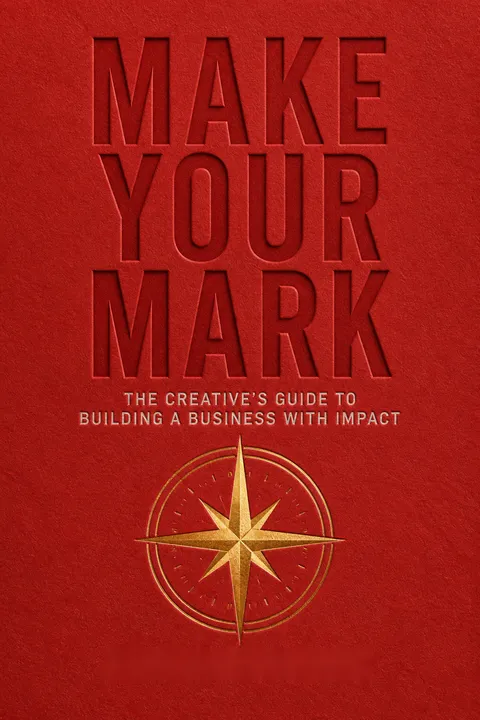


Key Takeaways
Make creative work matter by building a business that carries it to people.
Ideas need a path. Creativity alone does not ensure impact. A painting must be seen, research must be explained, and a useful invention must reach the people who need it. The book’s central argument is that business is not merely a way to monetize creative work. It is the practical machinery that makes work accessible, usable, and sustainable: product design, communication, distribution, leadership, and service all help talent travel beyond its creator.
Impact can sustain the maker. The goal is not growth for its own sake, but creating something that improves life for others while supporting the people who make it. That balance matters because meaningful work often demands long periods of effort and uncertainty. A business that serves a real need can help keep the work alive, rather than letting a promising idea remain private or disappear when its creator runs out of time or money.
The useful reframing is that business is part of the creative act, not a grubby sequel to it. Distribution and usability shape what an idea can do in the world, much as a bridge’s engineering shapes who can cross it. This also broadens the meaning of success beyond personal recognition. Still, impact is not automatically beneficial just because it is large or well packaged. The relevant test is whether the people reached are genuinely better served, not simply more numerous.
Distill your purpose until it can guide what you pursue and refuse.
Purpose is a compass. The book defines purpose as a clear account of the contribution a person or organization wants to make. A doctor named Bill Thomas summarized his life’s work as restoring respect for older people. That brief statement gave him a way to judge opportunities, relationships, and daily demands. By contrast, consultant Keith Yamashita initially described his work at length, until Thomas pressed him to make the central point clearer.
Find the overlap. Ask what the world needs, what you are unusually equipped to offer, what has been true of you at your best, and what you must become. The answers may not align neatly. Take time to examine the tension rather than forcing a polished slogan. Once purpose is clear, use it to decide what to stop doing, where patience is required, and whether personal aims fit the organization’s mission.
A concise purpose statement can function as a decision rule: it reduces the number of attractive distractions that deserve attention. In that sense, purpose resembles a constraint in design. A constraint does not eliminate creativity; it makes choices legible. The danger is treating a sentence as proof of alignment. Patagonia’s environmental commitments, as described here, become meaningful because they shape business choices. Purpose earns credibility through the opportunities declined and costs accepted, not through elegant wording.
Start with a human problem, then keep asking why the solution matters.
Name the need first. Entrepreneurs often describe what their product does instead of the problem a customer experiences. A gym owner might promise affordable training, for example, but that is a proposed solution. The deeper question is what makes it hard for people to exercise consistently. Emily Heyward recommends the “why test,” a method of repeatedly asking why a problem matters until its human or emotional stakes become clear. In the book’s car example, slow travel leads to lost time, and lost time matters because people want to accomplish more with their lives.
Look beyond the object. Nike is presented as more than shoes, and Apple as more than computers: enduring brands connect what they sell to a larger human concern. Warren Berger’s questions also help keep that connection alive: who would miss the company if it vanished, what business is it truly in, and what might it learn through a simple experiment?
Repeatedly asking why helps separate a customer’s lived difficulty from the founder’s preferred answer. It is a useful antidote to solution-first thinking, especially when a team has become emotionally attached to a product. The method also needs discipline: the deepest possible explanation is not always the most useful one. A founder should stop at the level that clarifies a real customer choice and can guide product decisions, rather than turning every practical need into a grand claim about human existence.
Build a learning organization that stays lean, open, and willing to change.
Treat the company as a system. Aaron Dignan calls the organization’s underlying values and working methods its “Responsive OS.” Responsive companies favor action, learning, openness, and flexible roles over heavy control and protection of past success. The book contrasts a mission-led vision with narrow commercial targets, lean teams with scale for its own sake, and shared information with closed silos. These choices are not just cultural decoration. They affect how quickly a company notices friction, tests an idea, and changes course.
Scale without going rigid. The practical advice includes short development cycles, small teams, and funding decisions tied to evidence from users. It also means accepting uncertainty: Twitter’s use as a news tool, for instance, was not fully anticipated by its creators. A responsive organization can begin with an informed direction while remaining open to what customers do with the product.
This operating model links organizational design to learning speed. Small teams and open information can reduce the distance between noticing a problem and acting on it. The idea of an organizational operating system is especially useful because it shifts attention from the business plan to the habits that determine how plans are carried out. Yet “lean” and “fast” are not universal virtues. Work involving safety, privacy, or complex regulation may require deliberate checks. Responsiveness means adjusting the process to the stakes, not eliminating safeguards.
Earn the right to expand by proving one product people urgently want.
Focus before variety. Andy Dunn argues that early brands should make one item excellent rather than launch a collection that divides attention, money, and customer understanding. Bonobos began with men’s pants designed to fit better. Before building a scalable online store, the founders sold in person and learned that customers wanted the pants: about 90 percent of those who tried them bought, and the company sold 475 pairs that summer. The first product gave the business evidence and a clear identity.
Expansion follows proof. Bonobos reached a million-dollar annualized revenue pace within six months of launching e-commerce, despite having a limited initial range. The point is not that every start-up should copy its sales model. It is that a strong first product can earn attention, feedback, and the resources to develop the next one. Starting with multiple offerings may make it harder to discover which customer need the business actually serves.
Narrow focus is both a product strategy and a learning strategy. When a company begins with one clear offer, customer behavior is easier to interpret: enthusiasm points toward a specific value proposition instead of a confusing bundle. The Bonobos story also shows why direct selling can be more than a temporary workaround; it exposes the founders to the language and objections of actual buyers. But one successful product is not proof of a durable market. Repeat purchase, referrals, and continued usefulness matter more than an impressive launch spike.
Treat prototypes as experiments, and users as co-designers, not judges.
Make learning tangible. Sebastian Thrun compares innovation to climbing unfamiliar terrain: plans cannot reveal every obstacle, so teams need to act, observe, and adjust. A prototype is an early version used to test an assumption, not a miniature finished product. Jane ni Dhulchaointigh sent early Sugru samples to roughly 150 people while she continued developing the self-setting rubber. Watching users try it showed that communication and examples were as important as the material itself.
Observe behavior, not just opinions. When families treated Sugru like modeling clay, that behavior revealed a gap between the intended use and what users understood. The book recommends putting unfinished work in people’s hands, showing them possible uses, and inviting them to share their own. Sugru’s users supplied ideas, feedback, and public demonstrations that helped shape the product and spread its appeal.
The strongest user research often comes from watching what people do when instructions are sparse. Stated preferences can be vague, while behavior exposes confusion, workarounds, and unexpected uses. This makes early testing a form of joint discovery rather than a verdict on the creator’s talent. There is a useful limit, however: a handful of enthusiastic testers can reveal usability problems without representing a whole market. Early observations should generate better questions and further trials, not be mistaken for universal demand.
Design the default experience so useful actions feel almost effortless.
Remove needless work. Scott Belsky calls attention to the “default experience,” what people encounter without studying instructions or customizing a product. A Behance sign-up once asked new users to choose creative fields; the step took about two minutes and caused roughly 10 percent of users to leave. Removing it from sign-up and asking later helped sign-ups rise. The lesson is to make the first useful moment arrive quickly, then request extra effort only when it serves the user.
Let the product disappear. Julie Zhuo calls design that removes visible steps or relies on familiar patterns “invisible design.” Search replaced the labor of browsing growing directories, while Dropbox made file syncing understandable by using familiar computer folders. A product should be judged not only by how it looks, but by how smoothly it helps someone accomplish a task.
These examples connect design quality to cognitive effort. Each extra choice or unfamiliar interaction asks the user to pause, interpret, and decide. Removing steps can make a product feel almost magical because attention stays on the user’s goal rather than the interface. Simplicity is not always the same as fewer controls, though. Some users need visibility, customization, or explanations to feel safe. A good default makes the common path easy while leaving a clear route for people whose needs differ.
Give people a story and real ways to help carry it.
Build participation, not just awareness. Chris Guillebeau describes a small community that generated $22,000 for a clean-water effort in less than a day and more than $100,000 in a product launch. The response came from years of trust, not a sudden viral event. His approach is to create work people can believe in, invite them into it, and serve them before asking for support. Sharing expertise, useful content, or practical help can build that relationship.
Let customers shape the story. DODOcase connected tablet covers to San Francisco bookbinding, and customers followed the making process while waiting for orders. Their participation made the delay part of a shared journey. Sugru similarly shifted from displaying the founder’s examples to showing what users had made. A story becomes more persuasive when customers have meaningful opportunities to contribute to it.
A community is not simply an audience with a more flattering name. It has a reciprocal structure: people receive value, recognize a shared purpose, and can influence what happens. That distinction helps explain why a small group may mobilize more effectively than a large list of passive followers. The approach also has an ethical boundary. Strategic generosity can become a disguised sales tactic if every gift carries an unspoken demand. Trust lasts when giving remains useful even to people who never buy.
Make trust tangible through honest service and small acts of care.
Solve the customer’s actual problem. The book argues that customers notice when they are treated as people rather than transactions. Airbnb’s founders, when growth stalled, stayed in rentals and met hosts and guests to find out what was broken. Charles Schwab addressed frustrations such as hidden fees and phone trees by offering fee refunds and access to a human representative. The point is to understand the moments that make a customer’s life harder, then fix them.
Details communicate respect. Tattly included extra temporary tattoos with orders, along with playful touches in its packaging and invoices. The gesture cost little but made customers feel considered. Warby Parker’s free shipping and returns served a similar purpose: they reduced the risk of buying glasses online and signaled confidence in the product. A sincere apology matters, but it must be followed by a real remedy.
Trust is built through repeated evidence, not merely a friendly tone. A company that listens, explains mistakes, and repairs the harm gives customers reasons to believe its promises. Small gestures can be potent because they make care visible in mundane interactions, where corporate values are usually tested. Still, kindness cannot substitute for reliable core service. A charming package does not redeem a defective product or an unfair policy. The most credible delight sits on top of competent, accountable work.
Lead by sharing context and giving capable people room to act.
Make leadership useful. The book presents management as the work of helping a group succeed, not claiming status or issuing orders. At Buffer, the team and public could see figures such as revenue, salaries, and customer-support volume. Its founder argued that shared information helps people make decisions with the context leaders already have. Clear communication also requires repetition: in a changing team, a decision that seems obvious to one person may be news to everyone else.
Transfer responsibility, not just tasks. On the USS Santa Fe, Captain David Marquet found that sailors obeyed an order even when they knew it could not be carried out. He shifted the crew toward stating intended actions and taking ownership. Operational performance improved, and reenlistments rose from three to thirty-three in a year. The example shows how a leader can create conditions for judgment instead of training people to wait for permission.
Information and authority are complements. Sharing facts without decision rights can produce informed spectators; delegating without context can produce confident mistakes. The submarine story makes the stakes vivid because compliance itself became dangerous. In ordinary organizations, the same principle suggests matching autonomy to training, clarity, and consequences. Transparency also requires judgment: sensitive personal or customer information should not be exposed merely to prove openness. The aim is shared understanding, not disclosure for its own sake.
Put unfinished work into the world before caution becomes hiding.
Readiness is a choice. Seth Godin distinguishes preparation from the moment of releasing work for others to encounter. New products often arrive before customers fully understand them. The telephone appeared before people had settled conventions for answering it, and cars became useful as roads and fueling systems developed around them. Waiting for a market to feel completely prepared can mean withholding the very thing that helps people imagine a new possibility.
Release to learn and serve. The book’s advice is not to abandon preparation, but to recognize that uncertainty cannot be removed by endless private polishing. A prototype, early service, or first public version can reveal what people understand, need, and value. The creator’s task is to make a responsible first move, then listen and improve, rather than treating discomfort as evidence that the idea must remain hidden.
The closing challenge is to notice when “not ready” describes a real defect and when it protects the creator from judgment. That distinction is difficult because both can feel like caution. Releasing early creates feedback, but the cost of a mistake varies sharply by domain. A rough event announcement and an untested medical device do not warrant the same threshold. Courage is not the absence of safeguards. It is accepting uncertainty while taking the most responsible next step.
Analysis
Make Your Mark is a business anthology, not a single-author argument unfolding through one continuous narrative. Its 21 contributors approach creative enterprise from purpose, product, customers, and leadership. The compilation’s coherence comes from repeated commitments: serve a real need, learn in public, simplify the user’s path, and build organizations where people can exercise judgment. The examples give those principles texture, from Bonobos testing pants face-to-face to the USS Santa Fe replacing obedience with ownership.
The book’s most important synthesis is that impact depends on alignment across layers. Purpose guides what a company chooses to solve. Product design translates that choice into an experience. Customer relationships reveal whether the experience works. Leadership and communication determine whether the organization can respond. A weakness in any layer can undo strength elsewhere: a moving mission cannot compensate for a confusing product, and an elegant product cannot sustain trust through indifferent service.
The collection is strongest as a practical set of questions and experiments, not as proof that one business recipe guarantees success. Its memorable cases tend to feature companies that survived and became notable. Those stories illustrate possible mechanisms, but they cannot establish that the same practices alone caused the outcomes, or that the approach transfers unchanged to every industry. The reader should treat each recommendation as a hypothesis to test against actual users, resources, and risks.
A productive way to apply the book is to move from aspiration to evidence. State the human problem, identify what would count as a useful first test, watch what people do, and revise the product and organization around what is learned. Keep purpose specific enough to constrain choices, but flexible enough to absorb new evidence. That is the book’s real promise: creative ambition becomes consequential when it is made useful, shareable, and capable of learning.
Review Summary
Make Your Mark receives mixed reviews, averaging 3.97/5 stars. Readers appreciate its inspirational and practical advice for creative entrepreneurs, praising the diverse perspectives and valuable insights. However, some criticize its shallow content and lack of originality, comparing it to online articles. The book is seen as a quick read with useful tips on business, leadership, and customer service. Critics note outdated examples and conflicting advice, while supporters value its concise format and thought-provoking ideas for building impactful businesses.
People Also Read






Glossary
Responsive OS
Adaptive organizational operating systemThe set of values, processes, and working methods that shape how an organization acts. In the book, a Responsive OS favors lean teams, openness, experimentation, learning, and flexible structures. It contrasts with company cultures that protect existing success through secrecy, hierarchy, and tight control.
why test
Repeatedly probe a needA method for clarifying why a customer problem matters. Starting with a real difficulty, ask why it matters, then ask why again until the underlying human stakes become clear. The purpose is to connect a product to a meaningful need rather than relying on a description of its features.
Cycle of Simplicity Loss
Feature growth drives user departureScott Belsky’s name for a recurring product pattern: users adopt a simple product, its creators add features and complexity, and users move toward a simpler alternative. The concept warns product teams not to take early users’ preference for simplicity for granted as a product evolves.
minimum viable product
Smallest useful learning testThe simplest product or version that can test an assumption and reduce uncertainty. In the book’s discussion of experimentation, the aim is not to build a tiny version of every planned feature. It is to create only what is needed to learn whether an idea addresses a real need.
invisible design
Design that removes frictionA product-design approach that improves an experience by eliminating steps, reducing visible complexity, or using familiar patterns. The design may be less noticeable precisely because the task feels easier. Examples in the book include search replacing directory browsing and file syncing that works through familiar computer folders.
default experience
What users meet without setupThe ordinary product experience users receive without reading instructions, changing settings, or learning advanced features. The book argues that this initial path deserves special attention because many people continue using only what they discover immediately. A helpful default makes the core value accessible without extra effort.
servant leadership
Leadership centered on helping othersA model of management in which the leader’s role is to support people, help them work toward a shared goal, and create conditions for them to succeed. Rather than treating leadership as control or rank, the book frames it as service to specific individuals and to the team’s collective work.
mission question
Open-ended goal for growthA bold, forward-looking question that gives an organization an ongoing challenge without pretending that its answer is already known. Unlike a fixed mission statement, it invites employees, partners, and customers to help explore how the company might extend its work or contribute more meaningfully.
FAQ
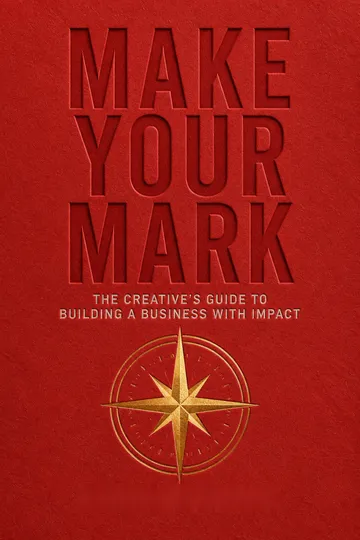
What's "Make Your Mark: The Creative’s Guide to Building a Business With Impact" about?
- Focus on Execution: The book emphasizes the importance of executing ideas rather than just generating them, aligning with Thomas Edison's notion that "Genius is 1 percent inspiration, and 99 percent perspiration."
- Building Impactful Businesses: It provides a playbook for crafting companies that thrive in a fast-paced, socially connected world, focusing on making an impact rather than just profit.
- Insights from Experts: The book compiles insights from 21 leading experts and entrepreneurs on building a business with impact, covering topics from defining purpose to serving customers.
- Practical Advice: It offers practical advice and fresh thinking for launching new companies or retooling existing businesses to create something meaningful.
Why should I read "Make Your Mark: The Creative’s Guide to Building a Business With Impact"?
- Action-Oriented Insights: The book provides pragmatic, action-oriented insights from leading researchers and visionary creatives, making it a valuable resource for anyone looking to execute their ideas.
- Diverse Perspectives: With contributions from various experts, it offers a wide range of perspectives on building a business, from product development to customer service.
- Focus on Impact: It shifts the focus from profit to making a meaningful impact, appealing to those who want to create businesses that change the world for the better.
- Empowerment: The book aims to empower readers to make good on their ideas, providing the tools and inspiration needed to take bold steps in their entrepreneurial journey.
What are the key takeaways of "Make Your Mark: The Creative’s Guide to Building a Business With Impact"?
- Purpose as a Compass: Uncovering and succinctly summarizing your purpose is crucial for guiding future actions and focusing on what matters most.
- Iterative Innovation: Emphasizes the importance of relentless iteration and fast failure as a means to innovate and improve products.
- Customer-Centric Approach: Building authentic relationships with customers and focusing on their needs is essential for long-term success.
- Leadership and Transparency: Encourages a leadership style that empowers team members and promotes transparency to foster trust and collaboration.
How does "Make Your Mark" define creativity and its role in business?
- Problem-Solving: Creativity is defined as solving problems in new ways and conceiving new ways of looking at the world.
- Expression in Various Forms: It can be expressed in art, science, and thought, but must be made accessible for consumption to make an impact.
- Execution Over Ideas: The book emphasizes that creativity must be coupled with execution, distribution, and management to sustain and serve others.
- Business Application: Creativity is about applying business forces to ideas, focusing on making an impact rather than just making money.
What is the "Responsive OS" mentioned in "Make Your Mark"?
- Organizational Operating System: The Responsive OS is a new way of working that allows companies to be more responsive to competition, culture, and technology.
- Core Values: It includes values like being visionary, lean, open, learning-focused, and emergent, contrasting with legacy businesses that are commercial, large, closed, sustaining, and controlled.
- Adaptability: Responsive organizations are comfortable with uncertainty and allow their structure and processes to adapt over time.
- Purpose-Driven: These organizations are driven by a purpose greater than profit, aiming to change the world in small or massive ways.
How does "Make Your Mark" suggest finding your company's purpose?
- Intersection of Truths: The process begins by looking at the intersection of what the world needs, the organization's unique talents, its history, and its future aspirations.
- Introspection and Debate: It involves introspection, storytelling, and debate to uncover what the company truly cares about.
- Purpose as a Guiding Light: Once defined, the purpose informs every move the company makes, adding meaning and motivation to daily operations.
- Alignment with Personal Purpose: The book also suggests aligning personal purpose with organizational purpose to create conditions for doing good in the world.
What advice does "Make Your Mark" offer for building a great product?
- Focus on One Thing: Start by getting one product right before expanding offerings, as this earns the right to develop additional products.
- User Experience: Emphasize simplicity and usability, ensuring the product is easy to understand and use for first-time users.
- Iterative Development: Encourage rapid prototyping and iteration to learn from failures and improve the product continuously.
- Collaboration with Users: Involve users in the development process to gain insights and make informed decisions about product improvements.
How does "Make Your Mark" address serving customers effectively?
- Storytelling: Build a story into your brand and invite customers into that story to create a deeper connection.
- Long-Term Focus: Prioritize customer experience over short-term profits, even if it requires unsustainable tactics initially.
- Reciprocity: Make sharing expertise and content part of your strategy to build loyalty and trust with your customer base.
- Two-Way Conversation: Engage in open dialogue with customers, focusing on influencing the conversation positively rather than controlling it.
What leadership qualities does "Make Your Mark" emphasize?
- Servant Leadership: Leadership should be about serving others and helping them become their best selves, rather than exerting control.
- Transparency: Share information openly and repeat key messages to ensure everyone is aligned and informed.
- Empowerment: Give control to team members to foster ownership, responsibility, and initiative.
- Continuous Improvement: Regularly reexamine and refactor processes to ensure they remain effective and relevant.
What role does transparency play in "Make Your Mark"?
- Building Trust: Transparency breeds trust, which is the foundation of great teamwork and collaboration.
- Empowering Teams: Sharing information openly empowers team members to make informed decisions and take initiative.
- Customer Loyalty: Openness with customers builds trust and loyalty, making them more likely to support and advocate for the brand.
- Feedback and Improvement: Transparency invites feedback, allowing for continuous improvement and higher standards.
What are some of the best quotes from "Make Your Mark" and what do they mean?
- "Purpose compels you to act." This quote emphasizes that a clear purpose drives meaningful action and helps focus efforts on what truly matters.
- "The devil is in the default." It highlights the importance of the default user experience, as most users will not explore beyond initial features.
- "Do things that don’t scale." This advice suggests focusing on perfecting the customer experience for early adopters before scaling the business.
- "Create more value than you capture." It encourages businesses to focus on providing value to customers and the world, rather than solely seeking profit.
How does "Make Your Mark" suggest handling failure and iteration?
- Learning from Failure: View failure as an opportunity to learn and improve, rather than a setback.
- Rapid Iteration: Encourage fast iteration and prototyping to quickly test ideas and gather feedback.
- Resilience: Maintain resilience and focus on the process, rather than being discouraged by setbacks.
- Embrace Uncertainty: Accept that innovation involves unknowns and that failure is a natural part of the journey.
99u Series

About the Author

Download PDF
Download EPUB
.epub digital book format is ideal for reading ebooks on phones, tablets, and e-readers.








