

Key Takeaways
Read Iran through historical memory, not a strategy game's arithmetic.
History shapes expectation. Polk argues that strategic models often misread Iran by treating its leaders as abstract calculators who respond predictably to costs and benefits. Iranians also interpret threats through memories of invasion, foreign interference, and humiliation. Those memories are reinforced through poetry, schooling, public ceremony, and religious observance, not merely preserved in archives.
Shared rules matter. The book uses social contract for the implicit expectations linking a people, its institutions, and its rulers. In 1979, the Shah's army and security forces still existed, yet could no longer command obedience in Tehran. Force had lost the public acceptance that made it effective. To understand Iran, then, means asking what an action signifies as well as what it costs.
This lens corrects a common mistake in strategic analysis: interpreting unfamiliar behavior as irrational instead of asking what history makes reasonable from the other side. Memory can alter the meaning of a threat, a concession, or a foreign presence. But it is not a single national script. Class, generation, ethnicity, and political faction shape how Iranians interpret their past. Polk's historical portrait works best as a warning against cultural blindness, not as a formula for predicting every Iranian decision.
See Iran as a layered civilization, not simply ancient Persia.
Identity accumulated over time. Polk distinguishes the modern Iranian population from the ancient Persians, whose language and culture became dominant without erasing other peoples. Indo-European migrations brought the ancestors of the Medes and Persians; Arab conquest introduced Islam and Arabic influence; Turkish migrations added new rulers and communities. The Mongol invasions devastated cities and irrigation, while later Persian language and literature spread across neighboring empires.
One name, many histories. Iranians include Persians, Kurds, Arabs, Turkmens, and others, as well as Shiis, Sunnis, Christians, Jews, Bahais, and Zoroastrians. The shared Iranian identity is neither a simple bloodline nor an unchanging essence. It grew through repeated encounters, conquests, and cultural exchange, with Persian language and memory providing a powerful common thread.
The account presents national identity as something assembled through contact rather than inherited intact. That is a useful distinction: cultural continuity does not require ethnic uniformity, and borrowing does not make a culture less distinctive. The Persian language's reach beyond Iran also shows that influence can travel without political control. Still, a shared cultural center should not be mistaken for consensus. The same national story can sustain competing claims about who belongs and what Iran ought to become.
Treat water and mobility as political forces, not scenery.
Scarcity organized daily life. Much of Iran is dry, and settled agriculture depended on oases, wells, and underground irrigation channels called ghanats. These channels carried water over long distances, sometimes through shafts roughly 100 meters deep. Where farming could not support people, nomadic herders moved seasonally between lowland winter pastures and upland summer meadows.
Different lives, shared dependence. Polk estimates that nomads numbered around a million, while villages and cities relied on limited water and agricultural output. Governments sought taxes from both settled communities and mobile tribes, often through coercive local intermediaries. Reza Shah later restricted tribal migration and forced settlement, weakening communities whose livelihood depended on movement. Geography did not dictate Iranian politics, but it set the constraints that rulers repeatedly tried to manage.
Environmental history helps explain why state control can look different in a country of deserts, mountains, and sharply uneven water supplies. A tax system designed for settled farmers does not fit mobile herders, and a policy of forced settlement can destroy useful economic knowledge along with political independence. Polk's account makes those tradeoffs visible. The caution is against treating geography as destiny: water scarcity shaped choices, but rulers still decided whose needs counted and how coercively to pursue them.
Recognize Shiism as Iran's bridge between faith and national identity.
A religious order became a state. The Safaviya began as a Sufi brotherhood founded by Shaikh Safi in Ardabil. Its later leader, Ismail, captured Tabriz in 1501, crowned himself Shah, and made Shiism the state religion, distinguishing his realm from Sunni Ottoman power. The Safavid rulers used religious devotion and military organization to reunify Iran after centuries of fragmentation.
Ritual carried memory. Polk argues that Iranian Shiism absorbed older Persian religious themes, including moral struggle and expectation of a final judgment. Public mourning for Imam Husain's death developed into the Taaziyeh, a passion play in which audiences relived his martyrdom. Such rituals made a distant event feel personal, turning grief and responsibility into shared political emotion. The book presents this as a key source of Iran's distinctive religious culture.
Ritual makes history social: it gives people a repeated, embodied way to feel connected to events they did not witness. That helps explain why religious observance can carry national meaning beyond formal doctrine. The Safavid example also shows rulers shaping identity through institutions, not just inheriting it. Polk's account of Zoroastrian influence is illuminating as a continuity hypothesis, but cultural traditions rarely pass unchanged from one faith to another. Similar themes can persist while their meanings are substantially remade.
Judge Iranian rulers by legitimacy as well as force.
Power needed a recognized claim. Farr is the divine favor that Iranian rulers associated with success and the right to govern. Ibn Khaldun's term asabiyah describes the close group solidarity that enables people to act collectively. Polk uses both ideas to explain how a leader could unite rival tribes: military victories demonstrated strength, lineage suggested a rightful inheritance, and religious authority supplied a higher purpose.
Authority was divided. The ulama, Iran's body of religious scholars, taught, interpreted law, and provided services that many people otherwise expected from government. Their leading jurist could serve as a marja-e taghlid, a religious authority whose rulings followers were obliged to follow. Shahs needed religious approval, while religious leaders often tolerated secular rule for practical reasons. Their uneasy partnership became a recurring contest over who could define legitimate authority.
Legitimacy is not a decorative story added after power is won. It helps explain why a smaller force can command loyalty and why a seemingly strong state can suddenly fail. Polk's account is especially useful in showing that religious and political authority were intertwined without being identical. The balance was never fixed: rulers sought control, while scholars could gain influence by defending social norms. The model should not imply that all Iranians shared one standard of legitimacy or that religious authority automatically represented popular consent.
Foreign interference repeatedly turns economic disputes into tests of sovereignty.
Concessions became political flashpoints. In 1890, a foreign company received a monopoly over Iranian tobacco. Merchants feared the loss of trade, and religious leaders opposed foreign control. A religious ruling against tobacco use helped unite the country in a boycott, forcing the Shah to cancel the concession. The episode showed that the ulama could mobilize public resistance against the monarchy.
The pressure widened. In 1907, Britain and Russia agreed to divide Iran into spheres of influence without consulting its people. Against this backdrop, the 1905 to 1909 constitutional movement demanded a national assembly and limits on arbitrary rule. Its coalition included religious leaders, merchants, notables, and secular intellectuals. Polk's account links foreign economic control to a larger question: whether Iranians could make decisions about their own state.
A commercial agreement can become a sovereignty issue when citizens believe that its terms were imposed by outsiders and protected by unequal power. The tobacco boycott is striking because it joined groups with different interests around a specific symbol of control. That coalition did not erase their differences, and the constitutional movement itself remained divided. The episode is a reminder that opposition to foreign influence may unite a population temporarily without producing agreement on what a fair domestic order should look like.
Modernize livelihoods without sharing power, and reform can destabilize rulers.
Reza Shah built capacity by force. He expanded the army, schools, and state administration, while attacking tribal independence and restricting seasonal migration. His policies helped create a more centralized country, but they also imposed severe costs on nomadic communities. His son, Muhammad Reza Shah, continued modernization through education, development plans, and land reform. The share of agriculturalists who owned land rose substantially, but many farms were too small to sustain a family.
Growth raised expectations. Oil revenues funded rapid development, yet benefits were uneven and political participation remained restricted. Rural families who could not prosper on small plots moved to cities, while a larger educated population sought influence the Shah would not share. Polk's argument is not that development caused revolution by itself. It is that economic and social change without political accommodation helped turn frustration into a challenge to the monarchy.
The distinction between improving material conditions and granting political agency is central here. New education and economic opportunity can create citizens who expect a voice, not simply better consumption. The Shah's reforms also show the risks of measuring success by aggregate growth while overlooking who bears the disruption and who receives the gains. Still, modernization does not mechanically produce revolution. Political organization, religious leadership, state decisions, and the particular crises of 1978 and 1979 shaped how discontent became a mass movement.
The 1979 revolution built clerical rule through both welfare and coercion.
The old order collapsed quickly. After the Shah fled, committees and armed groups seized power in a political vacuum. Ayatollah Khomeini's doctrine, Velayat-e Faghih, assigned governing authority to the learned Islamic jurist. Revolutionary tribunals executed former officials and others accused of opposing the new order; the Revolutionary Guard became a powerful force alongside the regular military.
The new state also distributed resources. After the revolution, foundations called bonyads took control of confiscated assets and funded employment and welfare programs. The Iraq-Iran War strengthened the regime's language of sacrifice and martyrdom while devastating both countries. By 2009, Polk describes a society divided between revolutionary-era leaders, veterans and officials who came of age in the war, and younger citizens pressing for change. The election protests revealed tensions within the system, though the book does not establish that the reported results were fraudulent.
Revolutions do not simply remove a ruler; they create new institutions, loyalties, and beneficiaries. The Iranian case combines coercive power with material support, making the regime more than a collection of slogans or police forces. Welfare networks can build genuine dependence and political attachment, even when participation is constrained. The account also resists the idea that the state is monolithic: clerics, elected officials, veterans, and young protesters can all claim the revolution's legacy while disagreeing sharply about its meaning.
Remember the 1953 coup when interpreting Iranian distrust of Washington.
A short operation left a long shadow. In 1953, American and British intelligence helped overthrow Prime Minister Muhammad Mossadegh after his government nationalized the oil industry. The Shah returned to power, and the United States became closely associated with his rule. The coup weakened Iran's nationalist political center and gave many Iranians reason to doubt American claims of neutrality.
The distrust accumulated. The 1979 seizure of the American embassy drew on older memories of foreign intervention, although it violated diplomatic protections. Later confrontations, including American support for Iraq during the Iran-Iraq War and the 1988 shooting down of an Iranian passenger plane, reinforced Iranian suspicion. Polk's central point is that policy is interpreted through accumulated experience: actions that Washington regards as separate episodes can look to Tehran like a continuing pattern.
The 1953 coup matters not only as a historical event but as a lasting reference point through which later American actions are judged. In international relations, reputation acts like a constraint: assurances are less persuasive when past conduct gives the other side reasons to doubt them. That does not make every Iranian accusation accurate, nor does history excuse hostage-taking or other abuses. It does mean that rebuilding trust requires more than a change in tone. The credibility of a promise depends on observable behavior.
Reduce Iran's sense of encirclement before demanding nuclear restraint.
Security shapes nuclear choices. Polk argues that Iran's interest in nuclear capability cannot be understood apart from its fear of attack and regime change. He cites the 2007 American intelligence estimate, which judged with high confidence that Iran had halted its nuclear weapons program in 2003, while noting that uncertainty remained about its intentions and capabilities. In the book's account, threats and sanctions could strengthen the very security concerns they aimed to resolve.
Offer a reciprocal path. Polk recommends that the United States renounce preemptive attack, that Iran receive credible guarantees of sovereignty, and that regional states move toward a nuclear-weapon-free Middle East. He also proposes trade and access to technology alongside international monitoring. The aim is not to accept every Iranian claim, but to make restraint compatible with Iran's security and dignity.
This is a security dilemma: steps one country calls defensive can look threatening to another, prompting countermeasures that leave both less secure. Polk's proposal correctly treats credible guarantees and verification as connected rather than competing tools. Yet a guarantee alone cannot settle disputes about compliance, regional influence, or future intentions. Durable restraint needs reciprocal commitments, monitoring, and a way to address violations without making every disagreement a pretext for war. Security is not a favor granted by one side; it is an arrangement both sides must trust.
Analysis
Polk's strongest contribution is methodological. He asks readers to treat Iranian political behavior as historically situated rather than as a puzzle to be solved by assuming universal rational calculation. His narrative joins geography, religious memory, political institutions, and foreign intervention, showing how a water system, a mourning ritual, an oil concession, and a constitutional demand can each shape the terms of political life. This is especially valuable for understanding why external pressure can generate defiance instead of compliance.
The same method carries a risk. Iran becomes at times a single historical personality, governed by a collective memory that the book cannot fully document. Its own material shows a more fractured society: nomads and urban residents, ethnic communities, secular intellectuals, clerics, veterans, and younger protesters do not experience history identically. The book is most persuasive when it follows those groups and institutions, and less secure when it attributes a unified intention to Iran as a whole. Its proposed line of continuity from Zoroastrian belief to Shiism is suggestive, but should be read as interpretation, not an uncontested genealogy.
The narrative also has a clear 2009 horizon. Its account of the nuclear dispute relies partly on intelligence judgments that were necessarily uncertain, and its predictions about Iran's political direction are arguments made at a particular moment, not settled outcomes. Still, its central diplomatic insight remains analytically useful: coercion can change an opponent's incentives in the opposite direction from the one intended, especially when that opponent sees the pressure as a threat to survival. Polk does not ask readers to excuse the Iranian state. He asks them to distinguish understanding its motivations from endorsing its actions, a distinction essential to serious negotiation.
Review Summary
Understanding Iran receives mostly positive reviews for its comprehensive historical overview and insights into Iranian culture and politics. Readers appreciate Polk's unique perspective as a former U.S. government advisor. The book is praised for its readability and ability to connect past events to modern Iran. Some criticize potential bias in recent political analysis and outdated information. Overall, reviewers found it informative and valuable for understanding Iran's complex history and its relationship with the West, despite occasional editorial issues.
People Also Read


Glossary
collective unconscious
Shared inherited social memoryPolk uses this Jungian term for the largely unspoken body of inherited assumptions, memories, and norms that helps a society decide what seems normal or proper. In his account, Iranian history is kept alive through education, poetry, folktales, and religious ceremony, so the past can shape present political reactions even when people are not consciously recalling a specific event.
social contract
Implicit political expectationsIn this book, the social contract is the implicit relationship among a people, their institutions, and their leaders. It is not necessarily a written constitution. It consists of shared expectations about authority and proper conduct. Polk argues that when those expectations collapse, as they did before the 1979 revolution, armies and police may be unable to preserve order even when they remain materially powerful.
farr
Divine favor legitimizing ruleFarr is an ancient Iranian concept of divine favor associated with kingship. A ruler's success, especially victory in war, could be taken as evidence that he possessed it. Losing power or suffering defeat could indicate that this favor had departed. Polk uses the idea to explain why military failure could damage a ruler's legitimacy, not merely weaken his practical control.
asabiyah
Solidarity enabling collective actionIbn Khaldun's term for the emotional attachment that binds a group closely enough for its members to subordinate some private interests to common action. Polk applies it to Iranian tribal politics, where leaders needed to unite groups that might otherwise compete or fight. Shared lineage, religious purpose, and successful leadership could strengthen this cohesion.
ulama
Islamic religious scholarsThe ulama are the body of scholars knowledgeable in Islamic religious matters. In Iranian Shiism they were not a single centralized church with one chain of appointment. They included village clerics, teachers, students, and senior jurists. Polk emphasizes their broad social role in education, law, religious guidance, and charity, as well as their recurring political rivalry and cooperation with rulers.
marja-e taghlid
Authority for religious emulationA marja-e taghlid is a senior Shia religious authority whose legal and religious rulings may be followed by less learned believers. The term means a resource or reference for emulation. Polk describes such authorities as influential not simply because of formal office, but because their learning and reputation lead followers to accept their judgments.
Velayat-e Faghih
Rule by an Islamic juristVelayat-e Faghih is Khomeini's doctrine that a qualified Islamic jurist should exercise political authority during the absence of the Hidden Imam. It became the principle behind the Islamic Republic's supreme religious office. The doctrine departed from the older view that the ulama should generally avoid ruling directly before the Imam's return.
bonyad
Religious social welfare foundationA bonyad is a foundation that manages assets and provides social or economic services. Traditional Iranian foundations were supported by private endowments, but after the 1979 revolution the regime created powerful foundations using confiscated property. Polk describes them as major employers and providers of welfare, as well as influential economic institutions with special privileges.
bast
Sanctuary from state authorityBast is the practice of taking refuge in a place regarded as protected from arrest or punishment. Traditionally, sanctuaries included mosques, shrines, and the homes of religious leaders. During the 1905 constitutional movement, protesters used bast as a form of nonviolent political action, gathering in protected places to press demands on the Shah.
taqiyyah
Concealing belief under dangerTaqiyyah is a Shia practice of concealing or disguising religious belief when openly expressing it would bring danger. Polk invokes it in discussing how a threatened Iranian government might use negotiation and apparent restraint while preserving strategic options. The term's religious use should be distinguished from any broader political claim that every Iranian statement is deceptive.
FAQ
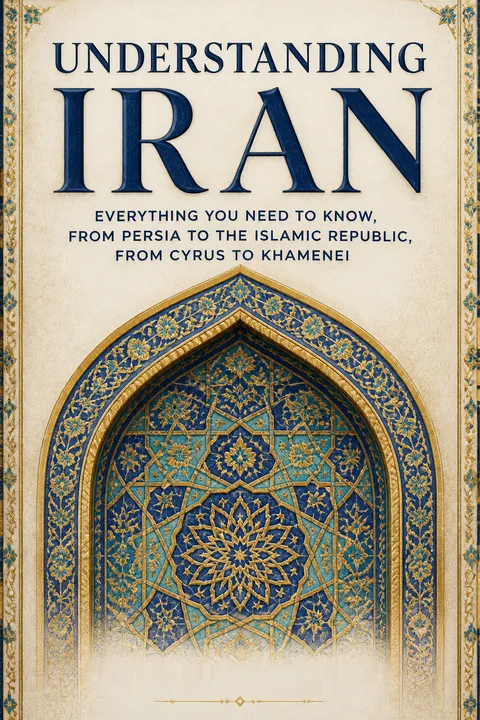
1. What is [Understanding Iran: Everything You Need to Know, From Persia to the Islamic Republic, From Cyrus to Khamenei] by William R. Polk about?
- Comprehensive historical overview: The book traces Iran’s history from ancient Persia through the Islamic Republic, covering over two millennia of cultural, political, and religious developments.
- Focus on identity formation: Polk explores how Iranian identity was shaped by Indo-European influences, Zoroastrianism, Islam, and successive political regimes.
- Contemporary relevance: The narrative connects historical events to modern Iranian society and politics, especially in relation to the West and nuclear issues.
- Cultural and political analysis: The book emphasizes understanding Iran’s unique cultural code and collective memory to grasp its current dynamics.
2. Why should I read [Understanding Iran] by William R. Polk?
- Nuanced perspective: The book challenges Western misconceptions by providing deep historical and cultural context, moving beyond stereotypes and simplistic geopolitical analysis.
- Bridging cultural gaps: Polk explains how Iran’s diverse heritage shapes its national identity and political behavior, which is crucial for informed foreign policy.
- Accessible scholarship: Written for general readers, it balances detailed research with clear explanations, making complex topics understandable.
- Policy relevance: The book offers practical lessons for diplomacy and international relations, especially regarding U.S.-Iran interactions.
3. What are the key takeaways from [Understanding Iran] by William R. Polk?
- Historical continuity matters: Iran’s modern politics and society are deeply rooted in its long history and collective memory.
- Religion and identity: Zoroastrianism and Shiism have profoundly shaped Iranian culture, politics, and responses to foreign influence.
- Foreign intervention’s legacy: Repeated Western interference, especially the 1953 coup, has fueled Iranian mistrust and shaped its revolutionary path.
- Understanding over confrontation: Polk argues that diplomacy and cultural understanding are essential to avoid conflict and foster stability.
4. How did ancient Indo-Europeans and Zoroastrianism shape Iranian culture according to [Understanding Iran]?
- Technological and social innovations: Indo-Europeans introduced the horse, chariot, and compound bow, influencing military and social structures.
- Religious synthesis: Their “sky religion” merged with local beliefs, evolving into Zoroastrianism, which became Iran’s foundational cosmology.
- Enduring concepts: Zoroastrian ideas like dualism, the Last Day, and ritual purity persist in Iranian culture and influenced later religions.
- Cultural legacy: The Persian language and many social concepts trace back to these early influences.
5. How does [Understanding Iran] by William R. Polk explain the significance of the Safavid dynasty and Shiism?
- Religious-military origins: The Safavid dynasty emerged from a Sufi brotherhood, militarized by the Qizilbash tribes.
- Shiism as state religion: Shah Ismail I established Twelver Shiism as the official faith, forcibly converting the population and creating a distinct Iranian Shia identity.
- Political unification: The Safavids reunited Iran after centuries of fragmentation, blending Persian traditions with Shia Islam.
- Lasting impact: This era set the foundation for modern Iranian statehood and religious identity.
6. What is the “social contract” concept in [Understanding Iran] and how does it relate to Iranian history?
- Implicit societal agreement: Polk describes the social contract as the evolving relationship between people, institutions, and leaders, defining what is “right” and “normal.”
- Revolutionary breakdown: When this contract is broken, as in the 1979 revolution, even strong regimes can collapse due to loss of legitimacy.
- Cultural underpinning: Understanding this contract explains why Iranians respond differently to governance and threats compared to Western expectations.
- Historical examples: The Shah’s downfall exemplifies the consequences of violating the social contract.
7. How does [Understanding Iran] describe the role of the ulama (religious scholars) in Iranian politics and society?
- Guardians of Shia law: The ulama, especially mujtahids and ayatollahs, are respected authorities on Islamic law and moral guidance.
- Political counterbalance: They have historically acted as a check on monarchs, supporting or opposing rulers as needed.
- Institutional power: The ulama control religious courts, education, and social services, making them a powerful force in society.
- Revolutionary leadership: They played central roles in the 1905 and 1979 revolutions and in shaping post-revolutionary governance.
8. What were the main causes and consequences of the 1953 CIA coup in Iran according to [Understanding Iran]?
- Oil nationalization crisis: Prime Minister Mossadegh’s move to nationalize the Anglo-Iranian Oil Company triggered British and American intervention.
- Covert operation: The CIA and MI6 orchestrated a coup using propaganda, bribery, and military support to restore the Shah’s rule.
- Destruction of moderates: The coup eliminated moderate political forces and intensified autocracy in Iran.
- Long-term mistrust: It created deep anti-American sentiment and set the stage for the 1979 revolution.
9. How does [Understanding Iran] by William R. Polk explain the 1979 Iranian Revolution and its aftermath?
- Protests and collapse: The revolution began with opposition to the Shah’s repression, escalated through religious rituals, and led to the regime’s collapse.
- Disintegration of authority: The Shah’s army and police disintegrated or joined protesters, voiding the social contract and leading to chaos.
- Rise of theocracy: Khomeini established a dual government, eventually consolidating power and sidelining moderates.
- Violent repression: Revolutionary committees and tribunals executed thousands, creating a climate of fear and control.
10. What social and economic changes occurred in Iran after the 1979 revolution according to [Understanding Iran]?
- Population policies: The regime first encouraged large families, then implemented successful family planning to reduce growth rates.
- Rise of bonyads: Religious foundations confiscated assets and became major economic players, providing welfare and creating a new privileged class.
- Persistent challenges: Despite oil wealth, poverty and unemployment remained widespread, fueling discontent.
- Social justice focus: The regime used Islamic institutions to provide education, health, and welfare, blending tradition with modern state functions.
11. How does [Understanding Iran] analyze the complex U.S.-Iran relationship, both historically and today?
- Early limited contact: Initial relations involved missionary work and trade, deepening during WWII and the Cold War.
- Turning points: The 1953 coup and U.S. support for the Shah’s military buildup created lasting mistrust.
- Hostage crisis and sanctions: The 1979 hostage crisis and subsequent U.S. sanctions further soured relations.
- Contemporary tensions: Fears over Iran’s nuclear program and mutual perceptions of hostility continue to complicate diplomacy.
12. What recommendations does William R. Polk offer in [Understanding Iran] for improving U.S.-Iran relations and avoiding conflict?
- Renounce preemptive strikes: The U.S. should officially abandon the doctrine of attacking Iran at will to reduce Iranian fears.
- Security guarantees: Internationally guaranteed assurances that neither the U.S. nor Israel will attack Iran are essential for trust.
- Nuclear-free Middle East: Polk advocates phased regional disarmament, including Israel, to reduce proliferation incentives.
- Engagement and trade: Opening diplomatic channels, lifting sanctions, and enabling economic development can foster moderation and mutual benefit.
Download PDF
Download EPUB
.epub digital book format is ideal for reading ebooks on phones, tablets, and e-readers.








