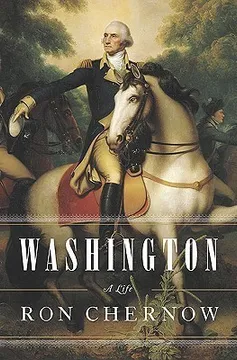


Key Takeaways
Treat self-control as a leadership skill, not evidence of a bloodless nature.
Reserve concealed intensity. George Washington’s formal stillness was not a sign of emotional emptiness. Gilbert Stuart, the painter who created the famous presidential portrait, saw force and suspicion beneath the composed face. People who knew Washington described a man capable of terrible anger, deep affection, and tears. From childhood, he worked to govern feelings he feared might overwhelm him. His early home life, especially his difficult relationship with his strict mother, may have helped shape that discipline.
A deliberate public mask. Washington also understood that distance could reinforce authority. He revealed little about himself in public, spoke sparingly, and let his actions carry his claims. The reserve was both personal practice and political tool: it made him difficult to read, but helped a new country see steadiness where it most needed it.
What's striking is that Washington's restraint was an achievement, not a temperament handed to him fully formed. That distinction matters for leadership: composure can help people trust a decision-maker under pressure, but it can also make the person seem remote. Washington's example supports the value of emotional regulation while warning against confusing control with emotional health. The same reserve that protected his authority could limit intimacy and make honest disagreement harder. His effectiveness depended on the mask, but his life also shows the personal cost of wearing it.
Turn limited schooling into practical expertise, then use access without mistaking it for merit.
A self-made skill set. Washington’s father died when he was eleven, ending his chance of a formal education comparable to those of several other founders. He compensated through practical study: arithmetic, surveying, bookkeeping, and careful copying of legal forms. At sixteen, he crossed the Blue Ridge on a surveying trip, learning to work in harsh conditions and recognize the value of western land.
Patronage opened doors. His friendship with the powerful Fairfax family helped him become Virginia’s surveyor for Culpeper County at seventeen. That appointment gave him income, contacts, and access to valuable land. His rise was neither purely self-made nor simply inherited: ability mattered, but so did family property and powerful sponsors. The surveying skills and habits of precision he built early stayed with him as planter, soldier, and president.
Washington's story resists the simple myth that success is either earned alone or handed down intact. Practical competence made him useful, while patronage gave that competence an audience and a route upward. The distinction is important: networks can create opportunity, but access is not proof of merit, and merit does not erase inherited advantage. Washington's self-education is genuinely impressive. So is the fact that he began with land, enslaved people, and influential connections. His achievement becomes more credible, not less, when both truths remain visible.
Learn from defeat before pride turns a setback into a permanent strategy.
Early command was costly. Washington’s first major military assignment helped ignite the French and Indian War. In 1754, his men attacked a French party carrying a diplomatic summons, killing its commander, Joseph de Jumonville. Washington then retreated to Fort Necessity, a poorly placed, hastily built post. When the French attacked in heavy rain, the Americans surrendered. The episode damaged his reputation and exposed his inexperience.
Experience came through failure. During General Braddock’s disastrous 1755 campaign, Washington saw European tactics fail in forest warfare and watched British regulars collapse under ambush. He learned the value of mobility, local knowledge, supply, and adapting to the enemy. He remained ambitious and sometimes overconfident, but he could study mistakes without abandoning the work. His early defeats were painful tuition in the kind of war he would later have to lead.
The value of failure here is specific: it gave Washington evidence about what did not work in North American terrain, command structures, and logistics. That is more useful than the familiar claim that adversity automatically builds character. It does not. Washington's defeats could have ended his career, and some errors reflected poor judgment rather than bad luck. What mattered was his willingness to revise assumptions. The story also cautions against celebrating learning after the fact while ignoring the human cost paid by soldiers and civilians.
Build a national army from local forces before patriotic enthusiasm runs out.
The army was fragile. When Congress made Washington commander in chief in 1775, he inherited a patchwork of militias, not a dependable national force. Soldiers arrived without enough weapons, clothing, or gunpowder. Short enlistments meant that men often left just as they had learned to fight. Washington pushed for longer service and professional discipline, while trying to turn troops from separate colonies into one army.
Necessity changed policy. The need for soldiers led Washington to permit free Black men to reenlist after Congress had initially excluded them. Later, Rhode Island formed an all-Black battalion that promised freedom to enslaved recruits. At Valley Forge, Baron von Steuben drilled soldiers in basic formations and bayonet use, helping turn exhausted recruits into a more capable force. Washington’s leadership was managerial as much as battlefield command.
The army became a working experiment in national identity: people from different colonies had to obey shared rules, endure common shortages, and recognize a common cause. Washington's desire for hierarchy sometimes clashed with the egalitarian ideals his soldiers fought for, but the practical demands of war pushed him toward broader inclusion and merit. The case for discipline is strong, yet discipline alone cannot create commitment. The army survived because structure was paired with shared hardship, political purpose, and leaders who stayed present.
Retreat can preserve the cause; choose the moment to strike back.
Survival came first. In 1776, British forces overwhelmed Washington’s army on Long Island and captured New York City. His decision to withdraw across the East River under cover of fog saved more than 9,000 troops without losing a man. Later, the loss of Fort Washington exposed a serious error: he had not overruled a subordinate who believed the exposed fort could be held.
A surprise restored momentum. With his army shrinking and enlistments about to expire, Washington crossed the ice-filled Delaware on Christmas night and attacked the Hessian garrison at Trenton. He followed with a victory at Princeton. Those operations did not end the war, but they revived American morale and helped keep the army together. The larger lesson was not to avoid risk, but to preserve the force until a risk had a plausible purpose.
Washington's strongest military decisions often served a political purpose as well as a battlefield one. The retreat protected the army, while Trenton and Princeton restored belief that resistance was possible. This is a useful corrective to leadership myths that equate boldness with constant forward motion. Yet the failed defense of Fort Washington shows that preservation can become indecision when leaders delegate a critical choice and then fail to reassess it. Strategy requires both restraint and timely intervention, not one fixed posture.
Do not claim liberty while postponing the contradiction of slavery.
The contradiction was personal. Washington owned enslaved people throughout his life and controlled hundreds through his marriage to Martha Custis. He sometimes treated enslaved families with unusual consideration for the era, and he opposed the importation of slaves in Virginia. Yet he also bought and sold enslaved people, relied on their labor, and once sent a runaway to the Caribbean for sale.
Good intentions had limits. He supported recruiting Black soldiers when military need demanded it, and by the end of his life he had decided to free the slaves he owned after Martha’s death. He did not free them during his lifetime, and Martha’s dower slaves were not his to emancipate. His eventual provision mattered, but it did not undo decades of ownership or the delay.
Washington's record cannot be reduced either to heroic abolitionism or to the idea that his era made his choices inevitable. He could recognize slavery as wrong, treat some enslaved people with personal concern, and still protect the system that sustained his wealth. That contradiction is central, not incidental. His gradual plan also illustrates how postponement can preserve injustice while allowing its opponents to feel morally serious. The biography invites a harder standard: intentions matter, but the people held in bondage experienced actions and institutions, not private regret.
Give up command visibly so civilian rule becomes more than a slogan.
Restraint built legitimacy. Washington repeatedly accepted civilian authority, even when Congress’s decisions frustrated him. At the end of the Revolutionary War, he returned his military commission rather than turning victory into a claim to power. He had also declined a regular salary, asking only that Congress reimburse documented expenses. Those gestures were not proof that he had no ambition; they showed that he understood the danger of a victorious general appearing to rule by force.
A lasting precedent. Washington’s resignation at Annapolis became a public demonstration that the army answered to elected representatives. His later rebuke of a proposal to make him king reinforced the point. He understood that a republic needed more than written limits: its most powerful leader had to show, in front of the public, that he would obey them.
Washington's resignation mattered because it converted an abstract constitutional principle into a visible act. Institutional legitimacy often depends on what powerful people do when they could plausibly refuse. His conduct helped establish that military success did not confer a right to govern. Still, the symbolism should not obscure the unequal power Washington continued to exercise as a wealthy planter and slaveholder. His example is strongest when viewed as a crucial democratic precedent, not evidence that every form of hierarchy had disappeared.
Build a government strong enough to act, but restrained enough to remain republican.
The old system failed in practice. Under the Articles of Confederation, Congress could ask states for money but could not compel payment. Washington watched shortages cripple the army and saw states pursue conflicting interests. Shays’s Rebellion in Massachusetts sharpened his fear that a weak national government might be unable to preserve order or protect property.
The Constitution required trust. Washington supported a convention to repair the system and presided over its deliberations, though he did not write the Constitution. As president, he backed public credit, a national bank, and a more effective executive, while remaining alert to fears of concentrated power. His task was to help make the new government capable of acting without making it resemble the monarchy Americans had rejected.
Washington's central institutional insight was that liberty needs capacity: a government unable to raise revenue, coordinate states, or enforce laws can leave people vulnerable to disorder and private coercion. Yet capacity brings its own danger. The Constitution’s checks and balances were not decorative; they were part of the bargain that made stronger government acceptable. Washington’s approach sought both effectiveness and restraint, though his broad reading of executive responsibility could still alarm critics. The enduring question is not simply how much power government has, but who can check it.
Credit the coalition, not charisma, for Yorktown’s decisive victory.
The plan changed at the crucial moment. Washington long favored an attack on British-held New York, but French commander Rochambeau and Admiral de Grasse redirected the campaign toward Virginia. Washington accepted the shift and marched his army south, while the French fleet controlled Chesapeake Bay. At Yorktown, roughly 19,000 allied troops surrounded Cornwallis’s force of about 9,000 British soldiers.
Victory required cooperation. French expertise shaped the siege, French naval power blocked escape or relief, and American troops fought alongside their allies. Cornwallis surrendered in October 1781. Washington had made errors earlier in the war and was not the sole architect of this victory. His achievement included keeping the army alive, accepting allied expertise, and coordinating a coalition strong enough to force the decisive result.
Yorktown is most illuminating when treated as a coalition achievement rather than a solo performance by a national hero. Washington’s value was not that he controlled every element; it was that he could coordinate forces, accept a plan that differed from his preference, and keep the American army central to the outcome. The episode also shows why alliances are not simply gifts. French naval power and engineering mattered, while political mistrust and competing priorities remained. Good leadership can build cooperation without pretending interests are identical.
Treat allies as partners with interests, not rescuers without agendas.
Gratitude was not a strategy. France’s alliance helped keep the Revolution alive, but Washington repeatedly worried that French policy served French interests first. The French fleet sometimes failed to coordinate with American plans, and Washington struggled with being a junior partner to a powerful ally. His experience reinforced a practical view of diplomacy: aid could be genuine and still come with limits.
Neutrality became a test. As war between France and Britain threatened to pull the United States into another conflict, Washington issued a neutrality proclamation and resisted Citizen Genet’s attempt to enlist American support for France. He believed the young nation needed time to strengthen its finances and institutions. The decision angered pro-French Americans, but it helped establish that American policy would not be dictated by revolutionary gratitude or foreign pressure.
Washington’s realism was not cynicism for its own sake. It recognized that alliances rest on overlapping interests, which can shift when circumstances change. That perspective helped a fragile country avoid being drawn automatically into another war. But neutrality was not emotionally neutral: many Americans saw France as a fellow republic and Britain as a former oppressor. The policy therefore required political courage as well as strategic calculation. Washington’s achievement was to distinguish sympathy for a people’s cause from an obligation to adopt another government’s wars.
Analysis
Chernow’s biography is a story of transformation under pressure. Washington begins as a socially ambitious provincial, shaped by early loss, patronage, frontier work, and a hunger for recognition. He becomes a commander whose authority rests less on a string of battlefield victories than on endurance, self-command, and the ability to keep a fragile army intact. His resignation at Annapolis then turns private restraint into a public precedent: a victorious general gives power back to civilian government. Finally, the presidency tests whether that precedent can become an institution rather than a one-time gesture.
The book’s strongest interpretive thread is the tension between Washington’s powerful inner life and his carefully managed public reserve. The mask is not merely personality; it is a political instrument, especially in a new republic suspicious of military rule. Yet the same discipline can look like coldness, conceal error, and leave close relationships strained. His life resists the easy story of innate greatness: he learns from defeat, relies on advisers, and sometimes misjudges events, as at Fort Washington and Brandywine.
The deepest contradiction is slavery. Washington opposed the trade in principle, showed concern for some enslaved families, and eventually provided for emancipation of the people he owned. He also profited from human bondage, pursued runaways, and did not free those people during his lifetime. His moral evolution matters, but it cannot be mistaken for resolution. The biography is most persuasive when it lets such contradictions remain visible rather than turning complexity into absolution.
Washington’s legacy is therefore not simply that he won a revolution or held office. He helped define how power might be exercised, restrained, and surrendered. But the institutions he helped establish carried exclusions that his own conduct did not overcome. His achievement and his failure belong in the same account: the republic gained a durable model of civilian authority while leaving its most profound claim of liberty radically incomplete.
Review Summary
Reviewers overwhelmingly praise Washington: A Life as a masterful, deeply researched biography that successfully humanizes an often mythologized figure. Chernow is lauded for balancing Washington's strengths and flaws, particularly his complex relationship with slavery, his emotional depth, and his transformative roles as general and president. While some note the book's considerable length and occasional bias toward Hamilton, most agree it stands as a definitive single-volume biography. The vivid storytelling and accessible prose make it essential reading for anyone interested in American history.
People Also Read



Glossary
Articles of Confederation
First national frameworkThe Articles of Confederation governed the United States before the Constitution. They created a loose union in which Congress depended on states to provide money and troops, but could not compel them to do so. Washington saw this weakness firsthand during the war and later argued that the country needed a stronger central government.
Society of the Cincinnati
Officers’ hereditary societyFounded near the end of the Revolutionary War, the Society of the Cincinnati aimed to preserve fellowship among Continental Army officers and assist their families. Its provision allowing membership to pass to eldest sons provoked fears that it would create an American aristocracy. Washington served as its first president but supported reforms to answer those objections.
dower slaves
Custis estate slavesThese were enslaved people who belonged to the estate of Martha Custis’s first husband. Martha controlled them during her lifetime, but they were legally designated to pass to her Custis heirs. Because Washington did not own them outright, he could not free them in his will, even though they lived and worked under his authority at Mount Vernon.
Virginia Plan
Convention proposal for governmentPresented by the Virginia delegation at the Constitutional Convention, the Virginia Plan proposed a stronger national government with separate branches and representation based on population. It favored larger states over smaller ones in Congress. The final Constitution adopted some of its core ideas, while a compromise gave states equal representation in the Senate.
neutrality proclamation
Policy against entering warIssued by Washington in 1793, the proclamation declared that the United States would remain neutral in the conflict between France and Britain. It also warned Americans not to assist either side. The policy asserted an independent American foreign policy at a time when Citizen Genet sought to enlist U.S. support for France.
implied powers
Powers needed to governImplied powers are governmental powers not listed word for word in the Constitution but considered necessary to carry out its stated responsibilities. Hamilton used this reasoning to defend a national bank. Washington accepted the argument, helping establish a broader interpretation of federal authority than a strict reading of enumerated powers allowed.
Download PDF
Download EPUB
.epub digital book format is ideal for reading ebooks on phones, tablets, and e-readers.








