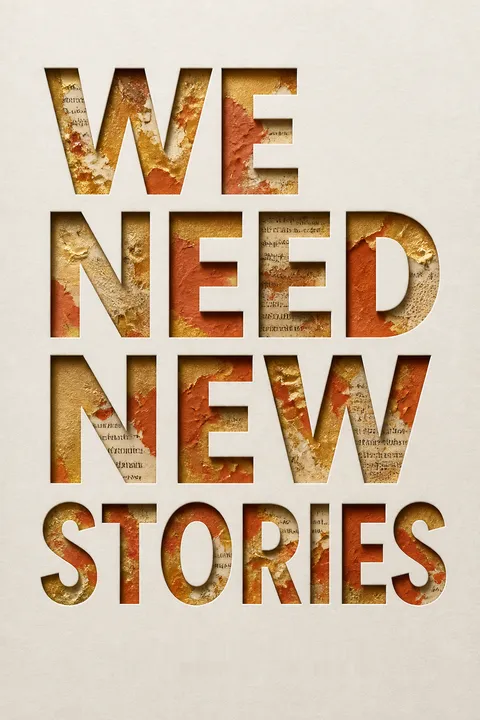


Key Takeaways
A comforting story can shelter you, then teach you to accept subordination
A family inheritance. As a child, Nesrine Malik heard her grandmother describe a vast family estate in Sudan, where tea cooled before it could cross the house. When Malik finally visited, the supposed fortress was a small, crumbling place. Her grandmother had been a young widow with five children and little money. The fantasy helped her endure a collapse in status, then became a family legend that descendants kept repeating.
From family to nation. Malik later recognized a similar illusion in her idealized picture of Britain. Stories can give people meaning and help large groups cooperate, but they become toxic when they flatter some people’s status and make inequality seem natural. The book examines six such myths, about gender, political correctness, free speech, identity, national history, and who deserves authority.
What's compelling is the distinction between a story's emotional usefulness and its political effects. A family legend can preserve dignity when circumstances are harsh; a national story can do the same at a much greater scale. The danger begins when comfort is mistaken for evidence, or when a story that once helped people cope becomes a rule about who should lead and who should defer. This also suggests a practical test for inherited beliefs: does the story help people face reality, or make reality harder to question?
Measure equality by the bargains women still make, not rights on paper
The hidden exchange. Malik calls the everyday concessions women make to secure safety, income, relationships, or professional standing the woman’s bargain. A woman may temper her opinions at work, tolerate harassment to keep a job, or accept a partner who offers security at the cost of independence. The bargain is rarely recorded in official measures, even though its cumulative cost shapes women’s lives.
Three familiar excuses. The equality myth says gender roles are biologically fixed, that past progress has exhausted what can reasonably be achieved, or that women’s underrepresentation reflects insufficient merit. Malik points out that the UN’s Gender Inequality Index measures reproductive health, education, political representation, and employment, but cannot capture daily concessions. Saudi Arabia illustrates the gap: women came to outnumber men in university enrollment, while guardianship rules still restricted their autonomy.
The idea of a bargain makes invisible pressures easier to notice. It also clarifies why legal equality and lived equality can diverge: access to a workplace does not guarantee equal safety, authority, or freedom to refuse its informal rules. Measurement remains valuable, but every index has blind spots, and a number should not be mistaken for a full account of power. The strongest analysis combines measurable outcomes with attention to the costs people absorb to participate in a system.
Ask who benefits when requests for basic respect become a crisis
A manufactured uproar. In 2017, Cambridge students asked their university to add non-white writers to a literature syllabus. The Telegraph falsely reported that they wanted white authors removed, then issued a much less visible correction. Student Lola Olufemi was turned into a symbol of supposedly unreasonable political correctness. Meanwhile, reported racist incidents at UK universities had risen by 60 percent in two years, a real problem that received less attention.
The diversion. Malik describes a pattern: grievance is stirred up, anecdotes or false claims are amplified, and discussion is diverted from the underlying inequality. She calls one version Frequency Scrambling: recasting a concrete request, such as a more inclusive curriculum, as a threat to everyone else. The argument then becomes about the alleged excess of reform rather than the problem reform addressed.
A useful way to read a controversy is to track what disappears from view once the loudest framing takes hold. Media incentives can reward the sharpest conflict, while corrections travel less widely than the original accusation. That does not mean every request for sensitivity is automatically wise; some proposals merit disagreement. The key distinction is between debating a proposal on its merits and inflating a distorted version of it until the original issue cannot be heard.
Defend speech without confusing a right to speak with immunity
Speech and consequence. Malik argues that freedom of speech protects expression from improper state punishment; it does not guarantee a platform, an audience, or freedom from criticism. Online speech expanded rapidly, but abuse disproportionately targeted women and minorities. In a survey of tweets sent to British women MPs, the 20 MPs from minority backgrounds received almost half of the abusive messages analyzed.
A lopsided marketplace. The free speech crisis narrative treats objection to harmful speech as censorship, while overlooking how access to influential platforms is already unequal. Malik cites research finding only 35 attempts to disinvite campus speakers in 2017 and nine in 2018, far from evidence of a sweeping epidemic. She also shows how attention can be granted to provocative figures because controversy draws audiences, not because all ideas have equal public value.
The distinction between legal permission and social consequence is essential, but it does not settle every dispute about moderation. Private platforms and publishers can also wield power unfairly, and vague rules can be applied inconsistently. The answer is not to treat every decision as censorship or to assume every act of protest is justified. Clear standards, transparent procedures, and scrutiny of who receives reach can protect expression without pretending that all speech causes equal harm.
Name white identity politics before blaming minorities for making politics divisive
Two kinds of identity politics. Malik distinguishes defensive identity politics, which seeks rights denied because of identity, from aggressive identity politics, which seeks dominance for a group. The distinction matters because white political behavior is often treated as neutral or merely economic, while minority organizing is labeled divisive. The murder of Labour MP Jo Cox during the Brexit campaign illustrates the danger of minimizing white supremacist politics as the act of an isolated misfit.
Follow the evidence. In the 2016 US election, economic hardship was often offered as the explanation for white support for Donald Trump. Research discussed by Malik found that white millennial Trump voters were not more economically precarious than non-supporters; racial resentment better accounted for their support. The 1977 statement by the Combahee River Collective, a group of Black feminists, also shows that organizing around specific oppression can aim at freedom for everyone, not separation from everyone.
The distinction helps expose how supposedly universal politics can conceal the interests of groups whose power is already normalized. It also avoids treating every identity-based movement as morally equivalent: demands for protection and demands for supremacy are not interchangeable. Still, identity and economics should not be forced into competition as explanations. Material insecurity can shape political choices, while racial hierarchy influences how that insecurity is interpreted and who is blamed.
Teach the costs of empire as history, not a national balance sheet
A curated past. Malik argues that countries edit history to make present-day pride feel deserved. British schooling, she writes, often gives little time to the empire or its aftermath, while national storytelling dwells on domestic milestones and wartime heroism. That omission matters: Britain’s colonial decisions shaped other countries, including Sudan, where colonial administration helped deepen divisions that continued after independence.
Nostalgia as policy. During the Brexit campaign, politicians invoked figures from Alfred the Great to Churchill and presented leaving the European Union as a return to national greatness. Such accounts cast past triumphs as proof that Britain could prosper alone, while neglecting the allies, trade relationships, and imperial violence that shaped its history. Malik rejects the balance sheet approach, which weighs supposed benefits against harms as if a railway could settle the value of lives lost.
Historical correction need not mean replacing patriotic myth with collective shame. It means separating the record of what happened from the present-day identity people wish to derive from it. That distinction allows societies to acknowledge achievements, harms, and consequences without treating any one item as moral compensation for another. A fuller history can support civic confidence, but confidence grounded in selective memory is brittle, especially when political choices depend on fantasies of past power.
Audit the authority of narrators who repeatedly misread the public
Confidence without correction. Before both the Brexit referendum and the 2016 US election, many prominent journalists and commentators confidently predicted the wrong outcome. Malik sees the failures not as isolated forecasting errors but as evidence that elite opinion had become detached from people and conditions outside its networks. The Iraq War offers a more serious example: major newspapers later admitted they had not sufficiently challenged government claims about Iraqi weapons, yet many influential journalists continued in prominent roles.
A narrow bench. Malik connects these failures to the composition of the media. A 2016 study found that British media workers were 95 percent white and 55 percent male; most had attended university. Homogeneous newsrooms can miss experiences that are not represented in their own circles. Representation alone cannot guarantee good reporting, but a narrow range of backgrounds makes blind spots more likely and leaves fewer people positioned to correct them.
Trust in a narrator should depend on more than fluency, reputation, or institutional prestige. Repeated errors become especially damaging when they bring no meaningful accountability and the same people continue shaping public interpretation. Broader representation can widen the questions journalists ask, but it is not a substitute for verification, editorial independence, or willingness to revisit assumptions. Diversity of perspective improves the odds of noticing what a closed professional culture has learned not to see.
Notice when status myths make their own supporters pay the bill
The promised winners. Myths tell people they are gaining status by keeping others beneath them, even when the arrangement harms them too. Malik notes that rigid expectations of male toughness can leave men with little emotional support; the book cites US men as 3.5 times more likely than women to die by suicide. The gender hierarchy harms women directly, but it can also make men feel unable to seek help or adapt when traditional roles change.
The cost comes home. Brexit supporters who expected to punish distant elites or immigrants faced higher prices, business uncertainty, and restrictions on their own movement. Trump supporters who backed a border wall encountered a government shutdown when funding it affected public employees, including some of his voters. These examples show how political promises aimed at someone else can become material costs for the people who believed them.
This is a powerful account of how relative status can distract from shared material interests. Yet the costs are not distributed evenly: people with wealth and security can often avoid consequences that fall heavily on others. Recognizing a myth’s boomerang effect should therefore not flatten differences in harm or excuse the choices that produced it. It can, however, reveal why coalitions built on resentment are unstable: they promise protection without changing the conditions that make people vulnerable.
Follow the incentive behind a story before accepting its facts
A practical check. Malik’s afterword offers a method for resisting myth-making. Question claims that arrive as unquestionable facts, look beyond an inflammatory anecdote to the issue it distracts from, and avoid assuming that one political camp is immune to myth. An outlier may reveal a real excess, but it does not automatically represent an entire movement. Before joining a public argument, ask whether it will clarify the issue or merely score a point.
Make better stories. Fact-checking matters, but facts alone may not dislodge a story that gives people identity, status, or a sense of belonging. Malik argues that new accounts must explain the real evidence while also offering a more honest way to understand society. Social media can expose false claims and open doors to excluded voices, but it can also reward outrage and turn discussion into factional combat.
The method works best as disciplined curiosity, not suspicion of every account or automatic attribution of bad motives. Incentives help explain why a claim spreads, but they do not prove it false; evidence still has to carry the argument. The deeper contribution is to treat storytelling as part of political reasoning rather than decoration around it. A persuasive alternative must be accurate, emotionally intelligible, and open to revision, or it risks becoming another comforting myth.
Analysis
Malik’s central contribution is to treat political myths as working instruments rather than mere errors. A myth can contain fragments of truth and still mislead by deciding which facts count, whose pain is legible, and who must defend themselves. The recurring pattern is not simply misinformation. It is a shift in the burden of explanation: women must prove inequality, minorities must justify seeking protection, and critics of national history must defend themselves against charges of disloyalty. Meanwhile, dominant groups retain the power to describe their own interests as neutral or universal.
The book’s strongest method is comparative. Malik moves between family lore, Sudanese and Saudi experiences, and British and American politics, showing how unlike societies can use similar stories to preserve hierarchy. That perspective unsettles the easy division between a backward elsewhere and a self-correcting West. It also makes personal narrative analytically useful: the grandmother’s invented estate is both a tender strategy for surviving loss and a miniature of how collective myths can harden into inherited status rules.
The argument is persuasive when it identifies patterns of deflection and unequal scrutiny. Its risk is that a wide-ranging critique can sometimes make distinct controversies appear more coordinated or politically uniform than the evidence establishes. Claims about media incentives, class, race, and gender require case-specific testing; identifying who benefits is a question to investigate, not proof of intent. Malik’s own prescription points toward that restraint: question narratives, distinguish a movement’s aims from its outliers, and resist substituting one set of certainties for another. The result is not a demand for a myth-free society, which is probably impossible, but for stories that remain answerable to evidence and revisable by people previously excluded from telling them.
Review Summary
We Need New Stories receives mostly positive reviews for its critical analysis of cultural myths and power structures. Readers appreciate Malik's compelling arguments and journalistic perspective on topics like political correctness, free speech, and identity politics. Some find the writing dense or repetitive, while others praise its clarity and thought-provoking nature. Critics note the book may not convince those who disagree with its premises. Overall, reviewers commend the book for challenging toxic myths and offering new perspectives on social issues.
People Also Read






Glossary
the woman's bargain
Everyday concessions for securityMalik’s term for the repeated compromises women make to obtain safety, income, relationships, professional opportunity, or social standing in unequal conditions. The trade-offs can be conscious or habitual, and are often missing from formal measures of equality. The concept emphasizes their cumulative effect rather than treating each concession as an isolated personal choice.
the set up
Comparison that dodges the issueAn argumentative maneuver that answers a complaint about a specific injustice by comparing it with a worse situation elsewhere or in the past. The comparison may be factually true, but it redirects discussion from the original issue and implies that further reform is unreasonable because progress has already occurred.
Frequency Scrambling
A false grievance redirects attentionMalik’s term for presenting a genuine concern through a misleading frame that shifts public discussion toward a manufactured grievance. A request to diversify a curriculum, for example, can be recast as an attack on white authors. Attention then goes to disputing the false accusation instead of addressing the original concern.
defensive identity politics
Organizing against identity-based exclusionPolitical action by people seeking rights or protection denied to them because of their identity. Malik distinguishes it from efforts to dominate others on identity grounds. Such organizing can address experiences ignored by supposedly universal movements and can contribute to broader coalitions against systems of oppression.
aggressive identity politics
Seeking dominance through identityPolitical action that seeks to preserve or increase a group’s power over others on the basis of identity. Malik argues that white political mobilization is often treated as ordinary patriotism or economic concern, while comparable organizing by minorities is more readily described as divisive identity politics.
the wink
Deniable signals of racial grievanceA rhetorical strategy that presents exclusionary or racialized politics in respectable language, such as patriotism, tradition, or concern about social cohesion, while denying that race is relevant. The language can reassure sympathetic audiences without openly stating the more exclusionary implication of the political message.
the balance sheet tool
Turning history into moral accountingA way of discussing national history that weighs supposed achievements against harms, as if one could compensate for the other. Malik argues that this shifts history from establishing what happened to defending present-day national identity. It also creates a false choice between pride in the past and shame about it.
the myth of the reliable narrator
Unearned trust in public voicesThe assumption that prominent commentators and institutions provide neutral, dependable accounts of events. Malik challenges this trust by pointing to repeated media misjudgments, weak accountability, and the narrow social backgrounds of many influential journalists. The myth obscures how proximity to power can shape what gets reported and believed.
mediarchy
Media power shaped by insidersMalik’s term for a media environment in which people with similar backgrounds, networks, and assumptions dominate public storytelling. The effect need not result from a coordinated plan. Shared professional cultures can still narrow debate, reproduce familiar interpretations, and make excluded experiences less visible.
Download PDF
Download EPUB
.epub digital book format is ideal for reading ebooks on phones, tablets, and e-readers.








