

Plot Summary
Prologue
The book opens with the enslaved dead returning to the land where they were chained, beaten, branded, and sold. They carry the iron and tools once used against them, now transformed into instruments of judgment.
The warning reaches beyond the plantation’s former owners to their descendants and to anyone who has chosen not to remember. In the woods, their whispers travel through the trees and water, promising that the buried past will not remain quiet.
This opening establishes the dead not as an atmospheric threat but as witnesses carrying specific evidence: shackles, branding irons, whips, and the clothes they died in. Their return turns the usual haunted-house question inside out. The danger is not that the living have disturbed an innocent place; it is that the place was built through violence, then presented as harmless. By addressing those who once held power, the prologue makes the reader feel implicated in the story’s central problem: what happens when a society treats historical suffering as finished while its consequences remain active.
Mira Comes Back
Ten years after leaving Kipsen, Mira1 agrees to attend her childhood friend Celine’s3 wedding at the newly renovated Woodsman Plantation. A brief voicemail from Jesse,2 the friend she left behind, tips the balance: he has missed her, and she wants to know what remains between them.
The drive home brings back the plantation’s history, her mother’s9 story that their ancestors came from that land, and Mira’s1 buried memory of the day she and Jesse2 entered its abandoned house. On the road, a chained prison work gang recalls Javion,12 a student Mira1 failed to understand before police dragged him from school. The sight forces her to face how often she has mistaken silence for safety, even as she continues toward Kipsen.
Mira’s return is powered by two forms of unfinished business: private longing for Jesse and a public history she has trained herself to suppress. The prison chain gang links her teaching life to the plantation’s past without making the connection merely symbolic. She has already watched a vulnerable student become a problem to be managed, and she recognizes the same reflex in her younger self, who stayed silent when Jesse needed her testimony. Her journey therefore begins before she reaches Kipsen. The road makes her confront the difference between physically leaving a place and escaping the habits that place has taught her.
The Woodsman House
Mira’s1 memories return to the afternoon Jesse2 first led her toward the plantation. She, Jesse,2 and Celine3 had become friends after Jesse2 stood beside Mira1 and Celine3 when other students mocked them on the bus. Years later, Celine3 refuses to enter the woods, but Mira1 follows Jesse2 into an old tobacco barn and then the decaying Big House.
After Jesse2 cuts his hand breaking a window, he explores upstairs while Mira1 waits outside. Through a window, she sees a blood-covered figure inside and runs. Jesse2 catches up, but Mira1 denies seeing anything when he asks what frightened her. Soon afterward, the body of Mr. Loomis8 is found in the river, and police use Jesse’s2 blood at the house to make him their suspect.
The childhood expedition is a test of belonging as much as courage. Mira goes partly because she wants to share Jesse’s appetite for risk, and partly because she hopes he might see her differently. Her terror then becomes a secret she keeps to preserve herself. That silence has an immediate, material consequence: the evidence points toward Jesse, while the person Mira saw remains unaccounted for. The scene also sets up the novel’s recurring conflict between visibility and danger. Mira has been taught that being seen can invite punishment, but withholding what she knows leaves Jesse exposed to a system already prepared to misread him.
The Cost of Silence
After nightmares begin, Mira1 tells her mother9 that another person was in the Woodsman house. Despite her mother’s9 warnings that no one will believe a Black girl, she travels to the police station and gives Sheriff Brody11 only part of what she saw.
Brody11 turns her childhood friendship and feelings for Jesse2 into reasons to doubt her account, then sends her away. Celine3 confirms the pair had visited the property, and Jesse2 is released, but classmates harass him until he leaves school. Mira1 and Celine3 drift apart.
When Mira1 earns a college scholarship, Celine3 gives her savings to help pay for expenses, a generous gift Mira1 accepts with guilt. Mira1 leaves Kipsen, completes her education, and becomes a teacher, but the unresolved past follows her into adulthood.
Mira’s attempt to tell the truth is real, but the sheriff’s interrogation teaches her that truth alone does not determine what institutions will hear. Brody recasts her testimony as romantic loyalty, making her relationship with Jesse evidence against her credibility. Her mother’s caution is protective, yet it also helps turn distrust into a rule for living. The consequences spread beyond the police station: Jesse loses school, Mira loses her closest friendships, and Celine’s financial help becomes entangled with the harm her disclosure did not prevent. Leaving gives Mira distance and a future, but not a resolution. The novel treats forgetting as an adaptation, useful for survival and costly in intimacy.
A Plantation for Guests
At the Woodsman grounds, Mira1 finds a crowded tourist attraction built around reenactments, costume photographs, and themed dining. The renovation has erased the names of enslaved people while adding air-conditioning to replica cabins; one visitor even imagines living in one.
Black workers perform for mostly white guests, and a young bartender tells Mira1 employees are not meant to give their names. Mira1 tips her, then feels uneasy about participating in the spectacle. At the rehearsal dinner, Celine’s3 wealthy fiancé Phillip Hunnicutt4 greets Mira1 with possessive attention, while guests admire the gold-and-silver display.
Celine3 has chosen the plantation for its prestige and effect on the local elite, not because she has reconciled with its history. Mira1 sees that the venue’s polished surfaces make denial feel comfortable.
The attraction does not simply misrepresent slavery through inaccurate details; it converts spectatorship into a pleasurable role. Visitors can buy a performance of plantation life, then retreat to cocktails and air-conditioned comfort. The workers’ anonymity echoes the historical erasure the attraction claims to stage, while Mira’s tip briefly recognizes one employee as a person without undoing her own participation. Celine’s choice is also psychological: the venue promises her entry into a class that once dismissed her. For Mira, the spectacle reveals how class aspiration and racial memory collide. The past is not absent from the grounds; it is being curated so that visitors can enjoy it without having to answer to it.
Jesse at the Dinner
Mira1 spots Jesse2 at dinner but cannot reach him before Celine’s father, Mr. Tatum,10 publicly accuses him of killing Loomis8 and shoves him from his chair. Phillip4 sides with Tatum,10 and Celine3 pleads with Jesse2 to stay without asking her father10 to leave.
Jesse2 chooses to walk out. Mira1 follows and finally speaks with him alone. They trade memories, then walk to the locked Woodsman family graveyard, where Jesse2 finds a plain marker for Marceline,5 a woman Mira’s mother9 had named as an ancestor.
The discovery offers no proof of exactly how Marceline5 connects to Mira,1 but it gives her a tangible family trace. Later, amid the grounds, Mira1 kisses Jesse.2 He admits he has wanted this for years, then asks whether they will discuss what happened in the old house. Mira1 puts it off.
The dinner reenacts the older injustice in a new social setting: Tatum makes an accusation, the room watches, and people with the power to intervene choose not to. Celine’s hesitation matters because her friendship with Jesse and Mira once seemed to cross boundaries the town enforced. At the graveyard, the lone fieldstone marker gives Mira a name without a complete genealogy, resisting both total erasure and the fantasy that history can be neatly repaired. The kiss offers a moment of mutual desire, but Mira’s refusal to discuss the past shows that renewed intimacy cannot yet bear the truth between them. Their closeness is genuine, and still vulnerable to the same silence that once broke it.
Celine Disappears
After visiting Celine’s3 room, Mira1 hears a child laughing in the hall, though the wedding is adults-only. Later, she walks toward the tobacco fields and sees a woman dressed in white vanish from sight. That night, nightmares of insects leave Mira1 scratching her skin.
In the morning, Celine3 fails to appear for her wedding preparations, and the bridesmaids find her room empty except for the untouched wedding dress. Phillip4 says she must have gone out, while guests trade rumors that she abandoned him.
Mira1 searches the property, unsettled by the previous night’s apparition and by how little she now knows about her old friend. The wedding is called off, but no one can locate Celine.3 What began as a reunion becomes a search across a plantation where the dead seem to be guiding Mira1 toward something.
Celine’s disappearance makes absence the plot’s immediate mystery, but the novel refuses to let it remain a simple question of whether a bride has fled. The empty room, the unseen child, and the woman in white place different kinds of absence alongside one another: a missing person, an erased child, and a possible ancestor. Mira’s bodily nightmare turns history into sensation before she can explain it. Meanwhile, the guests’ quick assumption that Celine has merely left reveals how little they are prepared to care about her actual safety. Their gossip turns her crisis into entertainment, repeating the tourist attraction’s habit of converting other people’s lives into a show.
The Vanishing Grave
Searching the closed grounds, Mira1 loses her way and follows work singing to a clearing. There, enslaved men dig a huge hole under a white man’s orders; sacks arrive, and the overseer makes the workers look at what he has brought before raising an ax.
Mira1 runs. Jesse2 finds her and explains that the wedding has been canceled, but she insists on leading him back to the clearing. The hole and the men are gone. Jesse2 believes her and asks her to tell him what she saw.
Over a late meal, they remember their childhood and kiss again, but Jesse2 stops her when she tries to take their reunion further. He needs to know what she remembers about the plantation. He then admits he has seen unexplained figures on the grounds and believes the old ghost stories may be true.
The vision refuses the safety of a museum reenactment. Mira sees no audience, no explanatory sign, and no clean boundary between performance and the past; she witnesses labor and threatened violence without being able to intervene. When the clearing returns to grass, the disappearance does not undo what she saw. Jesse’s belief matters because it reverses the earlier pattern in which his questions met her denial. Their renewed physical closeness cannot substitute for that acknowledgment. His decision to stop and ask about memory insists that intimacy requires more than longing: Mira must be willing to share the knowledge she withheld when their lives first broke apart.
Jesse’s Evidence Wall
At Jesse’s2 apartment, Mira1 sees his photographs of Kipsen residents beside records and historical accounts. One old image, taken inside the plantation when they were teenagers, appears to show a barefoot Black girl. Jesse2 identifies her as Lucy,7 an enslaved child kept by Roman Woodsman’s6 wife, Annabelle.14
Annabelle’s journal and a bill of sale confirm Lucy’s7 existence, though the records omit her from the family register. Jesse2 also connects Loomis’s8 ancestor, the overseer Henry,15 to the failed slave revolt at the plantation.
He believes the spirits are pursuing descendants of those who harmed them. The wedding date falls on the revolt’s anniversary. Jesse2 reveals that he told Celine3 about the date and the haunting, but she still chose the venue and scheduled the wedding for that night.
Jesse’s archive makes the novel’s haunting evidentiary as well as supernatural. The photograph does not explain Lucy’s presence by itself, but the journal and bill of sale give the blurred figure a name and a documented life. That recovery also exposes the limits of official records: Annabelle counted enslaved people in lists while reducing them to a category, and Lucy remains absent from the register that should have recognized her. Jesse’s research joins family memory, public documents, and visual uncertainty without pretending they form a complete account. Celine’s choice to proceed despite knowing the anniversary sharpens the ethical conflict: ignorance can no longer explain her indifference.
The Empty Clearing
Jesse2 wants to stay away and let the night unfold, hoping the spirits will prove his theory. Mira1 refuses to leave the guests in danger, even after Jesse2 reminds her that she has often stayed silent when action mattered.
On their return, they find the plantation in disarray and learn that Celine’s3 body has been found in the tobacco fields. Phillip4 has blood on his hands, but Tatum10 blames Jesse2 and gathers local men to hunt him. Mira1 tries to warn the group, then calls Jesse2 when she realizes the accusation will put him in danger.
Believing the spirits want the revolt’s dead exposed, she takes a shovel into the woods and digs at the clearing. The earth yields no bones or graves. Exhausted and frightened, she abandons the pit without knowing what the ghosts have been trying to show her.
Mira’s choice marks a break with the self-protection that shaped her earlier life. She returns not because she is sure of what the ghosts want, but because she cannot accept Jesse’s proposal to let other people die. Yet courage does not guarantee understanding. She interprets the vision as a literal demand to uncover bodies, and the empty clearing frustrates her effort to make historical truth physically available. The mob’s immediate focus on Jesse repeats the old accusation before anyone investigates Celine’s death. Mira recognizes the pattern, but recognition alone cannot stop it. The scene makes action necessary and imperfect: she must act before she can be certain that she understands.
The House Reveals Its Crimes
A scream draws Mira1 into the Big House, which shifts into the plantation’s past. She witnesses enslaved women examined and sold to masked men, then sees Roman Woodsman6 claim Mira1 is Marceline.5 A laughing child leads her to Lucy,7 whom Annabelle14 rewards with food for obeying tricks before locking her in a wire cage.
In the same room, a young man secretly frees Lucy7 but cannot bring himself to kill Annabelle.14 The vision moves to a barn, where Roman6 confronts the captured rebel Jeffrey.13 Roman6 explains that buyers want human skin and begins cutting the flesh from Jeffrey’s13 face.
Mira1 recognizes the blood-covered figure she saw as a child. This is not the grave-digging scene she imagined: Roman6 has turned the rebels into commodities, and the survivors’ bodies bear the cost of their failed revolt.
The house’s shifting rooms collapse the distance between historical spectacle and historical violence. Mira no longer observes from a safe position outside the window; she is placed among the women and made to face the conditions the plantation’s modern reenactments soften. Lucy’s cage and Jeffrey’s torture are not separate horrors but parts of a system that controls bodies through confinement, sexual exploitation, punishment, and sale. The vision also clarifies why the revolt matters: Roman makes even death an extension of ownership. Mira’s recognition of the figure from childhood finally joins her private memory to Jesse’s evidence. What she once could not say now becomes knowledge she can share.
Phillip’s Confession
Outside the vision, Mira1 finds Jesse2 and tells him what she has seen. The mob is closing in, so she tries to lead him toward the river. A woman in white appears and draws Mira1 away from Jesse2 through the woods.
There she meets Phillip,4 who is armed and searching for Celine,3 whom he insists he saw alive. Mira1 realizes he killed Celine.3 Phillip4 admits that Celine3 came to him the previous night and ended their engagement. He followed her, argued with her, grabbed her, and struck her; she fell and died.
He wanted to know why the life he provided had not made her happy. When the ghosts’ whispers overwhelm him, Phillip4 tears at his own skin and collapses. Jesse2 finds Mira1 beside his body as the mob approaches, and he decides to draw the men away from her.
Phillip’s confession strips the wedding’s polished promise down to possession. He treats money, a house, and a public celebration as proof that Celine owes him gratitude, so her wish to leave becomes an intolerable refusal of his authority. The violence is neither an inexplicable monster’s act nor a supernatural accident: Phillip describes his own choices, including following Celine and hitting her. The ghosts’ intervention comes after his confession, not instead of it. Mira’s separation from Jesse repeats the story’s pattern of people being pulled apart, but this time she follows the woman in white toward information that can expose the human cause of Celine’s death.
The River Takes Tatum
Jesse2 runs toward the river to pull the mob after him, and the men fire. Mira1 hears the shots and sees him fall, but when she reaches him he has only tripped and struck his face. Jesse2 admits he never saw the ghosts as Mira1 did; he believed her, but his terror of being blamed again had shaped what he thought he witnessed.
They continue to the river, where Mr. Tatum’s10 body floats past and disappears downstream. Dawn approaches as they leave the empty plantation, its guests gone and their celebration scattered across the grounds.
Mira1 decides not to erase the night or pretend it was merely a dispute. She has finally told Jesse2 what she saw as a child, and they leave together knowing that any future between them must begin with the truth of who they are now.
The apparent shooting gives the novel a moment of expected repetition: Jesse seems to be the Black man struck down by a mob that has already decided he is guilty. His survival does not make the danger unreal; it exposes how readily Mira’s memory and fear have made the worst ending feel inevitable. Jesse’s admission that he never saw the ghosts distinguishes belief from eyewitness certainty, while his decision to protect Mira still carries real risk. At the river, Tatum’s body passes beyond their control, and the plantation offers no clean purification. Their departure is not absolution. It is a choice to carry the truth into whatever life they attempt next.
Epilogue
Morning finds Mira1 and Jesse2 leaving the plantation after a night that has emptied its grounds. The guests’ abandoned food, broken glass, and crumpled wedding program remain where their celebration ended. Mira1 understands that she cannot simply leave the past behind again, and Jesse2 no longer asks her to.
Before the novel closes, it turns toward the enslaved people still assigned to the plantation’s daily labor, naming their work and repeating motions as another day begins. The final image refuses to treat the haunting as finished: the dead have been seen, but the living world that erased them is still at work.
The ending resists the comfort of a solved mystery. Mira and Jesse escape the immediate danger, but the last movement returns to enslaved workers continuing their assigned tasks, as though the plantation’s violence has survived by becoming routine. Naming workers counters the tourist attraction’s anonymity, yet the repeated labor suggests that recognition by itself cannot dismantle a system. The closing insistence on another morning also complicates the lovers’ tentative new beginning. Their survival is meaningful, but not a cure for the world that produced the plantation, the mob, and the present-day spectacle. The book ends by making remembrance an ongoing obligation rather than a completed act.
Analysis
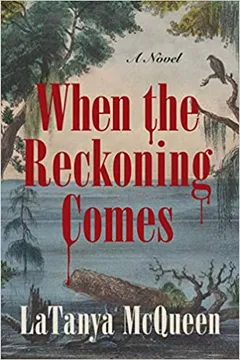
When the Reckoning Comes makes historical memory an active force rather than a lesson safely confined to the past. Its haunting is specific: the dead return with the material evidence of what was done to them, while the living have built a tourist attraction that sells the plantation’s appearance and softens its violence. The contrast between reconstructed cabins and actual archival traces exposes how erasure can coexist with abundance. Visitors receive costumes, cocktails, and performances; the enslaved people who built the property remain unnamed.
Mira’s1 arc is not simply from fear to courage. She has long practiced behaviors that helped her survive: respectability, restraint, silence, and distance. Those habits are understandable, particularly in a town where police dismiss her and a mob believes an accusation before investigating it. But the novel also shows their cost. Mira’s1 silence contributes to Jesse’s2 isolation, and her attempt to protect herself from disbelief leaves the truth trapped inside her. Her growth comes through accepting that telling the truth does not guarantee safety or justice, but withholding it guarantees that others will define the story.
Jesse’s photographs and research offer a counter-method to the plantation’s official narrative. Images, bills of sale, oral histories, and local memory each have limits, but together they make absence harder to maintain. The uncertain connection between Mira1 and Marceline5 resists a tidy family revelation; the past can be inherited without being fully recoverable. This uncertainty is not a weakness in the story. It reflects the damage done by records that treated people as property and families as disposable.
The novel also examines the difference between wealth and care. Phillip4 believes he has earned Celine’s3 loyalty by arranging a prosperous future, while the wedding’s guests confuse spectacle with history and convenience with innocence. By the ending, Mira1 and Jesse2 survive, but the final return to the plantation’s daily labor prevents survival from becoming a comforting resolution. Their work is unfinished: they must remember, name, and speak in a world still capable of repeating what it claims to have left behind.
Review Summary
When the Reckoning Comes receives mixed reviews, averaging 3.67/5. Many praise its haunting atmosphere, gorgeous writing, and powerful social commentary on plantation tourism and racism. The interstitial chapters from enslaved peoples' perspectives are frequently highlighted as standouts. Common criticisms include a slow pace, underdeveloped characters, rushed ending, and a protagonist prone to poor decisions. Some readers wanted more supernatural payoff, feeling the "reckoning" was underwhelming. Comparisons to Jordan Peele's Get Out and Toni Morrison's Beloved appear frequently, with many expressing interest in the author's future work.
People Also Read







Characters
Mira
The returning witnessMira is a Black language arts teacher who has built an adult life far from Kipsen, partly to escape the memories and relationships she left there. As a girl, she was cautious, self-conscious, and eager to be considered good; as an adult, she still tries to manage danger by anticipating how others will judge her. Her work with students gives her a more complicated understanding of what it means to fail someone, especially when she recognizes her own earlier judgments in the way she treated a grieving student. Mira’s relationship with Jesse2 holds affection and regret, but her deeper struggle is learning to trust what she has seen and to speak even when no one has promised to listen.
Jesse
The photographer and friendJesse is Mira’s1 childhood friend, a Black photographer whose curiosity and stubbornness often carry him toward places others avoid. He was raised by his uncle16 after his mother died and developed a strong sense of self through photography, art, and observation. As a teenager, he used daring to resist a world that imposed unequal rules on him, though his confidence could conceal fear and vulnerability. His relationship with Mira1 has always held a tenderness neither knew how to name, and their shared history is shadowed by the day she withheld what she saw. As an adult, Jesse’s photographs and archival research reflect a desire to recover lives distorted or erased by official accounts.
Celine
The ambitious childhood friendCeline is Mira1 and Jesse’s2 white childhood friend, first introduced as a talkative, poor girl who finds companionship with them in a segregated town. Her beauty later becomes a source of attention and a possible route toward the security she craves. Celine wants escape from poverty and exclusion, but she also longs for the status and romantic rituals associated with Kipsen’s wealthy families. Her friendship with Mira1 has genuine warmth, yet her drive to be accepted can lead her to overlook the cost of choices that appear glamorous to outsiders. Celine is difficult for Mira1 to reduce to either the bold girl she remembers or the socially ambitious woman she encounters years later.
Phillip Hunnicutt
Celine’s wealthy fiancéPhillip is a dentist from a wealthy Kipsen family whose money gives him influence and a polished public presence. He presents himself as attentive and generous, and he is prepared to spend lavishly on the wedding and the life he imagines sharing with Celine3. Beneath that confidence is a possessive need to have his choices recognized as proof of his worth. He measures affection through provision and status, which makes it difficult for him to imagine that someone might reject the future he has arranged. His role exposes the gap between benevolent appearance and control, especially within a social world where wealth can disguise entitlement.
Marceline
Mira’s possible ancestorMarceline is the name Mira’s mother9 gives as part of their family’s uncertain connection to the Woodsman land. Jesse2 and Mira1 find a fieldstone marker bearing the name among the Woodsman family graves, but the inscription does not establish exactly how Marceline is related to them or to Mira1. The woman in white who appears on the grounds seems connected to this name, drawing Mira1 toward parts of the past she has not been able to see. Marceline’s importance lies partly in the gaps around her: she is present in a trace of stone and family memory where a fuller record should exist.
Roman Woodsman
The plantation ownerRoman Woodsman is the nineteenth-century plantation owner whose wealth and authority were built on the labor of enslaved people. In local stories, his name becomes attached to cruelty, secret punishments, and the failed revolt on his land. Records and family accounts complicate the legends without making his power benign. Roman’s control extends beyond work in the fields to the treatment and sale of people’s bodies. The modern attraction presents his home as a preserved landmark, but the memories tied to him challenge any attempt to separate its imposing architecture from the violence that financed it.
Lucy
The silenced childLucy is an enslaved girl whom Roman Woodsman’s6 wife14 keeps inside the Big House. A bill of sale and Annabelle’s14 journal offer fragments of her history, while Jesse’s photograph seems to capture her as a child. Lucy does not speak in the visions Mira1 experiences; her gestures, laughter, and obedience carry the story instead. Her presence complicates the plantation’s public image of domestic life, revealing a child treated as both companion and possession. Lucy’s incomplete record also reflects how a person can be visible within a household and still be omitted from the documents meant to remember it.
Mr. Loomis
The isolated landownerMr. Loomis lives alone near the Woodsman property and is remembered around Kipsen through rumors of violence, drinking, and eccentricity. He inherited land linked to his family’s work on the plantation and speaks as though the history around him has never stopped pressing close. As a child, Mira1 encounters him in a grocery store, where he reacts to something in her face with sudden fear. His uneasy presence connects the town’s modern families to the plantation’s older structures, while the uncertainty surrounding his life makes him difficult for others to understand or pity.
Mira’s mother
The protective realistMira’s mother is a single parent who works to give her daughter1 a life beyond Kipsen’s poverty and racism. She values respectability, careful presentation, and avoiding needless confrontation because she believes those habits may protect Mira1 from danger. Her caution grows from experience rather than indifference, but it also teaches Mira1 to treat silence as a form of safety. She carries a fragmentary family history about Marceline5 and the Woodsman land, then urges Mira1 to leave the past behind. Her influence is loving and constraining at once.
Mr. Tatum
Celine’s volatile fatherMr. Tatum is Celine’s father3, a neglected and angry man whose drinking and temper make him a source of fear in her childhood. Mira1 remembers Celine3 arriving at her window after bad nights, though the girls never fully explain what happened at home. At the wedding, Tatum tries to move among wealthy guests whose acceptance he wants but cannot command. His resentment and public outbursts reveal how social humiliation can feed a desire to dominate someone more vulnerable. He remains an uneasy presence in Celine’s3 life and in Mira’s1 memories of their friendship.
Sheriff Brody
The dismissive authoritySheriff Brody is the local officer who questions Mira1 after Jesse2 is accused in the Loomis8 case. Rather than treat her account as evidence to investigate, he frames her as a girl protecting a boy she likes. His approach gives official authority to the town’s suspicion of Jesse2 and teaches Mira1 how easily a Black girl’s testimony can be turned against her. Brody is not a supernatural threat; his power is ordinary and procedural, expressed through the questions he chooses to ask and the possibilities he refuses to consider.
Javion
Mira’s grieving studentJavion is a quiet, disengaged student in Mira’s1 class whose brother has recently been killed. Mira1 interprets his withdrawal as disrespect before learning what he is carrying. His experience makes her reconsider the difference between an uncooperative student and a young person in pain, and it sharpens her recognition of how institutions punish Black children while asking adults to explain away the harm.
Jeffrey
The revolt’s captured leaderJeffrey is associated with the failed uprising on the Woodsman plantation. Local accounts disagree about why the revolt collapsed, but Jesse’s research and Mira’s1 visions connect him to the effort to resist Roman’s6 control. He embodies the danger of organizing under slavery, where a captured leader faces deliberate punishment meant to frighten everyone left behind. His story gives the haunting a particular history rather than an anonymous grievance.
Annabelle Woodsman
Roman’s record-keeping wifeAnnabelle Woodsman is Roman’s6 wife, whose journal records family births, deaths, and enslaved people on the plantation. Her documents give Jesse2 evidence about Lucy7 and the Woodsman household, though their orderly lists do not erase the violence beneath them. Annabelle is associated with the domestic space of the Big House and with the authority exercised there. Her written records preserve details while also reflecting the possessive categories through which the family understood the people it enslaved.
Henry
Loomis’s overseer ancestorHenry is identified in Jesse’s research as an ancestor of Mr. Loomis8 and an overseer on the Woodsman land. His role links the Loomis8 family’s later ownership of nearby property to the plantation’s system of supervision. Henry’s place in the history also gives context to the fears and stories that cling to his descendants.
Ray
Jesse’s guardian uncleRay is Jesse’s2 uncle, who takes him in after Jesse’s2 mother dies and helps raise him in Kipsen. His illness later brings Jesse2 back from Louisiana, where he has been working on oil rigs. Ray’s care gives Jesse2 a family tie to the town even after years of alienation, and his practical decisions reflect the narrow choices available to people living with medical debt and limited resources.
Plot Devices
The Woodsman Plantation
A past made profitableThe plantation grounds operate as both a haunted setting and a modern tourist attraction. Alden Jones renovates the Big House, reconstructs cabins, and sells staged demonstrations of plantation life to visitors. The polished experience creates a conflict between historical memory and entertainment, especially for Mira1 and Jesse2, who are Black residents of the town whose ancestors may be buried there. The attraction also gathers descendants of slaveholders on the anniversary of a revolt, making the property a focal point for the story’s supernatural and social tensions. Its physical spaces repeatedly shift between public spectacle, childhood memory, and the violence that happened there.
Jesse’s photographs and archive
Evidence against erasureJesse’s2 camera begins as a teenage instrument for studying the world and becomes a way to record people and places that official histories overlook. His later wall combines portraits of Kipsen residents with slave narratives and family records. One old image appears to show Lucy7 inside the abandoned Big House, linking a visual trace to Annabelle Woodsman’s14 journal and a bill of sale. The photographs do not deliver perfect proof; shadows and blurred details remain ambiguous. Their power comes from making the absent difficult to dismiss and from joining lived community to records shaped by the people who held power.
The woman in white
A guide through buried historyMira1 sees a woman dressed in white on the plantation grounds, first at the edge of the tobacco fields and later among the woods. The figure refuses ordinary conversation but beckons Mira1 toward events and places that clarify the history of the Woodsman family6 and the people enslaved there. Mira1 gradually associates her with Marceline5, though the evidence does not make their exact kinship certain. The apparition works as a guide whose purpose is not to comfort Mira1 but to direct her attention toward what she has avoided seeing. Its appearances link family memory to the plantation’s supernatural return.
The river and swamp
Escape route and witnessThe river and the nearby Great Dismal Swamp carry several meanings through the story. Local histories describe enslaved people attempting to escape along the waterways, while Jesse2 tells Mira1 about maroon communities that formed in the swamp. The river is also where Loomis’s8 body was found and where the present-day pursuit seems to converge. Mira1 and Jesse2 approach it hoping for safety, but the water offers no simple cleansing or escape. Its currents carry bodies out of sight, preserving the story’s tension between disappearance and the need to witness what happened.
The plantation reenactments
Violence staged as leisureVisitors encounter costumed workers, reconstructed cabins, field demonstrations, and themed activities designed to make plantation life feel approachable. The staged labor is presented without enslaved people’s names or the full history of their suffering, allowing guests to consume the setting as entertainment. The device also blurs the line between performance and haunting: Mira’s1 visions resemble reenactments at first, but they reveal details that the tourist presentation excludes. This contrast makes the attraction’s most troubling effect its apparent familiarity. Guests believe they are watching history, while the grounds may be showing them something the owners and operators cannot control.
Download PDF
Download EPUB
.epub digital book format is ideal for reading ebooks on phones, tablets, and e-readers.








