

Key Takeaways
Read religion as a by-product of social instincts, not a truth detector.
A useful distinction. A by-product is something produced by mental capacities that evolved for another job, rather than an adaptation shaped specifically to produce religion. The book argues that religious belief draws on social instincts for bonding, reading intentions, and seeking safety. Its analogy is food craving: ancestors benefited from wanting scarce fat and sugar, but modern concentrated versions can exploit that appetite in unhealthy ways. In the same way, religion can powerfully engage instincts without those instincts having evolved to verify supernatural claims.
Power is not proof. This account explains how belief can feel compelling and recur across societies. It does not mean every religious belief has the same origin, or that belief itself is harmless. The book presents the by-product theory as its central explanation, while noting that other scholars view religion as an adaptation for group cohesion.
The distinction between origin and truth is essential. Explaining why a belief is psychologically attractive does not establish whether it is true or false; that would confuse a belief's cause with evidence for its content. The food analogy clarifies how an old appetite can meet a new stimulus, but religious traditions are more varied than a single craving. Beliefs can also be debated, revised, and used to support competing values. The model is strongest as an account of susceptibility, not as a complete explanation of every faith or believer.
The god who comforts us resembles the caretaker our brains keep seeking.
Care begins early. The attachment system is the set of mechanisms that helps a vulnerable child seek protection and maintain bonds with caregivers. The book argues that this need persists into adult friendships and romantic relationships, and can also shape a relationship with a god imagined as loving, watchful, and always available. A fossilized Homo erectus woman who suffered severe poisoning may have survived for weeks or months only because others brought her food and protected her. Caretaking was not sentimental decoration; it was a survival condition.
Belief has relationships. The authors also describe a patient who sought in her Christian god the loving father she had not experienced in her abusive human father. Darwin’s marriage offers another example of attachment’s emotional stakes: his wife Emma feared his doubts would create a painful distance between them. Affection can make belief comforting, and disagreement costly.
Attachment theory makes religious devotion legible without reducing it to childishness. People often seek a dependable presence when frightened, grieving, or isolated, and an invisible caregiver can answer that emotional need in a distinctive way. The account also helps explain why disbelief may disrupt family ties, not just abstract ideas. Still, the parental model has limits: religious figures are not always loving fathers, and some traditions emphasize law, community, or impersonal forces. Attachment is a plausible route into faith, not a universal template.
Treat invisible minds as easy to imagine, not automatically real.
Thought travels without bodies. Decoupled cognition is the ability to think about people and events beyond the present moment, including mentally rehearsing a conversation with someone who is absent. Theory-of-mind mechanisms let people infer what others may believe, want, or intend. Together, these capacities make an unseen social partner easy to represent. A child can imagine a bottle cap as a flying saucer while still knowing it is a cap; adults use a related mental flexibility when replaying a conversation or planning a future one.
A small leap follows. In an experiment described in the book, children understood that a puppet mouse swallowed by an alligator could no longer eat, yet some still thought it missed its mother. The authors take this as evidence that mental life is readily imagined as separate from a living body. Religious ideas can extend that intuition to souls, ancestors, and gods.
The ability to model absent minds is a real cognitive achievement: it supports planning, empathy, memory, and cooperation. It also creates room for imagined agents, but the capacity to represent a mind is not evidence that the mind exists independently. This distinction is useful beyond religion, from fictional characters to assumptions about what another person thinks. The child experiment is suggestive rather than decisive on its own; children's answers can reflect how a question is understood. The broader case rests on a convergence of ordinary mental habits.
Question invisible agents and cosmic purpose when ambiguity feels like evidence.
False alarms can protect. The hyperactive agency detection device is the book’s term for a quick, sensitive bias to interpret unclear events as caused by an agent. If a sound in the grass might mean wind or a predator, a cautious guess could help an ancestor survive. The same bias can make a shadow seem purposeful, or encourage people to attribute storms and other natural events to invisible beings. A request to an imagined agent can then become prayer.
Familiar with a twist. The authors also describe minimally counterintuitive worlds: ideas that violate a small expectation while keeping most familiar features intact. A tree that hears a prayer remains recognizably a tree, yet the added ability makes the claim arresting. The viral label “Eye of God” applied to a nebula image illustrates how readily people find a face or presence in ambiguous patterns. Children’s tendency to explain things by their purpose adds another route to supernatural interpretation.
This account connects religious inference to a broader feature of perception: under uncertainty, people often settle on a meaningful pattern rather than leave a gap unresolved. That tendency can be protective when threats are real and misleading when they are not. The idea of a minimally altered, memorable supernatural claim also helps explain why some stories travel better than others. But a bias toward agency does not make every judgment mistaken. Each claim still needs evidence appropriate to its content, rather than dismissal solely because the mind has a pattern-finding tendency.
Do not outsource morality to authority, scripture, or sacred labels.
Moral judgment has roots. The book argues that religion does not create morality from nothing. Infants in a study preferred a helpful puppet over one that hindered another, suggesting that basic social evaluation appears early. Human communities then shape those intuitions through local values and rules. Moral responses may arise quickly and emotionally, while conscious explanations often follow afterward.
Authority can redirect it. In Stanley Milgram’s experiments, about two-thirds of ordinary participants continued administering what they believed were painful shocks when an authority figure instructed them to do so. The authors use this to show how obedience can compete with personal judgment. Religious systems can reinforce care and fairness, but can also define outsiders as suspect or sacred rules as beyond question. The practical distinction is between acting ethically and complying simply because a powerful source commands it.
The distinction between moral capacity and moral authority is valuable. A community can nurture concern for others while also teaching who counts as deserving concern. That makes moral reasoning more than a contest between religion and irreligion: secular institutions, political movements, and families can also turn group norms into unquestioned commands. Milgram’s findings illuminate obedience, but they do not show that people always obey or that every authority is harmful. The useful lesson is to examine the reasons for a rule and the people affected by it, rather than treating its source as sufficient justification.
Watch how fictive kin and costly rituals convert belief into loyalty.
Groups borrow family language. Kin psychology is the tendency to favor relatives and protect people regarded as close to one’s group. The book describes religious communities using terms such as father, brother, and sister to evoke family bonds. In its account of suicide-terrorist recruitment, recruiters can create fictive kin groups whose members feel loyalty to chosen comrades, sometimes above ties to actual relatives. The author also cites an Iraqi insurgent who killed his father for working as an interpreter for U.S. forces, an extreme example of allegiance overriding family ties.
Commitment becomes visible. Costly signaling means demonstrating sincerity through actions that are difficult to fake, such as demanding rituals, sacrifice, or major financial contributions. The book argues that such acts help groups identify committed members. Jonestown is a stark warning: 909 people died by suicide in the community, and some members killed their children. Belonging can strengthen cooperation, but under coercive leadership, it can also intensify danger.
Family language and visible sacrifice make membership emotionally concrete. They can build trust among people who lack long histories together, while high costs make casual participation less likely. Yet costly commitment is not the same as sound judgment or genuine consent. A sacrifice may signal loyalty to fellow members while also making it harder to leave, especially when a group isolates people from outside relationships. The same social machinery can support mutual aid or enable coercion. The surrounding power structure matters as much as the ritual itself.
Use synchronized ritual to understand why shared belief feels bodily true.
Ritual engages the body. The book argues that song, dance, touch, and repeated movement can affect brain chemistry associated with pleasure, bonding, alertness, and pain relief. Its examples range from ancient hunter-gatherer ceremonies built around singing, dancing, and trance to modern worship. In research described by the authors, people moving in synchrony cooperated more, while rowers working together showed higher pain thresholds than when they worked alone at a similar level of effort.
Emotion becomes communal. Shared rhythm can make a group feel less like separate individuals and more like a coordinated unit. Touch may also provide reassurance: one study described in the book found that holding a partner’s hand reduced women’s brain responses to a threat, with the effect related to how they rated the relationship. These findings help explain why rituals can feel persuasive before anyone argues for their truth.
The body is not merely a passenger in belief. Coordinated movement, touch, and music can shape emotion and affiliation, making a shared idea feel socially confirmed as well as intellectually accepted. This helps explain the force of worship and also of secular ceremonies, concerts, and team celebrations. A caution is necessary: neurochemicals do not dictate a single meaning or moral outcome. The same synchrony that increases solidarity within a group may sharpen its boundary with outsiders. Ritual explains how belonging is reinforced, not whether the group’s claims are true.
Brain evidence explains religious experience without settling whether gods exist.
Experience has neural pathways. The authors review research suggesting that prayer, meditation, trance, and intense religious feeling involve brain systems also used for social thought, emotion, and self-awareness. In the God Helmet experiments described in the book, subjects in a dark, quiet setting received magnetic stimulation near the temporal lobes; some reported sensing a presence. Other brain-imaging work found that religious and nonreligious participants used overlapping networks when considering religious claims. The studies support the idea that religious experience arises through ordinary brain processes, rather than a distinct “God center.”
Mechanism is not verdict. Reports of feeling merged with the universe, hearing a divine voice, or sensing another presence can be examined as experiences with bodily and neural correlates. That does not establish that the experiences are fabricated, nor does it prove or disprove a supernatural explanation. The evidence concerns how people experience and process belief, not the existence of its object.
Neuroscience can identify processes associated with an experience without deciding whether its interpretation is correct. A brain correlate of awe is not proof that the object of awe is unreal, just as a neural account of seeing does not make the world an illusion. This distinction keeps the science useful and its conclusions proportionate. The book’s examples are compelling, but dramatic techniques and unusual participants do not automatically represent everyday believers. The more ordinary imaging studies help broaden the picture, while still offering no direct test of metaphysical claims.
Teach evolution as an account of belief's machinery, not a verdict by itself.
Science explains origins. The book closes by urging readers to teach evolution and the science of belief, arguing that religious explanations of nature should not be treated as scientific alternatives. It recounts the Scopes trial, where a Tennessee teacher was convicted for teaching evolution, and the later Dover case, where a federal judge rejected requiring intelligent design in public-school science classes. These conflicts show how claims about human origins enter public education and policy.
Keep claims distinct. The authors argue that scientific findings can challenge religious claims about the natural world, and that understanding the mind’s role in belief can weaken unexamined certainty. They also recognize that some religious scientists see evolution as compatible with faith. A careful reader can distinguish testable claims about nature from personal or theological interpretations, then ask what evidence would support each.
Evolutionary psychology can make religious belief an object of study without making religious people objects of ridicule. That shift matters in education, where students can learn both how belief-forming mechanisms work and how scientific explanations are tested. The boundary between science and religion is not identical in every case: claims about the age of Earth or biological origins are empirical, while some ideas about purpose are not framed as testable claims. Teaching the distinction is more rigorous than assuming that one scientific account resolves every theological question.
Analysis
The book’s central contribution is to replace a single answer to religious belief with a chain of ordinary mental operations. People seek attachment, infer intentions, imagine absent minds, detect agents, favor kin, defer to authority, and respond to synchronized ritual. Religious ideas can recruit several of these capacities at once. That helps explain why belief may feel intuitive, emotionally sustaining, socially reinforced, and difficult to revise without requiring a dedicated belief faculty or a separate “God center” in the brain.
The by-product account is strongest when treated as a model of psychological availability. It explains how certain ideas can be generated and transmitted; it does not by itself explain the enormous variation among religions, why particular doctrines prevail in particular societies, or whether a supernatural claim is true. The evolutionary story also has to distinguish what plausibly helped ancestors survive from what is merely compatible with survival. Several mental processes described here have multiple functions, and their contribution to religion can vary across people and settings.
The book’s most important epistemic caution is implicit in its scientific subject matter: explaining the mechanism of belief is not equivalent to refuting its object. Brain activity accompanies ordinary perception and religious experience alike. Evidence about the former does not make the external world unreal, and evidence about the latter does not establish a deity. Each claim requires its own evidence. Likewise, moral capacities can precede religious instruction without making religious communities irrelevant to moral life; institutions can cultivate compassion, enforce conformity, or do both.
A balanced reading therefore preserves the book’s explanatory force while resisting its occasional slide from psychological origin to broad conclusions about religion. Its mechanisms illuminate why faith can be compelling and how communities amplify it. They also invite a wider question: which social and cognitive needs are being met, and what happens when the institution meeting them rewards inquiry, care, and accountability, or instead rewards obedience and hostility? That question makes the science useful beyond arguments about whether belief is rational.
Review Summary
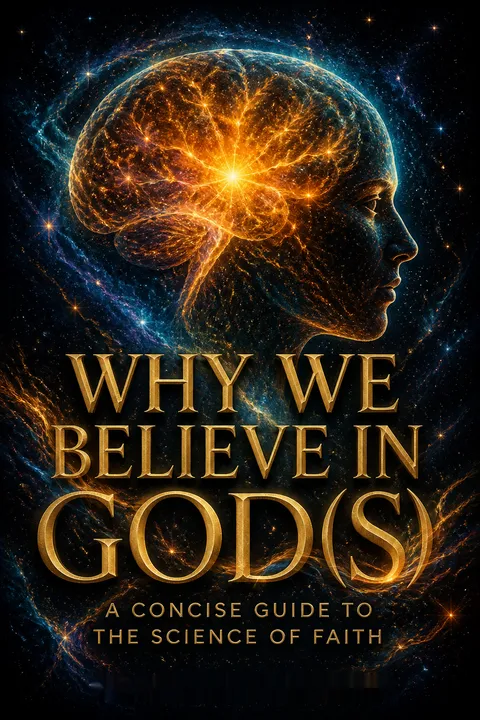
Why We Believe in God(s) offers a concise overview of the psychological and evolutionary origins of religious belief. Many reviewers praised its accessibility and thought-provoking content, appreciating the scientific approach to understanding faith. Some found it too brief or biased against religion, while others considered it an excellent introduction to the topic. The book examines cognitive mechanisms, brain chemistry, and evolutionary adaptations that predispose humans to believe in supernatural entities. Overall, readers found it informative and engaging, despite its brevity and occasional lack of depth on certain subjects.
People Also Read









Glossary
by-product
A secondary result of adaptationIn the book, a by-product is a capacity or cultural practice that arises from traits shaped by natural selection for other purposes. Religious belief is presented this way: it draws on social and cognitive mechanisms that helped humans navigate relationships and danger, rather than being an adaptation evolved specifically to produce religion.
attachment system
Mechanisms for seeking careThe attachment system is the set of psychological and neural mechanisms that helps a vulnerable child seek protection and maintain a bond with a caregiver. The book argues that these mechanisms continue to shape adult relationships, including friendships and romantic bonds, and can support a person’s emotional connection to a god imagined as protective and dependable.
decoupled cognition
Thought beyond the presentDecoupled cognition is the ability to think about people, events, and possibilities that are not present in the immediate situation. It supports remembering the past, planning the future, and mentally rehearsing conversations with absent people. The book argues that this capacity also makes it possible to imagine ongoing relationships with ancestors, spirits, or gods.
theory-of-mind mechanisms
Inferring other mindsTheory-of-mind mechanisms are cognitive capacities used to infer what another person may think, feel, want, or intend. They help people predict behavior and coordinate with others without direct access to their private thoughts. The book argues that these capacities make it easy to imagine what an unseen supernatural agent might know, want, or expect.
intensionality
Tracking beliefs about beliefsIntensionality is the capacity to represent nested thoughts, such as knowing that another person believes something, or knowing that person understands what someone else believes. The book uses this concept to explain how a private idea can become a shared religious commitment: people can recognize not only a belief, but that others share and expect the belief.
hyperactive agency detection device
Quickly detecting possible agentsThe hyperactive agency detection device is the book’s term for a bias toward interpreting ambiguous sights or sounds as the work of an intentional agent. The proposed evolutionary logic is that missing a real predator or enemy could be more dangerous than mistakenly reacting to wind or shadow. The same tendency can support belief in invisible agents.
minimally counterintuitive worlds
Familiar ideas with supernatural twistsMinimally counterintuitive worlds contain a limited violation of ordinary expectations while preserving most familiar features. A tree that can hear a prayer remains a tree, but gains an unexpected ability. The book argues that such ideas are easy to imagine, attention-grabbing, and memorable, helping supernatural stories persist and spread.
promiscuous teleology
Seeing purpose everywherePromiscuous teleology is a tendency to understand things in terms of purpose, even when there may be no intended purpose. The book illustrates it with children explaining lakes as existing for fish or rocks as existing for animals to scratch against. The tendency can make a designed or purposeful account of nature feel more intuitive than evolution by natural selection.
costly signaling
Showing commitment through sacrificeCostly signaling refers to actions that are difficult to fake and therefore can communicate commitment to a group or cause. The book applies the idea to demanding rituals, financial contributions, physical sacrifice, and other visible acts of devotion. Such signals can build trust among members, while also making participation burdensome or intensifying loyalty to a group.
mirror neurons
Neurons responding to observed actionsMirror neurons are neurons that respond both when an individual performs an action and when that individual observes another performing a similar action. The book connects this mirroring capacity to imitation, shared bodily responses, and empathy, arguing that religious images and collective behavior can engage social responses that do not originate in religious teaching.
God Helmet
A temporal-lobe stimulation deviceThe God Helmet is the name used for a device in experiments led by psychologist Michael Persinger. Participants sat in a dark, quiet setting while magnetic stimulation was applied near the temporal lobes. Some reported sensing a presence. The book presents the work as evidence that brain activity can contribute to experiences interpreted as supernatural, not as a test that settles whether gods exist.
FAQ
1. What is "Why We Believe in God(s)" by J. Anderson Thomson about?
- Scientific exploration of faith: The book provides a concise, science-based explanation for why humans are predisposed to religious belief, drawing on evolutionary psychology and cognitive neuroscience.
- Religion as a by-product: Thomson argues that religious belief is not an adaptation itself, but a by-product of various evolved psychological mechanisms that helped our ancestors survive and thrive in social groups.
- Accessible summary: The book distills complex academic research into an accessible guide for lay readers interested in the origins and persistence of religious faith.
- Focus on mechanisms: It details the specific mental adaptations—like attachment, agency detection, and ritual—that combine to make religious belief nearly universal across cultures.
2. Why should I read "Why We Believe in God(s)" by J. Anderson Thomson?
- Understand the roots of belief: The book offers a clear, evidence-based explanation for why religious ideas are so compelling and persistent, even in the modern world.
- Bridges science and religion: It helps readers see how evolutionary psychology and neuroscience can illuminate the origins of faith, moving beyond simple debates about religion’s truth or falsehood.
- Practical implications: Understanding these mechanisms can help individuals and societies address the negative consequences of religious extremism and dogma.
- Concise and engaging: The book is praised for its brevity, clarity, and engaging style, making complex science accessible to a broad audience.
3. What are the key takeaways from "Why We Believe in God(s)" by J. Anderson Thomson?
- Religion is a by-product: Religious belief arises from cognitive mechanisms evolved for social survival, not from a direct adaptation for faith.
- Multiple mental systems involved: Mechanisms like attachment, agency detection, theory of mind, and ritual behavior all contribute to the formation and maintenance of religious beliefs.
- Religion exploits social instincts: Religious systems tap into our need for community, authority, kinship, and moral order, making them powerful and hard to abandon.
- Scientific understanding can liberate: Recognizing the origins of faith can help individuals and societies move toward more rational, evidence-based worldviews.
4. How does J. Anderson Thomson explain the evolutionary origins of religious belief in "Why We Believe in God(s)"?
- By-product theory: Thomson supports the idea that religion is a by-product of psychological adaptations that evolved for other purposes, such as social bonding and threat detection.
- Fast food analogy: He compares religion to fast food—both hijack ancient cravings (for safety, community, meaning) with supernormal stimuli that are now often maladaptive.
- Survival in groups: The need to cooperate, detect agency, and form attachments in small groups shaped the brain in ways that make religious ideas intuitive and compelling.
- Empirical evidence: The book draws on studies from evolutionary psychology, anthropology, and neuroscience to support these claims.
5. What are the main psychological mechanisms behind religious belief according to "Why We Believe in God(s)"?
- Attachment system: Our need for caretakers and secure relationships is easily transferred to gods or religious figures, making faith emotionally compelling.
- Hyperactive agency detection: Humans are wired to detect intentional agents everywhere, leading to beliefs in spirits, gods, and supernatural forces.
- Theory of mind and intensionality: The ability to imagine others’ thoughts and intentions allows us to conceive of invisible beings with minds like our own.
- Transference and kin psychology: Early relationships with parents and kin are unconsciously projected onto religious authorities and communities.
- Ritual and synchrony: Group rituals harness brain chemistry to create powerful feelings of unity, trust, and transcendence.
6. How does "Why We Believe in God(s)" describe the role of ritual and brain chemistry in sustaining faith?
- Neurochemical rewards: Rituals trigger the release of neurotransmitters like serotonin, dopamine, oxytocin, and endorphins, producing pleasure, bonding, and reduced anxiety.
- Group cohesion: Shared rituals create synchrony and unity, reinforcing group identity and commitment to shared beliefs.
- Costly signaling: Participation in demanding rituals serves as a hard-to-fake signal of commitment, building trust within the group.
- Origins in early societies: The book traces ritual’s roots to hunter-gatherer societies, where song, dance, and trance were central to religious experience and social survival.
7. What is the significance of the "hyperactive agency detection device" in "Why We Believe in God(s)"?
- Evolutionary advantage: This cognitive bias helped our ancestors survive by erring on the side of caution—better to mistake a shadow for a predator than vice versa.
- Foundation for supernatural belief: It predisposes humans to see intention and agency in natural events, paving the way for belief in gods, spirits, and other unseen agents.
- Persistence in modern life: Even today, people attribute agency to random events or objects, reinforcing religious and superstitious thinking.
- Link to anthropomorphism: The tendency to ascribe human-like qualities to non-human entities is central to the formation of personal gods and supernatural beings.
8. How does "Why We Believe in God(s)" address the relationship between religion and morality?
- Morality is innate: The book argues that humans are born with moral instincts, such as empathy, fairness, and reciprocity, which evolved to facilitate social living.
- Religion co-opts morality: Religious systems claim ownership of these moral feelings, providing explicit codes and justifications, but do not create them.
- Mirror neurons and empathy: Neuroscience shows that humans literally feel others’ pain, supporting the idea that morality is hardwired, not solely taught by religion.
- Religion as a moral shortcut: Faith can make moral decision-making easier by providing ready-made answers, but genuine morality requires independent thought.
9. What evidence from neuroscience does "Why We Believe in God(s)" present for the origins of religious experience?
- No "God center": Brain imaging studies show that religious belief activates the same neural networks used for social cognition, theory of mind, and emotion.
- Temporal lobe involvement: Experiments with the "God Helmet" and studies of temporal lobe epilepsy reveal that stimulation of certain brain areas can induce religious or mystical experiences.
- Attachment and self: Religious experiences often involve brain regions associated with attachment, identity, and the sense of self, explaining the emotional power of faith.
- Mirror neurons and ritual: Observing and participating in rituals activates mirror neurons, enhancing empathy and group cohesion.
10. How does "Why We Believe in God(s)" explain the difficulty of abandoning religious belief?
- Deeply ingrained mechanisms: The psychological systems that support faith—attachment, agency detection, group loyalty—are hardwired and operate largely outside conscious awareness.
- Social and emotional costs: Leaving religion can threaten important relationships and social standing, triggering fears of rejection and loss.
- Cultural reinforcement: Societal indoctrination from childhood further entrenches belief, making skepticism or apostasy emotionally and socially challenging.
- Cognitive biases: Self-deception and the tendency to rationalize beliefs make it difficult to critically examine and abandon faith.
11. What are some of the most important concepts and definitions in "Why We Believe in God(s)" by J. Anderson Thomson?
- Attachment: The emotional system that bonds us to caregivers, easily transferred to gods or religious figures.
- Hyperactive agency detection: The tendency to see intentional agents behind ambiguous events, leading to supernatural beliefs.
- Decoupled cognition: The ability to imagine interactions with unseen others, crucial for belief in invisible gods.
- Minimally counterintuitive worlds: Religious ideas are memorable because they are just different enough from reality to be interesting, but not too bizarre.
- Costly signaling: Rituals and sacrifices serve as honest signals of commitment to the group or faith.
12. What are the best quotes from "Why We Believe in God(s)" by J. Anderson Thomson and what do they mean?
- "If you understand the psychology of fast food, you understand the psychology of religion." — Religion, like fast food, hijacks ancient cravings with supernormal stimuli, often leading to maladaptive outcomes in the modern world.
- "We are risen apes, not fallen angels." — Human nature is shaped by evolutionary history, not divine origin, and our minds are products of adaptation, not supernatural design.
- "Our snap judgments are ‘millions of years in the making’ and so is the human propensity to construct and to believe in gods." — The tendency to believe is deeply rooted in evolved mental mechanisms, not simply cultural indoctrination.
- "Religion is a by-product of adaptations that occurred for other reasons." — Faith arises from cognitive systems designed for social survival, not from a specific adaptation for religious belief.
- "This knowledge can free us." — Understanding the true origins of religious belief empowers individuals and societies to move beyond dogma and toward rational, evidence-based thinking.
Download PDF
Download EPUB
.epub digital book format is ideal for reading ebooks on phones, tablets, and e-readers.








