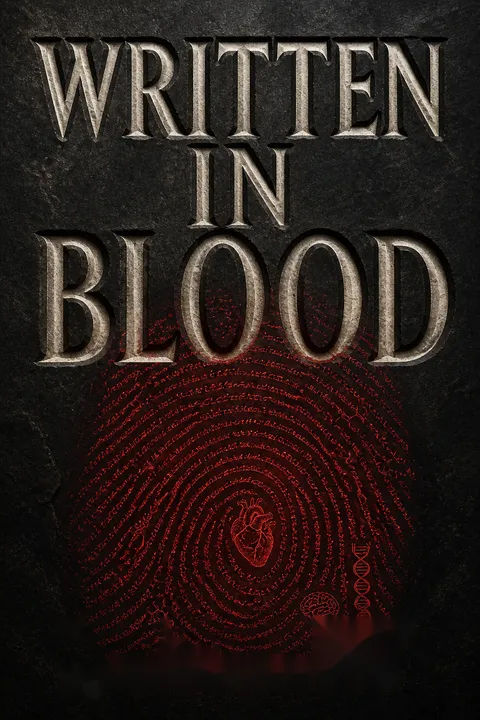


Key Takeaways
Treat every trace as evidence, not as an answer.
Traces tell partial stories. Colin and Damon Wilson frame forensic detection around the idea that contact transfers material. In the 1936 murder of writer Nancy Titterton, investigators found little at first: a short length of blind cord, a smear of green paint, and, on the bedspread, a tiny horsehair. Laboratory analysis linked the hair to stuffing in a love seat delivered to the apartment that day. That led investigators to the furniture workers, then to Johnny Fiorenza, who had visited Titterton before.
Interpretation completes the clue. The horsehair did not identify Fiorenza by itself. Investigators combined it with the cord’s source, his false alibi, his criminal record, and his familiarity with the apartment. A trace is valuable because it narrows possibilities, not because it speaks unambiguously. The book’s recurring lesson is to collect small details before they disappear, then test how well they fit a whole account.
What's striking is how the hair matters only within a chain of reasoning. A clue is not a verdict, and a plausible story can make weak evidence feel stronger than it is. The case also shows why preservation matters: once a scene is disturbed, later analysts may be unable to distinguish a criminal's trace from material left by a victim, visitor, or investigator. The practical discipline is to document first, interpret second, and keep alternative explanations alive until independent evidence supports one account.
Demand corroboration before a confession becomes a conviction.
Coercion is not proof. The book contrasts early justice, which relied on torture to force admissions, with investigation based on observable evidence. In eighteenth-century Malta, Judge Cambo knowingly condemned an innocent baker because circumstantial evidence and torture produced a confession. Centuries later, Connecticut prosecutor Homer Cummings declined to prosecute Harold Israel for a priest's murder, despite a confession, a matching gun calibre, and witnesses who seemed to place him nearby. Cummings tested the evidence and found the confession had followed an exhausting night of questioning.
Doubt protects both sides. Cummings did not establish Israel's innocence; he concluded that the evidence could not safely support conviction. That distinction runs through the book. The cases of mistaken identity, including Oscar Slater and Adolf Beck, show how confidently delivered testimony can still be wrong. A justice system must resist both the old demand for confession and the newer temptation to treat scientific-sounding evidence as certainty.
The book's strongest ethical insight is that investigation is not merely a contest to identify a culprit. It is also a process for preventing the state from harming the wrong person. A confession can be accurate, but exhaustion, pressure, self-protection, or confusion can also produce one. Likewise, an expert's certainty can exceed the evidence. Good procedure therefore requires independent corroboration and a clear distinction between not proven and proven innocent, as the Israel case makes painfully clear.
Improve detection by solving one evidence bottleneck at a time.
Methods answer specific questions. For centuries, poison could imitate natural illness. Toxicologist Mathieu Orfila recognized that ordinary tests often failed when poison was mixed with food or bodily tissue. James Marsh then devised a sensitive test that produced a visible arsenic deposit, addressing the practical problem of persuading a jury. Fingerprinting followed a similar path: Francis Galton established its distinctiveness, while Edward Henry developed a workable classification system for police records. Each advance made a previously unusable clue searchable or measurable.
Progress is cumulative. The book traces a sequence of practical improvements: chemical tests for poison, systems for identifying repeat offenders, blood grouping, comparison microscopes, and eventually DNA profiling. These tools did not replace patient investigation. They made particular questions answerable, such as whether a stain contained arsenic, whether two fingerprints matched, or whether a biological sample could have come from a suspect. Detection advanced by improving the link between a clue and a claim.
This history resembles engineering more than a parade of lone geniuses. A method earns its value by removing a specific bottleneck and surviving use in real cases. Marsh's visible arsenic deposit mattered because a jury could inspect it; Henry's classification mattered because officers could retrieve a record. The same standard should apply to newer tools: sensitivity alone is not enough. A technique must be reproducible, interpretable, and appropriate to the question being asked.
Use microscopic traces to connect people, places, and competing stories.
Small transfers link scenes. Edmond Locard's principle, described in the book as the transfer of traces through contact, gave investigators a reason to examine hair, fibres, dust, paint, and soil. In the murder of Germaine Bichon, forensic scientist Victor Balthazard compared hairs clutched in the victim's hand with samples from a suspect, helping expose that she had fought her attacker. In another case, Georg Popp linked a murder suspect to a victim through a combination of fibres, industrial dust, and soil on clothing.
Traces can test narratives. Edmond Locard's laboratory used dust from a counterfeiter's clothing to connect it to the metals in fake coins. Later, the Backhouse investigation combined blood patterns, wool fibres, and an imprint on a note pad to show that a farmer had staged threats against himself. The microscope did not merely find objects; it made relationships among objects visible, sometimes exposing a story that ordinary questioning had failed to challenge.
The power here lies in convergence. A single fibre or dust particle may have several plausible origins, while several independent traces can jointly constrain an explanation. This is also why microscopic evidence is vulnerable to contamination and overinterpretation. The book's best examples pair laboratory work with scene details and witness accounts. The weakest temptation is to let a visually striking match become a complete narrative before its source and transfer history are established.
Know when blood excludes, and when DNA can identify.
Blood groups narrow the field. Landsteiner's discovery of blood groups and Uhlenhuth's test for distinguishing human from animal blood transformed bloodstains into evidence. Yet the book repeatedly shows the limits: a group match could include many people, while a mismatch could exclude a suspect. In the 1983 Laitner murders, serologist Alf Faragher found a rare combination of blood factors in a stain on the victim's bed that matched Arthur Hutchinson's sample, helping identify him from a field of about 200 suspects.
DNA sharpens the comparison. Alec Jeffreys's genetic fingerprinting compared highly variable regions of DNA, making it possible to distinguish individuals far more precisely than ordinary blood grouping. It cleared Richard Buckland, wrongly suspected in the murders of Lynda Mann and Dawn Ashworth, then identified Colin Pitchfork after a mass screening of local men and exposed a friend's attempt to provide a substitute sample. The technique also helped convict Ian Simms in Helen McCourt's murder, despite the missing body.
The distinction between exclusion and identification is essential. A blood group usually cannot name one person, but it may show that a suspect cannot be the source. DNA profiling adds much greater discrimination, yet its strength still depends on sample quality, laboratory practice, and accurate explanation of what a match means. The Pitchfork case captures both sides: the method prevented a wrongful suspect from being blamed and caught a killer who had tried to defeat the investigation.
Reconstruct the event, but keep experts inside their limits.
Bodies preserve sequences. Pathologists in the book do more than name causes of death. Alexandre Lacassagne tested whether a corpse's hand could be made to hold a revolver after death, challenging the assumption that a gun in the hand proved suicide. John Glaister reconstructed two dismembered bodies in the Ruxton case, using bone size, teeth, surviving fingerprints, and anatomy to identify the victims. Keith Simpson used acid-resistant remains, including dentures and gallstones, to prove that John Haigh had destroyed a victim's body.
Confidence can outrun evidence. The same history includes Alfred Swain Taylor's mistaken analysis in the Smethurst case and Sir Bernard Spilsbury's influential testimony in the disputed Norman Thorne case. In the latter, the evidence undermined Thorne's suicide story, but did not fully establish the precise cause of death. Expert testimony can reconstruct an event, yet it cannot fill gaps simply by sounding authoritative. The most reliable analysts test assumptions, explain limits, and distinguish what they observed from what they infer.
Forensic reconstruction is strongest when it tests a physical possibility rather than pretending to read a body like a complete transcript. Lacassagne's experiments challenged a supposedly obvious inference, while the Thorne dispute shows the danger of moving from evidence against a suspect to certainty about exactly how a death occurred. The distinction matters in court: expertise can clarify what is consistent with the evidence, but the remaining uncertainty belongs in the verdict, not in the expert's confidence.
Read a bullet as a weapon's signature, not a verdict.
Guns leave individual marks. A bullet's grooves and a cartridge's firing-pin marks can link it to a particular weapon. The insight emerged gradually: Henry Goddard compared a bullet with those from a suspect's mould, and Alexandre Lacassagne used microscopic grooves to connect a bullet with a revolver. Later, the comparison microscope let experts examine two bullets side by side. It helped establish that a weapon recovered from a Michigan suspect had fired bullets from the St. Valentine's Day Massacre.
Expertise needs checking. The Sacco and Vanzetti case became a public battle over ballistics. Calvin Goddard's comparison microscope eventually showed that the fatal bullet had been fired from Sacco's revolver, though the evidence against Vanzetti remained less conclusive. In the Merrett case, experts who tested a similar gun rather than the actual weapon nearly helped send the wrong conclusion to a jury. Ballistics can identify a weapon; it cannot by itself establish the shooter's intent or a partner's guilt.
A tool signature is a powerful form of association, but association is not a full account of a crime. The gun may be identified while the identity of its user, the sequence of events, or another defendant's role remains uncertain. The history also shows how disagreements among experts can become courtroom theatre. Reliability depends on transparent comparison, adequate controls, and a willingness to state when a conclusion is limited rather than conclusive.
Use offender profiles to focus searches, never to replace proof.
Patterns guide attention. The book traces profiling from detectives' observations about a suspect's habits to the FBI's psychological profiling team and VICAP, the Violent Criminal Apprehension Programme, which compared violent crimes for recurring patterns. The chapter also advances the idea of the Right Man: a dominant, self-justifying person who experiences control and status as central to his identity. Such ideas may help investigators prioritize leads, especially when a serial offender selects victims at random.
A profile remains a hypothesis. The unsolved Jack the Ripper case shows the limits of inferring identity from a pattern, while the Yorkshire Ripper inquiry demonstrates how too much unintegrated information can overwhelm a search. Profiles cannot prove guilt, and an offender's apparent personality may be misread after the crime. The strongest use is operational: generate questions, compare cases, and direct attention. Physical evidence and corroborated facts must still carry the case into court.
Profiling is most defensible as a search strategy, not as a psychological verdict. It can make a large field of possibilities more manageable, but a vivid story about a killer's inner life can also anchor investigators to the wrong suspect. The book's Right Man account is suggestive, especially in linking domination to violence, but it is a theory rather than a diagnostic test. Its value depends on remaining open to evidence that contradicts the portrait.
Share records across jurisdictions before a mobile killer disappears.
Local files need links. The early detective often had to search hotel registers or question whole neighborhoods because there was no fast way to compare information across regions. Central fingerprint records changed that. By 1932, nearly 5,000 law-enforcement agencies were cooperating with the FBI, whose identification holdings eventually exceeded 200 million records. A case could be solved by linking a fragmentary clue to a distant arrest, as when a fingerprint from the Lamar bank robbery identified Jake Fleagle.
Coordination turns traces into cases. In the Yorkshire Ripper inquiry, thousands of interviews and reports became difficult to manage because the information was not integrated. By contrast, the McCourt investigation used DNA from Helen's parents to identify blood as hers, while police in another country pursued the suspect. Shared records do not replace judgment, but they make it harder for a repeat offender to exploit borders, aliases, and disconnected investigations.
The book's narrative moves from the lone detective's notebook toward a network of laboratories, police files, and shared records. That shift increases the chance that one local clue will connect to a distant crime. It also creates a governance problem: larger files make identification more efficient, but broader collection raises questions about privacy, retention, and error correction. The sound principle is not to collect everything indiscriminately, but to make relevant records searchable and auditable across agencies.
Analysis
Written in Blood is best understood as a history of changing standards of proof, told through cases rather than as a neutral catalogue of inventions. Its narrative begins in a world where authorities treated confession as the only route to certainty, then follows the gradual assembly of a forensic toolkit: chemical tests, identification systems, microscopy, serology, ballistics, and DNA. The recurring drama is epistemic. A detective sees a clue, forms an explanation, and must decide whether the explanation survives independent testing. The most convincing episodes are not simply technological triumphs, but moments when a method corrects an attractive error, as in Cummings's refusal to prosecute Harold Israel or Jeffreys's exclusion of Richard Buckland.
The book also exposes a tension that remains central to forensic science: evidence becomes more precise, while interpretation remains human. Fingerprints can identify a print but not explain how it arrived; blood groups can exclude more readily than identify; a medical expert can reconstruct injury without establishing intent. The celebrated courtroom expert can be useful and dangerous at once, since public confidence may outrun the underlying method. The cases of Spilsbury, Willcox, and the Sacco and Vanzetti experts show that expertise needs adversarial scrutiny, not reverence.
The authors' broad psychological thesis is less secure than their history of techniques. Their account often interprets killers through dominance, sexual frustration, or the proposed Right Man type, but these explanations are sometimes retrospective and more confident than the evidence warrants. The book's own cases show that motives can be mixed, fabricated, or unknowable. That weakness does not erase its central achievement: it teaches readers to see detection as cumulative reasoning, dependent on preservation, comparison, institutional memory, and the humility to distinguish a clue from a conclusion. Its lasting argument is not that science makes error impossible, but that disciplined methods can make error visible and correctable.
Review Summary
Written in Blood receives mixed reviews, with an average rating of 3.93/5. Readers praise its comprehensive coverage of forensic science history and true crime cases, finding it informative and engaging. However, some criticize its repetitiveness, graphic content, and focus on cases rather than forensics. The author's bias and arrogance are noted by some readers. Despite its flaws, many find it a fascinating read, particularly for those interested in true crime and the evolution of forensic techniques.
People Also Read




Glossary
Every contact leaves a trace
Contact transfers materialThe forensic principle that people who touch objects or places may transfer material, such as hair, fibres, dust, blood, or skin, and may also carry traces away. The book uses it to explain why crime scenes can preserve links between suspects, victims, and locations. It is a guide to looking for evidence, not a guarantee that a useful trace will remain.
Anthropometry
Identification by body measurementsA system for identifying people through a set of bodily measurements, including dimensions of the head, fingers, limbs, and height. Alphonse Bertillon developed it as a way to distinguish repeat offenders who used false names. Its success depended on careful measurement and organized filing; it was later displaced by fingerprint systems that were easier to apply and compare.
Bertillonage
Classified measurement recordsThe criminal identification method based on Alphonse Bertillon's anthropometric measurements, photographs, and written physical descriptions. Measurements were sorted into categories so police could retrieve a record when a suspect was arrested. The system helped establish scientific identification as a police practice, but was vulnerable to measurement error and became cumbersome as records expanded.
Uhlenhuth test
Human versus animal bloodA serological test that distinguishes human blood from animal blood by using serum prepared to react with proteins from a particular species. A positive reaction indicates that the tested stain contains the corresponding type of blood. The method helped turn bloodstains into forensic evidence, although contamination and poor technique could produce misleading results.
Marsh test
Sensitive arsenic detectionA chemical procedure devised by James Marsh to detect very small quantities of arsenic. The suspected material is reacted to produce arsine gas, which is heated so that metallic arsenic forms a visible deposit in a glass tube. The visible result made arsenic evidence easier to demonstrate in court, though the test required controls to prevent contamination.
Poroscopy
Fingerprint pore comparisonA method associated with Edmond Locard that compares the pores along the raised ridges of fingerprints. Locard argued that pore arrangements are distinctive and can help identify a person when a print is partial or unclear. Poroscopy extends fingerprint analysis beyond the overall ridge pattern, but still depends on adequate impressions and careful comparison.
Absorption elution test
Typing old bloodstainsA method developed by Stuart Kind for identifying blood groups in old or dried stains. Antibodies from a fresh test serum attach to antigens in the stain; gentle heating separates them, and their remaining reactions help determine the stain's group. The method replaced more cumbersome procedures and became a standard way to examine old blood evidence.
Genetic fingerprinting
Identification through DNA patternsA technique developed by Alec Jeffreys that compares highly variable regions in a person's DNA. The resulting pattern can be compared across samples from blood, semen, or other tissue, and can help identify a source or establish biological relationships. The book describes its use to exclude a wrongly suspected man, identify Colin Pitchfork, and connect a murder victim's blood to her parents.
VICAP
Violent-crime pattern comparisonThe Violent Criminal Apprehension Programme, a system described in the book for comparing violent crimes and identifying possible links among cases. Its purpose is to help investigators recognize patterns that may otherwise remain hidden across jurisdictions. VICAP can guide investigations, but a pattern match is a lead to test, not proof that the same person committed every crime.
Right Man
Dominance-driven offender typeA psychological type proposed in the book to describe offenders who feel entitled to dominate others, reject limits, and cast their loss of control as a deliberate choice. The authors use the idea to interpret serial killers and other violent offenders. It is a speculative explanatory model, not a forensic test or a reliable way to identify an individual.
About the Author
Other books by Colin Wilson




Download PDF
Download EPUB
.epub digital book format is ideal for reading ebooks on phones, tablets, and e-readers.








