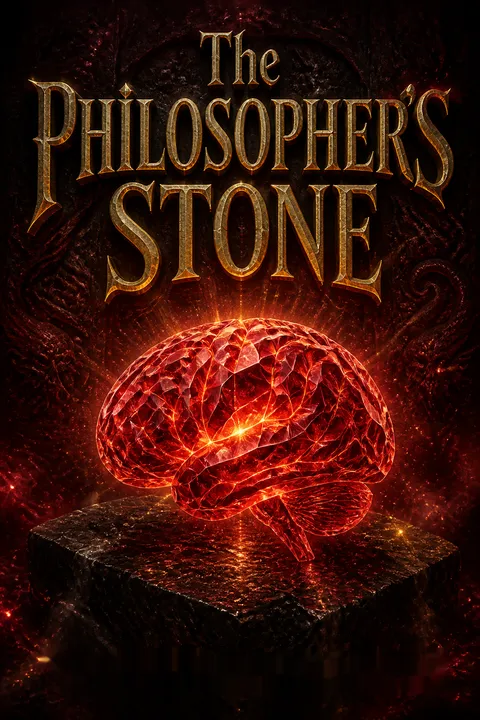


Plot Summary
Choirboy Finds His Double
Growing up in industrial Hucknall, Howard Lester feels trapped by his father’s plan for him to become an engineer. Music unsettles him more deeply than mathematics, and a Greek song first makes him confront the fact of his own death. At thirteen, he joins a church choir and meets Sir Alastair Lyell, a scientist whose love of music and ideas matches his own.
Lyell invites Howard to visit his country house and soon welcomes him there as a virtual adopted son. In the museum upstairs, fossils and rocks make deep time feel more real than everyday life. Howard moves his books to Sneinton Hall, where Lyell guides his studies without dictating them, though the closeness estranges Howard from his brothers and father.
Howard’s first crisis is not simply adolescent dissatisfaction. The prospect of a conventional career feels morally empty because he has already glimpsed mortality as a concrete limit on his time. Lyell offers more than education: he models a life in which intellectual attention can be an end in itself. Their unusual kinship also gives Howard a first experience of being understood across differences of age and class. Yet the escape has a cost. His family reads the new household as privilege, while Howard experiences it as purpose, establishing the novel’s recurring tension between inward vocation and ordinary attachment.
The Mentor Is Gone
While working with Lyell, Howard becomes fascinated by a question about autolytic enzymes, the agents that break down a cell after death but leave it intact during life. He suspects that will might help explain the body’s resistance to collapse, though Lyell insists the idea needs a test.
Years later, Lyell dies suddenly after an illness in China. Howard inherits a substantial fortune, but the money cannot steady him; alone in a cottage by the sea, he loses interest in research and nearly loses interest in living.
Drinking in a pub, he listens closely to a farm labourer describe his constrained life. The encounter reminds Howard that he is free to choose his own direction, and he returns to writing about how art and science enlarge human awareness.
The death destroys Howard’s assumption that intellectual work can proceed independently of emotional life. His grief initially turns into contempt for science, which now seems to catalogue an indifferent universe while failing to answer why living matters. The pub encounter makes attention itself the turning point: listening to another person gives Howard access to a life beyond his own desolation. His emerging theory that art and science share a purpose is therefore born from grief and social contact, not from a laboratory result. The novel makes insight inseparable from the conditions that permit a mind to notice more than itself.
Alexandria Opens the Mind
Howard visits Aubrey Lyell, a relative of Alastair’s, in Alexandria and immerses himself in the library left by Aubrey’s uncle, a scholar of Christian mysticism. Furtwängler’s recordings of Bruckner change how Howard hears music: the long symphonies become exercises in stepping outside ordinary, personal time.
In a book on ageing, he finds studies suggesting that intense experiences can revive apathetic older people and help some alcoholics recover. Linking these findings to his own idea of wider consciousness, he argues that human longevity may depend on sustaining the will to develop.
A voyage home deepens the theory when, during a bout of sickness, attention to other passengers briefly distracts Howard from his symptoms. He resolves to study the body and pursue evidence rather than let the idea remain speculation.
Alexandria gives Howard a bridge between scientific inquiry and spiritual practice without requiring him to surrender either. Music becomes a method of attention, while the ageing studies suggest that consciousness may have measurable bodily consequences. His theory is still speculative, but its key psychological observation is grounded in experience: self-absorption can intensify suffering, while purposeful attention opens access to energy. The scene also reveals Howard’s impatience. He wants the insight to become a general law and begins searching for biological proof, setting up the conflict between a compelling interpretation and the slow, ethical demands of experimentation.
A Theory Meets Resistance
After hearing a lecture by psychologist Sir Henry Littleway, Howard writes to him and studies the work of Aaron Marks, whose experiments connect intense meaning experiences with recovery and vitality. When they meet, Littleway agrees that the question matters but argues that Howard has no workable experiment.
Frustrated, Howard later drinks in a London pub and sees Romantic poets and composers as evidence of a new capacity for mental detachment. He writes an essay proposing that humanity is evolving toward broader consciousness, and that will, not pleasure or ecstasy alone, keeps that capacity alive.
On a train to Leicester, Littleway reads the essay and accepts its importance, though not its proof. He invites Howard to stay at Langton Place, where their collaboration can test the idea.
Littleway functions as both intellectual ally and necessary brake. Unlike Aubrey, he does not dismiss Howard’s inward life, but he refuses to confuse a persuasive account with a verified mechanism. Howard’s pub insight answers an emotional need for certainty, and its brilliance is inseparable from its risk of overreach. The essay’s central distinction, between a moment of ecstasy and the sustained will to understand what it reveals, becomes the book’s ethical hinge. Howard must learn that a powerful experience is not self-validating; its value depends on the disciplined attention and evidence that follow it.
Dick Becomes the Test
At Langton Place, Henry’s brother Roger tells them of Dick O’Sullivan, a young farm labourer whose skull was pierced by a harvesting machine. Since the accident, Dick has displayed apparent second sight, radiant benevolence, and a trance-like delight in colour and music, but he can no longer work reliably.
Henry offers Dick and his pregnant wife, Nancy, a cottage and support so they can be studied. The researchers find that induced illnesses sometimes disappear rapidly after carefully staged emotional experiences. Then Dick develops headaches, and an examination reveals a brain tumour that may have existed before the experiments.
Dick dies weeks later. Howard’s belief that ecstasy could preserve life collapses. In despair, he reconsiders the case and concludes that lasting vitality depends not on ecstasy itself but on a mind able to connect present experience with wider meaning.
Dick’s case turns Howard’s theory into a moral problem. The researchers gain access to a vulnerable couple partly because they can offer financial security, but their experiments may have intensified a condition they do not understand. Dick’s delight is real, yet it does not amount to the deliberate, sustained attention Howard values. His death forces a crucial revision: vivid feeling can illuminate reality, but it cannot replace the work of making relationships among experiences. The distinction protects Howard’s theory from a simple failure, but it also exposes how easily a scientist can reinterpret a tragic outcome to preserve his convictions.
A Fragment Changes Everything
At the University of Wisconsin, Howard and Henry study brain activity, hypnosis, and the prefrontal lobes, which may support reflection and imagination. Their experiments with animals and human subjects produce findings but no reliable way to sustain the focused awareness Howard seeks.
They then use electrodes made with Neumann alloy, a metal that briefly stores and releases a weak current. A tiny fragment breaks off inside Zachariah Longstreet’s brain during a test. When they apply the current again, the formerly alcoholic, emotionally blunted man becomes strikingly attentive and composed, describing a new sense of mental openness.
The researchers repeat the procedure and see a similar effect. Longstreet’s case suggests the alloy has triggered a capacity for concentrated, relational consciousness, giving Howard and Henry their first practical lead.
The accidental fragment makes the scientific breakthrough depend on contingency, but the researchers’ response determines whether chance becomes knowledge. Howard recognizes that Longstreet’s stillness differs from Dick’s emotional rapture, shifting the project from producing intense feelings to understanding sustained attention. Yet the procedure is invasive, and the subjects are far from ideal candidates: Longstreet is a convicted offender in treatment, not a neutral volunteer. The novel stages discovery beside ethical unease, showing how easily the language of evolutionary improvement can make coercive interventions seem justified.
Howard Enters the Machine
The team tests the method on Honor Weiss, a young poet recovering from suicidal depression. Under stimulation, she feels able to examine her life with unusual clarity and says that her former despair came from being trapped in emotional confusion. The concentration brings strain and headaches, however, and she refuses further sessions.
Longstreet also becomes less remorseful about his past, which Henry reads as evidence that the treatment may distort judgment. Howard argues that they cannot understand the process without trying it themselves.
Henry and a surgeon implant a fragment in Howard’s prefrontal region, then apply a mild current. Howard experiences ordinary awareness as suddenly fuller and more energized. He learns to reproduce the state through will alone. Henry eventually undergoes the procedure too, and his temperament changes as he begins exploring philosophy.
Honor and Longstreet prevent Howard from treating the procedure as a universal cure. The same intervention that helps one person reconsider despair may leave another morally less constrained, and neither subject’s response fits neatly into a success metric. Howard nevertheless chooses self-experimentation, combining scientific courage with a striking confidence that his own values will protect him. Henry’s later consent establishes their partnership more fully, but their mental gains also introduce a new hazard: both men may be changing faster than their ethical frameworks can keep pace.
The Past Comes Forward
After Henry’s operation, Howard’s attention widens beyond present experience, and he begins trying to reach the histories of places and objects. At a quiet Tudor house, he imagines its former moat and buildings, then learns that his reconstruction matches details the owner’s sister remembers.
He and Henry investigate the property’s records and form a speculative connection among Lord Burghley, Francis Bacon, and Shakespeare’s early life. Their theory leads Howard to read Shakespeare and Bacon directly; rather than confirming their excitement, he judges both writers less profound than their reputations suggest.
The episode teaches him that heightened intuition can generate a lead, not a verdict. His expanding perception now demands ordinary corroboration, even as it tempts him to trust impressions that cannot easily be checked.
The historical visions transform perception into a contested instrument: Howard experiences them as direct knowledge, while the surviving documents offer only partial confirmation. His willingness to investigate the Bacon-Shakespeare theory shows both intellectual appetite and a growing tendency to mistake coherence for proof. The episode’s quieter lesson is methodological. Extraordinary access to impressions does not abolish the need for evidence; indeed, it raises the stakes of verification. Howard’s dismissal of celebrated authors also reveals how his new consciousness narrows his patience for ordinary human drama, foreshadowing the danger that expanded perspective can harden into superiority.
Stonehenge Resists Him
At Stonehenge, Howard experiences a vertiginous rush of prehistoric impressions, including enormous figures hauling stones, while Henry senses the same disturbing atmosphere. A basalt figurine, which Howard dates far earlier than experts would expect, intensifies their suspicion that human history contains a concealed chapter.
At Silbury Hill, Howard feels an unseen force suppress his curiosity; soon after, Henry grows inattentive at the wheel and nearly drives their car beneath a timber lorry. Howard believes an outside influence is dulling their minds.
Their research is obstructed again when archaeologists Robin Jackley and Albrecht Kircher turn inexplicably hostile. Meanwhile, Henry’s brother Roger is accused of a brutal assault, then attacked himself. The accumulating dangers make their historical inquiry feel less like scholarship than a struggle against an unseen opponent.
The novel shifts from speculative investigation to threat by making obstruction psychological before it becomes spectacular. Fatigue, anger, and professional suspicion are familiar states, so the alleged influence can hide inside ordinary human weakness. This ambiguity makes the danger more unsettling than a visible monster would be. Roger’s violence also complicates the idea that enhanced consciousness automatically produces moral progress: his stagnant appetites make him vulnerable, but the consequences fall on real people. Howard and Henry’s growing certainty protects them from dismissing the pattern, while increasing the possibility that they are imposing a single explanation on unrelated events.
The Codex Names Them
A report of a newly discovered Vatican manuscript gives Howard and Henry a way around hostile museum scholars. With help from a Vatican contact, they receive photographs of the Maya codex and Howard begins deciphering its symbols.
The text describes a succession of creators, a star-born dark power, catastrophic cycles, and the creation of humanity as a servant class. Its account resembles scattered myths and the legends of beings called the Great Old Ones. Howard and Henry cannot tell how literally to take it, but the manuscript gives their suspicions a historical shape.
Howard later shares his translation with Jackley, who apologizes for his earlier hostility. The unexpected truce does not settle the danger; it gives the researchers a new set of clues and a reason to continue.
The codex changes the investigation from a collection of anomalies into a narrative about power, creation, and human dependence. Its religious language can be read as history, metaphor, or deliberate manipulation, and the researchers have no neutral means of deciding among those possibilities. That uncertainty matters: the text does not simply reveal facts, it supplies a framework that reorganizes every earlier event. Jackley’s apology offers social validation, yet cannot prove the codex’s claims. Knowledge here gains force through interpretation, and interpretation itself becomes a possible point of vulnerability.
Barbara Joins the Search
In London, Howard presents his translation to Jackley and meets Barbara, Jackley’s pregnant niece, who is raising two young children while separating from her husband. She accepts Howard’s offer to work with him and Henry, and a powerful sense of mental intimacy draws them together.
Howard understands that forming a family could make him easier to threaten, but he chooses to bring Barbara and her children to Langton Place. A package then arrives containing the papers of Benjamino Evangelista, a murdered religious leader who had written about beings resembling the Great Old Ones.
Howard concludes that Evangelista was killed after his visions brought him too close to forbidden knowledge. The book reads as a warning that the unseen forces can reach into domestic life, not merely obstruct research.
Barbara’s arrival changes the scale of Howard’s risk. Until now, he has treated danger as something that can be met through attention and intellectual discipline; attachment creates people whose safety cannot be reduced to an experiment. His choice to welcome her is not simply a romantic surrender. It tests whether the expanded consciousness he prizes can include care, responsibility, and dependence. Evangelista’s papers then make the threat intimate by linking forbidden inquiry to a murdered household. The warning is effective precisely because Howard has begun to build the kind of life that gives him something concrete to lose.
Roger Speaks From Below
After returning from hospital, Roger arrives at dinner sullen and intoxicated, then speaks in a torrent of occult names and images. Howard recognizes that Roger is not merely rambling: his mind seems to be echoing material from the hidden beings’ mythology.
When Howard concentrates on Roger, the man suffers a seizure and later wakes calmer, as if the influence has withdrawn. The next morning, the disturbing presence returns through Roger’s dreams. Howard asks where to find the forbidden book they seek, and catches a fragment that Henry interprets as a reference to Philadelphia.
Their call to a Pennsylvania scholar leads them to the Voynich manuscript and to the disappearance of Professor John Lang, who had claimed to decipher it. Howard and Henry book separate flights, unwilling to risk losing both researchers at once.
Roger becomes an involuntary channel between human vulnerability and the novel’s concealed history. His behavior is not presented as a clean possession narrative: his own cruelty, addictions, and resentment remain part of the cause, while the influence seems to exploit them. Howard’s attempt to direct Roger’s mental state mirrors his experiments, but now the stakes are interpersonal and uncontrolled. The clue to Philadelphia rewards attentive listening rather than force. Their decision to travel separately shows that the men have begun to treat their survival as part of the investigation, not an assumption.
The Voynich Manuscript Wakes
In Philadelphia, Howard examines the Voynich manuscript and confirms that it has been deliberately made resistant to his historical perception. He studies its damaged symbols alongside John Lang’s surviving notes, which suggest the manuscript is a medieval commentary on the Necronomicon rather than the legendary book itself.
Working together, Howard and Henry focus on the pages until the barrier gives way. They glimpse the Old Ones’ history: beings who created humans as servants, then tried to develop bodies and conscious control of their immense power.
Their effort triggered a catastrophe that drove them into a long sleep. The act of breaking the manuscript’s defenses appears to stir one of them. Howard and Henry feel a force capable of wrecking continents, and leave Philadelphia frightened by what their curiosity may have awakened.
The manuscript’s psychic barrier turns reading into an act with physical and ethical consequences. Howard and Henry do not merely uncover a story; their combined attention activates the force that the text was designed to conceal. The danger arises from their method of knowing, not from ignorance alone. Their revelation also reverses the familiar hierarchy between human beings and monsters: humanity may be a designed instrument, while its makers possess power without the precision that consciousness brings. The scene’s terror rests on scale, but its deeper warning is about discovery undertaken without knowing whether the object of study can respond.
The Human Weapon Misfires
On the journey home, Howard’s power of concentration sharpens into a new ability to project images and intentions. At an airport, he and Henry react angrily to a man provoking a porter; their combined force drops the aggressor, leaving him badly hurt.
Howard recognizes that his focused mind has become dangerous when instinctive anger commandeers it. He also tests the power on a dog and a customs officer, briefly making each respond to an image that is not physically present.
During the flight, he connects this danger to the Old Ones’ downfall: they had tried to acquire precise, conscious control over immense unconscious energy, but their suppressed instincts erupted and destroyed their civilisation. The discovery changes their task. They must prepare humanity before the sleeping beings awaken.
The airport incident gives Howard’s abstract theory an immediate ethical cost. He has spent the novel treating increased consciousness as liberation, but concentrated intention can become coercive or destructive when emotion directs it. His insight about the Old Ones is therefore also self-diagnosis: their catastrophe may recur in miniature whenever power outruns self-knowledge. The dog and customs officer tests suggest a capacity that could be used to protect, manipulate, or dominate. Howard’s new mission is not simply to become stronger than the ancient beings; it is to cultivate a form of power that does not repeat their failure.
Mu’s Last Night
Back in England, a photograph of the Chichen Itza figurine lets Howard see past the interference surrounding the original. He traces the image to Mu, an ancient civilisation guided by K’tholo, a priest who kept its people disciplined and united. With Henry, he later finds a crystal once used by K’tholo to view distant events.
Through it, Howard witnesses the Old Ones’ rise, their effort to master consciousness, and the Night of the Monsters, when uncontrolled psychic forces shattered their underground cities and sent them into sleep. The vision resolves the central mystery but sharpens the deadline: the Old Ones may wake at any time.
Howard and Henry conclude that humanity must become their equal, not their servant, and plan to spread the brain procedure carefully. Howard’s pregnant wife and their unborn child embody his hope that the change might continue across generations.
The final vision turns a history of domination into a problem of reciprocal development. K’tholo’s civilisation offers order and collective purpose, but its stability rests on hierarchy and fear; the Old Ones’ attempt to gain control ends in catastrophe. Howard therefore imagines a third possibility, human beings mature enough to meet their creators as collaborators. Yet his confidence is not a resolution of the danger. He has no proof that the procedure can be safely shared, or that a population will choose wakefulness over comfort. The ending’s hope remains inseparable from its anxiety: evolution can be invited, but not guaranteed.
Analysis
The Philosopher’s Stone builds its speculative plot from a persistent psychological question: what enables a person to experience life as meaningful rather than merely endure its routines? Howard’s answer develops through grief, study, and experiment. Lyell’s death first makes the limits of intellect painfully visible; Howard then discovers that attention to other people, music, books, and history can widen the mind beyond immediate distress. The brain procedure gives this private experience a biological mechanism, but its consequences resist simple optimism. Dick’s rapture does not protect him from illness, Honor refuses the strain of intensified awareness, and Longstreet’s response unsettles the belief that greater consciousness automatically produces moral improvement.
The novel’s strongest structural idea is that perception is both a source of freedom and a source of danger. Howard’s expanding awareness lets him recover historical meaning from artifacts, but it also makes him vulnerable to grand theories and gives his focused intention the capacity to injure. The Old Ones mirror this problem on a vastly greater scale. They seek precision and self-conscious control, yet their suppressed forces destroy the civilisation they have built. Their history is thus not just an alien threat. It is an extreme version of the conflict already present in Howard, whose intellectual discipline must govern powerful instincts rather than deny them.
The book also questions who should benefit from human enhancement. Howard argues that many people would misuse an increased lifespan, and his wish to select suitable subjects reveals an authoritarian streak beneath his language of evolution. The ending imagines humanity meeting its makers as an equal species, but it does not resolve who gets to decide what counts as readiness. This tension keeps the story from being a straightforward celebration of scientific transcendence. Its final hope depends on a collective awakening, while its protagonist’s confidence repeatedly risks turning a theory of human freedom into a plan imposed on others.
Review Summary
People Also Read

Characters
Howard Lester
Relentless consciousness seekerHoward narrates his life as a scientific memoir, beginning as a gifted, solitary boy hungry for ideas and impatient with ordinary routines. Music, mathematics, and the reality of death shape his early search for a life that matters. His bond with Alastair Lyell gives that search direction, while Lyell’s death forces Howard to confront how much intellectual ambition depends on emotional attachment. Howard is curious, disciplined, and capable of unusually forceful conviction; those strengths can turn into arrogance when he treats his interpretations as established fact. His research into consciousness is also a search for a way to escape human limitation, and the novel keeps testing whether his desire to uplift humanity can coexist with respect for individual choice.
Sir Alastair Lyell
Howard’s intellectual mentorAlastair Lyell is a scientist, scholar, and music lover whose range of interests gives Howard a model of an undivided intellectual life. He values independent thought and introduces Howard to disciplines rather than prescribing a career. Lyell recognizes in the boy a rare intensity that recalls his own youthful hunger, and their connection becomes unusually intimate despite their age difference. His scientific caution sometimes frustrates Howard, but it also distinguishes observation from speculation. For Howard, Lyell is mentor, intellectual companion, and chosen family. His presence establishes the standard against which Howard measures both his ideas and his own ability to live fully.
Henry Littleway
Skeptical scientific partnerHenry Littleway is a psychologist and brain researcher with an empirical temperament, practical energy, and a willingness to entertain questions that conventional science avoids. He challenges Howard to find testable methods, then joins him when the evidence begins to accumulate. Their partnership balances Howard’s visionary leaps with Henry’s caution, though both become increasingly invested in the promise of their work. Henry is also a brother, a host, and a colleague whose private life brings family tensions into the laboratory. He is motivated by curiosity, but the novel suggests that even disciplined scientists can be changed by the discoveries they pursue.
Roger Littleway
Henry’s volatile brotherRoger lives in a separate wing of Henry’s house and resists the intellectual seriousness that defines his brother’s life. He is drawn to sexual scandal, pornography, and stories of cruelty, and he uses mockery to make other people’s convictions seem naive. His interest in the grotesque is not simply eccentricity; it reflects a restless appetite for sensation without the discipline to examine what it means. Roger’s resentments and isolation make him a source of friction within the household and an unsettling contrast to Howard’s ideal of deliberate self-development.
Dick O’Sullivan
Accidental experimental subjectDick is a young farm labourer whose life changes after a machine pierces his skull. Before the accident he is athletic, practical, and known as a capable worker. Afterwards, he becomes dreamy, affectionate, and intensely responsive to music, colour, and beauty, while losing much of his capacity for ordinary tasks. His experience gives Howard and Henry an unusual opportunity to study consciousness, but Dick is a person in need of help, not merely a scientific puzzle. His relationship with his wife Nancy also makes the consequences of the researchers’ choices visible beyond the laboratory.
Barbara
Mother and chosen partnerBarbara is Robin Jackley’s niece, a thoughtful young mother navigating separation from her husband while caring for two children. Her intelligence and emotional steadiness appeal to Howard, who is accustomed to treating human relationships as distractions from intellectual work. Their sense of mental intimacy develops quickly, and she chooses to join Howard and Henry’s household. Barbara represents a form of connection that may deepen rather than interrupt Howard’s understanding of life. Her presence also makes his decisions more consequential: he must consider the safety and future of a family, not only the progress of his theories.
Honor Weiss
Poet facing despairHonor is a young, intelligent poet who has struggled with suicidal depression after an abortion. She agrees to take part in Howard and Henry’s experiment, and her response suggests that concentrated awareness can let her examine her life from a different perspective. Her experience is not a simple cure: the mental intensity causes strain, and she chooses not to continue. Honor’s sensitivity to poetry coexists with a fear of the demands that sustained self-examination might place on her. She gives the researchers an important human perspective on the difference between temporary relief and lasting change.
Zachariah Longstreet
First alloy test subjectZachariah Longstreet is an older patient with a history of alcoholism and criminal behavior who takes part in treatment with Henry and Howard. The researchers regard his emotional bluntness and recurrent relapses as reasons to seek a more durable form of change. During an experimental session, he displays a degree of calm concentration that differs from the emotional states the team has studied before. His case forces Howard and Henry to consider how a neurological intervention might affect judgment, responsibility, and a person’s understanding of his own past.
Aubrey Lyell
Alexandrian intellectual hostAubrey is a relative of Alastair Lyell who offers Howard hospitality in Alexandria. He argues that emotion, sexuality, and social life are central to human existence, providing an alternative to Howard’s growing devotion to ideas. His house contains the theological library that brings Howard into close contact with mysticism and Bruckner’s music. Aubrey is candid about the limits of his own intellectual interests and remains a courteous host despite their disagreements. Through him, Howard encounters a humane position he cannot fully accept but must take seriously.
Nancy O’Sullivan
Dick’s protective wifeNancy is Dick’s young wife, pregnant and worried about how they will survive after his accident leaves him unable to work as before. She describes the changes in Dick to Howard and Henry, then accepts their offer of support and a place to live. Her practical fears give the researchers’ study a human context: what they learn may affect a couple’s daily security, not just scientific theory. Nancy is also vulnerable to the shifting loyalties and desires inside the household at Langton Place.
Aaron Marks
Psychologist of value experienceAaron Marks is a psychologist whose research links powerful experiences of meaning with changes in behavior and vitality. His work with alcoholics and older people supplies Howard with evidence that consciousness may affect health, and his theories help translate Howard’s private intuitions into a wider research program. Marks is interested in psychological well-being and social conditions, while Howard sees a more radical evolutionary implication in the same findings. Their different priorities show how one body of evidence can support distinct scientific ambitions.
Sir Robin Jackley
Archaeologist and reluctant allyRobin Jackley is an archaeologist and the uncle of Barbara. His expertise helps Howard and Henry approach Maya artifacts and historical collections. At first, he is drawn into unexplained hostility toward the researchers, which threatens their access to evidence and strains an established professional friendship. Howard’s later translation gives Jackley reason to reconsider his judgment. Jackley’s character highlights how scholarship depends on trust and institutions, both of which can be undermined by personal suspicion.
K’tholo
Priest-king of MuK’tholo is a legendary priest and ruler whose life and civilisation survive through artifacts and ancient accounts. He serves as an intermediary between the Old Ones and the people of Mu, and his records preserve a history inaccessible to ordinary archaeological methods. To Howard, K’tholo embodies a formidable union of purpose, leadership, and knowledge, but the civilisation he governs also depends on strict hierarchy. His story gives the final revelations a human scale while raising questions about whether order founded on obedience can ever produce genuine independence.
The Great Old Ones
Ancient hidden powersThe Great Old Ones are ancient beings described in the manuscripts and sensed through objects associated with prehuman history. Their immense power and unusual relationship to bodies distinguish them from human life, while their interest in creating servants ties them to humanity’s origins. They are not presented simply as conventional monsters: their efforts to gain conscious control over their own forces suggest both intelligence and a profound vulnerability. Their presence turns Howard and Henry’s scientific work into a confrontation with the history of life and the possibility that humanity was designed to serve another species.
Plot Devices
Neumann alloy
Unlocks focused awarenessNeumann alloy can briefly retain a weak electrical charge and release it in a small burst. During experiments on the brain, a fragment breaks from an electrode and lodges in a subject’s prefrontal region. When the researchers apply current, Longstreet enters a state of unusual concentration, and later tests on Honor and Howard suggest the effect can be reproduced. The alloy gives Howard and Henry a practical route into the question of consciousness, but the surgical risks and varied psychological effects keep it from being a simple cure. It is the accidental tool that turns Howard’s theory into an experiment.
Relational consciousness
Links the present to meaningHoward’s central theory proposes that consciousness works by relating what is immediately present to remembered, distant, or imagined experience. When attention narrows to the present alone, people become vulnerable to boredom, despair, and habitual responses. When the mind sustains a wider field of relations, an experience can acquire significance beyond its immediate emotional effect. Howard connects this idea to art, science, music, ageing, and the will to live. The theory explains why he distinguishes sustained understanding from brief ecstasy, and it supplies the psychological framework for the brain experiments.
Historical artifacts
Make the past perceptibleCertain ancient objects provoke unusually vivid historical impressions in Howard and, eventually, Henry. The basalt figurine, the Maya jade, and the crystal associated with K’tholo each open different routes into the past. Their effects are not identical: some objects seem to resist inquiry, while photographs can sometimes reveal what the originals conceal. The artifacts let the narrative move from brain science into archaeology and cosmic history, while requiring the protagonists to distinguish perception from fantasy. Their changing accessibility also makes the objects part of the conflict, not merely evidence within it.
Vatican and Voynich texts
Conceal and disclose originsThe Vatican Codex and the Voynich manuscript supply written accounts of ancient beings, human creation, and forgotten catastrophes. The Vatican text is partly decipherable through Howard’s growing command of Maya symbols, while the Voynich pages have been damaged and psychically shielded. John Lang’s notes offer a partial route into the latter. Together, the manuscripts turn scattered myths into a historical hypothesis, yet their age, damaged state, and ambiguous language leave room for error. Seeking their meaning brings Howard and Henry closer to a concealed history and triggers a direct encounter with the danger guarding it.
Psychic interference
Defends buried historyAn unseen influence appears to dull attention, inflame resentment, and obstruct attempts to investigate certain artifacts and records. It can make colleagues act irrationally, interfere with Howard and Henry’s perceptions, and turn ordinary travel into danger. The influence is initially difficult to separate from fatigue, bad judgment, or personal hostility, which allows it to work through familiar human weaknesses. As the protagonists compare incidents, they suspect that the interference protects a buried history and serves powers that cannot be approached directly. It transforms research into a contest over who can sustain clear thought.
About the Author
Other books by Colin Wilson


Download PDF
Download EPUB
.epub digital book format is ideal for reading ebooks on phones, tablets, and e-readers.








