

Key Takeaways
Treat boredom as a narrowed view, not proof that life is empty
Meaning feeds vitality. Wilson argues that everyday worries can shrink awareness until the world seems dull and pointless. That mood then drains the energy needed to notice anything beyond those worries. He calls this the “triviality of everydayness,” a trap dramatized by Faust: the scholar’s despair loosens when the Easter bells reconnect him with childhood and a larger sense of life.
Notice the shift. Proust’s narrator tastes a madeleine dipped in tea and suddenly experiences his childhood as vivid reality, not merely a fact he can describe. For Wilson, such moments show that the world’s richness has not disappeared; attention has stopped registering it. Art, memory, nature, and curiosity can all interrupt that narrowing.
What's valuable here is the distinction between a bleak interpretation of life and a temporary failure to perceive its complexity. It gives boredom diagnostic value: perhaps the problem is not that nothing matters, but that attention has become captive to a small set of concerns. The idea also has a limit. Some boredom signals genuine exhaustion, grief, or unmet needs, not merely a lapse in perspective. Treating every low mood as a perceptual error could become another way to blame people for suffering.
Train attention to reach beyond the present moment
A latent faculty. Wilson calls this ability Faculty X: the capacity to experience other times, places, and meanings as real, rather than merely knowing about them as facts. It is not necessarily a paranormal sense. It can appear when memory, imagination, or concentration makes a distant event feel immediate.
Stretch the frame. Historian Arnold Toynbee described reading about past events and briefly feeling transported into their scenes. Wilson treats this as a stronger form of ordinary historical imagination, similar to the sudden return of childhood memories in Proust. The practical implication is to notice when perception expands, then deliberately give attention more room instead of assuming the present moment is all that exists.
Faculty X is memorable because it connects mystical experience to familiar acts of memory and imagination, rather than cordoning it off as supernatural. A vivid reconstruction of the past can deepen empathy and loosen the tyranny of immediate concerns. Yet vividness alone does not establish literal access to another time or place. The useful distinction is between an experience's psychological reality, which may be profound, and its claim about external reality, which requires separate evidence.
Test psychic claims without confusing perception with explanation
The unconscious notices. Wilson proposes that some supposed psychic abilities may be ordinary perception operating below awareness. Jim Corbett, the hunter and writer, once found himself crossing the road for no clear reason, then discovered tiger tracks where he would otherwise have walked. He believed an unconscious sensitivity to danger had guided him.
Other abilities vary. Wilson also discusses animal navigation, water divining, and the clairvoyant Peter Hurkos. These examples suggest that human senses may register more than conscious attention reports. But Wilson does not offer a single mechanism that explains them all. A hidden cue, coincidence, telepathy, or some other process could produce similar impressions, so the experience should be distinguished from the explanation attached to it.
The book's strongest move is to resist a false choice between dismissing every strange perception and declaring every one supernatural. Corbett's story, for example, can be read as rapid unconscious integration of subtle cues, whether or not it proves a sixth sense. This keeps curiosity alive while demanding careful testing. The limitation is that Wilson often gives anecdotes more evidential weight than controlled comparison would justify. A compelling story can generate a hypothesis, but it cannot by itself identify the mechanism.
Use symbols to focus the mind, not certify the supernatural
A symbolic instrument. Wilson sees systems such as the I Ching and Tarot as tools for concentrating attention and engaging the subconscious. The I Ching combines broken and unbroken lines into patterns that represent situations; its readers use those patterns to reflect on a question. The Tarot similarly connects images such as the Hermit, the Moon, and the Tower into a symbolic language.
Meaning matters more than prediction. Wilson considers the I Ching most valuable as a book of wisdom, not as a device for forecasting events. He invokes Jung's idea of synchronicity to explain why a random cast of coins might seem to match a person's concerns. The match can prompt insight, but it does not prove that the coins or cards were guided by spirits.
Symbolic systems can be useful without being treated as supernatural machinery. Their structure gives attention something to work on, while the user's question supplies emotional relevance. That combination can reveal assumptions a person had not noticed. The danger is circular reasoning: an ambiguous symbol is interpreted to fit a concern, then the fit is presented as independent confirmation. Wilson's best defense is to emphasize reflection over fortune-telling, keeping the tool valuable even when its metaphysical explanation remains uncertain.
Treat evolution as a question of purpose, not only mechanism
A challenge to reductionism. Wilson objects to accounts of life that explain evolution entirely through accident and selection. He points to cooperative or strikingly organized animal behavior, including flattid bugs that gather into a shape resembling a flower, and a flatworm that uses stinging cells taken from its prey for defense.
A bold hypothesis. Drawing on cybernetics, Wilson presents David Foster's idea of an “Intelligent Universe,” in which information helps organize matter and life. This resembles older mystical beliefs that nature contains meaning, not merely mechanical events. The examples make purpose a question worth asking, but they do not establish that a cosmic intelligence programmed evolution. Wilson's proposal is a speculative framework, not a demonstrated scientific result.
Wilson is right that a purely mechanical vocabulary can leave important questions about organization and meaning untouched. Asking what a biological system does is not the same as asking how it arose, and neither question cancels the other. Still, organized complexity does not by itself prove intention; natural selection can produce sophisticated adaptations without foresight. The most durable contribution here is not the claim that the universe has a programmer, but the insistence that scientific explanation should remain open to questions its current methods cannot settle.
Read magic's history as a struggle over meaning and authority
From healing to control. Wilson sketches a movement from shamans using altered states and intuitive skill for their communities to more elaborate magic in settled societies, where ritual could promise protection, wealth, or power. He then traces how Christianity recast magic as traffic with the Devil, while the rise of science rejected many supernatural claims.
The story is not simple progress. Pythagoras, Agrippa, Paracelsus, and John Dee each sought knowledge through mixtures of philosophy, experiment, mysticism, and ritual. Their histories show that “magic” has meant different things in different eras: healing, divination, spiritual discipline, or fraud. Wilson's narrative is less an encyclopedia than an argument that cultures repeatedly push unwanted forms of experience outside the boundaries of legitimate knowledge.
This historical arc helps explain why occultism cannot be reduced to one belief system. It shifts with the institutions that define respectable knowledge, and with the needs those institutions fail to meet. The contrast between shamanic healing and persecuted witchcraft also shows how authority can transform ambiguous practices into crimes. The account is necessarily selective, however, and its broad stages risk making diverse cultures seem like points on one European timeline. The history is most useful as a map of changing meanings, not a universal sequence.
Separate self-transcending magic from the hunger to dominate
Two motives, one label. Wilson distinguishes the mage, who seeks knowledge or a wider relation to reality, from the sorcerer, who seeks personal advantage. The distinction appears in his portraits of figures such as Cagliostro and Aleister Crowley, whose genuine curiosity and unusual abilities coexist with showmanship, ambition, and self-dramatization.
Discipline changes the direction. Gurdjieff offers a contrasting model. His “work” asks people to observe their habits and apply sustained effort, rather than simply chase spectacular experiences. Wilson sees the point as gaining more control over oneself, not control over other people. The distinction is a moral test for any claimed power: does it enlarge understanding, or mainly strengthen ego and dependence?
The distinction is useful because extraordinary ability carries no automatic moral direction. A person may be perceptive, persuasive, or unusually disciplined and still use those capacities selfishly. Wilson's portraits make the mixed case especially clear: charlatanism does not necessarily erase genuine ability, and genuine ability does not excuse exploitation. The framework should not become a way to romanticize anyone who calls themselves a seeker. Motives are difficult to verify, so conduct, accountability, and consequences matter more than a magician's self-description.
See witch hunts as fear weaponized against ambiguous experience
A volatile mixture. Wilson connects witchcraft accusations to sexual frustration, religious conflict, local superstition, and real or imagined psychic events. The case of Isobel Gowdie, a Scottish woman whose elaborate confession included sexual encounters with demons and magical harm to neighbours, illustrates how fantasy and social belief could reinforce one another.
Persecution made the stories worse. Accusations were often extracted through torture, while inquisitors treated unusual experiences as proof of the Devil. Wilson argues that the resulting terror helped create the very atmosphere of witchcraft it claimed to suppress. His account also links the craze to the narrowness and misery of isolated communities. It is not a defense of alleged magic; it is an explanation of how fear, authority, and imagination became mutually reinforcing.
The chapter is most persuasive when it shows how institutions can turn uncertainty into a self-confirming system: an accusation prompts coercion, coercion produces a confession, and the confession is then treated as proof. Wilson's emphasis on sexual frustration and psychic experience adds psychological texture. His broader claims about feminine intuition and female reason are less convincing, since they risk turning historical stereotypes into explanations. Witch persecution is better understood here as a collision of fear, power, and limited ways of interpreting unusual behavior.
Demand evidence for phenomena, and restraint in explaining them
Reports are not verdicts. Wilson collects accounts of mediums and healers, from Daniel Dunglas Home's reported levitations to Rasputin's reputed ability to calm the Tsarevitch's dangerous bleeding. Such testimony cannot simply be waved away, especially when witnesses describe repeated events under observation.
Interpretation remains open. A levitating body, a healing, or a message apparently containing private information may be reported sincerely, yet still admit several explanations. Wilson's larger argument is that science can be dogmatic when it dismisses anomalies to protect its assumptions. The reverse danger is equally real: treating an unexplained event as proof of a preferred spiritual theory. The careful reader preserves the report, questions the conditions, and keeps the explanation provisional.
This is the book's essential epistemic discipline, even when Wilson himself does not always maintain it. Unusual reports deserve neither automatic ridicule nor automatic belief. The distinction between “something happened” and “this is what caused it” is foundational to responsible inquiry, whether the subject is medicine, history, or psychic experience. Wilson's willingness to entertain anomalies is valuable; his confidence that some occult claims are established beyond reasonable doubt goes further than the evidence presented here can securely support.
Build inner strength through deliberate effort, not spectacle
Practice waking attention. Gurdjieff's exercises, manual work, and disciplined dances were designed to interrupt habitual passivity and make people notice what they were doing. His “fourth way” combines attention to physical, emotional, and intellectual habits rather than relying on one path alone. Wilson's practical point is that effort can restore energy and concentration that routine appears to have drained.
Start with ordinary moments. Instead of waiting for a crisis or a dramatic vision, Wilson urges readers to practise clearer attention during daily activities. He also warns against treating drugs as shortcuts: they may alter consciousness without strengthening the ability to control or learn from it. The aim is not a supernatural performance, but a more deliberate, awake relation to experience.
The practical emphasis on effort is a welcome counterweight to the book's fascination with marvels. Gurdjieff's work treats attention as trainable, and makes ordinary tasks a test of whether awareness is present or merely running on habit. Yet discipline is not automatically liberating: effort can become coercive, and unusual states can be misread as progress. A sound practice needs both persistence and judgment, including the ability to stop when strain or self-deception replaces genuine clarity.
Analysis
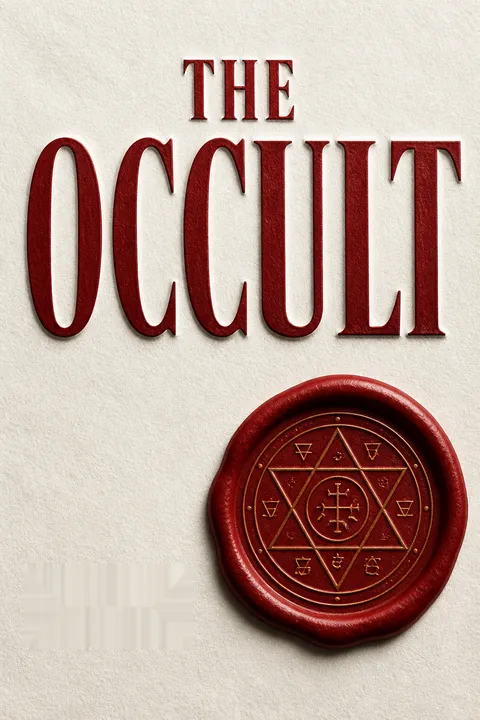
The Occult is a hybrid of intellectual autobiography, history of magic, case collection, and theory of consciousness. Its unifying claim is not that every supernatural report is true, but that ordinary waking awareness is a restricted mode of consciousness, and that human beings may possess capacities obscured by habit, fear, and narrow attention. Wilson links that thesis to a striking range of material: Proust's involuntary memory, Toynbee's historical visions, animal navigation, mediumship, witch persecutions, and Gurdjieff's disciplines of effort. The narrative gains energy from the author's willingness to move between memoir and speculation, but that same breadth creates a problem of proof. Anecdotes about telepathy, healing, levitation, and reincarnation are not equivalent in evidential quality, and a vivid report cannot settle its own cause. The strongest interpretive distinction is between an experience and the explanation attached to it. Wilson's concept of Faculty X is most useful when read as a name for expanded awareness of temporal, emotional, and contextual reality, not as a synonym for paranormal powers. His proposal that evolution is guided by purpose is more daring than his evidence can demonstrate. Modern cognitive science offers a compatible but more modest lens: attention, memory, expectation, and unconscious processing can make perception feel radically enlarged without proving access to a cosmic information field. That possibility does not make the experience trivial. It sharpens the question of what is experienced, how it is produced, and what kind of evidence would discriminate among explanations. Wilson's lasting challenge is therefore both psychological and epistemic: resist the deadening assumption that everyday consciousness exhausts reality, while resisting the equally tempting assumption that every anomaly confirms the supernatural. The book is most compelling as an invitation to investigate the limits of awareness, and least secure when it treats those limits as already mapped.
Review Summary
The Occult receives mixed reviews, with praise for its comprehensive history and Wilson's engaging writing style. Critics appreciate the book's extensive research and fascinating anecdotes but note Wilson's credulity towards supernatural claims. Some find his "Faculty X" theory intriguing, while others dismiss it as unsupported. Readers value the book as an introduction to occult history but caution against accepting all claims uncritically. Wilson's breadth of knowledge and ability to connect diverse topics are highlighted, though some find the work dated and lacking scientific rigor.
People Also Read



Glossary
Faculty X
Expanded sense of realityWilson's name for the human capacity to experience other times, places, and meanings as vividly real, rather than merely knowing about them abstractly. It can appear in intense memory, historical imagination, or moments of heightened attention. Wilson treats it as a potential of ordinary consciousness, while also connecting it to experiences traditionally described as mystical or occult.
Intelligent Universe
Information-organized cosmosDavid Foster's proposed description of a universe in which matter and life can be understood as organized through information. Wilson presents the idea as compatible with the intuition that nature contains meaning and direction, rather than being only a chain of accidents. The book treats it as a provocative scientific and philosophical hypothesis, not an established finding.
lunar knowledge
Intuitive symbolic knowingWilson's term for forms of knowledge associated with intuition, dreams, symbols, and the subconscious, contrasted with the more analytical, daylight-oriented knowledge he calls solar. Examples include the symbolic systems of the I Ching, Tarot, and Robert Graves's interpretation of the White Goddess. Wilson argues that lunar and solar knowledge need not be enemies.
the astral light
Proposed occult mediumA term used by Eliphaz Levi for an invisible medium believed to connect minds, symbols, and physical events. In the magical traditions Wilson describes, it helps explain how ritual or focused intention might affect the world beyond the magician's body. The book presents this as an occult concept, not a mechanism verified by modern science.
the collective unconscious
Shared symbolic psychic layerC. G. Jung's term for a deep layer of the psyche that is not limited to one person's memories and that contains recurring symbolic patterns, or archetypes. Wilson uses it to help explain why myths, dream figures, and symbols can appear across cultures or in individual experience without direct learning. Its role in explaining paranormal events remains interpretive.
the fourth way
Integrated self-development pathGurdjieff's name for a method of self-development that combines attention to physical, emotional, and intellectual life within ordinary circumstances. Unlike paths centered mainly on bodily discipline, devotion, or meditation, it uses sustained work and self-observation to challenge habitual passivity. Wilson presents it as a practical discipline for increasing awareness and self-control.
orgone energy
Reich's proposed life energyWilhelm Reich's proposed universal energy, which he believed was present in the atmosphere and living bodies and could be accumulated in specially constructed boxes. He connected it to sexuality, health, and the vitality of organisms. Wilson discusses the theory as an example of attempts to identify life energy, while its scientific validity remains unestablished.
FAQ
What is The Occult by Colin Wilson about?
- Comprehensive exploration of the occult: The book investigates the history, philosophy, and phenomena of the occult, including magic, witchcraft, psychic powers, and spiritualism.
- Focus on consciousness and evolution: Wilson argues that occult phenomena are linked to latent human faculties and the evolution of consciousness.
- Bridges science and mysticism: The book connects occult experiences with modern scientific ideas, such as cybernetics, psychology, and the concept of an intelligent universe.
- Historical and contemporary cases: Wilson uses both historical accounts and modern examples to illustrate the reality and complexity of occult phenomena.
Why should I read The Occult by Colin Wilson?
- Thought-provoking synthesis: The book combines detailed historical research with Wilson’s personal philosophical insights, making it both informative and intellectually stimulating.
- Challenges conventional thinking: It encourages readers to question the limits of rationalism and consider the potential of human consciousness and latent powers.
- Bridges disciplines: Wilson connects science, psychology, literature, and mysticism, offering a unique perspective for readers interested in any of these fields.
- Relevance to personal growth: The book provides practical advice for expanding consciousness and developing one’s own latent faculties.
What are the key takeaways from The Occult by Colin Wilson?
- Occult as future science: Wilson argues that magic and occult phenomena are not superstitions but represent a science of the future, tied to expanding human consciousness.
- Faculty X concept: He introduces "Faculty X," a latent human power to perceive deeper reality and purpose, which underlies all occult experience.
- Evolution of consciousness: The book traces the development of human consciousness from instinct to intellect, suggesting that lost powers can be reactivated.
- Practical methods: Wilson offers advice on concentration, use of symbols, and maintaining an active will to access deeper levels of reality.
What is the main thesis of The Occult by Colin Wilson?
- Primitive wisdom vs. rationalism: Wilson contends that primitive beliefs in unseen forces were closer to truth than modern rationalism, which narrows human consciousness.
- Need for expanded consciousness: He argues that developing new faculties of perception is essential for human evolution and understanding the occult.
- Occult as latent potential: The occult is not about superstition but about unlocking human potential and integrating it with rational thought.
- Science and magic convergence: Wilson sees magic as a science of the future, destined to merge with advances in physics and psychology.
What is "Faculty X" in The Occult by Colin Wilson and why is it important?
- Definition of Faculty X: Faculty X is a latent human faculty that allows direct perception of deeper reality, purpose, and the interconnectedness of all things.
- Already present but unconscious: Wilson argues that humans already possess Faculty X but are largely unaware of it due to everyday trivial consciousness.
- Key to occult experience: Faculty X underlies all genuine occult phenomena and is essential for the next stage of human evolution.
- Path to higher awareness: Developing Faculty X involves concentration, will, and the use of symbols to bridge conscious and subconscious minds.
How does The Occult by Colin Wilson explain the relationship between magic, science, and consciousness?
- Magic as future science: Wilson claims that magic is not outdated superstition but a science that will eventually integrate with modern disciplines like atomic physics and cybernetics.
- Intelligent universe concept: He discusses the idea of the universe as a form of cosmic programming, aligning with both occult intuitions and scientific theories.
- Consciousness as the bridge: The expansion of human consciousness is seen as the key to understanding and harnessing occult phenomena.
- Critique of reductionism: Wilson criticizes scientific dogma for ignoring purpose and teleology, which he sees as essential for understanding life and consciousness.
What are the most significant historical and modern examples of occult phenomena in The Occult by Colin Wilson?
- Premonitions and psychic abilities: Wilson cites cases like Nicos Papapetrou’s prophetic dreams and the tested abilities of Peter Hurkos and Gerard Croiset.
- Mediumship and spiritualism: The book details the extraordinary feats of mediums like Daniel Dunglas Home, whose phenomena were witnessed under strict conditions.
- Multiple personalities and poltergeists: Wilson discusses cases such as Christine Beauchamp’s multiple personalities and poltergeist activity linked to subconscious psychic energy.
- Vampirism and werewolves: He explores these as manifestations of psychic vampirism and thought-forms, rather than mere folklore.
How does The Occult by Colin Wilson describe the evolution of human consciousness and magic?
- From instinct to intellect: Wilson traces humanity’s journey from primitive telepathic and instinctive powers to the development of rational intellect, which narrowed but also advanced consciousness.
- Magic as lost powers: Ancient abilities like second sight and premonition have gone underground but can be reawakened through conscious effort.
- Role of will and purpose: The book emphasizes the importance of will and intentionality in evolving consciousness and regaining occult faculties.
- Critique of scientific reductionism: Wilson argues that science’s neglect of purpose and teleology hinders human evolution.
What is the significance of the I Ching and Tarot in The Occult by Colin Wilson?
- I Ching as symbolic system: Wilson presents the I Ching as a profound system for expanding consciousness, based on the interplay of Yin and Yang.
- Tarot as Western counterpart: The Tarot is described as a set of symbols reflecting archetypes and facilitating communication between conscious and subconscious minds.
- Tools for self-development: Both systems are seen as practical tools for stimulating the subconscious and accessing deeper levels of awareness.
- Bridging rational and intuitive: Engaging with these symbols helps bridge the gap between rational thought and intuitive insight.
Who are the key historical figures discussed in The Occult by Colin Wilson, and what are their contributions?
- Cagliostro: Portrayed as a genuine magician with both real occult gifts and elements of charlatanism, involved in scandals like the Affair of the Diamond Necklace.
- Helena Blavatsky: Founder of the Theosophical Society, blending Eastern and Western mysticism and inspiring later occult movements.
- Aleister Crowley: Known as "The Beast," Crowley was a controversial magician who emphasized the subconscious will and ritual magic.
- George Gurdjieff: Developed the "Fourth Way," a system for awakening higher consciousness through intentional work and self-remembering.
What practical advice or methods does The Occult by Colin Wilson offer for expanding consciousness and developing latent faculties?
- Concentration and stillness: Wilson recommends training the mind to focus and achieve stillness, similar to learning a skill or memorizing a poem.
- Use of symbols and rituals: Engaging with systems like the I Ching, Tarot, or ritual practices can help bridge conscious and subconscious minds.
- Active will and interest: Maintaining an active will and avoiding boredom is crucial, as psychic powers diminish with passivity.
- Learning from artists and mystics: Poets and artists, who naturally access deeper faculties, serve as models for developing one’s own latent powers.
What is the general theory of occult phenomena proposed in The Occult by Colin Wilson?
- Life as a vital force: Wilson sees life as a force struggling against matter, evolving through consciousness and the development of higher faculties.
- Consciousness as divided: Ordinary consciousness is sub-normal and divided, causing passivity and stagnation; occult powers are latent faculties awaiting development.
- Evolution through mental concentration: The next stage of evolution involves developing "mental muscles" (Faculty X) for higher awareness and control.
- Integration of rational and occult: Wilson advocates for integrating occult faculties with rational consciousness to achieve unity and personal evolution.
What are the best quotes from The Occult by Colin Wilson and what do they mean?
- "Magic was not the 'science' of the past. It is the science of the future." Wilson suggests that what we now call magic will eventually be understood and integrated into scientific knowledge.
- "We need to develop another kind of consciousness... This is Faculty X." He emphasizes the importance of awakening latent faculties to perceive deeper realities.
- "Civilisation cannot evolve further until 'the occult' is taken for granted on the same level as atomic energy." Wilson argues that accepting and understanding occult phenomena is essential for human progress.
- "The poet is a man whom Faculty X is naturally more developed than in most people." He highlights the role of artists and poets in accessing and expressing deeper truths through their developed faculties.
About the Author
Other books by Colin Wilson



Download PDF
Download EPUB
.epub digital book format is ideal for reading ebooks on phones, tablets, and e-readers.








