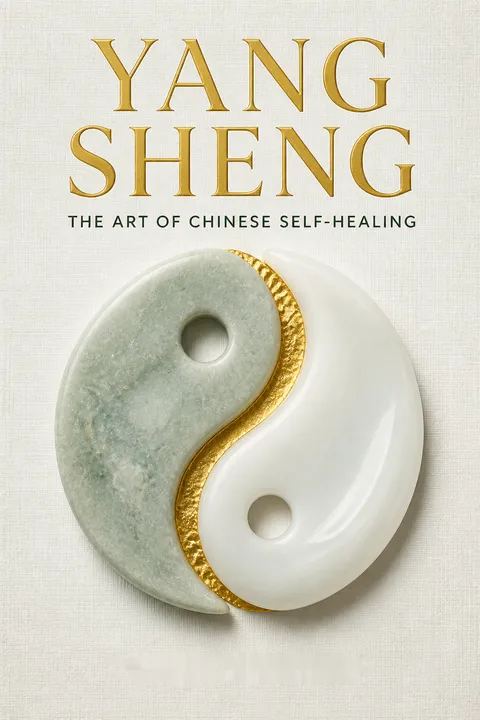


Key Takeaways
Treat health as daily upkeep, not emergency repair
Small care, repeated. Yang sheng means nourishing life through everyday habits that support physical, emotional, and spiritual wellbeing. The book’s central premise is that small acts of care, repeated regularly, may help people feel better before discomfort grows into a larger problem. It offers breathing, movement, food, sleep, and self-massage practices that can be chosen to suit an individual routine, rather than one demanding program.
A personal turning point. Brindle describes living with persistent pain after a car accident ended her hopes of becoming an opera singer. Acupuncture and tui na massage helped her recover, prompting her to study Chinese medicine and share self-care practices. She presents yang sheng as a complement to medical care, not a reason to reject it.
The strongest practical insight is the shift from occasional rescue to repeatable maintenance. Public health makes a similar distinction: habits such as sleep routines and regular movement matter because they accumulate, not because any single session is miraculous. The approach is also forgiving, since a reader can begin with one small practice instead of adopting an entire lifestyle. Its limitation is that balance is a broad and sometimes unfalsifiable explanation. Persistent pain, fatigue, or mood changes can have causes that require diagnosis, so everyday care should support, not replace, appropriate clinical assessment.
Use one-minute breathing to interrupt stress before it runs the day
A brief reset. The One-Minute Rescue Breath Ritual is a short sequence intended to redirect attention and encourage relaxation. First, exhale through the mouth with a soft Haa sound three times. Then close the eyes and breathe through the nose, counting to five on each inhale and exhale. Bring attention toward the lower abdomen and imagine a warm, smiling feeling there. The book suggests practising at least once daily and repeating it when stress or shallow breathing appears.
Breath as a bridge. Brindle connects slow breathing with the vagus nerve and the body’s rest response. In Chinese medicine, this is described as shifting from active yang toward restorative yin. The exercise requires no equipment and can be attached to an ordinary pause, such as waiting for a kettle or sitting in a car.
Slow breathing is a useful example of a practice whose immediate value does not depend on accepting the full traditional explanation. Controlled breathing can influence arousal and gives attention a concrete anchor when thoughts are racing. A minute is short enough to lower the barrier to starting, although it is not a guaranteed treatment for anxiety or a substitute for care when distress is persistent. The ritual’s strength lies partly in its usability: a practice that can be remembered in the moment may be more helpful than an elaborate routine that remains theoretical.
Choose movement gentle enough to repeat on ordinary days
Movement without punishment. Qigong is a Chinese practice of coordinated, relaxed movement, breathing, and attention. Brindle contrasts it with exercise organized around strain or appearance, arguing that gentle movement can be easier to sustain and may leave people feeling calmer and more energized. She offers simple options such as shaking the body, turning the waist, walking with attention to breath, and Lifting the Sky, a slow sequence of raising and lowering the arms.
Start very small. The book proposes brief daily practice, building consistency before duration, and recommends movement breaks throughout the day. It also encourages choosing an activity that feels enjoyable, and resting when fatigue or illness makes exercise unwise. Qigong is presented as adaptable, not as a complex routine that must be mastered before it counts.
This approach usefully reframes exercise as a behavior to sustain rather than a test of character. Gentle movement can lower the perceived cost of starting, and breaking up sedentary time gives activity more opportunities to fit into daily life. Still, the claim that a few minutes of qigong can be more effective than a strenuous workout is not a universal comparison. Different forms of activity serve different goals, including cardiovascular fitness and strength. The sensible reading is to use qigong as an accessible option or complement, not as a blanket replacement for other movement.
Eat to support digestion, not to obey food rules
Make meals less hurried. The book’s food advice focuses on the experience of eating as much as on the food itself. Sit down, look at the meal, chew thoroughly, eat slowly, and avoid working or scrolling through a screen if possible. Brindle suggests leaving time after a meal for digestion and avoiding constant snacking so the body has a break between meals. The point is to eat with attention, rather than treating food as fuel to consume while rushing elsewhere.
Choose variety over restriction. Chinese medicine describes food through five tastes: sour, salty, bitter, pungent, and sweet. The book uses this model to encourage variety and moderation, not a rigid diet or a long list of forbidden foods. It also recommends favoring seasonal, local foods where practical and adjusting meals to personal comfort.
The emphasis on slowing down is a concrete alternative to the familiar cycle of restrictive rules and rebound eating. Attentive meals can make it easier to notice taste, hunger, and satisfaction, while a varied diet is generally more workable than a plan built around permanent exclusion. The five-taste system is a traditional organizing model, not a nutritional diagnostic tool, and cravings do not reliably identify a specific organ imbalance. Likewise, fixed meal schedules and universal portion targets may not suit everyone. The durable lesson is to observe how eating feels and avoid turning health into food anxiety.
Read sleep as a whole-body signal, then protect your routine
Build a transition. Brindle treats sleep trouble as a possible sign that daytime stress and nighttime recovery are out of balance. Her practical recommendations include keeping a regular bedtime, making the bedroom quiet, cool, and dark, reducing screen use before bed, and creating a gentle evening wind-down. She also suggests lighter activity in the evening and short daytime rests when feasible, rather than driving an already tired body harder.
Traditional interpretation, not diagnosis. Chinese medicine links different waking times with particular organs, such as the liver or lungs. The book uses this as a way to think about patterns, but these clock-based associations are not a medical diagnosis of organ disease. A person can use the general sleep practices without accepting that explanation, and persistent or severe sleep problems deserve professional attention.
The transition from day to night is an unusually practical way to think about sleep: sleep is not an isolated switch, but is affected by light, stimulation, stress, and routine. Circadian biology also emphasizes regular timing and exposure to light, though individual schedules and needs vary. The organ clock is better treated as a traditional interpretive map than as evidence about what is medically wrong. That distinction preserves the useful behavioral advice without encouraging people to infer disease from the hour they wake.
Name emotions, move them through the body, and choose a response
Notice before reacting. In the book’s Chinese medicine framework, emotions are associated with organs: anger with the liver, fear with the kidneys, grief with the lungs, and worry with the stomach and spleen. These are traditional correspondences, not claims that an emotion is literally stored in an organ. Brindle recommends first naming the feeling and accepting that it is present, then using breath, movement, laughter, tapping, or singing to shift attention and bodily tension.
Practice a different perspective. The book also describes transcendence: recognizing an emotion and cultivating a complementary quality, such as compassion in response to anger or gratitude alongside grief. This does not mean pretending to feel something else. It is offered as a way to reflect, learn from a feeling, and avoid being governed by it.
The sequence of identifying a feeling, noticing its bodily effects, and deciding how to respond resembles modern emotion-regulation approaches. Naming an emotion can create a little distance from it, while movement or breathing may help some people settle enough to think clearly. The traditional organ associations can serve as memorable prompts, but they should not be used to diagnose physical illness or explain away mental distress. Cultivating a contrasting quality is most useful when it expands choice, not when it becomes pressure to replace anger, sadness, or fear with a supposedly superior emotion.
Let your routines bend with the seasons instead of fighting them
Follow the changing year. The book presents seasonal living as a way to adjust activity, rest, food, and sleep to changes in daylight and weather. In its model, spring and summer are more active, outward-facing periods, while autumn and winter invite greater rest and warmth. Examples include spending more time outdoors in warmer months, choosing cooked and warming meals in winter, and allowing more quiet time during darker months.
Adapt, do not obey a calendar. The advice is intended as a set of gentle adjustments, not a strict program. A reader might change a walk, meal, or bedtime rather than reorganize an entire life. The traditional framework also connects seasons with organs and emotions, but practical decisions need not depend on accepting those correspondences.
Seasonal routines offer a useful counterweight to the assumption that energy and motivation should remain constant all year. Day length, temperature, and daily schedules do change, so adapting outdoor time, sleep habits, and activity can make care feel more realistic. Yet seasonality is not experienced uniformly: climate, latitude, work hours, disability, and caregiving responsibilities all shape what is possible. Flexible attention to local conditions is more helpful than treating a traditional seasonal prescription as universal. The core insight is responsiveness, not compliance.
Use gua sha for comfort, not as proof of toxins leaving
A press-stroke massage. Gua sha is a traditional technique in which a smooth-edged tool is drawn over lubricated skin, often producing temporary redness. The book describes using it on the face or body to relax tight areas and encourage circulation, and offers a spoon as an accessible substitute for a specialized tool. Facial gua sha is presented as a relaxing skincare ritual that may reduce the look of puffiness, while body gua sha is suggested for muscular tension.
Separate experience from explanation. Brindle interprets redness as evidence of heat or stagnation being cleared. The book cites preliminary research on circulation and other possible effects, while acknowledging that the mechanism is not fully clear. Redness alone does not establish that toxins have left the body or that an underlying condition has been treated.
A repeated self-massage ritual can provide attention, sensory comfort, and a moment of calm, even when its traditional account of energy flow is not accepted. The distinction between an experience and its proposed mechanism matters: visible marks are not proof of detoxification, immune improvement, or lasting cosmetic change. Evidence for gua sha is limited and varies by claimed outcome, so the most grounded expectation is modest relief or relaxation. Readers should also avoid treating irritated skin or unexplained pain as a reason to scrape harder.
Never assume worsening symptoms mean your body is healing
The book’s caution. Brindle describes a traditional idea called a healing crisis, in which someone may feel temporarily worse after beginning self-care practices. She lists symptoms such as headaches, sweating, or cold-like feelings, and advises rest and hydration. She also says to introduce techniques gradually and to consult a GP if symptoms continue beyond three days.
Do not self-diagnose. Feeling worse can have many explanations, including an ordinary illness, a reaction to a treatment, or a condition needing medical care. A person should not stop prescribed medication or delay help on the assumption that symptoms show toxins leaving or balance returning. New, severe, or rapidly worsening symptoms warrant prompt medical advice.
The phrase healing crisis can make discomfort sound reassuring, but that reassurance is not medically reliable. Symptoms do not reveal, by themselves, whether a practice is working, and the book’s suggestion not to suppress them with medication is unsafe as general advice. Rest and hydration may be reasonable for mild symptoms, but they do not replace assessment when symptoms are severe, unusual, or persistent. This is where a self-care system needs a firm boundary: use gentle practices for wellbeing, and let clinical evidence guide decisions about illness and treatment.
Analysis
Yang Sheng is best understood as a practical invitation wrapped in a traditional explanatory system. Its most usable contributions are behavioral: brief breathing pauses, gentle movement, slower meals, regular sleep routines, emotional awareness, and adjustments to changing seasons. These practices are intentionally small, pleasurable, and selectable. That design is not incidental. People are more likely to repeat care that fits their lives than to sustain a demanding regimen built around guilt or perfection.
The book’s Chinese medicine vocabulary gives readers a coherent picture of interdependence. Qi, yin and yang, meridians, and organ-emotion pairings describe health as relational rather than as a collection of isolated parts. This can be meaningful as metaphor and can prompt careful attention to patterns. It should not, however, be confused with established biomedical mechanisms. A waking hour does not diagnose a particular organ, facial features cannot reliably identify internal disease, and redness after gua sha does not demonstrate detoxification. The distinction between a practice that feels useful and an explanation that is scientifically established is essential.
The book also makes a strong case for prevention, but prevention is not the same as self-treatment. Sleep, food, movement, and stress management can support wellbeing, while persistent symptoms may require investigation, medication, or other professional care. The most responsible adaptation keeps the book’s generosity and flexibility while rejecting the notion that worsening symptoms are proof of healing. In that form, yang sheng works as a menu of low-barrier self-care experiments, not a diagnostic system or substitute for medicine. Its lasting value lies less in claims of ancient authority than in the practical question it repeatedly poses: what small, supportive action can be repeated today?
Review Summary
Yang Sheng: The Art of Chinese Self-Healing receives mixed reviews, with an average rating of 3.95 out of 5. Many readers appreciate it as an accessible introduction to Chinese medicine and self-care practices, praising its beautiful illustrations and practical exercises. Some find it repetitive and surface-level, wishing for more in-depth information. Critics argue it oversimplifies complex traditions, while supporters value its user-friendly approach to integrating Yang Sheng principles into daily life. Overall, it's considered a good starting point for those new to Chinese traditional medicine and holistic health practices.
People Also Read




Glossary
yang sheng
nourishing lifeA Chinese medicine concept meaning nourishment or cultivation of life. In this book, it refers to everyday self-care practices involving breathing, movement, eating, sleep, emotions, and connection with the seasons. The author presents these habits as ways to support overall wellbeing and prevent small problems from growing, while also recognizing the role of professional treatment.
qi
life energyA central concept in Chinese medicine, commonly translated as energy or life force. The book describes qi as moving through the body and connecting it with the wider natural world. Smooth movement is associated with wellbeing, while stagnation or depletion is used to explain discomfort. This is a traditional framework, not a direct equivalent of a measurable biomedical substance.
yin and yang
complementary changing forcesA traditional Chinese model of opposing but interdependent qualities that change in relation to each other. The book associates yin with qualities such as rest, cooling, and nourishment, and yang with activity, warmth, and movement. Health is described as a shifting balance rather than a fixed state, with daily habits and seasonal changes influencing that balance.
qigong
breath-led moving practiceA family of Chinese practices combining coordinated movement, breathing, and attention. The author presents qigong as gentle exercise and dynamic meditation, with movements that can be adapted for different abilities and practised in short sessions. Chinese medicine describes it as a way to cultivate qi. The book recommends it for movement and relaxation, not as a replacement for every form of exercise.
meridians
traditional energy pathwaysChannels described in Chinese medicine as routes through which qi moves. Acupuncture points are located along these pathways, and practices such as acupressure, massage, tapping, and gua sha are said to influence their flow. Meridians belong to the traditional Chinese medicine model and should not be treated as anatomical structures established in the same way as nerves or blood vessels.
gua sha
press-stroke skin massageA traditional technique involving repeated strokes with a smooth-edged tool over lubricated skin. It can leave temporary redness, which the book calls sha and interprets through the Chinese medicine idea of clearing heat or stagnation. The author describes facial and body uses for relaxation, skin care, and muscular tension. The visible marks are not evidence that toxins have been removed.
Shen
heart-mind or spiritA Chinese medicine term the book translates as spirit or heart-mind. It includes consciousness, mental presence, and aspects of a person’s inner life. The author connects Shen with emotional awareness and the expression of vitality, including the idea that a person’s spirit may be reflected in the face. The term is part of a traditional model, not a single biomedical organ or function.
healing crisis
claimed temporary worseningA traditional holistic-health idea, called the Ming Xuan reaction in the book, that symptoms may temporarily worsen as the body supposedly clears stored toxicity and restores balance. The author describes possible headaches, sweating, and cold-like symptoms, and recommends rest and hydration. This idea is not a reliable medical explanation for worsening symptoms and should not delay clinical assessment or justify stopping prescribed treatment.
Download PDF
Download EPUB
.epub digital book format is ideal for reading ebooks on phones, tablets, and e-readers.








