

Key Takeaways
Make nature a daily input to brain health, not a scenic luxury
The body responds measurably. The book’s central claim is that nature is not merely pleasant scenery. Human beings evolved among living landscapes, and the biophilia hypothesis describes an inborn tendency to notice and respond to other living things. Studies reviewed by the authors associate exposure to nature with lower stress markers, including cortisol and blood pressure, and greater activity in the nervous system’s calming branch. Japanese forest-bathing studies found mood improvements alongside changes in these physical measures.
Even a view can matter. In a well-known hospital study, patients recovering from the same surgery did better, on average, when their windows faced trees rather than a wall. They stayed fewer days, reported fewer complications, and used less powerful pain medication. These results do not mean a landscape cures illness, but they suggest that surroundings can help shape recovery.
What's striking is the book's move from poetic intuition to testable questions: does a view change stress physiology, and does that matter for recovery? That framing links environmental design to preventive health, rather than treating greenery as decoration added after the important decisions are made. The evidence is strongest for short-term changes in mood and stress responses. Claims about broad disease prevention are harder to establish because people with green surroundings may differ in many other ways. The practical implication remains valuable: nature can be a supportive condition for health, even when it is not a treatment on its own.
Put screens in their place before they crowd out recovery
Attention has a cost. The authors argue that screens do not simply add entertainment or information. They can also displace sleep, face-to-face time, movement, and time outdoors. The book reports that children and teenagers in its era averaged 7 hours and 38 minutes of media use outside school each day. That figure describes the period studied, not current usage, but the underlying concern is about what those hours replace.
Information is tempting. The brain’s dopamine reward system responds to seeking information, even when the information is trivial. That helps explain why checking one message can become many. The book also reviews studies linking heavy screen use with distraction, fatigue, and later emotional difficulties, while cautioning that screen exposure and nature loss often occur together. Its target is not useful technology, but unexamined use that crowds out restorative experiences.
The useful distinction is not between virtuous nature and wicked technology. It is between technologies that serve a purpose and habits that quietly consume attention without restoring it. That distinction avoids turning a complex social problem into a simple moral lecture about devices. Screen use also supports work, relationships, access to information, and entertainment, so total hours alone cannot tell the whole story. A more revealing question is what a screen session displaces, and whether it leaves a person more capable of returning to the task, relationship, or rest that matters.
Restore attention with environments that fascinate without demanding
Effortful focus runs down. Directed attention fatigue is the temporary difficulty concentrating after sustained effort to ignore distractions. Psychologist Stephen Kaplan’s Attention Restoration Theory proposes that nature can help because it captures attention without demanding constant control. A flowing stream or a patch of trees can hold the mind gently, unlike a task that requires continuous filtering and decisions.
Restoration has ingredients. Kaplan’s account emphasizes getting some distance from routine demands, engaging with something that invites effortless interest, experiencing enough richness to hold attention, and finding the setting suited to what one wants to do. In one study reviewed in the book, participants completed demanding mental tasks and then walked in either a park or a city setting. The park walkers performed better on subsequent attention tests. The point is not that every green view works for everyone, but that attention needs recovery as well as exercise.
This framework makes a subtle distinction between stimulation and restoration. A setting can be exciting yet still demand effort, while a quieter scene can let attention loosen its grip. That idea applies to workspaces, classrooms, and public places: the goal is not to eliminate challenge, but to give people intervals in which their attention is not constantly under siege. The theory is compelling, though individual preferences matter. A forest may restore one person and unsettle another. The best design offers varied settings and lets people choose a restorative level of engagement.
Use light, sound, plants, and water to change a room's signal
Nature reaches beyond sight. The book examines how light, scents, plants, water, and natural sounds may affect mood, attention, and stress. Daylight supports alertness, while bright artificial light at night can interfere with the body’s normal sleep timing. Views of plants and natural scenes have been associated with lower stress, and the authors describe studies in which natural sounds helped people recover from brief stressors more quickly than traffic noise did.
Small changes count. A few plants in a room may be enough to improve comfort or performance in some tasks; filling every corner with greenery is not necessarily better. Water views often rated highly in preference studies, while plant aromas can have different effects depending on the scent and the person. The evidence for some specific mechanisms, including airborne plant compounds and negative ions, is less settled than the evidence for broad benefits of nature exposure.
The strength of this idea is its attention to environmental design at human scale. A window, a plant, or quieter sound can alter the character of a place without requiring a major retreat or renovation. It also challenges the assumption that buildings are neutral containers and that wellbeing depends only on individual choices. At the same time, isolated sensory interventions should not be mistaken for full contact with nature or for medical treatment. Bright-light therapy, scents, and other tools can have risks or uneven effects, so specific interventions deserve appropriate care and context.
Move outdoors to make exercise easier to repeat and richer for the brain
The setting changes the experience. Exercise supports mood, cognition, and physical health, but the book argues that doing it in green surroundings can add benefits. In comparisons of outdoor and indoor exercise, participants often reported greater enjoyment, less fatigue, and a more positive mood outdoors. A forest walk also produced lower stress measures than a comparable treadmill session in one study. Nature may make movement feel less like a chore and more like something worth returning to.
Start at a sustainable pace. The authors recommend building gradually, choosing an activity and setting a person enjoys, and treating consistency as more important than athletic ambition. Their practical target is 30 minutes of moderate activity on most days, with shorter bouts as a useful starting point. Even brief green exercise may help mood. It is not a substitute for medical care, and people with health concerns should adapt exercise to their circumstances.
The adherence insight is especially practical: the best exercise plan is partly the one people will actually keep doing. Enjoyment, scenery, and the freedom to choose pace can reduce the friction that makes activity hard to sustain. The book’s proposed extra benefit from green exercise is plausible, but comparisons between outdoor and indoor activity can be difficult to interpret. Weather, social contact, terrain, and expectations all change at once. That does not diminish the advice to find a pleasant route. It does mean that nature should be understood as a potentially helpful setting, not a guaranteed multiplier.
Choose hands-on nature when you need focus, purpose, or a reset
Growing things engages the whole person. Gardening combines movement, sensory attention, problem-solving, and the visible progress of caring for living things. In a 12-week Norwegian horticultural program for people with depression, participants gardened twice a week. Their depression scores improved, and the gains remained lower than baseline three months after the program ended. The authors suggest that fascination with the garden may help interrupt repetitive negative thinking.
Wilderness needs skilled guides. More intensive nature programs combine outdoor challenges, group life, reflection, and sometimes counseling. The book describes encouraging results, but also notes that research designs are difficult and that safety depends on qualified operators. Gardening may be adapted to a small plot, a community space, or containers. Claims that soil microbes directly improve mood are intriguing, but the authors present them as an emerging area, not as a settled reason to handle soil.
Hands-on nature differs from looking at a landscape because it gives people agency: a plant needs watering, a bed needs tending, and effort can produce a visible result. That combination of attention and purpose may be particularly useful when rumination makes life feel passive. It also makes gardening a promising community activity, not just a private hobby. Still, the reported therapeutic outcomes do not establish that gardening alone treats depression. Programs should complement appropriate mental-health care, and wilderness interventions require careful screening, competent staff, and clear safety standards.
Let animals reconnect people, but treat pet care as a real commitment
Animals can calm and connect. The book presents companion animals as more than a pleasant distraction. In one study of adults with high-stress jobs and high blood pressure, people who added a cat or dog to medication treatment showed smaller blood-pressure increases during stressful tasks than those taking medication alone. Other studies found that people performed better on some difficult tasks with a dog nearby, and that animals can help people feel more comfortable in social and therapeutic settings.
Care must be mutual. Pets can encourage movement and offer companionship, but they are not a prescription to acquire casually. The authors emphasize the responsibility of providing time, money, training, and appropriate care. They also point to the consequences of irresponsible ownership, including animals abandoned to shelters and risks to wildlife from free-roaming cats. The bond can support human wellbeing only when the animal’s welfare is taken seriously too.
The human-animal relationship shows how social support need not come only from conversation between people. A calm animal can make a stressful setting feel less threatening, and caring for one can create routine and companionship. That is a meaningful contribution, especially for people who find direct social contact difficult. But pets are living dependents, not wellness equipment. The benefits described in studies do not erase differences in allergies, housing, finances, or capacity to care. A responsible approach includes other forms of animal contact, such as volunteering or supervised visits, for people who cannot own pets.
Feed the brain whole foods instead of mistaking quick calories for fuel
Food patterns matter. The authors connect diet to brain health through nutrients that support nerve cells and through the effects of inflammation and oxidative stress. They contrast a highly processed Western pattern with a traditional, Mediterranean-style pattern built around vegetables, fruit, legumes, whole grains, nuts, and fish. In studies they review, diets closer to this pattern were associated with lower depression risk, while processed foods and sugary drinks were associated with worse mental-health outcomes.
Prefer the pattern to the miracle ingredient. The book highlights the imbalance between omega-6 and omega-3 fats in modern diets and the low share of grain intake coming from whole grains. Its practical message is to prioritize minimally processed foods over relying on single supplements or a supposed brain-boosting snack. Many nutrition findings are observational, and diet is only one influence on mental health. Food choices should support, not replace, clinical care when it is needed.
The strongest contribution here is the shift from hunting for one magical nutrient to considering the overall pattern of eating. That is consistent with how complex biological systems work: foods arrive in combinations, and their effects depend on habits, access, and health conditions. The book’s environmental framing also usefully connects food production to personal wellbeing. Its nutrition claims, however, need more caution than its basic dietary advice. Associations between a diet and depression do not prove that changing diet alone prevents or treats depression, and supplement claims require especially careful evaluation.
Build greener cities, because personal nature access is a public-health resource
A prescription needs a place. Ecotherapy is the practical use of mindful contact with nature to support mental health, paired with awareness of the natural world. The book describes therapists holding sessions outdoors and clinicians writing specific recommendations for walking, gardening, or spending time in green space. It calls this access to nature “vitamin G.” The key is meaningful attention, not merely being outside while absorbed in a screen.
Access cannot be left to chance. Studies reviewed in the book associate nearby greenery with less stress and better health, including in lower-income communities. Parks, trees, and biodiverse spaces should therefore be treated as public-health infrastructure, not amenities reserved for affluent neighborhoods. Virtual nature can offer some benefits when real access is impossible, but the authors warn that simulations cannot fully replace living places or the relationships that encourage people to protect them.
This conclusion turns a personal wellness argument into a question of design and fairness. A nature prescription is hollow if safe, welcoming green space is absent from someone’s neighborhood. Public access also gives the idea a collective dimension: parks can support rest, activity, and social contact while making nature part of ordinary life. The evidence does not mean greenery alone can undo structural causes of illness or unequal health outcomes. It does support including nature in urban planning and health policy, alongside housing, safety, transportation, and other conditions that shape daily wellbeing.
Analysis
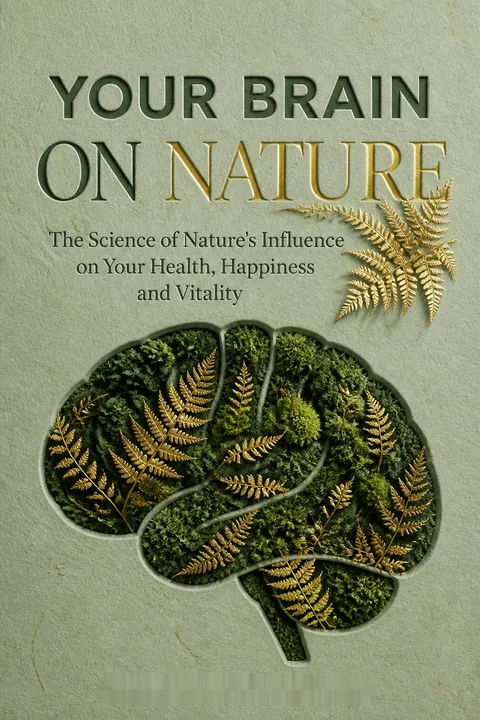
Your Brain on Nature is a science-informed argument for treating contact with the living world as part of human health, not as an optional escape from modern life. Its narrative moves from an evolutionary bond with nature, through the cognitive and emotional costs of screen-heavy environments, toward practical responses: forest walks, daylight, exercise, animals, gardens, nourishing food, therapy, and public green space. The unifying idea is that bodies and minds respond to their surroundings, and that the consequences can extend from an individual’s stress response to social empathy and conservation.
The book is strongest when it links specific environmental conditions to near-term outcomes. Controlled comparisons of natural and built scenes, walks, or rooms help make the case that settings can change mood, attention, and stress measures. The account of directed attention fatigue also gives readers a useful explanation for why a walk in a park may help after demanding work. These claims are more persuasive than the broadest population-level associations between greenery, mortality, and mental illness, which can be influenced by income, safety, activity, social connection, and other factors.
Its historical lens is both a strength and a limitation. The return to old medical intuitions is compelling, but the book’s 2012 screen-use figures and some mechanistic claims should not be mistaken for current measurements or settled consensus. Nature exposure is also not one uniform intervention: an urban garden, a forest, a pet, and a bright window offer different experiences and benefits. The most durable takeaway is therefore not that nature replaces medicine or technology. It is that healthy lives require environments designed for attention, recovery, movement, and contact with other living things, with access distributed fairly rather than treated as a luxury.
Review Summary
Your Brain On Nature receives mostly positive reviews, praised for its comprehensive exploration of nature's effects on mental and physical health. Readers appreciate the scientific evidence presented, though some find it dry or repetitive. The book covers topics like green exercise, aromatherapy, and nutrition, emphasizing the importance of nature exposure for well-being. Critics note potential bias and outdated information. Overall, readers find it insightful and motivating, encouraging a closer connection with nature for improved health and quality of life.
People Also Read









Glossary
Biophilia
Innate affinity for living thingsThe biophilia hypothesis proposes that humans have an inborn emotional and attentional affinity for other living organisms and natural settings. The book links this tendency to evolutionary needs, such as recognizing useful resources and potential threats, while also describing how nature can influence emotion, attention, and behavior.
Shinrin-yoku
Mindful forest immersionA Japanese term meaning taking in the forest atmosphere through the senses. Shinrin-yoku involves spending time in a forest environment, often walking slowly and noticing its sights, sounds, and aromas. The book reviews studies associating forest visits with improved mood and changes in stress and immune markers.
directed attention fatigue
Exhaustion from focused attentionA temporary state of mental fatigue that follows sustained effort to concentrate and suppress distractions. It can make people more distractible, less accurate, and less able to plan or shift strategies. The book argues that settings which engage attention effortlessly, including many natural environments, can help restore this capacity.
Attention Restoration Theory
Nature can replenish attentionA theory developed by psychologist Stephen Kaplan proposing that natural environments can help restore attention fatigued by sustained mental effort. The account emphasizes opportunities to feel away from routine demands, experience effortless interest, engage with a sufficiently rich setting, and find that setting compatible with one's intentions.
green exercise
Physical activity in natureExercise performed in green or otherwise natural settings, such as walking in a park or running on a forest trail. The book argues that outdoor exercise can combine the established benefits of physical activity with additional gains in mood, stress recovery, enjoyment, and willingness to continue exercising.
ecotherapy
Nature-based mental-health practiceAn umbrella term for applying mindful contact with nature to support mental health. Practices may include outdoor counseling, nature walks, gardening, or other guided activities in green settings. The book frames ecotherapy as involving both personal engagement with nature and a commitment to understanding and caring for the natural world.
vitamin G
Health benefits of green spaceA term used in the book for the potential health benefits of greenspace. A vitamin G prescription gives practical guidance for spending time in parks, gardens, forests, or other natural settings, often through walking or gardening. The authors stress mindful engagement rather than simply being outdoors while focused on a screen.
Nutri-Ecopsychology
Nutrition linking people and planetThe book's term for considering nutrition as part of the relationship between psychological health and ecological health. It links dietary patterns to mood and cognition, while also considering how food production affects the environment. The concept favors understanding food, mental wellbeing, and planetary conditions as connected rather than separate concerns.
Download PDF
Download EPUB
.epub digital book format is ideal for reading ebooks on phones, tablets, and e-readers.








