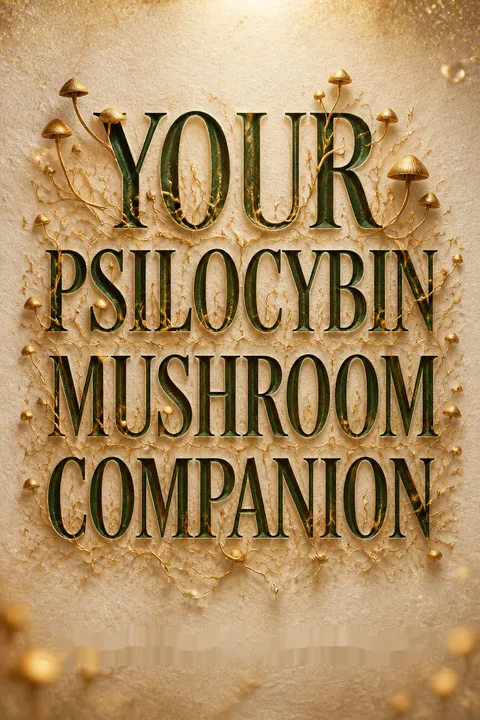


Key Takeaways
Treat psilocybin as a powerful experience, not a stronger version of cannabis
The surprise is real. The author’s first mushroom experience began with a familiar mistake: expecting something like cannabis, then discovering that ordinary surroundings seemed to move and her judgment was altered. She drove home while tripping, a risk she later recognized as potentially fatal. The book’s central argument grows from that lesson: curiosity is not preparation, and an intense experience deserves respect before, during, and after it happens.
Safety starts with limits. Do not drive or operate equipment while affected. The author recommends planning ahead, choosing a safe environment, and seeking experienced or professional support when needed. The point is not to promise a perfect trip, but to prevent avoidable danger and approach uncertainty with care.
The opening story works because it replaces abstract warnings with a concrete failure of judgment. It also exposes a common trap: familiarity with one psychoactive substance can create false confidence about another. Harm reduction is strongest when it makes risks imaginable before they become urgent. At the same time, a compelling personal account is not population-level evidence. Its value here is as a vivid caution, not proof that every trip follows the same arc. The practical lesson is robust regardless: impairment and driving do not mix, whatever the substance or the distance.
Physical toxicity is not the same as a safe trip
Risk has several faces. The book reports that a large international drug survey found fewer than 1 percent of surveyed mushroom users sought emergency care. That figure describes survey respondents, not a guarantee of safety for an individual. Psilocybin can bring intense fear, confusion, and emotional distress, and impaired judgment can lead to dangerous actions. Picking mushrooms adds a separate hazard: confusing a psychoactive species with a poisonous one.
Health and law matter. The author notes that some clinical studies exclude people with serious heart conditions, a history of psychosis, bipolar disorder, or certain other vulnerabilities. Medication combinations can also be complicated. These are reasons to consult a qualified clinician, not to stop prescribed treatment independently. Legal consequences vary by place, and possession may carry serious risks even when the substance itself is not physically addictive.
This distinction improves public understanding by moving beyond the misleading binary of safe versus dangerous. A substance can have relatively low potential for physical overdose while still creating meaningful psychological, situational, and legal hazards. The survey statistic is useful, but self-selection and self-report limit how confidently it can describe risk across the population. A careful reader should also separate clinical-trial findings from unsupervised use: screened participants and professional monitoring make those settings unlike ordinary life. The book is most persuasive when it treats safety as a whole situation, not a property of the molecule alone.
Shape your surroundings before changing your state of mind
Set and setting means the person’s mental and emotional state, plus the physical and social environment around them. The book argues that both can strongly influence a psychedelic experience. A familiar, private, comfortable place is easier to manage than a crowded public setting, where strangers, noise, or interruptions may intensify unease. A trusted sober person can provide reassurance and practical help, particularly for someone inexperienced or facing an intense experience.
Prepare for ordinary needs. The author recommends setting aside the day, avoiding unexpected obligations, and arranging a calm place to rest. Music, lighting, food, water, and a working bathroom may seem mundane, but they can become important when attention and sensation feel unusually intense. The core principle is to remove avoidable surprises, not to assume that good planning can control every part of the experience.
The emphasis on environment has a close parallel in design and behavioral science: context changes what people notice, how they interpret events, and what actions are available to them. A calm room cannot guarantee calm feelings, but it can reduce the number of external demands competing for attention. The framework is also usefully social. A sitter’s steadiness can function as a reminder that the experience is temporary and that help is available. One limitation is that a familiar place is not automatically a safe one; relationships, privacy, and access to emergency care matter too.
Start conservatively because mushroom strength and response vary
A weight is not a prediction. Psilocybin content varies among species, strains, growing conditions, and storage, while individuals can respond differently to the same material. The book therefore rejects the idea that one standard amount works for everyone or that body weight reliably predicts intensity. It advises inexperienced people to begin cautiously rather than treating a large first experience as a test of courage.
Intensity is not linear in value. Lower or moderate experiences can still be emotionally difficult, and a stronger experience does not guarantee insight or spiritual clarity. The author describes encountering painful feelings at a comparatively modest retreat session, while a later, more intense session felt expansive. Those personal outcomes are not a dosing formula. The practical message is to avoid rushing, avoid taking more because effects seem delayed, and seek qualified support rather than improvising when health or medication questions arise.
This is a useful antidote to recreational bravado. The assumption that a bigger dose produces a better experience mistakes intensity for quality, a confusion found in many domains from endurance sport to productivity culture. The book also recognizes a genuine measurement problem: dried weight is only a rough proxy for active content. Its advice should not be mistaken for individualized medical guidance, however. Potency and vulnerability are difficult to predict, and cautious preparation cannot eliminate risk. The most defensible takeaway is humility about control, not confidence that a carefully chosen amount can guarantee a desired outcome.
A difficult trip needs support, not a contest of endurance
Hard does not mean harmful. The book distinguishes an unnecessarily chaotic experience from a prepared but emotionally difficult one. The latter may bring grief, fear, painful memories, or shame into awareness. The author recounts a participant who took mushrooms alone while trying to address childhood trauma and became overwhelmed, concluding that the work needed more support. A challenging experience is not automatically therapeutic, and suffering should not be romanticized as proof of progress.
Use grounding and connection. A calm companion can listen without trying to direct the person’s thoughts. Changing the room, music, or activity may help when someone feels trapped in a repeating anxious thought. Slow breathing and simple reassurance can also help. If there is immediate danger, medical or emergency help takes priority over any belief that the experience must simply be endured.
The distinction between challenge and preventable harm is ethically important. It allows room for meaningful discomfort without converting every crisis into a heroic growth narrative. Trauma-informed care offers a helpful lens: a person’s sense of choice, safety, and relationship can matter as much as the material being explored. That also explains why a supportive presence should be nonjudgmental rather than forcefully interpretive. The caution is especially important because people in altered states may be unable to advocate clearly for themselves. Respect for the experience must never become an excuse to ignore signs of danger.
Psychedelic therapy is a supported process, not a capsule alone
The container matters. Modern clinical psychedelic therapy generally involves screening, preparation with therapists, a supervised dosing session, and follow-up conversations. The book describes research teams building trust before the session so participants feel safer when difficult emotions arise. A comfortable room, attentive clinicians, and time to discuss the experience are part of the intervention, not decorative extras.
Promise is not proof of universal treatment. The text reviews early studies involving mystical experiences, end-of-life anxiety, addiction, and depression. In one prominent study of psilocybin’s capacity to occasion mystical-type experiences, many participants later described the session as highly meaningful. Other trials reported encouraging changes in mood or anxiety. These findings helped revive research after decades of restriction, but they do not establish that unsupervised use will treat a condition or replace established care.
The clinical model challenges the idea that a medicine can be evaluated separately from the relationship and setting in which it is given. In psychotherapy, trust and expectation are not incidental variables; they can shape what a person is able to experience and communicate. This makes the research both promising and methodologically demanding. Strong participant screening, therapeutic attention, and memorable experiences can all contribute to outcomes, so isolating the drug’s effect is difficult. The book’s enthusiasm is most credible when read alongside its reminder that early clinical results are not a do-it-yourself prescription.
Treat brain explanations as promising models, not settled mechanisms
One proposed account centers on the Default Mode Network, a set of connected brain regions associated with self-referential thought, autobiographical memory, and planning. Brain-imaging research described in the book found reduced activity in parts of this network during psilocybin experiences. Researchers propose that this may loosen familiar patterns of thought and allow new mental associations.
The REBUS model expands that idea: psychedelics may relax high-level beliefs that normally shape perception, allowing more flexible communication across brain systems. The book connects this possibility to reports of fresh perspectives and emotional change. It also discusses research suggesting that psychedelic compounds may influence neural plasticity, the brain’s capacity to change. These are active theories, not complete explanations of consciousness or proof that a single brain change causes lasting improvement.
The account is compelling because it links subjective reports of loosened identity with measurable changes in brain activity. It offers a bridge between first-person experience and neuroscience without reducing one to the other. Yet the bridge remains provisional. Brain imaging can show patterns that occur alongside an experience, but association alone does not establish which change causes which outcome. The language of a brain being reset can also invite an overly mechanical interpretation. The book’s stronger formulation is that altered flexibility may create an opportunity for change, while what happens in a person’s life remains central.
Turn a vivid insight into a small, testable change in daily life
Integration is the process of making sense of a psychedelic experience and applying useful lessons to ordinary life. The author describes realizing that feelings of isolation were partly reinforced by her own boundaries. The insight did not instantly transform her relationships; she began reaching out to people and gradually learned to invest more in existing friendships. This is the difference between a revelation and a practiced change.
Make meaning concrete. Journaling, art, meditation, body-based practices, supportive conversation, or time in nature can help someone reflect on what an experience means. The book cautions against rushing into major decisions while emotions are still intense. A dramatic image or apparent instruction should be treated as material for reflection, not as an unquestionable command. Integration is personal, gradual, and often less spectacular than the trip itself.
The distinction between insight and implementation is one of the book’s most durable contributions. A memorable experience can reorganize attention, but habits and relationships are maintained by repeated choices in ordinary contexts. This resembles learning theory: new understanding becomes durable when it is practiced and reinforced. The author’s example is effective precisely because the change is modest and relational rather than cinematic. There is also a useful safeguard in delaying major decisions. Intensity can make an idea feel certain; reflection creates room to test whether it remains wise when the altered state has passed.
Microdosing claims currently outrun the strength of the evidence
A microdose is a small amount intended to be barely perceptible rather than produce a full psychedelic experience. The book reports that users describe better mood, focus, creativity, or relief from distress, and it reviews early studies that found associations with some of these outcomes. Yet in 2019, when the book was written, controlled evidence was scarce, and many reports came from people who knew what they had taken.
Expectations complicate the results. If someone anticipates improved focus, that expectation may influence how the day is judged. This does not mean reported benefits are imaginary, but it makes cause and effect difficult to establish. Users have also reported unwanted effects, including anxiety, irritability, emotional sensitivity, and difficulty sleeping. The book advises caution around health conditions and medications and does not present microdosing as a proven replacement for professional care.
Microdosing is a particularly good case study in how anecdotes become cultural certainty. Personal reports are useful for identifying questions and possible outcomes, but they cannot reliably separate pharmacological effects from expectation, selection, or changes in routine. Placebo responses are not fraudulent; they are part of how people experience treatments. Still, clinical claims require controlled comparisons and careful monitoring. The book’s dated evidence base makes its distinction between enthusiasm and established efficacy especially important. Readers should treat reported benefits as hypotheses worth testing, not as a universal productivity or mental-health tool.
Learn from Indigenous ceremony without flattening it into a technique
Mazatec mushroom ceremonies are described as community-rooted healing practices in Oaxaca, not simply recreational sessions with traditional decoration. A curandero, or healer, may guide a ceremony after other forms of help have been sought. Participants may approach the mushrooms through prayer, a household altar, and beliefs about local spiritual guardians. The ceremony’s purpose and customs belong to a specific cultural world.
Context changes meaning. The book contrasts Western clinical sessions, which often encourage inward attention and later discussion, with Mazatec practices that may use an altar to focus attention and treat the ceremony as sacred. It also notes that Mazatec participants may keep what they learn private, while Western integration often relies on talking. These differences should not be collapsed into a single universal method or used to claim that one culture’s practice can be copied without its history and relationships.
This account broadens the reader’s understanding of what a psychedelic experience can mean. Ritual, community, and inherited interpretation can provide structure that an individual user may otherwise lack. It also prompts an important question: what is lost when a practice is detached from the people and obligations that give it meaning? The book is strongest when it presents Mazatec practice as a living tradition rather than a collection of techniques for outsiders. Any comparison should remain modest, since communities are diverse and ceremonial knowledge cannot be reduced to a single representative account.
Analysis
This book occupies an unusual middle ground: part harm-reduction manual, part reporting on clinical research, part memoir, and part introduction to Indigenous ceremony. Its organizing tension is that psilocybin may loosen familiar patterns of thought while making a person unusually sensitive to context. That tension explains why the book’s practical message is not simply to seek insight, but to consider who is present, what the environment affords, and how an experience can be understood afterward.
The strongest narrative move is the author’s admission that knowledge did not protect her from a painful retreat experience. Her account resists the simplistic promise that psychedelics reliably produce catharsis or self-improvement. The lesson is not that distress is always beneficial, but that preparation, support, and interpretation shape what a difficult experience can become. This humility also informs the book’s strongest practical distinction: taking a substance is not the same as completing a therapeutic process.
The science is presented as an emerging field, and that historical moment matters. The 2019 text describes promising trials and brain models while acknowledging substantial unanswered questions. Its results should therefore be read as a map of research possibilities, not a current clinical guide or proof that unsupervised use treats depression, trauma, or addiction. The distinction between a regulated trial and naturalistic use is especially important because clinical outcomes arise within a package of screening, trust, support, and follow-up.
The central insight is broader than psychedelics: powerful experiences can disrupt a person’s usual story, but disruption does not automatically create wisdom. Meaning depends on context, and lasting change depends on how an insight is evaluated and practiced. The book’s best contribution is this insistence on respect without mystification, curiosity without overconfidence, and reflection without treating every intense feeling as truth.
Review Summary
"Your Psilocybin Mushroom Companion" receives overwhelmingly positive reviews, with readers praising its comprehensive and accessible approach to psilocybin use. Many find it informative for beginners, offering practical advice on preparation, mindset, and integration. The book is commended for its well-researched content, personal anecdotes, and emphasis on safety. While some experienced users note familiar information, most appreciate the book as an excellent starting point. A few readers mention repetition and desire more depth on specific topics, but overall, it's highly recommended for those interested in exploring psilocybin responsibly.
People Also Read




Glossary
Set and setting
Mindset and environmentA framework for understanding how a person’s mental and emotional state, and the physical and social environment, can shape a psychedelic experience. Set includes mood, expectations, and personal circumstances. Setting includes location, other people, and surrounding conditions. The book treats both as central to safety and to how an experience is interpreted.
Integration
Applying experience to lifeThe process of reflecting on a psychedelic experience, identifying which insights or feelings are meaningful, and incorporating them into everyday life. Integration may involve journaling, creative expression, conversation, therapy, meditation, or practical changes in behavior. It is not simply recounting the trip, and it does not require treating every impression as accurate or actionable.
Default Mode Network
Self-referential brain networkA group of connected brain regions associated with functions such as self-focused thought, autobiographical memory, planning, and thinking about other people’s perspectives. The book discusses research reporting reduced activity in parts of this network during psilocybin experiences. Researchers have proposed that this may relate to loosened patterns of thought, though the full mechanism remains uncertain.
REBUS model (Relaxed Beliefs Under pSychedelics)
Relaxed high-level beliefsA theoretical account of psychedelic effects proposing that psychedelics temporarily relax high-level beliefs that normally shape perception and interpretation. With those beliefs exerting less influence, communication among brain systems may become more flexible. The model is used to explain why familiar assumptions can feel less fixed during an experience. It is a research hypothesis, not a settled explanation.
Mystical Experience Questionnaire (MEQ)
Scale for mystical experiencesA research questionnaire used to assess features commonly associated with mystical experiences during psychedelic sessions. The book describes dimensions such as unity, a sense of sacredness, deeply positive feeling, altered experience of time and space, and difficulty putting the experience into words. Researchers have used MEQ scores to examine how reported experience relates to therapeutic outcomes.
Shadow
Disowned parts of oneselfA concept from Jungian psychology for aspects of personality that a person rejects, hides, or regards as unacceptable. In the book’s account, these traits may be projected onto other people or become a source of inner conflict. Facing them with honesty and compassion may support self-understanding, but a difficult encounter is not automatically healing and may require support.
Microdose
Barely perceptible amountA small amount of a psychedelic intended to produce subtle effects without the pronounced sensory changes of a full psychedelic experience. The book describes reported uses that include mood, focus, and creativity, while emphasizing that evidence was limited when it was written. Microdosing can still produce unwanted effects, and its safety or effectiveness cannot be assumed for every person.
Velada
Mazatec night ceremonyA Mazatec ceremonial gathering in which sacred mushrooms may be used for healing under the guidance of a curandero. The book describes practices involving prayer, an altar, and community-specific beliefs about spiritual guardians. Ceremonies vary, and the term refers to a cultural and spiritual practice, not merely to a setting or technique that can be detached from its community.
FAQ
What's "Your Psilocybin Mushroom Companion" about?
- Comprehensive Guide: The book is an informative guide to understanding magic mushrooms, covering everything from their effects to safe usage practices.
- Personal Experience: Author Michelle Janikian shares her personal experiences with psilocybin mushrooms, providing a relatable and insightful perspective.
- Safety and Preparation: It emphasizes the importance of preparation, set, and setting to ensure a safe and meaningful psychedelic experience.
- Integration and Healing: The book also explores the concept of integration, helping readers understand how to apply insights from their psychedelic experiences to everyday life.
Why should I read "Your Psilocybin Mushroom Companion"?
- Educational Resource: It serves as a comprehensive resource for anyone interested in learning about the safe and effective use of psilocybin mushrooms.
- Personal Growth: The book offers insights into how psilocybin can be used for personal growth, healing, and spiritual exploration.
- Practical Advice: Readers will find practical advice on dosage, preparation, and integration, making it a valuable guide for both beginners and experienced users.
- Cultural Context: It provides a cultural and historical context for the use of psilocybin, enhancing the reader's understanding of its significance.
What are the key takeaways of "Your Psilocybin Mushroom Companion"?
- Respect and Safety: The importance of respecting the power of psilocybin mushrooms and ensuring safety through proper preparation and setting.
- Integration is Crucial: Integration is a key component of the psychedelic experience, helping to apply insights gained during trips to everyday life.
- Varied Experiences: The book highlights that experiences with psilocybin can vary greatly depending on dosage, set, and setting.
- Potential for Healing: Psilocybin mushrooms have the potential to aid in healing and personal growth when used mindfully.
What are the best quotes from "Your Psilocybin Mushroom Companion" and what do they mean?
- "Trust. Let Go. Be Open." This quote encapsulates the mindset recommended for a successful psychedelic experience, emphasizing the importance of surrendering to the journey.
- "We don’t always have the trip we want; instead, we seem to have the trip we need." This highlights the unpredictable nature of psychedelic experiences and their potential to provide valuable insights.
- "The purpose of life isn’t just to be happy, but it’s to find meaning." This reflects the book's theme of using psilocybin to explore deeper meanings and personal growth.
- "Integration is making sense of a psychedelic experience, mining it for lessons or insights, and then applying those teachings to your everyday life." This quote underscores the importance of integration in the psychedelic process.
How does Michelle Janikian suggest preparing for a psilocybin experience?
- Set and Setting: Emphasizes the importance of a comfortable, safe, and familiar environment to enhance the experience.
- Mindset Preparation: Recommends relaxation techniques such as meditation or yoga to prepare mentally and emotionally.
- Intentions and Rituals: Suggests setting clear intentions and possibly creating a personal ritual or ceremony to honor the experience.
- Practical Preparations: Advises on practical aspects like having a trip sitter, preparing music and lighting, and ensuring no interruptions.
What is the significance of "set and setting" in "Your Psilocybin Mushroom Companion"?
- Definition: "Set" refers to the individual's mindset, while "setting" refers to the physical and social environment during the psychedelic experience.
- Impact on Experience: Both set and setting significantly influence the nature and outcome of a psilocybin trip, affecting emotional and psychological responses.
- Preparation: The book stresses the importance of carefully planning both set and setting to ensure a safe and meaningful experience.
- Avoiding Negative Experiences: Proper attention to set and setting can help avoid challenging or negative experiences during a trip.
What does Michelle Janikian say about the integration process?
- Definition: Integration involves making sense of a psychedelic experience and applying the insights gained to everyday life.
- Importance: It is a crucial step for personal growth and ensuring that the benefits of the psychedelic experience are long-lasting.
- Techniques: The book suggests various techniques for integration, including journaling, meditation, and community support.
- Lifelong Process: Integration is described as an ongoing journey, with the potential for continuous personal development and healing.
How does "Your Psilocybin Mushroom Companion" address the risks of psilocybin?
- Potential Risks: The book discusses potential risks, including psychological distress and interactions with certain medical conditions.
- Precautions: It advises on precautions for individuals with specific health conditions, such as hypertension or a history of mental illness.
- Safe Usage: Emphasizes the importance of responsible use, including proper dosage and avoiding mixing with other substances.
- Informed Decisions: Encourages readers to make informed decisions by understanding both the benefits and risks of psilocybin use.
What advice does Michelle Janikian give for dealing with challenging trips?
- Acceptance and Surrender: Encourages accepting and surrendering to the experience rather than resisting it, which can lead to valuable insights.
- Supportive Environment: Highlights the importance of having a supportive environment and possibly a trip sitter to help navigate difficult moments.
- Breathing and Grounding: Suggests techniques like deep breathing and grounding exercises to manage anxiety and fear during a challenging trip.
- Learning Opportunities: Views challenging trips as opportunities for personal growth and understanding one's shadow aspects.
What is Michelle Janikian's perspective on microdosing psilocybin?
- Definition: Microdosing involves taking sub-perceptual doses of psilocybin to enhance mood, creativity, and focus without a full psychedelic experience.
- Potential Benefits: The book discusses potential benefits, including improved mental health, increased productivity, and enhanced creativity.
- Lack of Research: Acknowledges the current lack of scientific research on microdosing but shares anecdotal evidence of its positive effects.
- Caution Advised: Advises caution and self-awareness when experimenting with microdosing, as effects can vary between individuals.
How does "Your Psilocybin Mushroom Companion" explore the cultural and historical context of psilocybin use?
- Indigenous Practices: The book delves into the ceremonial use of psilocybin by indigenous cultures, highlighting its spiritual significance.
- Historical Context: Provides a historical overview of psilocybin use, including its role in the psychedelic movement of the 1960s.
- Modern Renaissance: Discusses the current psychedelic renaissance and the growing interest in psilocybin for therapeutic and personal growth purposes.
- Cultural Respect: Emphasizes the importance of respecting the cultural origins and traditional practices associated with psilocybin use.
What are the recommended dosages for psilocybin according to "Your Psilocybin Mushroom Companion"?
- First-Time Users: Recommends starting with a low dose of 0.5 to 2 grams for first-time users to acclimate to the psychedelic experience.
- Moderate Dose: Suggests a moderate dose of 1.5 to 2.5 grams for those with some experience, allowing for deeper exploration.
- High Dose: Defines a high or "heroic" dose as 3 to 5 grams, suitable for experienced users seeking a profound or mystical experience.
- Caution and Gradual Increase: Advises caution and gradual increase in dosage to avoid overwhelming experiences and ensure safety.
Download PDF
Download EPUB
.epub digital book format is ideal for reading ebooks on phones, tablets, and e-readers.








