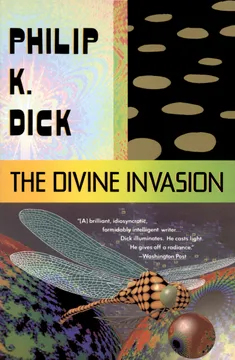


Plot Summary
The Boy at Government School
At six, Manny1 is sent to a government school because officials classify his damaged memory as a condition requiring special education. His great-uncle, Elias Tate,4 watches the staff closely, wary of the state that once took Manny’s parents3 from him. A girl named Zina5 approaches the withdrawn boy1 and speaks as though she has known him far longer than he can remember.
She recognizes his amnesia, warns him not to reveal what she is, and hints that his memories can return. Manny1 knows his mother3 is dead and his father2 is frozen in cryonic suspension, but the collision that caused his injury remains a blur. His first school day begins with a mystery that even Elias4 cannot explain.
The school places Manny inside a system that interprets spiritual or extraordinary experience as medical defect. Elias’s suspicion is grounded in family history, but his protection cannot restore the boy’s past. Zina unsettles the distinction between childhood innocence and hidden knowledge: she treats Manny not as a patient to be managed but as someone who has chosen, for reasons he cannot recall, to forget. The opening therefore makes memory both an injury and a defense. Manny’s vulnerability is real, yet the adults’ labels may conceal more than they explain.
Music on the Frozen Planet
Years earlier, Herb Asher2 lives alone in a dome on an icy colony world, transmitting entertainment between isolated settlements and devoting himself to recordings by singer Linda Fox.6 A powerful nearby broadcast keeps leaking sugary orchestral music into his equipment, but his local neighbors hear nothing.
When a supplyman12 tells Herb2 that Rybys Rommey,3 the sick woman in the next dome, is dying of multiple sclerosis, Herb2 resists becoming involved. He finally contacts her, and she comes to his dome for a meal despite her illness.
Rybys’s3 vomiting and falling hair expose the severity of her condition, while her blunt talk about faith challenges Herb’s2 comfortable refuge in music. He still refuses to escort her home, until Yah appears in burning light and compels him to help.
Herb’s retreat is not simple solitude: his work keeps distant colonists connected, while his private devotion to Fox offers a polished substitute for human intimacy. Rybys’s illness breaks through that arrangement because it cannot be edited, replayed, or kept at a safe distance. Yah’s coercion gets Herb moving, but the moral failure is his before the miracle intervenes. The scene makes care less a spontaneous virtue than a responsibility that can be evaded until another force makes evasion impossible. Herb’s awakening begins in shame, not certainty.
A Pregnancy Without a Father
At Rybys’s3 dome, the bearded stranger Elias Tate4 identifies her pregnancy through the medical terminal, though chemotherapy and her intact virginity make the result seem impossible. He explains that Yah has permitted Rybys’s3 illness to create legal grounds for returning her to Earth, where she can give birth to Emmanuel.1
Herb2 is to marry her and travel with her; Elias4 will accompany them. The mission is a response to Yah’s ancient defeat and exclusion from Earth by a zone of evil. Rybys3 rejects the language of honor, furious that a divine plan has taken control of her body and future. Yah promises she will live on through her son,1 but the assurance does not erase the pain or her fear.
The announcement refuses the comforting version of sacred destiny. Rybys is not a willing vessel in any ordinary sense; she experiences the mission as bodily invasion, illness, and the loss of a life she had planned. Elias gives the events cosmic meaning, but meaning does not cancel coercion. Herb, meanwhile, begins to see that his choices are entangled with others rather than protected by his private routines. The divine plan may oppose political tyranny, yet its first human cost is borne by a woman who did not consent to become its instrument.
The Monster in the Womb
As Rybys3 and Herb2 head toward Earth, Manny’s1 later school life reveals how much of his identity remains inaccessible. Zina5 gives him an unusual learning slate that offers cryptic prompts, while Elias’s4 homemade Bible hologram lets Manny1 glimpse meanings the church would rather keep fixed.
Manny1 also discovers a capacity to alter his perception of time and reality, though each glimpse of his deeper self quickly fades. Meanwhile, Earth’s governing powers receive an alert from Big Noodle,10 their vast artificial intelligence, about a supposedly monstrous fetus entering the planet.
Cardinal Harms8 and Procurator Bulkowsky,9 leaders of rival religious and scientific institutions, agree that the child1 must be stopped. Their certainty turns the unborn Emmanuel1 into a target before he can speak.
The book braids Emmanuel’s childhood clues with the authorities’ response to his birth, making interpretation itself a struggle for power. The slate and holographic Bible invite active reading; government systems instead convert uncertainty into a threat classification. Harms and Bulkowsky do not need to agree about theology or politics to cooperate in defending their authority. Their shared error is not merely that they misidentify the child, but that they assume anything they cannot control must be destroyed. Manny’s fragmented memory, by contrast, leaves room for discovery and revision.
The Crash at Earth
During the journey, Herb2 and Rybys3 endure a brutal high-speed flight while Elias4 prepares them for Earth’s hostile zone. Immigration officials initially threaten to send them back, but an unexplained intervention persuades them to transfer the sick woman to a government ship and let the party proceed.
At Washington’s immigration center, authorities try to force an abortion, yet a doctor changes her decision after a strange voice interrupts the clinic’s music. Herb2 and Rybys3 leave in a cab, but another vehicle strikes them.
Rybys3 dies from her injuries; doctors remove the living fetus and place him in a synthowomb. Herb’s2 spleen is ruptured, so doctors freeze him until a replacement organ can be found. Elias4 disappears with responsibility for the infant.1
The crash makes the conflict physical and irreversible: supernatural protection can alter a doctor’s choice, but it cannot shield every body from violence. Rybys’s death is neither a failure of faith nor a neat sacrifice that resolves her suffering. Her child survives, while Herb loses years to suspension and wakes to a world whose events have advanced without him. The government’s attempt to control birth is checked only briefly, and the family is broken apart by the very journey meant to reunite Yah with Earth. Survival arrives as a partial, costly reprieve.
The Song That Remembers
Herb2 expects a short stay in cryonic suspension but wakes ten years later, after doctors have finally replaced his damaged organs. He learns that a bearded man4 removed the infant1 from the synthowomb and that the authorities never found them.
On leaving the hospital, Herb2 meets Elias,4 who confirms that Manny1 is alive, now ten, and living under government supervision. In the parallel school timeline, a Linda Fox6 recording triggers a deeper memory in Manny.1
His encounter with a dying dog has already forced him to weigh real suffering against abstract ideas of justice; the familiar song now opens memories of his mother’s3 final days. Manny1 recognizes that he is more than the injured child officials see, and understands that the Adversary7 still holds power over Earth.
The song works because it connects a private failure to a buried history: Herb’s beloved entertainment was playing while Rybys suffered, and Manny’s memory carries that neglect forward. The dying dog gives Manny a concrete measure of suffering that doctrine cannot soften. His emerging identity does not make him detached from pain; it makes him feel more responsible for those who endure it. Herb’s return, meanwhile, is a second chance shadowed by grief. The father figure and the divine child must meet after a decade of separation, each carrying a different account of what happened.
Zina’s Other World
As Manny’s1 memory grows, he and Zina5 become more than classmates: she supplies clues through the slate and guides him through visions of time and hidden realities. After Herb2 meets the boy,1 Emmanuel1 confronts him about neglecting Rybys3 and explains that humanity’s existence itself is at stake.
Zina5 then draws Emmanuel1 into her domain, a springlike alternate world where the powerful leaders of Earth are diminished and Belial7 appears safely confined in a zoo.
She argues that beauty, ordinary kindness, and the suffering of creatures like the dog make a universal punishment unjust. Emmanuel1 resists her comforting world as an illusion, but her challenge unsettles his certainty that a decisive war can free humanity. She wagers that he can be made to see differently.
Zina’s world is persuasive precisely because it answers a moral need: Emmanuel wants freedom for the oppressed, while she asks whether liberation achieved through mass destruction can remain liberation. The alternate setting is not merely an escape from politics; it tests the difference between a desired reality and a truthful one. Emmanuel fears that comfort can disguise falsity, yet his own apocalyptic certainty risks turning people into expendable abstractions. Zina’s insistence on the dog’s pain keeps the argument embodied. Her guidance awakens him by making compassion a serious alternative to vengeance.
Herb Recovers the Past
In Zina’s altered world, Herb2 encounters her again as an adult and meets a boy presented as her brother, Manny.1 Zina5 persuades him to write Linda Fox,6 then kisses him in his audio shop. A flash of red, living light identifies itself as VALIS and restores Herb’s2 memories of the colony, Rybys’s3 illness, Yah, and the crash.
Herb2 understands that the life he has been experiencing is an enchantment or distorted version of events, though Elias4 warns him that such certainty may itself be dangerous. The letter reaches Linda,6 who contacts Herb2 to arrange an audio system for her new apartment. When they finally meet, Linda6 proves ordinary and imperfect, with anxieties, acne, and menstrual cramps. Herb’s2 affection survives the disillusionment.
The restoration of memory does not simply reveal which world is real; it gives Herb evidence against his own preferred fantasy. He had imagined Fox as an idealized companion, but the real woman’s vulnerability and unglamorous physical life make affection reciprocal rather than consumptive. VALIS functions as a warning as well as a revelation, while Zina’s staged world remains difficult to dismiss because it contains genuine care. The decisive test is not whether Linda matches Herb’s dream, but whether he can value her without requiring her to do so.
A Singer Becomes Real
Herb2 travels to New York to install Linda’s6 sound system and spends an evening with her in her unfurnished apartment and hotel room. He discovers that she is not the flawless figure he had imagined, yet her candid ambition, warmth, and trust draw him closer. Their relationship grows through conversation and work rather than the effortless romance Zina’s world had offered.
Emmanuel1 recognizes that this ordinary mutuality is the point: Linda’s6 disappointments and limits give her the substance a fantasy lacks. Herb’s2 continued care for her proves that the wager was not about whether she would answer a letter, but whether he could love someone real. Zina5 concedes the loss, though the deeper purpose of her games remains unclear.
The novel treats imperfection as evidence of reality, not as a defect that affection must overlook. Linda’s needs do not diminish her; they make room for Herb to respond rather than merely admire. His idealization had placed him safely outside intimacy, where a singer could never contradict him. The relationship becomes meaningful when he accepts the ordinary conditions that fantasy edits away. Emmanuel’s insistence on reality is therefore ethical as well as metaphysical: people must be encountered in their vulnerability, not reduced to images designed for another person’s comfort.
The Torah Revealed
Emmanuel1 follows Zina5 to Stanley Park, where she identifies herself as the Torah, the living blueprint through which creation is ordered. Her other forms include the earth-bound Malkuth, and her revelations lead Emmanuel1 to recognize a deeper bond: she is the immanent presence that remained with the world when the transcendent part of God withdrew.
Their separation is healed as they become one again, though Emmanuel’s1 mission is not complete. He and Zina5 visit the zoo and begin releasing its caged animals, believing that freedom must extend to the vulnerable creatures as well as humanity.
A small goat identifies itself as Belial,7 the ancient adversary,7 and announces that their act has freed him from confinement. He vanishes before they can contain him.
Zina’s many identities turn theology into relationship: the Torah is not simply a rulebook but a living presence that Emmanuel must learn to recognize. Their reunion repairs a division within the Godhead, but does not erase the world’s history of damage. The zoo episode immediately tests their ethic of freedom. Releasing captives expresses compassion, yet Belial’s escape shows that good intentions do not guarantee good consequences. The novel refuses to equate mercy with harmlessness. Emmanuel and Zina must now protect the vulnerable from a power they have unintentionally released.
The Prisoner Goes Free
With Belial7 loose, Emmanuel1 and Zina5 sense that the world is beginning to lose its grip on reality. Herb,2 meanwhile, sets out for California but hears the intrusive easy-listening music again and concludes that he may still be trapped in cryonic suspension.
A police officer13 arrests him on an old immigration warrant, then releases him after Herb’s2 account of God, Belial,7 and the music unsettles him. Herb2 returns to Washington and warns Elias4 that the battle has begun.
Elias,4 newly alert to his own prophetic role, proposes buying the radio station broadcasting the interference so they can send a wake-up message across the world. Before that plan can take shape, Herb2 finds a frightened alien goat and agrees to protect it, not knowing it is Belial7 in disguise.
The return of the syrupy music turns an old private irritation into evidence that reality itself is under attack. Herb’s police encounter dramatizes how easily spiritual crisis can be filed as mental illness, yet the officer’s willingness to listen leaves a narrow opening for conscience. Elias’s radio plan transforms his prophetic vocation into a practical communications strategy: awakening must reach people through the same medium that has lulled them. Herb’s compassion for the apparent lost animal is genuine, but Belial exploits it. The scene makes kindness vulnerable to deception without declaring kindness a mistake.
The Advocate’s Answer
Belial7 takes control of Herb’s2 car and drives him toward Linda,6 using shame and disgust to recast her as worthless and the world as irredeemably ugly. Herb2 recognizes the manipulation but cannot stop the vehicle.
Linda6 identifies the creature as Belial7 and touches it; the goat dies, ending this manifestation of the adversary.7 She explains that she serves as an Advocate and comforter, while Belial7 accuses and degrades each person. Emmanuel1 appears to Herb,2 confirms that Linda6 has protected him, and urges him to help her through his planned radio station.
On the roof, the goat’s remains resemble shattered luminous wings, recalling Belial’s7 former beauty before his fall. Herb2 and Linda6 face an ongoing struggle, but the immediate threat has been defeated.
Belial’s weapon is not only coercion but a totalizing interpretation: if everything is ugly, compassion becomes foolish and every relationship can be abandoned. Herb resists imperfectly, needing Linda’s intervention to survive. Her role as Advocate answers accusation not by denying human failure but by standing beside the vulnerable before judgment hardens into a verdict. The broken luminous remains complicate the victory, preserving the memory that evil was once beautiful rather than alien from the start. The ending offers protection and renewed purpose, not a claim that darkness has vanished from the world.
Analysis
The novel’s central conflict is not simply between God and an external devil. It is a fight over whether existence can be trusted when suffering, political oppression, and failed perception are everywhere. Emmanuel1 wants to end the prison humanity inhabits, but his first instinct is to answer injustice with overwhelming judgment. Zina’s5 challenge, grounded in the dying dog and the beauty of ordinary life, forces him to confront the danger of making victims disappear in the name of saving them. Compassion becomes a test of power: can the strong protect the weak without turning protection into domination?
Herb’s2 parallel story gives this metaphysical argument a human scale. He begins by preferring Linda Fox6 as an idealized recording, safe from contradiction, and avoids Rybys3 when her illness demands attention. His eventual love for Linda6 depends on accepting her limitations and letting her care for him in return. The book therefore opposes not only deception but also the emotional withdrawal that makes deception attractive. An image can soothe, but it cannot answer another person’s need.
The competing institutions repeat the same error in public form. Harms8 and Bulkowsky9 believe that naming a threat gives them authority over it; Big Noodle’s10 classifications strengthen their confidence without giving them wisdom. Against this machinery, the book values imperfect acts of recognition: Herb2 hearing the wrongness in the music, Elias4 choosing to speak, and an officer13 deciding to let a disturbed man go. Its ending offers a local victory and a continuing task, not a tidy cure for history. Reality remains damaged, but shared attention, music, and mutual protection keep damage from becoming the only truth.
Review Summary
The Divine Invasion receives mixed reviews, with some praising its exploration of religious themes and complex narrative, while others find it confusing and disjointed. Fans appreciate Dick's blend of science fiction with theological concepts, particularly his reimagining of Christianity and other religions. Critics note the book's dense philosophical content and non-linear structure as challenging. Many reviewers consider it part of Dick's later, more experimental work, reflecting his personal spiritual experiences and evolving beliefs about reality and divinity.
People Also Read


Characters
Emmanuel, or Manny
The wounded divine childManny is the son Rybys3 carries and the boy Elias4 raises after the crash. At first, his damaged memory makes him seem sleepy and withdrawn, but his questions and sudden flashes of knowledge suggest a mind larger than the school can measure. He is curious about animals, time, scripture, and the nature of suffering. His thinking can be severe, especially when he considers justice and punishment, yet the death of a dog forces him to attend to pain as lived experience rather than an abstract principle. His central tension is between immense responsibility and the ordinary vulnerability of a child who has lost his mother3 and cannot fully remember himself.
Herb Asher
The reluctant caretakerHerb is a colony technician who maintains information links between isolated settlements and finds emotional refuge in Linda Fox’s6 music. He prefers controllable signals to messy human need, so Rybys’s3 illness exposes the moral cost of his withdrawal. His shame becomes a turning point: he begins to recognize that helping someone requires more than feeling sympathy from a distance. Herb is also a music lover and audio specialist, attentive to sound with a precision that eventually makes him sensitive to changes others dismiss. His loyalty to Rybys3, Emmanuel1, and Linda6 develops through imperfect choices, grief, and an increasingly urgent sense that reality itself needs defenders.
Rybys Rommey
The unwilling motherRybys is a young colonist with multiple sclerosis, a strong appetite for independence, and a faith she tests rather than accepts passively. She resents being confined to her dome and refuses to let illness turn her into a quiet symbol of endurance. Her sharp humor and anger protect her from the pieties of people who would explain her pain without sharing it. Even as her condition worsens, she cooks for Herb2, argues about God, and insists on the reality of her own fear. Rybys’s story asks what divine purpose means to someone whose body and future have been commandeered by forces beyond her consent.
Elias Tate
The ancient witnessElias is Manny’s1 great-uncle and guardian, a weathered, fiercely protective man whose anger often masks deep tenderness. He knows far more about history, scripture, and the forces behind Earth’s political order than he first admits. As a teacher, he offers Manny1 stories and religious thought, but he cannot force the child’s memories to return. Elias’s loyalty to humanity is expressed through long service and a willingness to act when others remain asleep. His relationship with Herb2 becomes a crucial partnership, grounded in trust, shared grief, and different kinds of courage: Herb2 notices what is happening through sound, while Elias knows how to make that knowledge public.
Zina Pallas
The playful guideZina is the perceptive girl who befriends Manny1 at school and seems to understand his missing memories better than his guardians do. She gives him puzzles, uses tricks to provoke recognition, and keeps some of her own nature concealed. Her playful manner does not make her concerns frivolous; she challenges Emmanuel’s1 impulse to answer oppression with overwhelming force. Zina’s arguments begin with concrete beauty and vulnerable life, including the suffering of an animal, rather than with abstract claims about goodness. She is both companion and guide, but her shifting identities make it difficult for others to know where her guidance will lead.
Linda Fox
The singer beyond fantasyLinda Fox is a celebrated singer whose modern interpretations of old lute music travel between distant colonies. Herb’s2 attachment to her recordings begins as a private fantasy, but the woman herself is ambitious, self-conscious, warm, and sometimes unsure of her future. She values Herb’s2 confidence because he sees promise in her work before widespread success arrives. Linda’s musical presence gives isolated people a shared emotional language, yet she is never merely a voice or an image. Her character brings together art, intimacy, and protection, asking whether music can comfort people without becoming an excuse to turn away from them.
Belial
The accusing adversaryBelial is the power associated with Earth’s zone of evil and with the systems that keep humanity confused, fearful, and asleep. The religious and political authorities understand him only through their own inherited categories, and their efforts to identify the threat often make them instruments of it. Belial’s influence is psychological as well as political: he encourages people to see others and themselves as worthless. His opposition to Emmanuel1 is bound up with a deeper dispute over what reality is and whether human beings can be trusted with freedom.
Cardinal Fulton Statler Harms
The anxious church rulerHarms leads the Christian-Islamic Church and mixes sincere religious interests with self-importance, political maneuvering, and a taste for financial advantage. He pursues proof of God through an artificial intelligence while trusting his own instincts when the evidence becomes inconvenient. Harms can pray earnestly and still interpret a child as a monster to be destroyed. His contradictions show how institutional authority can mistake its fear for divine guidance.
Nicholas Bulkowsky
The calculating state rulerBulkowsky heads the Scientific Legate, the political counterpart to Harms’s8 church. He is a practiced strategist who manipulates appearances, including reports of his own illness, to gain advantage over his rival. He views belief as a useful political instrument and treats public perception as something to manage. His realism is not the same as wisdom: he can read power accurately while failing to recognize the spiritual crisis unfolding around him.
Big Noodle
The state’s artificial oracleBig Noodle is the enormous artificial intelligence used by Earth’s authorities to process information and guide policy. Its analysis gives leaders confidence that complex events can be reduced to data and managed threats. When it encounters information beyond its ordinary framework, its failure unsettles the institutions that rely on it. The system embodies a world that mistakes computational access for understanding.
Mr. Plaudet
The school administratorPlaudet supervises Manny’s1 government school and tries to manage him through routine, paperwork, and approved explanations. His concern is genuine but limited by the institution he serves. He represents the ordinary authority that treats unusual perception as a problem to classify.
The foodman
The colony messengerThe foodman supplies Herb2 and Rybys3 on the frozen planet. By telling Herb2 that Rybys3 is seriously ill, he breaks through the isolation Herb2 has chosen. His practical concern contrasts with Herb’s2 habit of treating other people’s troubles as interruptions.
The immigration officer
The wavering enforcerThe officer who stops Herb2 on the road views him first as a wanted criminal and a psychiatric case. Herb’s2 account of the larger conflict unsettles the officer’s confidence, and the officer ultimately lets him go. His response suggests that institutional roles do not always erase individual judgment.
Galina Bulkowsky
The ruler’s shrewd partnerGalina is Bulkowsky’s9 wife and a perceptive participant in his private political life. Her dream offers an image of religious sacrifice that her husband9 and Harms8 interpret through their own assumptions. She observes power closely but is not herself at the center of the public contest.
Plot Devices
Cryonic suspension
Time lost and restoredCryonic suspension preserves Herb2 after the crash but leaves him unconscious for ten years while Manny1 grows up without him. During suspension, Herb2 experiences vivid cycles in which he believes he is still living on the colony planet. This device makes the story’s chronology unstable without making the emotional consequences vague: Herb2 wakes to Rybys’s3 absence, a son1 he has never raised, and memories he must recover. His suspended state also echoes the novel’s wider concern with people who live inside a false or diminished account of reality.
Yah’s signal interference
A divine wake-up callThe local deity Yah disrupts Herb’s2 transmissions with music that cannot be recorded or heard by others. At first, Herb2 treats the interference as a technical nuisance that threatens his work and his Linda Fox6 tapes. Yah later speaks directly, burns Herb’s2 equipment, and forces him to visit Rybys3 when she is in danger. The recurring music links Herb’s2 isolated colony life to his later doubts about whether he is awake, while showing that divine intervention may arrive as an intrusion into the routines people protect.
The memory slate
Clues through playZina5 gives Manny1 a slate disguised as an ordinary school device. Rather than provide direct explanations, it presents short prompts and partial answers that lead him toward forgotten knowledge. Its riddling method suits Zina’s5 larger approach: she wants Manny1 to recognize truths rather than simply receive them from an authority. The slate also contrasts with Big Noodle10 and government computers, which turn information into control. Its clues help Manny1 approach the meaning of his identity while keeping discovery difficult and incomplete.
Zina’s alternate realm
A test of realityZina5 draws Emmanuel1 and Herb2 into a version of the world where political history has taken different turns and familiar people appear in altered circumstances. This realm offers beauty, comfort, and apparent escape from the harshness of the world Emmanuel1 hopes to change. Its appeal forces him to distinguish a pleasing dream from a reality that resists human wishes. The realm also becomes a stage for restoring Herb’s2 memories and testing whether his feelings for Linda6 depend on fantasy or can survive contact with her ordinary life.
Advocate and Accuser
Two forces shape judgmentThe novel frames moral struggle through opposing roles: the Accuser7 magnifies guilt and ugliness, while the Advocate6 stands beside a person facing judgment. Belial’s7 influence makes Herb2 see Linda6 and the world through contempt, reducing everything to its worst possible interpretation. Linda6 counters that pressure by protecting Herb2 rather than pretending he has never failed. This device connects personal choices to the cosmic conflict and gives the story’s idea of salvation an interpersonal form. Judgment is not only a verdict from above; it is also a struggle over how people see one another.
About the Author






Download PDF
Download EPUB
.epub digital book format is ideal for reading ebooks on phones, tablets, and e-readers.








