


Plot Summary
Prologue
Thrawn remembers the day the Chiss Ascendancy declared him an exile. Five admirals delivered the decision, and his people sent him to a remote world with enough equipment to survive alone.
To the officers who later find his forest settlement, he appears to be a castaway with no way home. The truth of his exile, and why he accepts service in the Empire, will take years to emerge.
The exile frames Thrawn as a figure displaced from the start, but it also makes displacement a question rather than a settled fact. His solitude seems to define him until the Imperial patrol turns it into an opportunity. The gap between what a person appears to be and what he is becomes the book’s governing method: Thrawn reads other people through the same gap, while others repeatedly mistake his restraint for weakness or his origins for a limit.
A Hut in the Forest
Captain Voss Parck’s patrol discovers an isolated hut and unfamiliar crates on a forest world, then loses a V-wing pilot to an unseen attacker. Cadet Eli Vanto, a Wild Space language specialist, helps read the shipping marks as the camp’s strange attacks multiply. The attacker uses fermented berries to lure animals carrying rigged power packs, cuts down another fighter with monofilament, and jams the troops’ communications.
When the Imperials prepare to leave, a missing stormtrooper appears to explode, but the body is gone. Parck realizes the enemy has hidden aboard the transport. In the Strikefast’s darkened hangar, the lone intruder slips toward another ship and is captured. The blue-skinned Chiss identifies himself as Thrawn.
Thrawn’s first victory is not a defeat of Imperial firepower but a manipulation of Imperial assumptions. Parck’s men interpret unfamiliarity as primitiveness, so they search for crude weapons and visible enemies while Thrawn turns their own equipment, procedures, and blind spots against them. Eli’s local knowledge matters because he recognizes details the officers dismiss. Their first encounter establishes that intelligence here is not abstract brilliance: it depends on observing material facts and correcting for one’s prejudices.
The Emperor's Bargain
Aboard the Strikefast, Thrawn explains how he used the first pilot’s body, the berries, stolen equipment, and a stormtrooper disguise to escape his camp. He admits he wants to return to his people, who face dangers the Chiss leadership refuses to confront preemptively. Parck takes him to Coruscant, where Thrawn identifies his past connection to Anakin Skywalker and offers the Emperor knowledge of threats beyond Imperial space.
Palpatine accepts his service, promotes him into the navy, and orders Eli transferred to the Royal Imperial Academy to remain Thrawn’s translator and aide. Eli’s carefully planned supply career is abruptly redirected, while Thrawn enters the Empire with neither trust nor freedom guaranteed.
The bargain is built on asymmetry. Thrawn offers useful knowledge but withholds the locations that would make the Chiss vulnerable; Palpatine offers a career while retaining the power to define its limits. Eli becomes the human bridge between these systems, though he initially experiences the assignment as a theft of his future. The scene also distinguishes loyalty from obedience: Thrawn agrees to serve the Emperor, but his purpose remains protection of his people, not submission for its own sake.
The Academy's Trap
At the elite Royal Imperial Academy, Commandant Deenlark gives Thrawn a lieutenant’s insignia while treating Eli as a provincial outsider. Cadets Spenc Orbar and Rosita Turuy try to frame the pair in a forbidden gambling scheme, but Thrawn reveals his rank plaque at the precise moment an instructor arrives, turning the trap back on its designers.
Later, three attackers assault Thrawn on campus. Eli hesitates, tempted by the thought that Thrawn’s failure might restore his old career, then hurls gravel at the attackers and helps break their attack.
Thrawn persuades Deenlark to transfer the perpetrators to starfighter training rather than expose the commandant to their powerful families. Eli graduates, but the Navy assigns him as Thrawn’s aide aboard the Blood Crow.
Eli’s choice is small in scale and decisive in character. He does not suddenly become a fearless soldier; he acts while still afraid and ashamed of his hesitation. Thrawn, meanwhile, treats institutional injustice as a tactical environment, not a reason to abandon judgment. His alternative punishment protects the academy from political retaliation and redirects capable attackers toward work suited to them. Together, they establish a form of loyalty based on competence and shared risk rather than rank or comfort.
Pryce Leaves Lothal
On Lothal, Arihnda Pryce learns that Pryce Mining has uncovered valuable doonium. Arik Uvis, a governor’s associate who owns part of the company, urges her to sell the governor a controlling interest; she refuses, intent on keeping the mine in her family. Soon her mother, Elainye, is arrested for embezzlement on evidence Arihnda believes has been fabricated.
Senator Domus Renking offers to free Elainye if the family surrenders the mine to the Empire and leaves Lothal. Arihnda accepts, arranging work for her parents on Batonn and a place for herself on Coruscant. She tells herself the capital will be her escape, but she also begins planning to use its political machinery to reclaim what the Pryces lost.
Arihnda’s ambition grows out of a real wound, not simple vanity. She has long resented Lothal’s limits, yet losing the family mine turns escape into complicity with the system that harmed her. Her bargain protects her parents while splitting the family from its home and legacy. The choice shows her early political instinct: she can recognize coercion and still find room to maneuver within it. That adaptability will become both her strongest tool and her most dangerous rationalization.
The Dromedar's Prisoners
A distress call brings the Blood Crow to the derelict freighter Dromedar, where Ensign Eli Vanto and a small team find Nevil Cygni hiding after pirates seize the crew.
Cygni claims the ship’s hyperdrive is locked and the reactor dangerous, but Thrawn notices his dust-covered clothes and the missing warning about the reactor, signs that he has been near the engines. Thrawn lets Cygni restart the drive, then surrenders when the pirate force arrives, hoping to reach the captured crew. Cygni is revealed as the pirates’ accomplice.
Thrawn and the others are caged aboard the pirate vessel, but Thrawn uses a disguised buzz droid to cut them free and seize the ship. They save the crew and recover the Dromedar, though the pirates have already drained twelve of its twenty tibanna cylinders.
Thrawn’s willingness to be captured looks reckless until its purpose becomes clear: he needs access to the people the pirates took, not merely the cargo. His plan depends on reading Cygni’s motives and on making the crew obey orders even when surrender feels intolerable. The missing tibanna prevents this from becoming a clean triumph. The failure exposes a limit to Thrawn’s control and gives the Navy a financial grievance to weaponize against him, even though he has rescued lives and captured the attackers.
Arihnda's Coruscant Fall
On Coruscant, Arihnda works for Renking’s citizen-assistance office, wins the trust of local residents, and begins building political contacts. During Ascension Week, Renking sends her to deliver a data card to Moff Ghadi.
Ghadi switches the card, sprays illegal spice on her, and threatens to accuse her of dealing it unless she carries his substituted card back to Renking. The card contains material connected to Renking’s political maneuvering, and Ghadi uses the incident to force Arihnda into betraying her employer.
Renking’s office then collapses under allegations, and he dismisses Arihnda. She starts over by persuading a poorly staffed assistance office to hire her, where she meets Juahir Madras and begins forming the friendships she had lacked in the capital.
Ghadi’s blackmail succeeds because Arihnda has mistaken access for power. She can move through elite rooms and recognize opportunity, but she cannot yet protect herself from officials who control evidence and enforcement. Her dismissal exposes the fragility of Renking’s patronage, while her successful self-hiring shows that humiliation does not erase her practical skill. Juahir’s friendship offers a rare alternative to transactional relationships, which makes Arihnda’s later compromises emotionally costly rather than merely strategic.
The Nightswan Pattern
While serving aboard the Blood Crow under Captain Filia Rossi, Thrawn and Eli investigate a missing shipment of tibanna and the elusive planner called Nightswan. Thrawn studies purchases of Clone Wars equipment and discovers a sharp rise in demand for vulture droids, suggesting someone intends to use obsolete weapons against modern defenses.
On Umbara, hundreds of vulture droids attack an Imperial task force during a supposed uprising. Thrawn spots that the fighters change behavior inside the ships’ communication shadows, proving they are being guided from a ground transmitter.
Admiral Gendling refuses to fire on the suspected site, so Thrawn maps the droids’ vulnerable zones and helps the Imperial ships turn the battle. The Empire wins, but Gendling blames Commander Cheno for the unauthorized tactics and ends his career.
The vulture droid attack turns Thrawn’s artistic and historical attention into a practical weapon. He sees that design carries assumptions about how a machine should fight, then notices when its behavior contradicts those assumptions. Yet tactical success does not protect the people who make it possible. Cheno absorbs the institutional cost because Gendling’s authority is more secure than the truth of the battle. The episode sharpens Eli’s awareness that Imperial politics can punish competence when it embarrasses the powerful.
Fire Over Cyphar
On Cyphar, Thrawn investigates a land conflict between human colonists and the native Afe clan. Shipping records and the Afe meetinghouse’s artwork help him identify a small doonium vein beneath disputed farmland and a conspiracy using raids to provoke the Afes into killing humans.
The conspirators are also refining pre-spice into the addictive drug scarn. Thrawn and Eli catch the raiders at work, but the captured crop geneticist reveals that the stored product is hidden elsewhere.
Thrawn has a TIE pilot trace the buried vein with a short-range sensor while the Thunder Wasp’s turbolasers burn the pre-spice out of the ground. The scheme collapses, but the fire destroys homes and farmland. The Afe chief condemns Thrawn’s decision, and Coruscant again summons him to answer for his methods.
Thrawn’s solution prevents future violence by removing the economic incentive, but it imposes immediate harm on people who did not create the scheme. His reasoning is consequentialist: he accepts visible destruction to prevent a greater, predicted loss of life. The Afe chief’s objection exposes what that calculation leaves out, including sovereignty and the community’s right to choose its own risks. The episode complicates the idea that superior foresight automatically grants moral authority. Thrawn may read a pattern correctly and still misjudge what its victims are entitled to decide.
Pryce Enters the Game
Arihnda becomes a capable manager at a Coruscant assistance office, then accepts work with the Higher Skies advocacy group through Driller MarDapp. The group places her near senators and officials, but Moff Ghadi suspects it is gathering information against him.
He again threatens her with false criminal charges and orders her to spy on the group. Rather than submit, Arihnda contacts Thrawn and passes him evidence that Ghadi has concealed a doonium mine. Thrawn holds the information until it can be used safely.
Arihnda then gives Grand Moff Tarkin a decoy dossier and a recording of Ghadi’s plan to obtain damaging material on Tarkin. In exchange for helping Tarkin, she secures the path to Lothal’s governorship. She also helps expose Higher Skies’ effort to compromise bodyguards, leading to Juahir’s arrest.
Arihnda’s political intelligence is real, but so is the moral slippage in how she deploys it. She learns to survive blackmail by building a stronger lever, and she distinguishes her own betrayal from Ghadi’s only by choosing a target she considers deserving. Her decision to expose Higher Skies protects powerful officials and costs her the friendship she valued most. The scene’s psychological tension lies in her ability to feel grief without allowing grief to revise her strategy. Power becomes, for her, both protection and proof that she has escaped helplessness.
The Governor's Rise
Thrawn’s investigations continue as he rises through the Navy, while Eli remains an ensign despite his growing command experience. On Botajef, Governor Quesl declares independence and places weapons around his palace, expecting an Imperial attack to make him a martyr.
Thrawn uses Jefi history and the palace art collection to recognize that Quesl wants to exploit the conflict to steal priceless cultural objects. He disarms the palace defenses with carefully trained TIE pilots, draws Quesl onto a corvette, and exposes the theft before the Jefi can be turned against the Empire.
Elsewhere, Arihnda returns to Lothal as governor, closes the depleted Pryce mine, and secretly allows a trusted mining contact to continue extracting the remaining doonium. She also traps Renking into attempting a bribe, leading to his arrest.
Both characters turn knowledge into authority, but they do so with different relationships to institutions. Thrawn uses cultural evidence to prevent Quesl from manufacturing a war, while Arihnda uses political evidence to punish a former patron and quietly restore value to her family’s lost mine. Each acts beyond the narrow rules of their office. The difference is that Thrawn treats the rules as constraints to work around for an operational goal; Arihnda increasingly treats them as instruments that can justify personal redress.
Scrim Island Misfires
When insurgents seize the Scrim Island garrison and its hostages, Fleet Admiral Donassius assigns the attack to Admiral Durril, who dismisses Thrawn’s warnings and bombards the island without understanding its defenses.
The rebels use changing shields, concealed ion cannons, and a hidden turbolaser to cripple Durril’s force while freighters escape with weapons. Thrawn and Eli observe from a captured freighter, then pose as arms dealers to follow one fleeing ship to a Clone Wars repair vessel. There they find Cygni, now known as Nightswan, directing the insurgency.
Thrawn hides aboard the vessel and lets Eli meet Nightswan, then triggers an evacuation alarm and escapes amid the confusion. The diversion gives him intelligence, but the insurgents retain their stronghold and Nightswan’s wider plan remains unclear.
The failed assault reveals how a commander’s confidence can become a weapon in the enemy’s hands. Durril follows familiar doctrine so rigidly that the insurgents can predict his attention and exploit every pause. Thrawn’s choice to observe rather than rescue the battle is uncomfortable, but it yields access to the strategist behind the attacks. The revelation that Cygni is Nightswan also recasts their earlier encounter: what seemed like a single pirate deception was one move in a much longer contest between two minds.
Water Against Stone
After Durril’s defeat, Thrawn takes command of the effort to recover Scrim Island. He studies the island’s defenses and recognizes that orbital fire cannot penetrate its shield, while a direct landing would expose troops to the ion cannons.
Instead, he orders the Chimaera to strike the ocean beyond the shore. The resulting waves crash over the exposed weapon emplacements, flooding and disabling the ion cannons and turbolasers without first destroying the island’s interior. With the defenses gone, the insurgents lower their shield and surrender.
Thrawn’s victory restores the garrison and hostages, but it does not end the campaign. Shipping records show that the weapons taken from Scrim were moved to the shielded Creekpath mining complex, where thousands of civilians are also trapped.
The operation demonstrates Thrawn’s preference for changing the conditions of a fight rather than simply applying more force. Water becomes a means of reaching defenses that armor and turbolasers cannot touch. Yet the careful assault also foreshadows the limits of tactical elegance: the next target is not an isolated fort but a civilian population gathered around a mine. The victory gives Thrawn a new intelligence problem, one in which minimizing casualties depends not only on defeating the enemy but on understanding who is inside the enemy’s perimeter.
Two Men at Dusk
Thrawn invites Nightswan to meet outside Creekpath and promises to protect the civilians if the insurgents surrender. He also offers Nightswan a place with the Chiss Ascendancy, arguing that his strategic gifts could help confront dangers beyond the Empire.
Nightswan refuses because he believes the people at Creekpath would face renewed repression without him. During their conversation, he learns that Thrawn was never truly abandoned by the Chiss: the apparent exile was a covert mission to assess whether the Empire could become an ally against greater threats.
Thrawn admits he chose Imperial service as the best way to prepare for those dangers. Nightswan still will not leave his people. At the same time, Arihnda reaches Batonn with ISB agent Mattai Gudry and persuades her parents to help her enter Creekpath.
The meeting makes the two strategists’ deepest disagreement explicit. Both see dangers larger than themselves and accept personal risk, but Thrawn trusts that a powerful institution can be redirected toward survival, while Nightswan distrusts any promise that does not protect the vulnerable now. Their conflict is not simply loyalty versus rebellion. It is a dispute over whether future security can justify present coercion, and whether a leader’s duty is to the survival of a system or to the people who have placed their lives in his hands.
The Shield Holds Fire
Inside Creekpath, Gudry discovers the insurgents’ weapons and mines both their explosives cache and the shield generator. Arihnda’s real aim is to save her parents, not help the Empire seize the complex, so she secretly leaves Gudry and returns to their house.
When he finds her packing, Gudry threatens to abandon her parents and force her to help destroy the insurgents. Arihnda breaks his arm, takes his blaster, and kills him. She then leads her parents toward the Imperial lines.
To evade an insurgent guard, she detonates one small charge and shoots him during the distraction. Outside the shield, she later uses Gudry’s remote to trigger the explosives cache before the shield generator is disabled. The blast is contained inside the shield and devastates Creekpath’s crowded homes.
Arihnda’s transformation is complete in action before she admits it in words. She kills Gudry because he threatens the family she has chosen to protect, then manipulates the unfolding battle to erase the evidence of that killing. Her choices are strategic, but their emotional logic is intimate: her parents matter more than the insurgents, the Empire, or the agent assigned to protect her. The shield turns her act into a disaster for thousands. A device built to protect Creekpath becomes the mechanism that contains and magnifies the destruction.
The Battle's Terrible Price
Nightswan’s ships arrive in three groups, passing the disabled light cruisers without firing because he will not order helpless crews slaughtered. Thrawn had anticipated the restraint and concealed full TIE squadrons inside repair barges around the cruisers.
Once the attackers pass, the fighters launch behind them and strike from the rear while the Chimaera’s weapons engage. The Imperial fleet wins, but the Creekpath shield remains intact when Gudry’s explosives detonate. The blast destroys the mining complex and the surrounding homes, killing far more civilians than insurgents.
Nightswan dies in the battle’s aftermath. Arihnda claims Gudry triggered the explosives to avoid capture, while Thrawn cannot prove she caused the catastrophe. The insurgency is broken, but the victory leaves a civilian death toll that neither tactical success nor official praise can undo.
Thrawn’s plan succeeds because it accounts for Nightswan’s ethics as carefully as his weapons. That moral insight gives the Empire a battlefield advantage, but it cannot prevent the simultaneous catastrophe on the ground. The contrast is devastating: the admiral preserves enemy ships and crews because he understands Nightswan’s restraint, while Arihnda’s hidden choice turns a defensive shield into a mass-casualty trap. The result resists a clean moral accounting. Thrawn wins the engagement, yet the system he serves is left with a victory built over civilians.
A Star Built in Secret
After the battle, Arihnda offers Thrawn political help in exchange for support against unrest on Lothal. He recognizes that she may know more about Creekpath’s destruction than she admits, but lacks proof and needs her influence.
The Emperor summons Thrawn to Coruscant, promotes him to Grand Admiral, and grants Eli the long-delayed rank of lieutenant commander. Thrawn then asks about the hidden project whose demand for doonium and other materials he has traced for years. Palpatine identifies it as the Death Star, a weapon intended to suppress rebellion through the threat of annihilation.
Thrawn warns that concentrating Imperial resources in a single weapon is strategically dangerous, but accepts the new rank. He also meets Darth Vader, whose confidence prompts Thrawn to recognize a familiar presence beneath the armor.
The promotion appears to confirm that Thrawn has mastered the Empire’s hierarchy, but the Death Star revelation unsettles that apparent success. The Emperor’s answer exposes the danger Thrawn feared: a system designed to protect itself may become so confident in coercion that it creates the resistance it seeks to eliminate. Eli’s promotion also resolves a long-standing injustice, though it arrives through elite intervention rather than institutional fairness. Thrawn’s recognition of Vader introduces an intimate uncertainty into an otherwise grand political exchange.
Epilogue
Eli reads the final entry in Thrawn’s journal and leaves Coruscant in a small ship, carrying a message to the Chiss. He finds Admiral Ar’alani waiting aboard a Chiss vessel and introduces himself as someone Thrawn believed could be useful to the Ascendancy.
Ar’alani welcomes him and proposes that they discover together whether Thrawn’s judgment was right. Eli’s next path begins beyond the Empire, but the bond that first felt like an unwanted assignment has become the reason he is trusted with this journey.
The ending resolves Eli’s central question by giving his logistical intelligence a new setting without erasing the cost of his years beside Thrawn. His assignment began as a disruption imposed by powerful people; now he crosses into Chiss space by choice and on the strength of what he learned. The journal makes memory an active form of companionship. Thrawn is absent, but his faith in Eli has altered the younger man’s sense of what work he can do and where he belongs.
Analysis
The novel makes interpretation its central form of action. Thrawn studies art, technology, language, and the spacing of ships because each offers evidence about what another mind assumes. Eli learns to read shipping records with the same seriousness, while Arihnda learns to read ambition, resentment, and institutional weakness. Their methods overlap, but their moral conclusions diverge. Thrawn tries to preserve lives while serving an empire he considers necessary; Nightswan sees that the Empire’s coercion breeds the resistance it claims to suppress. Arihnda begins with a desire to rescue her family from political abuse, then increasingly accepts coercion when it advances her own protection and power. Creekpath is the sharpest collision of these positions: Thrawn’s careful fleet trap defeats the insurgent ships, but Arihnda’s private decision turns a protective shield into a mass grave. The Empire celebrates results, yet the bodies make those results impossible to call uncomplicated victories. The book’s strongest psychological insight is that intelligence does not guarantee wisdom. Seeing a pattern can help a commander predict an opponent, but it cannot by itself decide whose lives may be risked or whose suffering counts as acceptable. The ending preserves that uncertainty. Thrawn’s concern about the Empire’s secret weapon is justified, but his confidence that he can influence the system remains untested. Eli’s journey to the Chiss offers a different possibility: knowledge can be shared without being used only to dominate. His growth matters because he moves from resenting Thrawn’s influence to carrying forward a judgment of his own. The story asks whether loyalty can remain ethical inside a compromised institution, and whether understanding another person can ever substitute for changing the conditions that make conflict profitable.
Review Summary
Thrawn received mostly positive reviews for its compelling portrayal of the titular character's rise through Imperial ranks. Readers praised Zahn's writing and character development, particularly the relationships between Thrawn, Eli Vanto, and Arihnda Pryce. Many appreciated the exploration of Imperial politics and tactics. Some found the pacing slow or repetitive, while others felt it lacked the depth of Zahn's original Thrawn trilogy. Overall, fans welcomed Thrawn's return to canon, though opinions varied on how it compared to previous Star Wars novels.
People Also Read
Characters
Thrawn
Chiss strategic outsiderThrawn is a blue-skinned Chiss officer whose attention moves easily from military hardware to art, language, and the habits of a people. He treats details others dismiss as evidence, then builds plans that exploit what opponents assume is insignificant. His manner is controlled, but not empty of feeling: he is committed to protecting his people and limiting needless deaths, even when those aims collide with Imperial priorities. He values competence more than ceremony, which helps him win battles and repeatedly alienates the hierarchy above him. His central tension is whether service to a powerful, compromised Empire can be made compatible with defending those it may one day threaten.
Eli Vanto
Logistics-minded aideEli comes from a Wild Space shipping family and expects his Navy career to build on his talent for languages, supply, and numbers. His assignment to Thrawn initially feels like a derailment, especially when Core World officers treat his origins as a deficiency. Eli is observant and conscientious, but his first instinct is often to seek a safe, predictable path. Working beside Thrawn forces him to act under pressure and to recognize patterns beyond inventories and shipping records. Their relationship is affectionate without becoming sentimental: Thrawn challenges Eli’s assumptions, while Eli helps translate Imperial customs and politics that Thrawn does not instinctively grasp.
Arihnda Pryce
Ambitious Lothal nativeArihnda is raised in the Pryce mining family on Lothal and longs for the reach and sophistication she associates with Coruscant. She is capable, disciplined, and quick to read what other people want, especially when money or status is involved. The loss of her family’s mine deepens her ambition and gives it a personal grievance to serve. She can protect vulnerable people through practical work, but she also learns to treat trust, information, and even friendship as political resources. Her defining conflict is not between intelligence and ignorance, but between the empathy she can feel and the ruthless choices she is willing to defend as necessary.
Nightswan
Insurgent strategistNightswan is a gifted planner whose schemes draw on obsolete weapons, commercial networks, and the Empire’s blind spots. He first appears through the effects of his work, a name attached to smuggling, unrest, and carefully chosen disruptions. Unlike a conventional pirate, he is concerned with the people caught in the machinery of conflict, even when his operations endanger them. He believes the Empire’s repression creates the disorder it claims to prevent. His intellectual kinship with Thrawn makes their conflict more than a chase: both study systems and anticipate consequences, but they disagree about whether a dangerous institution can be redirected or must be opposed.
Emperor Palpatine
Imperial power brokerPalpatine recognizes Thrawn’s unusual strategic value and offers him a place in the Imperial Navy. He is patient in conversation and skilled at turning another person’s ambition or fear into a bargain. His interest in the Unknown Regions is both practical and imperial, and he expects loyalty in return for opportunity. Through him, Thrawn gains access to the Empire’s highest decisions, while also confronting the danger of a ruler who sees overwhelming force as the surest answer to political opposition.
Wullf Yularen
ISB military allyColonel Yularen works within the Imperial Security Bureau and becomes one of Thrawn’s most important institutional contacts. He respects results, understands political risk, and is willing to intervene when Navy prejudice threatens to bury a capable officer. His support is not blind: he questions Thrawn when a plan appears to cross into treason or endanger the Empire. Yularen’s combination of skepticism and trust gives Thrawn access to investigations and political rooms that a Navy commission alone could not provide.
Moff Ghadi
Corrupt political predatorGhadi is a powerful official who uses status, planted evidence, and threats of arrest to force other people into serving his interests. He assumes that a junior aide such as Arihnda can be frightened into obedience because he controls the institutions that would judge her. His rivalry with other political figures makes him both dangerous and vulnerable to leverage. Ghadi represents a form of power that does not need to persuade; it can make a threat credible simply by controlling the machinery behind it.
Grand Moff Tarkin
Imperial power brokerTarkin is a formidable administrator who treats access, information, and appointments as instruments of rule. His office is designed to intimidate, but he is also attentive to evidence and recognizes Arihnda’s ability to deliver useful intelligence. He can reward competence while remaining entirely transactional. His interest in Thrawn and Arihnda links the military and political plots, revealing how quickly personal ambition can be absorbed into Imperial strategy.
Juahir Madras
Arihnda's closest friendJuahir is a martial arts instructor who meets Arihnda when she needs both practical help and human connection. She is energetic, candid, and protective, with a physical confidence that contrasts with Arihnda’s more calculated social skill. Her work brings her into contact with government bodyguards and political clients. Juahir’s friendship matters because it offers Arihnda a relationship that initially feels mutual rather than useful, making their later conflict especially painful.
Domus Renking
Arihnda's political patronRenking is a senator from Lothal whose political influence helps Arihnda leave the planet after her mother’s arrest. He understands the bargains that govern Coruscant and offers protection only when it serves his own interests. His relationship with Arihnda begins as patronage and becomes a contest of leverage. Renking is neither a simple benefactor nor a simple villain: he gives her a route into power while demonstrating that the route is controlled by people who expect something in return.
Voss Parck
First Imperial contactCaptain Parck leads the Imperial patrol that discovers Thrawn’s settlement. He is cautious enough to recognize that the unseen attacker may be more capable than his troops assume, and curious enough to bring the prisoner to Coruscant. His decision opens the path by which Thrawn enters Imperial service.
Anakin Skywalker
Thrawn's past connectionAnakin is a Jedi general Thrawn encountered during the Clone Wars. Although he appears only through Thrawn’s account and the Emperor’s knowledge of their meeting, his reputation helps establish Thrawn’s credibility at court. Thrawn remembers him as a resourceful and courageous opponent whose judgment mattered.
Filia Rossi
Blood Crow captainRossi takes command of the Blood Crow after the more respected Captain Virgilio is removed. She values discipline and appearances, and she resents the unusual status Thrawn receives aboard her ship. Her clashes with him reveal how institutional tradition can disguise personal prejudice. She is capable of managing a vessel, but her rigid priorities leave little room for Thrawn’s unconventional methods.
Alfren Cheno
Steady ship commanderCommander Cheno leads the Thunder Wasp and gives Thrawn room to work, even when his methods depart from standard procedure. He is neither a brilliant tactician nor an insecure commander, and he recognizes the value of a capable officer. His willingness to protect his crew and accept responsibility makes him a stabilizing presence in a Navy where political standing often matters more than judgment.
Captain Filia Rossi's predecessor
Respected ship captainCaptain Virgilio commands the Blood Crow before Rossi and is known for balancing orders with practical judgment. He accepts Thrawn’s presence after testing his abilities and permits him to study unusual technology. His fair treatment gives Thrawn room to establish himself before the ship’s command changes.
Elainye Pryce
Arihnda's motherElainye helps manage Pryce Mining and is arrested when the family’s new wealth makes the business a political target. She is practical and deeply attached to her family’s history on Lothal. Her relationship with Arihnda is loving but not uncomplicated: she wants her daughter to succeed, while fearing what the capital and Imperial power will demand of her.
Talmoor Pryce
Arihnda's fatherTalmoor has spent his life working in the family mine and is accustomed to solving concrete industrial problems. He is steady under ordinary pressure, but political coercion leaves him uncertain. His attachment to Lothal and its people contrasts with Arihnda’s desire to escape, even as he remains devoted to his daughter.
Mattai Gudry
ISB field agentGudry accompanies Arihnda into Creekpath as her investigator and protector. He is trained to gather intelligence and prepare explosives, but approaches the operation as a search and destroy mission rather than a family rescue. His bluntness and confidence create friction with Arihnda, who has her own priorities.
Maketh Tua
Lothal's senior ministerTua manages industrial production on Lothal and briefs Arihnda when she returns as governor. She is capable within the existing administration but often fails to anticipate how economic decisions affect the planet’s political position. Her caution reflects the uncertainty of serving under a new governor with powerful backing.
Arihnda's parents
Pryce family anchorsElainye and Talmoor are Arihnda’s parents and the keepers of the family’s connection to Lothal. They value home, work, and community ties more than the capital’s social rewards. Their different temperaments shape Arihnda’s sense of duty: she loves them deeply, but increasingly measures protection through control and decisive action.
Admiral Ar'alani
Chiss fleet representativeAr’alani is a Chiss admiral who receives Eli when he reaches the Ascendancy carrying Thrawn’s recommendation. Her welcome is measured and open-minded, leaving Eli’s value to be tested through work rather than assumed from his connection to Thrawn.
Plot Devices
Art as intelligence
Culture reveals tactical habitsThrawn studies art as evidence of a society’s history, values, and habits of thought. On Botajef, Jefi art helps him understand how the population responds to leadership and why Governor Quesl’s performance is suspicious. On Cyphar, the Afe meetinghouse’s patterns help him anticipate how the clan will respond to raids. The device gives Thrawn a way to infer behavior before an opponent acts, but it is not magic: it depends on careful comparison and can still leave moral questions unanswered when he turns an accurate cultural reading into a military decision.
Logistics and markets
Supply shifts expose hidden plansEli’s training in shipping and inventory turns commercial data into strategic evidence. Rising prices for doonium, unusual purchases of vulture droid parts, altered shipping volumes, and the movement of freighters reveal operations that military reports miss. These patterns help Thrawn connect scattered crises to Nightswan and later point toward a much larger Imperial project. The device also gives Eli an independent form of intelligence: he is not simply translating Thrawn’s insights but learning to see how resources, routes, and demand can disclose an adversary’s intentions.
Imperial rank and patronage
Power bends the rulesPromotions, appointments, and political sponsorship shape what each character can do. Thrawn’s rapid advancement provokes resentment, while Eli’s delayed promotion shows how prejudice can quietly obstruct a career. Arihnda learns to exchange information for access, eventually using Tarkin’s influence to gain a governorship. These mechanisms create pressure beyond the battlefield: a sound plan can be ignored if its author lacks standing, and a powerful patron can turn a private grievance into public authority. The novel repeatedly asks whether a system can be used without allowing its incentives to remake the person using it.
The concealed shield
Protection becomes a weaponThe Creekpath energy shield is introduced as a defense for the mining complex and the people living inside it. Gudry’s plan requires the generator to be disabled before the explosives are triggered. When the cache detonates while the shield is still active, the shield contains the blast and magnifies the destruction within the complex. The device makes the climax depend on setup rather than sudden invention: a tool built to keep danger out becomes a trap when Arihnda activates the wrong part of the plan.
Thrawn's journal
Memory passes on a missionThrawn’s first-person reflections frame the military narrative and reveal how he understands choices, command, and changing paths. The journal is not merely a record of victories; it exposes the reasoning and uncertainty that other characters cannot always see. In the epilogue, Eli reads its final entry before traveling to the Chiss Ascendancy. The journal turns their relationship into an inheritance of judgment: Eli receives not a set of orders, but evidence that Thrawn believed he could develop beyond the role he had been assigned.
FAQ
0. Synopsis & Basic Details
What is Thrawn about?
- A Chiss's Strategic Ascent: Thrawn chronicles the meteoric rise of Mitth'raw'nuruodo, an alien from the Unknown Regions, through the ranks of the Galactic Empire. Discovered in exile, his unparalleled tactical genius and unique approach to understanding adversaries through their art quickly catch the attention of Imperial officers.
- Unlikely Partnerships Forged: The narrative follows Thrawn's journey from a mysterious castaway to a formidable Grand Admiral, often through the eyes of his human aide, Eli Vanto. Their partnership navigates the Empire's xenophobia and rigid social hierarchies, revealing the complexities of loyalty and ambition.
- Galactic Intrigue and Hidden Threats: Beyond personal stories, the book delves into the Empire's political machinations, burgeoning rebellions, and the shadowy threats lurking in the Unknown Regions. It explores the moral ambiguities of power and the sacrifices made in the name of order, setting the stage for larger galactic conflicts.
Why should I read Thrawn?
- Masterclass in Tactical Brilliance: Readers seeking a deep dive into military strategy and psychological warfare will find Thrawn's methods captivating. Timothy Zahn's meticulous plotting and Thrawn's unique ability to deduce enemy intentions from cultural artifacts offer a fresh perspective on conflict in the Star Wars universe.
- Compelling Character Development: The novel offers rich character arcs, particularly for Thrawn and Eli Vanto, exploring themes of identity, loyalty, and the struggle against prejudice. Eli's journey from a reluctant aide to a capable officer, finding his own purpose, is a highlight for many readers.
- Expansive World-Building & Lore: Thrawn enriches the Star Wars canon by introducing the enigmatic Chiss Ascendancy and delving into the unexplored Unknown Regions. It provides crucial context for the Empire's internal politics and the looming threats that shape its destiny, making it essential for fans interested in the broader galactic narrative.
What is the background of Thrawn?
- Chiss Ascendancy's Strategic Exile: Thrawn originates from the Chiss Ascendancy, a powerful, isolationist civilization in the Unknown Regions. His "exile" is revealed to be a calculated strategic maneuver by the Chiss to infiltrate the nascent Galactic Empire and assess its potential as an ally against a greater, unnamed threat.
- Post-Clone Wars Imperial Expansion: The story is set in the early years of the Galactic Empire, following the collapse of the Republic after the Clone Wars. This period is characterized by Palpatine's consolidation of power, the suppression of dissent, and the Empire's aggressive expansion into the Outer and Mid Rims, creating fertile ground for both Thrawn's rise and the insurgencies he combats.
- Cultural and Political Landscape: The narrative highlights the Empire's inherent xenophobia and rigid social hierarchy, particularly on Core Worlds like Coruscant. This backdrop of prejudice and political maneuvering forms a constant challenge for Thrawn and Eli, forcing them to adapt and innovate to survive and advance.
What are the most memorable quotes in Thrawn?
- "To defeat an enemy, you must know them. Not simply their battle tactics, but their history, philosophy, art.": This quote, central to Thrawn's character and Thrawn analysis, encapsulates his unique approach to warfare. It emphasizes that true victory comes from deep cultural understanding, not just brute force, a recurring theme in Thrawn.
- "I am a warrior, Your Majesty. A warrior may retreat. He does not flee. He may lie in ambush. He does not hide. He may experience victory or defeat. He does not cease to serve.": Spoken to Emperor Palpatine, this line defines Thrawn's unwavering commitment to duty and his personal code of honor. It reveals the depth of his resolve and his distinct philosophy, even when facing the galaxy's ultimate power.
- "A friend need not be kept either within sight or within reach. A friend must be allowed the freedom to find and follow his own path.": This profound statement, found in Thrawn's journal, offers a rare glimpse into his personal philosophy on friendship and loyalty. It underscores his respect for individual autonomy, particularly in his relationship with Eli Vanto, and serves as a poignant reflection on their shared journey.
What writing style, narrative choices, and literary techniques does Timothy Zahn use?
- Third-Person Limited Perspective: Zahn primarily employs a third-person limited point of view, often shifting between Thrawn, Eli Vanto, and Arihnda Pryce. This narrative choice allows readers deep insight into each character's internal thoughts and motivations, enhancing character analysis and building suspense as their individual paths intertwine.
- Epigraphs and Foreshadowing: Each chapter begins with an epigraph, often a philosophical reflection from Thrawn's perspective, which subtly foreshadows upcoming events or introduces key thematic concepts. This literary technique provides a meta-narrative layer, inviting readers to consider the deeper implications of the unfolding plot and Thrawn's strategic thinking.
- Detailed Tactical Exposition: Zahn's writing is characterized by meticulous detail in describing military tactics, technological specifications, and strategic planning. This focus on the "how" and "why" of Thrawn's victories, combined with his unique "art as intelligence" method, immerses readers in the strategic mind of the protagonist, making the Thrawn analysis of battles particularly engaging.
1. Hidden Details & Subtle Connections
What are some minor details that add significant meaning?
- Eli's "Beckon Call" Insight: Eli's casual explanation of his family's "beckon call" technology for remotely summoning ships (Chapter 15) is a seemingly minor detail that Thrawn later repurposes. This highlights Thrawn's ability to extract practical applications from seemingly mundane civilian tech, demonstrating his adaptable genius and Eli's overlooked practical knowledge.
- The "Mark One" Buzz Droid's Doonium: Thrawn's insistence on keeping the "junk" Clone Wars-era buzz droids (Chapter 8) is initially dismissed by Captain Rossi. The later revelation that Mark One models contained valuable doonium shells, a detail Eli confirms, subtly foreshadows the Empire's secret doonium project and Thrawn's long-term strategic foresight in collecting seemingly obsolete tech.
- Gimm's Unseen Debt to Thrawn: Lieutenant Gimm, one of the cadets who attacked Thrawn at the Academy, later becomes an excellent TIE pilot (Chapter 12). Eli realizes Gimm's transfer to Skystrike Academy was Thrawn's doing, a subtle act of mentorship and strategic placement. This hidden detail underscores Thrawn's capacity for long-term planning and his ability to turn adversaries into assets, even if they remain unaware of his influence.
What are some subtle foreshadowing and callbacks?
- Pryce's Early Doonium Connection: Arihnda Pryce's family mine on Lothal is initially valued for its doonium deposits (Chapter 6). This early mention of doonium subtly foreshadows its later significance as a key resource for the Empire's secret project, linking Pryce's personal ambition to a larger galactic mystery that Thrawn investigates.
- Anakin Skywalker's Lingering Influence: Thrawn's casual mention of having met "Anakin Skywalker" to Emperor Palpatine (Chapter 3) is a powerful callback to the broader Star Wars saga. This seemingly innocuous detail immediately captures Palpatine's attention, hinting at a deeper, shared history and explaining the Emperor's unusual interest in Thrawn, a crucial element for Thrawn explained.
- Nightswan's "Q-less" Clue: Thrawn deduces Nightswan's connection to "Q'anah's Marauders" from the pirate's use of the slang term "Culoss" (Chapter 10), which Thrawn interprets as "Q-less." This clever linguistic deduction, based on a subtle mispronunciation, showcases Thrawn's unique analytical mind and foreshadows the depth of Nightswan's criminal network and his strategic use of misdirection.
What are some unexpected character connections?
- Thrawn's Jedi Encounter: The most unexpected connection is Thrawn's past encounter with Anakin Skywalker during the Clone Wars, which he reveals to Palpatine. This link to a pivotal figure in galactic history provides a unique perspective on Thrawn's early understanding of the Republic and the Jedi, and is a key piece of Thrawn lore.
- Pryce and Tarkin's Mutual Utility: Arihnda Pryce's calculated alliance with Grand Moff Tarkin (Chapter 14) is unexpected, as she leverages information on Moff Ghadi to secure her governorship. This transactional relationship highlights the ruthless pragmatism of Imperial politics and shows how even seemingly disparate characters can find common ground in ambition.
- Eli's Family and Smuggling Insights: Eli Vanto's background in a Wild Space shipping family provides him with an intimate understanding of smuggling operations and market dynamics (Chapter 13). This practical knowledge, often dismissed by Core World elites, becomes invaluable to Thrawn in tracking Nightswan's activities, creating an unexpected synergy between Eli's "backwater" origins and Thrawn's strategic genius.
Who are the most significant supporting characters?
- Colonel Wullf Yularen: More than just an ISB agent, Yularen acts as Thrawn's pragmatic advocate and protector within the Imperial bureaucracy. His willingness to listen to Thrawn's unorthodox insights and his influence within the ISB are crucial for Thrawn's survival and advancement, offering a nuanced view of Imperial politics explained.
- Commander Alfren Cheno: As captain of the Thunder Wasp, Cheno embodies the "good" Imperial officer who values merit over politics. He sacrifices his career to shield Thrawn from Admiral Gendling's wrath (Chapter 12), demonstrating a rare loyalty and integrity that contrasts sharply with other Imperial figures, highlighting themes in Thrawn of honor and sacrifice.
- Juahir Madras: Arihnda Pryce's friend and later roommate, Juahir unknowingly becomes a pawn in the Higher Skies conspiracy (Chapter 14). Her eventual arrest, orchestrated by Pryce, underscores the brutal personal cost of Pryce's ambition and the corrosive nature of political power, providing a stark example of Arihnda Pryce's ambition.
2. Psychological, Emotional, & Relational Analysis
What are some unspoken motivations of the characters?
- Thrawn's Chiss Ascendancy Loyalty: Beneath his stated loyalty to the Empire, Thrawn's deepest unspoken motivation is the protection of the Chiss Ascendancy. His "exile" was a calculated infiltration to assess the Empire as a potential ally against a greater threat, a core aspect of Thrawn's motivations explained.
- Eli's Quest for Validation: Eli Vanto's initial resentment stems from a deep-seated desire for validation and a fear of being permanently relegated to an insignificant role. His loyalty to Thrawn, while genuine, is also fueled by the recognition and intellectual stimulation he receives, which he rarely found elsewhere, driving his Eli Vanto character arc.
- Pryce's Vengeful Ambition: Arihnda Pryce's relentless pursuit of power is driven by a profound sense of humiliation and a desire for revenge against those who wronged her family on Lothal. Her ambition is not just for personal gain, but to reclaim what she believes was unjustly taken, making her Arihnda Pryce's motivations complex and dark.
What psychological complexities do the characters exhibit?
- Thrawn's Calculated Empathy: Thrawn exhibits a complex form of calculated empathy, understanding emotions and cultural nuances not to connect personally, but to predict behavior and exploit weaknesses. His ability to "read" people through their art allows him to manipulate situations without emotional attachment, a key aspect of Thrawn's psychology.
- Nightswan's Idealism vs. Pragmatism: Nightswan struggles with the psychological complexity of being an idealist forced into morally ambiguous actions. He seeks justice and protection for the innocent but uses chaotic, often violent, means, leading to internal conflict and a weary resignation about the nature of rebellion, central to Nightswan explained.
- Eli's Moral Compass in a Ruthless System: Eli grapples with the psychological strain of serving a ruthless Empire alongside a morally ambiguous genius. His internal monologues reveal his struggle to reconcile Thrawn's effective but often brutal methods with his own sense of right and wrong, showcasing the moral ambiguity in Thrawn.
What are the major emotional turning points?
- Eli's Choice to Defend Thrawn: A major emotional turning point for Eli occurs during the Academy attack (Chapter 5) when he actively intervenes to defend Thrawn, despite his earlier resentment and fear for his own career. This moment solidifies his loyalty and marks a shift from passive observer to active participant in Thrawn's unconventional path.
- Pryce's Murder of Agent Gudry: Arihnda Pryce's cold-blooded murder of Agent Gudry (Chapter 16) is a critical emotional turning point, signifying her complete embrace of ruthlessness and the shedding of any remaining moral qualms. This act cements her transformation into a truly formidable and morally compromised figure, a dark highlight of Arihnda Pryce's ambition.
- Thrawn's Regret over Creekpath: Thrawn's quiet but palpable regret over the civilian casualties at Creekpath (Chapter 17), despite the tactical victory, is an emotional turning point that reveals his deeper moral code. It underscores his commitment to minimizing loss of life, even when forced into brutal decisions, adding depth to Thrawn's character analysis.
How do relationship dynamics evolve?
- Thrawn and Eli: Mentor-Mentee to Mutual Respect: Their relationship evolves from a forced pairing of a brilliant alien and a reluctant translator to a deep bond of mutual respect and mentorship. Eli's growth in tactical understanding and Thrawn's subtle guidance culminate in Eli choosing to serve the Chiss Ascendancy, carrying Thrawn's legacy, a key aspect of Eli Vanto's relationship with Thrawn.
- Pryce and Her Parents: Protection to Manipulation: Arihnda Pryce's relationship with her parents transforms from a desire to protect them from Imperial machinations to a willingness to manipulate and endanger them for her own political gain. Her final act of sending them away from Creekpath, after using them as cover, highlights the ultimate cost of her ambition.
- Thrawn and Nightswan: Adversaries to Philosophical Counterparts: The dynamic between Thrawn and Nightswan evolves from a cat-and-mouse game between a brilliant Imperial and a cunning insurgent to a philosophical debate between two leaders with different paths to a similar goal. Their final conversation reveals a grudging respect and a shared understanding of galactic threats, making their rivalry a central theme in Thrawn.
4. Interpretation & Debate
Which parts of the story remain ambiguous or open-ended?
- The "Greater Threat" to the Chiss: The identity and full scope of the "dangerous predator" in the Unknown Regions that Thrawn and the Chiss Ascendancy are preparing for remain largely ambiguous. While hinted at as a force "far more evil than the Empire," its specific nature and immediate threat are left open, setting up future Thrawn lore and Thrawn explained discussions.
- Palpatine's True Intentions with Thrawn: The extent of Emperor Palpatine's knowledge regarding Thrawn's true origins and the Chiss's strategic "exile" is never fully clarified. It's debatable whether Palpatine genuinely saw Thrawn as a loyal asset or merely a powerful tool to be used and eventually discarded, leaving the Emperor Palpatine's motivations open to interpretation.
- Eli Vanto's Future with the Chiss: While Eli's departure to join Admiral Ar'alani and the Ch
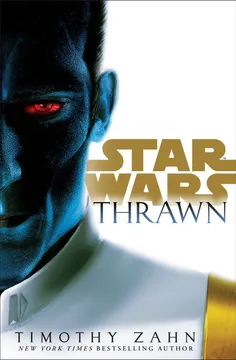
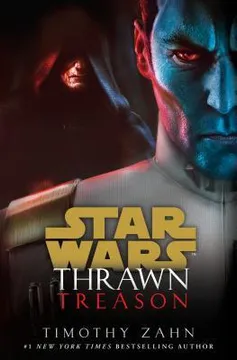
Star Wars: Thrawn Series
About the Author

Download PDF
Download EPUB
.epub digital book format is ideal for reading ebooks on phones, tablets, and e-readers.








