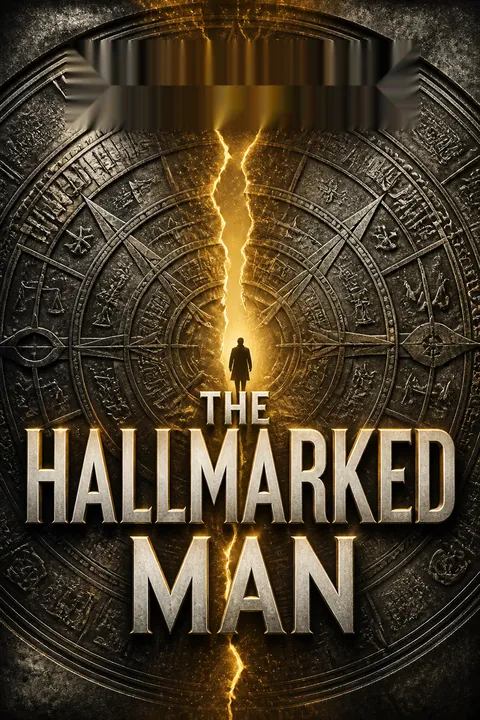


Plot Summary
The Vault's Unknown Dead
Cormoran Strike1 arrives in Kent exhausted by his uncle Ted's death and the strain of helping his sister clear their childhood home. His partner, Robin Ellacott,2 has called in sick, so he meets Decima Mullins3 alone at her neglected house. She has recently given birth to a son, Lion, whom she is hiding from her family, and insists that the mutilated body found in a London silver shop may be her missing boyfriend,5 Rupert Fleetwood.5
Police believe the corpse is armed robber Jason Knowles, but Decima3 says the identification was never proved. She recounts Rupert's5 debts, a stolen silver ship, and threats from a dealer, then begs Strike1 to establish who died so her son can have a father in his story.
The case begins with a demand for certainty that is also a demand for emotional protection. Decima can tolerate Rupert's death more easily than the possibility that he chose to leave her, so she turns investigation into a way of preserving the relationship she believes she had. Strike recognizes the familiar danger of a client asking him to confirm a conclusion rather than discover a fact, yet her hidden newborn and the unidentified body complicate his instinct to refuse. Grief, secrecy, and detective work are joined from the first meeting.
Robin's Body Betrays Her
While Strike1 drives to Kent, Robin2 lies in hospital after an ectopic pregnancy ruptures a fallopian tube. Surgeons remove the damaged tube and find severe scarring in the other, likely caused by chlamydia she contracted after being raped at nineteen. They warn that natural conception is unlikely and IVF may be her best chance.
Robin2 hides the diagnosis from her parents and initially even from Strike,1 asking Ryan Murphy4 to give him a false excuse for her absence. She is still dealing with the aftermath of her undercover work inside the United Humanitarian Church, including nightmares and unwanted press attention. When Murphy4 visits, she tells him what the doctors found, but neither can yet speak clearly about what it means.
Robin's investigation begins beside a private crisis that she has trained herself to minimize. She treats the loss as an operation to recover from, not a bereavement, because acknowledging the pregnancy would force her to imagine a life that ended before she knew it existed. The diagnosis also makes her past assault present again: an old infection has silently altered her future. Her instinct to conceal distress is not simple stoicism. It is a strategy for protecting her autonomy from people who may respond by asking her to stop the work that gives her life structure.
A Case Without DNA
Strike1 checks the public record and discovers that police statements never quite confirm the body as Jason Knowles. Robin,2 recovering at home, reads the murder coverage for the first time and finds how quickly the press moved from lurid speculation about a Masonic killing to the claim that an armed robber had died during a burglary.
Murphy4 later gives them restricted case details: the body matched Knowles in build, but its hands were missing, DNA confirmation had been delayed, and an undercover National Crime Agency source feared Knowles had instead been killed elsewhere.
Two other missing men, former soldier Niall Semple13 and mechanic Tyler Powell,10 also fit some physical details. Strike1 and Robin2 accept Decima's3 case, while agreeing to keep the sensitive police source confidential.
The first investigative turn is a problem of institutional certainty. The public story is tidy because it assigns a familiar criminal identity to an unidentified body, but the missing hands make that identity impossible to verify. Murphy's information reveals a clash between protecting an undercover source and establishing the victim's name. Strike and Robin are not simply checking police work for sport; they are confronting the consequences of a convenient answer. The case's central method is established here: treat official confidence as evidence to test, not as a substitute for proof.
The Shop's Cracked Defenses
At Ramsay Silver, owner Kenneth Ramsay16 shows Strike1 and Robin2 the vault where a collection of Masonic silver vanished and a naked, mutilated employee was found. He describes the dead salesman as William Wright, later assumed to be Knowles, and confirms the body wore a ceremonial sash with the shop's hallmark carved into its back.
The detectives notice old cameras, weak locks, and a vault code Ramsay16 nearly enters in front of them. A delivery mix-up had sent the enormous Oriental Centrepiece to rival dealers Bullen and Company, while Ramsay's16 sister-in-law, manager Pamela Bullen-Driscoll, was left to handle the crates. Ramsay16 also says Wright searched Masonic material online and sent an unexplained email to a music producer named Calvin Osgood.
Ramsay's shop is both a crime scene and a system of habits that has failed to protect itself. Its owner speaks of state-of-the-art security while demonstrating how easily routines can be observed and how poorly basic safeguards have been maintained. The Masonic objects encourage grand theories, but the practical details matter more: who had codes, who handled deliveries, and who could move through the basement unnoticed. Robin's sympathy for Ramsay's family losses does not erase his carelessness, while Strike's suspicion prevents grief from becoming an excuse for overlooking evidence.
Visitors to St George's Avenue
Strike1 and Robin2 locate Wright's former Newham lodging, where Mandy and Daz17 live with their young son. The couple recall a short, muscular tenant with fake tan, weights, and a story about a girlfriend who might join him. They also remember a long-haired woman in a pink floral top entering with a suitcase the day before the murder, then a curly-haired man wearing sunglasses indoors returning at dawn with an empty case.
The pair left carrying something, but Mandy and Daz17 initially deny telling police because they fear questions about their drug dealing. Their memories also include Wright asking about a woman called Rita Linda and claiming a tube he carried held a blood sample. The clues widen the case beyond Knowles.
The shabby flat supplies the kind of testimony that official records miss because witnesses are frightened, distracted, or ashamed of their own circumstances. Mandy and Daz are unreliable in manner but precise in details that can be checked: the timing, the clothing, the suitcases, and the tenant's habits. Their room also recalls Strike's own unstable childhood, making his attention to them more complicated than simple interrogation. The couple's fear of police is not proof of innocence, but it explains why crucial movements went unreported and why investigators must earn information rather than demand it.
Shanker's Warning
Strike1 asks his old criminal friend Shanker whether a drug dealer called Dredge killed Rupert.5 Shanker says Rupert5 paid the debt and was probably alive, then warns Strike1 away from the vault murder: the corpse was not Knowles, but a professional hit ordered by a wealthy Freemason. He cannot name the client, yet says the killer has gone to ground and is known for talking too much.
Soon the agency receives threats telling them to stop investigating. A coded note left at the office says the man in the safe was a dangerous entertainer, killed by someone on television. Strike1 and Robin2 begin to suspect that the Masonic clues may be deliberate misdirection rather than a ritual motive.
Shanker's warning is useful precisely because it is incomplete. He offers knowledge of criminal networks but refuses to expose the people who supplied it, leaving Strike to judge both the danger and the source's limits. The anonymous threats convert the investigation from an abstract puzzle into a physical risk, especially for Robin. At the same time, the coded note points toward a television personality and a porn performer, forcing the detectives to hold competing explanations. Suspicion becomes an ethical choice: continue with an increasingly dangerous case, or surrender the truth to whoever wants it buried.
The False Music Producer
Strike1 contacts the real Calvin Osgood, who says someone has stolen his identity to create a glamorous Instagram account under the name Oz. The impostor9 uses borrowed photographs, including images of music studios, luxury travel, and a supposed life in the music business. Robin2 finds that a missing teenager, Sapphire Neagle, had communicated with both the real Osgood and the fake account.
Meanwhile, records identify Sofia Medina,12 a Spanish student found raped and stabbed on the North Wessex Downs the day after the vault murder. The abandoned van near her body and an email about a van sent to Osgood suggest a link. The false producer identity may have attracted vulnerable women and concealed a criminal's movements.
Oz's online persona turns aspiration into a trap. The account sells access to fame, wealth, and travel, while its stolen images make the deception look verifiable to young people with little reason to suspect it. Robin's research connects a missing schoolgirl and a murdered student through the same constructed identity, while Strike treats the supposedly unrelated emails as possible traces of one operator. The internet does not merely obscure the perpetrator; it supplies him with a believable mask and lets him approach victims across distances without revealing who is watching.
Sofia's Ruby Necklace
Robin2 pressures Sofia's12 former flatmate, Gretchen Schiff, to meet at a pub. At first Gretchen and her boyfriend deny knowing anything useful, but Robin's2 questions about the curly-haired man make them falter.
Gretchen finally admits that Sofia12 had been seeing an older, married man who called himself Calvin Osgood or Oz. He gave Sofia12 a necklace she believed contained real rubies, promised music-industry opportunities, and asked for photographs of Gretchen and Sofia12 together.
Gretchen fears he still has compromising images of her. She also suspects Sofia12 spent the weekend of her murder with him. Separately, schoolmate Tia Thompson says Oz offered Sapphire a backing-singer job and a ruby necklace, linking both young women to the same manipulator.9
Gretchen's silence is not indifference to Sofia; it is fear of being exposed, judged, or blamed for photographs she regrets. Robin recognizes that moral pressure alone may not free her, so she makes clear that the truth could protect other young women. The necklace works as both lure and credential: a valuable object helps Oz seem powerful and generous, while its supposed rubies reinforce a fantasy of sudden elevation. The interviews transform anonymous online contact into a pattern of grooming, secrecy, and coercion with identifiable victims.
Threats Turn Personal
As Strike1 investigates Lord Oliver Branfoot,23 a television regular and Masonic figure, the press attacks Strike1 with fabricated claims that he coerced a sex worker. Robin2 defends him publicly and privately, but their already complicated feelings sharpen. She is then seized in Harrods, where a man presses a small rubber gorilla into her hand and warns her to stop.
The gorilla recalls the mask worn by the rapist who assaulted her at nineteen. Later, a masked man follows her through Walthamstow and throws a ceremonial Masonic dagger at her feet. Robin2 hides the weapon rather than telling Murphy,4 who already resents the agency's case. Strike1 learns of the threats, but Robin's2 refusal to be treated as helpless strains their partnership.
The attacks exploit Robin's specific history rather than threatening her in generic terms. The gorilla object collapses past and present, turning a symbol of an earlier assault into a message about the current investigation. Robin's concealment from Murphy reflects both self-protection and a wish to preserve her professional autonomy; she knows concern may become pressure to withdraw. Strike's protective instincts are genuine, but his language can make care sound like distrust. Their relationship is therefore tested not only by attraction, but by who gets to define risk and agency.
A Family of Half-Truths
Robin2 finds Rupert's5 friend Albie Simpson-White,20 who describes him as steady and kind, despite the theft of the nef. Albie20 says Dino Longcaster6 bullied Rupert5 and Decima3 for their appearance and class, mocked Rupert's5 dead parents, and made the young waiter feel unwelcome.
Strike1 interviews Sacha Legard,8 who confirms Rupert5 gatecrashed his birthday party after stealing the silver ship, but offers little concern for his cousin. Valentine Longcaster7 refuses to help and insults Strike1 and Robin.2
Decima3 insists Rupert5 loved her and points to his cherished White Lion T-shirt, which inspired their son's name. Her account strengthens the emotional bond she believes survived Rupert's5 disappearance, while the Longcaster family's contempt keeps key facts hidden.
The witnesses describe Rupert differently because each sees him through a different social lens. Albie notices loyalty and loneliness; Valentine sees a disposable opportunist; Decima preserves a romance that gives meaning to her son's birth. Dino's obsession with surfaces and status makes the relationship between his children and employees a hierarchy of appearance. The family offers many explanations for Rupert's behavior, but almost none of its members has tried to find him. Their refusal to care becomes as consequential as any lie, because it leaves Decima alone with the story she needs to believe.
Two Missing Men
Strike1 visits Niall Semple's13 wife, Jade, in Crieff and learns that Semple,13 an injured former SAS soldier, became absorbed in Masonic books before disappearing. He left a cryptic note and may have carried a locked briefcase. Robin2 visits Tyler Powell's10 grandmother, Dilys, in Ironbridge.
Tyler10 had left after a fatal car crash involving his former girlfriend and a local young man, amid rumors that he sabotaged his own car. Dilys remembers him mentioning silver, while neighbor Ian Griffiths9 says Tyler10 was hounded from town despite his innocence. Both men remain plausible matches for the body, but neither their motives nor the vault's role make sense.
The two candidate histories mirror different ways a person can disappear. Semple's military trauma and religious fixation suggest a mind seeking purpose after a catastrophic loss; Tyler's exile follows public blame and a community's appetite for a culprit. Yet the detectives cannot reduce either man to a profile. Their physical similarities are not enough, and the most significant clues arrive through family memories, which are partial, self-protective, and emotionally charged. The investigation remains stuck because identity alone cannot explain why the victim was killed in that particular place.
The Body Behind the Mask
On Sark, Strike1 and Robin2 find adult performer Danny de Leon15 alive at a gardener's workplace after his brother first denies contact with him. Danny15 says he fled London after Lord Branfoot's23 circle threatened him. Branfoot23 had hired performers for secret filming behind a two-way mirror, including people who did not know they were being recorded.
Danny15 had tried to extract more money and joked about exposing the private films, which Branfoot23 treated as blackmail. The detectives realize Danny15 was not the corpse in the vault, but his account confirms a wealthy, influential man had reason to silence a performer. The brothers agree that Danny15 will speak publicly, while Strike1 and Robin2 return to London with a stronger lead.
Danny's survival resolves one identity but deepens the threat. His story shows how economic vulnerability can blur the boundary between consensual work and exploitation, especially when one party controls the room, the camera, and the future use of the images. Branfoot's public charm depends on keeping private conduct unrecorded and unspoken. Danny is neither a spotless victim nor a reliable hero, yet his fear is credible because his powerful employer has access to both criminal muscle and respectable institutions. The case now has a plausible motive, but still lacks a provable killer.
Rupert's Hidden Kinship
After Robin2 pressures Cosima and Strike1 visits Tara Jenson, they learn that Rupert5 stole the nef and sought help from people who knew the Longcaster family. Robin2 eventually finds him working at a Clairmont hotel in Sardinia. Rupert5 admits he discovered through a DNA test that Dino Longcaster,6 not Peter Fleetwood, was his biological father.
That made him Decima's3 half-brother, turning their relationship and their expected child into a devastating secret. He fled in horror, believing disappearance would spare Decima3 and their son the truth. Strike1 and Robin2 tell him that Decima3 has spent months believing he is dead and blaming herself. Rupert5 agrees to contact her, though the relationship cannot return to what it was.
Rupert's disappearance is neither simple abandonment nor a heroic sacrifice. He tries to solve an unbearable moral crisis by vanishing, but his silence transfers the pain to Decima, who interprets absence as death and takes responsibility for it. The revelation exposes how family history can become a trap when identity is withheld or misrepresented. Rupert's shock is real, yet it does not erase the harm his decision caused. The discovery gives Decima truth, not restoration, and leaves the adults to decide how much of that truth their child should inherit.
Silver Behind the Wall
Reviewing Ramsay Silver's footage, Strike1 notices that the crates appear too heavy for their contents, while Robin2 recalls Wright stumbling after the vault had supposedly been stocked. They reason that the Murdoch collection never left the shop: someone concealed it behind a bricked-up recess in the basement wall.
The original delivery, the swapped crates, Pamela's unexplained departure, and the missing space at the back of the vault now form a workable route for hiding the silver.
Their search points back toward Jim Todd,11 who helped Wright get hired, had a false identity, and possessed a history of trafficking and sexual violence. When Strike1 finds Todd11 and his mother murdered, it becomes clear the killer is eliminating people who can connect the robbery to the real victim.
The hidden cache changes the crime from a failed burglary into a carefully staged scene. What looked like an oversized haul stolen by opportunists was actually a set of objects moved just far enough to support a false narrative. The clue is not a dramatic confession but a mismatch between weight and footage, a practical discrepancy overlooked because everyone assumed the crates contained what their labels promised. The case rewards attention to ordinary physical facts over elaborate symbolism. It also shows how a staged crime can recruit institutions into repeating the killer's preferred story.
The Man Called Oz
The detectives identify the killer as Ian Griffiths,9 Chloe's18 guitar-teaching father, who used the false music-producer identity Oz to groom women and arrange secret recordings.
Tyler Powell10 had trusted him, used a false name at Ramsay Silver, and was killed in the vault; Griffiths9 then staged the mutilation and Masonic clues to disguise him. Sofia Medina12 helped Griffiths9 move between identities and was later murdered, while Todd's11 trafficking history and connection to Griffiths9 made him another liability.
Robin's2 discovery of the yellow Wolves weights and Strike's1 reconstruction of the hidden silver tie the evidence together. They confront Griffiths9 and his associates at the house, where Sapphire Neagle is found chained in a concealed basement.
The solution depends on joining clues that each seemed to belong to a different story: a fake producer, a missing schoolgirl, a murdered student, a mechanic's weights, and a Masonic vault. Griffiths uses respectability as camouflage, presenting himself as a helpful father and music enthusiast while arranging access to vulnerable people. His exploitation is systematic, but his control fails around the evidence he cannot fully erase. Sapphire's rescue makes the investigative victory concrete, while Tyler's death and Sofia's murder prevent it from becoming triumphal. Finding the perpetrator does not return the victims' lives.
A Confession on the Stairs
After Decima3 learns Rupert5 is alive and the police take over the case, Robin2 and Strike1 return to their unfinished personal lives. Robin2 has agreed to resume building a future with Murphy,4 but her boyfriend's4 concealed drinking and workplace misconduct have broken her trust. Strike,1 having learned Murphy4 may propose, finally tells Robin2 he loves her and wants a permanent relationship.
She rejects the timing and doubts his sincerity, accusing him of speaking only because he fears losing her from the agency. Strike1 insists he has loved her for years, but Robin2 leaves to face Murphy4 rather than betray him. Alone, Strike1 turns off the office lights, then notices the struggling black fish and tries to save it.
The confession does not resolve the romance; it removes the protection of ambiguity. Strike risks the friendship and business partnership by finally speaking plainly, but he does so only after Robin has already built a competing future with Murphy. Robin's refusal is not a clean rejection of love so much as a refusal to make a life-altering decision under pressure, especially while her own trust and grief remain unsettled. The dying fish gives Strike a small, practical task after a confession he cannot take back. Care becomes action where certainty is unavailable.
Analysis
The novel treats identity as something people construct under pressure, then exposes the cost when others control the construction. William Wright is a name that allows a vulnerable man to work and disappear; Oz is a polished digital fiction that gives a predator access to young women; Rupert's5 inherited name conceals a family truth that makes his love impossible to continue. The mysteries converge not because one symbol explains everything, but because mundane traces do: a delivery's weight, a bad email, a tattoo, a bracelet, a misremembered street name, and a set of distinctive weights.
The book is equally interested in the uneven distribution of credibility. Decima3 is dismissed as delusional, Mandy and Daz17 as unreliable, Rena14 as unstable, and Robin2 as a woman whose competence is questioned even after she has helped solve major crimes. Their imperfect testimony still carries facts the authorities missed. At the same time, respectable men use money, family standing, professional roles, and charitable reputations to hide coercion. The novel does not equate social respectability with innocence or marginality with virtue; it asks readers to follow evidence without letting status decide in advance who deserves belief.
Robin's2 and Strike's1 personal arcs echo the investigation's demand for honest naming. Robin2 must distinguish love from obligation, and care from control, while confronting the bodily consequences of an assault she has tried to treat as finished. Strike1 must stop using silence as a shield and risk losing the friendship that matters most to him. Their ending is not a romantic resolution but a choice finally spoken aloud. Like the case, their relationship remains unfinished, because truth can end a deception without deciding what comes next.
Review Summary
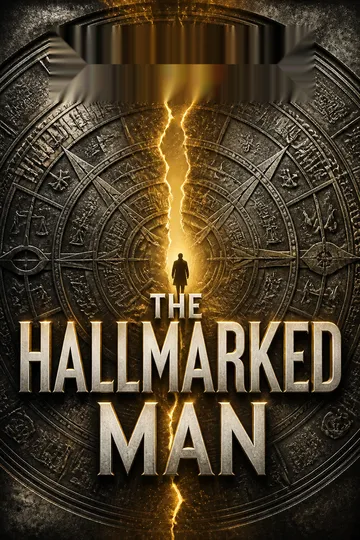
The Hallmarked Man receives mixed reviews, averaging 4.27/5 stars. Many fans feel disappointed by excessive length and repetitive "will-they-won't-they" romantic tension between Strike and Robin that overshadows the mystery. Critics cite Robin's character regression, poor decision-making, and the convoluted case involving a body in a silver vault, Freemasons, and trafficking. Complaints include thin paper quality, too many underdeveloped characters, and constant drinking references. However, some readers praise the complex plotting, emotional depth, and masterful storytelling. Most agree the investigation feels secondary to prolonged relationship angst, with another cliffhanger ending frustrating dedicated series followers.
People Also Read








Characters
Cormoran Strike
The stubborn private detectiveStrike is a former military police investigator who runs a London detective agency with Robin Ellacott2. He is large, physically impaired by the loss of part of his right leg, and more comfortable with practical evidence than emotional exposure. His methods combine patient observation, criminal contacts, and a willingness to challenge official conclusions. He is grieving his uncle Ted and carrying unresolved feelings for Robin2, but habitually protects himself with bluntness and self-reliance. Beneath the gruff exterior is a strong sense of responsibility: he remembers clients who are easy for others to dismiss and will take personal risks when he believes the truth matters.
Robin Ellacott
The perceptive investigative partnerRobin is Strike's1 business partner, a skilled investigator whose empathy often draws out witnesses that more forceful methods would silence. She has survived rape, undercover trauma, and an ectopic pregnancy, but dislikes being treated as fragile or defined by what happened to her. Her intelligence is social as well as analytical: she notices shifts in tone, inconsistencies, and the fear beneath evasive answers. Robin wants meaningful work and a life chosen on her own terms, yet she is conscientious enough to confuse loyalty with obligation. Her closeness to Strike1 and her relationship with Murphy4 place competing demands on her honesty, affection, and sense of future.
Decima Mullins
The grieving new motherDecima is an accomplished chef and restaurant owner from a wealthy family, but she initially appears withdrawn and disordered in the decaying Kent house where she has concealed her newborn son. She hires Strike1 because she cannot accept that Rupert Fleetwood5 might have left her voluntarily. Her certainty that the dead man is Rupert5 is less an investigative conclusion than a defense against abandonment and guilt. Decima is sensitive to family judgment and has spent much of her life seeking affection from people who value status and appearance. She is also capable of real tenderness, particularly toward her son and the young man she believes she has lost.
Ryan Murphy
Robin's strained partnerMurphy is a CID officer, Robin's2 boyfriend, and a recovering alcoholic whose demanding work often leaves him exhausted and defensive. He is kind and attentive when Robin2 is vulnerable, but jealousy and professional frustration can make him critical of Strike1 and the agency. His concern about children and a shared home is sincere, yet he sometimes frames those hopes as practical decisions before Robin2 has decided what she wants. Murphy's identity is strongly tied to policing, and setbacks at work threaten both his confidence and his sobriety. He wants intimacy and security, but struggles to ask for them without turning fear into anger.
Rupert Fleetwood
The missing waiterRupert is a young waiter raised in Switzerland after his parents died in an avalanche. He returns to Britain hoping for family connection, but his trust fund is nearly gone and he becomes entangled with the wealthy Longcaster family, drug debts, and a relationship with Decima3. Rupert is not the glamorous opportunist that some relatives assume him to be. Friends describe him as steady, kind, and hungry for belonging. He has a sentimental streak, expressed through an old band T-shirt and a belief in lucky objects, but he is also capable of flight when he feels trapped by shame or impossible circumstances.
Dino Longcaster
The image-conscious patriarchDino owns a prestigious private club and places extraordinary value on beauty, polish, and control. He is Decima's father3 and Rupert's godfather5, though his relationship with Rupert5 is largely one of employer and critic. His contempt for anyone who fails to meet his standards shapes the Longcaster household and helps make the club's staff feel disposable. Dino's power is expressed less through open violence than through humiliation, exclusion, and financial leverage.
Valentine Longcaster
Charlotte's hostile old friendValentine is Decima's brother3, a fashion stylist, and a former friend of Strike's1 late fiancée Charlotte. He is witty, socially confident, and accustomed to treating other people's vulnerabilities as material for mockery. His loyalty to Charlotte makes him hostile to Strike1 and suspicious of Robin2. He interprets Rupert's5 relationship with Decima3 through the family's assumptions about money and status, and is reluctant to share what he knows about the night Rupert5 vanished.
Sacha Legard
The celebrated, evasive cousinSacha is a famous actor, Charlotte's half-brother, and Rupert's cousin5. His public manner is warm and gracious, while Strike1 remembers him as self-absorbed and indifferent to Charlotte's crises. He occupies a protected world of family wealth and celebrity, where problems can be softened by public relations or ignored altogether. Sacha's reluctance to investigate Rupert5 reflects a preference for not disturbing the comfortable version of events he has been given.
Ian Griffiths
The local guitar teacherGriffiths is a musician and widower living in Ironbridge, where he teaches guitar and is known as a sympathetic neighbor. His daughter Chloe18 is close to his life, and he presents himself as protective of local young people who lack stable families. He is proud of his musical interests and his informal role as a trusted adult. The contrast between his genial appearance and the darker events around him makes him a difficult person for witnesses to judge clearly.
Tyler Powell
The exiled local mechanicTyler is an adopted young mechanic who loves cars and Wolverhampton football. After a fatal crash involving people he knew, he becomes the focus of rumors and is pushed out of Ironbridge despite the lack of proof against him. His grandmother remembers his generosity, while other young people describe possessiveness and troubling behavior. These conflicting accounts make Tyler a person whom the community has simplified into either innocent victim or convenient villain, while the evidence about his life remains incomplete.
Jim Todd
The unobtrusive cleanerTodd cleans for several businesses around Holborn and lives in cramped, unstable circumstances. His small, unassuming appearance encourages people to overlook him, while his need for money and long history around criminal associates make him difficult to assess. At Ramsay Silver he appears to be a low-level worker, but he knows the shop's routines and has access to its staff spaces. Strike's1 interviews reveal how much a seemingly peripheral employee can know about a crime.
Sofia Medina
The murdered studentSofia is a Spanish student studying film and screen business in London. She posts explicit material online to help fund her education and enjoys attention, glamour, and the fantasy of a life beyond her family. Gretchen remembers her as fun and sweet but naive about the men drawn to her. Sofia's confidence online does not protect her from manipulation in person, and her story forces the investigators to distinguish adult choices from the coercion and danger surrounding them.
Niall Semple
The injured former soldierSemple is a former paratrooper and special forces soldier who suffers a traumatic brain injury during a covert operation. His marriage to Jade is intense and unstable, shaped by infidelity, grief, and her longing for a more conventional life. After his injury he becomes absorbed in Masonic texts and withdraws from those around him. His disappearance leaves behind cryptic clues and a family struggling to distinguish his old self from the man he became after trauma.
Rena Liddell
The dead soldier's sisterRena is Ben Liddell's sister and has struggled with serious mental health problems. She believes her brother may still be alive and becomes fixated on Masonic clues, bridges, and hidden messages. Her account is fragmented, but she remembers details that link Niall Semple13 to the Liddell family and to the site of a private meeting. Others treat her as unreliable; Strike1 recognizes that confusion and truth can coexist in what she says.
Danny de Leon
The adult performer from SarkDanny is an adult performer from Sark who works under his own name and becomes involved with wealthy clients through the porn industry. His desire for money and willingness to take risks make him neither a conventional hero nor an innocent bystander. He values his family, though he is embarrassed by his choices and wary of his brother's judgment. Danny's experience gives the detectives a view into the hidden relationships between performers, powerful patrons, and people who control private images.
Kenneth Ramsay
The desperate silver-shop ownerRamsay owns the shop where the body and the missing Murdoch collection are found. He is enthusiastic about Masonic silver and eager to turn his specialist business into a success, but his optimism outruns his judgment. His wife is incapacitated and his son has died, leaving him under financial and emotional strain. Ramsay's account of the shop is valuable, though his poor security practices and strained family arrangements make him an imperfect guide to what happened there.
Mandy and Daz
The wary upstairs neighborsMandy and Daz share a shabby Newham bedsit with their young son and use cannabis. They remember William Wright's habits and the visitors to his room, but initially conceal what they know because they fear police scrutiny. Their chaotic home and casual speech make them easy to dismiss, yet they provide some of the most specific observations in the investigation. They reveal how poverty and mistrust can keep witnesses silent even when they have seen something important.
Chloe Griffiths
The guarded Ironbridge daughterChloe is Ian Griffiths's daughter9 and was once close to Tyler Powell10. She leaves Ironbridge to travel through Europe after the deaths of Anne-Marie and Hugo, carrying grief and a complicated history with Tyler10. Her online posts and later messages offer a partial view of their relationship, but she resists being drawn into the investigation. Chloe's privacy and anger make her difficult to read, while her loyalty to her father9 complicates her account of the past.
Tish Benton
Rupert's former housemateTish shared a house with Rupert5, Zacharias, and the pressures that pushed them apart. She becomes difficult to reach after Rupert5 disappears, but her closeness to the household makes her a potentially important witness. Her work in marketing and later travel for a hotel group keep her moving between places and leave the detectives with few chances to speak to her.
Albie Simpson-White
Rupert's loyal friendAlbie is a young Harrods employee who worked with Rupert5 at Dino's6 club and became his friend. He sees Rupert's5 gentler, more thoughtful side and resents the way the Longcasters treated him. Albie is nervous when Robin2 questions him because he knows more than he first admits, yet he is also constrained by loyalty and fear. His testimony complicates the picture of Rupert5 as a simple opportunist.
George Wardle
Strike's police allyWardle is a police detective and one of Strike's1 longest-standing contacts. He is blunt, loyal, and increasingly worn down by family bereavement, separation, and the pressures of police work. His willingness to share limited information is balanced by his concern for colleagues and the risk of crossing professional lines. Wardle is one of the few men with whom Strike1 can speak plainly about grief, even if neither is comfortable making the conversation last.
Kim Cochran
The ambitious subcontractorKim is a former police officer and capable private detective who joins the agency as a subcontractor. Her work is efficient and she has useful contacts, but her confidence can shade into condescension toward Robin2 and other colleagues. Kim seeks recognition and opportunity, and her personal grievances sometimes influence the way she handles information. Her presence exposes tensions inside the agency about loyalty, authority, and what counts as professional judgment.
Oliver Branfoot
The public-minded television figureBranfoot is a former politician, charity patron, and familiar television personality who cultivates the image of a harmless, bumbling aristocrat. He supports projects for troubled young men and speaks frequently about public morality and private investigation. His speech impediment becomes part of his public persona, inviting audiences to underestimate him. Beneath the charm is a man accustomed to influence, access, and the protection that wealth and reputation can provide.
Wade King
The violent man in greenKing is a former long-distance lorry driver with a history of violence. He becomes a recurring presence in the detectives' search for the person threatening Robin2 and is associated with the darker network around the case. His respectable work history makes him less conspicuous than the image of a career criminal might suggest. King represents the danger posed by men who can move between ordinary employment and violence without attracting immediate suspicion.
Plot Devices
The false identity
Hides victim and killerWilliam Wright, Calvin Osgood, and Oz are names used to conceal or redirect identity. The false salesman persona lets the victim work at Ramsay Silver without revealing his past, while the stolen music-producer identity gives a predator a glamorous route to young women. The names create separate trails that initially appear unrelated. Strike1 and Robin2 gradually connect them through emails, social media, witness accounts, and the mismatch between public profiles and real lives. The device makes the case about more than identifying a face: the detectives must determine who chose each name and what danger that choice was meant to hide.
The Masonic silver
Stages a misleading crime sceneThe Murdoch collection, the ceremonial sash, the carved hallmark, and the shop's proximity to Freemasons' Hall invite theories of ritual murder. Those objects also provide practical cover for a robbery and a hidden cache. Strike1 and Robin2 study the symbols without accepting the most dramatic explanation, while the shop's poor security and delivery confusion reveal how the crime could be staged. The silver's weight and form become evidence: the collection's apparent disappearance conceals the fact that it remains inside the building. Masonic imagery is both clue and deliberate distraction.
The ruby necklace
Turns fantasy into leverageThe supposed ruby gifts make Oz appear wealthy, generous, and connected to the music industry. Sofia12 and Sapphire are drawn by the promise of a more exciting future, while the jewellery supplies a tangible sign of his claims. In reality, the gifts are part of a calculated pattern of grooming and control. The necklace links separate young women to the same persona and later helps Robin2 test whether witnesses are withholding what they know. It is an object whose emotional value exceeds its monetary value, precisely because it seems to prove that Oz's promises are real.
The gorilla and dagger
Makes danger personalA rubber gorilla delivered to Robin2 recalls the mask worn by the rapist who attacked her as a teenager. Later, a masked man threatens her with a Masonic dagger, turning the investigation's symbolic imagery into a physical warning. The objects are meant to make Robin2 stop, but they also reveal that the attacker knows her history and can reach her in public. Robin's2 homemade pepper spray and refusal to abandon her work become practical responses to a threat designed to reactivate trauma.
The hidden weights
Connects a name to a bodyThe weights ordered to Wright's room first seem like evidence of an active gym routine. Robin2 later realizes that their distinctive Wolves design may connect them to Tyler Powell10, who loved the football club. Their size also helps explain why someone returned to the flat after the murder to remove objects too heavy for the first visitor to carry. The weights bridge the victim's false identity and his real history, while the missing objects become evidence that someone was systematically erasing the room's clues.
Cormoran Strike Series

About the Author
Other books by Robert Galbraith
Download PDF
Download EPUB
.epub digital book format is ideal for reading ebooks on phones, tablets, and e-readers.








