

Key Takeaways
Treat the ego as a viewpoint, not the whole person.
Consciousness has a center. Jung calls the ego the center of what a person is aware of: memories, choices, and the sense of being “me.” But the larger personality includes unconscious processes the ego cannot inspect directly. Jung calls this larger, never fully knowable totality the self. It is not a second, hidden personality so much as a way to describe the whole psyche, including what consciousness excludes.
Freedom has limits. People can make choices, yet impulses, bodily states, and unrecognized motives also shape them. Jung argues that major personal changes can seem to happen to the ego rather than be chosen by it. The practical implication is modest but useful: a confident account of one’s motives may still be incomplete.
What's striking is the distinction between having a point of view and mistaking that point of view for the whole mind. Contemporary metacognition makes a similar caution: people can be poor reporters of the processes that produce their judgments, even when they feel certain. Jung's “self” gives that gap a broad conceptual place. It should not be treated as a measurable inner agent, however. The value lies less in proving a hidden totality than in prompting intellectual humility about what conscious self-report can establish.
Name your disowned traits before they act through you.
Self-knowledge has a moral cost. Jung calls the shadow the traits a person cannot comfortably recognize as their own, especially qualities judged inferior or unacceptable. It is not simply a catalogue of vices. It can also contain ordinary instincts, useful reactions, and capacities the conscious personality has rejected. Recognizing it means admitting that an unwanted tendency belongs to oneself, not merely condemning it in the abstract.
Emotion points to weak spots. Jung observes that strong, poorly controlled reactions often reveal where adaptation is strained. A person may know, for example, that they can be impatient, but still resist seeing how impatience shapes their behavior under stress. Shadow work, in Jung's account, is slow because insight alone does not dissolve the defenses that keep an uncomfortable trait out of view.
The shadow is a memorable model for a familiar problem: people often defend their self-image more fiercely than they investigate their behavior. Research on motivated reasoning helps explain why evidence that threatens identity can be discounted, while evidence that flatters it is readily accepted. Jung's emphasis on moral effort adds something important: self-knowledge is not just noticing a trait, but accepting responsibility for its effects. The model has limits, since not every painful trait is repressed or secretly owned. Some apparent “shadow” material may reflect stress, illness, or another person's actual misconduct.
Test your judgments of others for projections before declaring them facts.
The mind fills in blanks. Jung uses projection for unconscious material experienced as if it belonged entirely to someone else. A person's image of a parent, for instance, combines what that parent actually did with the observer's incomplete knowledge and personal interpretations. The resulting picture can feel like a transparent record of reality, even when it includes substantial distortion.
A patient sees the trap. Jung recounts a man who had lived with compulsive neurosis for twenty-five years and felt cut off from the world. The patient could describe his lost time, yet struggled to see how his own patterns helped sustain his isolation. Jung's point is not that every grievance is imaginary. It is that intense certainty about another person's motives can conceal a person's own contribution to a conflict.
This idea connects with attribution bias, the tendency to explain other people's actions by their character while explaining one's own by circumstances. Checking for projection can interrupt that asymmetry and make relationships more reality-based. It is also easy to misuse: calling a complaint a projection can silence someone who is accurately describing harm. A fair test considers both sides: what observable behavior supports the judgment, and what assumptions or emotional history might be coloring it? That approach keeps self-questioning from becoming automatic self-blame.
Notice inner scripts that hijack relationships, then reclaim their energy.
A relationship carries inner images. Jung calls the anima and animus archetypal figures through which unconscious material may appear in a person's experience of others. In his historical terminology, the anima is a feminine figure in a man's psyche, and the animus a masculine figure in a woman's. Jung portrays these figures as autonomous, often showing up through intense moods, rigid opinions, or idealized expectations of a partner.
The projection can mislead. Jung describes a son who longs for the safety of maternal care and struggles to meet a resistant adult world on his own terms. The story illustrates a broader mechanism: a relationship can be burdened with expectations that belong partly to an inner image, not wholly to the person in front of us. Jung's gendered account is a period-specific theory, not a rule about how men and women must think.
The useful part of this framework is its attention to inner scripts that can overwhelm ordinary perception. Attachment theory offers a more empirically developed vocabulary for how early relationships shape expectations of later partners, while Jung's symbolic language emphasizes the felt drama of those expectations. The two can illuminate similar patterns without being identical. Jung's strict mapping of feminine and masculine qualities onto different sexes is a serious limitation, especially across diverse identities and cultures. The framework is most helpful when treated as a prompt to inspect expectations, not as a diagnosis assigned by gender.
Integrate unconscious material without letting it inflate the ego.
A wider mind needs boundaries. Jung calls individuation the continuing process of bringing conscious and unconscious parts of the personality into a more workable relationship. This is not the same as absorbing every inner figure into the ego. If someone identifies with an unconscious image of authority or wholeness, Jung warns, the ego can become inflated: it mistakes a powerful psychic experience for proof of personal greatness or special status.
Keep a foothold in daily life. Jung recommends attention to ordinary responsibilities, careful observation, and self-criticism alongside engagement with dreams and fantasies. He also warns against the opposite error: dismissing unconscious material as meaningless, which leaves its influence unexamined. The task is to acknowledge psychic experience without granting it unlimited authority over conduct or reality.
This is a strong argument for psychological integration with reality-testing intact. It resembles a useful principle in clinical practice: intense experiences can be taken seriously without being treated as literal instructions or evidence of special powers. Jung's two-sided warning also avoids a simple celebration of introspection. His language of an autonomous self can sound metaphysical, though, and may encourage overinterpretation if every mood or dream is assigned archetypal significance. Ordinary context, including sleep, stress, and social circumstances, remains essential.
A culture that denies evil risks acting it out collectively.
Opposites shape judgment. Jung challenges the theological idea that evil is merely a lack of good. He does not claim to define good and evil as metaphysical substances. His psychological claim is narrower: harmful actions and destructive capacities are real features of human experience and should not be explained away as trivial defects.
Christ needs a shadow. Jung reads Christ as a cultural image of wholeness, but argues that the traditional image emphasizes goodness and light while excluding its dark counterpart. In Christian symbolism, the Antichrist supplies that counter-image. Psychologically, the split warns that what a person or culture refuses to acknowledge may return in distorted form. Jung wrote in the aftermath of the Second World War, when mass violence made easy assurances about human goodness especially difficult to sustain.
The strength of this argument is its refusal to confuse moral aspiration with an accurate account of human capability. The concept of moral disengagement, for example, describes how people can recast harmful conduct as justified, necessary, or impersonal. Jung's warning about disowned darkness speaks to that danger. Still, acknowledging destructive impulses does not mean treating good and evil as equal in every situation, or weakening standards of accountability. Psychological complexity should sharpen moral judgment, not dissolve it into an abstract balance of opposites.
Read the Christian fish as an evolving psyche-symbol, not proof of astrology.
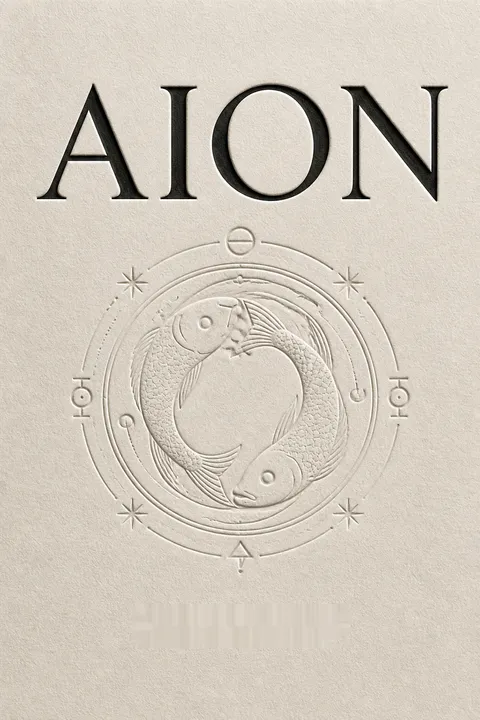
One image gathers many histories. Jung traces fish imagery through early Christianity, older Near Eastern traditions, Jewish symbolism, and alchemical writing. Christians used the fish to represent Christ and believers; the image also evoked baptism, sacred meals, and deliverance from the depths. In alchemy, a mysterious fish could represent the hidden starting material and final product of transformation, which Jung interprets as a symbol of psychic wholeness.
The Pisces connection is a hypothesis. Jung places this history beside astrology's Age of Pisces, which he associates with the Christian era and its conflict between Christ and Antichrist. But he acknowledges that the fish symbol's origins cannot be securely derived from the zodiac. His point is that symbols can accumulate meaning across cultures and centuries, not that a planetary arrangement caused Christian belief.
What's valuable here is the attention to how symbols change as communities reuse them. A fish can be food, a sign of belonging, a rescue image, and a metaphor for hidden psychic life without having one fixed meaning. That resembles cultural memory: later groups inherit images and adapt them to present concerns. Jung's historical comparison is rich, but the leap from symbolic resemblance to an astrological age is not independently established by the evidence presented. Reading the connections as interpretation rather than causal history preserves the insight without turning astrology into proof.
Preserve living traditions that help people interpret inner upheaval.
Symbols translate experience. Jung sees myths and religious images as inherited forms through which people can recognize powerful inner conflicts. He argues that doctrines and rituals can function as shared language for experiences that are otherwise difficult to name. When those forms become lifeless formulas, people may keep the words while losing their connection to the experiences they once expressed.
A vacuum invites substitutes. Jung connects the weakening of inherited symbols with cultural disorientation and the appeal of totalizing political or materialist ideologies. His historical story runs from Gnostic thought through alchemy and the rise of science, with Christianity and Western culture repeatedly changing their symbolic language. This account is interpretive, not a demonstrated single cause of political extremism. Its central question remains practical: what shared stories help people face conflict without pretending it does not exist?
Jung's strongest cultural insight is that meaning-making systems are not ornamental extras. They help people organize fear, grief, obligation, and hope. Modern sociology similarly studies how shared narratives create identity and coordinate action. Yet inherited tradition can also preserve hierarchy, exclusion, and mistaken claims, so continuity alone is no cure for disorientation. A living tradition must be open to interpretation and criticism. Jung's call is best read as a case for meaningful cultural resources, not for restoring every old belief unchanged.
Aim for wholeness, not spotless perfection.
Completeness is not purity. Jung distinguishes perfection, the attempt to embody an ideal, from completeness, which includes conflict and limitation. He uses the mandala, a circular or four-part image of order, as a recurring symbol of psychic wholeness. Such images appear, he argues, especially when a person feels disoriented or is reorganizing their life.
A dream gives direction. Jung recounts a student uncertain about his future who dreamed of entering a dark forest and finding a faintly glowing jellyfish in a pool. The dream helped him decide to study science. Jung interpreted the scene as an image of the self, but the practical lesson is not to treat dreams as commands. It is to notice when an image gives shape to a conflict that conscious reasoning has not yet resolved.
The distinction between perfection and completeness can relieve the pressure to make every part of the self conform to an ideal. It also makes room for ambivalence, a normal feature of serious decisions. The dream story shows how symbolic material may help someone imagine a direction when explicit reasoning stalls. Its interpretation remains subjective, however. A compelling dream can generate insight, but it cannot by itself establish which choice is wise. Reflection, evidence, and consultation still matter.
Analysis
Aion is less a practical manual than an ambitious attempt to join clinical psychology, religious history, mythology, and alchemy into one account of psychic wholeness. Its central distinction, between the conscious ego and the larger self, gives the book its psychological spine. The reader begins with ordinary self-deception, moves through projection and inner figures, and then follows the same problem outward into Christian symbols, the fish, and centuries of arguments about good and evil. The movement from an individual's divided psyche to a culture's symbolic conflicts is the book's organizing narrative.
The most durable insight is methodological: symbolic images deserve interpretation as expressions of experience, not automatic dismissal as nonsense or literal acceptance as fact. Jung's reading of the fish shows how an image can gather religious, social, and emotional meanings over time. His insistence that wholeness includes conflict also offers a useful correction to moral idealism that denies destructive capacity.
The argument's limits are equally important. Jung treats recurring images across cultures as evidence of a collective unconscious, but parallels can arise through shared human needs, historical contact, or selective interpretation. His account of the Pisces age is evocative as cultural symbolism, yet it does not demonstrate astrological causation. The archetype is a powerful interpretive concept, not a straightforwardly testable mechanism. His anima and animus theory also assumes a rigid gender binary and should not be applied as a universal description of gender or personality.
A careful reader can keep Jung's central questions while remaining agnostic about some answers: What parts of the self are disowned? What happens when a society denies a dangerous capacity? Which inherited symbols still help people interpret experience? Aion rewards readers who engage its symbolic imagination without mistaking interpretation for empirical proof. Its lasting value is less a final map of the psyche than a demand to notice what conscious identity and cultural ideals leave outside the frame.
Review Summary
Aion by C.G. Jung explores the archetype of the Self through Christian symbolism, Gnosticism, and alchemy. Reviewers consistently note its extreme difficulty, with dense prose requiring slow, careful reading. The book examines Christ as a symbol of the Self, fish symbolism in Christianity, and the integration of conscious and unconscious aspects including the shadow. Many praise Jung's argumentative depth and insights into collective unconscious, though the alchemical and astrological sections prove challenging. Readers emphasize this isn't an introductory work—prior Jung knowledge is essential. Despite complexity, many found it transformative, revealing profound truths about human nature and psychological wholeness.
People Also Read

Glossary
Self
whole psychic personalityJung's term for the total personality, including conscious and unconscious contents. The ego is part of the self, not its equal or center in every respect. The self cannot be fully described or known, but Jung argues that it appears indirectly through symbols of unity and wholeness.
Ego
center of consciousnessThe conscious point of reference to which a person's known thoughts, feelings, and memories are related. Jung treats the ego as essential for choice and adaptation, while rejecting the idea that it represents the entire personality. Its freedom is limited by bodily conditions and unconscious processes.
Shadow
disowned personality traitsThe aspects of personality that the conscious ego does not recognize or accept as its own, often because they seem inferior or morally troubling. Jung's shadow includes more than harmful traits: it can also contain natural instincts, practical insight, and creative capacities. Recognizing it requires honest self-examination.
Anima and animus
inner figures of unconscious lifeJung's paired terms for archetypal figures through which unconscious material may appear in a person's feelings, opinions, dreams, and relationships. In his model, anima names a feminine figure in a man's psyche, and animus a masculine figure in a woman's. These terms reflect Jung's historical gender assumptions and are not neutral universal categories.
Collective unconscious
shared archetypal psychic patternsJung's hypothesis that the psyche includes an impersonal layer not acquired solely through an individual's life. He associates this layer with archetypes, recurring patterns that organize images and experience. He treats mythology, religion, and dreams as evidence for it, though its status as a psychological mechanism remains debated.
Archetype
recurring pattern of psychic lifeA hypothesized organizing pattern of the psyche that appears through particular images, stories, or figures rather than as a fixed inherited picture. Jung uses archetypes to explain recurring motifs such as the shadow, the divine child, and the mandala. Their expressions vary across individuals and cultures.
Projection
unconscious material attributed outwardA process in which a person experiences their own unrecognized psychic contents as if they belonged to someone or something outside them. Projection can shape judgments of parents, partners, or social groups. Jung argues that recognizing it can improve self-knowledge, while it does not prove that the other person's actions are harmless or unreal.
Individuation
development toward psychic wholenessJung's term for the continuing process of bringing conscious and unconscious aspects of the personality into a more integrated relationship. It does not mean becoming socially isolated or simply strengthening the ego. The process involves recognizing disowned traits, relating to inner figures, and maintaining a workable connection to everyday life.
Enantiodromia
reversal toward an oppositeJung's name for a psychological tendency in which an extreme or one-sided attitude gives rise to a movement in the opposite direction. He applies the idea both to individual psychic balance and to his interpretation of broad cultural change. In Aion, this is an interpretive principle, not a precise law that predicts historical events.
Mandala
symbol of psychic orderA circular or four-part image that Jung interprets as a symbol of unity and psychic wholeness. He notes that mandala-like forms appear in religious traditions and in dreams or drawings, particularly during periods of disorientation or reorganization. Their presence may be meaningful without proving a single fixed interpretation.
Aion
symbolic age of transformationA Greek term for an age or period of time. Jung uses the idea of an aeon to explore shifts in the Christian era, linking the fish symbol and the astrological Age of Pisces with changing religious and cultural attitudes. His historical interpretation is symbolic and should not be confused with evidence that astrology caused those changes.
FAQ
What is Aion by C.G. Jung about?
- Exploration of the Self: Aion investigates the archetype of the self, focusing on its psychological, historical, and symbolic manifestations.
- Christian and Gnostic Symbolism: Jung analyzes Christian and Gnostic symbols, especially the figures of Christ and the Antichrist, to illustrate the psychic dynamics of opposites.
- Integration of Alchemy and Psychology: The book connects alchemical imagery with psychological processes, showing how ancient symbols reflect the journey toward individuation and wholeness.
- Cultural and Historical Context: Jung situates his analysis within the broader context of European culture and the evolution of religious consciousness.
Why should I read Aion by C.G. Jung?
- Deep Psychological Insight: The book offers profound understanding of the psyche’s structure, especially the self, shadow, anima, and animus, which are central to Jungian psychology.
- Bridging Myth and Mind: Jung reveals how ancient religious and mythological symbols correspond to psychological realities, enriching both spiritual and therapeutic perspectives.
- Foundational Jungian Text: Aion is essential for anyone interested in analytical psychology, providing foundational knowledge about archetypes and individuation.
- Relevance to Modern Life: The book addresses the crisis of meaning in modernity, offering tools for reconnecting with inner experience and tradition.
What are the key takeaways from Aion by C.G. Jung?
- Self as Wholeness: The self is a dynamic archetype representing psychic totality and the union of opposites.
- Symbolic Mediation: Symbols such as Christ, the fish, mandalas, and the serpent mediate between conscious and unconscious, aiding individuation.
- Integration of Opposites: Psychological health requires integrating shadow, anima/animus, and other unconscious contents into consciousness.
- Historical Evolution: Religious and alchemical symbols evolve alongside the psyche, reflecting collective and individual psychological development.
How does C.G. Jung define the ego and the self in Aion?
- Ego as Conscious Center: The ego is the center of consciousness, responsible for personal identity and decision-making.
- Self as Total Personality: The self encompasses both conscious and unconscious aspects, representing the totality of the psyche and including the ego as a part.
- Supraordinate Nature: The self is a higher-order concept, often symbolized by mandalas or quaternities, and acts as a guiding principle for individuation.
- Limits of the Ego: The ego has free will within consciousness but is limited by the self, which includes unconscious elements beyond the ego’s grasp.
What is the shadow archetype in Aion by C.G. Jung?
- Dark Side of Personality: The shadow represents the inferior, rejected, or morally problematic aspects of the personality.
- Moral Challenge: Becoming conscious of the shadow requires significant moral effort and self-knowledge, as it often manifests through projection onto others.
- Personal and Archetypal Levels: While the shadow is primarily personal, it also has an archetypal dimension that is more autonomous and difficult to integrate.
- Source of Conflict: Unrecognized shadow elements can lead to emotional possessiveness, conflict, and illusory relationships.
What are the anima and animus in Aion and what is their psychological significance?
- Contrasexual Archetypes: The anima (in men) and animus (in women) are archetypes representing unconscious feminine and masculine elements, respectively.
- Projection and Relationship: These figures often appear in relationships with the opposite sex, causing emotional and intellectual conflicts through projection.
- Mediators of the Unconscious: The anima and animus serve as bridges between conscious and unconscious, facilitating reflection and relationship.
- Autonomous and Numinous: Even after integration, these archetypes retain autonomy and a numinous quality, influencing moods, attitudes, and creativity.
How does Jung relate the archetype of the self to the figure of Christ in Aion?
- Christ as Self Symbol: Jung interprets Christ as an archetype of the self, embodying wholeness and the union of opposites.
- Duality and Shadow: The Christian Christ-symbol lacks the shadow aspect, which Jung associates with the Antichrist, representing the dark half of human totality.
- Historical and Psychological Context: Jung’s interpretation is psychological, not metaphysical, viewing Christ as a symbol of individuation and psychic wholeness.
- Androgyny and Integration: Christ’s androgyny, such as the vision of the woman born from his side, symbolizes the integration of opposites and spiritual ascent.
What is the significance of the fish symbol in Aion and its relation to Christianity and astrology?
- Ancient and Christian Symbolism: The fish (Ichthys) has deep roots in Near Eastern cultures and early Christianity, symbolizing Christ and the Christian community.
- Astrological Age of Pisces: Jung connects the fish symbol to the astrological age of Pisces, aligning it with the Christian era and messianic expectations.
- Ambivalence and Duality: The fish embodies both salvation and danger, purity and impurity, reflecting the paradoxical nature of the self and Christian myth.
- Alchemical and Gnostic Links: The fish also appears in alchemical and Gnostic traditions, symbolizing transformation and the union of opposites.
How does Jung interpret alchemical symbolism, especially the fish, in Aion?
- Fish as Prima Materia: In alchemy, the fish symbolizes the arcane substance or prima materia, the starting point and goal of transformation.
- Magnet of the Wise: The fish’s legendary power to stop ships is likened to the "magnet of the wise," representing the doctrine that attracts and integrates the unconscious self.
- Union of Opposites: The alchemical fish embodies the complexio oppositorum, the union of opposites, and is linked to the philosopher’s stone (lapis philosophorum).
- Symbol of Transformation: Alchemical symbols illustrate the psychological process of individuation and the integration of unconscious contents.
What role do Gnostic symbols play in Jung’s understanding of the self in Aion?
- Anticipation of Jungian Ideas: Gnostic systems anticipated many images and concepts about the self and psychic wholeness.
- Magnetism and Integration: Gnostic symbols, such as the serpent and water, represent the magnetic attraction of the divine to the human soul and the integration of opposites.
- Complex Symbolism: Gnostic imagery expresses the unknowable essence of the incarnate God and the individuation process, blending water, serpent, and Logos motifs.
- Shadow and Light Duality: Gnostic dualism, including the demiurge and devil, corresponds to the shadow aspect of the psyche and the interplay of conscious and unconscious.
What is the "Moses Quaternio" in Aion and what is its psychological meaning?
- Fourfold Structure: The Moses Quaternio consists of the lower Adam (ordinary man), Moses (culture hero/father), Zipporah (higher mother), and Miriam (anima figure).
- Stages of Consciousness: It represents a psychological ascent from the lower, mortal man to the higher spiritual man, reflecting stages of consciousness and unconscious dynamics.
- Shadow Elements: The quaternio includes shadow aspects, such as Miriam’s leprosy and the Ethiopian woman, illustrating the ambivalence and complexity of psychic relationships.
- Symbol of Individuation: The structure exemplifies the process of integrating opposites and achieving psychic wholeness.
What practical insights about individuation and self-knowledge does Aion by C.G. Jung offer?
- Integration of Unconscious Contents: Individuation involves integrating unconscious archetypes like the shadow, anima/animus, and self, expanding consciousness and achieving psychic wholeness.
- Moral and Intellectual Effort: The process requires moral courage, self-criticism, and intellectual openness to overcome projections and illusions.
- Symbolic Mediation: Symbols such as mandalas, fish, serpent, and Christ serve as mediators between conscious and unconscious, helping individuals navigate conflicts of opposites.
- Therapeutic and Spiritual Value: Understanding and working with these symbols can facilitate personal growth, healing, and a deeper connection to the collective unconscious.
About the Author
Other books by C.G. Jung



Download PDF
Download EPUB
.epub digital book format is ideal for reading ebooks on phones, tablets, and e-readers.








