

Key Takeaways
Feelings report the body's condition, making them central to the mind.
A bodily reading. Damasio argues that a feeling is not simply a thought about happiness or fear. At its core, it is the mind’s perception of the body in a particular state: tense or relaxed, strained or functioning smoothly, painful or pleasurable. The brain continually builds neural maps of bodily activity, from visceral signals to muscle tension. These maps provide the material from which feelings emerge.
More than a mood. A feeling can also include thoughts that fit the emotion and a change in how the mind works. In sadness, for example, thoughts may slow and narrow; in happiness, images may arrive more freely. Feelings, on this account, make the organism’s condition mentally available, rather than serving as decorative additions to thought.
This account makes emotion less like a visitor to the mind and more like a dashboard for a living organism. It also helps explain why bodily changes can color attention and interpretation before a person can name what is happening. The dashboard metaphor has limits, though: a dashboard reports selectively, and Damasio’s body maps can be altered by drugs, brain activity, or simulation. Feelings are meaningful signals, not transparent measurements. Their usefulness depends partly on learning to distinguish what they reveal from what has distorted them.
Emotion moves first; feeling is the mind's reading of bodily change.
Action before awareness. Damasio separates emotion, the coordinated bodily and neural response, from feeling, the private mental perception of that response. An emotionally competent stimulus is an object or event, present or remembered, that triggers an emotion. The brain can launch the response before a person consciously identifies its cause.
A startling demonstration. During brain stimulation for Parkinson’s disease, one patient abruptly began crying and reported intense sadness, despair, and thoughts of worthlessness. When the stimulation stopped, the episode quickly ended. The emotional pattern had begun without a sad thought; the feeling and related thoughts followed. Similar stimulation in another patient produced laughter and mirth. These cases support the sequence Damasio proposes: bodily emotion can generate the feeling and thoughts that seem, in ordinary experience, to have caused it.
The sequence matters because people often treat a feeling as proof of what the situation means: I feel threatened, therefore danger is present. Damasio’s cases show that bodily state can shape the interpretation itself. This is compatible with broader research on feedback between perception, action, and emotion, but it does not mean every emotion is body-first or that a single clinical case settles the matter. The strongest lesson is methodological: separate the stages of an experience before assuming that its conscious story reveals its origin.
Trace emotion back to life's regulation, from cells to social behavior.
A life-regulating tree. Homeostasis is the collection of processes that keeps an organism functioning and supports survival and well-being. Damasio presents emotional life as nested within these processes: metabolic regulation and reflexes support pain and pleasure responses; these support drives such as hunger and thirst; and these, in turn, are incorporated into more complex emotions.
Older than thought. A paramecium can move away from danger or toward nutrients without a brain or deliberation. A snail’s coordinated response to touch resembles parts of a human fear response, though Damasio argues that this does not establish that the snail feels fear. Spinoza’s term conatus names an organism’s tendency to maintain itself. Damasio interprets it biologically as the dispositions that regulate life and pursue better functioning.
This evolutionary layering offers a useful antidote to the idea that emotion is a uniquely human interruption of reason. Some protective responses are older than brains, while richer feelings depend on more elaborate nervous systems. The model also encourages a systems view: a social emotion is not an isolated mental module but a recombination of older regulatory capacities. Its caution is equally important. Similar behavior across species does not prove similar subjective experience, so observable response and felt experience should not be casually conflated.
Your brain can simulate bodily states, so empathy is embodied imagination.
Maps can be modified. Feelings depend on patterns in body-sensing brain regions, but those patterns need not perfectly match the body’s current state. In natural analgesia, the brain can dampen pain signals, allowing a person to keep acting during danger. In an as-if-body-loop, the brain rapidly alters body maps to simulate a state without first producing the full bodily change.
Feeling with another. When someone hears about a serious injury, a brief bodily echo of the other person’s pain may arise. Damasio links this kind of empathy to simulated body states and discusses evidence that damage to right-sided body-sensing regions can impair recognition of others’ emotions. The same broad system can represent actual sensations, filtered sensations, and imagined bodily states.
Embodied simulation helps explain why empathy can feel immediate rather than like a detached calculation. It also suggests why stories, faces, and observed gestures can make another person’s condition emotionally vivid. But resonance is not identical to understanding: someone may share another’s distress yet misread its cause, or feel less for people outside familiar circles. Empathy can motivate attention, while perspective-taking and evidence are needed to make that attention accurate and fair.
Let emotion flag uncertain choices, then let reason examine the warning.
A marker from experience. The somatic-marker hypothesis proposes that past emotional experiences attach bodily or simulated signals to options and their likely outcomes. When a difficult choice arises, these signals can draw attention toward promising possibilities or warn against costly ones. They do not replace reasoning; they help narrow the field.
When the system fails. Patients with damage to the ventromedial prefrontal region could explain social rules and reason through hypothetical dilemmas, yet repeatedly made damaging choices in daily life. Their emotional guidance was impaired, especially when outcomes were uncertain and delayed. Damasio describes this as a failure to use past emotional experience to anticipate the future. A gut reaction can therefore be informative, but it is a prompt for judgment, not a verdict.
This is a compelling account of why expertise often feels like intuition: experience can compress many past consequences into a rapid warning or invitation. It also fits decision research showing that people use affective signals when probabilities are unclear. Yet emotional learning can encode prejudice, trauma, or short-term reward as readily as wisdom. The useful practice is neither to obey every feeling nor to suppress it, but to ask what history it may be summarizing and whether that history fits the present choice.
Build ethics on social feeling, but restrain its tribal boundaries.
Feeling supports cooperation. Damasio argues that sympathy, shame, guilt, and related social emotions help people respond to others and learn from the consequences of their actions. He points to animals that cooperate or show distress at another’s suffering, and to people with certain frontal brain injuries whose social judgment and relationships can deteriorate despite intact factual knowledge.
Biology is not a moral code. These emotional capacities may help make ethical behavior possible, but they do not guarantee it. Social instincts can favor familiar groups and turn hostile toward outsiders; dominance can support leadership or become tyranny. Damasio therefore treats laws, justice, and political institutions as cultural extensions of life regulation, built to manage problems that automatic responses cannot solve alone.
The argument bridges moral psychology and political theory: rules work better when they engage human motives, not only abstract principles. Yet describing a biological basis for cooperation does not establish which institutions are just. Evolution can explain both care and exclusion, and an origin story is not a standard of rightness. The more defensible implication is that ethical systems should account for emotional capacities and biases, then use deliberation and institutions to widen concern beyond the groups that instinct readily protects.
Treat the mind as embodied, not as a passenger inside the brain.
The body shapes the mind. Damasio rejects the idea that mind and body are separate substances. The brain maps bodily activity and uses those representations in feeling, perception, memory, and thought. He calls attention to an often overlooked point: the brain is part of an organism that must regulate living tissue, not a detached computer receiving neutral data.
Perception is construction. Neural patterns are shaped by interactions between the organism and the world; they are not literal pictures transmitted into the brain. Vision, for example, depends on the brain assembling activity from specialized sensory systems. Damasio finds a striking parallel in Spinoza’s claim that the mind is the idea of the body, while acknowledging that neuroscience still cannot fully explain how neural patterns become conscious images.
Embodiment shifts the mind-body debate from two mysterious substances to the coordinated activity of a living system. It also connects perception to action: the same organism that senses its surroundings must respond to them. This framework is more biologically grounded than a brain-only picture, but it does not dissolve every philosophical problem. Showing that conscious experience depends on bodily and neural processes clarifies its conditions, while leaving open why those processes have a subjective feel.
Seek Spinoza's joy through understanding, self-command, and shared flourishing.
A philosopher in exile. The book’s science returns repeatedly to Spinoza, a seventeenth-century thinker expelled from Amsterdam’s Jewish community for his beliefs. He lived simply, made lenses, and completed his major work in The Hague. Damasio sees his account of joy, sorrow, self-preservation, and the unity of mind and body as anticipating questions now studied by biology.
A practical ideal. Spinoza’s path to contentment joins knowledge with feeling: understanding can help loosen the grip of fear, anger, and other destructive passions, while stronger, reasoned positive affects can counter them. He connects personal well-being to the well-being of others and to fair social arrangements. Damasio finds this vision powerful but notes its demanding, inward quality; intellectual serenity alone cannot repair every injustice or loss.
Spinoza’s relevance here is not that he secretly possessed modern neuroscience, but that he treated affect, bodily life, and ethical conduct as parts of one problem. That synthesis resists both the fantasy that reason floats above emotion and the opposite claim that feelings need no scrutiny. The book’s own tension is productive: private composure may help a person endure reality, while social action is needed to change preventable suffering. A satisfying account of flourishing must make room for both.
Analysis
The book’s central achievement is to make feeling biologically discussable without treating it as trivial. Damasio distinguishes the public, bodily process of emotion from the private experience of feeling, then links both to life regulation. The proposal is explanatory in a specific way: bodily signals and brain maps help explain what feelings contain, when they arise, and how they influence attention and choice. It is not a complete account of subjective experience. The author explicitly recognizes that neural patterns do not yet explain how conscious images emerge, a limit that remains essential to the argument’s intellectual honesty.
The cases of electrically induced crying and laughter are especially effective because they disrupt the everyday assumption that thoughts always cause feelings. They show that bodily and neural processes can generate an emotional experience whose apparent explanation arrives afterward. Still, case studies establish possibilities more readily than universal sequences. The book is strongest when it treats such cases as windows into component mechanisms, not as final proof of a single architecture for every emotion.
Its account of moral life is similarly strongest as a foundation, not a conclusion. Emotion can support cooperation and give future consequences psychological weight, while social instincts can also produce exclusion, aggression, and submission. That ambivalence makes the book’s appeal to law, political institutions, and cultural learning necessary. Biology can constrain ethical design and reveal human vulnerabilities, but it cannot by itself determine justice.
Spinoza gives the scientific discussion a broader human purpose. His emphasis on self-preservation, joy, and the mutual relation of mind and body becomes a lens through which neuroscience can inform personal conduct and public policy. The adaptation’s enduring question is practical: if feelings carry information about the organism’s condition, how can people interpret that information wisely, and how can societies reduce the conditions that generate avoidable distress? The answer requires neuroscience, reflection, and institutions working together.
Review Summary
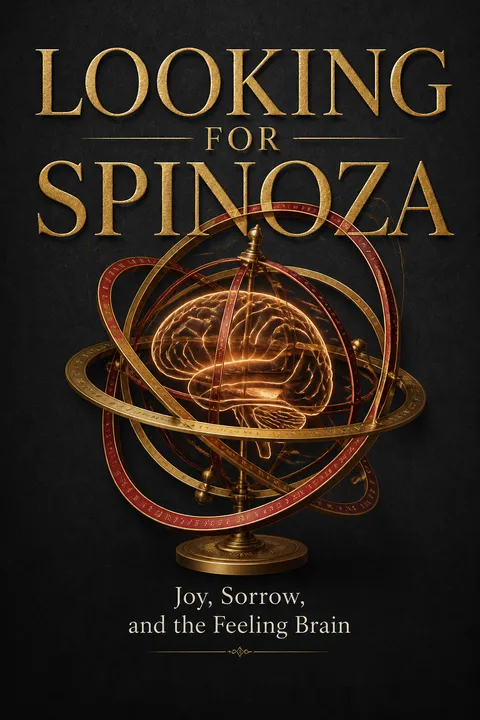
Looking for Spinoza: Joy, Sorrow, and the Feeling Brain explores the neurobiological basis of emotions and feelings, connecting modern neuroscience with Spinoza's philosophy. Damasio argues that emotions and feelings are crucial for survival and decision-making. Many readers appreciate the blend of science and philosophy, finding the book insightful and thought-provoking. Some criticize its dense language and repetitiveness, while others praise its accessible explanations of complex concepts. The book's exploration of Spinoza's life and ideas receives mixed reactions, with some finding it fascinating and others seeing it as tangential.
People Also Read






Glossary
Homeostasis
Life-regulating balanceThe collection of processes that regulates an organism’s internal condition and supports survival and well-being. Damasio uses the term broadly, from metabolism and immune responses to emotions and feelings. These processes are not limited to maintaining a fixed state; they continually adjust the organism as its internal needs and external circumstances change.
conatus
Tendency to persistSpinoza’s term for the inherent striving by which each thing maintains its existence. Damasio interprets it biologically as the aggregate of dispositions in an organism’s brain and body that support self-preservation and well-being. The striving is largely automatic and does not require conscious intention or knowledge of the processes involved.
emotionally competent stimulus
Trigger for an emotionAn object or event, either currently perceived or recalled from memory, that can trigger an emotional response. Some such triggers are associated with innate brain mechanisms; others gain emotional significance through personal experience. Their presence can initiate bodily and neural changes even when the person is not consciously aware of the trigger.
as-if-body-loop
Simulated bodily stateA process in which the brain rapidly alters body-sensing maps to represent a bodily state without first producing the full change in the body itself. Damasio proposes that this mechanism can contribute to empathy and decision-making. The resulting feeling is based on the brain’s representation, which may differ from the body’s actual condition.
somatic-marker hypothesis
Emotion guides choiceDamasio’s proposal that past emotional experiences associate bodily or simulated signals with possible actions and their consequences. When a person faces a choice, these signals can mark options as promising or risky, direct attention, and reduce the range of possibilities considered. They assist reasoning but do not replace it.
nesting principle
Simple reactions within complex onesDamasio’s description of how more complex life-regulating responses incorporate elements of simpler ones. Emotions, for instance, draw on components of drives, pain and pleasure responses, reflexes, and metabolic regulation. Evolution builds new responses by rearranging existing mechanisms, rather than constructing every complex behavior from scratch.
affects
Emotions and related feelingsSpinoza’s broad term for bodily modifications that increase or diminish an organism’s power to act, together with the ideas of those modifications. Damasio uses the term to connect bodily emotion and mental feeling as related parts of a continuous process. It includes appetites and other states as well as familiar emotions.
FAQ
What's Looking for Spinoza about?
- Exploration of Feelings: The book investigates the nature of feelings and emotions, focusing on their biological foundations. António Damásio explores how these elements are crucial to understanding the mind-body connection.
- Spinoza's Influence: Damásio links his findings to Baruch Spinoza's philosophy, highlighting the relevance of Spinoza's ideas on emotions and human flourishing. The book acts as a bridge between modern neuroscience and historical philosophical thought.
- Mind-Body Problem: It delves into the philosophical and scientific inquiries surrounding the mind-body problem, discussing how emotions and feelings relate to consciousness.
Why should I read Looking for Spinoza?
- Interdisciplinary Approach: The book combines neuroscience, philosophy, and psychology, offering a comprehensive view of human emotions. It's ideal for readers interested in the intersection of these fields.
- Practical Applications: Understanding feelings and emotions can lead to better mental health and decision-making. Damásio discusses how this knowledge can help address issues like depression and addiction.
- Engaging Narrative: Damásio's writing is accessible and thought-provoking, making complex scientific concepts relatable. His personal reflections on Spinoza add depth to the narrative.
What are the key takeaways of Looking for Spinoza?
- Feelings as Biological Signals: Feelings are not just subjective experiences; they are biological signals reflecting our body's state. Damásio emphasizes that feelings arise from the brain's mapping of bodily states.
- Emotion Precedes Feeling: Emotions trigger feelings, which are then processed in the brain. Damásio states, "Emotion and feeling played an important but very different part."
- Mind and Body Connection: The book reinforces the idea that the mind and body are interconnected, challenging the traditional dualistic view.
What are the best quotes from Looking for Spinoza and what do they mean?
- "Feelings of pain or pleasure... are the bedrock of our minds.": This quote highlights the foundational role of feelings in shaping our mental experiences. Damásio suggests that our emotional states are crucial for understanding consciousness.
- "The mind arises in a brain that is integral to the organism.": This encapsulates the central thesis, emphasizing that mental processes are deeply rooted in our biological makeup, challenging the notion of a separate mind and body.
- "Hope is nothing else but an inconstant joy, arising from the image of something future or past, whose outcome to some extent we doubt.": Reflects Spinoza's view on hope and its emotional implications, suggesting that hope is tied to perceptions and expectations.
How does António Damásio define feelings in Looking for Spinoza?
- Feelings as Perceptions: Damásio defines feelings as perceptions of body states, emphasizing their connection to our physical condition. He states, "Feelings are perceptions and, in some ways, they are comparable to other perceptions."
- Interactive Nature: Feelings are interactive perceptions involving both the body and the mind. They reflect the ongoing life state of the organism and can influence decision-making.
- Complexity of Feelings: Feelings can be influenced by various factors, including emotions and cognitive processes, making them essential for understanding human behavior.
What is the relationship between emotions and feelings according to Looking for Spinoza?
- Sequential Process: Damásio argues that emotions precede feelings in a sequential process. He explains that "emotion is born first and feeling second, with feeling forever following emotion like a shadow."
- Distinct Functions: Emotions are automatic responses to stimuli, while feelings are the conscious awareness of those emotional states. This distinction is crucial for understanding how we experience and interpret our emotions.
- Neurobiological Basis: The relationship is grounded in neurobiology, with specific brain regions responsible for processing emotions and feelings.
How does Looking for Spinoza connect neuroscience and philosophy?
- Philosophical Framework: Damásio uses Spinoza's philosophy as a lens to explore modern neuroscience, arguing that Spinoza's insights into emotions are relevant to contemporary discussions about the mind-body connection.
- Interdisciplinary Dialogue: The book fosters a dialogue between neuroscience and philosophy, suggesting that both fields can inform each other. Understanding feelings requires both scientific and philosophical perspectives.
- Historical Context: By situating his arguments within the historical context of Spinoza's work, Damásio highlights the enduring relevance of philosophical inquiry in understanding human emotions.
What role do feelings play in decision-making as discussed in Looking for Spinoza?
- Somatic Marker Hypothesis: Damásio introduces the somatic marker hypothesis, which posits that feelings guide decision-making by providing emotional signals.
- Influence of Emotions: Feelings help prioritize options based on past experiences and emotional outcomes, enhancing decision-making efficiency.
- Conscious Awareness: The conscious awareness of feelings allows individuals to reflect on their choices and consider the emotional consequences.
How does António Damásio address the concept of empathy in Looking for Spinoza?
- Empathy as Simulation: Damásio describes empathy as a process of simulating another person's emotional state within oneself.
- Role of Mirror Neurons: The concept of mirror neurons is introduced as a mechanism for understanding empathy, allowing individuals to resonate with others' emotions.
- Neural Basis of Empathy: Damásio highlights the importance of body-sensing regions in the brain for experiencing empathy.
What implications does Looking for Spinoza have for mental health?
- Understanding Emotions: Damásio's exploration of feelings and emotions provides insights into mental health issues such as depression and anxiety.
- Therapeutic Applications: The book emphasizes the importance of addressing emotional states in therapeutic settings.
- Holistic Approach: Damásio advocates for a holistic approach to mental health that considers both biological and psychological factors.
What is the mind-body problem discussed in Looking for Spinoza?
- Philosophical Debate: The mind-body problem refers to the philosophical question of how the mind relates to the body and whether they are distinct entities.
- Substance Dualism vs. Monism: The book critiques substance dualism and advocates for a monistic view where mind and body are aspects of the same reality.
- Scientific Inquiry: Damásio emphasizes that recent advances in neuroscience have begun to address the mind-body problem empirically.
How does Looking for Spinoza address the concept of joy?
- Joy as a Positive Emotion: Damásio defines joy as a positive emotional state that contributes to well-being and personal fulfillment.
- Connection to the Body: The book emphasizes that joy is deeply rooted in bodily experiences and processes.
- Role in Ethical Living: Joy is linked to ethical living in Spinoza's philosophy, suggesting that a joyful life is one aligned with virtue and reason.
About the Author
Other books by António Damásio

Download PDF
Download EPUB
.epub digital book format is ideal for reading ebooks on phones, tablets, and e-readers.








