

Key Takeaways
Separate fear of change from fear of what change costs.
Novelty is not the enemy. People may oppose a workplace change because it threatens their income or adds work, not because they inherently dislike change. Mlodinow calls the appetite for novelty neophilia. He argues that humans evolved with a strong exploratory drive, though individuals differ in how much novelty they seek. The book contrasts the slow adoption of push-button phones, which took decades to displace rotary phones, with the rapid shift to touchscreen smartphones.
Explore with judgment. New territory can offer food, opportunity, or danger. The book’s examples of Pokémon Go and businesses that failed to adapt show how quickly a fresh idea can alter a market. The practical question is not whether change is good, but what it offers, what it threatens, and whether familiar habits still fit.
The distinction between change and its consequences is useful because it replaces a vague complaint about resistance with a concrete diagnosis. A person may welcome a new tool while resisting an unfair workload attached to it. That distinction also guards against using adaptability as an excuse to demand endless accommodation from employees or families. Exploration has value when it expands options, but novelty alone is not evidence of progress. The sounder habit is curiosity paired with a clear-eyed account of who bears the risk and who receives the benefit.
Use elastic thinking when the problem has no known rulebook.
Three ways to respond. The book distinguishes scripted responses, analytical thought, and elastic thinking. A script is an automatic reaction to a familiar cue, like a goose rolling an egg toward its nest even after the egg has disappeared. Analytical thought moves step by step through facts and rules. Elastic thinking is a largely unconscious, bottom-up process that connects ideas in nonlinear ways, helping people respond when no established procedure fits.
Match the mode to the problem. A computer can calculate a defined route to a grocery store; human elastic thinking helped invent the automobile. Neither mode replaces the others. Scripts are efficient in routine situations, and analysis is powerful when the rules are clear. Novel problems need idea generation and reframing, followed by analysis to examine what those ideas imply.
This distinction gives readers a practical diagnostic: is the problem routine, rule-bound, or genuinely unfamiliar? Trouble often follows from using the wrong mode, such as applying a familiar script to an unusual situation or trying to reason linearly through a problem whose terms are wrong. The modes are best understood as complementary capacities, not competing kinds of intelligence. The book’s contrast between brain and computer is vivid, although it can sound too absolute: computers can generate surprising outputs, while human imagination can be conventional. The useful difference is flexibility across unfamiliar contexts, not a magical human monopoly on novelty.
Let emotional value guide decisions, then stop when an option suffices.
Feeling helps choose. Patient EVR retained a high IQ and logical knowledge after surgery, but damage to part of his reward system left him unable to experience pleasure normally. He could analyze restaurant choices endlessly, yet could not decide where to eat. The case suggests that emotion does not merely decorate reasoning. It helps establish what matters and gives a decision a stopping point.
Avoid endless optimization. Too many options can drain that decision-making capacity. Psychologist Herbert Simon’s term satisficer describes someone who accepts an option that meets the need, rather than searching indefinitely for the best possible one. Mlodinow contrasts this with maximizing, which can breed regret and second-guessing. The strategy is useful for ordinary purchases and plans, though major choices may deserve a deeper search.
The EVR story challenges the flattering idea that good decisions come from pure reason. Facts can rank options only after someone has supplied the criteria that matter, and those criteria are often emotional or personal. Satisficing protects attention for decisions where careful comparison has real stakes. It should not become a blanket excuse for haste: the first acceptable doctor, job, or long-term commitment may not be good enough. The distinction is between consequential search and low-value perfectionism, not between carefulness and carelessness.
When stuck, change the problem’s frame before adding more effort.
Assumptions hide exits. Theater executive David Wallerstein struggled to sell more popcorn until he reconsidered the problem: perhaps customers wanted more, but felt awkward buying a second bag. Offering a larger size changed the frame and helped sales rise. The book calls a deliberate change in the way a problem is represented restructuring. It can expose a solution that effort within the old frame cannot reach.
Measure progress differently. In Douglas Hofstadter’s dog-and-bone puzzle, a dog facing a fence appears close to a bone but cannot reach it directly. The open gate is farther away physically, yet closer to the goal. The puzzle becomes solvable when distance means progress through a usable path, not straight-line proximity. Similar shifts helped mathematicians treat imaginary numbers as useful abstractions rather than dismissing them as impossible quantities.
Reframing is more than looking at a problem from a new angle. It changes what counts as evidence, progress, or even a possible answer. That makes it especially valuable when repeated effort produces no movement. Wallerstein’s insight also shows that a frame can be social: customers were constrained by what a purchase seemed to say about them, not simply by hunger. A caveat matters, though. Reframing should clarify reality, not disguise it. A new interpretation earns its place by explaining the obstacles and making a workable next move possible.
Give your brain quiet time to connect what focused effort cannot.
Rest can be active. Mary Shelley struggled to invent a ghost story during a rainy summer gathering. After she stopped forcing an answer and rested with her thoughts, an image that became the seed of Frankenstein emerged. Neuroscientists call the brain’s internally active, unfocused state the default mode of thought. It supports private reflection and the recombination of memories, knowledge, and feelings, even when a person seems to be doing nothing.
Protect the conditions. The book describes mind wandering during quiet walks, showers, and pauses from concentrated work as fertile ground for associations. Constant phone checking and messages can interrupt that process by pulling attention outward. A break is not guaranteed to produce an insight, and aimlessness is not a substitute for research or effort. But when a problem is stuck, a stretch without fresh demands can give the mind room to make connections.
The default mode recasts downtime as part of thinking rather than its opposite. Focus gathers and examines information; unfocused attention can let distant pieces meet. The two processes resemble different stages of making a map: one surveys details, the other reveals a route across them. This is a helpful correction to workplaces that treat visible busyness as the only proof of effort. Quiet time still needs boundaries. An uninterrupted pause can support reflection, but passive distraction or rumination may simply repeat old concerns rather than create useful connections.
Generate unusual ideas before your inner censor votes them down.
Filters keep thought manageable. The brain receives far more sensory and associative information than conscious attention can handle, so cognitive filters prioritize what seems relevant and suppress the rest. Those filters make routine action efficient, but they can also hide an unconventional solution. Clarence Saunders saw piglets feeding themselves and imagined customers serving themselves in a grocery store. His Piggly Wiggly design helped establish the self-service supermarket.
Make room beyond the obvious. In the nine-dot puzzle, people often assume they must draw within the square formed by the dots. The solution requires crossing that imagined boundary. The same trap appears in functional fixedness, the tendency to see an object only through its familiar use. In a candle puzzle, the tack box becomes a holder. First loosen the assumption; then judge whether the odd idea actually works.
The book separates idea generation from idea evaluation, a distinction that helps explain why premature self-censorship can be costly. An idea that initially sounds silly may be a useful hypothesis, but it is not automatically a good solution. The nine-dot puzzle makes the hidden boundary visible, while Saunders’s story shows how an unfamiliar analogy can reveal a new system. The goal is not to abolish filters, which protect attention and social judgment. It is to notice when a filter is enforcing convention rather than identifying genuine danger or impossibility.
Make expertise answerable to dissent, novices, and fresh evidence.
Knowledge can become a blindfold. Before the 1973 Yom Kippur War, Israeli intelligence officers saw a major military buildup but interpreted it through an existing belief that Egypt would not attack before gaining air superiority. They explained away warning signs as a military exercise. The book argues that a trusted doctrine can prevent experts from recognizing that circumstances, or an opponent’s assumptions, have changed.
Invite friction. Chess experiments described in the book found that players who spotted a familiar winning line could become much less able to see a better, less familiar one. The effect was equivalent to a 600-point difference in chess ratings. In a separate experiment, exposure to people who called blue slides green subtly shifted how subjects later classified borderline colors. Dissent can alter what seems plausible, even when it does not persuade anyone outright.
Expertise compresses experience into fast recognition, which is valuable until a new case resembles an old one only superficially. Dissent provides a test of whether a conclusion rests on evidence or on an unexamined template. It works best when disagreement is safe enough to be specific: a warning should be heard as information, not treated as disloyalty. The book’s stories support that principle, while also suggesting a limit. A novice is not automatically wiser than an expert. The advantage comes from combining deep knowledge with people willing to question its application.
Tune your mental state to the task, not just your preferred routine.
State changes the search. Mlodinow describes research in which positive mood improved performance on tasks requiring original associations. He also describes studies where tired subjects did better at creative riddles, while alert subjects did better at orderly analytical problems. The implication is not that exhaustion is ideal, but that diffuse attention can sometimes help when familiar answers are blocking a fresh one.
Choose safer levers. Mindfulness practice can help people notice automatic reactions, while quiet walks, fewer interruptions, and a pleasant mood may make it easier for unusual ideas to surface. The book also discusses alcohol and drugs as substances that can loosen cognitive filters, but their effects can impair analysis and carry serious risks. The more practical approach is to experiment with breaks, settings, and task timing, then observe which conditions help a particular kind of work.
This insight turns creativity from a mysterious trait into a problem of conditions. A deadline, a noisy room, or a depleted attention system can change which thoughts reach awareness. The useful experiment is personal and modest: compare the same kind of task under different conditions and notice the result. The book’s evidence does not justify treating tiredness or positive mood as universal creativity switches. A relaxed state may widen the search, but good work also needs focus, revision, and enough energy to tell an insight from an appealing mistake.
Let imagination improvise, then use analysis to make the answer hold.
Creation needs two modes. The book’s examples range from artists to scientists: original ideas may arrive through loose associations, but they must be developed and tested. A child in a German munitions factory once faced a Gestapo officer who noticed an extra child at roll call. When the supervising father could not invent an explanation, the boy stepped forward and improvised a convincing account that saved the group from immediate danger.
Keep the balance. The boy’s quick story illustrates imagination under pressure, not a recipe for every problem. In less urgent settings, the same flexible process can suggest a design, a theory, or a new way to approach a personal obstacle. Analytical thought then examines consequences and repairs weaknesses. Too much control can censor a promising idea before it forms; too little can leave a clever but unworkable notion untested.
The closing story makes flexibility concrete: imagination is not only a source of art or business innovation, but a capacity for responding when the expected script fails. Yet the story’s danger also prevents a sentimental reading of creativity. Improvisation can be necessary without being pleasant, and a successful response in one emergency does not make every spontaneous idea wise. The stronger lesson is coordination. Generate possibilities broadly when the situation is novel, then bring judgment to bear before acting whenever time and safety allow.
Analysis
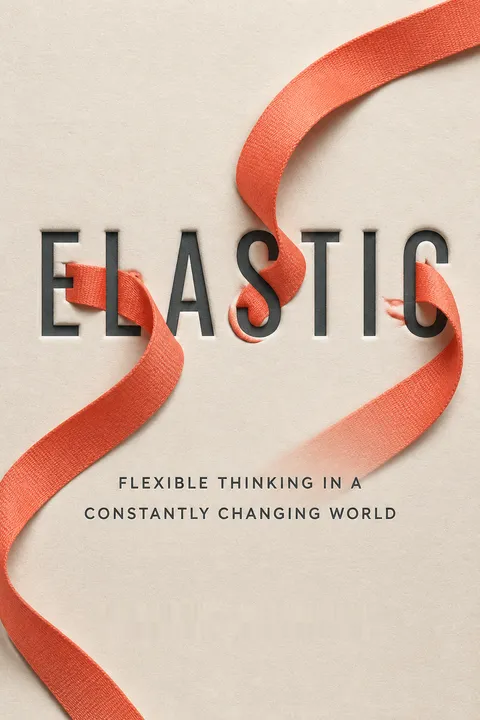
Elastic presents thinking as a repertoire rather than a single ladder of intelligence. Routine scripts save effort, analysis handles explicit rules, and flexible association helps when the situation does not fit either. The book’s distinctive contribution is to make the unconscious feel less like a mystical source of inspiration and more like a working process shaped by reward, attention, memory, and inhibition. Its stories move convincingly between individual invention and institutional failure: the same rigidity that hides an alternative use for a box can also distort intelligence assessments before a war.
The most useful implication is diagnostic. When a solution fails, the problem may not be insufficient effort. The person may be using an old frame, suppressing remote ideas too quickly, or facing too many choices without a meaningful basis for selection. The suggested response is to change conditions and perspective, not merely to intensify concentration. Rest, dissent, emotional awareness, and openness to unusual associations become practical instruments for changing the search.
The framework is strongest as a model of practice, not as a complete map of the brain. The contrast between bottom-up and top-down thought makes complex processes memorable, but real cognition is more entangled than a clean division between creativity and logic suggests. The book sometimes gives brain regions, dopamine, and hemispheres roles that can sound more settled or localized than the stories themselves establish. Likewise, findings about mood, ADHD, drugs, or expert error should not be converted into universal prescriptions. A filter that blocks an idea may be bias, but it may also be useful caution.
The durable lesson is therefore not to weaken judgment indiscriminately. It is to regulate judgment: loosen it while exploring, strengthen it while evaluating, and notice when the context has changed enough to require a different frame. Elasticity is not endless novelty seeking. It is the capacity to shift modes without mistaking yesterday’s successful method for a law of nature.
Review Summary
Elastic offers insights into creative thinking and adapting to change. Readers appreciate Mlodinow's engaging writing style and practical examples, though some find the content repetitive or lacking novelty. The book explores the brain's ability to generate innovative solutions, contrasting analytical and elastic thinking. While some reviewers praise its accessibility and thought-provoking ideas, others criticize its anecdotal approach and limited concrete advice. Overall, opinions are mixed, with many finding value in the book's exploration of cognitive flexibility and creative problem-solving.
People Also Read









Glossary
Elastic thinking
Flexible, associative problem-solvingA nonlinear style of thought that helps people handle novelty when familiar scripts or step-by-step analysis are insufficient. It works largely through bottom-up interactions among neural networks, drawing on emotion, memory, and associations to generate new ideas or frames. Analytical thinking can then help examine and develop those ideas.
Neophilia
Affinity for noveltyA person's tendency to seek or welcome new experiences and unfamiliar situations. The book treats neophilia as a temperament that varies among individuals and is influenced by both biology and experience. High novelty-seeking can support exploration and discovery, but very high risk-taking can also expose a person to danger.
Default mode of thought
Unfocused internal processingA mode of brain activity that becomes prominent when attention is not directed toward a specific external task. In this state, the mind can revisit memories, feelings, and knowledge, and form associations outside deliberate step-by-step reasoning. The book presents it as an important source of reflection and creative insight.
Cognitive filters
Selection of conscious informationMental processes that prioritize some sensory information and possible ideas while suppressing others. They help prevent attention from being overwhelmed by the brain's large supply of incoming data and associations. Because they are shaped by expectation and experience, they can also screen out unusual information or unconventional solutions that deserve consideration.
Functional fixedness
Seeing only familiar usesA tendency to view an object according to its customary purpose, making it harder to imagine a different use. In the book's candle puzzle, people often fail to recognize that an empty tack box can serve as a candleholder. The term also illustrates how familiar assumptions can restrict creative problem-solving more broadly.
Restructuring
Changing a problem's frameThe process of altering the representation or framework used to understand a problem. Restructuring may reveal that an apparent obstacle is based on an unhelpful assumption, or that progress should be measured differently. It is especially useful when repeated attempts within the original framing lead to an impasse.
Satisficers
People who accept enoughDecision-makers who choose an option that adequately meets their needs instead of continuing to search for the best possible choice. The term, introduced by economist Herbert Simon, combines the ideas of satisfying and sufficing. The book presents satisficing as a way to conserve effort and reduce regret in many everyday decisions.
Schizotypy
Spectrum of unusual traitsA cluster of personality traits that can include unusual ideas, eccentric behavior, and unconventional associations. The book describes schizotypy as varying in degree, with some traits associated with divergent thinking and creativity. At extreme levels, unusual thinking can become disorganized or disabling, so the traits are not presented as an uncomplicated advantage.
Compound remote associate problems
Word-association insight puzzlesA class of puzzles in which a solver receives three words and must find a fourth word that forms a familiar phrase or compound with each one. They can be solved through deliberate testing of candidate words or through a sudden associative insight. Researchers use these problems to study the mental processes involved in insight.
FAQ
What's Elastic: Flexible Thinking in a Constantly Changing World about?
- Focus on Change: The book explores how rapid societal and technological changes require new cognitive approaches. Leonard Mlodinow emphasizes adapting our thinking styles to thrive in this evolving landscape.
- Elastic Thinking Defined: Mlodinow introduces "elastic thinking," which involves solving novel problems by integrating diverse ideas and reframing questions, contrasting with rigid analytical thinking.
- Practical Strategies: The book offers strategies to cultivate elastic thinking, drawing on neuroscience and psychology to explain how our brains can be trained for flexibility.
Why should I read Elastic by Leonard Mlodinow?
- Relevance to Modern Life: Understanding flexible thinking is crucial for success in an age of information overload and rapid change, applicable across various fields.
- Scientific Insights: The book is grounded in recent scientific research, making complex ideas accessible and engaging through storytelling and scientific explanations.
- Empowerment Through Knowledge: Learning about elastic thinking empowers readers to embrace change, fostering creativity and problem-solving abilities.
What are the key takeaways of Elastic by Leonard Mlodinow?
- Embrace Change: Change is inevitable and beneficial, offering opportunities for growth and innovation. Mlodinow encourages viewing change positively.
- Cultivate Elastic Thinking: Traits like curiosity, imagination, and ambiguity tolerance enhance cognitive flexibility, crucial for modern life.
- Neuroscience of Thought: Understanding brain processes, like the default mode network, helps harness creative potential and elastic thinking.
What is elastic thinking according to Elastic by Leonard Mlodinow?
- Definition of Elastic Thinking: It's the ability to solve novel problems by integrating diverse ideas and reframing questions, moving beyond conventional thought patterns.
- Bottom-Up Processing: Elastic thinking arises from bottom-up brain processes, contrasting with top-down analytical thinking, which is linear and logical.
- Importance of Flexibility: Essential for adapting to modern complexities, elastic thinking enables creative solutions and effective navigation of uncertainty.
What specific methods does Elastic recommend for improving elastic thinking?
- Unplugging from Technology: Set aside time to disconnect from devices, allowing the mind to wander and engage in creative thought.
- Mindfulness Practices: Mindfulness exercises clear the mind and enhance elastic thinking, modifying attention subsystems.
- Embrace Downtime: Periods of inactivity are opportunities for creative thought, allowing the default network to process experiences.
What is the significance of the default mode network in Elastic by Leonard Mlodinow?
- Understanding the Default Mode: The default mode network (DMN) is active during rest and daydreaming, crucial for idea generation and creative thinking.
- Connection to Elastic Thinking: The DMN allows spontaneous idea generation and associations, key to elastic thinking and exploring diverse concepts.
- Implications for Creativity: Nurturing the DMN through relaxation enhances creativity, valuing idleness as mental exploration opportunities.
What role does procrastination play in creativity according to Elastic by Leonard Mlodinow?
- Positive Correlation: Procrastination can enhance creativity by allowing the mind to explore ideas unconsciously, leading to innovative solutions.
- Unconscious Processing: Delaying decision-making gives the brain time to process information and generate insights, fostering creativity.
- Historical Examples: Figures like Leonardo da Vinci used breaks to let their minds wander, resulting in significant creative breakthroughs.
How does culture influence elastic thinking in Elastic by Leonard Mlodinow?
- Cultural Influence on Thought: Cultural norms shape cognitive styles and problem-solving approaches, affecting responses to challenges.
- Exposure to Diverse Perspectives: Engaging with diverse cultures enhances cognitive flexibility, broadening perspectives and encouraging innovation.
- Cultural Barriers: Strong cultural identities can create rigid frameworks, hindering adaptability. Recognizing and challenging these assumptions fosters elastic thinking.
What are some historical examples of elastic thinking in Elastic by Leonard Mlodinow?
- Doolittle Raid: Francis Low's idea of launching bombers from aircraft carriers during WWII illustrates how ignoring conventional wisdom leads to innovation.
- Mary Shelley and Frankenstein: Shelley's idea for Frankenstein during idleness highlights the importance of allowing the mind to wander.
- Leonardo da Vinci: Da Vinci's breaks from work led to creative insights, showing the value of rest for elastic thinking.
What are the barriers to elastic thinking discussed in Elastic by Leonard Mlodinow?
- Mental Blocks: Rigid beliefs, fear of failure, and reliance on familiar thought patterns are significant barriers to elastic thinking.
- Destructive Doctrine: Adherence to destructive doctrines inhibits creativity and innovation, requiring challenges to ingrained beliefs.
- Overcoming Barriers: Strategies include embracing failure as a learning opportunity and seeking diverse perspectives to break limiting thought patterns.
What is the relationship between creativity and mental health as discussed in Elastic by Leonard Mlodinow?
- Schizotypy and Creativity: A mild dose of schizotypal traits can enhance originality, with high scorers often being eccentric and gifted in elastic thinking.
- Risks of Extremes: Extreme traits can lead to dysfunction, as seen in severe mental illness cases like John Nash's.
- Balance is Key: Balancing elastic and analytical thinking fosters creativity without succumbing to mental health pitfalls.
What are the best quotes from Elastic by Leonard Mlodinow and what do they mean?
- “Our success and happiness depend on our coming to terms with it.”: Adapting to change is crucial for personal fulfillment and achievement, encapsulating the book's central theme.
- “Elastic thinking is what endows us with the ability to solve novel problems.”: Highlights the significance of elastic thinking in navigating complex challenges, essential for success.
- “The more we understand elastic thinking... the better we can all learn to harness it.”: Reflects the belief in knowledge's power to enhance cognitive abilities, encouraging active engagement with the book's concepts.
About the Author
Other books by Leonard Mlodinow



Download PDF
Download EPUB
.epub digital book format is ideal for reading ebooks on phones, tablets, and e-readers.








