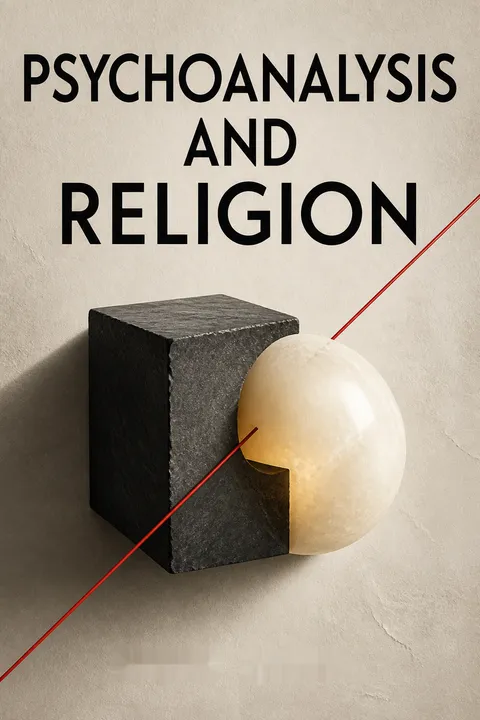


Key Takeaways
Ask what your devotion makes of you, not whether you call it religion.
Religion is broader than belief. Fromm defines religion as a shared system of thought and action that gives people a way to understand their place in life and something to devote themselves to. In this sense, a person can be religious without believing in God: devotion to a nation, money, success, or a political leader can serve the same orienting role. Human beings need more than food and comfort; awareness of mortality, separateness, and limited knowledge presses them to find meaning and connection.
The real test is human. Fromm therefore shifts the question from whether religion exists to what kind of devotion it expresses. Does it strengthen love, reason, and responsibility, or make people submissive, fearful, and destructive? Religious labels alone cannot answer that. The same outward identity can conceal very different ways of living.
This broader definition makes religion available for psychological and social analysis without assuming that every commitment is equally wise. It also helps explain why ostensibly secular movements can inspire sacrifice and intense loyalty. The framework resembles the study of identity: people orient themselves through groups and ideals, not only through explicit theology. Its strength is diagnostic, though its breadth risks making nearly any deep commitment religious. The distinction between a useful analogy and a literal category matters. Calling consumerism a religion may reveal its emotional power, but it should not erase the differences between shopping habits, communal worship, and theological traditions.
Freud defended religion's ethics; Jung's openness could abandon truth.
The disagreement is more complex. Freud viewed theistic religion as a response to human helplessness, much like a child's reliance on a powerful parent. He worried that this dependence could weaken critical thought and morality. Yet his ideals, including truth, freedom, and concern for others, overlap with the ethical core of many religions. Fromm argues that Freud's criticism of supernatural authority does not amount to hostility toward every religious value.
Jung makes a different tradeoff. He treats religious images and experiences as psychologically real because people experience them, without deciding whether their claims are true. Fromm objects that an idea's existence, or popularity, cannot establish its truth. A widely shared belief can still be false. Thus Freud's skepticism can defend religious ethics, while Jung's apparent sympathy can flatten the distinction between insight and delusion.
Fromm identifies a recurring trap in debates about religion: confusing the emotional function of a belief with its truth, then treating criticism of one as rejection of the other. This distinction remains useful in discussions of political ideology and personal identity. A belief can comfort people and still be mistaken; it can also arise from desire and still be true. Fromm is persuasive in resisting Jung's move from psychological presence to validity. Yet the criticism should not imply that all religious truth claims can be settled by the same standards as empirical claims. Different claims require different kinds of evidence and interpretation.
Choose devotion that develops human powers, not obedience to power.
Two religious orientations differ. Authoritarian religion locates ultimate power outside the person and treats obedience as its central virtue. The worshiper gains protection by surrendering independence. Humanistic religion instead asks people to develop reason, love, and their capacity to act; its central virtues are self-realization and responsible freedom. Fromm says this divide cuts across theistic and nontheistic traditions, and can appear within a single tradition.
The examples make the contrast concrete. Fromm reads early Buddhism as a call to investigate reality and cultivate compassion, rather than submit to a supernatural ruler. In a biblical story, Abraham challenges God over the proposed destruction of the innocent, appealing to justice. For Fromm, these examples express a different relationship to authority: religious commitment can include independent judgment, not merely compliance.
The distinction offers a practical way to evaluate institutions: do their teachings cultivate judgment and care, or reward deference and fear? It also links religious psychology to political theory, where authority can either enable collective life or suppress agency. Still, these categories are interpretive rather than neutral descriptions. Traditions contain internal disagreements, and obedience can sometimes express trust or coordination rather than self-erasure. Likewise, independence is not automatically virtuous. The important question is whether authority remains answerable to human welfare and whether followers retain the capacity to examine its claims.
Test beliefs against conduct; sincere conviction can still rationalize.
A belief can serve a hidden motive. Psychoanalysis, in Fromm's account, does not accept a person's stated reason as the whole explanation for an action. Someone may sincerely call a decision just while acting from cruelty, or praise democracy while accepting authoritarian conduct. Rationalization is the use of plausible reasoning to defend motives or commitments that the person is not honestly confronting.
Fromm shows how this works socially. He cites a survey in which many white respondents endorsed equality as an abstract principle, while far fewer accepted equality between Black and white people. The gap suggests that a public ideal can remain detached from feeling and behavior. Fromm's proposed test is to examine the whole pattern: how people treat neighbors, children, and minorities may reveal more than their declarations of faith or principle.
This is a strong account of motivated reasoning: people often reason not only to discover what is true, but to defend identities and loyalties. Contemporary research on cognitive dissonance similarly examines how people reinterpret evidence when it threatens a valued self-image. Fromm's emphasis on behavior supplies a useful corrective to self-report. Yet conduct also needs context. A single action can reflect constraints, fear, or limited opportunity, not settled character. The best test combines words, repeated choices, and the conditions under which those choices are made.
Treat distress as evidence, not merely a symptom to suppress.
Relief is not always a cure. Fromm distinguishes treatment aimed at helping someone fit prevailing expectations from a deeper effort to develop independence, integrity, and the ability to love. His example is a young man pressured by his businessman father to join the family firm despite wanting to study physics. One therapist might interpret his distress as irrational resistance; another might see it as a signal that he has surrendered a meaningful vocation.
Symptoms can register a moral conflict. Fromm also describes a successful writer whose headaches accompany work that violates his convictions, and a businessman whose drinking masks a life built around money and hostility. Removing a symptom without addressing its source may leave the underlying conflict intact. For Fromm, the analyst acts as a physician of the soul by helping a person examine what kind of life is producing the distress.
Fromm's challenge to simple symptom removal anticipates a central question in modern clinical practice: does treatment reduce suffering while preserving agency, or does it merely help people tolerate harmful conditions? His cases show why context matters. A distressing reaction can be disabling, but it can also carry information about a conflict that deserves attention. The caution is that suffering alone cannot identify the right life choice. A patient may need symptom relief before making difficult changes, and a clinician should not impose a moral interpretation where careful assessment is needed.
Outgrow family and group loyalties before they replace your conscience.
Dependence can outlive childhood. Fromm uses the term incestuous fixation for a broad psychological attachment to familiar, protective authorities, not only sexual desire. A person may remain emotionally governed by parents, or transfer that need for belonging to a nation, race, political party, or state. Familiarity becomes the test of truth, while independent judgment feels dangerous because it threatens the security of the group.
Freedom requires separation. Fromm sees maturity as a lifelong movement toward making one's own judgments and taking responsibility for one's actions. He interprets the biblical departure from Eden as an image of the painful loss of guaranteed security that accompanies human development. Loyalty itself is not the problem; the danger comes when loyalty makes people excuse their own group's injustices while condemning the same acts in others.
This idea connects individual development to group psychology. Belonging can provide security and shared purpose, but it can also narrow moral attention, making outsiders seem less deserving of fairness. Fromm's lens helps explain why criticism of one's own group can feel like betrayal rather than ordinary reasoning. The concept should be used carefully, however. Strong family bonds and cultural identities are not inherently immature, and separation is not a universal measure of health. The key distinction is whether belonging supports judgment and reciprocity or demands their surrender.
Practice love as respect and responsibility, not attachment or possession.
Love is a capacity, not a claim. Fromm distinguishes love from dependence, control, possessiveness, and the fear of being alone. He describes mature love as concern for another person, respect for their individuality, and an active interest in their growth. It also requires self-respect: devotion to another that depends on self-contempt is not, in his account, genuine love.
Conscience can guide repair. Fromm also separates fear-based guilt from a more inward moral awareness. In authoritarian religion, wrongdoing means disobeying a powerful authority and invites punishment or submission. In humanistic religion, conscience is an inner signal that one's actions are damaging one's integrity or capacity to care. The response is not self-hatred, but understanding the harm and trying to act differently.
This account usefully separates care from control, a distinction relevant to relationships, parenting, and leadership. It also treats self-respect as part of ethical concern rather than its rival. Modern therapeutic approaches often make a similar distinction between shame, which condemns the self, and guilt, which can focus attention on a repairable action. Fromm's claim that love cannot be confined to one person is best understood as a test of character, not a demand that affection be evenly distributed. Intimate bonds can be special without becoming possessive or excluding concern for others.
Modern success worship can endanger faith more than scientific discovery.
The market can become an idol. Fromm argues that modern people often experience themselves as products competing for approval. Professional skill matters, but so does packaging: the right personality, connections, and image. When self-worth depends on being in demand, people adapt themselves to the market and lose a stable sense of identity. A person may profess love or justice while organizing life around status and success.
Science targets another part of religion. Scientific progress weakens religion when religion claims to explain nature or control it through supernatural means, such as praying for practical outcomes that human knowledge and action can address. Fromm calls this the scientific-magical aspect. But he does not see scientific discovery itself as a threat to religious experience. For him, the deeper danger is a daily culture that treats people as instruments of economic success.
Fromm's critique anticipates current concerns about personal branding and performance metrics: when every quality becomes a signal to sell, identity can start to feel provisional. This analysis explains how a society may become less religious in vocabulary yet intensely devoted to status. It also makes an important distinction between scientific explanation and ethical purpose. The limitation is that markets do not only commodify; they can also create opportunities and coordinate useful work. The issue is not exchange itself, but allowing market value to become the measure of human worth.
Keep rituals and symbols alive by connecting them to lived values.
Rituals can express or conceal. Fromm defines a rational ritual as shared action that expresses values people recognize and endorse. Greeting someone or honoring the dead can create a common language of respect. An irrational, compulsive ritual instead manages an unacknowledged fear or impulse. He describes a washing compulsion that temporarily eases guilt tied to destructive feelings the person cannot face directly. The outward act alone cannot tell which kind of ritual is taking place.
Symbols deserve interpretation. Fromm argues that myths, dreams, and religious teachings often use symbolic language, expressing inner experience through images rather than literal descriptions. Misreading every symbol as a factual claim can obscure its psychological meaning. Yet interpretation should not make every claim immune to evidence. Fromm's broader point is that religious symbols and ceremonies matter when they connect people to shared values, rather than serving as empty habits or substitutes for ethical action.
This distinction helps avoid two opposite errors: dismissing ritual as irrational by definition, or treating tradition as meaningful simply because it is old. Ritual studies and social psychology also emphasize how repeated shared actions can create belonging and reinforce norms. Fromm adds a valuable diagnostic question: does the practice express a value people can name, or does it mainly manage anxiety? The answer may be mixed. A ceremony can provide comfort, solidarity, and habit at once. Its significance is best judged by both its inner meaning and its consequences for how participants treat others.
Analysis
Fromm's central move is to relocate the religious question from belief in God to the human capacities a belief system cultivates. That move makes psychoanalysis neither church adversary nor theological substitute. It becomes a method for examining the motives, emotional needs, and social conditions hidden beneath declared convictions. His argument travels across scales: a person may submit to a parent, a group may worship a leader, and a society may treat market success as its highest authority. In each case, devotion can either enlarge human agency or transfer it to an external power.
The book's most durable distinction is between humanistic and authoritarian orientations, because it evaluates religion by its effects on freedom, reason, and love rather than by its supernatural vocabulary. Its account of symptoms as possible protests against a damaging life also challenges a narrow definition of mental health as successful adjustment. These arguments remain useful in settings where institutions reward conformity while describing it as wellbeing.
The framework is also normatively demanding. Fromm treats love, independence, and reason as standards grounded in human needs, but the book offers less practical guidance for resolving conflicts among them. Independence can collide with duties of care, and sincere traditions may define human flourishing differently. His interpretations of religious histories are selective, and his psychological readings sometimes risk turning disagreement into evidence of hidden dependence. Those limits do not erase the insight; they make the method stronger when used as a question rather than a verdict. What does a devotion enable people to become, what does it ask them to surrender, and do its professed values appear in ordinary conduct? For Fromm, those questions matter more than the label believer or unbeliever.
Review Summary
Readers broadly praise Psychoanalysis and Religion as a courageous, accessible, and thought-provoking work. Many highlight Fromm's compelling distinction between authoritarian and humanistic religion, and his balanced critique of both Freud and Jung. Reviewers appreciate his humanistic vision, arguing that psychoanalysis and religion share common goals around love, self-realization, and spiritual growth. Some Arabic-language reviewers note the absence of Islam from discussion. A minority found the work underdeveloped or overly optimistic, while most consider it essential reading that challenges assumptions about faith, psychology, and human nature.
People Also Read










Glossary
religion
shared orientation and devotionFromm uses religion broadly for any shared system of thought and action that gives people a frame for understanding their place in the world and an object of devotion. The term includes theistic traditions as well as secular commitments to such objects as a nation, political movement, money, or success.
authoritarian religion
devotion through submissionA religious orientation that treats a power above the individual as entitled to obedience and worship. Its central virtue is submission, and its central failure is disobedience. Fromm argues that the same pattern can appear in secular systems that elevate a leader, state, or political cause and diminish individual judgment.
humanistic religion
devotion through human developmentA religious orientation centered on developing human reason, love, freedom, and responsibility. Its measure is not obedience to an external power but the realization of human capacities and connection with others. Fromm argues that this orientation can be theistic or nontheistic and can exist within a tradition that also contains authoritarian elements.
marketing orientation
selfhood shaped for saleFromm's term for a character pattern in which people experience themselves as commodities whose value depends on appeal to others. Skills and integrity matter, but image, adaptability, and being in demand can dominate self-evaluation. The result is dependence on external approval and a weakened sense of a stable, self-directed identity.
incestuous fixation
attachment to familiar authorityFromm's broad psychological term for remaining dependent on protective, familiar figures or groups instead of developing independent judgment. It extends beyond sexual desire or a literal attachment to parents. A person may transfer the need for security and belonging to a nation, race, state, or political group, allowing familiarity to replace independent moral evaluation.
rationalization
reasoning that conceals motivesA process in which a person offers plausible reasons for an action or belief while remaining unaware of, or avoiding, its actual emotional motive. The explanation may sound logical and may even contain true statements, yet it can function to protect a commitment from scrutiny. Fromm applies the concept to individuals and groups.
symbolic language
inner experience in imagesA way of expressing thoughts and feelings through sensory images rather than direct, literal statements. Fromm applies the idea to dreams, myths, religious teachings, and ritual. Interpreting symbolic language requires asking what human experience an image expresses, while keeping symbolic interpretation distinct from proof that a literal claim is true.
About the Author
Other books by Erich Fromm




Download PDF
Download EPUB
.epub digital book format is ideal for reading ebooks on phones, tablets, and e-readers.








