

Plot Summary
Prologue
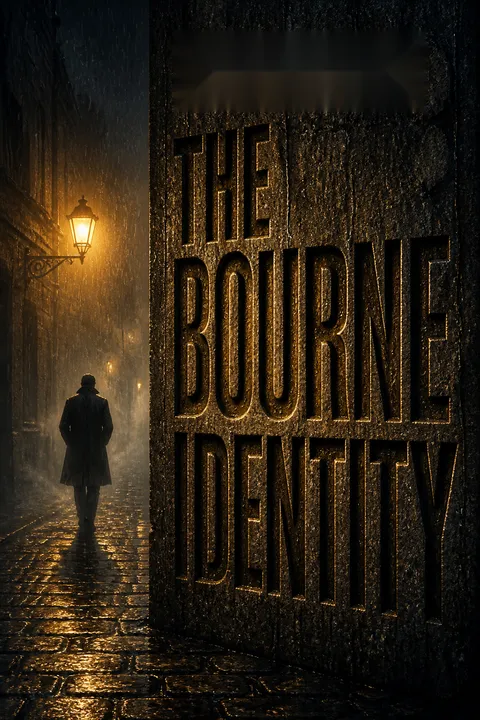
Newspaper reports sketch Carlos as a fugitive assassin linked to political violence across Europe. The accounts disagree about his movements and allies, but agree that governments cannot pin him down.
This press portrait establishes the public myth that will shape Jason Bourne’s search: a name associated with hired killings, clandestine networks, and a reach that seems to cross every border.
The clippings give the story an unstable public record before its amnesiac protagonist can form a private one. Their confident headlines turn rumor into apparent fact, a process that later proves dangerous when intelligence agencies, criminals, and journalists all treat incomplete information as certainty. Carlos’s legend is therefore not just background. It is a weapon: it influences how people interpret Bourne, and it gives the hidden operators around him a ready-made story to manipulate.
A Stranger From the Sea
A storm wrecks a fishing vessel in the Mediterranean, and a bullet-riddled man falls into the water as the ship explodes. Fishermen rescue him, and Dr. Geoffrey Washburn, an alcoholic English doctor living on Ile de Port Noir, keeps him alive through delicate surgery. When the stranger wakes weeks later, he cannot name himself.
Washburn notices his altered face, traces of dyed hair and contact lenses, and a small piece of microfilm implanted beneath his skin. Its numbers open a private Swiss bank account, but offer no explanation for the fortune or the man who owns it. With the doctor’s care, the patient regains strength, not memory, and begins treating his own body as the only evidence he can trust.
The story begins with a body that has survived its own apparent disappearance. The implanted account code makes identity tangible but not meaningful: money can identify an owner to a bank without telling that owner who he is. Washburn’s medical work and his own alcoholism create a second tension. He is an unreliable caretaker in ordinary life, yet becomes precise when a life depends on him. Bourne’s earliest task is therefore not simply remembering; it is learning to trust observable evidence while resisting conclusions that exceed it.
The Name Jean-Pierre
While the stranger studies amnesia, Washburn tests what remains intact. A tossed pistol reveals expert weapon handling; a deliberately harsh week aboard a fishing boat tests whether sea conditions and hostility will trigger anything. When the crew attacks him, the patient responds with efficient, unfamiliar martial skill, murmuring syllables he cannot interpret.
Three men are badly hurt, and the skipper expels him before the injured crew’s families can retaliate. Washburn gives him money, a passport, and a route toward Marseilles, then sends him away by boat. The patient leaves with a destination, Zurich, but no confidence that the man he is becoming resembles the one he used to be.
Instinct returns as competence without autobiography. Bourne can dismantle a weapon and survive a fight, but neither skill tells him whether he once used them lawfully or cruelly. The fishing trip turns Washburn’s therapeutic theory into a moral hazard: provocation restores function, yet it can injure others before the patient understands what drives him. His departure also marks a necessary loss. Washburn has been both doctor and anchor; Bourne must now navigate without either, relying on capacities that feel less like possessions than evidence against him.
The Borrowed Suit
On the coast, Bourne reads a local conversation well enough to identify an opportunity. He enters a wealthy man’s room, takes the man’s clothing, watch, money, and car, then sells the Jaguar and pawns the watch to finance altered travel papers. The ease of the theft frightens him more than the police risk: he recognizes how naturally he can impersonate, threaten, and calculate.
At a Marseille café, a stranger sees him and reacts as if a dead man has returned. The stranger draws a knife, but Bourne disables him and watches him flee. Someone has already decided Bourne should be dead, and the attack turns his journey to Zurich from an investigation into a flight.
This episode makes survival morally expensive. Bourne’s practical intelligence gets him money and papers, but it works through coercion and theft, forcing him to confront the possibility that effectiveness may be his most dangerous inheritance. The man at the café supplies the first external confirmation that his past is not merely inaccessible; it is being pursued. Yet the attacker does not explain why. Bourne gains a stronger reason to reach Zurich, while every successful improvisation deepens his suspicion that his lost identity belonged to a practiced criminal.
Jason Bourne Appears
During a turbulent flight, Bourne experiences a vivid image of jumping from an aircraft at night, then loses it before he can understand it. At the Carillon du Lac in Zurich, a hotel employee recognizes him and registers him as J. Bourne of New York. Bourne discovers that Treadstone Seventy-One is listed as his employer, though no telephone directory reveals such a company.
He follows the implanted numbers to the Gemeinschaft Bank, where a coded signature unlocks millions of francs and a sealed card naming him Jason Charles Bourne. The account’s size and secrecy deepen his fear. Before he can make sense of the name, two armed men move in to kill him.
The name arrives through institutional recognition rather than memory. A hotel clerk and a bank can identify Bourne more confidently than he can identify himself, but their records offer only partial answers and new threats. The money complicates the moral question: wealth implies long-term access, while the account’s coded safeguards suggest someone expected danger. The unexplained Treadstone connection is especially potent because it is both a possible home and an absent one. Bourne now has a name, but the systems that confirm it are already surrounded by violence.
The Woman in the Elevator
Bourne fights off the men at the bank, escapes into the street, and realizes their network has tracked him from Marseille. At his hotel, he spots the same killers waiting outside and seizes Marie St. Jacques, a Canadian economist attending an international conference.
He forces her through a dark lecture hall while bullets tear into the stage, then escapes through a loading exit. In the hotel parking area, a hidden marksman wounds him; Bourne shoots back, killing the attacker, and forces Marie to drive. His survival depends on a woman who has done nothing to him, but fear and injury leave him unable to offer her a choice.
The first encounter between Bourne and Marie is built on coercion, not romance. His ability to read a lecture hall, improvise an exit, and use a hostage as camouflage keeps him alive, but it also makes him frightening to the person beside him. The scene sets a distinction that Marie will later test: tactical violence may be necessary, but necessity does not erase its cost. Bourne’s competence protects his body while isolating him further, and his reliance on Marie begins under conditions that will make trust difficult to claim.
The Man at Number 37
Bourne drives Marie to the Drei Alpenhäuser, where a frightened intermediary identifies a chain of secret payments and points him toward M. Chernak, a legless former Nazi collaborator. At Chernak’s flat, Bourne asks about a sealed envelope, but Chernak shoots him and invokes Carlos before Bourne kills him.
Marie escapes, then sees men pretending to be police and understands that Bourne’s pursuers intend to use her. She returns to the wounded man, gets him to a safe room outside Zurich, and finds a discreet doctor. After listening to his account, she chooses not to hand him over, despite the evidence suggesting he may be a paid assassin.
Marie’s decision is the first freely chosen bond in the story. She has been threatened and injured by Bourne, yet distinguishes what he did under pressure from what his pursuers intend to do to her. Her judgment does not excuse him; it recognizes that the available evidence is compromised. Chernak’s history and the secret payment route widen the conflict beyond a personal vendetta, while the name Carlos provides a new center of gravity. The question changes from who is Bourne to who benefits from making him appear monstrous.
A Date Breaks the Case
As Bourne heals, Marie studies his fragments of knowledge and concludes that he may have served international financial interests rather than worked as a gunman. Their growing intimacy gives him a rare interval of warmth, but neither can settle the question of what he has done. In Paris, Bourne checks old newspapers for the killing the Zurich intermediary described.
He finds coverage of Ambassador Howard Leland’s assassination in Marseille, then remembers that Washburn received him on the island two days before Leland died. That date proves Bourne could not have fired the fatal shot. He meets Marie again, bringing her the first solid reason to doubt the story being built around him.
The date is a small fact with enormous ethical force. Rather than relying on a sympathetic impression, Bourne finds a contradiction that can be checked independently. Marie’s analytic temperament and his fragmentary recollection complement one another: she tests patterns, while he notices details that have no context until she helps examine them. Their relationship deepens, but the discovery does not absolve him of every possible crime. It does something more useful. It breaks the totalizing story of guilt and makes room for competing explanations.
The Bank’s Hidden Instruction
In Paris, Bourne and Marie test the account at the Banque de Valois. Marie’s covert observation shows that vice-president Antoine d’Amacourt receives secret instructions and contacts someone after Bourne asks to access the transferred funds. Bourne confronts him and learns that the Zurich account carries a confidential instruction card, altered to divert reports to Paris instead of New York.
Marie arranges bearer bonds rather than traceable checks, and Bourne collects the money from an armored courier. During the same operation, Marie’s former partner Peter is murdered in Ottawa after investigating Treadstone. Their financial lead now points toward a dangerous intelligence network, and someone is killing people who ask about it.
The bank turns abstract suspicion into procedure. A coded instruction can make an institution act as a relay without its employees understanding the larger purpose, while a bribed officer can quietly redirect that relay. Marie’s financial expertise is not decorative; it lets the pair see how secrecy is built into ordinary transactions. Peter’s death gives the investigation a personal cost and confirms that their questions are not harmless. The bearer bonds offer mobility, but the same covert mechanisms that move money also conceal responsibility, leaving Bourne and Marie unable to tell who is directing whom.
The Myth Called Cain
After Peter’s murder, Bourne and Marie search a Paris magazine archive for Carlos. An article portrays the assassin as a market-minded killer with a far-reaching organization. Marie quizzes Bourne against its details, and he supplies places, methods, and fees that he claims not to have read. His answers seem to confirm that he worked for Carlos, perhaps as a rival who defected, though Marie doubts the conclusion.
At the same time, Les Classiques, an elegant fashion house, emerges as a possible message relay: Bourne recognizes its switchboard operator, Philippe d’Anjou, but cannot place him. Carlos’s network has hidden itself among ordinary business and social routines, where a phone call can move orders without revealing their source.
The magazine exercise is an improvised psychological test, but its results are ambiguous. Bourne’s recall is precise enough to incriminate him and incomplete enough to resist verification. Marie understands that familiarity is not proof of personal experience; a person can retain information without remembering how it entered the mind. Les Classiques extends that ambiguity into the world around them. The store’s polished surface can conceal a chain of people who carry information blindly, suggesting that the machinery of violence need not look violent to function.
The Photograph in Paris
At Les Classiques, Bourne adopts the identity of a wealthy buyer and wins an invitation into managing partner Jacqueline Lavier’s office. He finds a telephone number linking the store to the network, while a gray-haired operator recognizes him from a past he cannot reach. Elsewhere, Lavier confirms that Carlos’s people are hunting a figure called Cain.
Bourne decides that his apparent history makes him too dangerous for Marie and tries to leave her with a note and money. A newspaper then brands her a suspect in Zurich murders and a multimillion-franc theft, using her photograph to flush Bourne out. He returns to her, abandoning the separation before she is left to face the accusation alone.
Bourne’s planned departure is an act of protection that repeats the very abandonment Marie fears. He assumes that choosing for her is kinder than exposing her to his uncertainty, while she has repeatedly chosen to stay with open eyes. The planted newspaper story makes their private dilemma public and turns Marie into bait. The operator’s recognition offers another destabilizing clue: Bourne’s past is not merely hidden in documents but remembered by people he cannot recognize. His return does not resolve their danger, but it corrects the emotional logic of his attempted escape.
The Empty Room Attack
At an out-of-town inn, Bourne arranges a false room and watches two gunmen storm it, firing at Marie’s dress and his clothes rather than at living people. Marie sees this as a message meant specifically for Bourne, not an attempt to kill them. She calls Canadian embassy attaché Dennis Corbelier, who confirms that senior officials want to help.
Before they can meet, Corbelier is shot dead at the embassy. Marie’s evidence grows harder to ignore: someone is reaching toward Bourne while another force frames and hunts him. She persuades him to seek the source rather than surrender to the conclusion that he is simply Carlos’s assassin.
The empty room converts violence into communication. The bullets make a picture from Bourne’s and Marie’s clothes, treating them as stand-ins for bodies and forcing Marie to interpret the act. Her inference is uncertain, but the later murder of Corbelier makes the message theory more persuasive than a simple ambush. This is a turning point in their trust: Bourne has insisted that every sign points to his guilt, while Marie insists that discrepancies are evidence too. Her confidence gives him permission to continue without pretending that fear has disappeared.
Villiers Opens His House
Bourne traces the Paris telephone number to General André Villiers, a decorated former soldier and politician, then confronts him on a country road. Villiers first attacks him, but listens when Bourne explains that a Carlos relay may be operating from his home. At the general’s house, Bourne sees the Les Classiques operator speaking with Villiers’s young wife, Angélique, and learns she shops elsewhere.
The mismatch persuades Villiers that she may be more than a social companion. He and Bourne agree to disrupt the fashion house’s communications, hoping that pressure will force Carlos’s intermediaries to reveal themselves. Villiers’s grief over his murdered son gives the investigation a personal stake beyond Bourne’s survival.
Villiers brings a different form of authority into the story: not the procedural authority of banks or agencies, but the personal judgment of a soldier who has spent a lifetime reading risk. His belief in honor makes him vulnerable to the possibility that his household has been used, yet it also gives him a reason to resist Carlos rather than retreat into grief. Bourne recognizes the danger of accusing a man’s wife without proof, but the relay evidence leaves Villiers with an intolerable choice. Their alliance rests on facts and shared loss, not uncomplicated trust.
The Relay Is Silenced
Bourne spreads false warnings through Les Classiques employees, using panic to make Carlos’s communications network expose its weak links. Villiers reports that Angélique is still receiving unexplained calls and that Lavier has arrived at his house, watched by men in a car.
Bourne follows the women to a church in Neuilly-sur-Seine, where he sees Carlos briefly, disguised as a priest, and chases him through the street. Carlos escapes in traffic. Inside the church, Bourne finds Lavier murdered in a confessional and arranged to look as though she took her own life. Her death shows how quickly Carlos removes a useful intermediary once she becomes a risk.
The network’s weakness is also its defense: intermediaries can be replaced, but only if no one can trace the chain. Bourne’s disruption forces movement, yet it cannot protect Lavier from a leader who treats people as expendable components. Carlos’s brief appearance is especially destabilizing because it reveals how little the legend depends on a recognizable public face. Bourne has seen the man he is hunting, but the sight does not give him a name or a clean opportunity. The failed chase turns his investigation into a more direct contest of timing and inference.
Delta Meets Treadstone
Philippe d’Anjou, a former associate from Bourne’s buried past, agrees to meet near the Louvre. Bourne lures Carlos’s watchers away, but an attack kills two of them and Carlos appears before escaping again. D’Anjou explains that Cain was a fictional identity Bourne had used to challenge Carlos on behalf of Treadstone Seventy-One.
Bourne was the Medusa operative called Delta, not the assassin his returned fragments suggest. Meanwhile, Treadstone’s leaders interpret planted fingerprints at their New York headquarters as proof that Bourne murdered their colleagues. The same false evidence that helps Carlos isolate Bourne convinces his own handlers that he betrayed them.
The revelation separates a person from the role that has consumed him. Cain was designed to be persuasive, and its success has made the fiction difficult even for Bourne to distinguish from memory. The Treadstone leaders’ mistake shows how institutional suspicion can reproduce an enemy’s deception: they accept fingerprints as context-free truth because they already expect betrayal. D’Anjou can identify the mission, but not repair Bourne’s identity. The truth arrives as a structure, not as an inner recollection, and the growing danger leaves little time to absorb it.
The Cemetery Ambush
Bourne meets CIA officer Alexander Conklin at a cemetery outside Paris, expecting an explanation from Treadstone. Conklin instead accuses him of killing the organization’s leaders and cites fingerprints found on broken glass in the New York headquarters. A hired gun is waiting nearby, and the argument becomes a shootout.
Bourne disarms Conklin, then refuses to kill him when he has the chance; he shoots the gunman instead and escapes. Conklin remains convinced that Bourne betrayed them, while Bourne now understands that his former allies may kill him for a crime he did not commit. The only ally he can still reach is Villiers, whose wife has become part of the same web.
Conklin’s certainty is emotionally understandable and factually disastrous. He has lost colleagues and treats physical evidence as a verdict, while Bourne cannot provide the memories that would make his denial credible. Bourne’s refusal to shoot Conklin is important because it contradicts the ruthless identity Conklin assigns him, but it cannot persuade a man who believes restraint is another tactic. The scene exposes the cost of secrecy: Treadstone’s compartmentalization protects operations until the moment of crisis, when it leaves everyone unable to distinguish a damaged agent from a traitor.
Villiers Risks His Name
Bourne returns to Paris and learns that Villiers has strangled Angélique after she admitted serving Carlos. Rather than let Villiers surrender to disgrace or suicide, Bourne persuades him to stage the death as Bourne’s doing and deliver a threatening message to Carlos.
The message claims that Bourne will return to New York for hidden documents that could protect him from Treadstone. Villiers accepts the deception, arranging diplomatic passage for Bourne and promising to protect Marie. Bourne leaves for America alone, carrying a false passport and a plan that depends on Carlos believing he has discovered a secret cache.
Villiers’s act begins as revenge and risks ending in self-destruction. Bourne gives him a way to turn that loss into action, but only by asking him to lie about the death and weaponize his own shame. The fabricated message is deliberately incomplete: it must sound credible to Carlos without revealing the real reason for Bourne’s return. Here, truth and deception are not simple opposites. The lie is meant to create a narrow chance to expose the larger deception that has already damaged Bourne and his allies.
Back to Seventy-First Street
In New York, Bourne returns to the Treadstone brownstone and discovers that a moving crew is emptying it. He disguises himself as a laborer, invents a claim to a fishing rod, and gets past the crew’s supervisor. Outside, Carlos’s gunmen shoot the taxi driver who brought him, confirming that the assassin is already in position.
Bourne phones Langley, but the officer who answers denies that anyone has been shot and refuses to connect him to Conklin. He returns to the brownstone in disguise, determined to find the hidden papers and the source of his identity before the moving crew removes the last evidence.
The return to New York is both tactical and existential. Bourne’s disguise lets him enter a place designed to exclude him, while his claim to a trivial possession gives him an ordinary reason to cross a threshold loaded with history. Langley’s denial repeats the central injury of the novel: institutions can erase what a person knows happened by refusing to recognize it. Yet Bourne is no longer searching only for a name. He believes the house contains the missing context that may let him separate his own life from the manufactured identity of Cain.
The House Becomes a Jungle
Inside the brownstone, Carlos ambushes Bourne with a knife, then gunfire, while hired men block the exits. Bourne fights through the dark rooms, using a captured machine gun and road flares to reveal hiding places and drive Carlos toward the library where Cain was created.
Wounded and losing blood, he confronts Carlos beneath the projection screen, but the assassin escapes when Conklin and other pursuers arrive. Bourne’s mind collapses into the memory of Tam Quan, where he had killed a traitor named Jason Bourne while rescuing his brother. Marie reaches him as he loses consciousness. The truth has surfaced, but neither his enemies nor his fragmented memory has fully released him.
The final fight turns the brownstone into a physical model of Bourne’s mind: rooms conceal histories, light exposes fragments, and every route toward an answer is guarded. The road flares reconnect his present violence to Tam Quan, but the memories arrive in a flood rather than as a stable narrative. Carlos’s escape prevents a simple victory, while Bourne’s collapse interrupts the fight before he can claim mastery over his past. What changes is not that he becomes whole, but that his former self begins to emerge from beneath the role imposed on him.
Epilogue
At a guarded cottage by the sea, General Crawford explains that Bourne is David Webb, a former foreign service officer whose wife and two children were killed in Cambodia. Webb joined the covert Medusa operation, rescued his kidnapped brother Gordon at Tam Quan, and killed a traitor named Jason Bourne.
Years later, he adopted that dead man’s name for the Treadstone mission. Psychiatrist Morris Panov argues that forcing his memories back could do further harm, so Marie stays beside him as recovery proceeds gradually. One morning Webb runs from the water to tell her that he has found his name. She answers by welcoming David, not the assassin or the myth.
The final name does not repair the past; it gives Webb a point from which to approach it. His identity was fractured by grief, deep-cover performance, neurological injury, and the repeated interpretations imposed by intelligence agencies. Panov’s caution matters because recovery is not treated as a switch that can be thrown without cost. Webb’s return to the sea echoes the opening rescue, but this time he comes out of the water under his own power and chooses what to tell Marie. The ending grants recognition and relationship, not total cure or a captured Carlos.
Analysis
The novel treats identity as a contest among memory, performance, and institutional record. Bourne’s body remembers what his conscious mind cannot: a weapon’s balance, the geography of a city, the movement needed to escape a room. Those capacities are real, but their meaning is not self-evident. The story’s central epistemic problem is that skill can establish experience without establishing motive. Bourne’s handlers and pursuers repeatedly mistake a coherent operational persona for a complete person.
That mistake is intensified by systems built to manufacture certainty. Banks use coded signatures, intelligence agencies circulate reports, and newspapers convert accusations into public fact. Each system has its own version of evidence, yet none initially has the whole account. Carlos exploits those gaps, while Treadstone’s secrecy makes its own people vulnerable to the same manipulation. The result is not a simple opposition between truth and lies. It is a struggle over who gets to interpret partial truths, and what happens when institutions act before checking their assumptions.
Marie offers a different method. Her economics training leads her to compare claims, dates, incentives, and discrepancies rather than accept the most dramatic explanation. She does not know who Bourne is, but she refuses to treat his worst possible identity as proven. Her loyalty is therefore an intellectual act as well as an emotional one. Villiers’s eventual cooperation follows a parallel path: grief initially narrows his judgment, but evidence and personal honor give him a reason to reconsider.
The ending refuses a neat restoration. David Webb recovers a name, but not a complete past, and Carlos remains beyond reach. The novel’s hard-won hope lies in a smaller achievement: Webb can begin to distinguish the man he was from the role he performed, with Marie beside him and time allowed for memory to return without force.
Review Summary
The Bourne Identity receives mixed reviews. Many praise its complex plot, thrilling action, and Bourne's character development. Criticisms include excessive length, unrealistic dialogue, and dated Cold War themes. Some find the romance unconvincing. Readers note significant differences from the film adaptation. While some consider it a classic spy thriller, others find it slow-paced and difficult to follow. Overall, it's seen as an influential work in the espionage genre, though opinions on its execution vary widely.
People Also Read






Characters
Jason Bourne
The amnesiac operativeBourne begins as a wounded stranger with no accessible past and a body trained for violence, languages, and rapid disguise. He is methodical under pressure, but troubled by how readily survival skills turn into theft, coercion, and combat. His central drive is to find a coherent account of himself without accepting guilt merely because others supply a convincing story. Marie’s scrutiny challenges his self-condemnation, while danger repeatedly pulls him toward the role of a killer. His changing names and appearances are not simple disguises; they express a deeper fear that the person beneath them may be unrecoverable.
Marie St. Jacques
The analyst who believesMarie is a Canadian government economist whose habit of testing evidence makes her a formidable partner in a mystery built from unreliable memories. Her first connection to Bourne is frightening and coercive, yet she distinguishes his immediate desperation from the claims made by people pursuing him. She uses financial expertise, contacts, and careful observation to keep the investigation moving. Her belief in him is neither blind forgiveness nor simple attraction; she demands that he face facts without mistaking accusation for proof. Her personal courage grows as institutional threats endanger her colleagues and her own freedom.
Carlos
The elusive assassinCarlos is a feared contract killer whose reputation reaches across political groups, intelligence services, and criminal networks. He protects himself through layers of intermediaries, using coded instructions and people who may not know whom they serve. His power depends as much on controlling information as on carrying out assassinations. To Bourne, Carlos becomes the center of an identity crisis: the man is both a physical pursuer and the apparent source of memories that may not belong to Bourne at all. His legend makes others act before they know what is true.
Geoffrey Washburn
The flawed island doctorWashburn is an English doctor living in isolation on Ile de Port Noir, burdened by alcoholism and a past professional failure. He performs delicate surgery on Bourne and records the patient’s recovery with unusual care. His method is to provoke association and stress in hopes of restoring memory, though he cannot guarantee what will return or what it will mean. He becomes a temporary mentor who can offer medical observations but not an identity. His own struggle with drink makes his moments of competence feel hard-won rather than effortless.
André Villiers
The grieving French generalVilliers is a decorated soldier turned politician who values military honor and the memory of his murdered son. He is proud, disciplined, and accustomed to judging people by their conduct under pressure. Bourne’s accusation against his household forces him to weigh personal loyalty against evidence. His grief can make him dangerous, but his respect for courage leaves him capable of listening when anger would be easier. He represents a generation whose patriotism and military history can be manipulated by people who know how to appeal to old wounds.
Alexander Conklin
The suspicious handlerConklin is a senior intelligence officer who helped shape Treadstone and has deep personal ties to its field operatives. He is experienced, blunt, and conditioned to treat uncertainty as a security risk. His concern for the people he worked with coexists with a willingness to make lethal decisions when he believes an agent has turned. He and Bourne share a history neither can initially access in a trustworthy way. Conklin’s judgments show how institutional duty can become a trap when evidence is interpreted through fear and grief.
David Abbott
The architect of TreadstoneAbbott is an elder intelligence strategist known for patience, secrecy, and long-range planning. He creates operations that depend on compartmentalization and carefully controlled deception, believing that institutions can be used to draw a dangerous adversary into the open. His methods make him difficult to read even to colleagues, and his decisions carry consequences far beyond the small circle that understands them. He represents the seductive confidence of planners who believe a human being can be shaped into an instrument without losing the ability to choose.
Gordon Webb
The brother in dangerGordon is an American army officer whose capture in Vietnam becomes the reason a Medusa team undertakes a dangerous rescue. He is connected to the protagonist through family loyalty, a bond that complicates the otherwise brutal calculations of covert operations. His presence in the story reminds readers that the mission’s stakes are not merely political or strategic. Personal attachments can survive inside systems that demand emotional detachment, and they can make a supposedly expendable operation matter to the person carrying it out.
Angélique Villiers
The general’s younger wifeAngélique is Villiers’s much younger wife, a poised presence in Parisian political and social life. She is adept at moving through circles where reputation and access matter, and Villiers believes she has helped him navigate public life. Their age difference and separate interests leave room for private insecurities that the general tries to manage through trust. She is closely connected to his household and therefore stands at the intersection of his personal world and the political information he protects.
Philippe d’Anjou
The switchboard intermediaryD’Anjou works at the elegant fashion house Les Classiques and appears, at first, to be an ordinary operator handling private calls. He is controlled, observant, and wary of the past that links him to Bourne. His position makes him valuable to a network built on indirect messages, yet his own loyalties are difficult to read. When Bourne approaches him, their shared history surfaces in fragments rather than a clear account, making d’Anjou an important source whose information still has to be tested.
René Bergeron
The fashionable designerBergeron is a designer whose work gives Les Classiques its standing among wealthy clients. He is energetic, physically confident, and closely tied to the store’s internal life. His artistic ambitions and fluency in Parisian social codes make him difficult to separate from the network of couriers and intermediaries around him. People describe him as a man with extensive knowledge of Carlos, but the source and reliability of that knowledge remain uncertain.
Jacqueline Lavier
The commanding shopkeeperLavier manages Les Classiques with an imperious manner and a sharp instinct for money, status, and personal leverage. She can make a fashion business feel like a private court, rewarding loyalty while keeping employees uncertain of their place. Her influence depends on relationships that appear social or commercial on the surface. Bourne’s questions put pressure on the gap between her polished public role and the private arrangements that pass through her office.
M. Chernak
The compromised go-betweenChernak is a legless former collaborator who has survived by selling information and moving payments through hidden channels. He is fearful, suspicious, and practiced at protecting himself by knowing as little as possible about the people he serves.
Antoine d’Amacourt
The cautious bankerD’Amacourt is a senior officer at the Banque de Valois, alert to the risks and opportunities hidden in confidential transactions. He wants to protect his position, but his professional vanity and appetite for compensation make him willing to reveal more than a careful banker should.
Alfred Gillette
The resentful evaluatorGillette directs personnel screening for the National Security Council and resents the elite insiders who rely on staff work while keeping power for themselves. His bitterness makes him receptive to a rival intelligence network that offers recognition and influence.
Morris Panov
The cautious psychiatristPanov is a psychiatrist who understands both the limits of diagnosis and the danger of turning a theory into a license for force. He is skeptical of intelligence officers who want certainty from a brief account of an injured man’s mind. His insistence on time and examination offers a humane counterweight to institutions that prefer a quick label and a quick solution.
Peter
Marie’s former partnerPeter is a senior Canadian government official who once shared a life with Marie and remains an important colleague. Their relationship has ended without erasing mutual respect, and he continues to support her work and career.
Plot Devices
The implanted account code
A clue beneath the skinA tiny piece of microfilm hidden beneath Bourne’s skin contains the numerical signature for a Swiss bank account. It connects an injured, nameless patient to money, a place, and a system that expects him to know how to proceed. The code opens doors but not memories, so each successful transaction gives Bourne practical access while deepening his uncertainty. The account also becomes a point of vulnerability: its secrecy and unusual instructions attract the attention of both Treadstone and Carlos’s network. It is evidence, but never a complete explanation of who Bourne is.
The shifting identity
Memory without ownershipBourne’s lost memory returns in fragments triggered by places, objects, names, and danger. He can recognize a restaurant, identify a weapon, or recall a method without knowing when he learned it. His altered face and practiced disguises reinforce the instability: other people may know him under names he cannot claim. The device drives suspense because a recovered fact can be either a genuine memory or a piece of the imposed Cain identity. It also structures the emotional arc, as Bourne moves from assuming every violent skill proves guilt toward recognizing that the story attached to those skills may be false.
The Cain legend
A manufactured assassinTreadstone creates the Cain persona to challenge Carlos and draw him into the open. Reports of a prolific assassin are distributed through intelligence sources until the invented figure seems to exist everywhere. Bourne performs the role so convincingly that his handlers, Carlos’s organization, and eventually Bourne himself struggle to separate the decoy from the man. The legend functions as both an operational lure and a psychological burden. Once the operation is compromised, its success becomes dangerous: every party has a reason to treat Bourne as the assassin the fiction describes.
The confidential fiche
A bank becomes a relayA confidential instruction card accompanies Bourne’s account between Swiss and French banks. It tells officials how to respond when the account is accessed, while an altered telephone number redirects information to a contact in Paris. The method lets powerful people coordinate without appearing in direct contact, and it gives Bourne a trail to follow through otherwise respectable institutions. Its bureaucratic form disguises the human choices behind it: an officer can obey a card without understanding its purpose, while a bribed insider can change the route and expose the account holder.
The relayed message
Violence made legibleCarlos’s network relies on indirect contacts, false reports, planted evidence, and people who carry messages without understanding the whole operation. Bourne and Marie use the same logic in reverse, spreading contradictory warnings through Les Classiques to make hidden loyalties surface. The staged newspaper accusations and the bullets through their clothes further complicate interpretation: an attack may be a threat, a signal, or a trap designed to provoke action. The device keeps the characters from trusting appearances and makes every communication a test of who knows what, who believes it, and who will act on it.
FAQ
Synopsis & Basic Details
What is The Bourne Identity about?
- Amnesiac man seeks identity: A man is found in the Mediterranean Sea with no memory, but with skills and clues that suggest a dangerous past. He embarks on a journey to uncover his identity and the reasons behind his attempted murder.
- International intrigue and espionage: The story unfolds in a world of international espionage, where powerful forces are at play, and the lines between friend and foe are blurred.
- Quest for truth and survival: The narrative follows the man's struggle to piece together his past while evading capture and confronting his potential role as an assassin.
Why should I read The Bourne Identity?
- Intricate plot and suspense: The novel offers a complex and suspenseful plot, filled with twists and turns that keep the reader engaged and guessing until the very end.
- Exploration of identity and memory: It delves into the psychological aspects of identity and memory, exploring the impact of amnesia and manipulation on a person's sense of self.
- Action-packed thriller: The book is an action-packed thriller with intense combat sequences, high-stakes chases, and a constant sense of danger, making it a gripping read.
What is the background of The Bourne Identity?
- Cold War espionage: The novel is set against the backdrop of Cold War tensions, with references to international espionage, covert operations, and the power struggles between global powers.
- Political and social unrest: The story incorporates elements of political and social unrest, reflecting the turbulent times of the 1970s, with references to terrorist groups and government conspiracies.
- Psychological manipulation: The narrative explores the psychological impact of manipulation and mind control, highlighting the vulnerability of individuals in the face of powerful forces.
What are the most memorable quotes in The Bourne Identity?
- "You are not helpless. You will find your way.": This quote, spoken by Dr. Washburn, emphasizes the theme of self-reliance and the protagonist's ability to overcome adversity despite his amnesia.
- "I don't know where I came from, either.": This line, uttered by the man with no memory, highlights the central mystery of the novel and his desperate search for identity.
- "The answer's in Zurich.": This recurring phrase underscores the protagonist's determination to uncover his past, using the Swiss bank account as a starting point for his quest.
What writing style, narrative choices, and literary techniques does Robert Ludlum use?
- Fast-paced and action-oriented: Ludlum employs a fast-paced, action-oriented style, with frequent shifts in perspective and location, creating a sense of urgency and suspense.
- Detailed descriptions and technical jargon: The author uses detailed descriptions of combat techniques, espionage tactics, and financial transactions, adding realism and complexity to the narrative.
- Cliffhangers and plot twists: Ludlum utilizes cliffhangers and unexpected plot twists to keep the reader engaged and guessing, creating a sense of constant danger and uncertainty.
Hidden Details & Subtle Connections
What are some minor details that add significant meaning?
- The contact lenses: The detail about contact lenses designed to change eye color foreshadows the protagonist's altered appearance and his use of disguises, hinting at a life of espionage.
- The contact lenses: The detail about contact lenses designed to change eye color foreshadows the protagonist's altered appearance and his use of disguises, hinting at a life of espionage.
- The oilcloth packet: The oilcloth packet given to the protagonist by Washburn, containing money and a passport, symbolizes the doctor's trust and the protagonist's need for a new identity.
What are some subtle foreshadowing and callbacks?
- The phrase "You're on your own now": This phrase, spoken by the captain of the fishing boat, foreshadows the protagonist's journey of self-discovery and his struggle to navigate a world where he has no memory or identity.
- The words "Che-sah," "Mee-sah," and "Kwa-sah": These words, spoken by the protagonist during moments of intense physical exertion, foreshadow his training in martial arts and his connection to a specific culture.
- The mention of the Carillon du Lac hotel: The casual mention of the Carillon du Lac hotel in Port Noir foreshadows the protagonist's eventual arrival in Zurich and the significance of the hotel in his past.
What are some unexpected character connections?
- The captain of the fishing boat: The captain of the fishing boat who rescues the protagonist is later revealed to have been a patient of Dr. Washburn, creating an unexpected connection between the two characters.
- The butcher shop servant: The middle-aged servant in the butcher shop, who casually mentions the Marquis de Chamford, inadvertently sets in motion the events that lead to the protagonist's acquisition of money and new clothes.
- The elderly man in the café: The elderly man in the café who is going to the washroom is used as a distraction for the protagonist to enter the room where the Marquis de Chamford is.
Who are the most significant supporting characters?
- Dr. Geoffrey Washburn: Washburn is a pivotal character who provides medical care and guidance to the protagonist, helping him recover physically and mentally while offering clues to his past.
- Marie St. Jacques: Marie is a crucial ally who uses her intelligence and resourcefulness to help the protagonist navigate the world of espionage, providing emotional support and challenging his assumptions about his identity.
- Walther Apfel: Apfel is a key figure at the Gemeinschaft Bank who provides access to the protagonist's account and reveals the existence of the fiche confidentielle, setting the protagonist on his path to discovery.
Psychological, Emotional, & Relational Analysis
What are some unspoken motivations of the characters?
- Dr. Washburn's desire for redemption: Washburn's dedication to the protagonist's recovery stems from his own desire for redemption, seeking to atone for past mistakes and reclaim his professional identity.
- Marie's need for control: Marie's analytical approach and her insistence on logic and reason stem from a need for control in a world where she feels vulnerable and powerless.
- Villiers' desire for revenge: Villiers' alliance with the protagonist is driven by his desire for revenge against Carlos, seeking to avenge his son's death and reclaim his honor.
What psychological complexities do the characters exhibit?
- Bourne's internal conflict: The protagonist struggles with an internal conflict between his amnesiac present and his potentially violent past, grappling with the possibility that he may be an assassin.
- Washburn's self-destructive tendencies: Washburn exhibits self-destructive tendencies, using alcohol to cope with his past failures and the guilt he feels over his professional mistakes.
- Marie's emotional vulnerability: Marie, despite her intelligence and analytical skills, reveals emotional vulnerability, struggling with her feelings for the protagonist and the danger that surrounds them.
What are the major emotional turning points?
- Bourne's discovery of his name: The moment when the protagonist learns his name, Jason Bourne, is a major emotional turning point, providing a sense of identity and purpose, but also raising new questions about his past.
- Marie's decision to help Bourne: Marie's decision to help the protagonist, despite the danger, marks a major emotional turning point, highlighting her loyalty and her belief in his inherent goodness.
- Villiers' realization of betrayal: Villiers' realization that his wife was a traitor is a major emotional turning point, leading to a violent act and a shift in his alliance with the protagonist.
How do relationship dynamics evolve?
- Bourne and Washburn's mentor-student dynamic: The relationship between Bourne and Washburn evolves from a doctor-patient dynamic to a mentor-student relationship, with Washburn providing guidance and support to the protagonist.
- Bourne and Marie's evolving partnership: The relationship between Bourne and Marie evolves from a hostage-captor dynamic to a partnership based on mutual trust and respect, with both characters relying on each other for survival and support.
- Bourne and Villiers' uneasy alliance: The relationship between Bourne and Villiers evolves from hostility to a tentative alliance, based on a shared desire for revenge and a mutual understanding of the dangers they face.
Interpretation & Debate
Which parts of the story remain ambiguous or open-ended?
- The true nature of Treadstone: The novel leaves the true nature of Treadstone Seventy-One ambiguous, raising questions about its purpose and the extent of its influence.
- The full extent of Bourne's past: The protagonist's past remains partially shrouded in mystery, with some details left unresolved, leaving the reader to speculate about his true identity and motivations.
- The ultimate fate of Carlos: The novel does not provide a definitive resolution to the conflict with Carlos, leaving the reader to wonder about his ultimate fate and the future of the world of espionage.
What are some debatable, controversial scenes or moments in The Bourne Identity?
- Bourne's violent actions: The protagonist's violent actions, particularly his use of lethal force, raise questions about morality and the justification of violence in the pursuit of justice.
- Marie's complicity: Marie's complicity in Bourne's actions, despite her initial reluctance, raises questions about the extent to which she is willing to compromise her own values for the sake of her relationship with him.
- Villiers' decision to kill his wife: Villiers' decision to kill his wife, despite his initial alliance with Bourne, raises questions about the nature of revenge and the limits of morality in the face of betrayal.
The Bourne Identity Ending Explained: How It Ends & What It Means
- Bourne's escape and uncertain future: The ending of the novel sees Bourne escaping from Paris, but his future remains uncertain, with the threat of Carlos and Treadstone still looming.
- The cyclical nature of violence: The ending highlights the cyclical nature of violence, with Bourne's actions perpetuating a cycle of revenge and retribution, raising questions about the possibility of breaking free from this pattern.
- The search for identity continues: The ending emphasizes that Bourne's search for identity is ongoing, with the truth about his past still partially obscured, leaving the reader to ponder the nature of self and the impact of memory.
Jason Bourne Series

About the Author
Other books by Robert Ludlum


Download PDF
Download EPUB
.epub digital book format is ideal for reading ebooks on phones, tablets, and e-readers.








