

Key Takeaways
Check the scale before trusting a number that merely sounds enormous
Big numbers fool intuition. In a Pepsi commercial, a Harrier jet was offered for seven million points. Pepsi sold extra points for ten cents each, making the apparent price $700,000 for an aircraft that cost the US Marine Corps more than $20 million. A customer treated the offer as real, and Pepsi ended up in court. The number sounded huge, but nobody in the ad’s production had checked what it meant in dollars.
Our instincts compress scale. A million seconds is about eleven and a half days; a billion seconds is over thirty-one years; a trillion seconds is roughly 31,700 years. People tend to intuit large quantities logarithmically, noticing ratios more readily than absolute differences. Formal math helps correct that instinct, but only when someone actually does the calculation.
The story makes a useful distinction between a number’s emotional force and its practical magnitude. Large figures can function rhetorically, making a claim feel serious without making it accurate. This matters beyond advertising: budgets, risks, and public statistics often become persuasive precisely because few readers can mentally scale them. A quick conversion into familiar units is a form of cognitive debiasing. The caveat is that analogies such as seconds and years clarify scale, but can also distract from uncertainty in the original estimate. Translation improves understanding, not the underlying evidence.
Give every counter an expiry test before the real world finds its limit
Finite storage has consequences. A 32-bit unsigned counter can represent values only up to 4,294,967,295. A Los Angeles air-traffic system counted milliseconds down from that limit and failed after running for about fifty days. Boeing 787 generator software had a related counter problem after about 248 days of continuous power, prompting a requirement to restart the aircraft systems.
Time is a stress test. Unix-based systems also used a signed 32-bit count of seconds beginning in 1970. Its maximum value corresponds to January 2038, when affected systems may misread the date or fail. Restarting systems can delay a failure, but it does not repair the assumption that the counter will never reach its limit. Wider counters help, but embedded devices may not be easy to update.
These failures are examples of a broader engineering principle: operating conditions include duration, not just load or speed. A system that works perfectly during routine testing may fail after months of uninterrupted operation. Reliability engineering therefore asks how a component behaves at boundaries and under sustained use. Moving to wider representations buys time, but it can also postpone rather than eliminate the need for maintenance. The strongest design pairs adequate capacity with monitoring, documented limits, and a way to update devices that are difficult to reach.
Recalculate whenever a design changes, even if the change looks cosmetic
Small changes alter forces. London’s Millennium Bridge began swaying sideways when pedestrians walked across it. Their steps synchronized with the bridge’s movement, creating a feedback loop that amplified the wobble. Engineers had considered vertical movement but underestimated lateral motion. Dampers were added before the bridge reopened.
Convenience can change structure. At the Kansas City Hyatt Regency, a construction change replaced continuous support rods with separate shorter rods. That shifted the load so the upper walkway carried both its own weight and the lower walkway. Its connections failed under a crowd, killing 114 people. The original calculations had not been repeated for the revised design. The lesson is not merely to check the arithmetic: a seemingly equivalent arrangement may have a different mechanical structure.
The bridge and walkway show why engineering depends on models of interaction, not just isolated parts. People changed the bridge’s behavior by adapting their gait, while a hardware revision changed which components bore the load. In complex systems, users, materials, and design features can feed back on one another. This is closely related to stress testing in software and infrastructure: test the whole arrangement under realistic conditions, including unusual but foreseeable behavior. Recalculation is essential, but independent review also matters because the same team may carry forward the original design assumptions without noticing that they no longer apply.
Treat data formats as decisions, not harmless containers
A name can become a bug. A Sun Microsystems employee named Steve Null repeatedly vanished from a database because NULL is also a programming value meaning missing data. Excel creates similar hazards by interpreting gene names such as MARCH5 as dates. In a study of genome-research files, 19.6 percent of the examined papers had spreadsheets containing gene-name errors.
Spreadsheets invite quiet corruption. Phone numbers are identifiers, not quantities to calculate with, yet Excel may remove their leading zeros or display long digit strings in scientific notation. In a separate sample of Enron spreadsheets, about 24 percent of those containing formulas had visible error messages. Many more formula mistakes are harder to detect because the spreadsheet cannot know whether a formula points to the right cells. Use explicit data types and suitable databases for consequential records.
Data is never just a pile of values. A system’s assumptions about whether a field is a date, number, identifier, or missing entry determine what it can preserve and how it can be searched. This is why database design and data governance are safety work, not clerical overhead. Explicit schemas can prevent some errors, though rigid rules can exclude legitimate people, such as workers whose names do not fit a narrow template. Good systems need both validation and a humane way to handle exceptions.
Ask whether events are independent before multiplying their odds
Rare is not the same as impossible. In a British murder trial, jurors heard that two infant deaths from sudden infant death syndrome in one family had a probability of about one in 73 million. Prosecutors got this by multiplying the probability of one death by itself, as if the events were independent. But shared genetic and environmental factors can affect both outcomes. The conviction was overturned, and the statistic was condemned for lacking a valid statistical basis.
Context changes probability. The chance of being tall differs between the general population and professional basketball players because the groups are related. Likewise, a coincidence involving two people in one photograph may seem astonishing when viewed alone, but millions of people and photographs create many chances for such coincidences. Before combining probabilities, check whether the events are truly independent and define the population being considered.
This is a lesson in conditional probability and in the ethics of quantification. A probability can be mathematically neat yet answer the wrong question if it ignores shared causes or the way a case was selected. In law, medicine, and public policy, numerical authority can obscure those choices. A careful analysis asks what evidence is conditioned on, what comparison group is relevant, and which alternative explanations remain. The same discipline protects against overcorrecting: dependence does not prove a common cause, but it means multiplication cannot be assumed without justification.
Keep units and precision attached to every consequential number
A bare number can mislead. NASA lost the Mars Climate Orbiter after software reported thruster forces in pound-force while another system interpreted them as newtons. The mismatch accumulated during the nine-month journey, sending the spacecraft into the Martian atmosphere. In 1983, Air Canada Flight 143, later called the Gimli Glider, took off with roughly half the fuel required after kilograms and pounds were confused. Its pilots glided the powerless aircraft to a safe landing.
Precision can be counterfeit. In a German election, 4.97 percent of the vote was rounded to 5.0 percent, apparently qualifying a party for a seat it had not actually won. A rounded estimate should not acquire extra decimal places through later arithmetic. Record units, define rounding rules, and preserve uncertainty as numbers pass from one calculation or institution to another.
Units act like grammar for measurement: they specify what a number means and which operations make sense. Dimensional analysis, the practice of tracking units through equations, is a simple but powerful audit because incompatible units expose many errors before they reach hardware or policy. Precision deserves similar discipline. More digits do not automatically mean more knowledge, and calculations can amplify uncertainty while displaying an impressive-looking result. Still, rounding is not inherently deceptive. It is useful when its convention and the uncertainty of the underlying measurement are made visible.
Build defenses for predictable human error, not an imaginary perfect operator
Accidents have layers. James Reason’s Swiss cheese model describes safety barriers as imperfect protections. Each has gaps, but disasters occur when several gaps line up. On British Airways Flight 5390, a maintenance worker installed bolts that looked almost identical to the required parts. Poor lighting, missing labels, inadequate stock, an unsuitable tool, and the lack of an independent check all helped the error pass through. The windshield failed in flight, but everyone survived.
Design for recovery. This view shifts attention from finding one guilty person to asking why the surrounding process did not catch a foreseeable mistake. The Therac-25 radiation machine illustrates the stakes: software failures and weak safeguards contributed to patients receiving dangerous radiation overdoses. Clear warnings, physical interlocks, cross-checks, and systems that make the safe action easier can interrupt an accident chain.
The model is powerful because it treats error as a normal property of human work rather than a moral defect. That shift encourages reporting, investigation, and better-designed safeguards. It also avoids a simplistic conclusion that every mishap is inevitable: some hazards are foreseeable, and institutions remain accountable for choosing inadequate protections. Redundancy works best when barriers are genuinely independent. Several checks that rely on the same misleading display or the same mistaken assumption may look like layers while functioning as one.
Test automation against edge cases and inherited assumptions
Code carries old assumptions. The Ariane 5 rocket reused an inertial reference system designed for the earlier Ariane 4. A value that had stayed within bounds on the older rocket exceeded the available space on the new flight path. The resulting software error was misread as navigation data, and the rocket self-destructed. Reusing code saved effort, but its original assumptions had not been revalidated for the new system.
Speed magnifies defects. In 2012, Knight Capital’s trading software bought and sold stocks incorrectly for less than an hour, producing a loss of $461 million. Automated financial systems can execute thousands of decisions before a person can intervene. Code review, staged deployment, limits on exposure, and rapid shutoff mechanisms are not bureaucratic extras. They are controls for systems whose mistakes can propagate faster than human oversight.
Automation changes the scale and tempo of error. It does not remove human judgment; it moves judgment into design choices, test cases, thresholds, and monitoring. A powerful safeguard is to treat software reuse as a new deployment rather than proof of fitness: context changes what a program’s assumptions mean. Yet testing cannot cover every possible input or interaction. That makes operational limits and rollback plans essential complements to pre-release verification, particularly when an algorithm can make many consequential decisions in seconds.
Do not call data random until its patterns survive scrutiny
Random-looking is not random. A game-show contestant, Michael Larson, memorized recurring patterns in Press Your Luck’s Big Board and won a record sum. The board appeared unpredictable, but its limited set of cycles made it exploitable. Computers often use pseudorandom numbers: sequences generated by deterministic rules that imitate randomness. They can be useful, but weak algorithms or predictable starting values can make them unsafe for security or unreliable for simulations.
Human intuition fakes randomness poorly. Students asked to record coin flips often invent sequences with too few long runs, even though a fair coin can produce many identical results in succession. Randomness is assessed through multiple tests, not by whether a sequence looks messy. For security-sensitive tasks, use a source designed to provide unpredictable values rather than assuming any built-in random function is adequate.
The distinction between unpredictability and disorder is subtle but useful. A sequence can look irregular and still be generated by a rule; conversely, a genuinely random sequence may contain streaks that people find suspicious. This matters in cryptography, experiments, and games, where the required kind of randomness differs. A simulation may tolerate reproducible pseudorandomness, while security requires resistance to prediction. The practical question is not whether randomness is philosophically pure, but whether the method is fit for the task and tested against the risks that task creates.
Inspect how data was collected before believing its summary
Averages hide variation. Australia’s census description of the average person combined traits that no individual matched. A US Air Force survey of 4,063 personnel found that no one fit within the middle 30 percent across all ten uniform measurements. The result was useful not as a portrait of a typical person, but as evidence that equipment should accommodate variation.
Summary statistics can conceal shape. The Datasaurus Dozen consists of datasets with matching averages and standard deviations that produce dramatically different plots. Selection also matters: Matt Parker found striking geometric alignments among former Woolworths shops by searching millions of possible triangles and displaying only the matches. Survivorship, sampling, and publication biases can all distort conclusions. Examine the data, the collection process, and the alternatives that were left out.
Statistics compress information, which is precisely why they are useful and dangerous. A mean gives a fast summary but can erase clusters, outliers, and unequal experiences. Visualizing distributions and documenting sampling decisions help restore some of that lost structure. The Woolworths example also illustrates multiple-comparison risk: searching enough combinations almost guarantees a compelling pattern somewhere. Still, plots do not interpret themselves. Visualization can expose hidden structure, but sound conclusions also require a defensible question, relevant comparison, and a transparent account of how results were selected.
Share failures so the next team can avoid repeating them
Mistakes can teach without shaming. Parker describes his own failed attempt to construct a magic square from square numbers. It did not solve the problem, but it became a symbol for trying difficult mathematics without treating every wrong answer as disgraceful. Exploration needs room for failure; life-critical applications need verification and safeguards.
Lessons disappear when failures stay hidden. The book’s examples show that engineering and computing improve when investigations explain what went wrong. Yet companies may restrict even harmless lessons through confidentiality agreements. After the Quebec Bridge collapsed during construction, a redesigned structure eventually succeeded, but the episode also shows the human cost of ignoring warnings and proceeding without adequate testing. A mature response to error combines candor, technical scrutiny, and systems that make future mistakes less likely.
The distinction between exploratory failure and operational failure is essential. Researchers and learners need permission to test ideas that may not work; users of bridges, aircraft, or medical equipment need reliable safeguards before those ideas become infrastructure. Treating every mistake as shameful suppresses evidence, while celebrating failure without accountability can excuse preventable harm. The most productive culture separates honest disclosure from blame avoidance: it asks what the person knew, what the system made easy, and what change would prevent recurrence. Knowledge has public value when the people who can use it are allowed to learn.
Analysis
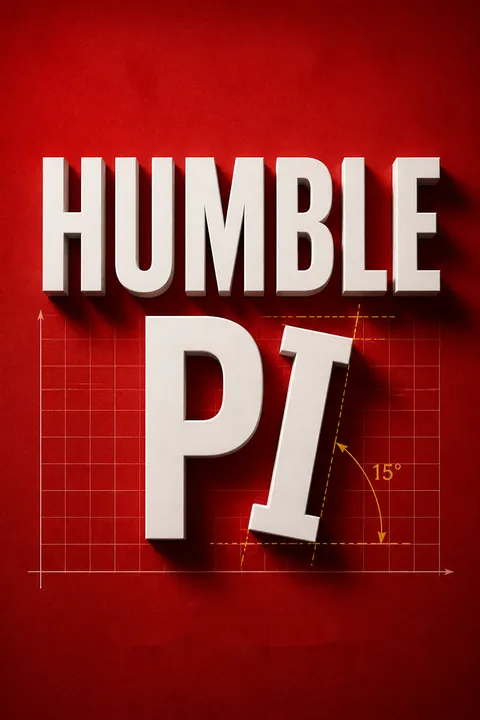
Humble Pi is a popular-mathematics book organized around incidents rather than a single formal theory. Its connective argument is that mathematical errors are not anomalies outside modern life. They are clues to the hidden assumptions that let modern systems function: the width of a counter, the definition of a unit, the interpretation of a missing value, or the behavior of a crowd on a bridge. Parker’s humor makes these abstractions memorable, but the stories also resist a simple morality tale about careless individuals. Failures often emerge from several reasonable-seeming decisions interacting across time, organizations, and technical boundaries.
The book’s most useful shift is from asking who made the arithmetic error to asking what made the error consequential. A person may enter the wrong bolt, but poor labeling, lighting, tools, and review procedures determine whether that mistake becomes a catastrophe. The same logic applies to spreadsheets and software: a tool’s apparent convenience can conceal assumptions that users do not know they are making. This is a human-factors perspective as much as a mathematical one.
The cases also show that numerical correctness is contextual. A probability calculation can be internally consistent but inappropriate when events are dependent. A reported average can be accurate but unrepresentative. A number can be precise while its inputs are uncertain, or meaningless without units. Mathematics is not a substitute for judgment; it disciplines judgment by making assumptions inspectable.
The book’s limitation is also part of its charm: a collection of vivid failures naturally overrepresents dramatic breakdowns. It cannot, by itself, estimate how often systems succeed or which interventions work best across industries. Still, that imbalance sharpens its central practical message. Trustworthy systems do not depend on everyone being infallible. They make assumptions explicit, test boundaries, preserve uncertainty, and create routes for errors to be caught, reported, and learned from.
Review Summary
Humble Pi receives largely positive reviews for its entertaining exploration of mathematical errors in the real world. Readers appreciate Parker's humor, accessible writing style, and wide-ranging examples from engineering, computing, and everyday life. Many find the book both informative and amusing, praising its ability to engage even those who typically dislike math. Some criticisms include repetitiveness in later chapters and a lack of cohesion. Overall, reviewers recommend it as an enjoyable read that highlights the importance of mathematics in our daily lives.
People Also Read



Glossary
rollover errors
Counters wrap aroundA rollover error occurs when a computer value reaches the largest number its allocated storage can represent and then resets or wraps to another value, often zero or a negative-looking value. Software that assumes the count will keep increasing may malfunction. Parker shows how time counters and small binary values produced failures in aircraft systems, games, and medical equipment.
off-by-one error
A count misses oneAn off-by-one error is a counting mistake in which a process includes one extra item or omits one item. It often arises when people confuse the number of intervals between points with the number of endpoints, or begin counting at zero rather than one. The fence-post problem is a classic example: five fence sections require six posts when both ends need support.
Swiss cheese model
Layered safety barriersThe Swiss cheese model, associated with psychologist James Reason, represents safety defenses as layers that each contain weaknesses. Most errors are stopped by one of the layers, but an accident can occur when weaknesses align and a hazard passes through every defense. The model directs attention toward interacting system conditions, not only the final person involved.
hot-cheese model
Changing safety barriersThe hot-cheese model extends the Swiss cheese model by treating safety layers as changeable rather than fixed. A safeguard can block some errors while creating new pressures, workarounds, or failure paths. It highlights that adding a new procedure or technology does not automatically improve safety. Systems must be evaluated after implementation because people adapt to them.
little data
Individual data-entry detailsLittle data is Parker’s term for the work of collecting, entering, and storing individual pieces of information before large-scale analysis begins. Names, dates, identifiers, and locations can be misread, rejected, or transformed by software. Errors at this basic stage can corrupt later analysis, no matter how sophisticated the tools used to process the dataset.
survivor bias
Only survivors are observedSurvivor bias occurs when conclusions are drawn from the people, objects, or institutions that remain visible, while those that failed or disappeared are missing from the sample. A bridge that has lasted for centuries may appear exceptionally well designed partly because weaker bridges collapsed or were replaced. The observed survivors may not represent the original population.
Benford's law
Uneven leading digitsBenford’s law describes a recurring pattern in certain naturally occurring collections of numbers: leading digits are not equally common. In suitable datasets, values beginning with 1 appear more often than values beginning with larger digits, while 9 is relatively uncommon. Accountants can use deviations as a screening signal for unusual data, though a deviation alone does not prove fraud.
Datasaurus Dozen
Matching statistics, different shapesThe Datasaurus Dozen is a collection of datasets whose basic summary statistics, including means and standard deviations, are nearly identical, although their plotted shapes differ substantially. One resembles a dinosaur, while the others form different patterns. The example demonstrates that summary values alone can hide structure and that inspecting data visually can reveal relationships the aggregates conceal.
pseudorandom number
Deterministic random-like valueA pseudorandom number is produced by a deterministic algorithm but is designed to resemble a value drawn randomly. Such generators are efficient and useful for many applications, but their outputs depend on an initial seed and the algorithm’s quality. Predictable seeds or weak generators can undermine security, simulations, or games that rely on unpredictability.
FAQ
What's Humble Pi: A Comedy of Maths Errors about?
- Exploring math mistakes: The book delves into real-world mathematical errors, illustrating their significant consequences.
- Humorous anecdotes: Author Matt Parker uses humor to make complex mathematical concepts accessible and entertaining.
- Real-life implications: Each chapter highlights the importance of mathematics in everyday life, from engineering to finance, and the far-reaching effects of errors.
Why should I read Humble Pi by Matt Parker?
- Engaging storytelling: Matt Parker combines humor with education, making it enjoyable for both math enthusiasts and those who typically shy away from the subject.
- Real-world relevance: The book illustrates how mathematical errors impact various fields, emphasizing the importance of accuracy in calculations and decision-making.
- Increased math appreciation: Readers gain a greater appreciation for mathematics and its societal role, understanding common pitfalls in mathematical reasoning.
What are the key takeaways of Humble Pi?
- Math is everywhere: Mathematics is integral to daily life, influencing technology, finance, and more.
- Mistakes are common: Everyone, including professionals, makes mistakes, which can lead to serious consequences.
- Learning from errors: The stories encourage readers to be more mindful and precise in their mathematical endeavors.
What are the best quotes from Humble Pi and what do they mean?
- "A million seconds from now is just shy of eleven days." This quote illustrates the difficulty humans have in comprehending large numbers.
- "You can’t count on it." This phrase reminds readers that even simple counting can lead to errors if not approached carefully.
- "Our human brains are simply not wired to be good at mathematics." This emphasizes the innate challenges people face with math, suggesting education and practice are essential.
What types of mathematical errors are discussed in Humble Pi?
- Engineering mistakes: Examples include the Millennium Bridge wobble and the 20 Fenchurch Street building's reflective glass issue.
- Statistical miscalculations: Misinterpretation of statistics can lead to wrongful convictions, as seen in a case involving flawed statistical evidence.
- Computer errors: Issues like the divide-by-zero error in computer systems illustrate how programming mistakes can have serious implications.
How does Humble Pi explain the importance of precision in mathematics?
- Real-world examples: Anecdotes demonstrate how small errors in calculations can lead to catastrophic outcomes, such as the Therac-25 radiation machine incident.
- Cautionary tales: Each story serves as a reminder of the need for precision and attention to detail in mathematical work.
- Encouraging mindfulness: The book advocates for a careful approach to mathematics, urging readers to double-check their work.
What is the significance of the title Humble Pi?
- Play on words: The title references the mathematical constant pi (π), symbolizing the complexity and unpredictability of mathematics.
- Emphasis on humility: "Humble" suggests that even confident mathematicians can make mistakes, highlighting the importance of humility.
- Connection to errors: The title encapsulates the theme of exploring mathematical errors and the lessons learned from them.
How does Humble Pi address the concept of probability?
- Human intuition vs. reality: Parker discusses how human intuition often fails in understanding probabilities, leading to misconceptions.
- Real-life examples: Anecdotes like the lottery illustrate how probability works in practice and how people misinterpret it.
- Encouraging critical thinking: Parker urges readers to think critically about probabilities and not rely solely on gut feelings.
How does Humble Pi illustrate the relationship between math and technology?
- Coding errors: Programming mistakes can lead to significant failures, such as the Knight Capital trading loss and the Ariane 5 rocket disaster.
- Randomness in computing: The book explores how computers generate random numbers and the challenges of achieving true randomness.
- Human error in tech: Human error is often the root cause of technological failures, highlighting the need for robust systems.
What are some notable examples of math errors discussed in Humble Pi?
- Ariane 5 Rocket Failure: A programming error caused the rocket to self-destruct shortly after launch due to a data type mismatch.
- Knight Capital's Trading Loss: A coding error led to a $461.1 million loss in a single day, illustrating financial devastation from small mistakes.
- Vancouver Stock Exchange Index: An error in calculation led to the index reporting a value half of what it should have been.
How does Humble Pi encourage a positive attitude towards mistakes?
- Embracing fallibility: Parker advocates for a culture that accepts mistakes as part of the learning process.
- Personal anecdotes: The author shares his own experiences with mathematical errors, making the message relatable.
- Promoting curiosity: By framing mistakes as opportunities for exploration, Parker inspires deeper engagement with mathematics.
What are the implications of math errors in finance, as discussed in Humble Pi?
- High-stakes environment: Even minor coding errors can lead to massive losses, as seen with Knight Capital.
- Impact on market stability: Errors in trading algorithms can disrupt market stability, leading to phenomena like the flash crash.
- Regulatory considerations: Parker emphasizes the need for oversight and accountability in the financial industry.

Download PDF
Download EPUB
.epub digital book format is ideal for reading ebooks on phones, tablets, and e-readers.








