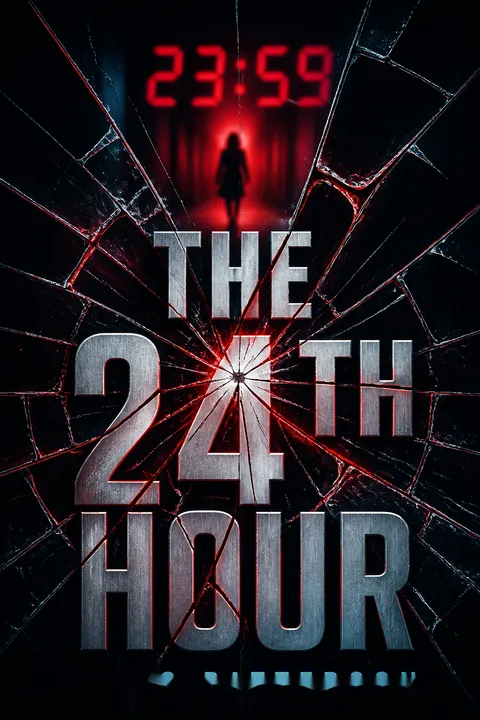


Plot Summary
Prologue
Six months before the main story, Lindsay Boxer, a San Francisco homicide sergeant, abandons her friends’ birthday lunch when a scream rises from upstairs. In a restaurant changing room, she finds Mary Elena Hayes beaten, strangled, and barely able to speak.
Lindsay catches restaurant worker Tyler Cates half dressed nearby and arrests him, but the victim’s shifting names and her insistence that the attack happened to more than one of her selves leave Lindsay with a question the arrest cannot answer. The ambulance takes Mary Elena away, Cates goes into custody, and the lunch meant to celebrate friendship becomes the beginning of a difficult prosecution.
The opening makes a crime scene out of a celebration, so Lindsay’s divided life as friend and police officer is present from the first turn. Her quick intervention secures a suspect, but it does not produce a simple account of what happened. Mary Elena’s different names are initially evidence of confusion, then become the central challenge of the case: the victim’s fractured memory makes her vulnerable not only to assault but also to disbelief. The prologue plants the courtroom conflict before anyone enters court. It also shows how an act of care, Lindsay leaving her friends to help a stranger, can set several lives moving toward consequences none of them chose.
The Fricke Murder Returns
The Women’s Murder Club takes a rare day on the bay to celebrate reporter Cindy Thomas’s success and the renewed promise of marriage between Cindy and Lindsay’s partner, Rich Conklin. The next morning, Lindsay and Rich are called to Pacific Avenue, where billionaire James Fricke lies shot dead. Six months earlier, his wife Holly, a former Olympic gymnast and admired philanthropist, was killed in the same neighborhood.
James’s watch, wedding ring, and Jaguar are gone, as Holly’s jewelry and Bentley had been. A witness saw a man shoot James and drive away in his car, but could not identify him. Lieutenant Jackson Brady puts Lindsay in charge, and the paired killings turn an old, stalled investigation into an urgent hunt.
The shift from the yacht’s carefully earned ease to a familiar killing ground gives the novel its emotional and structural hinge. Lindsay’s friends have reason to celebrate a future together, but her work immediately returns her to a loss that has never been explained. The resemblance between the Fricke murders initially invites a robbery theory, while the precision and excess of the shootings resist that explanation. James’s death also changes the meaning of Holly’s case: the first murder can no longer be treated as an isolated tragedy. The clue that matters is not yet a person or motive, but repetition itself.
Yuki Builds a Difficult Case
As the trial of Tyler Cates approaches, prosecutor Yuki Castellano sees that the physical evidence of rape is strong, but the case turns on whether Cates knew Mary Elena Hayes could not give informed consent.
Her chief doubts that a jury will accept a prosecution built around dissociative identity disorder, and Yuki’s second chair, Nick Gaines, presses Mary Elena on the defense’s account. Under his questions, she abruptly becomes Lily, a frightened childlike identity who treats Yuki as her mother and rejects Gaines.
Yuki calls Mary Elena’s psychiatrist, Dr. Stuart Aronson, and receives a therapy video with her client’s permission. The episode warns Yuki that testimony could trigger an identity shift in court, but she continues preparing rather than abandon the case.
Yuki’s dilemma is not simply whether a witness will be believed. The legal process demands a stable, continuous account, while Mary Elena’s condition is described as a response to trauma that disrupts memory and continuity. Gaines’s aggressive rehearsal produces useful information about the risk, but it also enacts the danger Yuki is trying to manage. Yuki responds by consulting Aronson and adapting her preparation rather than treating Mary Elena’s distress as disqualification. The scene exposes a difficult ethical balance: preparing a witness can become another demand imposed on someone whose original injury was a loss of control.
A Hospital’s Forty-Eight Hours
Lindsay’s husband, Joe Molinari, is pulled back into federal work when FBI section chief Craig Steinmetz summons him to help cyberterrorism director Bao Wong. A ransomware group has already breached Oakland Pediatrics, altered medical protocols, and contributed to four newborn deaths before collecting a multimillion-dollar payment.
Now St. Vartan’s Hospital faces a similar attack, with its records and medical systems at risk. Joe and Bao meet the hospital leadership and its cybersecurity contractors, Sveinn Thordarson and Peter Wooten.
The intruders have embedded malware over months and threaten to trigger further damage if the ransom is not paid. Because abruptly disconnecting the network could worsen the crisis and erase the trail, the team must protect patients while tracing an enemy whose digital signals keep moving.
The cyber plot enlarges the novel’s question of responsibility beyond individual violence. In the Fricke case, a killer leaves bodies and physical traces; at St. Vartan’s, attackers can alter treatment from a distance and make institutional systems carry out harm. Joe’s expertise is useful but incomplete, which forces him to rely on Bao and the security team rather than play solitary savior. The deadline converts technical uncertainty into a human emergency: a network cannot be switched off without consequence because patients depend on it. Here, the book makes infrastructure feel intimate, connecting code, medical decisions, and the vulnerable bodies that bear their cost.
The Will Behind the Photograph
At the Fricke mansion, Jamie’s house manager, Arthur Bevaqua, gives Lindsay a draft of the dead man’s will. Its revisions cancel the fortune and house once intended for Holly and redirect substantial money to Jamie’s sons, Holly’s sister Rae Bergen, and several household employees.
A note points Lindsay to personal messages in Jamie’s desk. She finds a hidden key taped behind a framed photograph of Jamie and Holly, then discovers cards describing intimate attachments to cook Patty Delaney and Holly’s former assistant Marilyn Stein.
When Lindsay rushes upstairs after Sonia Alvarez calls for help, she finds Patty distraught in her bedroom and Arthur nearby. Patty says she and Jamie had planned to marry. The discoveries widen the list of people with emotional or financial stakes in the deaths.
The will turns the mansion into an archive of competing versions of Jamie. Publicly, he was a powerful husband and philanthropist; in private, his promises and bequests linked him to employees and relatives in ways Lindsay had not known. The hidden key and private cards make investigation an act of reading, but documents do not automatically explain motive. Patty’s grief is genuine enough to complicate suspicion, while the will gives that grief a possible financial dimension. Lindsay’s error-prone first assumptions about Arthur also reveal the danger of mistaking proximity for knowledge: household intimacy can conceal loyalty, dependence, and secrets without proving murder.
The Witness Who Splinters
In court, Yuki presents Lindsay’s arrest testimony and medical evidence of Mary Elena’s injuries, then calls psychologist Laurie Birney and psychiatrist Aronson. Aronson traces Mary Elena’s disorder to repeated childhood abuse by her grandfather and explains how Lily, Olivia, Loretta, and Ana developed as protective identities.
During testimony, Mary Elena shifts into Ana, who is angry at the prosecutor’s office and must be guided away from the courtroom. Aronson later explains that Ana told Cates Mary Elena had a mental disorder and was not available for sex.
Mary Elena then takes the stand and describes entering the restaurant for a restroom, but says she lost time after Cates frightened her. Her account is interrupted when Cates accuses her of knowing him from Brookside Psychiatric.
The testimony converts an abstract diagnosis into a contested question of knowledge. Mary Elena’s alters are presented as responses to childhood harm, yet the jury must decide what Cates could understand in a brief encounter and what can be proved through testimony. The courtroom itself becomes a stressor: a witness who cannot reliably recall the assault is asked to describe it in public, while her identities emerge under pressure. The book draws a distinction between memory and evidence. Mary Elena’s amnesia does not erase the injuries or DNA, but those facts cannot by themselves settle the question of consent or what the accused knew.
The Wrong House Burns
Joe and Bao follow a tip to an abandoned house occupied by young men and filled with expensive computer equipment. When police close in, four occupants run outside with guns and are arrested. A fifth fires from the canyon, hitting Officer Devon Brown in the thigh.
Bao discovers that the house is being used to manufacture and sell drugs, not to hold St. Vartan’s network hostage. One fugitive sets a kitchen fire and shoots again; Joe and Bao return fire, and the gunman falls down the steep, muddy slope and appears to die.
Brown is rushed for surgery, Bao’s hands are burned, and the team has no cyberterrorists to question. The false lead costs the operation time and leaves Joe responsible for a dangerous failure without bringing the hospital closer to safety.
The failed raid is a practical correction to the fantasy that urgency guarantees accuracy. Joe’s team has a credible lead and real weapons, yet the people they capture are criminals of a different kind. A wrong target still produces consequences: an injured officer, a fire, and a death on the ravine. Joe must hold the risk of those outcomes while accepting that the search remains unfinished. The sequence also places Bao in physical danger and shows her competence under pressure, but does not turn skill into certainty. In a story full of apparent clues, this is the costly reminder that resemblance is not proof.
The Laptop at Starbucks
While the raid yields nothing, Wooten and Thordarson’s tracking system finally detects a signal moving from Europe into San Francisco. Joe enters a Starbucks identified by the system and finds a laptop left behind by a customer. A note on it suggests its owner expects someone to find him.
Joe takes the computer, and Bao confirms it is the machine Apocalypto is seeking. They locate its owner, Bob Nicholson, who admits he negotiates ransomware payments for a Dutch toy company that secretly operates as a cybercrime business.
Bob offers the information and technical help needed to free St. Vartan’s in exchange for protection from the organization. Steinmetz accepts the bargain. Bob and the security contractors repair and test the hospital network, ending the immediate threat to patients.
The laptop offers an unusual route into a hidden organization: its owner does not evade capture so much as make himself findable. Bob’s decision is partly self-preservation and partly an attempt to stop work he can no longer rationalize. His role as negotiator has allowed him to distance himself from the damage, but the hospital attack makes that distance untenable. The resolution depends on cooperation with a compromised insider rather than a clean victory through force. It saves the hospital from the immediate attack, while leaving moral accountability unresolved. The book’s interest is in the fragile moment when a participant chooses to become a witness.
Brookside Falls Apart
Cates’s outburst about a shared stay at Brookside forces Judge Henry St. John to halt proceedings and investigate. Mary Elena is re-traumatized, while Yuki fears that even an unsupported claim will poison the jury’s view of her.
The court checks facilities across the country and finds no record that either Cates or Mary Elena was a patient at any Brookside institution. Cates refuses the judge’s opportunity to correct the lie and initially rejects a proposed plea.
When proceedings resume, however, he pleads guilty to rape and aggravated assault, apologizes to Mary Elena, and receives a sentence of thirty-five years for rape plus fifteen for assault, both with parole eligibility. Yuki’s difficult case ends with conviction, though not with the testimony she had prepared to deliver.
The Brookside claim attacks the trial’s most vulnerable point: Mary Elena’s credibility. Because the defense has already framed her diagnosis as unverifiable, the allegation of a shared institutional past could make her assault seem like a story between acquaintances rather than violence against a stranger. The judge counters this by treating the claim as checkable rather than allowing courtroom spectacle to substitute for evidence. Cates’s eventual guilty plea resolves the legal question, but only after Mary Elena has absorbed another public assault on her reliability. The outcome gives her recognition, not recovered memory, and underlines the difference between judicial closure and psychological repair.
The DNA in Jamie’s Hand
Claire Washburn notices abrasions on Jamie’s knuckles and sends swabs for rapid DNA testing, suspecting he struck his killer before he died. At Jamie’s funeral, Lindsay and Rich question employees and relatives, including Rae, Holly’s sister and a longtime presence in the Fricke family.
Rae acknowledges her love for Jamie but gives little that identifies a killer. Holly’s former assistant Marilyn describes her own complicated attachment to Jamie, while Rae’s former husband Christophe offers an alibi for the morning James was shot.
Lindsay learns from gossip writer Moira Benet that Holly and Christophe also had a brief affair, adding another layer to the family’s permissive relationships. Alvarez pursues hired killer Padre, but discovers he was in jail during Jamie’s murder. No suspect is cleared by the new intimacy, yet DNA points toward a male relative.
The funeral gathers people who have all loved, served, or depended on the Frickes, but proximity gives Lindsay no dependable map of motive. The revelations about overlapping relationships resist a conventional jealousy plot: the people involved describe an arrangement in which affairs were known and sometimes tolerated. That does not make the relationships harmless, but it prevents Lindsay from treating betrayal as self-evident motive. Claire’s forensic observation shifts the investigation from interpretation to a testable biological clue. The DNA does not name a killer, yet it constrains the field in a way the funeral’s emotional performances cannot. The dead man’s body becomes more informative than the living mourners.
Rae’s Murder on Video
Christophe arrives at the Hall of Justice frantic, after sending Lindsay a recording of a video call with Rae. On the screen, a man approaches Rae from behind and shoots her as she works at her computer. Lindsay recognizes that the killing has turned the investigation into an immediate manhunt.
In Tahoe, Alvarez has already spent time testing the lead against Padre, a contract killer who claimed knowledge of the Frickes; police records place him in custody when James was shot, making him a dead end.
Christophe cannot identify the killer at first, but investigator Paul Chi questions him. Lindsay and Rich fly to Malibu, where Rae lived, and begin following the trail toward Pepperdine University. Jamie’s close male DNA match and the attack on Rae now point toward someone inside the family circle.
Rae’s murder changes the investigation from retrospective reconstruction to active danger. The video provides an unusually direct record of the crime, but its clearest fact is only that the killer is close enough to approach her unseen. Christophe’s distress gives Lindsay an urgent witness, though emotion alone cannot establish what he knows. Alvarez’s failed trip to Padre is useful precisely because it closes a tempting but unsupported theory. The case narrows through independent forms of evidence: forensic kinship, a recorded killing, and the family’s movements. Their convergence prepares the revelation without making it seem inevitable before Lindsay reaches the person who can explain it.
The Son in the Chapel
At Pepperdine, Lindsay and Rich find Rae’s son, Brock Picard, asleep in his Porsche. He bolts when they approach and fires at them before taking a student hostage inside the campus chapel. Lindsay and Rich persuade him to release the student, then lower their weapons to keep him talking. Brock admits Jamie was his biological father and says Holly disclosed the truth before ending their sexual relationship.
He says he killed Holly, then shot Jamie after luring him to the street, and finally killed Rae during the video call. Jamie’s DNA on his knuckles fits the family connection. Brock hands Rich his gun, then takes it back and shoots himself. The officers cannot save him, and the three connected murders end without a trial.
Brock’s confession gives the case its answer while revealing how little the family’s apparent openness protected the people inside it. His grievance is not a single affair or inheritance, but a delayed recognition that his identity and attachments were shaped by secrets adults managed around him. That history explains his rage without excusing the murders. The chapel heightens the scene’s conflict between sanctuary and violence, while Lindsay’s decision to lower her weapon creates a chance for speech rather than an immediate shootout. Brock’s suicide prevents accountability from becoming a public process. The detectives gain factual closure, but the motive arrives through a person who refuses to live with what he has done.
Choosing the Dangerous Work
After the St. Vartan’s crisis, Steinmetz offers Joe a full-time federal position. Joe and Lindsay weigh the salary and intellectual challenge against the absences and dangers that once strained their marriage.
Lindsay supports him, and Joe decides to take the job, with their neighbor Gloria Rose likely to help care for their daughter, Julie. The choice is not a return to an easier life; it is an agreement to make room for risk without pretending it will disappear.
Meanwhile, Cindy and Rich prepare for the wedding she had postponed while protecting her career and independence. She asks Lindsay to stand beside her as maid of honor, and Lindsay agrees. The friends’ private commitments now move toward public vows, though the work that brought them together remains close.
The personal resolution refuses a simple opposition between family and vocation. Joe’s work is dangerous, and Lindsay remembers what its demands once cost them, yet she does not decide on his behalf. Their choice depends on explicit trust and practical support, including childcare, rather than romantic denial of risk. Cindy’s wedding brings a parallel resolution: she can commit to Rich without surrendering the career she worked to build. Both couples negotiate continuity rather than escape. The novel leaves their safety uncertain, but portrays partnership as a practiced capacity to share decisions, anticipate consequences, and remain present when professional danger enters the home.
Epilogue
Cindy marries Rich with Lindsay as maid of honor and Yuki and Claire beside her. At the altar, Cindy abandons her prepared vows and speaks from the relationship they have built through years of hesitation, care, and loyalty. Rich answers with an equal commitment, and their families and friends celebrate around them.
Yuki watches Jackson Brady and remembers the dangers their work brings into marriage; Claire imagines renewing her own vows. Cindy leaves the ceremony happy and newly certain of her choice, while keeping a private piece of news for that night with Rich.
The wedding gives the friendship plot a resolution distinct from the murder cases: Cindy’s commitment is not a sudden conversion but the end of a long negotiation between love, work, and fear. Her unscripted vows matter because she stops trying to produce the perfect statement and speaks from the accumulated details of ordinary care. The ceremony also acts as a mirror for Yuki and Claire, whose own marriages carry different histories of danger and intimacy. The closing private secret remains undisclosed, preserving the sense that marriage begins another conversation rather than sealing every uncertainty. Public vows affirm connection; private life continues beyond the page.
Analysis
The novel braids three kinds of vulnerability: Mary Elena’s body after assault, St. Vartan’s dependence on compromised technology, and the Fricke family’s private history beneath its wealth and public image. Each plot asks how harm can be established when the most direct account is incomplete. Mary Elena cannot remember the attack, the hospital cannot simply sever its infected network, and Lindsay cannot infer a killer from the Frickes’ crowded field of lovers and dependents. The book’s recurring answer is procedural rather than mystical: gather medical evidence, test testimony, track signals, preserve traces, and revise assumptions when facts disagree.
That procedural faith is not presented as painless. Yuki must ask a traumatized witness to endure public scrutiny; Joe’s false lead leaves an officer critically injured; Lindsay’s suspicion repeatedly risks turning emotional proximity into accusation. Their competence consists partly in admitting those limits and continuing to work. The plot contrasts systems that can create accountability with systems that can obscure it. A courtroom can test an accusation, but its demand for a coherent witness strains someone whose mind protects her through discontinuity. A hospital network can save patients, yet the same infrastructure can be weaponized without a visible attacker.
The Fricke murders offer the darkest version of hidden consequence. Adult secrecy leaves Brock with a fractured understanding of kinship and belonging, but the story does not treat that injury as absolution. His grievance explains his violence while his choices remain his own. Across the investigations, intimacy is both shelter and exposure: friends sustain Lindsay and Yuki, spouses negotiate dangerous work, and family secrets become lethal. The closing wedding and Joe’s career decision do not promise safety. They show characters choosing mutual commitment with a clear view of risk, which is more credible, and more demanding, than pretending love can make danger disappear.
Review Summary
The 24th Hour receives mixed reviews, with ratings ranging from 1 to 5 stars. Many readers find it an enjoyable, fast-paced read with familiar characters, while others criticize its formulaic plot and lack of depth. The book features three separate storylines, including a rape trial, a murder investigation, and a cyberterrorism plot. Some reviewers appreciate the multiple narratives, while others feel they are underdeveloped. Long-time fans of the Women's Murder Club series generally enjoy the book, but some express disappointment compared to earlier installments.
People Also Read







Characters
Lindsay Boxer
Homicide’s moral centerLindsay is a San Francisco homicide sergeant, devoted friend, and mother whose work repeatedly brings violence to the edge of her home life. She acts quickly at a crime scene, but her strongest investigative habit is returning to details other people overlook. That persistence makes her an effective lead on the Fricke murders, even when she becomes attached to a theory too soon. Lindsay depends on her partner Rich, her Women’s Murder Club friends, and her husband Joe, yet does not confuse intimacy with certainty. She wants justice for victims while understanding that evidence must carry the case. Her defining tension is practical: she must stay open to danger at work without allowing it to consume the life she has built with Joe and Julie.
Yuki Castellano
Relentless trial prosecutorYuki is an assistant district attorney and Lindsay’s close friend, married to Homicide Lieutenant Jackson Brady. She approaches prosecution as both legal craft and moral obligation, especially when a victim’s credibility is vulnerable. Mary Elena’s case forces Yuki to argue from medical evidence, expert testimony, and a witness whose memory cannot provide a continuous narrative. Yuki’s composure is earned through preparation, including advice she carries from her late mother, but she is not immune to fear that one bad moment will undo months of work. Her strength lies in adapting without pretending uncertainty has vanished. She tries to protect Mary Elena while also asking her to endure the exposure a trial demands.
Joe Molinari
Federal-risk specialistJoe is Lindsay’s husband, Julie’s father, and a former senior government operative who now works as a risk assessment consultant. He brings experience in security and cyber threats to the St. Vartan’s crisis, but recognizes when Bao and the cybersecurity specialists know more than he does. Joe combines procedural caution with a willingness to act under pressure, a mix that makes him useful in the field and uneasy about the consequences of mistakes. At home, he is affectionate and playful, and he and Lindsay work to keep their marriage from being reduced to their jobs. The federal offer forces him to consider how much of his old professional life he wants back.
Mary Elena Hayes
Trauma survivor and witnessMary Elena is a human-resources employee living with dissociative identity disorder after severe childhood abuse. She has periods of lost time and does not remember the assault at Xe Sogni, even though her body bears clear evidence of violence. Several protective identities, including Lily, Olivia, Loretta, and Ana, respond to situations she cannot manage as her everyday self. The trial asks her to expose a deeply personal condition to strangers while the defense questions whether that condition exists and whether she can be trusted. Mary Elena is not defined only by vulnerability: she seeks treatment, works, and agrees to participate in the case. Her presence forces the legal system to confront the limits of memory as proof.
Cindy Thomas
Fearless crime reporterCindy is a San Francisco Chronicle crime reporter, Lindsay’s close friend, and a member of the Women’s Murder Club. Her reporting instinct persists even when friends ask her to respect the boundary between a case and a private conversation. She is bold, funny, and professionally ambitious, but her independence also protects her from commitments she fears might narrow her life. Her relationship with Rich has lasted through that uncertainty, with his patience giving her room to make her own decision. Cindy’s success as a writer does not erase her loyalty to the people she covers or loves. She is often the group’s most irreverent presence, yet she can act decisively when someone she cares about is threatened.
Rich Conklin
Lindsay’s steadfast partnerRich is Lindsay’s longtime homicide partner and Cindy’s devoted partner. He is a patient interviewer who can help distressed witnesses speak without turning every exchange into a contest. His steady temperament complements Lindsay’s urgency, and his loyalty extends beyond the squad room into a relationship with Cindy that has survived years of differing expectations. Rich comes from a large family and hopes for a shared future, but does not use that hope to dictate Cindy’s choices. His professional competence is matched by a quiet generosity, evident in the small practical ways he supports Lindsay and the people around him. He represents constancy without passivity: he waits, but he remains honest about what he wants.
Claire Washburn
Medical examiner and confidanteClaire is San Francisco’s chief medical examiner and one of Lindsay’s closest friends. She moves easily between forensic precision and personal warmth, examining victims without losing sight of the people who must live with the findings. Her work supplies essential evidence in both the assault and homicide investigations, and her attention to a small injury can redirect an entire case. Claire is practical rather than theatrical, willing to admit when a promising clue remains only a hypothesis. She is married to Edmund and has a family of her own, giving her a grounded perspective on the costs of dangerous work. Among the friends, Claire often steadies emotion by returning the group to what the evidence actually shows.
Tyler Cates
Restaurant assault defendantTyler works in the kitchen at Xe Sogni and becomes the defendant in the case arising from Mary Elena’s assault. He insists that the encounter was consensual and that he did not understand her condition, making his knowledge central to the prosecution. His account clashes with the injuries, the screams heard downstairs, and the victim’s shifting identities. In court, he is volatile enough to disrupt proceedings, while his defense attorney tries to undermine the psychiatric basis of the case. Tyler’s limited education does not settle questions of responsibility; the trial turns on what he perceived and chose to do. He functions as a test of whether legal standards can account for a victim who cannot remember an attack.
Sonia Alvarez
Fearless homicide investigatorSonia is a homicide inspector who joined Lindsay’s team after undercover work with Las Vegas Metro. She is confident, observant, and eager for demanding cases, with a directness that helps move interviews forward. Sonia’s energy sometimes makes her push hard, but she can also recognize when a suspect’s emotional display does not fit the evidence. She works closely with Lindsay and Rich on the Fricke investigation and takes initiative when a possible hired killer is identified. Her history with former colleagues gives her access to leads outside San Francisco, though she still needs to test those leads rather than trust their reputation.
Bao Wong
Cyberterrorism directorBao directs the FBI’s cyberterrorism work and becomes Joe’s partner during the threat to St. Vartan’s. She understands the technical patterns behind ransomware attacks and can translate them into operational choices for agents and hospital leaders. Bao is disciplined without being remote; her affection for her son Cameron surfaces even as she works against a deadline. In the field, she remains composed through a raid, a fire, and a gunfight, then returns to examining the computers. She values collaboration and knows when a promising lead has failed. Her professional competence gives Joe a partner he can respect without needing to pretend that he is the technical expert.
Bob Nicholson
Ransomware insiderBob is an American software specialist recruited into a Dutch company whose legitimate toy business hides a cybercrime operation. He serves as a ransom negotiator and tells himself that he is not responsible for target selection or malware design. Attacks on hospitals make that separation harder to maintain. Bob is technically skilled, financially rewarded, and ashamed of how his work has contributed to real harm. When Joe and Bao find him, he offers information and technical help in exchange for protection. His importance lies in the uncomfortable difference between being a direct perpetrator and being a willing component of a destructive system.
Jamie Fricke
Powerful soccer magnateJamie is a billionaire philanthropist and owner of a Belgian soccer team, accustomed to commanding attention and controlling his surroundings. He has a first family, a second marriage to Holly, and relationships that reach into the household and social circles around them. To Lindsay, he is initially an unpleasant and guarded interview subject whose reputation offers many possible motives but few reliable answers. His will and personal papers reveal a more complicated private life than his public image suggests. Jamie’s wealth gives him influence, while his habits leave a broad network of people with conflicting feelings about him. He remains difficult to understand even after his belongings begin to speak.
Holly Fricke
Beloved Olympic championHolly is a former Olympic gymnast who won gold, founded a women’s sports magazine, and became known for philanthropy and public warmth. Lindsay admired her long before the murder investigation brought them into the same case. Holly’s marriage to Jamie placed her in an elite world of wealth and complicated relationships, but the people who knew her remember her as generous and widely loved. Her death remains the unsolved crime that draws the investigation forward. Holly’s public goodness shapes the case’s emotional stakes without explaining who wanted her dead.
Rae Bergen
Holly’s younger sisterRae is Holly’s younger sister, a writer with a life connected to Hollywood and a long history among the Frickes. She is the mother of Brock and the former wife of Christophe Picard, who remains close to her. Rae has known Jamie for many years and moves through a social world where private relationships are not always conventional. She is grieving, guarded, and difficult for Lindsay to assess, partly because the family’s boundaries and loyalties are unfamiliar to the investigators. Rae’s connection to several central figures makes her a crucial source of context, while her privacy makes that context hard to obtain.
Brock Picard
Rae’s college-age sonBrock is Rae and Christophe’s college-age son, distant from his parents and uncomfortable in family gatherings. Rae says he is difficult to reach and required persuasion to attend Jamie’s funeral. He has grown up near the Fricke family and has his own complicated history with its members. At Pepperdine, he is found in a Porsche, a detail that contrasts with the vague, withdrawn impression he makes at the funeral. Brock’s role in the family story is bound up with questions of belonging, adult secrecy, and the effects of truths withheld.
Arthur Bevaqua
Fricke household managerArthur has managed the Fricke household for two decades, moving from kitchen work into responsibility for staff, schedules, and the house itself. He is loyal to Jamie and Holly and presents himself as a practical servant rather than a confidant, though his long proximity gives him access to sensitive details. He provides Lindsay with the draft will and points her toward people who may know more. Arthur’s composed manner can make him difficult to read, especially when grief and suspicion overlap. He is both a witness to the family’s private life and someone whose own future depends on what happens to the household.
Patty Delaney
Fricke family cookPatty is the Fricke household cook, a warm and emotionally expressive woman whose life has become closely entwined with Jamie’s. Her grief is visible and difficult to separate from the private hopes she had attached to him. Lindsay’s questions place Patty under suspicion, but Rich’s patient interviewing helps her share information without treating distress as proof. Patty knows the household’s rhythms and the people who entered it, giving her a useful perspective even when she cannot identify a killer.
Christophe Picard
Restaurateur and family friendChristophe is a San Francisco chef and restaurateur, Rae’s former husband, and a familiar presence in the Fricke family’s orbit. He remains devoted to Rae and cares deeply about their son, Brock. Christophe is expressive and generous, but his grief can make him difficult to question. He offers Lindsay an alibi and information about Rae, then struggles to explain the danger surrounding her. His restaurant becomes both a meeting place for investigation and a window into the relationships that shaped the family.
Nick Gaines
Yuki’s trial partnerNick is Yuki’s second chair, a talented attorney with sharp instincts and a strong concern for victims of violent crime. He wants to test the weaknesses in the case before the defense can exploit them, but his intensity unsettles Mary Elena during rehearsal. Nick can acknowledge risk and adjust his approach, while remaining committed to the prosecution. His role shows how legal preparation can help a witness and still become emotionally hazardous.
Dr. Stuart Aronson
Mary Elena’s psychiatristAronson has treated Mary Elena over several periods of her life and understands the history behind her dissociative identities. He explains her symptoms to the court and shares a therapy recording with her permission. His testimony supplies clinical context, while his account of Ana’s statements connects Mary Elena’s condition to the question of Cates’s knowledge. Aronson is firm and professional, though the defense’s attack on psychiatric evidence pushes him into a more openly argumentative response.
Ed Schneider
Cates’s defense attorneySchneider is a formidable criminal defense lawyer who attacks the prosecution’s reliance on psychiatric expertise and Mary Elena’s uncertain memory. He presents consent and Cates’s claimed ignorance as the central issues, and he tries to make the jury distrust a diagnosis that cannot be established by a simple physical test. His aggressive courtroom strategy protects his client’s interests but also contributes to the trial’s volatility when Cates interrupts proceedings.
Jackson Brady
Homicide lieutenantBrady commands the homicide unit and is Yuki’s husband. He assigns Lindsay to lead the Fricke task force, coordinates investigators, and takes part in questioning household witnesses. At home, he gives Yuki affection and steadiness before her difficult trial. Brady’s authority is matched by a direct manner that can make an interview intimidating, though his purpose is to keep a complex investigation moving.
Sveinn Thordarson
Cybersecurity response leaderThordarson leads the private cybersecurity firm working with St. Vartan’s. He brings a background in mathematics and security operations, and coordinates the effort to contain the malware while tracking its source. His partnership with Peter Wooten gives the FBI technical capacity it does not possess alone.
Peter Wooten
Cyberattack trackerWooten is Thordarson’s precise, technically gifted partner. He helps create the real-time threat-tracking system that identifies a signal moving toward San Francisco. His work gives Joe and Bao a way to distinguish a promising lead from the false one at the abandoned house.
Henry William St. John
Trial judgeJudge St. John presides over Cates’s trial and insists on order when the courtroom becomes volatile. He takes the Brookside claim seriously enough to investigate it rather than letting it stand as unsupported theater. His rulings and practical judgment help keep the case moving toward a resolution.
Plot Devices
Dissociative identity disorder
Memory, consent, and testimonyMary Elena’s condition shapes the assault case from the first crime scene onward. Her everyday self cannot remember the attack, while identities including Olivia and Loretta experience different parts of the encounter and Ana serves a protective role. The prosecution argues that these changes should have alerted Cates that Mary Elena could not give informed consent. The defense attacks the diagnosis and the gaps in memory. The device is not merely a mystery about which identity was present; it creates a legal conflict between the body’s evidence, a witness’s missing recollection, and the accused’s claimed understanding. It also connects the adult courtroom crisis to the childhood abuse described in therapy.
Jamie’s hidden will
A paper trail of intimacyJamie’s amended will and the private cards in his desk expose financial decisions and attachments that were unknown to Lindsay. The document first directs her toward people who might have motives, while the intimate messages unsettle her initial assumptions about Patty and Arthur. It functions as both evidence and misdirection: the money and relationships broaden the suspect pool, but do not identify the killer. The will also brings the social structure of the Fricke household into view, showing how wealth, employment, sex, loyalty, and inheritance overlap.
Jamie’s knuckle swabs
A blow becomes a leadClaire notices that Jamie’s right hand is swollen and his knuckles are abraded, suggesting he struck someone before he died. She collects separate swabs and requests rapid DNA analysis. The sample does not immediately identify a person, but its eventual relation to James Fricke’s own DNA points toward a male member of his family. This physical trace cuts through the many possible motives raised by the Fricke household and social circle. Its importance depends on careful observation rather than a dramatic confession, and it gives Lindsay a concrete reason to look toward the younger generation.
Cyber threat catcher
Track the roaming signalThordarson and Wooten’s system models suspicious digital signals moving between distant locations and highlights connections to known targets. Its real-time map gives Joe and Bao a way to follow Apocalypto’s shifting path without simply shutting down the hospital network, which could trigger further damage. The tracker initially contributes to the mistaken belief that a drug operation may be the cyberattack source, showing that technical indicators still require interpretation. Later, a matching signal helps Joe locate the laptop tied to the ransomware operation and find Bob Nicholson.
The Starbucks laptop
A negotiator makes contactBob Nicholson leaves his laptop in a public coffee shop with a brief note that prompts Joe to recognize the act as an attempt to be found. The computer is the device Apocalypto is seeking, giving Bao a technical link to the operation and Joe a path to its negotiator. Bob’s willingness to trade information for protection allows the FBI to restore St. Vartan’s systems before the deadline. The abandoned laptop turns a cybercriminal’s private crisis of conscience into an actionable encounter, though the bargain also raises questions about protection, punishment, and the value of cooperation.
Women's Murder Club Series Series


About the Author




Download PDF
Download EPUB
.epub digital book format is ideal for reading ebooks on phones, tablets, and e-readers.








