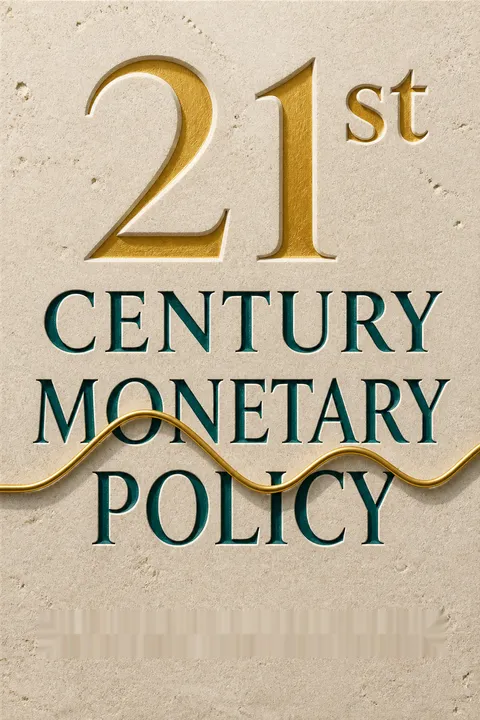


Key Takeaways
Read the Fed’s history as adaptation to three changing constraints
Three forces reshaped policy. Bernanke’s central argument is that the Fed’s transformation came less from new legal powers than from three economic shifts: inflation changed, normal interest rates fell, and financial crises became more dangerous. The historical story explains why a central bank once focused mainly on the money supply and bank panics now uses asset purchases, public promises, emergency lending, and financial oversight. The book opens with a sharp illustration: in January 2020, the economy looked strong and COVID-19 was a passing uncertainty; five weeks later, the Fed was cutting rates and confronting collapsing markets.
History supplies the operating manual. The Fed’s responses to COVID-19 drew heavily on tools developed during the 2007-2009 crisis, while the 2020 policy framework reflected lessons from decades of changing inflation. Past decisions matter because institutions learn, but they also carry the habits and mistakes of earlier eras.
The history makes monetary policy look less like the application of timeless equations and more like institutional learning under pressure. That is a useful corrective to accounts that treat policy tools as neutral inventions. A tool’s meaning depends on the crisis that produced it, the public expectations surrounding it, and the rules that constrain its use. The three forces also interact: low interest rates leave less room to fight recessions, while financial instability can deepen the downturns that require intervention. The framework is compelling, though the book’s historical lens naturally gives less space to forces outside the Fed’s remit, especially fiscal choices and changes in production.
Treat inflation expectations as a policy variable, not background noise
The 1970s taught a costly lesson. U.S. consumer prices rose only about 1.3 percent annually from 1952 to 1965, then inflation averaged more than 7 percent from late 1965 through 1981. Fiscal stimulus, including Vietnam War and Great Society spending, overheated demand. Oil shocks then raised production costs, while workers and firms began assuming that high inflation would persist and built price increases into wages and contracts. This self-reinforcing process helped turn temporary shocks into lasting inflation.
Credibility takes action. Fed chair Arthur Burns repeatedly eased policy when unemployment rose, partly because he doubted monetary policy could control inflation without intolerable job losses. Paul Volcker took a more persistent approach. Inflation fell sharply, but unemployment reached 10.8 percent in 1982. The painful episode restored confidence that the Fed would defend price stability, giving future policymakers more room to respond to downturns.
Expectations matter because people make decisions using forecasts, not just current prices. When workers bargain for wages and businesses set prices, their beliefs about future inflation can help produce the outcome they fear. That feedback loop is a familiar feature of collective behavior: expectations are not merely commentary on reality, they can become part of its machinery. Yet credibility is not a free substitute for action. Volcker’s reputation may have helped, but the severe recession shows that restoring trust can impose immediate costs, unevenly distributed across workers, borrowers, and industries. The history argues for early credibility, not for treating disinflation as painless.
Never let a fragile estimate of full employment dictate policy alone
The Phillips curve is conditional. This economic relationship connects inflation with labor-market slack: when employers compete for scarce workers, wages and prices may rise faster. But the 1970s showed that supply shocks, such as oil-price surges, can raise inflation while unemployment also rises. Inflation expectations matter too. The relationship is therefore a guide, not a fixed law.
The inputs can be wrong. In the 1960s, policymakers treated roughly 4 percent unemployment as sustainable. Later estimates put the natural rate, the unemployment level consistent with stable inflation, closer to 5.5 percent in the 1960s and 6 percent in the 1970s. In the 1990s, unemployment fell without the inflation surge many expected. The Phillips curve appeared flatter, and both the natural unemployment rate and neutral interest rate proved difficult to estimate in real time.
This is a lesson in epistemic humility: measured indicators are not the economy itself, and estimates of hidden variables are especially vulnerable to revision. The Fed’s history shows two opposite errors. Policymakers once believed unemployment could be pushed too low without inflation; later, they worried that falling unemployment would cause inflation even when the evidence stayed subdued. The practical answer is not to abandon models, which can discipline intuition, but to treat them as maps with uncertain coordinates. A dashboard of wages, participation, hours, and prices can reveal more than a single headline rate, although more indicators can also create more opportunities to cherry-pick.
When short rates hit zero, work through bond supply and expectations
QE changes the mix of assets. Quantitative easing, or QE, is large-scale central-bank buying of longer-term securities to lower long-term rates and support the economy. When the Fed bought Treasury bonds and mortgage-backed securities, investors had fewer of those assets to hold, so their prices tended to rise and yields to fall. Sellers could then shift into other investments, reducing borrowing costs more broadly. QE also signaled that the Fed expected to keep short-term rates low, reinforcing its effect on longer-term rates.
The purchases mattered. Research discussed in the book estimates that QE after the financial crisis lowered the ten-year Treasury yield by more than one percentage point at its peak. Bernanke’s model-based estimate is that QE and forward guidance together supplied stimulus roughly comparable to 3 percentage points of additional rate cuts. That is meaningful extra capacity, but it may not be enough in an exceptionally deep recession.
QE is easier to understand when viewed as a change in the supply of assets available to investors, rather than as money simply being poured into the economy. Its second channel, communication, shows how central banking can influence decisions before any loan is made or any purchase occurs. That power also creates a measurement problem: markets react to what they expected, not just what policymakers announce. The evidence supports QE’s usefulness, but the estimated strength is not a universal constant. Market conditions, purchase design, and the credibility of the accompanying message all affect the result.
Watch the funding chain, not just the bad loan
A small trigger can expose a fragile system. Subprime mortgages were a minority of U.S. home loans, yet trouble in that market helped set off the 2007-2009 panic. Mortgages had been bundled into complex securities, while banks and nonbank firms relied on short-term wholesale funding, including repurchase agreements. When investors no longer trusted the securities, they withdrew funding or demanded more collateral. Firms sold assets quickly, prices fell, and credit tightened far beyond housing.
Liquidity and solvency differ. A lender of last resort can provide cash to a sound institution facing a run, but lending cannot repair a firm whose assets are worth less than its debts. After Lehman Brothers failed, government capital support was needed to stabilize the wider banking system. In March 2020, the Fed applied lessons from that crisis quickly, restoring Treasury-market functioning and supplying dollars to foreign central banks through swap lines.
The panic is a network failure, not simply a story about irresponsible mortgage borrowers. Securitization dispersed risk across institutions, while short-term funding made the system vulnerable to sudden withdrawals. That distinction helps explain why the Fed’s response had to reach markets and institutions beyond conventional banks. It also clarifies the boundary between emergency lending and public recapitalization: liquidity can buy time, but it cannot make an insolvent balance sheet sound. The difficult policy question is how to prevent panic without shielding risk-takers from losses. A credible resolution process can make that boundary clearer before a crisis begins.
Markets price tomorrow, so a Fed statement can move today
Communication became a policy tool. Forward guidance is central-bank communication about the expected future course of policy. If investors believe short-term rates will stay low, longer-term rates can fall now, affecting mortgages, corporate borrowing, stock prices, and the dollar. Guidance can be a forecast, which changes with new evidence, or a stronger commitment intended to bind future policy.
Precision matters. After the 2008 crisis, vague promises to keep rates low for an extended period did not convince markets that tightening was far off. In 2013, investors misunderstood the Fed’s discussion of slowing QE purchases, triggering the taper tantrum: the ten-year Treasury yield rose about one percentage point between May and September. The Fed’s independence matters here. Congress sets its goals, but policy independence allows the Fed to choose instruments without taking orders from the president.
Communication is not decoration placed around a decision. It changes the information available to investors and can alter the policy effect before the instrument itself moves. But the taper tantrum shows that more words do not automatically create more clarity. Markets interpret statements through their own expectations, and different audiences may hear different commitments. Transparency therefore requires consistency between public language, internal agreement, and the actual policy path. Independence protects that consistency from short-term political demands, while public explanation helps make delegated authority accountable. Neither secrecy nor a flood of technical detail is a substitute for a comprehensible rationale.
Regulate credit booms before they become crises
Credit busts hit the whole economy. A stock-market crash can hurt confidence and spending, but it is not always followed by a severe recession. The 1987 crash, for example, caused no major financial institution to fail. Credit booms tied to housing are more dangerous because homes are both household wealth and collateral for large debts. When prices collapse, borrowers cut spending, lenders absorb losses, and falling credit can deepen the downturn.
Use targeted safeguards. Macroprudential policies are regulations designed to reduce risks to the financial system as a whole, rather than just protect individual firms. After 2008, stress tests, stronger bank capital requirements, and orderly liquidation rules improved resilience. But gaps remained in shadow banking, where firms perform bank-like functions without equivalent safeguards. Bernanke argues that similar financial activities should face similar oversight, and that monetary policy is usually too blunt to cool one overheated sector without harming the broader economy.
The distinction between asset-price excitement and leveraged credit growth is a practical diagnostic. A rising stock index may signal optimism; a housing boom financed by fragile debt can place household balance sheets, lenders, and spending on the same fault line. That makes regulation a more targeted first response than raising interest rates for everyone. Still, regulation can drive risky activity into less visible corners of finance, so supervision must follow functions as well as institutional labels. The book’s case is strongest when it treats financial stability as system design, not as a forecast about whether a particular asset price is too high.
Let employment strengthen when inflation stays anchored and slack is uncertain
The 2020 framework changed the balance. Flexible average inflation targeting, or FAIT, keeps the Fed’s 2 percent inflation goal but aims to make up for periods when inflation runs below target by allowing it to rise moderately above target for a time. The framework also says the Fed should respond to employment shortfalls, rather than tightening merely because unemployment has fallen. This reflects uncertainty about the natural rate and a weaker historical link between unemployment and inflation.
Employment is broad, not just a statistic. Fed Listens events brought community leaders and workers into discussions of policy. They emphasized how a strong labor market can draw people into work, particularly those with lower incomes or less experience. The pandemic recovery tested the framework: supply bottlenecks and uneven reopening pushed inflation higher than officials expected in 2021. The challenge was to distinguish a temporary supply-driven jump from inflation that might persist.
The framework takes seriously the asymmetric danger of repeated inflation undershoots when rates are already near zero. A promise to tolerate some overshoot can support demand by persuading markets that policymakers will not tighten at the first sign of recovery. Its employment emphasis also recognizes that the gains from a tight labor market are not evenly distributed. The risk is that a flexible, qualitative commitment may be difficult for the public to evaluate. The 2021 price surge made that tension visible: patience can prevent overreaction to temporary disruptions, but a mistaken forecast can give persistent inflation time to become embedded.
Pair monetary speed with fiscal precision when interest rates leave little room
Central banks cannot do everything. When short-term rates approach zero, QE and forward guidance can add stimulus, but Bernanke estimates their combined power at roughly 3 percentage points of conventional rate cuts, not an unlimited reserve. The Fed can support credit and financial stability, but it cannot directly replace lost income or choose which families and firms receive grants.
Fiscal policy fills a different role. Congress’s CARES Act supported households, businesses, health care, and local governments during the pandemic. Such spending can be targeted, while monetary policy acts broadly and quickly. Fiscal decisions, however, are vulnerable to delay and political gridlock. The book considers tools used abroad, including negative rates and yield curve control, but argues that automatic stabilizers, such as unemployment support triggered by worsening conditions, could make fiscal help faster and more dependable.
The contrast is institutional as much as technical. Monetary policy can move rapidly, but it mostly works through economy-wide financing conditions. Fiscal policy can direct help toward particular groups, but it depends on political agreement and administrative capacity. Treating either as a complete substitute for the other ignores its distinct weakness. Automatic stabilizers offer a useful bridge because rules agreed upon in advance can reduce the delay of emergency bargaining. Their design still involves political choices about eligibility and cost, so delegation should be explicit rather than disguised as a purely technical monetary decision.
Defend Fed independence through public accountability and clear limits
Independence is delegated, not absolute. Congress establishes the Fed’s mandate and can change its powers. The institution has policy independence: it can choose how to pursue maximum employment and stable prices without being directed by the president on individual decisions. The 1951 Treasury-Fed Accord established this separation after wartime pressure to keep interest rates low for government borrowing. The Great Inflation showed the cost of allowing election-year politics to shape monetary policy.
Public trust requires more than expertise. The financial crisis damaged the Fed’s reputation, and the pandemic made its actions unusually visible. Press conferences, community outreach, and plain-language explanations help people understand why decisions are made. The Fed can support strong employment and monitor climate-related financial risks, but elected officials must set broader social priorities. Its legitimacy depends on competent action, candor about mistakes, and respect for the boundaries of its authority.
The book presents independence as a bargain: elected officials define the goals, specialists receive room to operate, and the institution remains answerable for results. That structure protects long-horizon decisions from election cycles, but it can look like insulation from democratic judgment, especially when emergency interventions benefit financial institutions. Public communication and community engagement help, though they cannot by themselves settle distributive disputes. The durable case for independence is therefore conditional. It rests on expertise, transparent reasoning, and a visible willingness to stay within delegated powers, rather than on the claim that central bankers are above politics.
Analysis
Bernanke’s history is also an argument about how institutions learn under uncertainty. The Fed does not simply select a tool from a stable menu. It changes its operating methods after failures reveal that old assumptions no longer fit: the Great Inflation exposed the power of expectations and political pressure; the global financial crisis revealed that bank-like risks had migrated beyond banks; the lower-bound problem pushed policy toward asset purchases and commitments about the future. The result is a central bank with more reach, but also greater exposure to public scrutiny and political contest. The strongest through-line is the interaction of credibility and flexibility. A central bank needs credibility to influence expectations, yet rigid commitments can become dangerous when forecasts fail. Bernanke’s account repeatedly shows that policy messages work only when audiences believe them, understand their limits, and see actions that match the words. That makes communication a form of governance, not merely market management.
The insider perspective is valuable because it reveals uncertainty, disagreement, and operational constraints that neat textbook accounts often omit. It also warrants a critical reading. The author is defending an institution he led, and his account tends to regard Fed independence and crisis interventions as necessary, even when their distributional consequences are politically contentious. He acknowledges mistakes, including the Fed’s inadequate response to inflation and its failure to foresee financial fragility, but readers should keep asking who bears the costs of policy and who receives protection.
The book’s lasting contribution is not a prediction about the next rate move. It is a set of questions for judging policy: Are decision-makers mistaking an estimate for a fact? Is a funding problem actually insolvency? Can regulation target a risk more precisely than interest rates? What public authority supports an emergency action? Monetary policy is powerful, but its legitimacy depends on knowing both what it can do and what it should leave to elected government.
Review Summary
21st Century Monetary Policy offers an insightful look at the Federal Reserve's history and operations from former chairman Ben Bernanke. Readers praise Bernanke's clear explanations of complex monetary policy concepts and his insider perspective on key economic events. The book covers the Fed's evolution, focusing on recent challenges like the 2008 financial crisis and COVID-19 pandemic. While some criticize Bernanke's defense of quantitative easing, most reviewers find the book informative and engaging for those interested in economics and central banking.
People Also Read



Glossary
Phillips curve
Inflation and labor-market slackAn economic relationship linking labor-market conditions, often measured by unemployment, with wage or price inflation. In its modern form, the relationship also accounts for supply shocks and inflation expectations. It is useful for understanding how demand can affect inflation, but the relationship changes over time and is not a precise rule for setting policy.
inflation psychology
Expectations that perpetuate inflationA self-reinforcing pattern in which households, workers, and businesses come to expect high inflation and incorporate anticipated price increases into wages, contracts, and selling prices. Those decisions can help sustain the inflation people expected. The Great Inflation demonstrated how repeated policy failures can weaken confidence that prices will remain stable.
natural rate of unemployment
Unemployment consistent with stable inflationThe estimated unemployment rate consistent with inflation remaining stable, sometimes represented as u*. It is not a fixed or directly observable number. Demographics, workers’ skills, labor-market structure, and the effectiveness of matching workers with jobs can all change it. Mistaking an uncertain estimate for a precise threshold contributed to policy errors during the Great Inflation.
neutral rate of interest
Rate consistent with stable inflationThe interest rate that would prevail when the economy is at full employment and inflation is stable, often represented as R*. It cannot be observed directly and changes with economic conditions, including productivity, demographics, saving, and investment. When the neutral rate is low, central banks have less room to cut rates during recessions before reaching the effective lower bound.
quantitative easing
Large-scale longer-term asset purchasesA central-bank policy of buying large quantities of longer-term securities to reduce their yields, ease financial conditions, and support goals such as employment and price stability. QE can work by reducing the supply of targeted securities available to private investors and by signaling that policy rates are likely to remain low. It is an asset exchange, not government spending or a direct increase in cash held by the public.
forward guidance
Communication about future policyStatements by central bankers about the expected or intended future course of monetary policy. Guidance can influence current financial conditions because long-term interest rates reflect expectations about future short-term rates. A forecast may change as conditions evolve, while a commitment seeks to persuade markets that policy will follow a particular path, often to provide stimulus when short-term rates are near their lower bound.
flexible average inflation targeting
Make up some inflation shortfallsThe Fed’s 2020 framework, which retains a 2 percent inflation goal but seeks inflation moderately above that level for a time after persistent undershoots. It also directs policy to address employment shortfalls rather than tightening solely because unemployment is low. The framework is flexible: it does not set a formula for the averaging period or the size and duration of an overshoot.
shadow banking
Bank-like finance outside banksA network of nonbank institutions and markets that provides services resembling traditional banking, including lending and the creation of liquid short-term investments. Before the global financial crisis, many shadow banks relied on uninsured short-term funding and operated with less oversight than commercial banks. Runs on that funding helped turn mortgage losses into a system-wide panic.
macroprudential policies
Safeguards for system-wide stabilityPolicies designed to reduce risks to the financial system as a whole, rather than focusing only on the safety of individual firms. They can build resilience through capital and liquidity requirements, or respond to specific threats such as rapid credit growth and risky mortgage lending. Their purpose is to limit systemic crises and their economic spillovers.
risk-taking channel of monetary policy
How rates alter risk appetiteThe tendency for easier monetary policy to increase the willingness of lenders, borrowers, and investors to take risks. Low rates can improve balance sheets and confidence, supporting recovery when private risk-taking is too weak. If risk appetite overshoots, however, the same process can help fuel excessive borrowing and financial instability.
FAQ
What's 21st Century Monetary Policy about?
- Historical Overview: The book provides a detailed history of the Federal Reserve's monetary policy from the Great Inflation of the 1970s through the COVID-19 pandemic, highlighting the evolution of the Fed's tools and strategies.
- Key Figures and Events: It focuses on significant Fed chairs like Paul Volcker, Alan Greenspan, and Ben Bernanke, and key events such as the 2007-2009 financial crisis and the pandemic.
- Contemporary Relevance: The narrative emphasizes the importance of understanding these developments for future economic policy, particularly in the context of recent crises.
Why should I read 21st Century Monetary Policy?
- Insightful Analysis: The book offers deep insights into the evolution of monetary policy, making it valuable for those interested in economics, finance, or public policy.
- Firsthand Experience: Bernanke's experience as a former Fed chair adds credibility and depth to the analysis, providing a unique perspective on the Fed's decision-making processes.
- Lessons for the Future: It provides lessons from past crises applicable to current and future economic challenges, relevant for policymakers, students, and general readers alike.
What are the key takeaways of 21st Century Monetary Policy?
- Evolution of Policy: The book illustrates how the Fed's approach to monetary policy has changed over time, particularly in response to crises, shifting from traditional interest rate adjustments to innovative tools like quantitative easing.
- Credibility and Expectations: Bernanke stresses the significance of the Fed's credibility in managing inflation expectations, crucial for effective monetary policy.
- Global Interconnectedness: The narrative underscores the global nature of financial markets and how events in one country can impact economies worldwide, especially during crises.
What are the best quotes from 21st Century Monetary Policy and what do they mean?
- "Monetary policy is not a panacea.": This quote reflects Bernanke's view that while monetary policy is essential for economic stability, it cannot solve all economic problems, emphasizing the need for a comprehensive approach.
- "We crossed a lot of red lines that had not been crossed before.": This statement highlights the unprecedented actions taken by the Fed during the COVID-19 pandemic, showcasing innovative and sometimes controversial measures.
- "Money matters—a great deal.": Bernanke asserts the critical role of monetary policy in influencing economic outcomes, encapsulating the book's central theme.
How did the Federal Reserve respond to the Great Inflation?
- Aggressive Interest Rate Hikes: Under Paul Volcker, the Fed implemented aggressive interest rate hikes to combat the high inflation of the 1970s, which was painful but ultimately successful.
- Lessons Learned: The experience emphasized the need for central banks to maintain independence from political pressures and focus on controlling inflation and managing expectations.
- Long-term Impact: Strategies developed during this period laid the groundwork for the Fed's approach in subsequent decades, influencing responses to inflationary pressures today.
What is quantitative easing (QE) as discussed in 21st Century Monetary Policy?
- Definition of QE: Quantitative easing is a monetary policy tool used by central banks to stimulate the economy by purchasing longer-term securities, increasing the money supply, and lowering interest rates.
- Implementation During Crises: The book details how the Fed employed QE during the 2007-2009 financial crisis and the COVID-19 pandemic to stabilize financial markets and support economic recovery.
- Effects on Financial Conditions: QE significantly affects financial conditions, including lowering long-term interest rates and boosting asset prices, stimulating economic activity.
How did the Fed's response to the 2007-2009 financial crisis differ from past crises?
- Innovative Tools: The Fed utilized new tools, including large-scale asset purchases and emergency lending facilities, marking a departure from traditional monetary policy responses.
- Focus on Stability: The response emphasized maintaining financial stability, with the Fed acting as a lender of last resort to both financial institutions and nonfinancial firms.
- Coordination with Agencies: The Fed worked closely with the Treasury and other regulatory bodies to implement a comprehensive response, including the Troubled Asset Relief Program (TARP).
What role did forward guidance play in the Fed's monetary policy?
- Definition of Forward Guidance: Forward guidance is a communication tool used by central banks to signal future policy intentions, influencing market expectations and economic behavior.
- Use During Crises: The Fed employed forward guidance during the 2008 financial crisis to reassure markets and signal its commitment to maintaining low interest rates for an extended period.
- Impact on Recovery: By managing expectations, the Fed aimed to support economic recovery by encouraging borrowing and spending, even when traditional tools were constrained.
How does 21st Century Monetary Policy address the issue of economic inequality?
- Impact on Inequality: Bernanke discusses how easy monetary policies can have distributional effects, potentially increasing wealth inequality by raising asset prices.
- Broader Economic Benefits: The book argues that strong economic growth and low unemployment, supported by expansionary monetary policy, can benefit lower-income communities.
- Comprehensive Solutions Needed: Addressing inequality requires more than monetary policy; it necessitates comprehensive government policies focused on fiscal measures and social programs.
What challenges does the Fed face in the 21st century according to 21st Century Monetary Policy?
- Low Interest Rate Environment: The Fed must navigate persistently low interest rates, which limit its ability to use traditional tools effectively.
- Financial Stability Risks: Increased risk of systemic financial instability requires balancing the dual mandate of promoting employment and stable prices with ensuring stability.
- Global Interconnectedness: The Fed must consider the global nature of financial markets and the potential impact of international events on the U.S. economy.
What new tools and frameworks might the Federal Reserve consider for future monetary policy?
- Yield Curve Control: The Fed could explore yield curve control to manage interest rates across different maturities, providing more precise control over financial conditions.
- Funding-for-Lending Programs: These programs could subsidize bank lending during downturns, supporting credit flow to households and businesses.
- Temporary Price-Level Targeting: This framework would allow the Fed to commit to maintaining inflation at a certain level over time, helping to anchor expectations and promote stability.
About the Author
Other books by Ben S. Bernanke

Download PDF
Download EPUB
.epub digital book format is ideal for reading ebooks on phones, tablets, and e-readers.








