

Key Takeaways
Model contagious stories as economic forces, not background noise
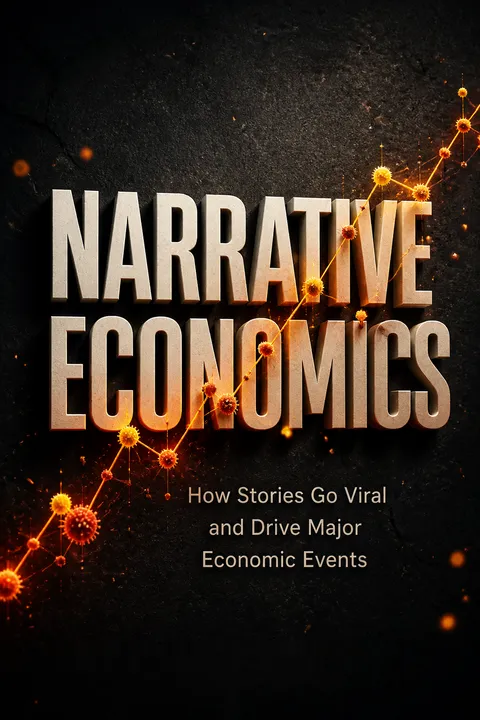
Stories can move markets. Narrative economics is the study of how contagious stories shape decisions about spending, saving, hiring, investing, and starting businesses. Shiller begins with the 1920s stock boom: people repeated tales of ordinary investors getting rich, sometimes without knowing what companies they were buying. The stories helped make speculation feel normal, even as the market’s rise became dangerous. Bitcoin offers a modern parallel. Its appeal includes technology, but also tales of riches, independence from government, and belonging to the financial future. Its total market value once exceeded $300 billion, although many buyers knew little about its underlying mathematics.
Beliefs enter decisions. A story need not be accurate or widely discussed to matter. It can change what people expect others to do, and that expectation can alter behavior. Shiller argues that economic models focused only on prices, interest rates, and output miss this human mechanism.
The book’s central move is to treat shared belief as part of the economic machinery, rather than as commentary added after the fact. This connects naturally to coordination problems: people often act not just on an asset’s properties, but on what they expect others to believe about it. That makes narratives relevant to economics without making fundamentals irrelevant. A useful distinction is between a story’s influence on demand and the underlying value or productivity it describes. The first can amplify the second, or detach from it. Keeping both channels in view avoids turning narrative analysis into a claim that stories explain everything.
Measure how stories spread and fade, not only what they say
An epidemic has a shape. Shiller adapts epidemiology’s SIR model, which divides a population into people susceptible to an idea, people actively spreading it, and people who have stopped spreading it. For economic narratives, recovery means forgetting or losing interest. A story spreads when its contagion rate exceeds its recovery rate, then fades as fewer people remain receptive or interested. The result can be a hump-shaped curve, like the rise and decline of Ebola cases in Liberia or the public attention given to Bitcoin and bimetallism.
Small groups can matter. Epidemics vary in speed and reach. A narrative need not convince everyone to affect the economy: Shiller suggests that if only 20% of a population delays major purchases, the spending drop might still help push a country into recession. Some stories spread slowly but linger; others flare quickly and disappear.
The epidemic analogy supplies a useful vocabulary for timing, reach, and decay. It also redirects attention from a story’s initial appearance to its transmission conditions, including repeated exposure and the size of receptive networks. Yet ideas do not confer immunity in the way many infections do. People can forget, remember selectively, or encounter a story again in a new context. The model is strongest as a disciplined starting point, not a literal description of every mind. Adding social networks, repeated exposure, and degrees of belief can make the analogy more realistic without losing its main insight: attention rises and falls through interaction.
Make an idea memorable with people, vivid images, and repeatable details
A diagram needed a story. The Laffer curve illustrates how an idea can escape a textbook. At a 1974 dinner, economist Art Laffer reportedly sketched a curve showing that tax revenue could fall at very high tax rates. Journalist Jude Wanniski later recounted the scene, including the famous napkin. Laffer disputed the napkin detail, but the image of a simple graph drawn among powerful political figures gave the argument a memorable human setting. The curve became a prominent part of the tax-cutting debate.
Small beginnings can snowball. In an online music-market experiment, listeners who could see other people’s choices developed different sets of hit songs in separate groups. Early choices were partly random, but popularity signals amplified them. Shiller’s lesson is not that the most popular story is the best one. Vivid images, recognizable people, and opportunities to repeat a story can help it spread.
The Laffer anecdote shows how memorable packaging can lower the effort required to transmit an abstract claim. The music experiment adds a related mechanism: visible popularity can become evidence for further popularity, even when early choices contain little information about quality. This resembles cumulative advantage in cultural markets. But communicative success and analytical soundness are separate properties. A compelling visual can make a weak argument feel settled, while a careful qualification may be harder to retell. Good public reasoning therefore needs both memorable explanation and visible scrutiny of what the image leaves out.
Map story constellations before blaming one headline for a crash
Stories cluster together. A narrative constellation is a group of related stories that reinforce a shared theme. A confluence is a set of less-related stories that happen to push behavior in the same direction. These ideas help explain why one headline rarely accounts for a major economic event. In his discussion of the 2000 stock market peak, Shiller lists a mixture of narratives: excitement about the World Wide Web, celebrated business successes, expanding financial media, optimistic analysts, new retirement plans, and a growing appetite for risk.
The quiet stories count. A narrative may influence behavior even if it occupies little casual conversation. A person deciding whether to buy a car might never mention the stories making them feel secure or anxious. Researchers therefore cannot identify a story’s importance by counting only what people say openly or by tracking one catchy phrase.
The constellation idea improves on explanations built around a single trigger. Economic outcomes often emerge from interactions among expectations, institutions, incentives, and social imitation. Grouping narratives by theme can help reveal how apparently separate signals reinforce one another; the confluence concept also leaves room for unrelated forces to line up. The challenge is evidential. Once an outcome is known, it is easy to assemble a persuasive collection of stories that appear to explain it. Good analysis should ask which stories appeared before decisions changed, whose behavior they reached, and what independent evidence links exposure to action.
Treat expectations as causes when they change what people do
Fear can become a script. In 1893, rumors that the US Treasury might stop exchanging notes for gold helped trigger withdrawals from commercial banks, even though those banks were not the institution at the center of the rumor. People acted out a familiar story of financial danger, helping create the very banking crisis they feared. Such feedback is a self-fulfilling prophecy: a belief contributes to actions that make the belief seem true.
Words can also steady behavior. During the 1933 bank crisis, Franklin Roosevelt used radio to explain the situation and asked people not to withdraw money unnecessarily. Shiller argues that the appeal helped restore confidence. He also suggests that after the September 2001 attacks, leaders’ calls to return to work and travel may have supported economic recovery. These cases show that causes can run both ways: events alter stories, and stories alter responses.
This reciprocal view is essential for understanding expectations. A forecast is not always a passive description: if households, firms, or banks act on it, the forecast can change the outcome. The same feedback can work in a stabilizing direction when credible leaders coordinate action. Still, the examples do not isolate narrative effects from policy, financial conditions, or other simultaneous changes. They are best treated as causal hypotheses supported by historical evidence, not as proof that a speech alone turns an economy. The practical question is what behavior a message invites, and whether its source is trusted.
Moral stories about money can make restraint contagious
Spending acquired a moral charge. During the Great Depression, stories of hardship made conspicuous consumption seem insensitive. Families postponed purchases, and people with jobs sometimes avoided visible displays of wealth to avoid seeming callous. Ford’s new-car sales fell 86% from 1929 to 1932. Shiller argues that the combination of lost income and moral pressure to spend less helped deepen the contraction: fewer purchases meant fewer jobs, which encouraged further restraint.
Anger can also delay buying. After World War I, the word profiteer helped frame businesses as villains for high prices. Many consumers expected prices to fall toward prewar levels and waited to buy. Shiller describes the 1920 to 1921 downturn partly as a buyers’ strike. Later stories blamed both labor and management for inflation, showing how moral narratives can shift their targets.
These examples show how private choices can create public consequences. Restraint may be prudent for one household, yet widespread restraint reduces demand and employment. Moral language can coordinate behavior by making individual choices visible as signs of solidarity or selfishness. That mechanism is especially powerful when neighbors observe one another. However, narratives should not obscure material hardship: people also cut spending because they lost income or feared losing work. Separating voluntary restraint from forced scarcity matters for both historical explanation and policy. A campaign to spend more cannot repair an economy if households lack the resources to do so.
Remember that currencies need shared belief as much as engineering
Money carries identity. Bitcoin’s appeal includes anonymity, technological novelty, and the promise of independence from national institutions. Its cryptographic design matters, but Shiller notes that most buyers could not explain the technical machinery. The story made ownership feel like participation in a new, international order.
Old money had its own myths. In the 1890s, supporters of bimetallism argued that allowing silver alongside gold would ease the burden of debt. Opponents presented the gold standard as honest and dependable. The debate became a struggle over fairness and trust, not merely a technical choice of monetary system. In the 1930s, mass unemployment helped change the public story about gold, and the United States eventually left the standard. The enduring lesson is that monetary arrangements depend partly on what people believe money represents.
Money is a coordination institution: an instrument works as money partly because other people accept it in exchange. Narratives help make that shared expectation legible, and they can attach monetary systems to ideals such as fairness, freedom, or stability. Yet collective belief is not the only source of monetary value. Legal rules, taxation, payment networks, and practical usefulness also support acceptance. This distinction helps explain why a currency story may attract attention without ensuring durable use. The narrative can mobilize participation, but the institution must still perform the functions people need from money.
Read house prices and stock booms through status stories, not charts alone
Homes became speculative stories. US real home prices rose 75% from 1997 to 2005, while real rents rose only 8%. Shiller points to stories portraying a house as a retirement plan, a route to status, and an investment that would keep appreciating. Websites that displayed neighbors’ home values made comparison easier. Home-price indexes also gave news outlets regular numbers around which to build stories.
Markets invite spectators. In the 1920s, public stock tickers projected prices where crowds could watch them together. Shiller argues that these displays helped turn trading into a shared spectacle. Later, the 1929 crash became a lasting story of boom, excess, and collapse. Such narratives can amplify buying or selling, but they do not replace other forces: housing supply constraints, lending practices, interest rates, and company earnings also shape prices.
The social-comparison lens explains why an asset can feel attractive beyond its expected cash return. A house is visible, personal, and easy to compare, while a stock index turns dispersed financial activity into a public score. That visibility can intensify imitation and regret. The distinction between narrative amplification and financial fundamentals is important, especially for policy: a housing boom can reflect both collective optimism and limited building supply. The strongest account combines cultural evidence with market data, rather than treating either stories or prices as a complete explanation.
Expect job-loss fears to recur whenever technology gets a new face
The fear keeps changing form. British workers who resisted power looms in 1811 became known as Luddites. During the Great Depression, stories about machines replacing workers spread alongside high unemployment and fears of permanent joblessness. In 1957 to 1958, automation became a widely discussed cause of recession. Today’s versions feature artificial intelligence, voice assistants, driverless vehicles, and machine learning.
Stories shape the response. Fear of being replaced can encourage people to save, delay spending, or seek policies such as a robot tax or universal basic income. Shiller’s point is not that every technology scare is accurate, but that repeated stories of imminent displacement can affect confidence and economic behavior. He calls for sustained research using text, interviews, focus groups, and other evidence to distinguish changing narratives from changing economic conditions.
A recurring fear can influence policy even when its predictions remain uncertain. Historical repetition helps explain why a new technology often feels like a final turning point: each generation sees its machines as different in kind from those before them. That perception may contain valid clues about speed, distribution, or worker vulnerability, but recurrence alone cannot establish what jobs will disappear. Strong analysis needs to track actual employment, wages, and task changes alongside public language. Policymakers then face two distinct duties: prepare for real transitions and avoid letting unfounded panic substitute for evidence.
Analysis
Shiller’s most valuable contribution is a change in what counts as economic evidence. A price series can show that a market rose; a narrative can help explain why people treated the rise as plausible, attractive, or socially safe. This shifts attention from a narrow opposition between rational fundamentals and irrational crowd behavior toward a more layered account. People respond to material incentives, but they also borrow interpretations from others, especially when the future is uncertain and the available evidence is ambiguous.
The epidemiological model gives this argument useful structure. It directs researchers to ask about exposure, repetition, social networks, forgetting, and the timing of behavioral change. The book’s historical cases also show why a single story rarely suffices. The Depression-era restraint narrative, for example, interacted with unemployment, fear, moral judgment, and business decisions. Narratives are mechanisms within an economic system, not substitutes for the system’s other mechanisms. The central methodological weakness is that text counts are imperfect measures of belief. A phrase can become more common because journalists are reporting on a behavior, not because readers adopted the story. Archival sources disproportionately preserve published voices, while many influential conversations leave no record. Retrospective accounts can also make scattered events seem more coherent than they felt to people living through them. Shiller recognizes the difficulty of proving causal direction, but his historical reconstructions often remain suggestive rather than decisive.
The most productive use of narrative economics is therefore not confident prediction from a trending phrase. It is structured monitoring. Researchers can compare language with surveys, spending, hiring, lending, and investment decisions, while distinguishing who is telling a story from who is acting on it. This approach could improve early warning by identifying shifts in public expectations before they appear fully in aggregate data. It should also guard against overreaction: a vivid story may be an early signal, a passing fad, or a reflection of changes already underway. The method’s promise lies in testing those possibilities rather than assuming one.
Review Summary
Narrative Economics receives mixed reviews, with praise for its unique perspective on how stories influence economic events. Readers appreciate Shiller's interdisciplinary approach and historical examples. However, some find the writing style dry and repetitive, wishing for more concrete evidence and practical applications. Critics argue the book could have been condensed into a shorter format. Overall, reviewers acknowledge the importance of considering narratives in economic analysis but debate the book's effectiveness in presenting this concept.
People Also Read









Glossary
Narrative economics
Stories shaping economic choicesThe study of how stories spread through conversation, media, and social networks, and how their popularity influences economic decisions. These stories may be factual, distorted, or false. The field also examines deliberate efforts to make stories more contagious and how changing narratives contribute to events such as booms, recessions, and shifts in public policy.
narrative constellation
Related stories reinforcing a themeA group of stories that people perceive as connected because they support a common theme or interpretation. The stories may have different origins, and their boundaries can shift over time. Together, they can reinforce one another and influence behavior more strongly than any single story, even when people rarely discuss the entire set explicitly.
confluence
Separate stories pushing one wayShiller’s term for narratives that are not necessarily linked in people’s minds but happen to encourage similar behavior at the same time. A confluence can help explain an unusually large economic event when several independent stories reinforce the same direction of spending, investment, or confidence.
SIR model
Susceptible, infected, recoveredAn epidemic model that divides a population into susceptible people, those currently spreading an infection, and those who have recovered. Shiller adapts the framework to narratives: people may encounter a story, repeat it, and then lose interest or forget it. The model helps describe how a narrative can grow, peak, and decline.
recovery rate
Rate of losing interestIn Shiller’s narrative adaptation of epidemic models, the recovery rate describes how quickly people stop spreading a story. They may forget it, lose interest, or decide it is no longer novel. A narrative spreads when transmission outweighs this process of disengagement, though a faded story may remain in memory and return in a new context.
information cascade
Choices inferred from others’ choicesA process in which people use the observed behavior of others as information about what to do, sometimes overriding their own limited evidence. Early choices can be amplified, so a trend may grow from a small or partly random beginning. Shiller connects this mechanism to the emergence of fads, market bubbles, and popular narratives.
flashbulb memory
Vivid memory of a startling eventA vivid, lasting recollection of the circumstances in which someone learned about a surprising and emotionally charged event. Such memories often include ordinary details surrounding the news and may be strengthened through later retelling. Shiller uses the idea to explain how memorable events can anchor stories that shape economic expectations and behavior.
technological unemployment
Job loss attributed to technologyA recurring narrative that labor-saving machines or automated systems reduce the need for human workers and create unemployment. Its wording and focus change across eras, from mechanized looms and farm equipment to computers and artificial intelligence. Shiller emphasizes that the narrative itself can affect confidence and spending, whether or not its predictions prove correct.
FAQ
What's Narrative Economics about?
- Exploring economic narratives: Narrative Economics by Robert J. Shiller examines how stories and narratives influence economic behavior and events, suggesting that these narratives can drive major economic changes.
- Focus on contagion: The book emphasizes narrative contagion, where stories spread rapidly through media and social networks, affecting public perception and economic decisions.
- Interdisciplinary approach: Shiller integrates insights from psychology, sociology, and epidemiology to understand how narratives shape economic outcomes and forecasting.
Why should I read Narrative Economics?
- Understanding economic behavior: The book enhances understanding of how narratives impact economic behavior, crucial for those interested in economics, finance, or social sciences.
- Improved forecasting: Shiller argues that incorporating narrative analysis into economic models can lead to better predictions of economic events.
- Historical context: It provides historical examples of how narratives have influenced significant economic events, offering lessons relevant to contemporary challenges.
What are the key takeaways of Narrative Economics?
- Narratives drive economic events: Economic narratives can significantly influence public confidence and behavior, leading to phenomena like bubbles and crashes.
- Epidemic nature of narratives: Narratives can spread like diseases, affecting how people perceive and react to economic conditions.
- Importance of context: The context in which narratives arise and mutate is crucial for understanding their impact on the economy.
What are the best quotes from Narrative Economics and what do they mean?
- Understanding epidemics: "If we do not understand the epidemics of popular narratives, we do not fully understand changes in the economy." This highlights the need to recognize narratives' roles in shaping economic realities.
- Vectors of change: "Narratives are major vectors of rapid change in culture, in zeitgeist, and in economic behavior." Shiller underscores the powerful influence of narratives on societal and economic transformations.
- Incorporating narratives: "We need to incorporate the contagion of narratives into economic theory." This advocates for integrating narrative analysis into traditional economic models.
How does Shiller define "narrative economics"?
- Definition of narrative economics: Shiller defines it as the study of how stories and narratives influence economic behavior and events, shaping public expectations and actions.
- Interplay with traditional economics: Traditional models often overlook narratives, leading to misunderstandings of market dynamics and economic cycles.
- Examples of narratives: Historical examples, like the stock market crash of 1929, illustrate how powerful stories can drive economic phenomena.
What is narrative contagion in Narrative Economics?
- Definition of narrative contagion: It refers to the process by which stories spread rapidly among individuals, influencing their thoughts and behaviors.
- Mechanisms of spread: Contagion occurs through personal conversations, media coverage, and social networks, capturing public interest and leading to collective actions.
- Impact on economic behavior: As narratives spread, they shape public perceptions of economic conditions, leading to phenomena such as market bubbles or panics.
How does Narrative Economics relate to historical economic events?
- Historical examples: Shiller uses narratives from events like the Great Depression and the rise of Bitcoin to illustrate how stories have shaped economic outcomes.
- Lessons from the past: Understanding past narratives provides insights for interpreting current economic conditions and predicting future trends.
- Narrative evolution: Narratives evolve over time, mutating in response to changing contexts, leading to new interpretations and actions in the economy.
What role do influential figures play in shaping economic narratives?
- Thought leaders' impact: Influential figures, such as politicians and celebrities, play a crucial role in shaping public narratives, affecting economic behavior.
- Viral narratives: Their words and actions can amplify narratives, leading to widespread public reactions that influence market dynamics.
- Examples of influence: Statements from leaders like Franklin D. Roosevelt during the Great Depression helped shape public sentiment and expectations.
How can understanding Narrative Economics improve economic forecasting?
- Incorporating narratives into models: Integrating narrative analysis into economic models can enhance forecasting accuracy by accounting for public sentiment and stories.
- Recognizing narrative patterns: Studying historical narratives helps identify patterns that may signal future economic events.
- Adapting to changing narratives: Understanding narrative contagion dynamics allows for more effective responses to emerging narratives, potentially mitigating negative impacts.
What is the wage-price spiral narrative in Narrative Economics?
- Definition of wage-price spiral: It refers to rising wages leading to increased production costs, causing higher prices, perpetuating inflation if uncontrolled.
- Public perception: The public often believes in a wage lag hypothesis, where wage increases don't keep pace with rising prices, fueling frustration.
- Historical context: The narrative evolved during the 1970s inflation crisis, highlighting its importance for policymakers in addressing inflation.
How does Narrative Economics relate to behavioral economics?
- Intersection of fields: Shiller's work bridges narrative and behavioral economics by examining how stories influence decision-making.
- Human emotions in economics: Narratives evoke emotions, affecting economic choices, aligning with behavioral economics' focus on psychological biases.
- Policy implications: Understanding narratives helps design interventions that resonate with public sentiment, enhancing policy effectiveness.
What methods does Robert J. Shiller use in Narrative Economics?
- Historical analysis: Shiller analyzes past economic events and the narratives surrounding them to illustrate their impact on behavior.
- Case studies: The book includes case studies like the Great Depression to demonstrate how narratives shape perception and outcomes.
- Interdisciplinary research: Insights from psychology, sociology, and economics create a comprehensive framework for understanding economic narratives.

Download PDF
Download EPUB
.epub digital book format is ideal for reading ebooks on phones, tablets, and e-readers.








