


Plot Summary
Lila Crosses the Dead Door
Red London is celebrating its magic tournament while Prince Rhy lies dying, his life tied to Kell’s by an old spell. Lila Bard, a thief newly learning magic, uses blood and a stolen stone shard to cross alone into White London. The city has changed from a frozen wasteland into a lush, colorful place, but Kell is trapped in a blood-streaked cage, stripped of his magic by a collar.
Ojka, a scarred assassin serving the new king, blocks Lila’s way. Lila defeats her, losing her artificial eye in the fight, then breaks into Kell’s cell and removes the collar. His power returns, but he feels only one heartbeat. Rhy’s has stopped.
Lila’s rescue is a practical act of attachment, not a declaration of it. She risks a dangerous crossing without Kell’s help, and the route itself makes her confront what she has become: someone capable of wielding the power she once only encountered in others. Yet the rescue does not neatly restore order. Kell’s missing second heartbeat makes their success feel provisional, while Lila’s shattered eye turns the cost of intervention into something visible. The scene establishes the novel’s governing tension: love can motivate extraordinary action, but it cannot guarantee that action will repair what has been damaged.
Rhy Returns to Breath
Lila and Kell escape through a badly placed door between worlds, crash onto a rooftop, and return to the palace as guards close in. Before Kell can reach Rhy, Queen Emira refuses to leave her son’s corpse and sings the old sleep spell she once used to comfort him. Rhy gasps back to life, his body restored as the severed magical threads re-form.
Kell arrives to find him sleeping and collapses in relief; Emira and King Maxim embrace him despite their fear and anger. Kell explains that Holland survived his apparent death and now serves as the host for Osaron, a conscious force of magic from Black London. Holland offered the demon Kell’s body, but Kell refused, so Osaron took Holland’s instead.
Rhy’s return complicates the usual fantasy equation between rescue and restoration. Emira’s song does not erase the cost of the bond; it makes the family face how completely Kell’s life has become entangled with Rhy’s. Emira’s simultaneous gratitude and resentment toward Kell is psychologically credible because both feelings answer different truths: he saved her son, and his decisions nearly destroyed him. The resurrection also shifts the emotional center from individual heroism toward mutual dependence. No one in this family can claim to have saved the others without also exposing them to danger.
Osaron Takes the Rooftop
Osaron crosses into Red London through Holland’s body and arrives at the winner’s ball, where the tournament’s strongest magicians are gathered. Kisimyr Vasrin confronts him, but the demon changes stone beneath her feet and burns her alive when she resists. Kell and Lila reach the roof as the guests freeze in terror.
Kell’s attack briefly wounds Osaron, and Holland fights from inside his own body long enough to disrupt the demon’s control. The guards strike, forcing Osaron to abandon Holland’s body and form a figure made of shadow. Lila’s blades pass through him. Osaron then falls into the Isle, the city’s red river of magic, and the water begins turning black as his power spreads through London.
The rooftop assault exposes the difference between tournament strength and survival. Kisimyr has skill, reputation, and the confidence earned in a ring, but Osaron does not obey the rules that make competition legible. His power is not simply greater; it changes the conditions under which opposition is possible. Holland’s brief resistance matters because it proves the demon is not wholly sovereign, even when he controls a body. At the same time, Osaron’s escape into the Isle converts a single antagonist into an environmental crisis. The threat now travels through the city’s source of magic rather than approaching from outside it.
London Goes Black
Black magic rises from the Isle as a fog that enters minds, bends people toward Osaron, and kills those whose bodies cannot withstand his power. Kell and Lila race through the streets, marking people with their blood to make the shadows recoil, but the protection reaches only a few. Lila spends blood faster than she can replace it, while Kell refuses to stop fighting for his city.
Royal guards eventually force them back to the palace, where King Maxim makes Kell reckon with the scale of the disaster: courage alone cannot save thousands. The palace priests begin strengthening its wards, and Kell proposes putting the city’s people to sleep so Osaron will lose access to their minds and magic.
The fog turns political vulnerability into bodily vulnerability. Its victims are not merely defeated opponents; they are transformed into instruments of the force that has taken them. Kell’s instinct to save each person individually is morally admirable but strategically inadequate, and Maxim’s challenge forces him to distinguish visible effort from effective action. Lila’s limited blood supply gives her power an immediate physical price, preventing magic from becoming an effortless solution. The proposed sleep spell marks a shift from rescue as a series of heroic encounters to protection as collective restraint, a necessary but ethically uneasy use of power over the very people the characters hope to save.
The Emery House Falls
Alucard leaves the palace to reach his family and crew, carrying the protective mark Lila placed on his forehead. At the Emery estate, his brother Berras is under Osaron’s influence and attacks him, repeating the contempt that once drove Alucard from home. Alucard’s magic erupts; furniture, stone, and timber crush Berras, while the estate begins to collapse around them.
He finds his younger sister Anisa hiding upstairs, but the curse is already burning through her. Alucard carries her to his ship and tries to keep her anchored with a childhood story. She does not recover. Later, Rhy finds Alucard feverish and infected, while Anisa has become a dangerous, lifeless shell that Kell must leave behind.
Alucard’s homecoming makes the citywide catastrophe intimate. The estate is not just a location but the structure of a family that taught him shame, hierarchy, and the cost of disobedience. Berras’s curse-driven attack reopens that history, while Alucard’s uncontrolled response shows how quickly defensive power can become destructive. Anisa’s illness tests his identity as both magician and elder brother: he can carry her, comfort her, and tell her a story, but he cannot command her survival. The scene refuses the consoling assumption that love makes someone powerful enough to prevent loss. It instead shows care persisting when rescue has failed.
Holland’s Hope Turns Costly
Holland’s memories reveal why he accepted Osaron’s help. As a child, he killed his brother Alox while defending himself; later, his lover Talya’s betrayal ended in another death he could not prevent. He joined Ros Vortalis, who overthrew the tyrant Gorst and tried to rebuild their dying London, but the Dane twins captured Holland and bound him to their will.
After Kell killed the Danes, Holland found Osaron in Black London and bargained away his freedom to restore his home. The revived city flourished, but the demon kept demanding more. Holland offers himself as a vessel to spare his world, and Kell refuses. Now, chained in Red London, Holland explains that Osaron feeds on chaos and cannot be trusted.
Holland’s history makes his choices intelligible without making them innocent. He has repeatedly mistaken self-erasure for responsibility: first accepting blame for deaths, then serving a king as weapon, and finally surrendering his body to restore a world. His desire to save White London is sincere, but it is entangled with a private hunger to become the legendary savior he imagined as a child. That mixture of care and grandiosity gives his bargain its tragic force. The flashbacks also clarify why Kell’s refusal wounds him: Kell is not simply rejecting a plan, but denying Holland the familiar role of disposable instrument.
The Execution Becomes a Trap
Holland proposes a public execution, reasoning that Osaron needs an Antari body and will be drawn to a visible offer of one. Maxim agrees, and Kell prepares to kill Holland if the demon enters him. At dawn, Holland begs Osaron to take him, but Osaron responds by sending the Isle’s black water crashing over the platform.
Jinnar attacks and is killed; the guards’ blood marks wash away, allowing the curse to reclaim them. Osaron throws Holland into the river, expecting Kell to follow. Kell dives after him, breaks his chains by changing the iron into sand, and is trapped underwater by Osaron. Lila joins them. Holland forces the river aside long enough for her and Kell to breathe, and Kell raises them to shore.
The failed execution exposes the danger of treating an intelligent force as though it can be compelled by a single tactic. Osaron recognizes the emotional mechanism of the plan: Kell will not let Holland drown. He turns that loyalty into leverage, making rescue itself part of the trap. Yet the scene also changes the relationship among the Antari. Holland, who once used Kell as a means to protect his world, now helps save both Kell and Lila at personal risk. Rhy’s subsequent anger at Kell underscores a cost the rescue cannot dismiss: survival may be an act of love and still impose fear on everyone bound to it.
A Market Hidden at Sea
With ordinary defenses failing, Kell and the others seek an Inheritor, a rare device that can hold magical power. Alucard admits he once traded the artifact to Maris, keeper of the moving black market Ferase Stras. His old pirate cipher is gone, but Lila recognizes the unmarked map Kell took from her room in Grey London.
Alucard uses blood as ink to reveal its shifting routes and locates the market at sea. Captain Jasta offers her fast smuggling skiff, the Ghost, in exchange for royal favor and a large payment. Kell, Lila, Alucard, Holland, Lenos, and Hastra leave London, hoping to retrieve the device before Osaron overwhelms the city.
The map joins Lila’s past to the crisis without reducing that past to a convenient key. She once kept it because its blankness suggested freedom, and now its concealed routes make movement possible when the familiar city has become a trap. Alucard’s lost Inheritor is a practical failure, but it also forces him to disclose the network of choices that brought the group to Maris. The voyage gathers people who distrust one another into a shared constraint: they must depend on a small vessel, a smuggler captain, and a map whose meaning appears only through collaboration.
Rosenal Nearly Takes Lila
At the port of Rosenal, the travelers separate briefly, and Lila senses that someone is following them. Six former Copper Thieves attack her in an alley, punishing her for killing their captain and sparing them earlier. She fights until she is exhausted, then a seventh man stabs her through the chest.
Holland reaches her first and uses blood magic to heal the fatal wound; afterward he protects her from more attackers while Kell catches up. Lila wakes among the bodies, angry that she miscounted her enemies and unsettled that Holland saved her. His choice does not erase his killing of Barron, Lila’s former guardian, but it forces her to consider the difference between guilt, grief, and the possibility of changing what one does next.
The attack converts Lila’s history of escape into a consequence she cannot simply outrun. Her decision to spare the Copper Thieves once seemed like an efficient victory; now the survivors have returned with a claim on her life. Holland’s intervention complicates her moral accounting. She has good reason to hate him, and his rescue does not purchase forgiveness, yet it makes her confront the fact that people can act beyond the worst thing they have done. The scene’s emotional force lies in that unresolved contradiction. Gratitude does not cancel anger, and anger does not prevent Lila from recognizing an action that matters.
Maris Names the Price
At Ferase Stras, Maris will admit the party only in exchange for valuable tokens. Alucard offers a rare truth-revealing mirror and pays four years of his future to acquire it. Kell finds Antari binding rings and loses three years of life to purchase them. Lila trades her shattered glass eye for the empty Inheritor, then accepts a black false eye in exchange for a favor owed to Maris.
The bargains give each character something needed, but none leaves unchanged. Alucard’s purchase gives him a way to prove the truth about his past; Kell gains a tool with unknown uses; Lila’s black eye makes her Antari nature visible. The group departs with the device and its instructions, aware that every advantage has a cost.
Maris’s market makes value personal rather than universal. The same object can be worth little to one person and almost everything to another, because memory, time, and bodily identity are not interchangeable currencies. Alucard’s years and Lila’s eye expose that difference most clearly: one pays with a future he cannot recover, the other with a visible part of how she has understood herself. Kell’s transaction suggests that his instinct is still to spend himself first. The market therefore does more than supply a weapon. It anticipates the final question of the novel: who has the right to decide what another person should sacrifice?
Three Antari Share Power
Back aboard the Ghost, Kell discovers that the binding rings connect their wearers and allow them to draw on one another’s magic. When Lila takes a ring, she seizes too much power and nearly sets the ship ablaze. Holland uses another ring to divide her power between himself and Kell, ending the surge before the vessel burns.
The three Antari understand that the rings can amplify them enough to challenge Osaron, but they also make each wearer vulnerable to the others. Holland offers to anchor the shared power, accepting the risk that he will be bound to the spell. Lila distrusts him, yet recognizes the cost of asking someone else to surrender control for a common purpose.
The rings literalize interdependence as both resource and threat. Power moves between the Antari, but so do vulnerability and responsibility; Lila’s uncontrolled surge demonstrates that access alone is not mastery. Holland’s proposal to anchor the bond is especially charged because he has spent much of his life chained to stronger wills. This time, he chooses a binding for himself, though the choice remains ethically complicated. Lila’s hesitation is not simple selfishness. She knows what it means to let another person reach into her, and her eventual participation marks a difficult movement from self-protection toward negotiated trust.
The Crown Changes Hands
While Kell’s party is away, Rhy discovers that Osaron’s fog recoils from him, likely because his life is already bound to Kell’s. He ventures into the city, finds Alucard fighting the curse, and reaches Anisa, whose body has become a dangerous shell; she cannot be saved. At the palace, Veskan Princess Cora attempts to kill Maxim, but Faroan Lord Sol-in-Ar intervenes.
Cora’s brother Col later attacks Rhy and Emira. Rhy survives Col’s sword because he cannot die, but the blade passes through him and kills his mother. Tieren completes a spell that puts the city’s people to sleep. Maxim arms a line of steel guardians and confronts Osaron, dying as the demon enters his body. Rhy becomes king amid a city silenced by magic and grief.
The political plot and the intimate losses converge around the question of what a ruler owes the people. Rhy’s immunity gives him a public role, but it does not make him invulnerable to grief; he can survive a blade and still lose his mother. Maxim’s final strategy likewise embodies a king’s duty while exacting a private cost that cannot be repaired by policy. Cora and Col exploit the instability of the moment, showing how political ambition can imitate the demon’s coercive logic. Tieren’s sleep spell buys time by suspending agency, making protection resemble captivity. London survives the night only by accepting a dangerous pause.
The Ghost Loses Its Crew
The Sea Serpents attack the Ghost during the return voyage. Lenos is dragged overboard, and the crew discovers that Jasta has worked with the attackers, who were hired to kill Kell. Hano and Ilo are also killed. Kell, Lila, Holland, Alucard, and Hastra fight across the pitching deck, while Lila forces Jasta to admit her betrayal.
Jasta’s hidden knife flies toward Kell, but Hastra intercepts it and dies. Kell kills Jasta. Alucard remains aboard the damaged Ghost to face a Veskan fleet, while the others escape in a dinghy. A message from Rhy persuades the fleet to withdraw. Onshore, Kell feels his brother’s pain and uses the queen’s cloth token to return to London, where he learns Maxim and Emira are dead.
The sea battle strips away the comfort of treating the crew as a collection of useful skills. Each death belongs to a relationship: Lenos’s wary kindness, Hano’s curiosity, Hastra’s earnest loyalty. Hastra’s choice to protect Kell also crystallizes the novel’s concern with agency. He is not merely ordered into danger; he makes a decision that costs him everything. Lila’s confrontation with Jasta challenges the claim that identity determines conduct: both women may be knives, but they choose different uses for their violence. Alucard’s stand against the fleet and Rhy’s diplomatic message show two forms of courage, one bodily and one political.
The Shadow Palace Breaks
Rhy enters Osaron’s palace alone and is suspended in ice, pierced but kept alive by his bond with Kell. The returning Antari reach the palace and find him, then face Osaron in Ojka’s reanimated body. Their shared rings let them coordinate, but the demon outmatches them.
Lila uses the river to break the palace’s defenses and burns Osaron’s host; Holland, blinded by the demon, uses the binding ring to see the threads of power. When Osaron reaches for Holland again, Holland accepts him only long enough to drive the Inheritor into his palm and transfer the demon into it.
Lila breaks her ring connection, while Rhy frees Kell’s. The Inheritor darkens and Holland collapses, his magic spent. Osaron is contained, and the false palace crumbles into the real arena beneath it.
The climax resolves the novel’s central conflict through containment rather than annihilation. Magic cannot simply be killed, and the heroes must therefore create a boundary strong enough to hold it. Holland’s decision is not a clean redemption but a final act of responsibility made with full knowledge of his earlier choices. The shared rings make the victory possible, yet Lila’s severing of her ring and Rhy’s release of Kell show that collaboration does not require permanent surrender. The arena emerging beneath Osaron’s palace is a material correction: the demon’s imagined sovereignty collapses, leaving the ordinary civic space he tried to replace.
Anoshe, Then the Open Sea
London’s people remain asleep until the threat has passed, and the black river begins returning to red. Holland survives without magic and asks Kell to take him home to White London. There, color drains away again, but Holland chooses the world he was born in; Kell leaves a coin before departing.
Rhy assumes the crown and, after Alucard uses the truth-revealing mirror to show why he fled London years earlier, restores him to the royal household and their relationship. Lila takes command of the Night Spire, and Kell joins her rather than remaining at court. He and Rhy part with a linked pin and the expectation of meeting again. Lila sails toward new waters, while Kell looks back at the palace and raises his hand to his brother.
The resolution refuses to make survival synonymous with repair. Holland returns to a diminished home, Rhy inherits power alongside grief, and Kell carries a lasting wound in his magic. The characters do not recover their former lives; they decide what relationships and obligations remain possible after catastrophe. Alucard’s mirror turns confession into public evidence, allowing Rhy to judge the truth rather than an old abandonment. Lila’s command of the Night Spire completes her movement from stowaway to chosen captain, while Kell’s departure balances loyalty to Rhy with a life beyond the palace. Anoshe offers not closure, but a credible promise of return.
Analysis
A Conjuring of Light treats power less as possession than as a relationship: magic moves through bodies, families, cities, and worlds, and every attempt to control it changes the people involved. Osaron’s failure is not simply that he is cruel. He mistakes creation for ownership, believing that because he can transform life, he may decide what life is for. The human characters repeatedly face a smaller version of that temptation. Kell binds Rhy’s life to his own; Maxim makes political and magical decisions for a city; the Inheritor offers the power to contain another being. Protection can become coercion when the protected person has no choice.
The novel counters Osaron’s model through forms of attachment that remain reciprocal even when unequal. Rhy’s bond with Kell is frightening, yet Rhy is not merely a dependent prince; he chooses to act as king and to stand with his people. Lila’s connection to Kell does not domesticate her or erase her independence. Her final commitment is made alongside her continued appetite for travel. Holland’s sacrifice matters because it is neither a clean absolution nor an imposed punishment. He chooses to accept the consequences of a bargain he once made for understandable reasons.
The book also refuses the fantasy that victory restores the world to its former shape. London wakes, but the dead remain dead, damaged places persist, and magic has exacted lasting costs. The survivors must build lives around absence rather than erase it. That is why the repeated idea of parting until another day carries more weight than a simple farewell: it acknowledges uncertainty without pretending that love can defeat every loss. The ending’s hope is practical, not triumphant. It lies in choosing to return, to tell the truth, to share power, and to keep moving without claiming that the scars have vanished.
Review Summary
A Conjuring of Light concludes the Shades of Magic trilogy with mixed reviews. Many readers praise the intense action, character development, and satisfying ending. Holland's arc and the interactions between characters are highlights. However, some criticize pacing issues, Lila's lack of growth, and unanswered questions about characters' backgrounds. Despite these critiques, most consider it a strong finale, with Schwab's writing style and world-building receiving particular acclaim. The book elicits strong emotional responses from fans, who express both joy and sadness at the series' conclusion.
People Also Read



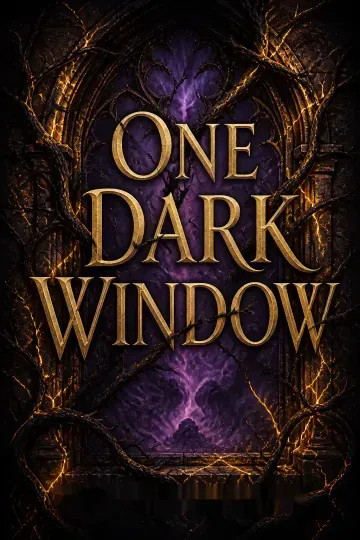


Characters
Kell Maresh
The divided-world AntariKell is an Antari, one of the rare blood magicians able to travel between the Londons, and the adopted brother of Prince Rhy. Raised inside the Maresh palace, he lives between the privilege of his royal home and the unease of never knowing his birth family. His magic makes him a messenger, weapon, and bridge, but he tends to treat his own life as expendable whenever others are in danger. His loyalty to Rhy is fierce, while his relationship with Lila draws him toward a future not defined solely by duty. Kell’s defining struggle is to distinguish responsibility from self-sacrifice, and to accept that connection can be reciprocal rather than a burden he must carry alone.
Delilah Bard
The thief who chose magicLila is a sharp-witted thief from Grey London who has become a magician and sailor without surrendering her instinct for escape. She values competence, freedom, and the ability to control her own risks; attachment unsettles her because it gives other people the power to hurt her. Her friendship with Alucard and growing intimacy with Kell challenge her habit of leaving before anyone can matter too much. Lila learns magic through action rather than formal study, which makes her inventive and dangerous but leaves her vulnerable when power exceeds her control. Her damaged artificial eye and hidden history reflect her guarded self-invention. She wants to choose who she becomes, rather than accept the limits assigned by birth, gender, or world.
Rhy Maresh
The prince bound to KellRhy is the charismatic heir of Arnes, raised amid comfort but never wholly satisfied by the authority his birth grants him. Unlike Kell, he has little magic, and that absence has shaped his hunger to prove that a crown can carry its own kind of power. His bond with Kell is intimate and mutual, not merely the protection arrangement others expect of them. Rhy’s charm often conceals a serious observer who studies people and politics closely. His romance with Alucard is marked by affection, hurt, and the difficulty of trusting someone who once left without explanation. Rhy wants to be seen as more than a protected prince, and to discover what leadership means when he cannot command magic.
Holland Vosijk
The scarred White AntariHolland is the Antari of White London, a controlled, perceptive magician shaped by a world where power is scarce and violence ordinary. He has spent years serving rulers who treated his body and magic as instruments, yet his deepest ambition has always been to restore his dying home. His restraint can look like coldness, but beneath it lies a painful tally of the people he has harmed and failed to protect. Holland distrusts easy hope and sees every choice as a trade with a cost. His uneasy connection with Kell rests on rivalry, resentment, and a reluctant recognition of shared burdens. He is driven by the desire to make his power mean something beyond survival or obedience.
Alucard Emery
The gifted privateerAlucard is a celebrated magician, captain of the Night Spire, and former lover of Rhy. He can read the threads of magic in people and objects, a talent that makes him perceptive but also leaves him acutely aware of what others conceal. His ease, vanity, and wit protect a more vulnerable self, especially where family rejection and Rhy’s lingering hurt are concerned. Alucard is loyal to his crew and capable of decisive courage, though he sometimes uses charm to evade accountability. He values chosen kinship more than inherited status, even as his noble family continues to shape his sense of shame and belonging. His challenge is to offer truth without assuming that affection alone will repair old injuries.
Osaron
The living shadow kingOsaron is an incarnation of magic from Black London, a force with consciousness, appetite, and a grandiose belief in its right to rule. He regards people as vessels and sources of power, not as independent lives, and interprets resistance as evidence that he must exert more control. His ability to alter elements and influence minds makes him difficult to confront through ordinary magical rules. Osaron’s self-image as a generous creator masks a transactional hunger: he offers power only to draw more power back into himself. He represents the danger of treating possibility as entitlement, and of mistaking the ability to transform a world for the right to own it.
Tieren Serense
The patient Aven EssenTieren is the senior priest of the Red London Sanctuary and a longtime mentor to Kell. He understands magic as a force that requires limits, practice, and respect for the lives it touches. His authority comes less from command than from patience and a clear-eyed refusal to confuse power with wisdom. Tieren has watched the Maresh family grow and carries a protective affection for them, though his counsel can be difficult to accept when the crisis demands immediate action. He teaches through both instruction and restraint, reminding Kell that some acts cannot be undone. His quiet presence offers a counterweight to the novel’s more theatrical forms of magical strength.
Maxim Maresh
The soldier beneath the crownMaxim is king of Arnes, husband to Emira, and father to Rhy. Before ruling, he was known as the Steel Prince, a soldier whose decisions were forged in war rather than court ceremony. He values discipline, strategy, and the duty of a ruler to protect the people, sometimes at the cost of tenderness within his own family. His relationship with Kell is complicated by Kell’s closeness to Rhy and by Maxim’s instinct to treat danger as a problem to manage. Beneath his authority, he is a father who fears failing those he loves. Maxim’s central tension is how to act decisively without allowing kingship to erase the private person doing the choosing.
Emira Maresh
The watchful queenEmira is queen of Arnes and mother to Rhy. A water magician whose element manifests as ice, she is attentive to weakness and alert to the ways beautiful, fragile things can break. Her caution is not indifference; it is the form her fear takes after years of trying to protect a beloved son. She struggles to accept Kell as both Rhy’s brother and a source of danger, because the two roles cannot be separated in the bond between them. Emira often listens more than she speaks, gathering the state of the palace through small signs others overlook. Her care can become overprotection, but it is rooted in a profound awareness of how little control even a queen has over loss.
Ojka
Holland’s knife-handed guardOjka is a skilled fighter and metal magician with a scarred face and a striking, two-colored gaze. She serves Holland in White London and carries herself with the discipline of someone who has survived by making herself useful. Her weaponized grace makes her dangerous, but her loyalty is more complex than simple obedience. Ojka has learned to endure a brutal world without pretending that it is fair, and she recognizes the strength required to live visibly with scars. Her connection to Holland gives her place in the political struggle a personal dimension.
Hastra
The earnest young guardHastra is a young palace guard who once expected to pursue priesthood. He is sincere, anxious to prove himself, and unusually willing to admit fear or uncertainty. His devotion to Kell and Rhy comes from affection rather than a hunger for rank, though that devotion can lead him into situations beyond his experience. Hastra’s sensitivity to plants and balanced magic suggests a gentler temperament than the guard’s work demands. He is often the person who notices the emotional weight others try to hide, and his earnest questions help expose the consequences of choices made by more powerful characters.
Lenos
The Spire’s wary sailorLenos is the Night Spire’s second mate, a cautious sailor with a gift for sensing danger before he can explain it. He is religious in a quiet, practical way, treating prayer as an offering rather than a demand for rescue. Though he is wary of Lila’s power, he recognizes her character before she fully trusts it herself. Lenos lacks the swagger of the other crew members, but his attentiveness makes him valuable. He is drawn to order and meaning, especially when the world becomes frighteningly unpredictable.
Jasta Felis
The hard-edged skiff captainJasta is a formidable captain from the borderlands, blunt in manner and fiercely protective of her vessel. She knows the sea as a place where survival often depends on reading danger before it arrives. Her confidence comes from experience, not ceremony, and she has little patience for people who mistake royal authority for universal respect. Jasta’s relationship with Lila is charged by their shared toughness and different ideas of what that toughness is for. She is an opportunist in a world where allegiance and payment are often entangled.
Cora
The underestimated Veskan princessCora is a young princess of Vesk who uses charm, flirtation, and apparent childishness to shape how others see her. Beneath the performance is an observant and ambitious mind, alert to the political limits imposed on a younger royal. She understands that conventional power is not the only kind available to her, and she studies the desires and insecurities of those around her. Her encounters with Rhy reveal both her capacity for warmth and the strategic calculations that can sit beside it. Cora wants to be recognized as an actor in her own right, not merely a piece within someone else’s succession.
Col
Cora’s soldierly brotherCol is the Veskan crown prince and Cora’s older brother. He is physically imposing, trained for combat, and accustomed to acting as his sister’s guardian. His sense of duty is tied closely to his family and country, but the confidence of a soldier can harden into a belief that force is the cleanest route to political security. Col’s presence turns the Veskan court’s ambitions into a direct threat to the Maresh household.
Sol-in-Ar
The Faroan royal adviserSol-in-Ar is a Faroan lord and adviser, a perceptive political observer who has little patience for royal self-deception. Without magic, he relies on attention, memory, and a clear understanding of how empires behave under pressure. He speaks carefully, but his advice can be blunt when delay would cost lives. His relationship with Maxim is grounded in the wary respect of two men shaped by war and statecraft. Sol-in-Ar seeks stability for Faro as well as justice for Arnes, and he knows those interests may not always align.
Ros Vortalis
Holland’s reforming kingRos Vortalis is a charismatic leader who believes White London can be rebuilt through decisive political change. He recruits Holland not merely as a weapon but as a partner in overthrowing a tyrant, offering a vision of power directed toward the public good. Vortalis is persuasive because he combines ambition with genuine concern for his city. Yet his faith in leadership cannot remove the violence and compromise built into the world he hopes to reform. He serves as an important counterpoint to rulers who claim authority without accepting responsibility.
Maris
The floating market’s keeperMaris is the ancient keeper of Ferase Stras, a mobile market where forbidden objects, rare magic, and personal history all have a price. She understands that people often misjudge what they value until they must surrender it. Her rules are exact, even when the bargains themselves seem capricious, and she is difficult to deceive. Maris treats memory as a form of power and approaches customers as both merchant and examiner. Her market is less a refuge than a place where desire is made legible through sacrifice.
Berras Emery
Alucard’s resentful brotherBerras is Alucard’s older brother and heir to the Emery family name. He is proud, physically powerful, and deeply shaped by the family’s rigid expectations of status and respectability. His rivalry with Alucard is sharpened by the difference between inherited authority and the younger brother’s public talent. Berras wants recognition within his house, but his resentment makes him vulnerable to anyone who promises that recognition can be seized by force.
Anisa Emery
Alucard’s beloved sisterAnisa is Alucard’s younger sister, a warm and affectionate presence in a family marked by conflict. Her connection with him is built through shared stories and small rituals, making her a reminder of the gentler life he left behind. She possesses a natural magic of her own and is cherished by Alucard as a source of comfort and continuity. Her vulnerability reveals the limits of his ability to protect the people he loves.
Jinnar
The silver-haired wind mageJinnar is a gifted wind magician and one of the strongest competitors in the Essen Tasch. He is a friend to Alucard and a respected figure among Arnesian magicians. His confidence comes from genuine skill, though the tournament has not prepared him for a threat that ignores its rules. Jinnar represents the capable allies who gather around the royal family when London is in danger.
Kisimyr Vasrin
The tournament’s fierce veteranKisimyr is a high magician and seasoned Essen Tasch competitor who measures herself by how well she can fight. She dislikes courtly performance and prefers the clarity of the arena, where skill has visible consequences. Her pride is matched by a practical understanding of her craft.
Ned Tuttle
The occult-minded tavern keeperNed runs the Five Points in Grey London and believes in magic long before he understands its dangers. He is nervous, imaginative, and drawn to the unexplained, with a tendency to turn fear into elaborate research. His tavern connects ordinary London to forces beyond its understanding.
Barron
Lila’s former protectorBarron owned the Stone’s Throw in Grey London and gave Lila shelter when she had little reason to trust anyone. His care was imperfect but real, and his memory remains tied to her first experiences of belonging. The watch he gave her becomes a private measure of what she has lost.
Alox
Holland’s older brotherAlox is Holland’s older brother, once a source of stories and protection in their difficult childhood. Their bond shapes Holland’s earliest ideas about magic, inheritance, and the possibility of saving White London. Alox’s mixture of affection and fear leaves a lasting mark on how Holland understands power.
Plot Devices
Antari world-crossing
Doors between LondonsAntari use blood, a spoken spell, and a token associated with the destination to pass between parallel versions of London. The same magic can find a person or move within a single world, but the doors obey exact spatial rules: the traveler must account for where the corresponding place lies on the other side. Lila’s attempt to rescue Kell shows that the ability is not simply a convenient portal. She must learn the spell herself, and her first solo crossing nearly kills her. The doors also link the plot’s worlds, letting Osaron escape Black London and turning the boundaries between cities into a source of danger.
The Rhy-Kell bond
Two lives, one tetherKell once bound his life to Rhy’s, creating a magical connection that lets each feel the other’s heartbeat and pain. The spell saves Rhy from an earlier death, but it also makes Kell’s injuries echo through him and leaves Rhy vulnerable whenever Kell is cut off from magic. The bond is not simply a protective charm: it raises questions about consent, dependence, and whether an immortal-seeming life can still feel like one’s own. It shapes Kell’s decisions throughout the crisis and gives Rhy a way to sense his brother across distance.
The Inheritor
A vessel for magicThe Inheritor is a rare device designed to receive and contain magical power. Its existence is introduced as a controversial answer to the problem of Osaron, who cannot be destroyed like an ordinary creature. Maris possesses the device, and the characters must bargain for it rather than simply seize it. Its use demands a sacrifice and requires the Antari to manage how power is transferred. The device’s function turns the climax away from defeating Osaron by force and toward finding a container capable of limiting him.
Binding rings
Shared power, shared riskAntari binding rings connect their wearers, allowing one person to draw on another’s magic or redistribute power among the group. The rings make Kell, Lila, and Holland stronger together, but also expose each wearer to another’s will and drain. Their use demands trust and control, especially because Lila’s raw power can overwhelm her when she first joins the bond. The rings become the team’s means of coordinating against Osaron and make the final sacrifice possible, while the ability to sever a ring connection gives the wearers a crucial measure of agency.
The sleeping spell
Silence Osaron’s sourcesTieren and the Sanctuary priests build a citywide spell that places London’s people into enchanted sleep. Osaron draws strength from the minds and magic he has infected, so removing those active sources weakens his hold and prevents him from using the population as an army. The spell needs a powerful anchor, and its creation carries a grave personal cost. It is a strategic act of protection that also suspends the city’s agency, allowing the survivors to confront Osaron without sacrificing thousands more to the fog.
About the Author
Other books by V.E. Schwab



Download PDF
Download EPUB
.epub digital book format is ideal for reading ebooks on phones, tablets, and e-readers.








