

Plot Summary
Custard for a Chance
Astra,1 a nineteen-year-old royal substitute trained to impersonate Princess Driziely, wants one brief chance to leave the castle and travel with Quin,19 a smiling member of the Elite Guard. Her friends Tarlia6 and Sayanne7 are already estranged, and Astra’s1 visit to Tarlia’s6 window reveals the guard Fachin20 in her bed, sharpening Sayanne’s7 judgment of her.
Hoping to secure a trip to Lord Stratson’s24 wedding, Astra1 slips calapher poison into passion-fruit custard meant for Sayanne.7 Tarlia6 unexpectedly eats some too. Astra1 knows she has betrayed both women, but her longing to be chosen outweighs her guilt. At night, she also clings to dreams of a kindred soul whose comforting embrace gives her a hope she cannot find in the tower.
Astra’s first decisive act grows from deprivation rather than malice. She has been trained to manipulate appearances for the kingdom, then turns those skills toward a private wish: to travel, to be noticed, to choose something for herself. Poisoning her friends makes that wish costly, but the cost is revealing. She has internalized the tower’s competitive logic so thoroughly that she treats other substitutes as obstacles even while calling them sisters. Her dreams provide a contrasting model of intimacy, one in which she is cherished without performing. The plot begins by placing self-determination beside the methods Astra has learned to survive.
Ziven Takes Quin's Seat
Otavio4 discovers that Astra1 used calapher and threatens to expel her, but Andrezza5 sends her on the wedding assignment because the other substitutes are ill. Quin19 never arrives. Prince Ziven3 takes the journey instead, dismissing Astra1 while concealing more attention and ability than his drunken reputation suggests.
He orders the party across the River of Tears by a rickety bridge, shortening their route through fae territory. The horses panic, the guards flee, and Prince Marlak,2 the disgraced fae prince, tears open their frozen carriage with air and ice magic.
Astra1 fights back with a burst of light and a thrown dagger, then sees a star-shaped scar on Marlak’s2 chest, the mark from her dreams. He captures her and probes her mind, but the visions that surface bewilder them both.
The journey turns Astra’s romantic fantasy into a collision with political danger. Ziven’s substitution defeats the plan she risked so much to arrange, yet his concealed competence hints that appearances in this world are not reliable evidence. Marlak’s arrival makes the same point more violently: the official story calls him a monster, while the star on his scar links him to Astra’s most intimate source of comfort. That contradiction does not make him safe. Rather, it destabilizes Astra’s habit of sorting people into trusted roles and dangerous categories before she understands their motives.
The Estate Burns
Ziven3 escapes Marlak2 and returns for Astra,1 and the pair continue to Lord Stratson’s24 estate after agreeing to hide the attack and their unusual magic. At the reception, Ziven3 turns their encounter into an entertaining story that makes the guests laugh, while Astra1 notices Lord Stratson’s silent daughter25 resisting the wedding arrangements.
The night leaves Astra1 with more questions about Marlak2 and the vivid dreams that return after she sleeps. Back in Krastel, Ziven3 tells her that the estate has burned and no one survived.
Astra1 suspects Marlak,2 but Ziven3 points out that they have no proof and that their account of the journey already conceals too much. They decide to keep their story, leaving the attack’s victims without a warning that might have connected the two disasters.
The fire makes secrecy morally concrete. Astra and Ziven are not simply protecting themselves from embarrassment or punishment: their silence may keep the truth about a lethal attack from reaching investigators. Yet neither can identify what the truth would have changed, and that uncertainty turns their decision into a form of helpless complicity. Ziven’s performance at the reception also shows how charm can function as cover rather than personality. The daughter’s silent resistance offers a quieter counterpoint: she cannot stop the wedding, but she refuses to make obedience look like consent. Astra recognizes that refusal because she, too, is being arranged by others.
A Bride by Choice
After her return, Astra1 overhears Otavio4 and Andrezza5 planning to make Princess Driziely ill and place a substitute in her role at an upcoming birthday celebration, where a foreign marriage alliance could preserve their influence.
Quin19 later approaches Astra1 with an invitation to her room, but she now suspects the masters may be using seduction as part of their scheme. Then Marlak2 arrives in Krastel and asks to marry her. Otavio4 reveals that the king23 has accepted, and tries to smuggle Astra1 out through a hidden passage rather than hand her to Marlak.2
Astra1 refuses, insisting that she must fulfill the duty she was trained for. Otavio4 supplies hair dye, poisons, and instructions to find Marlak’s2 stolen crown. In the tower chapel, Astra1 and Marlak2 exchange vows, and he offers her a brief, careful kiss.
Astra’s choice is real but severely constrained. She refuses Otavio’s escape route because a life outside duty appears to her as a void, not freedom; the institution has taught her to understand usefulness as the basis of belonging. Otavio’s rescue attempt complicates his severity, while his secret plan reveals that his protection has always served a political design. The marriage therefore binds two kinds of captivity: Astra’s chosen loyalty to a kingdom that has concealed and shaped her, and Marlak’s need to keep a politically valuable stranger from his brother. Neither partner knows the other well enough to call this intimacy, but both have crossed a point of no return.
A Queen Beneath Water
Marlak2 takes Astra1 to a remote island refuge in the Queen’s River, where she meets his knights, Nelsin8 and Ferer,9 and learns that his followers are treated as outsiders in the Crystal Court. Marlak2 gives her a lightstone and a fine sword, which she names Dusklight, and brings her to the Nymph Queen14 for protection. The queen14 recognizes that Astra1 is hiding something, but lets Astra1 decide when to disclose it to her husband.2
Marlak2 presents Astra1 as his queen, though he insists their marriage has limits and may end once his conflict with his brother11 is settled. Astra1 studies the fae books he provides, finds the Tiurian endearment he uses in her dreams, and begins to see the island as more than a prison even as she remains Marlak’s2 captive.
The island rearranges Astra’s sense of captivity without dissolving it. She has her own room, a weapon, books, and protection, yet Marlak controls her movements and keeps the larger political purpose from her. Material gifts matter because Astra has rarely owned anything; Dusklight gives her a physical experience of agency, however borrowed its origin may be. The Nymph Queen’s recognition creates another kind of pressure: someone sees through Astra’s performance without forcing an immediate confession. This section shifts the central question from whether Astra can escape to whether she can build an identity inside conditions she did not choose.
Nelsin's Test Turns Real
While Marlak2 is away, Nelsin8 takes Astra1 off the island and stages an illusion of Marlak2 under attack, hoping to prove she cares enough to change the knight’s orders. Astra1 breaks free and leaps down the cliff to help, only to learn the assault was false.
Before they can recover, two bloodpuppets attack. Their magic-sucking darts paralyze Nelsin,8 and one body begins transforming into flying leech roaches. Astra1 kills one attacker, then surrounds herself and Nelsin8 with a sustained shield of light.
Marlak2 finds them after a long flight and freezes the creatures. He dismisses Nelsin8 for disobeying, but later allows him to return at Astra’s1 request. The real attack leaves Astra1 shaken and Marlak2 newly suspicious that someone is tracking her, not merely targeting his own followers.
The staged rescue is a failed attempt to measure loyalty by forcing Astra into a crisis. Nelsin assumes that a dramatic choice will reveal a simple truth, but the real attackers transform his contrivance into a deadly test neither of them controls. Astra’s response is not strategic confidence; she acts before fear can immobilize her, then sustains protection through faith. The contrast matters: she can behave decisively while still doubting the source and legitimacy of her power. Nelsin’s reinstatement also marks a shift from obedience to earned trust. Astra advocates for him not because he was right, but because one reckless failure should not erase his capacity to learn.
Blood Unlocks the Storm
After Marlak2 presses Astra1 to explain her unusual light, he touches her hand and enters her memory of Commander Rowe,21 a visiting captain who treated their secret encounter as a paid service and left her with forty silver ducks. Astra’s1 old shame turns to fury when Marlak2 sees the memory without permission.
She cuts his palm and tastes his blood, then suddenly wields his elemental magic, hurling ice and air at him. Marlak2 blocks her attacks and makes clear that she has exposed a power she has spent her life concealing.
He apologizes for invading her privacy and encourages her to stop treating strength as contamination. Astra1 remains unsure whether he understands what her power means, but she can no longer pretend that she is only the harmless, well-behaved substitute her masters trained her to appear.
The magic emerges through a violation, not a lesson. Astra’s anger is sharpened by a memory in which her desire for tenderness was reduced to a transaction, and Marlak’s intrusion repeats the underlying injury: someone else decides what her private experience means. Her blood magic reverses that power imbalance, but it also frightens her because it confirms the story Krastel has taught her about people like her. Marlak’s response resists that inherited shame without yet fully understanding its roots. The scene makes self-knowledge double-edged: seeing what she can do is liberating, but it also raises the danger of being seen by everyone else.
Berta's Court of Tests
Marlak2 takes Astra1 to the Misty Court, where Queen Berta15 offers herself as a political partner and treats Astra1 as an expendable bed servant. Marlak2 freezes the palace, rejects the insult, and escapes with Astra1 by jumping from a high window and using air magic to slow their fall.
As they flee, he admits that his magic is unstable and that other rulers may want him for power or heirs. Later, he shares a painful memory of ending his relationship with Crisine,10 the Spider Court princess, because their political aims diverged.
Near Serenade, Astra1 and Marlak2 visit Lidiane,17 Ferer’s9 sister, who is struggling to keep her dressmaking work alive. Astra1 helps her fashion a gown from scraps for the coming coronation, and Marlak2 joins in, exposing a practical, protective tenderness beneath his evasions.
Berta’s proposition turns marriage into an explicit market of bodies, heirs, and political leverage, making Astra’s own position impossible to ignore. Marlak’s defense of her dignity does not erase his control over her, but it shows that he distinguishes protection from possession more often than his harsh language suggests. His memory of Crisine complicates the rumor that he simply abandons people for advantage: he can leave someone he loves because their futures would otherwise become instruments of a larger conflict. The work with Lidiane offers a smaller, more reciprocal model of alliance. Rather than buying loyalty outright, Astra and Marlak contribute labor to someone whose livelihood is fragile.
The Firelit Coronation
At the Court of Bees coronation, bonfires trigger Marlak’s2 buried memory of the night his family died. Astra1 enters the memory and finds the young Marlak2 trapped in a burning palace, grieving his mother and convinced that leaving changed nothing.
She shields him with the light he fears, then helps him return to the present and walk through the real fires into the palace. Inside, Marlak2 resumes his princely composure, but Astra1 now understands that his scars and his reputation conceal a childhood catastrophe.
Queen Neliara16 receives them, while Marlak2 warns Astra1 about the court’s potent drinks and sexual customs. His care is easy to mistake for routine protection, yet their shared passage through the fire has given Astra1 evidence of a vulnerability he cannot dismiss with mockery.
The fire scene overturns the public account of Marlak without resolving the mystery around it. Astra encounters not a guilty adult rehearsing an excuse, but a child overwhelmed by loss, which makes the accusation of family murder newly unstable. Her light does not erase the memory; it gives him enough safety to move through it. This is a relational act rather than a cure. Marlak’s return to his public mask immediately afterward shows how quickly vulnerability is hidden when witnessed. Astra, meanwhile, has crossed from suspicion into empathic knowledge, a change that will make it harder for her to treat him as merely the enemy she was sent to investigate.
Tarlia Brings Bad News
Azur,12 King Renel’s11 agent, tests Marlak2 by demanding a private audience and implying that Astra1 can be taken from him. Marlak2 performs indifference in public, then admits the proposal worries him because Renel11 appears to want Astra1 specifically.
Tarlia6 arrives with Ziven,3 pretending to be Princess Driziely, and tells Astra1 that Sayanne7 pushed her from a window before Tarlia6 escaped through a lower opening. She and Ziven3 have been investigating the tower’s plans: the substitutes are meant to secure influence by marrying one of them to Renel,11 while the real princess is kept out of danger.
Tarlia6 believes she may be chosen and refuses to run. Marlak2 secretly blocks the alcove so their conversation cannot be overheard, but his magic carries their words beyond it, exposing Astra’s1 divided loyalties to him.
This reunion makes the tower’s political violence personal. Sayanne’s alleged attempt to kill Tarlia is not an isolated betrayal but a symptom of a system that turns the substitutes into rivals for survival. Tarlia’s refusal to retreat echoes Astra’s earlier decision to marry Marlak, though Tarlia frames her choice as a chance to act from within the game. Ziven’s help is care expressed through investigation and risk, not the romance Astra once imagined. The overheard conversation also sharpens the difference between privacy and trust: Marlak can shield the alcove physically, yet cannot prevent his own magic from violating the intimacy he claims to protect.
Dreams Become a Kiss
When Marlak2 confronts Astra1 after overhearing Tarlia,6 their argument exposes the truth neither had been willing to trust: both have experienced the same intimate dreams and visions, and neither deliberately created them.
Marlak2 had mistaken Astra’s1 denials for a seduction strategy; Astra1 had hidden the dreams to avoid his ridicule. Their anger gives way to a kiss that neither can plausibly dismiss as a political performance. Before they can decide what it means, news arrives that death bees are attacking a nearby village.
Marlak2 leaves the coronation to help, while Crisine10 asks Astra1 for a private conversation. Astra1 follows, despite Tarlia’s6 warning, because she wants to know what Marlak’s former lover10 has to say. The new intimacy between the couple is real, but still vulnerable to both secrecy and danger.
The confession reframes the dreams as a shared experience rather than Astra’s manipulation, but it does not instantly settle what the feelings mean. Their secrecy arose from reciprocal misreading: Marlak expected a trap, while Astra expected humiliation. The kiss therefore marks a fragile movement from interpretation to direct encounter. Yet the immediate interruption prevents romance from becoming a refuge outside politics. Marlak’s departure to aid the village displays his obligations beyond Astra, and her decision to hear Crisine reflects the same hunger for certainty that has repeatedly placed her at risk. Connection is possible here, but it is not a substitute for judgment.
Cherry Cake Finds Her
Cr isine takes Astra to a distant hill, warns her that Marlak uses people, then disappears when armed fae seize her, leaving Astra stranded. On her return, Astra hears screams below and flies down from Cherry Cake to find death bees attacking Princess Malena and another fae girl.
Astra’s light disorients the insects long enough for Malena’s fire to destroy them, but armed men then seize the girls and demand Astra come with them. Marlak arrives and incapacitates the attackers, and the party escapes by river.
During the journey, he admits that Krastel accepted their marriage because he traded the Shadow Ring, a powerful relic, for Astra. He then takes her toward someone who can examine their shared dreams, while Astra realizes his sacrifice was far greater than the cheap trinkets he had implied.
Astra’s rescue of Malena makes her power publicly consequential before she understands its source. She acts for strangers without any guarantee of reward, turning the light from a private spiritual practice into a form of protection. The kidnapping attempt confirms that the danger around Marlak may also be closing around Astra, though its precise motive remains unclear. The revelation about the Shadow Ring retrospectively changes the marriage bargain: Marlak risked a significant artifact, not a token, while describing himself as indifferent. His evasions still frustrate Astra, but the discrepancy between his stated detachment and costly actions increasingly becomes the emotional puzzle she must face.
The Sanctuary Wakes
The Nameless,13 an elder who can read dreams, tells Astra1 and Marlak2 that their visions come from their own connection, not an outside spell, and challenges them to decide whether they truly want it broken.
On their way through the Wild Forest, Marlak2 leads Astra1 to a hidden Tiurian sanctuary containing ancient beacon stones and a dagger that can cut magical bargains. Astra1 senses the place before he finds its entrance. They finally share their waking intimacy, and the crystals above them glow purple.
Marlak2 recognizes that Astra’s1 power is tied to the long-suppressed Tiurian people and warns that her magic may be trackable. When the stones turn red, he abruptly acts as though he used and despises her, leaving Astra1 to believe their tenderness was a calculated deception.
The Nameless refuses to treat discomfort as proof that a bond should be severed. Her judgment presses both characters to distinguish unwanted intrusion from feelings they have chosen to hide. The sanctuary makes that question material: Astra’s instinct locates a history Krastel has excluded, and the stones respond to her presence in a way neither can dismiss. Yet revelation arrives alongside renewed danger. Marlak’s sudden cruelty exploits Astra’s deepest fear, that affection is only another strategy for using her. The contrast between the purple light and his performance of contempt dramatizes the book’s central uncertainty: whether intimacy can remain credible when both partners have learned to survive through concealment.
Dawnshadow in Her Hands
Otavio4 arrives with Renel11 and his forces. Marlak2 holds Astra1 at knifepoint long enough to make her escape toward Otavio,4 then allows himself to be restrained by Renel’s11 magic-blocking cuffs. From Marlak’s2 perspective, his cruelty was a deliberate ruse: he wanted Astra1 away from the danger and intended to find her again.
Otavio4 carries her to the Crystal Palace, where he admits that he is Tiurian too and had hidden her heritage while raising her to serve his plan. He now expects her to seduce Renel11 and produce an heir, promising their people influence over the Crystal Court.
Astra1 recognizes the same manipulation beneath Otavio’s4 tender explanations. When he takes her sword, its stones glow red, revealing that the weapon is the real Dawnshadow, not a replica. Marlak2 is captive, Astra1 is again being assigned a role, and her true origin remains newly understood.
The rescue does not restore Astra to safety; it returns her to the institution that first defined her as an instrument. Otavio’s revelation offers belonging as bait, then immediately attaches it to a new sexual and political assignment. The contrast with Marlak’s concealed sacrifice is crucial: both men manipulate Astra’s understanding, but Marlak’s deception aims to remove her from immediate danger, while Otavio’s plan recruits her body and heritage for control. The real Dawnshadow’s stones give Astra an object that joins her hidden history to her capacity for action. The ending leaves her between two systems of power, with enough knowledge to question both and no settled means of escape.
Analysis
The novel makes identity a political problem before it makes it a romantic one. Astra1 has learned to survive by performing an acceptable self: a substitute princess, a disciplined guard, a dutiful subject. Her first act of rebellion reproduces the logic of that training, as she poisons friends to secure a mission rather than asking whether the system should govern her choices at all. Marlak2 is another person shaped by concealment, but his masks arise from political danger and trauma rather than Astra’s1 institutional discipline. Their connection exposes how easily protection becomes control when each assumes the other is manipulating them.
The romance develops through repeated failures of interpretation. Shared dreams create genuine intimacy, but neither character can safely trust that intimacy while awake. Marlak’s2 mockery protects him from admitting desire; Astra’s1 silence protects her from humiliation. Their eventual honesty matters because it makes consent and vulnerability explicit rather than treating destiny as sufficient proof of love. The book does not erase the coercive conditions of their marriage, and its emotional progress depends on acknowledging those conditions instead of pretending they are romantic by themselves.
Astra’s light and blood magic sharpen the conflict between inherited shame and chosen identity. Krastel has taught her to fear what she may be, while Marlak2 urges her to develop power before she understands its consequences. The Tiurian history and the beacon stones show that the official past is not neutral: kingdoms can suppress a people’s history, then present the resulting fear as moral truth. The final reversal exposes Otavio’s4 protection as another form of control, leaving Astra1 with knowledge but not freedom. The ending therefore resolves neither the political struggle nor the romance. It leaves her facing the harder task of choosing which loyalties deserve her, and what kind of power she will claim for herself.
Review Summary
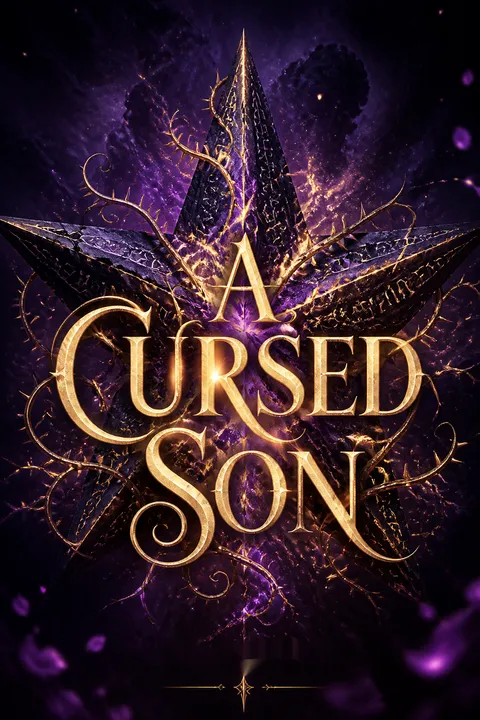
A Cursed Son is a captivating enemies-to-lovers fantasy romance that has garnered mostly positive reviews. Readers praise the unique world-building, engaging characters, and slow-burn romance between Astra and Marlak. The book's spicy dreams, witty banter, and intriguing plot twists keep readers hooked. Some criticism focuses on writing style and character development. Despite mixed opinions, many readers eagerly anticipate the sequel, drawn in by the cliffhanger ending and the promise of further exploration of the magical world and character relationships.
People Also Read






Characters
Astra
The hidden royal doubleAstra is a nineteen-year-old substitute trained to impersonate Princess Driziely, and she measures her worth by discipline, knowledge, and flawless performance. Because she was raised in a guarded tower, she has little experience choosing a life beyond her assigned role. Her longing for travel and affection can make her reckless, as her attempt to poison her friends shows, but she is also observant, resourceful, and quick to protect others. Astra’s deepest conflict is not simply whether to obey or rebel; it is whether she can distinguish her own values from the beliefs her teachers installed in her. Her faith, curiosity, and growing willingness to challenge authority give her tools for doing so.
Marlak
The hunted fae princeMarlak is a powerful, scarred prince from the Crystal Court, living under the shadow of accusations about his family’s deaths and his conflict with his brother11. He masks fear and tenderness with mockery, secrecy, and a deliberately difficult manner. His political life has taught him to treat disclosure as a danger, while his loyalties to friends and vulnerable allies show that he is not simply the ruthless figure rumors describe. With Astra1, he struggles to protect without controlling and to show affection without exposing her to his enemies. His personal history remains entangled with the questions of identity, trauma, and power that surround the Crystal Court.
Ziven
The clever false drunkPrince Ziven is a nephew of Krastel’s reigning king23 and is often dismissed as a wasted, drunken royal. His trip with Astra1 reveals a more alert and capable person beneath that public image. He notices political danger, reads people carefully, and can act with surprising bravery when another person is at risk. His connection with Tarlia6 grows through shared concern and investigation, though his interest in Astra1 initially complicates how she reads him. Ziven’s guardedness reflects the precarious position of a prince without clear authority: he survives by letting others underestimate him.
Otavio
The keeper of masksOtavio is Astra’s1 stern master, a renowned beauty expert and apothecary who has shaped her appearance and trained her for dangerous service. He often expresses care through rules, warnings, and control, leaving Astra1 hungry for approval even as she resents his authority. His skill at concealment makes him both protector and architect of the secrets surrounding her life. Otavio believes political outcomes justify elaborate preparation, and he expects loyalty from the young women he has trained. His relationship with Astra1 carries the emotional weight of a parent’s protection, but its basis in strategy makes that affection difficult for her to trust.
Andrezza
The exacting court tutorAndrezza is a senior instructor in the Elite Tower and one of the adults who oversees the substitutes. Beautiful, intelligent, and politically practical, she teaches the girls how to behave in court and understands that their training may lead to dangerous marriage assignments. She can be warm toward Astra1, but her concern operates within a system that treats young women as instruments of statecraft. Her partnership with Otavio4 reflects their shared investment in the tower’s plans, while her occasional reservations suggest she is not blind to the risks those plans create.
Tarlia
The defiant substituteTarlia is one of Astra’s1 fellow substitutes and has the same carefully crafted appearance as the princess she may be asked to impersonate. She is perceptive, emotionally candid, and unwilling to pretend that the tower’s promise of future freedom is enough to make present confinement bearable. Her relationship with Astra1 includes affection, private trust, and the strain of their unequal assignments. Tarlia seeks moments of pleasure without surrendering her desire for a future, and she is capable of making dangerous choices when she sees no safer route. Her dry humor often protects a more vulnerable fear of being disposable.
Sayanne
The ambitious substituteSayanne is a fellow substitute whose conflict with Tarlia6 disrupts the women’s former sense of sisterhood. She believes sexual behavior can damage a woman’s reputation and presents her judgments as protective concern. Her ambition and attention to social leverage make her skilled at reading what others want, but they also sharpen her rivalry with the people closest to her. Sayanne’s relationship with Ziven3 becomes another source of uncertainty for Astra1, who cannot easily separate affection, strategy, and performance in the tower’s tightly managed social world.
Nelsin
The cat-eared knightNelsin is a fae knight with catlike ears, claws, and a playful manner that can disguise how seriously he takes his duties. He serves Marlak2 and helps protect Astra1, while his decision to test her judgment reveals a tendency to turn emotional questions into risky experiments. Nelsin is capable of admitting error and learning from consequences, and his affection for Ferer9 makes loyalty more than a professional obligation. His attempts to understand Astra1 show how outsiders can recognize her courage even when she refuses to see it herself.
Ferer
The gilled loyalistFerer is a fae knight whose gills mark him as different even among the fae. Serious and observant, he offers Astra1 practical instruction and speaks candidly about the danger of hiding one’s identity for the sake of survival. His relationship with Nelsin8 is affectionate, but his standards of honor make him wary when Nelsin8 disobeys his duties. Ferer’s loyalty to Marlak2 coexists with a clear concern for vulnerable people, and his own experiences of exclusion give his advice to Astra1 particular weight.
Cr isine
The Spider Court princessCr isine is a princess of the Spider Court and a woman with a consequential history with Marlak2. Her perspective on him differs sharply from the loyalty his allies display, making her difficult for Astra1 to assess. She is skilled at using vulnerable language and political leverage, and her warnings force Astra1 to consider how easily affection can be confused with dependence. Cr isine’s presence connects private heartbreak to the larger ambitions of the fae courts.
Renel
The accepted fae rulerRenel is Marlak’s brother2 and the accepted ruler of the Crystal Court, though Marlak2 disputes the legitimacy of his kingship. He is largely known through the political stories others tell about him, particularly Marlak’s2 account of their shared past. Renel’s authority depends not only on power but on symbols, alliances, and how the surrounding courts interpret his claim. His relationship with Marlak2 is shaped by an unresolved family catastrophe and competing ideas of duty, responsibility, and rightful rule.
Azur
The king's sharp instrumentAzur serves Renel11 as a political agent, general, and negotiator. He approaches Marlak2 with carefully worded proposals designed to test what the prince2 values and where his loyalties lie. His manner is polished but threatening, and his reported ability to sense emotion makes him especially dangerous in a court where every reaction can be used as evidence. Azur represents Renel’s11 reach beyond the palace, carrying the king’s11 pressure into spaces where Marlak2 would rather remain hidden.
The Nameless
The dream-reading elderThe Nameless is an enigmatic elder who can interpret dreams and appears when Marlak2 seeks help with his connection to Astra1. She is impatient with evasion and presses both spouses to distinguish unwanted intrusion from feelings they are reluctant to acknowledge. Her counsel is less a supernatural solution than a demand for self-examination. The Nameless treats emotional truth as something the characters must face rather than outsource to magic.
The Nymph Queen
The river's hidden sovereignThe Nymph Queen rules an independent people whose influence is greater than the human and fae courts realize. She can perceive what others conceal and offers Astra1 protection without forcing her to disclose her hidden identity before she is ready. Her authority comes with a history of being hunted, which makes her sympathetic to those who live behind masks. She provides a rare example of power used to create room for another person’s choice.
Berta
The Misty Court queenQueen Berta rules the Misty Court and treats courtship as a political transaction. Her proposal to Marlak2 joins desire to questions of alliance, heirs, and power. She is bold, provocative, and accustomed to testing how much an ally will tolerate. Her encounter with Astra1 and Marlak2 reveals the blunt rules that can govern fae diplomacy beneath its elaborate manners.
Neliara
The Bee Court's queenQueen Neliara presides over the Court of Bees and receives visiting nobles at the coronation. Her cordial manner does not erase her political attentiveness; she watches how guests present themselves and what their alliances imply. Her court’s ceremonial protections offer temporary safety, but the danger beyond its grounds remains close.
Lidiane
The seamstress with dreamsLidiane is Ferer’s9 younger sister, a gifted seamstress trying to sustain her work while taking employment elsewhere. She treats Marlak2 as a friend rather than an untouchable prince, and she puts practical limits on what she can offer. Astra’s1 help with a dress made from fabric scraps gives Lidiane a chance to show her skill. Her modest hopes and guarded independence provide a grounded counterpoint to the ambitions of courts and rulers.
Malena
The fire-wielding princessPrincess Malena belongs to the Court of Bees and has powerful fire magic. Her secretive walk outside the coronation grounds puts her in danger, and her capacity to fight makes her an active participant in her own survival. She is wary of revealing more about herself than necessary, even to someone who has helped her.
Quin
The smiling guardQuin is a member of the Elite Guard trained to impersonate one of the princes. His relaxed smile and attention make Astra1 imagine a future that might exist beyond her assignments. He is also part of a system that trains young guards to perform roles and protect royal interests, so Astra1 cannot be certain where genuine affection ends and institutional purpose begins.
Fachin
The Elite Tower guardFachin is a guard stationed in the Elite Tower and becomes involved with Tarlia6. His presence in her room exposes the conflict between the substitutes’ private desires and Sayanne’s7 concern for their reputation. He is a functional but telling figure in the tower’s uneasy mix of supervision, intimacy, and unequal power.
Commander Rowe
The visiting captainCommander Rowe is a captain from Tirenzy who shares a brief encounter with Astra1 when she is pretending to be a maid. His treatment of that encounter leaves Astra1 with a painful lesson about the difference between being desired and being respected. Though his appearance in her life is brief, the memory shapes how she understands vulnerability.
Irene
The pixie dressmakerIrene is a renowned pixie seamstress whose wings, age, and beauty mark her as distinctly fae. She takes Astra’s1 measurements and offers her ornate clothing, assuming that the young queen wants to look more beautiful than a rival princess. Her enthusiasm reveals how appearance can become both craft and political currency.
King Leonius
Krastel's reigning kingLeonius rules Krastel after inheriting the throne from his brother. He relies on the Elite Tower’s substitutes to protect the royal family and serve the kingdom’s diplomatic needs. His decisions shape Astra’s1 assignments, even when she has no direct access to his reasoning.
Lord Stratson
The northern border lordLord Stratson is a regional noble whose wedding brings Astra1 and Ziven3 outside the castle. His position near Krastel’s northern border makes the marriage politically significant, while his estate’s reception exposes Astra1 to the formal rituals and unspoken pressures of court life.
Stratson's Daughter
The silent grieving daughterLord Stratson’s24 daughter attends the wedding reception soon after her mother’s death. She says little, but her rigid posture and refusal to participate warmly in the celebration make her silent resistance visible. Astra1 recognizes in her a person being required to accept a future she did not choose.
Plot Devices
The Substitute Identity
A life built on disguiseAstra1 and the other young women are trained to resemble Princess Driziely and act in her place at ceremonies, dangerous assignments, or political marriages. Hair color, cosmetic alterations, court etiquette, and practiced behavior help sustain the deception. The arrangement gives Astra1 skills that later help her survive beyond Krastel, but it also teaches her to treat her own identity as a liability and her body as a political resource. The substitutes’ uncertain promise of freedom keeps them loyal while encouraging rivalry over who will be chosen.
The Shared Dreams
Desire crosses waking lifeAstra’s1 faith ritual connects her to a kindred soul2 in dreams, while Marlak2 experiences related visions through a mysterious magical connection. The dreams comfort Astra1 before she knows the man’s identity, then confuse both characters once they meet in waking life. Each assumes the other is responsible, and that suspicion fuels mockery, concealment, and misplaced fear. The visions eventually force them to confront desires neither can confidently separate from the magic. They function as a private space of tenderness, but never replace the difficult work of trust and consent.
Beacon Stones and Relics
Magic carries political historyBeacon stones and ancient fae relics are artifacts of lost magical knowledge. Some can serve as conduits or signals, while others protect, reveal, or alter magic. Marlak’s2 collection links the Crystal Court’s current conflict to older Tiurian sanctuaries and forgotten histories. Their powers are often misunderstood, even by the characters who possess them, making each artifact both a potential weapon and a clue. The stones’ changing light connects Astra’s1 emerging abilities to a past Krastel has concealed.
Astra's Light
Faith becomes active protectionAstra1 calls on the Almighty Mother and produces light that can disrupt attackers, shield people from danger, and help Marlak2 face traumatic memories. Astra1 understands this practice as faith rather than magic, a distinction that allows her to use it without accepting the dangerous identity others have taught her to fear. Its power grows most clearly when she protects someone else, but its origins and limits remain uncertain. Light therefore works as both a practical defense and a way for Astra1 to act before she fully understands herself.
Fae Oaths and Treaties
Promises shape political dangerFae agreements, court customs, coronation protections, and personal oaths impose rules that humans do not always understand. Marlak’s2 promise to protect Astra1 shapes what he expects from his knights, while treaties determine where attacks can be justified and where a guest may find temporary safety. The rules can restrain violence, but they can also be manipulated through careful wording and strategic performance. Astra’s1 training in human court etiquette helps her read some situations, yet the fae courts repeatedly expose how much she still does not know.
Download PDF
Download EPUB
.epub digital book format is ideal for reading ebooks on phones, tablets, and e-readers.








