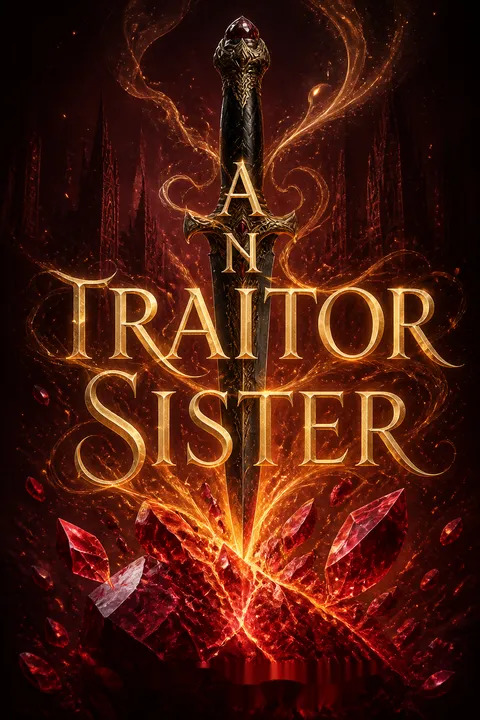


Summary Unavailable
This book is not suitable for a summary (it may be a textbook, workbook, cookbook, reference book, or collection). However, you can still explore the FAQs, about author, and other metadata below!
Plot Summary
The Brother in Chains
After the sanctuary confrontation, Marlak is captured by Renel, his estranged brother, and taken to a remote prison in the Shadow Lands. Renel's Shadow Ring suppresses Marlak's magic, while dark metal cuffs leave him unable to fight his way out. His guard Azur threatens Astra, forcing Marlak to submit rather than risk her life.
Renel confines him in a fireproof cell and offers him freedom in exchange for abandoning his claim to the Crystal Court throne. Marlak refuses, still intent on protecting Astra and discovering what happened to his missing sister, Mirella. The brothers part without speaking honestly about their shared past, leaving Marlak imprisoned with the Sundering Dagger and a faint first stir of magic.
The prison makes a family wound physically legible: Renel controls Marlak's magic, while Marlak's restraint comes from fear for Astra rather than helplessness alone. Their bargaining is political on the surface, but neither can name the old betrayal or their sister, so the proposal to start over lands as another attempt to dictate the terms of intimacy. Marlak's refusal preserves his agency, yet his decision to wait for Astra's safety shows how love can make caution both a virtue and a cage.
A Tiurian in the Castle
Astra returns to Otavio, the mentor who raised her, pretending to be the obedient pupil he expects. She now knows she is Tiurian, but Otavio refuses to explain her origins or teach her magic. When she mentions the Amethyst Palace, his composure cracks, confirming that her dreamlike visions point toward something real.
Meanwhile, Renel admits to himself that the Crystal Castle is moving toward the Fiery Gorge, where it may destroy the Jewel City, and he lacks the magic to control it. He believes Astra can grant him power if she loves him, so he plans to win her trust. His council leader, Zorwal, keeps him dependent and punishes even small acts of independence, leaving Renel desperate for a solution he cannot openly pursue.
Astra's practiced obedience has been a survival strategy, not proof of trust. The combing and beauty rituals blur care with ownership, making Otavio's paternal warmth difficult for her to reject even after his evasions expose its limits. Renel's crisis mirrors hers: he is treated as a ruler while lacking the power to rule, and he tries to turn intimacy into a remedy. His hope that Astra's love can solve a political catastrophe reveals how structural dependence tempts people to instrumentalize the very relationships they need to be genuine.
Arrows at the River
On the journey back toward Krastel, Tarlia confronts Prince Ziven about his sudden distance and learns that he fears his uncle's court may arrange his murder. Ziven reveals he once imagined escaping with her, but Tarlia's hope collides with his uncertainty about his feelings.
Before they can resolve it, their carriage stops in the forest and traitorous guards attack. Ziven uses water magic through his opus stone, but an arrow wounds his arm and drains his strength.
Tarlia runs when he orders her to escape, then turns back after a blue-skinned fae assures her he is alive. Nelsin and Ferer have defeated the attackers. With Ziven unconscious and Krastel unsafe, Tarlia accepts shelter among the fae rather than return to the life that trained her as a substitute princess.
Tarlia's flight is not simple cowardice: she obeys Ziven's instruction, then must decide whether survival without him is still bearable. Her return exposes the difference between tactical retreat and emotional abandonment. Ziven's disclosure arrives too late to become a shared plan, because both characters have learned to protect themselves through concealment. The attack converts romantic uncertainty into material danger and strips away the assumption that Tarlia can safely return to the role assigned to her.
Two Faces at Court
Lidiane, a lower fae skilled in glamours, proposes sneaking into the Crystal Castle with capes that make their wearers easy to overlook. Tarlia volunteers to stay behind as Astra's double, buying her friend time to escape and giving herself a chance to act instead of waiting for rescue.
The plan works long enough for Tarlia and Lidiane to reach Astra's room, where they exchange clothes and disguises. Astra leaves under a working cape; Tarlia remains in the castle with Otavio nearby.
Lidiane's cape proves less reliable than expected, and Azur notices that she is not enchanted. Instead of immediately arresting her, he assigns her as Tarlia's lady-in-waiting. The two women are now separated, each carrying a secret that could endanger the other.
The substitution reverses the girls' lifelong training: the skill meant to make them interchangeable becomes a tool they choose to use for one another. Tarlia takes on danger not because she believes she is expendable, but because usefulness offers a first route toward self-determination. Lidiane's capes also literalize social invisibility, showing how people pushed to the margins can move through power's spaces precisely because power has trained itself not to notice them.
The Guardian's Dangerous Errand
Azur asks Lidiane to help him enter the Jewel City's Inquiry House, where five lower fae have been condemned to die despite committing no crime. Her glamour lets them impersonate officials and reach the prison cells, but Zorwal arrives to interrogate the captives.
When he starts breaking their minds for information, Azur hurls him against a wall, apparently killing him. Azur then takes Lidiane and the prisoners to a merchant ship, where the Sea Court's prince demands a hidden sea fae.
Lidiane, who has sea-fae blood, stays concealed while Azur negotiates and uses his magic to escape the confrontation. He frees the five prisoners and sends them toward the Nowhere Lands. The mission saves lives, but Azur's secret power and the council leader's apparent death now threaten the whole court.
Azur's act of rescue is both moral intervention and personal defiance, though he cannot yet separate the two. His bond to Renel has trained him to make protection his identity, even when the assignment forces him to confront the violence that identity serves. Lidiane's concealed ancestry makes her vulnerability immediate, while her glamour becomes a form of solidarity rather than mere disguise. The apparent killing of Zorwal exposes the cost of acting outside the system: even a just rescue creates a dangerous vacuum of knowledge and accountability.
A Giant Opens the Cell
A group of giants breaks into the Desert Keep and frees Marlak, asking him to help against an ancient danger rising beneath the Shadow Lands. Their confused warning leaves him with little certainty, but he crosses the river and reaches Nelsin's refuge. Astra and Marlak reunite, and she confronts him for the cruel words he used to make Renel believe he did not care about her.
Marlak admits he was trying to protect her and agrees to stop making decisions on her behalf. With the Sundering Dagger briefly loosening his binding promises, he tells Astra, Nelsin, Ferer, and Ziven that Mirella survived and is imprisoned in the Blue Tower. Astra's vision of a hidden island identifies the tower's location, so Marlak and Ziven set out to rescue her.
The reunion repairs intimacy through explicit accountability rather than romantic destiny alone. Marlak's intention to protect Astra does not erase the injury he caused, and her insistence on being consulted changes the terms of their partnership. The revelation about Mirella also reinterprets his long search: his political defiance is bound to a sibling he has spent years trying to save. The giants' warning widens that private quest into a larger crisis, linking family rescue to the land's unstable magic.
Festival, False Bride
Renel believes the disguised Tarlia is Astra and awkwardly tries to charm her, hoping to gain the magic he needs to control the Crystal Castle. Tarlia sees his anxiety beneath the royal display, but cannot tell him who she is before Azur brings the party to a public festival. There, attackers seize Tarlia, and Azur disables them with air magic.
The castle's movements and Zorwal's summons then force Renel back into court politics. Zorwal returns despite Azur's belief that he killed him, interrogates Renel and the women, and threatens to expose their secrets. Azur attacks him again and escapes with Renel, Tarlia, and Lidiane, but his magic falters and leaves them stranded in the Shadow Lands. Tarlia has not yet told Renel the truth.
The failed courtship makes misrecognition more than a comic obstacle: Renel pursues a fantasy of power through a woman whose actual identity and needs he has not bothered to understand. Tarlia's double role lets her observe the gap between his public authority and private fear, while her own performance reflects a lifetime of being evaluated as a replacement. Zorwal's return demonstrates that power can survive the apparent defeat of a single body, so the group's escape does not end the danger; it merely relocates it.
The Shadow Lands Night
With Azur's magic failing, the four travelers race toward the Desert Keep before night brings the Shadow Lands' monsters. A soulsucker traps them in visions of their deepest fears, but Tarlia cuts the creature apart and wakes the others.
Sand sprites and a vast pack of earth ghouls then attack; Lidiane uses sound and illusions to misdirect some foes, while Renel and Azur fight with swords. When the ghouls overwhelm them, Renel's shout drives them back, and Cherry Cake, Marlak's dark unicorn, appears and leads them to the keep.
There, Tarlia admits she is not Astra. Renel is hurt by the deception but offers her a place as his guest. He and Tarlia share a night of intimacy, while Azur and Lidiane recognize their soulmate bond and then argue over whether to pursue it.
The night strips status down to bodily endurance: Renel's royal title cannot stop a soulsucker, and Tarlia's apparent lack of magic does not prevent her from saving the group. Their survival depends on different kinds of competence, not rank. Tarlia's confession ends the impersonation but does not immediately undo the trust formed between her and Renel. By contrast, Azur and Lidiane's bond arrives with a label before it has earned intimacy, exposing how destiny can create pressure rather than certainty.
The Tower That Eats Birds
Marlak and Ziven reach the Blue Tower by crossing its magically hidden bridge with Ziven's royal blood. Mirella emerges alive, but her confused behavior and filthy, abandoned surroundings suggest that the prison has altered her life profoundly.
She refuses to leave, then disappears before the men can understand how she has survived. That night, a gigantic raven-like creature breaks into the tower and suppresses both men's magic. Ziven realizes the bird's face resembles Mirella and blocks Marlak from striking it.
When the creature vanishes, Mirella lies in its place, waking in human form and describing years of flight and captivity as a nightmare. Her magic returns, and she runs through an old faerie circle toward the Crystal Castle before Marlak can stop her.
Mirella's transformation turns imprisonment into a split existence: the body that can escape is also the body that terrifies her family. Marlak's first impulse is to treat the bird as a threat, while Ziven's attention to resemblance opens a path toward recognition. Their rescue cannot be achieved by force alone; it requires seeing the prisoner's behavior as evidence of harm rather than proof of monstrosity. Mirella's immediate return to court shows that freedom does not erase the political history that shaped her captivity.
Astra Claims Her Name
Astra returns to Krastel to search Otavio's study, but finds most Tiurian books and records removed. Sayanne claims that Ziven and Tarlia died, then orders guards to arrest Astra; Ferer and Nelsin help her escape through a flooded passage beneath the castle.
The Nymph Queen summons Astra and warns that ancient forces are stirring in the Shadow Lands, while Tiurian magic has been suppressed for generations. Astra washes Otavio's dye from her hair and sees her natural purple color for the first time.
Nelsin helps her understand that the faith she learned in Krastel may still be hers even if its teachers used it to condemn Tiurians. Astra regains her protective light, enters the Shadow Lands with Ferer and Nelsin, and giants take Nelsin as leverage.
Astra's purple hair is not a magical solution by itself; it is an act of refusing the concealment that shaped her childhood. Nelsin's counsel lets her reclaim faith without accepting the prejudice attached to it, separating a source of inner strength from the institution that distorted it. The giants' demand makes her new self-understanding consequential: she cannot simply discover who she is in private, because others now depend on what she can do.
Otavio's Canvas Cage
Otavio tracks Tarlia and Lidiane by the hair coloring he used on them and locks them in a wooden cage. He reveals that he raised the girls as tools, had Tarlia's childhood family killed, and cultivated Sayanne's ambition until she helped seize Krastel's throne.
Lidiane impersonates Otavio to trick a guard into opening the cage, then carries Tarlia through a hidden river route that masks their escape. They make for the Crystal Castle, where Tarlia confesses her identity to Renel.
Renel offers her shelter rather than punishment, and their attraction deepens. After Tarlia and Lidiane reach the Desert Keep, Zorwal summons them. He survives his apparent death, stabs Renel, and offers Tarlia a bargain: her obedience in exchange for Renel's life.
Otavio's revelations show how abuse persists through engineered dependence: he gives the girls survival skills, then frames their survival as proof that they belong to him. Lidiane's quick impersonation turns the same coercive performance into an escape tool. Tarlia's confession to Renel is an attempt to stop being a substitute, but her later bargain with Zorwal shows how difficult it is to escape instrumental roles when someone else's life is at stake. The repeated returns of the powerful men make safety feel provisional, not earned once and for all.
The Palace Answers Back
Following the pull of her visions, Astra reaches the Amethyst Palace with Ferer. Its hidden gate opens to her blood, and its ruined halls lead her to a black heart and a crystal formation.
When she touches both, the palace shows her Marlak in danger and reveals that Renel is asking for help through the castle's magic. A voice directs Astra to cut a black vine with the Sundering Dagger, which she summons from afar. The cut breaks enchantment bonds across the lands, freeing enslaved fae and releasing Mirella from the curse that turned her into a bird.
Astra also learns that the Crystal Castle's path toward the Fiery Gorge threatens to release the Witch King from his underground prison. The ghouls kneel to her and guide her through the palace.
Astra's power becomes legible through relationships rather than mastery of a technique: faith steadies her, the ghouls recognize her, and the palace answers her touch. The Sundering Dagger's broad effect is ethically significant because it breaks bonds without allowing her to select only the convenient ones. Freedom arrives as disruption, not a clean victory; the same force that releases the enslaved also alters the political order and reveals a larger danger beneath it.
Zorwal Walks Again
After Astra's intervention severs Azur's binding to Renel, Azur is finally free to speak against the system he once enforced. He admits his anger at Marlak over an attack that mutilated him as a child, then Lidiane challenges him to see Marlak as more than an enemy. At the castle, Zorwal appears again and threatens the court.
Marlak returns with Mirella, only to find Renel bleeding from a stab wound inflicted by someone wearing Marlak's appearance. Zorwal offers to heal Renel if someone accepts a life bond. Tarlia accepts a narrower bargain, agreeing to obey Zorwal in exchange for Renel's survival and the others' temporary safety. Zorwal heals Renel, then leaves with Tarlia and Mirella, while Marlak and Renel begin an uneasy truce.
The severed guardian bond changes Azur's role from compelled protector to a person who must decide what he believes. His confrontation with Marlak makes inherited grievance explicit, while Lidiane insists that accountability need not erase the possibility of friendship. Tarlia's bargain is both courageous and troubling: she chooses Renel's life, but does so by entering another coercive contract. The brothers' truce is born from shared danger, not repaired trust, leaving their history unresolved even as cooperation becomes necessary.
The Castle Leaves Its Course
Astra and Azur reach the Crystal Castle as its movement toward the Fiery Gorge accelerates. Astra tastes a drop of Azur's blood, using her Tiurian ability to wield another person's magic, and the two join hands to transcend the entire castle toward safer ground.
Astra cuts the magical pull drawing it toward destruction, but the effort drains her and the pair vanish from the castle. Marlak learns that Astra saved the court and broke the enchantments, then discovers she and Azur are missing.
He and Renel agree to cooperate: Renel will yield the throne after they retrieve Tarlia, while the freed lower fae need protection from a likely backlash. Their immediate victory prevents the city's destruction, but it does not recover the women or contain the danger beneath the palace.
The rescue requires a form of power that is cooperative rather than possessed: Astra can borrow Azur's capacity, but neither can move the castle alone. Their success also disrupts the idea that legitimate authority belongs to whoever holds the throne; the castle changes course because a hidden Tiurian acts where the court's institutions failed. Yet the disappearance prevents victory from becoming closure. The political crisis survives, and Marlak's grief makes the cost of collective rescue painfully personal.
The Witch King Wakes
Astra wakes underground beside Azur, whose magic has vanished, and finds the Witch King waiting among the ghouls. He thanks them for freeing him from the crystal prison beneath the Shadow Lands. Azur identifies himself as heir to the Nether Court and admits that he was raised to seek revenge on the Crystal Court, though he now says he will protect Astra.
The Witch King recognizes Astra's Tiurian ancestry and claims her bloodline, naming her a powerful heir. Aboveground, Marlak and Renel prepare to recover Tarlia and Mirella while the newly freed fae face an uncertain future. The castle has been diverted and the old bonds are broken, but Astra and Azur are now trapped beside a power that could turn the political crisis into a wider war.
The ending refuses to equate liberation with safety. Astra's action prevents the castle from destroying a city and frees people from enchantment, yet the same intervention releases an imprisoned force and exposes her ancestry to someone who may claim authority over it. Azur's allegiance is now divided between his inherited revenge and his chosen protection of Astra. The novel closes on a new moral test: whether freedom can be defended without reproducing the old logic of bloodline, vengeance, and control.
Analysis
The novel repeatedly asks whether protection can be separated from control. Marlak wounds Astra while trying to keep her safe; Otavio calls manipulation care; Renel accepts Zorwal's guidance because he fears political collapse; and Azur mistakes a binding duty for a chosen identity. Their motives are not equivalent, but the pattern matters: care becomes coercive when the protected person is denied a voice. Astra's insistence on being consulted marks a change in the story's moral grammar. She does not reject love, faith, or inherited power; she reclaims the right to interpret them herself.
The substitute-princess plot makes this question social as well as intimate. Astra and Tarlia have been trained to be interchangeable, yet their differences drive the action. Tarlia's improvisation, appetite, and bluntness save people precisely because she refuses to behave like the ideal pupil. Lidiane's glamour performs a parallel critique: people made invisible by class can use that invisibility to enter the structures that exploit them. When Astra breaks the magical bonds, liberation arrives without a neat transition plan, exposing how much the court depends on the very people it enslaves.
The book also resists clean moral sorting. Renel is complicit in injustice while sincerely trying to prevent catastrophe. Marlak's guilt over the fire is real, but incomplete, since Mirella's magic and the family's conflict complicate his memory. Azur's loyalty contains both love and resentment. Even Astra's victory frees the Witch King, turning rescue into a new danger. The ending therefore treats power less as a possession than as a relationship with consequences. No character can solve the crisis alone, and no good intention guarantees a good outcome. The unresolved alliances leave the central ethical task in view: build a form of belonging that does not require anyone else to be bound.
Last updated:
Report IssueReview Summary
A Traitor Sister receives overwhelmingly positive reviews (4.13/5), with readers praising its multiple POVs, expanded world-building, and complex character development. While Book 1 focused on Astra and Marlak, this sequel introduces compelling perspectives from Renel, Tarlia, Lidiane, and Azur. Reviewers highlight the emotional rollercoaster, jaw-dropping twists, and improved romance. Common criticisms include too many POVs causing confusion for some readers, and a slower middle section. Most readers found the cliffhanger ending exceptional and eagerly await Book 3, praising Day Leitao's intricate plotting and character work.
People Also Read



Characters
Astra
Hidden Tiurian heirAstra was raised in Krastel by Otavio, trained to observe, obey, and conceal the identity suggested by her unusual hair. She is curious and perceptive, but years of manipulation have taught her to doubt her own judgment and power. Her marriage to Marlak begins in secrecy and grows into a partnership that requires both tenderness and honest disagreement. Astra's central struggle is not simply learning what magic she has, but deciding which parts of her upbringing still belong to her. Her faith, friendship, and ability to recognize other people's suffering become sources of strength as she moves from being treated as a tool to acting on her own convictions.
Marlak
Exiled Crystal heirMarlak is a powerful fae with a scarred body, a guarded manner, and a history of being driven from his family home after a catastrophe. He avoids explaining his past because fear and guilt have made silence feel safer than trust. His search for his sister Mirella and his conflict with Renel are inseparable from his claim to the Crystal Court. With Astra, he discovers that protection without consent can itself become a form of harm. His humor and stubbornness often conceal grief, but his loyalty to friends and family keeps drawing him into alliances he once would have refused.
Tarlia
Defiant princess substituteTarlia was raised alongside Astra as a substitute for Krastel's princess, trained to perform a role and make herself useful to powerful people. She is observant, sensual, practical, and more courageous than she believes, though a lifetime of being treated as replaceable has left her hungry for proof that she matters. Her feelings for Ziven complicate her instinct to pursue safety, while her growing connection with Renel challenges her assumptions about both herself and the fae king. Tarlia's sharp humor is not mere cynicism; it is a way to reclaim some control over situations designed to make her an object.
Renel
Uncrowned Crystal rulerRenel governs the Crystal Court without the magic and secure legitimacy expected of a king. He is anxious, clever, and often more compassionate than his carefully managed public image suggests, but he has learned to depend on Zorwal's advice and the council's approval. That dependence narrows his political imagination and leaves him complicit in a system that exploits lower fae. His fear of losing power is entangled with a real desire to prevent catastrophe, making it difficult for allies to tell where duty ends and self-preservation begins. Renel's awkwardness in personal relationships contrasts with his practiced royal composure.
Azur
Bound guardian with secretsAzur is Renel's sworn guardian, an exceptionally powerful fae whose abilities include rare long-distance transcending. His role gives him access to influence while binding his choices to another person's safety. He is proud, blunt, and capable of startling kindness, yet his loyalty to Renel does not erase his awareness of the Crystal Court's oppression. His encounters with Lidiane unsettle the guarded identity he has built around duty. Azur's hat and carefully controlled appearance hint at a painful history, while his skill at reading magical danger often exceeds his willingness to speak honestly about himself.
Ziven
Threatened Krastel princeZiven is the former king's son and a target of the family that now rules Krastel. He masks anxiety with wit and a reputation for drinking, habits that help him avoid being treated as a political threat until it is too late. His water magic depends on an opus stone, leaving him vulnerable when it is damaged. Ziven values survival but wants that survival to mean something, which makes him eager to help even when Marlak considers him a liability. His friendship with Tarlia is genuine, though his inability to return her romantic feelings causes both of them pain.
Lidiane
Lower-fae glamour makerLidiane is a gifted dressmaker and glamour worker from the lower-fae community, with a strong sense of justice and an appetite for action. She resists being protected as though she were incapable of choosing risk for herself. Her clothes and disguises are practical forms of magic, giving people overlooked by the court ways to move through its guarded spaces. Lidiane is close to her brother Ferer and becomes a trusted ally to Astra and Tarlia. Her sharp humor hides genuine fear, especially around the sea and the possibility of losing people she has only just begun to trust.
Ferer
Protective fae knightFerer is a disciplined knight who values honor, preparation, and the safety of the people in his care. His caution can appear rigid, especially when Lidiane insists on acting for herself, but it comes from a sincere fear of losing his sister. He helps Astra navigate both human and fae territory and provides practical support when magic cannot solve a problem. His relationship with Nelsin is strained by a past disagreement over duty, yet their continued cooperation suggests that loyalty can survive conflict without immediately erasing it.
Nelsin
Playful fae rescuerNelsin is a cat-eared fae with a generous disposition, a teasing manner, and an instinct to help people before the rules permit it. His willingness to take risks sometimes frustrates Ferer, especially when a past act of disobedience endangered others. Yet his warmth helps Astra question assumptions about herself, and his practical knowledge repeatedly makes escape possible. Nelsin wants to repair his relationship with Ferer but does not force forgiveness, showing patience beneath his playful surface.
Otavio
Manipulative royal mentorOtavio raised Astra and Tarlia, taught them seduction and observation, and presented control as protection. He is attentive to appearances and skilled at making affection feel conditional on obedience. His plans reach beyond the girls' immediate lives, but he keeps their purpose obscure, encouraging them to accept his authority without understanding its cost. Otavio's polished manner makes his cruelty harder to recognize at first, particularly for pupils who have no family or safer place to turn.
Zorwal
Council power brokerZorwal leads the Crystal Court council and has long served as Renel's political adviser. He is a skilled healer and interrogator who understands the fears of powerful families and uses that knowledge to maintain his influence. His counsel often sounds practical because it addresses immediate threats, but it also teaches Renel to preserve the existing hierarchy rather than challenge it. Zorwal's calm manner conceals a willingness to use pain, bargains, and manipulation to secure the outcomes he wants.
Mirella
Missing royal sisterMirella is Marlak and Renel's younger sister, raised as a royal child within a family fractured by court politics. She shares Marlak's early interest in magic and remains tied to the succession struggle even when she is not present. Her relationship with her brothers carries the weight of childhood rivalry, shared loss, and conflicting memories of what happened to their family. The uncertainty surrounding her condition makes her central to Marlak's choices long before he can reach her.
Sayanne
Ambitious Krastel rivalSayanne grew up alongside Astra and Tarlia as another girl shaped by Otavio's training. Competitive and status-conscious, she has learned to treat beauty and influence as tools for survival. Her resentment toward Astra is tied to the unequal attention the girls received, though she pursues her ambitions in ways that deepen the danger around them.
The Nymph Queen
Underwater warning voiceThe Nymph Queen is a ruler who treats monarchy as a sacrifice of personal identity to collective responsibility. She speaks to Astra with urgency about old forces gathering in the Shadow Lands, but cannot provide a complete account of what is coming. Her warnings push Astra to take her dormant magic seriously without giving her an easy path or a comforting guarantee.
Cherry Cake
Free-roaming dark unicornCherry Cake is a rare dark unicorn who has aided Marlak over the years without becoming his possession. His appearances connect Marlak to a happier childhood and offer practical help at moments when ordinary allies cannot reach him. The unicorn's independence matters: Marlak treats him as a friend with his own will, not as a weapon or a source of magic.
The Witch King
Ancient imprisoned threatThe Witch King is an ancient figure associated with a past war and magic that can absorb power from others. Stories describe him as dangerous enough that armies could strengthen him by fighting directly. His history has become legend, but the warnings around his name suggest that old conflicts have not vanished as thoroughly as the courts would like to believe.
Plot Devices
The Sundering Dagger
Cuts magical bondsMarlak carries the Sundering Dagger as a rare artifact capable of cutting certain promises and magical bindings. He spends years searching for the right stones to activate it, but Astra's Tiurian power awakens it. The dagger first gives Marlak a brief chance to speak about secrets his bargains forbid him to reveal. Later, Astra summons it inside the Amethyst Palace and uses it to cut a dark vine linked to far-reaching enchantments. Its power is not selective, so using it can free people while also destabilizing arrangements that have protected or controlled them.
The Shadow Ring
Suppresses fae magicThe Shadow Ring is a powerful artifact that blocks the magic of whoever it affects. Renel uses it to subdue Marlak and make his imprisonment more secure, while its presence also serves as a political tool and a reminder of Renel's dependence on borrowed power. The ring can be hidden or passed between people, and its provenance ties Renel to Otavio's scheme. Its duplicate later complicates Marlak's return to the castle, showing that the appearance of an artifact is not proof that its power is present.
The Moving Crystal Castle
Carries a kingdom toward disasterThe Crystal Castle moves periodically across the fae lands, apparently following an old magical course that Renel cannot control. Renel studies its trajectory and concludes that it will reach the Fiery Gorge, where its passage could split the land and destroy the Jewel City. His fear drives his search for magic and his attempt to gain Astra's love. The castle's motion also makes time unpredictable: intervals between moves shorten, and its final destination threatens to release an ancient prisoner beneath the Shadow Lands.
Tiurian blood magic
Borrows another's powerAstra's Tiurian inheritance gives her magic that has been suppressed and concealed for generations. She can access another person's magic through contact with their blood, though the power may feel alien and physically overwhelming. Her abilities first appear as uncontrolled traces of Marlak's water magic, then grow into light, visions, and a connection to the Amethyst Palace. Near the climax, she uses a drop of Azur's blood to combine their abilities. The magic ties identity to choice: Astra's power becomes effective as she stops accepting other people's accounts of what she is.
The Disguise Capes
Make wearers go unnoticedLidiane creates enchanted capes that do not make their wearers invisible or change their appearance. Instead, they discourage observers from paying attention, allowing Astra and Tarlia to pass through guarded spaces. The capes enable the exchange that gets Astra out of the Crystal Castle and places Tarlia in her position. Their effects are not perfectly reliable, so the plan still depends on timing, a convincing glamour, and the guards' assumptions about who belongs. The device turns social neglect into practical cover, while exposing the danger of a disguise that can be mistaken for identity.
About the Author
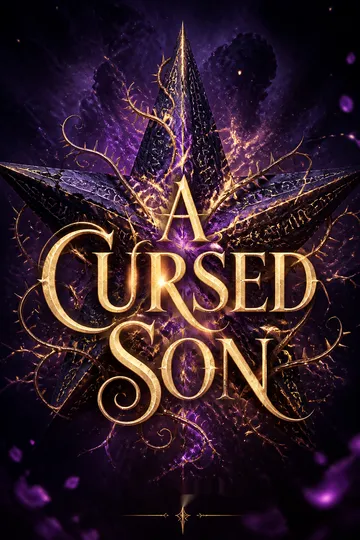
Day Leitao is a Brazilian-Canadian author based in Montreal who writes fantasy romance featuring heroes discovering their magic and opening their hearts. Her work emphasizes banter, character-driven storytelling, and the power of narratives to transform. She's currently running a Kickstarter for special editions of her Remnants of the Fallen Kingdom series, which includes A Cursed Son, A Traitor Sister, and A Devious Brother. Readers can follow her through various social media platforms and sign up for her mailing list for updates on releases and giveaways at dayleitao.com.
Other books by Day Leitao
Download PDF
Download EPUB
.epub digital book format is ideal for reading ebooks on phones, tablets, and e-readers.








