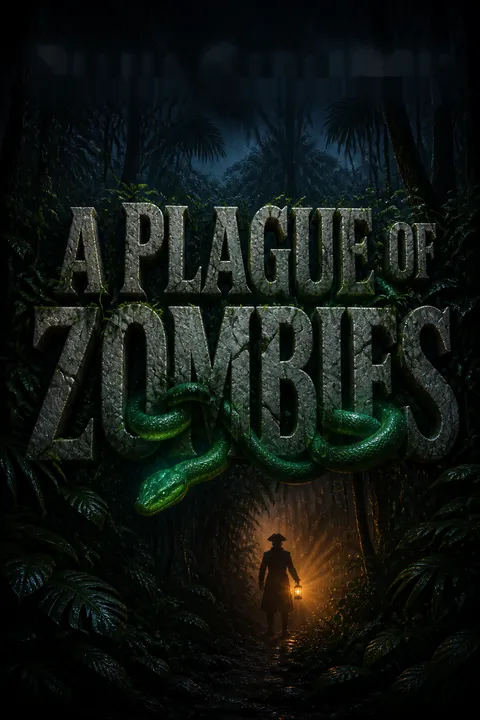


Plot Summary
Jamaica’s Unanswered Complaint
In 1761, Lieutenant-Colonel John Grey reaches Spanish Town with troops and orders to end the maroon uprising, whose raids have advanced toward Kingston. Governor Derwent Warren is frightened and unable to explain the conflict.
Grey learns that two maroons were whipped and jailed without trial after an accusation of theft; they escaped, a protest went unanswered, and the superintendent, Captain Cresswell, vanished while investigating the first plantation fires. One planter has been murdered, but reports are confused and the authorities conceal more than they clarify.
Studying the map, Grey notices the attacks’ route reaches Twelvetrees, a plantation newly inherited by a family with a name he recognizes. He keeps his own connection private and sees that suppressing violence will require finding its cause.
Grey’s first task is military, but the evidence makes a simple campaign morally and strategically impossible. The arrest without trial gives the maroons a grievance the governor cannot honestly answer, while Cresswell’s disappearance and Warren’s evasions suggest that colonial authority has already lost credibility. Grey’s instinct is to test claims before acting on them. That restraint is not indecision: by tracing the raids and asking what preceded them, he begins to distinguish organized resistance from the convenient story of lawless violence. His private recognition of the Twelvetrees name also places personal history beside public duty, though he chooses not to let it govern his first judgment.
Snakes Before the Grave
A small yellow snake on Warren’s drawing-room table sends the governor fleeing in terror, then turns up beneath Grey’s coat. Later, Rodrigo, a household servant, risks punishment to pass along an Obeah man’s warning that a zombie is coming for Warren. Grey orders sentries to guard the governor and walks back to his room, where a foul-smelling figure seizes him by the throat.
He frees himself, wounds the attacker with his dagger, and watches it escape through the French doors. Its grave stink suggests a corpse, but blood on Grey’s hand proves the assailant is alive. The attack leaves him shaken, yet more determined to learn whether the warning describes superstition, disguise, or a threat already inside the governor’s house.
The snake and the supposed corpse make Grey’s rational habits work under pressure rather than simply disprove local belief. He does not accept the word zombie as an explanation, but he takes Rodrigo’s warning seriously enough to protect Warren. That choice exposes Grey to an attacker and turns an uncanny rumor into physical danger. The blood is the crucial correction: what looks supernatural may be a human act staged to exploit fear. Rodrigo’s warning also establishes a quiet bond of trust, while Grey’s instinctive attention to him carries both desire and vulnerability. His investigation now has a personal cost, not only a military objective.
Nancy Names the Dead
To reassure the plantations, Grey rides with an escort to Philip Twelvetrees’s estate and proposes posting soldiers there. Philip’s sister, Nancy, interrupts the polite visit by condemning Warren and pressing Grey about his family name, stirring a history he prefers to keep private. When Grey asks about Obeah and zombies, Nancy explains that people believe zombies are dead bodies raised to obey a practitioner.
She directs him to Mrs Abernathy, whose husband was reportedly killed in a maroon raid and who may know more about such practices. Grey leaves for Rose Hall rather than returning to Spanish Town. On the mountain, horns answer one another through the dark, warning him that unseen watchers know where his party is camped.
Nancy changes the investigation by joining knowledge that official channels have kept apart. She knows Warren’s reputation, recognizes a charged family name, and points Grey toward a witness whose account may challenge the governor’s version of events. Her effort to control the conversation through flirtation and sharp questions also makes her more than an information source: she tests how much Grey will reveal and how much she can infer. The horns on the trail give the maroons a voice before Grey meets them. They are not merely a force to be tracked; they are listening, communicating, and deciding how to answer his arrival.
Rose Hall’s False Refuge
At Rose Hall, Mrs Abernathy tells Grey that a person can be made to appear dead with a powerful poison, then buried shallowly beside a recent corpse. The drug leaves its victim confused and obedient, so the living person believes the grave has claimed them. Her practical account gives Grey a human explanation for the attacker’s grave stink, though it does not fit the speed of his movements.
When Grey questions her story of surviving her husband’s murder by hiding in a spring, he finds the water exposed and without the reeds she described. He sees her swimming there alone and concludes that the alleged maroon attack is false. He cannot prove she arranged her husband’s death, but he no longer accepts that the maroons murdered him.
Mrs Abernathy’s explanation strips the zombie story of its apparent magic without making it harmless. Poison, burial, and suggestion can produce a person who is alive but deprived of agency, a condition that frightens Grey precisely because its effects are real. Yet the widow’s own account proves unreliable: the spring that supposedly concealed her offers no cover. Grey’s conclusion remains carefully limited. He suspects her involvement in her husband’s death but lacks evidence to charge her, and he refuses to convert suspicion into certainty. That discipline matters because it prevents the maroons from inheriting blame for every act of violence on the island.
The Governor’s Hidden Wound
Grey returns to King’s House to find Warren dead, the sentries missing, and the servants gone. The room reeks of decay and is smeared with blood, making a zombie attack seem likely. But Grey and Tom examine the body and find a stab wound in Warren’s back; the feeding marks came afterward. Gideon Dawes, the governor’s secretary, reveals that Warren had forced himself on Azeel, a young enslaved woman who escaped.
An Obeah man then cursed Warren with snakes, which had frightened him into drink and dreams. Meanwhile, Grey’s officers uncover Cresswell’s theft of payments owed to the maroons and his role in turning their complaint into a criminal charge. Grey concludes that Warren’s murder is not proof the maroons killed him.
The body separates spectacle from cause. Warren’s corpse has been mutilated, but the stab wound shows that the terrifying aftermath conceals an ordinary human killing. Grey’s inspection corrects the story that panic would otherwise spread, just as the records about Cresswell expose how administrative fraud helped produce the rebellion. These revelations do not make the governor’s death simple: his abuse of Azeel invited a curse, and the unexplained snakes shaped his fear, but neither accounts for the knife. Grey’s refusal to blame the maroons on appearance alone becomes an ethical test. It also leaves him with a more urgent question: who used the zombie terror, and why?
A Hat for Accompong
Grey decides the maroons are waiting to see whether he will answer their grievances, so he appoints Major Fettes acting governor and rides into the mountains to meet their leader, Captain Accompong. He takes Tom, Rodrigo, and two soldiers, carrying an elaborate hat as a sign of peaceful intent. The horns relay their presence through the hills, but the party is not attacked.
After camping overnight, Grey wakes alone: the horses, tent, supplies, Tom, Rodrigo, and the soldiers are gone. The maroons have left his boots, making clear that they expect him to continue on foot. Grey calls after them in anger, then sets out toward the horns, determined to recover his people without bringing an army down on the settlements.
Grey’s decision to travel without a force turns his authority into a personal wager. He cannot rely on rank, weapons, or reinforcements to make Accompong listen; he must show that he can enter maroon territory without treating every encounter as a battle. The captured party reverses the colonial gaze: Grey is now the one whose movement is controlled and whose companions can be used as leverage. Leaving his boots is both practical and pointed. The maroons have not simply abandoned him, they have set terms for his next choice. His anger is real, but his decision to walk rather than summon troops preserves the possibility of negotiation.
The Man Inside the Zombie
After three days on foot, Grey reaches Accompong’s settlement and learns that his companions are being held there. Azeel, the woman Warren assaulted, explains that she sought help from an Obeah man, who cursed Warren with snakes. Rodrigo, who loved her, instead paid Ishmael, a houngan from Hispaniola, to bring zombies and frighten the governor.
When Warren tried to flee, Rodrigo stabbed him; Ishmael’s zombies fed on the body. Accompong then had Ishmael turn Rodrigo into a zombie as punishment. Cresswell is also a prisoner, accused of cheating the maroons. Grey insists that English law must judge him and asks for his men. Accompong makes their release depend on Grey proving his truth at a sacred spring.
The revelations expose revenge as a chain of delegated violence. Warren’s abuse drives Azeel to seek a curse; Rodrigo takes revenge through a method she did not choose; Ishmael supplies the zombies; and Accompong answers that crime by imposing the same condition of lost agency on Rodrigo. Grey must hold several truths together: Cresswell deserves legal accountability, Rodrigo committed murder, and the maroons have reason to distrust English justice. Accompong’s demand for proof does not merely test Grey’s courage. It asks whether his principles survive when he cannot control the rules, the evidence, or the people he hopes to protect.
The Krait’s Verdict
At the spring, Ishmael gives Grey raw rum and leads him into a dark cave, where a venomous African krait is placed at his feet as a test of truth. Grey recognizes the danger, but lifts the snake and throws it into the darkness. It bites Ishmael, who later appears with his foot amputated.
Grey returns to Accompong at dawn, and the headman releases Tom and the two soldiers, then allows Grey to take Cresswell for trial. Grey also claims Rodrigo, still trapped in a zombie’s ruined body, and places him in Azeel’s care. In return for the maroons’ trust, Grey promises to choose a new superintendent they can approve. Accompong places his own hat on Grey and asks to take the snake burden from him.
Grey’s ordeal gives no clean proof that a spirit has judged him; its power lies in what he is willing to risk and how he acts when fear has narrowed his choices. By taking the krait, he refuses Ishmael’s attempt to make terror the measure of truth, though the bite that follows carries a brutal cost. The settlement is similarly imperfect. Cresswell will face English law, while the maroons gain a voice in choosing the official meant to represent them. Grey’s insistence on taking Rodrigo, despite his altered state, extends protection beyond usefulness or innocence. The exchanged hat makes political trust tangible, while the snake remains an unresolved weight.
Analysis
A Plague of Zombies begins with a rebellion that British officials treat as a security problem, then steadily reveals the abuses and failed systems beneath it. Two maroons are punished without trial, Cresswell exploits his role as intermediary, and Warren’s sexual coercion drives Azeel from the governor’s house. These are not background conditions; each generates a consequence that the authorities later mislabel as disorder. Grey’s investigation matters because he resists that simplification. He studies the evidence of Warren’s body, recognizes the maroons’ restraint, and seeks a meeting rather than marching his troops into the hills.
The story’s supernatural vocabulary is powerful precisely because it is partly material. Poisoned people are mistaken for dead, a staged attacker uses the reek of a grave, and a curse of snakes helps turn Warren’s private guilt and fear into public panic. The uncanny does not erase responsibility. Rodrigo chooses revenge, Ishmael supplies the means, and Accompong answers with a punishment that repeats the violation of a person’s agency. Grey’s horror at Rodrigo’s condition therefore complicates any easy division between law and vengeance. He does not excuse the killing, but he insists that the ruined young man remains someone for whom he has a duty of care.
The settlement offers no perfect justice. Cresswell is returned to English custody, but the maroons must risk trusting a colonial officer whose predecessors ignored their protest. Grey’s promise to bring them a superintendent they can approve gives their political judgment some standing, while the exchanged hat makes that promise visible. His success depends not on conquering the community but on accepting that legitimate authority must answer to the people it governs. The ending’s image of Accompong taking the snake from Grey leaves the burden partly symbolic and partly unresolved. Grey has secured a fragile agreement, not erased the injuries that made one necessary.
Review Summary
A Plague of Zombies receives mixed reviews, with an average rating of 3.98/5. Fans appreciate Gabaldon's writing style, character development, and historical details. Many enjoy Lord John Grey's character and his adventures in Jamaica. Some readers find the novella entertaining but too short, with an abrupt ending. The zombie theme intrigues some while others feel it's out of place. Critics note continuity errors and a lack of connection to the main Outlander series. Overall, readers consider it a fun, quick read for Gabaldon fans.
Characters
John Grey
The principled investigatorA British officer sent to suppress the maroon uprising, John Grey combines military discipline with a persistent need to test the evidence before him. He reads maps, notices when officials evade questions, and understands that force can win ground while deepening the grievance that produced resistance. His reserve hides a more exposed private life: he is attracted to men and has known both love and betrayal. That combination makes him observant about desire and careful about trust, though not immune to either. Grey’s instinct is to take responsibility, even when a choice places him at risk. He is most himself when authority cannot substitute for judgment.
Tom Byrd
Grey’s loyal valetTom is Grey’s young valet and longtime companion, a practical, outspoken presence who is as attentive to his employer’s safety as to his appearance. He is easily frightened by the island’s insects and unsettling stories, but fear does not erase his loyalty. Tom notices physical details others overlook and is willing to speak when he thinks Grey needs to hear something. His humor and affection soften Grey’s isolation without diminishing the unequal structure of their professional relationship.
Derwent Warren
The frightened governorWarren governs Jamaica from a position of privilege that proves less secure than it appears. Publicly, he must answer for plantation raids and the protection of Kingston; privately, fear and drink undermine his composure. His habits reflect the assumptions of a colonial authority accustomed to command, including the belief that other people’s refusal need not be respected. The worsening crisis exposes the distance between the office he holds and the judgment the island needs from him.
Gideon Dawes
The wary secretaryDawes serves as Warren’s secretary and is the first official to guide Grey through the island’s administration. Small, genial, and cautious, he often seems to know more than he is prepared to say. His instinct for self-preservation makes him an imperfect witness, but his access to household history gives Grey important context. Dawes is not a bold reformer; he is a functionary measuring how much truth can safely be spoken around power.
John Fettes
Grey’s steady majorFettes is Grey’s senior military colleague, a dependable officer whose blunt manner and controlled temperament make him useful in a crisis. He carries the practical weight of command, from managing troops to questioning suspicious officials, and rarely wastes effort on display. His solid reliability gives Grey room to pursue a less conventional approach, while his skepticism keeps the costs of that approach visible.
Robert Cherry
The incisive adjutantCherry is Grey’s quick-witted adjutant, an alert officer who can turn a casual exchange into pointed questioning. He handles investigations and military communication with energy, often balancing Fettes’s heavier steadiness. Beneath his genial manner is a sharp sense of where official explanations fail. His loyalty to Grey is expressed through competent work rather than grand declarations.
Rodrigo
The watchful young servantRodrigo is a young black servant in the governor’s household, confident in company and unusually composed around Grey. His knowledge of local custom gives him a role as an intermediary between the British officer and Jamaican life. Grey notices his physical grace and feels an attraction he works to contain. Rodrigo’s careful manner suggests someone accustomed to weighing the risks of what he says and to whom he says it.
Philip Twelvetrees
The new plantation ownerPhilip has recently inherited Twelvetrees plantation and is trying to establish himself in a place already unsettled by violence. He is hospitable and practical, more concerned with protecting the people and property under his control than with political argument. His affection for his sister Nancy shows through his efforts to shield her from painful subjects, even when his protection cannot erase them.
Nancy Twelvetrees
The sharp-eyed sisterNancy is Philip’s perceptive sister, an observant woman whose interest in Jamaica’s natural life sits alongside a keen reading of its social arrangements. She is outspoken about Warren and tests Grey with pointed questions about his family and private circumstances. Her flirtation is less a simple invitation than a way of taking measure, controlling the exchange, and seeking information. She has carried a disappointment with her from London, and it shapes the guarded edge beneath her confidence.
Mrs Abernathy
The hard-edged widowMrs Abernathy is a Scottish widow whose blunt manner and unsettling composure make Grey wary from their first meeting. She has cultivated an interest in African spiritual practices and speaks about frightening subjects with the ease of someone discussing household routine. Her directness resists the sentimental expectations placed on a bereaved woman, while her polished surface gives little away about what she truly believes or fears.
Captain Cresswell
The compromised intermediaryCresswell holds the official post connecting the Crown to Jamaica’s maroon communities. His position depends on trust from both sides, yet his character is shadowed by the temptations of trade and personal advantage. He represents the vulnerability of any system in which a single appointed intermediary can control what each party knows about the other. His apparent authority is therefore inseparable from the question of whether he has earned confidence.
Captain Accompong
The maroon headmanAccompong leads the maroons with a shrewdness that sits comfortably beside humor and ceremony. He understands that negotiation is a contest over dignity as well as practical outcomes, and he watches Grey closely before deciding what can be trusted. His authority rests not only on command but on his community’s judgment. He expects outsiders to recognize that the maroons have their own laws, memories, and standards of justice.
Azeel
The escaped enslaved womanAzeel is a young enslaved woman who refuses to accept sexual coercion as an unavoidable condition of her life. Her escape brings her into contact with spiritual practitioners and with people who claim to act for her. She is proud, controlled, and unwilling to display pain simply because others demand it. Her presence makes clear that the political conflict is also a struggle over bodily autonomy and the right to name one’s own injury.
Ishmael
The feared hounganIshmael is a houngan from Hispaniola, a religious practitioner whose command of zombie-making draws fear even from people who otherwise resist English authority. His scarred face and deliberate bearing make him difficult to read, and he treats supernatural power as both a practice and a weapon. He is not simply a symbol of local belief: his choices have concrete consequences for those who hire him and those who stand in his way.
Judge Samuel Peters
The absent magistratePeters is the Kingston magistrate who sentences two maroons without a trial. His decision becomes an early example of how official procedure can reinforce rather than settle a grievance. Although he remains largely offstage, his judgment helps set the rebellion’s events in motion.
Plot Devices
Zombie-making poison
Terror made physicalThe story’s zombies are not supernatural corpses but living people drugged into a state of extreme compliance and cognitive damage. The burial beside a recent body, the grave odor, and the victim’s belief that they are dead make the process terrifying to witnesses as well as victims. This device first gives Grey an apparent monster to confront, then forces him to separate the staged horror from the human acts of poisoning, murder, and revenge. It also makes the question of personhood urgent: a person may remain alive while losing nearly all power to act.
The snake curse
A warning made visibleSnakes appear around Warren and give material form to the curse invoked after his abuse of Azeel. Their presence makes the governor’s private fear visible to the household and helps explain his growing instability. The curse does not solve the mystery of Warren’s death, however. Grey must distinguish the snakes’ role in the governor’s terror from the later human violence that kills him. The image of a snake also follows Grey into his encounter with maroon belief, where spiritual meaning and physical danger become difficult to separate.
Maroon signal horns
The hills communicateThe horns carry messages between maroon groups across the mountain terrain. Grey first hears them while camping, then learns that they signal his presence as he travels toward Accompong’s settlement. They give the maroons a means to coordinate without exposing themselves and make the landscape feel inhabited by an organized community rather than an empty battlefield. For Grey, the horns are also a reminder that his movements are visible and that he is entering a place where others control the terms of encounter.
The exchanged hat
Trust given a tokenThe maroon custom of exchanging hats marks an agreement between people who have negotiated a matter of importance. Grey carries an ornate hat when he sets out to meet Accompong, treating the gesture as a sign that he comes to speak rather than attack. The final transfer of Accompong’s own hat to Grey gives their settlement a concrete, public form. The object is modest compared with military force, but it represents something force cannot secure by itself: mutual recognition of an agreement.
The krait ordeal
Truth tested through dangerAt the hot spring, Ishmael places a venomous African snake before Grey as a test of whether he speaks truthfully. Grey recognizes the krait and understands that the ordeal could kill him, yet he handles it rather than retreating. The result injures Ishmael and gives Accompong grounds to release Grey’s captured companions and negotiate over Cresswell. The episode leaves the nature of the test unresolved: it may be ritual, intimidation, or both. Its narrative function is to force Grey to act without the protection of conventional military authority.
Lord John Grey Series
About the Author
Other books by Diana Gabaldon






Download PDF
Download EPUB
.epub digital book format is ideal for reading ebooks on phones, tablets, and e-readers.








