

Plot Summary
Prologue
The narrator is not afraid of ghosts: family resemblance, old books, and inherited memories keep the dead close. But some hauntings belong to the future as well as the past.
A face in a mirror, a story repeated across generations, or a presence in an empty room can make the boundary between the living and the lost feel thin. The book opens by asking what people carry forward, by blood and by choice, and what they cannot leave behind.
The prologue turns haunting from a supernatural event into a condition of inheritance. The dead persist through recognizable faces, remembered stories, and the obligations the living assume on their behalf. That idea prepares the reader for a novel in which parentage is uncertain, memory can cross centuries, and decisions made by one generation shape another's life. Its most important tension is between rational dismissal and emotional possibility: the mind can reject a ghost while the body still responds to one. The image of inherited presence also frames the novel's central relationships, in which love is measured partly by what people choose to remember, protect, or pass on.
A Hanging and a Hiding
In Charleston in 1767, Claire and Jamie Fraser witness the execution of their former prison companion Gavin Hayes. Jamie gives Hayes whisky at his request, then insists on burying him properly when the priest demands more money than the travelers can spare. During the burial, the third prisoner, Stephen Bonnet, emerges from the wagon where he has hidden since escaping the gallows.
Jamie lets him go, moved by Gavin's friendship and by his own memory of surviving a death sentence. Bonnet asks for help past the soldiers, and the Frasers conceal him in Gavin's shroud. At a checkpoint, Jamie's calm lie gets them through, though a soldier wounds Bonnet with a bayonet. The rescue brings a dangerous stranger into their path.
Jamie treats mercy as an obligation shaped by memory: because another person once saved him, he cannot leave Bonnet to die, even while recognizing that the man may be dangerous. Claire's presence makes the choice shared, not private, and the concealment tests the trust between them before the consequences are clear. The public hanging of Gavin also establishes the novel's recurring collision between law and justice. His burial matters because the living refuse to let the state's spectacle dictate the meaning of his death. Jamie's decision is compassionate, but it is not innocent; the story insists that good intentions can set harm in motion.
Two Centuries Apart
In 1969 Boston, Brianna Randall is studying engineering while trying not to revisit the loss of her mother, Claire, who returned through time to Jamie. Historian Roger Wakefield, who understands the family history, calls and asks to see her. When he arrives, Brianna's attraction resurfaces alongside her fear that he cares for her only because Claire entrusted her to him.
At a Scottish festival, Roger performs songs about Jacobite battles; Brianna recognizes the history her parents lived through and flees after opening photographs of her mother and Frank Randall on their wedding day. The festival's clan ceremony brings her back to Roger. Their connection becomes a chosen relationship rather than a duty inherited from her parents.
Brianna's conflict is not simply grief but uncertainty about whether intimacy can be separated from obligation. Roger is both a possible partner and a witness to the history she is trying to avoid, so his presence makes escape difficult and understanding possible. The photographs of Claire and Frank complicate Brianna's inherited story: her mother's earlier marriage was real, not a false prelude to the love Brianna knows about. The festival turns history into spectacle, but Brianna experiences it as personal memory transmitted through song. Her decision to remain with Roger begins the novel's parallel inquiry into whether love is chosen freely or shaped by family history.
A Vow Against Fear
Roger spends the summer with Brianna in Boston, and their relationship deepens during a night together before the Apollo 11 moon landing. On Christmas Eve in Scotland, while they finish clearing the Reverend Wakefield's house, Brianna admits that she is searching records for Jamie and Claire.
Roger helps her face the loss she has carried, but when he proposes, she refuses to promise marriage while fearing that the kind of passion her mother felt could someday make her break her vows. Roger says he wants a marriage, not a temporary affair, and leaves the choice with her. She answers by embracing him and accepting the future he has offered. His silver bracelet, engraved with a changing declaration of love, becomes their private pledge.
The proposal forces Brianna to distinguish commitment from fear. She does not doubt that she wants Roger; she doubts whether desire can be trusted over a lifetime, because her mother's history appears to show that love can change the meaning of a vow. Roger refuses to exploit her uncertainty, insisting on the form of relationship he can honestly sustain. His restraint is not passivity; it establishes a boundary that gives Brianna a genuine choice. Their engagement also complicates the motif of inheritance: they are not repeating Claire and Frank's marriage or Claire and Jamie's, but trying to make a promise without knowing what the future will demand.
Tryon's Mountain Bargain
In 1767, the Frasers reach Wilmington with little cash, though they still possess valuable gemstones. At a dinner arranged through Scottish connections, Jamie sells a ruby to Baron Penzler and hears Governor Tryon's offer: land grants for settlers willing to build in North Carolina's backcountry. Tryon wants an experienced leader who can attract Highland families, and Jamie sees that the offer could restore his place as a landholder.
He also notices the hidden price: the governor can use the grant to secure loyalty in a region troubled by the Regulators. Jamie studies the offer rather than accepting on the spot. The prospect gives the family a possible future, but raises the question of what kind of authority Jamie is willing to exercise.
The land offer appeals to Jamie because it resembles the responsibility he lost in Scotland: land, tenants, and a community to protect. Yet Tryon's generosity is strategic, not disinterested. Jamie's experience as a former Jacobite lets him read the political bargain beneath its formal language, while Claire recognizes that accepting power can bind them to institutions they distrust. The scene gives economic security a moral dimension. Land is not merely property but a way to organize other people's lives, and the novel asks whether leadership can be separated from ownership. Jamie's hesitation is therefore an act of judgment, not indecision.
Bonnet Takes the Fortune
While the Frasers travel upriver toward River Run, pirates attack their small boat before dawn. Rollo is shot in the shoulder, Claire is struck and forced to surrender her wedding rings, and Jamie is pinned over her to keep the raiders from killing her. The leader is Bonnet, the man Jamie once freed from the gallows.
He takes the remaining emerald, sapphire, and black diamond, leaving the travelers with almost nothing. Claire swallows her silver wedding ring rather than let the pirates take it, and Jamie later forces it back up with a brutal remedy. She loses Frank's gold ring in the struggle. The robbery turns Jamie's earlier mercy into a direct wound to his family and finances.
The attack converts an ethical decision into material and emotional consequences. Jamie's kindness to Bonnet has not merely failed to reform him; it has given him another chance to prey on others. The stolen jewels were a portable future, wealth that might have bought land or passage, so their loss intensifies the family's vulnerability. Claire's attempt to preserve her rings distinguishes her two marriages without reducing either to a symbol: one ring survives, one is lost. Jamie's response combines guilt, anger, and protective force, while the injury to Rollo gives the violence an immediate domestic cost.
Jocasta's Blind Estate
At River Run, Jamie meets his widowed aunt Jocasta Cameron, a wealthy, blind plantation owner who welcomes him and Claire as family. She offers them a home and begins to envision Jamie as her heir, while Farquard Campbell explains that the estate needs a capable man to manage its dealings with the British Navy.
Jamie is tempted by the chance to rebuild a Highland household, but Claire refuses the prospect of owning enslaved people. Their arrival is also darkened by the death of Lissa Garver, a young laundress who dies after an attempted abortion. Before dying, she identifies a sergeant as someone who must be told. Jamie recognizes Sergeant Murchison from Ardsmuir and suspects the law will protect the powerful rather than the vulnerable.
River Run offers Jamie the exact form of stability he has been denied, but its wealth rests on slavery and on Jocasta's control of people who cannot freely leave. Claire's refusal prevents comfort from becoming moral anesthesia. The death of Lissa Garver sharpens the conflict: Claire can treat the body, but cannot undo the conditions that drove Lissa to seek help in secret. Jamie's history with Murchison makes him alert to the gap between legal procedure and justice. The plantation is therefore both refuge and trap, a beautiful system whose order depends on coercion and concealment.
A Mountain Instead of Slavery
Jamie and Claire help protect Pollyanne, an enslaved woman who assisted Lissa Garver and now faces punishment. With John Quincy Myers and Young Ian, they escort Pollyanne toward Tuscarora country, where she may live beyond the plantation's reach. Before leaving River Run, Jamie refuses to become Jocasta's effective manager and heir, unwilling to accept a life built on slave ownership.
He instead claims a tract of mountain land with Governor Tryon's support and plans to recruit former Ardsmuir prisoners. Duncan Innes agrees to find settlers and help Jocasta with her business. Jamie and Claire bless the unfinished cabin's hearth, then begin the work of building a home with their own hands.
Jamie rejects a ready-made estate not because he lacks ambition, but because its benefits would make him complicit in a system he cannot reconcile with his own experience of captivity. Choosing the mountain is a move from inherited status toward earned responsibility. Pollyanne's escape makes the choice concrete: freedom is not an abstraction when an individual can be hidden, escorted, and offered another community. The hearth blessing joins Christian prayer to older Highland ritual, suggesting that home is created through repeated acts of care, not merely possession of land. The decision is costly, but it aligns the family's material future with Jamie and Claire's moral limits.
The Ridge Takes Root
Jamie, Claire, and Ian spend their first winter building shelter and living on what they can hunt, gather, and preserve. In the mountains, a black bear attacks their camp; Jamie fights it at close range, and Claire strikes it with a fish while trying to save him. Three Tuscarora hunters arrive, treat Jamie's wounds, and honor the bear through ritual before sharing its meat.
Their hospitality changes Jamie's view of the people he had feared as savages. In spring, Duncan returns with settlers from Ardsmuir and Jocasta's gift of a feather bed. Jamie surveys the coves below the ridge, offers land to his companions, and begins turning a solitary shelter into a settlement.
The bear encounter reverses the direction of judgment. Jamie and Claire initially imagine danger in the unfamiliar people of the mountains, but the Tuscarora meet Jamie as fellow hunters and treat him with respect. Their ritual around the bear reveals a moral world in which an animal's death carries obligation, not merely utility. Claire's desperate use of a fish to distract the bear is both comic and consequential; it helps keep Jamie alive. The arriving settlers then convert admiration into community. Fraser's Ridge begins not as a claim imposed on empty wilderness, but as a fragile network of shelter, labor, and reciprocal aid.
The Skull Beneath the Cedar
As Fraser's Ridge grows, Claire rides to treat patients and gets lost after a storm throws her from her horse. She shelters beneath the roots of a fallen cedar and finds a human skull, a carved stone, and, in the dark, a painted Native man carrying a light that does not behave like an ordinary torch.
Jamie and Ian later find her, guided by Rollo, and recover her shoes from their doorstep, though no one can explain how they got there. The skull contains silver fillings, proving its owner came from Claire's future. The carved opal glows with colored fire. Claire keeps both discoveries, and the possibility of another passage through time becomes more immediate.
The skull collapses the distinction between the distant past and Claire's own world: dental work makes the dead man recognizably modern, while the opal links his burial to the novel's time-traveling stones. The unexplained light and the shoes returned to the doorstep resist rational closure without making the narrative abandon practical knowledge. Claire's medical habits help her investigate, but cannot explain the event. This tension is central to her character: she accepts evidence before she accepts a theory. The episode also makes the wilderness an archive, a place where histories lie literally beneath the roots and may surface without warning.
A Son Comes to the Ridge
Lord John Grey arrives at Fraser's Ridge with his stepson William, grieving the recent death of his wife. Jamie recognizes William as the boy he once knew at Helwater, though he keeps his own connection to him hidden. Measles reaches the isolated settlement; Ian and Lord John both fall ill, and a Tuscarora visitor dies despite Claire's care.
When Jamie and William travel to the village, Jamie shares fishing, hunting, and stories with the boy, while guarding the secret of their bond. William comes to trust him as a guide and companion. Jamie's brief time with the child deepens his longing for family, even as political danger and illness keep that tenderness precarious.
William's arrival brings private history into the household without allowing it to become public knowledge. Jamie's restraint is protective, but it also costs him: he must act as a father while accepting the boy's understanding of him as something else. Lord John's grief gives the visit a second emotional register; he has lost his wife and now risks exposing the child he loves to a world of illness and political instability. Claire's care cannot guarantee survival, but her presence gives the dying a witness. The episode asks whether kinship is defined by blood, daily care, or the stories a child is permitted to know.
Anna Ooka Burns
Jamie reaches Anna Ooka and finds the Tuscarora village burned, its survivors displaced and grieving. Measles has swept through the community, killing a large share of its people; the missing shaman Nayawenne, Gabrielle, and Berthe deepen the loss. Nacognaweto tells Jamie that the survivors believe themselves cursed, and they are preparing to move north.
Jamie returns to the Ridge carrying the knowledge that disease, not a battle, has undone a community already weakened by earlier conflict with settlers. Back at home, news of the epidemic also reaches the Muellers. When Gerhard Mueller's family dies, he blames the Indians and sets out for revenge, placing Fraser's Ridge between grief and retaliation.
The village's destruction shows how an epidemic can function as violence without a visible attacker. The Tuscarora have already endured war and displacement; measles turns that history into immediate demographic catastrophe. Jamie's visit cannot repair the loss, and the survivors' language of a curse expresses the need to make meaning from an event with no fair or legible cause. The parallel Mueller tragedy is especially dangerous because grief seeks a human target. The novel places two communities in the same crisis but gives them unequal power: settler vengeance can amplify the damage done by disease.
A Past That Burns
Back in 1971, Roger searches historical records while Brianna completes her studies. He finds a 1776 newspaper notice reporting that Jamie and Claire died when a fire destroyed their home at Fraser's Ridge. Believing that Brianna would risk the stones if she learned this, he destroys the paper and plans to discourage her from continuing her search.
But Brianna has already gone to Scotland. Roger realizes she may travel through Craigh na Dun alone, and abandons his plan to protect her through silence. At Midsummer, with Fiona's help and a diamond for protection, he enters the stones. A violent passage burns his chest and leaves him unconscious, but he survives in the past.
Roger's concealment begins as an act of protection, but it repeats the very paternal pattern Brianna fears: deciding what another person can bear to know. His reasoning is emotionally intelligible, since the newspaper seems to make her parents' deaths inevitable, yet it denies her agency. Once he understands that she has already acted, the moral cost of secrecy becomes undeniable. His choice to follow her is not simply romantic pursuit; he accepts the same danger she faced, while the diamond and the stones turn his private decision into a physical trial. The past cannot be edited by withholding evidence, but the present can still be shaped by trust.
Brianna Finds Her Family
Brianna crosses the stones on Beltane and reaches Scotland in 1769. She rides to Lallybroch, where her cousin Young Jamie recognizes her resemblance to his father and brings her inside. Jenny and Ian welcome her as family, while Laoghaire challenges her claim and demands the money Jamie owes. Brianna shows her grandmother's pearls, and Jenny accepts her at once.
The household surrounds Brianna with affection, but the visit exposes how much she does not know: Jamie's second marriage, the bitterness left behind, and the family scattered by the Rising. Brianna learns that her parents are in North Carolina and sets out across the ocean, carrying proof of her identity and a fierce need to find them.
Lallybroch gives Brianna more than confirmation of her ancestry; it gives her a living family that has preserved Jamie's place even in his absence. The welcome is not uncomplicated. Laoghaire's anger turns Brianna's parentage into a claim about debt, fidelity, and old injury, while the pearls become evidence that Brianna belongs to a lineage she has never inhabited. Brianna's arrival also converts historical knowledge into social reality: the names in her mother's stories are people with children, grievances, and loyalties. Her decision to continue toward America is therefore not an abstract search for origins, but a deliberate movement into the consequences of those origins.
Bonnet's Second Crime
On her journey through the Colonies, Brianna encounters Stephen Bonnet, the pirate who once robbed Claire and Jamie. Bonnet rapes her, then gives her money as though the assault were a transaction. Brianna reaches her parents at Fraser's Ridge and tells Claire what happened, but fears Jamie's reaction and cannot bear to make him see her as violated.
When she realizes she is pregnant, she considers whether the child might be Roger's or Bonnet's. She refuses to let the uncertainty decide her future and chooses to continue the pregnancy. The decision intensifies her fear of losing Jamie, since she knows he may answer Bonnet's violence with revenge.
Brianna's choice is not presented as a simple triumph over trauma. She is still frightened, angry, and uncertain about the child, while the assault has made her body feel like contested territory. Her decision to continue the pregnancy is an exercise of agency under conditions she did not choose, not proof that she has recovered. The parallel with Claire's history is deliberately painful: both women face violence and its consequences, but Brianna also carries the knowledge that Jamie may make her suffering a reason for further violence. Her silence protects him briefly, while deepening the emotional distance she fears.
The Circle Closes
Roger arrives at Fraser's Ridge after a brutal journey through the stones and across the Colonies. He meets Jamie, who attacks him after learning he slept with Brianna before marriage, then learns from Claire that Brianna was raped by Bonnet and is carrying a child of uncertain paternity.
Jamie's anger shifts from suspicion to grief and rage at the assault, while Roger insists he will stand by Brianna. The family remains divided over whether to return to the future; Brianna wants Jamie to help her find Roger, while Jamie wants to protect her from another separation. Roger's arrival restores the possibility of a shared future, but cannot erase what each has concealed or suffered.
The reunion does not resolve the family so much as force its members into the same room with incompatible forms of pain. Jamie's violence toward Roger reflects his fear that Brianna has been abandoned; Roger's return proves commitment but cannot undo his earlier concealment. Claire becomes the mediator because she understands both the past's dangers and the emotional costs of withholding truth. Brianna is not a prize to be transferred between men; she has made choices, and both men must learn to respect them. The scene's emotional force lies in its refusal of easy reconciliation: love permits repair, but only after truth is spoken.
A Child, A Name, A Home
As Brianna's pregnancy advances, Jamie tries to arrange a marriage for her with Young Ian, believing it will protect her and the baby. Brianna refuses, insisting that Roger is her husband through their handfasting and that she will wait for him. Jamie's proposal creates another breach, but they reconcile when he admits he acted from fear and she explains that she cannot accept a marriage made from obligation.
Roger eventually returns to the Ridge, acknowledges the baby as his, and reunites with Brianna. Their son is born, and the family gathers around him. At the Highland Gathering, Jamie and Brianna stand together as the Frasers announce themselves, choosing a shared identity rooted in both memory and the life they build.
The resolution turns inheritance into a practice rather than a possession. Jamie's attempted arrangement for Brianna repeats the protective logic that earlier drove Roger to conceal the newspaper notice; both men assume they can manage her future on her behalf. Brianna's refusal asserts that care without consent can become another form of control. Roger's return and acceptance of the child offer a path forward, though not a cancellation of Bonnet's violence or the uncertainty surrounding paternity. The final family gathering makes belonging audible and public: the Frasers are not restored to an untouched past, but created anew through chosen loyalty, shared work, and the child who links their histories.
Analysis
Drums of Autumn makes family history an active force rather than a settled record. The characters inherit names, scars, loyalties, and unfinished obligations, but they are not merely trapped by them. Brianna can choose whether to enter the past; Roger can choose whether to follow; Jamie can refuse an estate that would make him an owner of enslaved people. Each decision costs something, which keeps freedom from becoming a comforting abstraction.
The novel also asks what care requires when protection and control begin to resemble each other. Roger hides the newspaper notice to spare Brianna pain, while Jamie tries to arrange her marriage because he fears for her and the child. Both acts arise from love, yet each denies Brianna the right to choose with full knowledge. Her resistance is therefore central, not merely rebellious. She must decide what happens to her body and future even when every available option carries danger.
Claire's medicine provides a useful counterweight to supernatural belief and political violence. She trusts observation, anatomy, and practical treatment, but repeatedly encounters conditions she cannot cure. The novel does not make her knowledge omnipotent; its limits sharpen the difference between healing and rescue. Sometimes a poultice or a steady hand matters. Sometimes it does not.
The settlement on Fraser's Ridge offers a tentative model of belonging built through work and mutual dependence, but it remains surrounded by slavery, colonial expansion, and disease. The destruction of Anna Ooka shows that the settlers' new home exists inside a larger history of dispossession. The final family formation cannot erase that history or the harm Bonnet causes. It can only create a life in which people acknowledge what happened, refuse some inherited injustices, and keep choosing one another. The novel's hope is consequently practical and unfinished: a home is not safety from history, but a place from which people can face it together.
Review Summary
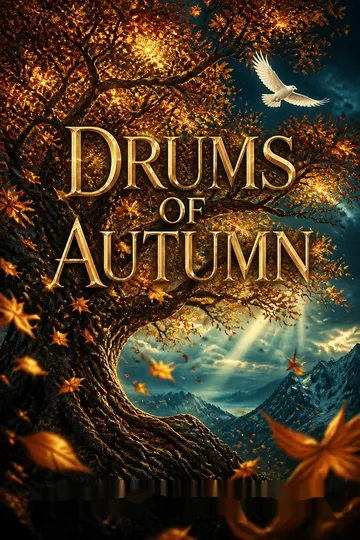
Drums of Autumn receives mixed reviews, with many praising its epic scope, character development, and Gabaldon's storytelling. Fans appreciate the continuation of Jamie and Claire's saga in America and the introduction of new characters. However, some criticize its length, pacing, and repetitive plot elements. Brianna's character receives mixed reactions, with some finding her unlikable. Despite these criticisms, many readers find the book emotionally engaging and eagerly anticipate the next installment in the series.
People Also Read
Characters
Claire Fraser
The healer across timeA twentieth-century surgeon stranded in the eighteenth century, Claire approaches danger with practical intelligence and a physician's instinct to act. Her medical knowledge makes her useful in a world without modern treatment, but it also sharpens her awareness of how often skill cannot prevent suffering. She is fiercely loyal to Jamie and deeply attached to Brianna, while retaining a habit of questioning the rules that govern both medicine and society. Claire's self-reliance can become a source of friction: she resists being protected when she believes she can choose for herself. Her bond with Jamie depends on candor, physical tenderness, and a shared willingness to face consequences rather than retreat into idealized versions of the past.
Jamie Fraser
The Highlander who buildsA former Jacobite warrior and landholder, Jamie is shaped by loyalty to kin, responsibility for those under his care, and the knowledge of what captivity can do to a person. He is physically formidable, but his authority rests as much on judgment and generosity as on force. He wants a home and a community to protect, yet resists power when it requires him to own other people. His love for Claire is durable, but not free of pride, fear, or the impulse to shield her from decisions he thinks dangerous. Jamie's deepest tension is between the warrior he knows himself to be and the humane man he chooses to become.
Brianna Fraser
The daughter who crossesRaised in the twentieth century by Claire and Frank, Brianna is tall, intelligent, and accustomed to solving problems through study and engineering. Her confidence can look like stubbornness, but it grows from a strong need to choose her own commitments and understand the people who shaped her. She loves both of the fathers who have defined her life, though their different histories complicate her sense of loyalty. Brianna's practical mind does not prevent deep feeling; it often gives her a way to act when grief or fear threatens to overwhelm her. She is drawn toward family history, but resists being reduced to its consequences.
Roger Wakefield
The historian who followsA Scottish historian and folk musician, Roger is intellectually curious, emotionally guarded, and deeply shaped by his own adoption and uncertain family history. His bond with Brianna grows through shared knowledge, humor, and a recognition of what it means to miss a parent. He wants to protect her, but that desire can tempt him to decide what she should know or do. Roger's scholarship makes him attentive to records and patterns; his private life teaches him that people cannot be reduced to evidence. He is capable of persistence and tenderness, though his need to be worthy of Brianna sometimes turns into fear of losing her.
Young Ian
The restless nephewJamie and Claire's nephew, Ian is an adventurous adolescent whose curiosity regularly outruns his caution. He is observant, funny, and eager to prove himself useful, but he also resists being shaped into someone else's idea of a gentleman. His affection for Jamie is genuine, though their exchanges often mix instruction with teasing and conflict. Ian is drawn to the people and customs of the new country, learning languages and skills through contact rather than formal study. His loyalty does not make him passive; he wants a life that belongs to him, and his choices increasingly reflect that desire.
Lord John Grey
The loyal English officerA British officer, landowner, and careful observer, Lord John moves through political and social worlds with practiced courtesy. His affection for Jamie is complicated by desire he cannot expect to have returned, and he has learned to keep that knowledge beneath a disciplined surface. He is also a devoted parent, protective of the boy he has raised, and capable of accepting emotional costs without demanding recognition. Lord John's tact is not weakness; it is a form of control that lets him navigate hostile institutions while preserving private loyalties.
William
The young English lordWilliam is Lord John's young stepson, accustomed to formal expectations but curious about the larger world beyond England. He is proud, easily embarrassed, and more vulnerable than his title suggests, especially when grief disrupts the rules that usually organize his life. His time with Jamie and the people of the Ridge brings him into contact with unfamiliar ways of living, from fishing to frontier travel. William's stubbornness and flashes of humor reveal a boy trying to become a man without surrendering the loyalties that have made him feel secure.
Stephen Bonnet
The charming predatorAn Irish smuggler and pirate, Bonnet combines social charm with a cold appetite for advantage. He can make a request sound reasonable and a threat sound like manners, which lets him move easily among people who should distrust him. Bonnet treats generosity as a debt to exploit and sees other people's vulnerability as an opening. His self-possession is not genuine courage so much as confidence that he can control the terms of every encounter. He serves as a sharp contrast to Jamie: both are capable of violence, but only one accepts responsibility for what his choices do to others.
Jocasta Cameron
The blind plantation ownerJamie's wealthy aunt, Jocasta is blind but far from powerless. She manages River Run through memory, touch, trusted servants, and a formidable understanding of people. Her hospitality is generous, yet she is also a strategist who expects family ties to secure the estate's future. Jocasta has survived repeated losses and built a life in a society whose prosperity depends on slavery. Her warmth and authority coexist uneasily: she can care for Jamie while still viewing him as the solution to problems she cannot manage alone.
Fergus Fraser
The loyal FrenchmanA French-born pickpocket turned printer, Fergus is witty, stylish, and fiercely loyal to Jamie. The loss of one hand has not diminished his quickness of mind or his ability to make himself useful. He approaches hardship with humor, though his easy manner can conceal the anxieties of a man who has had to build a life from very little. His devotion extends to his wife Marsali and their children, and he measures security less by wealth than by the people he can keep close.
Marsali Fraser
The practical young motherFergus's wife and Jamie's stepdaughter, Marsali is direct, capable, and unafraid to speak sharply when a situation requires it. She is a young mother learning to balance household demands with the uncertainties of frontier life. Her affection is practical: she works, argues, protects her children, and expects others to do their share. Marsali's brisk temperament can mask deep loyalty, especially toward the family she has chosen and the people who helped raise her.
Duncan Innes
The one-armed allyA former Ardsmuir prisoner and longtime friend of Jamie, Duncan is thoughtful, melancholy, and more capable than his quiet manner first suggests. The loss of an arm limits his choices in a society that values physical labor, but he remains practical and determined to be useful. He understands the burdens of shared history and often acts as a bridge between people who have difficulty speaking plainly. His loyalty to Jamie is matched by a wish for dignity and independent purpose.
Lizzie
Brianna's devoted companionA young Scottish servant, Lizzie is shy, observant, and more courageous than her fragile appearance suggests. She has little power in the world around her, but a strong sense of loyalty and a practical understanding of what danger looks like. Lizzie admires Brianna and tries to help her, sometimes beyond what her own strength allows. Her devotion is not blind obedience; she notices, remembers, and acts when she thinks someone she loves is at risk.
Pollyanne
The escaped healerAn African-born enslaved woman with formidable presence, Pollyanne is resourceful, perceptive, and skilled in healing practices unknown to Claire. Fear initially keeps her nearly silent, but once she feels safer, her humor and forceful personality emerge. She understands how to navigate danger by reading people and using whatever leverage she has. Pollyanne's knowledge and self-possession challenge the assumptions of those who mistake her vulnerability for helplessness.
Nayawenne
The Tuscarora healerAn elderly Tuscarora healer and dreamer, Nayawenne carries botanical knowledge and spiritual authority within her community. She is observant, playful, and comfortable with forms of understanding that Claire cannot easily translate into medical or rational terms. Her attention to Claire is both curious and discerning. Nayawenne's worldview joins healing to memory, place, and the unseen relationships between people, making her an important counterpoint to Claire's clinical training.
Nacognaweto
The Tuscarora leaderA Tuscarora leader, Nacognaweto is cautious, hospitable, and alert to the risks posed by both settlers and neighboring nations. He respects Jamie as a fellow hunter, but does not mistake courtesy for trust. His decisions arise from responsibility to a community with a long memory of violence and displacement. Nacognaweto's authority is measured rather than theatrical, and his willingness to welcome outsiders depends on whether they prove themselves through action.
Laoghaire MacKenzie
The wounded former wifeJamie’s former wife, Laoghaire is proud, resentful, and deeply marked by romantic rejection. She has spent years trying to secure material stability for herself and her daughters, and she regards promises as debts that must be paid. Her anger often hardens into accusation, but beneath it is a fear of being discarded and left without protection. Laoghaire's presence complicates Brianna's arrival at Lallybroch by bringing the consequences of Jamie's past choices into the open.
Frank Randall
Brianna's remembered fatherA historian and Brianna's father in the life she knew growing up, Frank is remembered through scholarship, family photographs, and the stories Brianna carries. He gave her security and shaped her interests, even while his marriage to Claire contained wounds Brianna only gradually understood. Frank's importance is not erased by the revelation of another father; his love and care remain part of Brianna's identity. His relationship with Roger's father also links two families across generations.
Farquard Campbell
Jocasta's trusted factorA longtime friend of Jocasta and a practical manager of plantation affairs, Campbell understands the pressures of business and the limits placed on a blind landowner. He is cautious, socially adept, and more humane than his formal role sometimes allows him to appear. His decisions are shaped by loyalty to Jocasta and by a need to keep the estate functioning.
Sergeant Murchison
The old prison adversaryA British soldier from Jamie's years at Ardsmuir, Murchison is rigid, resentful, and accustomed to the protection that comes with uniform and authority. He treats prisoners as a collective problem rather than individuals, and his sense of order leaves little room for mercy. His past with Jamie gives every later encounter an undertow of remembered cruelty.
Geillis Duncan
The dangerous scholarA former acquaintance of Claire, Geillis is intelligent, secretive, and fascinated by the power hidden in history, ritual, and the standing stones. She pursues knowledge with a willingness to cross ethical boundaries that Claire cannot accept. Geillis is not merely eccentric; she is disciplined in her research and dangerous in her certainty. Her interest in time travel and political prophecy makes her a dark mirror of Claire's more practical curiosity.
Plot Devices
The standing stones
A door through timeThe stones at Craigh na Dun allow certain people to travel between centuries, but the passage is unpredictable and physically dangerous. Dates associated with seasonal feasts appear to affect the opening, while precious stones may offer protection or direction. Claire's crossings establish the possibility; later journeys by Brianna and Roger show that love, knowledge, and intention do not guarantee a safe arrival. The stones transform family history into immediate action, forcing characters to decide whether the chance of reunion is worth the risk of losing home, identity, or life.
The Fraser gemstones
Portable wealth and passageThe valuable stones Claire and Jamie carry are both financial resources and objects associated with travel through time. Their sale helps the couple obtain passage and supplies, while their theft by Bonnet strips away the security they believed they possessed. Later, gemstones become more than currency: their color, weight, and placement connect physical danger to the mechanics of the stones. The motif makes wealth materially useful but morally unstable; the same object can buy a future, tempt a thief, or become a fragile protection against an unknown passage.
Fraser's Ridge
A home built by choiceThe Ridge begins as a remote grant of land and becomes a settlement through Jamie's labor and his recruitment of former prisoners. The cabin, hearth, gardens, and later homes are not merely scenery; they make visible the family's attempt to create safety without accepting Jocasta's plantation and its enslaved labor. The Ridge also exposes its inhabitants to weather, disease, isolation, and political conflict. Its physical growth measures the difference between claiming land and building a community, while its remoteness offers protection that can become dangerous when help is far away.
Claire's medical kit
Knowledge under pressureThe surgical instruments and casebook Claire acquires from Dr. Rawlings let her diagnose and treat people in a world without modern hospitals. They support episodes of practical competence, from delivering babies to tending wounds, but they cannot provide antibiotics, safe anesthesia, or reliable access to supplies. The kit therefore represents both power and limitation. Claire can recognize disease and reduce suffering, yet she must decide when intervention is possible and when presence is the only care left. Her medicine repeatedly collides with local beliefs, legal authority, and the body's vulnerability.
The remembered dead
History made personalLetters, portraits, songs, family names, graves, and oral stories let characters encounter the past as more than a sequence of dates. Brianna finds her parents in photographs and records; Jamie inherits both family obligations and the memory of former prisoners; Roger learns that his own ancestry may contain a stranger's secret. The evidence does not simply clarify identity. It creates new duties, grief, and choices, and sometimes leaves gaps that cannot be repaired. The novel treats memory as a living force that can guide people, mislead them, or bind them to those who came before.
FAQ
Synopsis & Basic Details
What is Drums of Autumn about?
- A Journey to America: The story follows Jamie and Claire Fraser as they navigate the challenges of colonial America, seeking to build a new life while grappling with the ghosts of their past.
- Family and Identity: The novel explores themes of family, loyalty, and identity, as the Frasers encounter new cultures and navigate complex relationships.
- Love and Loss: The narrative is marked by both love and loss, as the characters face difficult choices and navigate the complexities of their relationships.
Why should I read Drums of Autumn?
- Rich Historical Detail: Gabaldon weaves a compelling narrative with meticulous historical detail, immersing readers in the world of colonial America.
- Complex Characters: The novel features well-developed characters with intricate motivations and emotional depth, making their journeys both relatable and captivating.
- Intriguing Plot: The story is filled with unexpected twists and turns, keeping readers engaged and eager to uncover the next layer of the plot.
What is the background of Drums of Autumn?
- Colonial America: The story is set in the American colonies during the 1760s, a time of political unrest and cultural change.
- Scottish Diaspora: The novel explores the experiences of Scottish immigrants in the New World, highlighting their struggles and triumphs as they adapt to a new environment.
- Historical Events: The narrative incorporates real historical events, such as the Regulator movement, adding depth and authenticity to the story.
What are the most memorable quotes in Drums of Autumn?
- "By blood and by choice, we make our ghosts; we haunt ourselves.": This quote from the prologue encapsulates the novel's themes of legacy and the enduring impact of the past on the present.
- "I've never been afraid of ghosts. I live with them daily, after all.": This quote from the prologue highlights Claire's unique perspective and her acceptance of the supernatural elements in her life.
- "I badly need a drink, Sassenach.": This quote, often repeated by Jamie, reflects his need for comfort and escape in the face of adversity, and his reliance on Claire.
What writing style, narrative choices, and literary techniques does Diana Gabaldon use?
- Multiple Perspectives: Gabaldon employs multiple points of view, allowing readers to experience the story through the eyes of different characters, enhancing the complexity of the narrative.
- Rich Sensory Detail: The author uses vivid descriptions and sensory details to immerse readers in the world of the story, bringing the historical setting to life.
- Foreshadowing and Symbolism: Gabaldon uses subtle foreshadowing and recurring symbols to create a sense of unease and anticipation, hinting at future events and deeper meanings.
Hidden Details & Subtle Connections
What are some minor details that add significant meaning?
- The Red-Coated Soldiers: The constant presence of red-coated soldiers serves as a reminder of the political tensions and the ever-present threat of British authority in the colonies.
- The Use of Gaelic: The use of Gaelic, particularly in moments of stress or intimacy, highlights the characters' connection to their Scottish heritage and their shared history.
- The Description of Food: The detailed descriptions of food, from the simple meals of the poor to the lavish feasts of the wealthy, reflect the social and economic realities of the time.
What are some subtle foreshadowing and callbacks?
- Gavin Hayes's Fear of the Dark: Gavin Hayes's fear of the dark foreshadows his death and the subsequent events that lead to Stephen Bonnet's escape.
- The Skunk: Ian's description of the skunk foreshadows the dangers of the wilderness and the unexpected encounters that the Frasers will face.
- The Star-Spangled Banner: Claire's humming of "The Star-Spangled Banner" foreshadows the future of America and her own connection to it.
What are some unexpected character connections?
- Jamie and Gavin Hayes: The bond between Jamie and Gavin Hayes, forged in Ardsmuir prison, highlights the enduring impact of shared experiences and the importance of loyalty.
- Jamie and Stephen Bonnet: The unexpected connection between Jamie and Stephen Bonnet, stemming from Jamie's act of mercy, creates a complex dynamic that shapes the course of the story.
- Claire and Nayawenne: The connection between Claire and Nayawenne, a Tuscarora elder, reveals a shared understanding of the spiritual and the power of healing.
Who are the most significant supporting characters?
- Duncan Innes: Duncan Innes, a former Ardsmuir prisoner, serves as a loyal companion to Jamie, providing support and a connection to their shared past.
- Fergus Fraser: Fergus Fraser, Jamie's adopted son, is a complex character whose loyalty and resourcefulness are essential to the Frasers' survival.
- Nayawenne: Nayawenne, a Tuscarora elder, is a powerful figure whose wisdom and spiritual insights influence Claire's journey.
Psychological, Emotional, & Relational Analysis
What are some unspoken motivations of the characters?
- Jamie's Need for Control: Jamie's desire to control his surroundings and protect his loved ones stems from his past experiences of powerlessness and loss.
- Claire's Desire for Connection: Claire's need to connect with others and to heal stems from her own experiences of loss and her desire to create a sense of belonging.
- Brianna's Search for Identity: Brianna's journey is driven by a need to understand her own identity and to reconcile her past with her present.
What psychological complexities do the characters exhibit?
- Jamie's Internal Conflict: Jamie struggles with the conflict between his desire for a peaceful life and his ingrained sense of duty and honor, often leading to internal turmoil.
- Claire's Burden of Knowledge: Claire's knowledge of the future creates a sense of isolation and responsibility, as she grapples with the consequences of her actions.
- Brianna's Fear of Repetition: Brianna's fear of repeating her mother's history and her desire to forge her own path create a complex emotional landscape.
What are the major emotional turning points?
- The Hanging of Gavin Hayes: The hanging of Gavin Hayes is a major emotional turning point, highlighting the harsh realities of colonial justice and the characters' vulnerability.
- The Loss of the Gems: The loss of the gems to Stephen Bonnet is a major emotional blow, leaving the Frasers feeling vulnerable and betrayed.
- The Discovery of the Letter: The discovery of Frank Randall's letter is a major emotional turning point for Brianna, forcing her to confront her past and her feelings for her parents.
How do relationship dynamics evolve?
- Jamie and Claire's Enduring Love: Jamie and Claire's relationship is tested by the challenges of the New World, but their love remains a constant source of strength and comfort.
- Jamie and Ian's Bond: Jamie's relationship with Ian evolves from that of uncle and nephew to a deeper bond of friendship and mutual respect.
- Brianna and Roger's Complicated Relationship: Brianna's relationship with Roger is marked by both love and conflict, as they struggle to reconcile their pasts with their present desires.
Interpretation & Debate
Which parts of the story remain ambiguous or open-ended?
- The Nature of the Stones: The exact nature of the standing stones and their ability to transport people through time remains a mystery, leaving room for interpretation and speculation.
- The Fate of Stephen Bonnet: While Stephen Bonnet escapes, his ultimate fate is left ambiguous, leaving readers to wonder if he will return to haunt the Frasers.
- The Future of the Colonies: The novel leaves the future of the American colonies open-ended, hinting at the coming revolution and the challenges that lie ahead.
What are some debatable, controversial scenes or moments in Drums of Autumn?
- Jamie's Decision to Help Bonnet: Jamie's decision to help Stephen Bonnet escape is a controversial moment, raising questions about the nature of mercy and the consequences of one's actions.
- Claire's Inadvertent Slips: Claire's occasional slips in language and knowledge, revealing her origins in the future, create moments of tension and raise questions about the nature of time travel.
- The Nature of Love and Obligation: The novel explores the complex interplay between love and obligation, as characters grapple with difficult choices and conflicting loyalties.
Drums of Autumn Ending Explained: How It Ends & What It Means
- A New Beginning: The ending of "Drums of Autumn" sees the Frasers establishing a new life in the American colonies, but also facing new challenges and uncertainties.
- Unresolved Conflicts: The novel leaves several conflicts unresolved, including the threat posed by Stephen Bonnet and the political tensions in the colonies, setting the stage for future conflicts.
- Hope and Uncertainty: The ending is a mix of hope and uncertainty, as the characters look toward the future with a mixture of anticipation and trepidation.
Outlander Series

About the Author
Other books by Diana Gabaldon


Download PDF
Download EPUB
.epub digital book format is ideal for reading ebooks on phones, tablets, and e-readers.








