


Plot Summary
Blood Beneath the Shirt
Near Bordeaux, Ian Murray recognizes his childhood friend Jamie Fraser by his face before he understands why the young Highlander is shaking and barely standing. Once alone, Jamie reveals that English soldiers dragged him from Lallybroch after he defended it, flogged him for escaping, then flogged him again at Fort William.
His father, Brian, had come to seek his release and collapsed after seeing his son bound and bloody. Jamie was told Brian died of apoplexy, but blames himself for the shock that killed him. Murtagh, Jamie's godfather, brought him to Ian's mercenary company and warned him away from Scotland. Ian sees the fresh blood soaking Jamie's bandages and hears grief that Jamie has been carrying without a witness.
Jamie arrives already divided against himself: he has survived the soldiers' violence, but interprets his father's death as a consequence of his own survival. That guilt makes the company more than a refuge. It is also a place where he can postpone facing Lallybroch and Jenny, whose safety he fears he might endanger. Ian's immediate care gives Jamie a human anchor, yet the secrecy of mercenary life lets him avoid explaining his injuries to anyone else. The opening therefore makes friendship practical before it makes it sentimental: Ian feeds, steadies, and shelters Jamie, allowing him to remain alive long enough to confront what has happened.
A Jew's Last Confession
The company is escorting a wagon of rugs and precious metal toward Bordeaux when armed thieves attack from the trees. Jamie and Ian fight beside Captain D'Eglise's men, but Jamie collapses from his wounds and exhaustion after helping drive the attackers off.
The priest, Père Renault, mistakenly treats him as near death before Ian gets him back on his feet. A captured attacker, Ephraim bar-Sefer, is interrogated; the men learn that his band robs Jewish merchants using information supplied by someone outside their ranks.
When the captive is identified as Jewish, the priest tries to baptize him, and the prisoner is killed during the struggle. Jamie and Ian bury Ephraim beneath the trees and place two stones over the grave, unwilling to leave him entirely unmarked.
The first fight teaches Jamie that joining a company does not make violence legible or honorable. The men defend a valuable shipment, then participate in the aftermath of a killing that folds religious prejudice into military routine. Ian is angered by the attempted baptism, while Jamie's response is quieter: he insists on a grave marker for a man whose beliefs the company has just ignored. Their small cairn cannot undo the execution, but it preserves Ephraim as a person rather than a source of information. The episode also plants the outside informant whose identity will later reshape the escort mission.
The Road Away From Home
After the burial, Jamie admits to Ian that he wants Captain Randall dead, then asks Ian to return to Scotland and care for Jenny and Lallybroch. He cannot go himself: he fears the soldiers might follow him home and bring danger to his sister. Ian refuses to leave him alone, insisting that they will face home together when the time comes.
As the company marches toward Bordeaux, Jamie fights memories of Fort William by counting prayers, and the others gradually join him. Their voices give him brief company inside his grief, but they cannot settle his conviction that he failed his father. Ian's refusal becomes a promise of its own: Jamie may keep moving, but he will not have to move through the aftermath alone.
Jamie tries to turn grief into a task for Ian, sending his friend home because he sees himself as a danger to the family he loves. Ian rejects the practical logic without dismissing the fear behind it. Their disagreement reveals two different forms of loyalty: Jamie protects by withdrawing, while Ian protects by remaining present. The shared prayers on the road offer neither cure nor revelation. Their value is bodily and social, a rhythm Jamie can follow when memory threatens to overwhelm him. The scene keeps his guilt unresolved, but it changes its conditions: he is no longer carrying it entirely in isolation.
Bordeaux's First Brutal Lesson
In Bordeaux, Jamie tries to charm a brown-haired barmaid, but his Hebrew makes her mistake him for a Jewish man and she withdraws. Later, the friends witness Mathieu, a powerful mercenary, beat and sexually assault a woman in the tavern yard. Ian pulls Jamie back because intervening could turn the crowd against them; both men leave ashamed that they did nothing.
In another tavern, Ian's careless remark about Jamie's sister provokes Jamie to punch him, breaking his own knuckles. The friends apologize and make peace over food, but the scene leaves their innocence newly exposed: they have seen how easily power turns a woman's body into a spectacle, and how fear can make a witness stand still.
The episode gives the young soldiers a moral injury that differs from Jamie's battlefield trauma. They are not the direct targets of Mathieu's violence, yet their failure to intervene becomes something they must carry. Ian's restraint is partly strategic, but Jamie experiences it as helplessness, sharpened by thoughts of Jenny's vulnerability. His punch redirects that fear toward the one person close enough to strike. The barmaid's mistaken assumption also introduces the social prejudice surrounding Jewish identity, which will matter in the next commission. Here, sexual experience is not framed as a rite of passage. The men learn instead that desire, humiliation, and violence are already entangled around them.
A Scroll Under Guard
D'Eglise selects Jamie and Ian for a new assignment from Dr. Hasdi, a respected Jewish physician. His granddaughter, Rebekah, is to travel to Paris for a marriage arranged by her family, accompanied by an ancient Torah scroll and a dowry.
The men are hired to protect all three. Rebekah serves as interpreter for her grandfather, while Jamie's Hebrew surprises their hosts. During the meeting, Dr. Hasdi notices Jamie's infected wounds and cleans and dresses his back, with Rebekah translating and offering reassurance.
The doctor's care reaches Jamie where military discipline has failed: he is treated as an injured young man rather than a useful weapon. Ian and Jamie accept the escort, carrying both the sacred object and the responsibility for Rebekah's safety.
The commission places the two Scots in a role more intimate than guarding a wagon: they must protect a young woman and an object whose value is religious, familial, and financial at once. Rebekah's fluency makes her an active mediator rather than a passive parcel, and Jamie's limited Hebrew creates a point of connection he had not expected. Dr. Hasdi's treatment also interrupts the company’s habit of concealing pain. Jamie resists being examined, but the care is effective and specific, aimed at healing rather than proving toughness. The assignment thus begins with an uneasy convergence of trust: the physician entrusts his family and Torah to men whose last delivery lost a rug.
The Coach in the Mire
On the road north, Jamie spots mud across the route, but the coach surges past him and nearly throws him from his horse. Bandits seize the vehicle; Ian drives them off while Jamie fights their yellow-haired leader. The coach overturns in a ditch, killing Monsieur Peretz, the Torah's custodian, and leaving Rebekah and her maid shaken but alive.
The party rides to an inn, with Jamie carrying the scroll and nursing a head injury. Rebekah gives him medicinal tea and brandy, and the treatment brings on vivid waking visions. While Jamie drifts through them, Ian and Rebekah grow close and kiss. Their attraction complicates a journey already burdened by death, uncertainty, and the question of who knew the coach would be vulnerable.
The ambush converts a guarded journey into a crisis of custody. Peretz's death leaves the Torah in Jamie's hands, even though its religious rules make that transfer uncomfortable for its owners. Jamie's head injury and the doctor's medicine blur his perception at precisely the moment Ian and Rebekah form a real connection. His dreamlike state creates comic confusion, but it also keeps him from understanding the choices being made around him. The scene's intimacy is therefore asymmetrical: Ian and Rebekah experience a mutual attraction, while Jamie witnesses it through pain and altered consciousness. Beneath that confusion, the staged attack has begun to expose how little the escort party truly controls.
The Empty Bundle
At dawn, Jamie and Ian discover Rebekah and her maid have left the inn with the Torah and two horses, replacing the scroll with a bundle of sticks. They track the women toward a manor, where the yellow-haired attacker greets them as Pierre, a young French nobleman betrothed to Rebekah before her family arranged another match.
Pierre admits he staged the coach abduction to reunite with her. News arrives that Jewish bandits have also attacked D'Eglise's party and wounded several men; Jamie connects their earlier robbery to Rebekah, who could have accessed her grandfather's correspondence and helped finance a future with Pierre. The pair are disarmed and confined in the wine cellar, leaving them unable to stop the couple's plans or recover the Torah by force.
The theft first appears to be a romantic escape, but the surrounding evidence makes it a more calculated act. Pierre's clumsy abduction explains the coach attack, while the separate robbery of D'Eglise's men links Rebekah to the information network established through Ephraim. Jamie's deduction turns a seemingly helpless young woman into a planner who has used both family knowledge and other people's assumptions to secure her future. Yet his certainty is not the same as omniscience: he pieces together motives from the stolen rug, the correspondence, and Pierre's story. Their captivity forces Jamie to rely on interpretation and leverage rather than the physical strength that has failed him repeatedly.
Seven Turns Beneath Torches
Pierre's household eventually releases Jamie and Ian only to bring them to his wedding to Rebekah. The ceremony follows Jewish custom, and the tenderness between the couple is plain despite Jamie's anger at the deception. Pierre has accepted the cost of converting in order to marry her, including circumcision. Before the feast, Jamie slips away to confront Rebekah.
He demands the Torah for Dr. Hasdi and threatens to tell Pierre that her dealings helped lead to Ephraim's death. Rebekah insists she did not kill the man, but yields the scroll rather than risk Jamie exposing what she has done. Jamie and Ian leave with the Torah, choosing not to disrupt the marriage or drag Rebekah back to Bordeaux.
The wedding brings several competing kinds of commitment into one frame. Pierre's willingness to abandon his former social position gives his devotion a material cost, while Rebekah's choices reveal how much agency she has exercised outside her grandfather's plans. Jamie does not mistake that agency for innocence: he uses the death of Ephraim as leverage and secures the Torah, but declines to seize Rebekah herself. The sacred object becomes the boundary of his intervention. He can restore what was entrusted to him without claiming authority over the couple's future. That restraint is not forgiveness; it is a decision about what his duty actually requires.
The Brothel Gunfight
Back in Bordeaux, Jamie returns to the tavern where the brown-haired barmaid once served him, hoping to find her. Upstairs, he finds Mathieu forcing her toward a private room while the other men watch. Jamie orders him to stop, then draws his pistol when Mathieu ignores him and pins the woman against the wall. Gunfire erupts.
Ian joins the struggle, but Mathieu batters both Scots and knocks Jamie into a dissociative fury. Jamie finally kills him by crushing his throat. When his awareness returns, he sees the barmaid lying limp beside him, a bullet wound in her breast. The woman Jamie once failed to protect in the yard is dead, and his belated intervention cannot undo the violence that brought him to the fight.
The climax turns the earlier spectacle in the yard into an irreversible test. Jamie's first response to Mathieu's abuse was to hold back; this time he acts, but action does not grant him control over the outcome. The crowded room, competing pistols, and Jamie's fractured awareness make the violence chaotic rather than redemptive. He kills the man who is assaulting the barmaid, yet she dies from the gunfire. His victory therefore arrives with a consequence he cannot reinterpret as protection. The episode also makes clear that trauma can narrow perception: Jamie moves through the fight as a body driven by rage, then returns to consciousness only when the damage is done.
Peace Before Prussia
Ian takes Jamie to Bordeaux's cathedral, where Jamie cannot bring himself to enter a confessional. Instead, they light a candle for Brian and the dead barmaid, and Ian prays for Rebekah and Jamie's family as well. The quiet does not erase the killings or settle Jamie's guilt, but it allows the friends to leave the church together.
They return the Torah to Dr. Hasdi and tell him what happened to Rebekah; he receives them with formal thanks, keeping his response to himself. On the riverbank, Ian points out a packet boat and mentions that the King of Prussia needs soldiers. Jamie agrees to go. They step back toward war, not healed, but still bound to one another.
The ending refuses a clean moral accounting. Jamie does not confess, and Dr. Hasdi's composure gives the Scots no easy access to the grief or judgment behind it. The candle offers a different form of acknowledgment: Jamie can stand beside the dead without explaining them away. Ian's prayers widen that act beyond Christian kinship, including Rebekah even after the betrayal. Their departure for Prussia is not a claim that violence has been mastered; it is the next available direction for two men who remain soldiers. The story closes on companionship as a limited but durable form of peace, something carried forward rather than permanently achieved.
Analysis
Virgins follows two young Scots through a world where survival depends on loyalties that are rarely clean. Jamie and Ian protect merchants, a Jewish physician's granddaughter, and an ancient Torah, but each assignment exposes the distance between a stated duty and its consequences. The first ambush joins commerce to religious violence; the later escort joins family authority to Rebekah's attempt to choose her own future. The novel does not treat identity as a guarantee of virtue or victimhood. Rebekah's Jewish heritage is both a source of exclusion and a community she embraces, while her covert dealings implicate her in deaths she did not personally cause.
Jamie is shaped by a more intimate reckoning. He believes his father's death followed from his own suffering, and that belief makes protection feel like a debt he can never repay. He tries to send Ian home, restrains himself when violence against a sex worker seems too dangerous to interrupt, then answers Mathieu's next assault with lethal force. The contrast is not a simple transformation from cowardice to courage. His later intervention is morally serious but also uncontrolled, and the woman still dies. Action cannot reverse his earlier silence or guarantee rescue.
Ian offers a counterweight through steady companionship, though he is no moral authority untouched by desire or uncertainty. His bond with Jamie survives anger, shame, and disagreement because both men keep returning to practical care. The ending grants them no absolution: Jamie avoids confession, Dr. Hasdi gives no readable verdict, and the friends leave for another war. Their candlelit pause offers a smaller resolution. They acknowledge the dead together, then continue with the knowledge that loyalty can accompany guilt without erasing it.
Review Summary
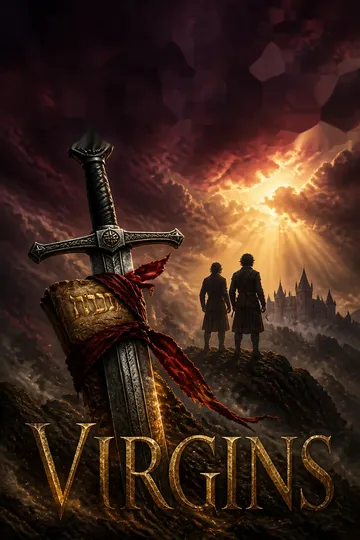
Virgins receives mixed reviews, with an average rating of 3.87/5. Fans appreciate the backstory of young Jamie and Ian's friendship, though some find the writing style and humor cringe-worthy. Readers enjoy the historical details but note the novella may not appeal to those unfamiliar with the Outlander series. While some praise the character development, others feel pre-Claire Jamie lacks depth. The short length and inclusion of sensitive topics like rape are points of criticism for some readers.
Characters
Jamie Fraser
Wounded Highland heirJamie is a young Highlander raised to protect Lallybroch and its people, with a sharp mind, unusual learning, and a strong instinct to act when others are threatened. He is physically imposing, but his confidence is unsettled by recent captivity and the belief that his choices contributed to his father's death. His education and linguistic curiosity distinguish him from the mercenary company, while his loyalty binds him to Ian and his family. Jamie often tries to protect others by taking danger onto himself, a strategy that can become recklessness when guilt or anger takes hold. His struggle is not simply to recover strength, but to decide what responsibility can reasonably ask of him.
Ian Murray
Steadfast Scottish companionIan is Jamie's closest friend and fellow Highlander, a practical soldier who notices hunger, fever, and fear before Jamie admits to them. He is older in manner if not by much, and often uses teasing to keep their friendship from becoming solemn. Ian has left farming and family responsibilities behind to earn money as a mercenary, yet home continues to exert a pull on him. His loyalty is active rather than abstract: he steadies Jamie, watches his weak side, and refuses to abandon him when asked. Ian is also inexperienced in love and uneasy about the moral weight of desire, which makes his growing attachment to Rebekah both exciting and unsettling.
Rebekah bat-Leah Hauberger
Resourceful Jewish heiressRebekah is the granddaughter of Dr. Hasdi, a young Jewish woman fluent in French and familiar with the languages and customs surrounding her family. She serves as her grandfather's interpreter and moves comfortably between the household's private world and the broader society that judges it. Rebekah is observant, composed, and capable of making plans for herself, even when family arrangements seem to leave little room for choice. Her kindness toward Jamie's injuries and her attraction to Ian show a capacity for tenderness, but she is not governed by sentiment alone. She is driven by the wish to shape her own future and protect the relationships and security she values.
Richard D'Eglise
Mercenary captainD'Eglise commands the multinational mercenary company that employs Ian and Jamie. He values capable fighters, keeps explanations brief, and treats contracts as practical arrangements that must be protected by force. His decisions place the Scots in successive escort missions, while his reliance on them reflects their usefulness within the troop. He is neither a sentimental mentor nor a simple brute; his authority rests on experience, calculation, and the expectation that his men will follow orders.
Dr. Hasdi
Physician and grandfatherDr. Hasdi is a respected Jewish physician in Bordeaux and Rebekah's grandfather. He values the Torah as a sacred inheritance and seeks to arrange his granddaughter's future within the community that has become her home. His household is discreet but cultured, and his medical care is precise, unsentimental, and attentive to suffering. He trusts D'Eglise's company with what matters most to him, though that trust is tested by the dangers of the road.
Pierre Robert Heriveaux d'Anton
Young French noblemanPierre is a young nobleman who has loved Rebekah since they were teenagers and understands their earlier betrothal as a binding promise. His aristocratic standing gives him comfort and status, but his attachment to Rebekah puts those privileges in conflict with the life he imagines sharing with her. Pierre is romantic, impulsive, and poorly suited to the practical demands of a dangerous plan. His sincerity is real even when his judgment is not.
Marie
Rebekah's maidMarie accompanies Rebekah on the journey and watches over her with a mixture of loyalty and blunt concern. She notices risks that Rebekah would rather minimize and is willing to challenge her when fear or danger becomes immediate. Her practical presence helps make Rebekah's plans possible, while her caution reminds the other characters that their choices affect more than themselves.
Brian Fraser
Jamie's beloved fatherBrian is Jamie's father and the laird of Lallybroch, a figure whose counsel remains vivid in his son's memory. Jamie associates him with home, steadiness, and the conviction that family endures even across distance. His influence shapes Jamie's understanding of duty and becomes especially powerful when Jamie is isolated from the people he loves.
Jenny Fraser
Jamie's sisterJenny is Jamie's sister and a central presence in his thoughts, even while she remains far from the action. Jamie worries about her safety and the responsibilities waiting at Lallybroch, and those concerns influence his decisions about returning home. She represents both the family he longs for and the people he believes his choices might endanger.
Murtagh
Jamie's protective godfatherMurtagh is Jamie's godfather, a trusted family ally who brings the wounded young man to Ian's company. His advice is blunt and protective, shaped by his knowledge of the danger Jamie might draw toward Lallybroch. Though he appears briefly, his intervention determines where Jamie goes next and places him in the care of a friend.
Captain Randall
British military threatRandall is the British commander associated with Jamie's imprisonment and physical abuse. His authority turns Jamie's resistance into punishment and leaves the young Highlander carrying lasting fear and anger. He functions in the story as the immediate face of the military power that has driven Jamie away from home.
Mathieu
Brutal mercenaryMathieu is a large, intimidating member of D'Eglise's company, known for crude humor and a readiness to use his strength against people with less power. Other soldiers give him room rather than confront him, and that impunity shapes the dangerous atmosphere around him. His presence tests what the younger men will tolerate in the name of staying safe.
Ephraim bar-Sefer
Captured Jewish banditEphraim is a Jewish traveler caught after an attack on a valuable shipment. He knows how the bandits obtain information but refuses to expose his associates, holding to his own limits under interrogation.
Père Renault
Company's priestPère Renault serves as the mercenary company's priest, offering religious rites before and after battle. His poor eyesight and earnest certainty give his interventions an awkward edge, especially when the company's violence collides with the beliefs of others.
Monsieur Peretz
Torah's appointed custodianMonsieur Peretz is a quiet middle-aged man entrusted with guarding Dr. Hasdi's Torah during the journey. His presence emphasizes that the scroll is not merely valuable cargo, but a sacred object with rules governing who may carry it.
Big Georges
Veteran mercenaryBig Georges is one of the larger and more experienced members of D'Eglise's company. He uses rough humor to manage camp life and knows when to restrain a hotheaded comrade from provoking a fight.
Juanito
Spanish Jewish soldierJuanito is a Jewish mercenary in D'Eglise's company, known for speaking little French or English. His presence gives Jamie and Ian an early glimpse of the Jewish communities and languages that become important to their assignment.
Raoul
Spanish Jewish soldierRaoul is another Jewish member of the mercenary company and a companion to Juanito. He is observant about how others respond to Jewish identity and remains a capable participant in the band's work.
Plot Devices
The Torah scroll
Sacred trust and leverageDr. Hasdi's ancient Torah gives the escort mission stakes beyond money. It is part of Rebekah's dowry, an object of religious devotion, and a target that can be stolen or used to force decisions. Because it may not be handled casually, Jamie's role as its temporary protector carries a spiritual awkwardness alongside the physical danger. When Rebekah takes it, the scroll becomes her protection against being returned to her grandfather. Jamie's effort to recover it therefore requires him to distinguish his duty to preserve the object from any claim to control Rebekah's life.
The bandits' information network
A hidden trail of betrayalEphraim's interrogation establishes that the Jewish bandits learn which shipments are worth attacking through an informant outside their ranks. The clue remains unresolved until Jamie links the theft of valuables, the stolen rug, and Rebekah's access to her grandfather's correspondence. The network turns an apparently random road attack into evidence of planning and gives Jamie a way to understand Rebekah's financial independence. It also complicates the story's portrayal of identity: shared religion does not make every member of the bandits' community trustworthy, and being targeted by prejudice does not prevent someone from participating in harm.
The medicinal draught
Pain and perception blurredDr. Hasdi gives Jamie a mixture intended to help his fever and injuries. Taken with ale and brandy, it produces vivid waking visions while the group rests after the coach wreck. The draught lets Jamie's physical pain recede briefly, but it also prevents him from following what Ian and Rebekah do together. This altered perception creates comic disorientation without making the injury trivial: Jamie remains vulnerable, and his recovery depends on other people monitoring him. The medicine also marks a contrast between Dr. Hasdi's careful attention to Jamie's body and the earlier military treatment that left his wounds infected.
The war cry
A portable call to kinJamie and Ian use their Fraser war cry when the company is attacked, turning a piece of Highland identity into a practical battlefield signal. The other mercenaries learn that it names the Frasers' ancestral stronghold and belongs to a particular clan branch. Its use briefly gathers the men into a fighting unit, while later camp teasing makes the phrase a point of social bonding. The cry matters because Jamie has been driven from his home and family, yet can still carry a sound of that home into a foreign landscape.
Outlander Series

About the Author
Other books by Diana Gabaldon






Download PDF
Download EPUB
.epub digital book format is ideal for reading ebooks on phones, tablets, and e-readers.








