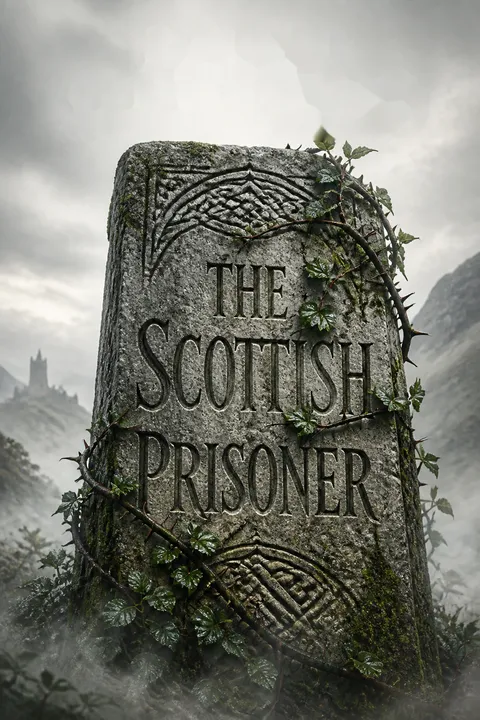


Plot Summary
Prologue
Jamie’s thoughts turn to the cost of killing. A soldier can try to separate the man who takes life from the man who tends a child, but violence leaves its mark on both.
To kill without necessity risks hollowing out the lives of the killer and the victim; to hesitate can put the killer in danger. Jamie carries that conflict into the story, still shaped by battle and still longing for the wife and child he believes are far beyond his reach.
The prologue frames violence as a problem of moral identity, not simply a fact of military life. Jamie’s distinction between necessary and needless killing matters because his survival has depended on both decisive force and restraint. The image of a permanent mark anticipates his fear that another political cause will again demand lives in exchange for an ideal. It also sets the terms of his conflict with Grey: each man believes duty can justify action, but neither can control the human consequences that follow.
The Green Branch
In the stable loft at Helwater, Jamie wakes from a dream of Claire and privately reaches for the closeness he has lost. A maid, Betty Mitchell, interrupts him with a coded message from an Irish gentleman: the green branch will flower, and Jamie is to meet him on the fells.
Jamie refuses the summons, but the next day he finds Tobias Quinn, an old Jacobite acquaintance, waiting at a ruined shepherd’s hut. Quinn claims Ireland is preparing a new rising, says he has found an ancient Druid king’s cup, and wants Jamie to persuade its guardian to hand it over. Jamie rejects the plan. The Cause, he believes, has already cost enough, and he will not lead men into another defeat.
Quinn’s arrival makes Jamie’s isolation porous: the past he has tried to bury can still find him through old friends and coded signals. His refusal is not indifference to Scotland or Ireland. It grows from the knowledge that leadership converts political hope into other people’s graves. Yet the reunion also exposes the emotional price of his retreat. Jamie has no comrades around him at Helwater, only work, memory, and the fragile hope that Claire and their child are safe.
Carruthers Lights the Fuse
In London, Lord John Grey gives his brother, Harold, Duke of Pardloe, the papers left by Charles Carruthers, a dying officer who documented Major Gerald Siverly’s corruption in Canada. The evidence describes stolen funds, abuses against civilians, and conduct that may have contributed to a mutiny. One sheet is an Irish poem neither man can read.
Minnie, the duchess, identifies it as Erse, and Jamie Fraser becomes the obvious translator because Grey once governed the prison where Jamie was held. A list in Carruthers’s papers also names Edward Twelvetrees, a soldier connected to Siverly. Grey’s promise to bring his dead friend’s evidence to justice now requires a journey to Ireland, where Siverly has taken leave.
Carruthers’s papers turn private grief into an institutional obligation. Grey is not pursuing an abstract ideal of clean governance; he has been entrusted with testimony by a dying man who believed he could still make the army answer for itself. The unfamiliar poem complicates that task by placing military fraud beside an apparently folkloric text. The contrast matters: official records offer names and dates, while coded language hints at motives the documents cannot yet explain.
A Child at the Stable
At Helwater, Jamie watches for more green branches and tries to avoid Betty’s attempts to draw him into private conversation. Then Lord Dunsany brings his young grandson William to meet the horses. The child resists the nursemaids but settles happily on Jamie’s shoulders, learns the horses’ names, and embraces a gelding without fear.
Jamie is startled by how much the boy’s trust moves him, and by the way the stable offers a rare chance to care for a child. Before he can hold on to that pleasure, soldiers arrive at the house. Dunsany identifies him by his real name, Fraser, and allows them to escort him to London. Jamie leaves Helwater without knowing why he has been taken.
William’s visit gives Jamie a form of intimacy that does not demand explanation. He can protect, teach, and delight the boy through the practical language of horses. That ordinary care unsettles the defenses he has built around his grief for Claire and their child. The military summons interrupts precisely when Jamie’s emotional investment is becoming harder to deny, converting his private attachment into a vulnerability others may exploit.
Parole Under Threat
The soldiers take Jamie to the London home of Pardloe, where he recognizes the duke as the man who once spared his life after Culloden. Pardloe’s wife is Minnie, formerly a young intelligence agent Jamie knew in Paris. Jamie translates Carruthers’s poem as an Irish version of the Wild Hunt, then explains what he knows of Siverly’s earlier Jacobite contacts.
Pardloe wants him to help Grey find Siverly and bring him back for a court-martial. Jamie refuses, but Pardloe threatens to revoke his parole and send him to the Tower unless he cooperates. Jamie accepts the mission because the alternative is prison, and because he means to return to William at Helwater.
Pardloe’s demand exposes the unequal structure beneath the men’s courteous dealings. Jamie’s parole depends on honor, but his captors can still use the threat of confinement to compel his labor. The choice is therefore constrained rather than freely made. Jamie’s determination to return to Helwater gives him a purpose distinct from either Grey’s justice campaign or Quinn’s rebellion, a private tether that will guide his decisions in Ireland.
The Park and the Past
Grey resents Pardloe’s decision to bring Jamie to London without consulting him. Jamie’s first meeting with Colonel Harry Quarry, who once governed Ardsmuir and kept him in irons, triggers memories of captivity; he flees into Hyde Park. Quinn finds him there and urges him to escape to Ireland, but Jamie refuses to break his parole and abandon William.
Grey later finds Jamie near a puppet show and offers Quarry’s formal apology, which Jamie declines to turn into a duel. Their conversation remains guarded, though they begin to work together. Away from the conflict, Grey seeks comfort with his friend Stephan von Namtzen, a grieving widower, but recognizes that he must not use Stephan to blunt his unresolved attraction to Jamie.
Both men manage painful desire by converting it into discipline. Jamie chooses the child over the fantasy of sudden escape; Grey chooses not to make Stephan an instrument of his longing. Their restraint is imperfect, but it allows them to approach one another without pretending the past has disappeared. The puppet show provides Jamie a brief return to ordinary sensation, while the offer of satisfaction gives him a dignified way to acknowledge Quarry’s harm without letting anger dictate the next act.
White Roses in the Poem
Minnie notices that Jamie’s translation omits a phrase resembling the Jacobite symbol of the white rose. Jamie and Thomas Lally, an Irish-French officer held in London, quietly confirm the reading but do not reveal it to Grey. The duchess privately tells Jamie that Twelvetrees has been moving large sums of money to Ireland and warns him to keep Grey away from the officer.
Grey and Jamie confront the strain between them in Pardloe’s conservatory, where Grey explains that his brother brought Jamie in without his consent and that he does not intend Jamie harm. Jamie accepts his word. The men leave for Ireland with the poem, Carruthers’s evidence, and a suspicion that Siverly’s military crimes may conceal a political network.
The omitted word makes translation an ethical act. Jamie knows enough to recognize a danger but withholds what could expose people he once considered comrades. Minnie and Lally reach a similar conclusion without coordinating, showing how secrecy circulates through trust as much as through codes. The conservatory conversation matters because Grey answers Jamie’s suspicion directly instead of demanding obedience. Their cooperation begins when Grey acknowledges the coercion that brought them together.
The Irish Crossing
The sea crossing to Ireland leaves Jamie violently seasick. Quinn, who has followed the party, gives Grey a whiskey-and-opium tonic that revives Jamie but leaves Grey and Tom Byrd with strange dreams. Quinn joins the riders toward Athlone, pretending to be a harmless traveler with printing business.
At a ruined tower where the party shelters overnight, Grey overhears Quinn urging Jamie to kill him and disappear. Jamie refuses, insisting that he gave his word to assist Grey. Quinn also presses him about a cause they once served together, but Jamie will not rejoin it. Grey now knows that Quinn and Jamie share a past, and that the Irishman’s presence carries a danger beyond Siverly.
Quinn’s tonic makes the body a temporary unreliable narrator: nausea and drugged dreams blur what the men can know, while their choices remain sharply consequential. Grey learns of Quinn’s intentions only because he wakes and listens, not because Jamie volunteers the information. Jamie’s refusal to let Quinn kill Grey is grounded in a promise, not affection, yet it establishes a boundary Quinn cannot cross. Their uneasy travel party is held together by obligations that pull in opposite directions.
The Cup Beneath the Bog
At the monastery of Inchcleraun, Abbot Michael FitzGibbons welcomes Jamie as the nephew of his old friend and shows him a bog-preserved body, a jeweled cup, and ceremonial horns. Jamie recognizes the cup as the relic Quinn hopes to use to rally the Irish behind the Stuarts. Michael asks whether Jamie will take up the leadership of a new rising.
Jamie refuses, recalling the burned Highland crofts and the bones of a child he found after Culloden. In confession, he reveals his conflict over Grey, Quinn, Claire, and William, admitting how deeply he fears losing the boy. Michael advises him not to endanger William, but Jamie believes the child needs him. He asks the abbot to return the cup to its grave.
The cup is not merely a political emblem. Its association with a murdered body makes the cost of turning sacred history into a recruitment tool physically present. Michael’s appeal to Jamie’s leadership touches a genuine capacity, but Jamie’s refusal comes from remembered evidence, not cowardice. His confession also clarifies that his attachment to William is no longer a distant abstraction. He is willing to risk his own safety to remain someone the boy can depend on.
Siverly Strikes First
Grey sends Jamie to Major Siverly’s estate, Glastuig, to test whether the poem means anything to him. Jamie presents the verse as an antiquarian curiosity and mentions an imaginary scholar who might examine it. Siverly recognizes the text, asks who Jamie really is, then dismisses the poem as a recent fabrication.
When Jamie turns to leave, Siverly attacks him with a knobbed war club. Jamie dodges, throws a candlestick, escapes through a window, and rides back to the village injured but alive. The attack confirms that the poem is dangerous and that Siverly knows more than he admits. Jamie has completed the reconnaissance Grey needed, but Siverly now knows someone is investigating him.
Siverly’s violence converts a question of interpretation into an immediate threat. The poem is no longer an uncertain clue because the major’s reaction proves it has living significance. Jamie’s improvisation, from dodging the club to escaping through the window, shows the survival skills that make him useful to Grey. It also exposes the risk of treating him as a disposable scout: he is the person absorbing the danger while others wait for evidence.
Blood at Glastuig
The next morning Grey visits Siverly in uniform and tries to persuade him to return voluntarily to England. Siverly rejects the evidence from Carruthers and storms away toward the estate’s summerhouse. Grey follows, then finds blood on the steps and Siverly’s battered body inside. The weapon is the same Iroquois club Siverly used against Jamie.
Local authorities arrive and arrest Grey, whose boots are stained with blood and whose explanation carries little weight in a countryside where he has no formal authority. Jamie hears of the arrest from Quinn and sees Grey bound among the servants. The pursuit of Siverly has abruptly become a rescue mission, and Grey’s guilt or innocence cannot be established from appearances alone.
The body at Glastuig creates a classic evidentiary trap: Grey has motive to confront Siverly, was seen near the scene, and cannot command the local legal system. The visible blood tells a story before the facts do. Jamie’s position also changes. He is no longer assisting a government mission at a distance; he must decide whether to risk himself for the man who brought him to Ireland under threat.
The River Gate Escape
Jamie chooses to rescue Grey from Athlone Castle, rejecting Quinn’s argument that the Englishman should be left to face his own danger. Before the break-in, Quinn finally explains the conspiracy: Irish Brigade officers plan to seize King George II in London and use the Druid cup to support a Stuart invasion. Jamie hears that men who refuse to join may be killed.
At night, he, Quinn, and Tom free Grey from his cell and escape toward the Shannon. Guards shoot Tom in the arm, but the group reaches a boat and gets him to the monks at Inchcleraun, where the wound is treated. Jamie has saved Grey and learned the rising is real, but the plot now places his old loyalties against the safety of many others.
Jamie’s rescue is a decisive act of agency within a mission imposed on him. He chooses Grey not because the coercive arrangement has become fair, but because the man’s life is now tied to his own code. Quinn’s plan also changes the moral scale of the conflict: this is not only a restoration scheme, but a coup that anticipates killing fellow soldiers who refuse. Jamie’s past battlefield knowledge makes him recognize the human cost hidden inside Quinn’s confident arithmetic.
Names in the Ashes
After leaving Tom in the monks’ care, Grey and Jamie return to Glastuig under cover of night. They find Edward Twelvetrees, Siverly’s close associate, trying to burn papers in the library. Grey and Twelvetrees struggle, while Jamie saves several sheets from the fire. One is the Wild Hunt poem, with six names written on its reverse.
Grey recognizes it as a list of conspirators, though they do not yet know the full extent of the network. Twelvetrees claims authority as Siverly’s executor and says the missing money is beyond Grey’s reach. The ironbound chest has vanished. The recovered page gives Grey evidence to take back to London, but Twelvetrees remains a dangerous and unexplained presence.
The ashes give the investigation its first tangible map of the conspiracy, but the evidence is incomplete by design and by accident. Twelvetrees’s attempt to destroy the papers suggests urgency; his claim to be executor gives him a lawful pretext for handling them. Grey cannot yet distinguish legitimate authority from concealment. Jamie’s intervention preserves a document, but the missing funds leave open whether the network is still active and who controls it.
A Duel at Dawn
Back in London, Twelvetrees publicly insults Grey at the Beefsteak Club, using Grey’s sexuality to discredit him and suggesting Jamie is his lover. Jamie steps between them, breaks Twelvetrees’s cue, and accuses him of sharing Siverly’s treason. Twelvetrees responds by striking Jamie and demanding a duel.
Grey then challenges Twelvetrees himself, ostensibly to defend his honor, though his concern for Jamie also drives him. At dawn, the men fight with sabers. Grey is cut in the leg and chest, but drives his blade into Twelvetrees’s abdomen. Twelvetrees dies the next morning; Grey survives with serious wounds. The club assumes Grey has defeated a traitor, while the truth of Twelvetrees’s role remains unknown.
The duel turns public reputation into lethal machinery. Twelvetrees uses a homophobic slur to make Grey’s private life a weapon, while Jamie answers with political accusation. Grey’s challenge fuses self-defense with attachment, though he cannot safely name the latter. Their actions are understandable and still disastrous: the duel kills the man who might have explained the conspiracy, and leaves Grey with both physical wounds and a future burden of responsibility.
The Spy's Misjudgment
At a general court-martial, Grey presents Carruthers’s evidence and Siverly is found guilty on every charge, including treason. Afterward, the spymaster Hubert Bowles reveals that Twelvetrees was actually working to suppress Jacobite plots.
He had not killed Siverly; Quinn had, after discovering that Siverly meant to take the conspiracy’s funds for himself. Grey realizes that his challenge killed an intelligence agent and destroyed a fragile source of information.
Jamie shares his own history of unintended harm, and Grey tells him that Rabbie MacNab, the boy Jamie once tried to protect, survived and is living in London. The revelation offers Grey no absolution, but it gives him a reason to understand how duty can produce consequences its agents never intended.
The reversal does not make Twelvetrees innocent in every respect or Grey’s choices meaningless; it changes the moral knowledge available to both men. Twelvetrees’s secrecy was part of his work, and Grey mistook that secrecy for evidence of betrayal. Jamie’s account of MacNab supplies a counterweight to Grey’s self-condemnation: an action can cause harm without erasing every good it enabled. The story resists easy exoneration while distinguishing regret from total moral failure.
The Tithe in Blood
Quinn sends Jamie an urgent note directing him to a room in London. Jamie finds him dead beside the Cupán, having cut his wrist and written a word meaning a tithe to hell in his own blood. Jamie takes the cup and later buries Quinn on the bog island near the earlier body.
As he prepares to place the relic in the grave, a spectral hunting party appears, led by a woman in white and a tall man wearing a rope. Jamie throws the cup into their midst, and the figures vanish. He completes the burial alone. The image may be supernatural or shaped by grief and legend, but Jamie experiences it as a final encounter with the human cost of the cause Quinn could not relinquish.
Quinn’s death gives the language of the poem a personal price. The written word makes him both a self-appointed sacrifice and a possible accuser, leaving Jamie unable to settle what the dead man meant. The apparition does not solve that ambiguity. Instead, it joins ancient ritual to modern political violence, as the cup appears to summon the very forces it was meant to control. Jamie’s act of throwing it away is a refusal to let the relic recruit another generation.
Home Under Parole
The Grey brothers arrange the final arrests of the Irish plotters, and Jamie returns to Helwater with Grey and Tom. Jamie declines the possibility of a pardon because he has chosen to return to William, though he cannot openly claim the boy. Lord Dunsany asks Grey to become William’s guardian, and Grey accepts.
The appointment creates a new connection between the two men, but it does not erase Jamie’s confinement or his private attachment to the child. Jamie resumes his stable work and finds that the familiar routine offers comfort as well as constraint. Grey must leave soon, and both men understand that their cooperation in Ireland cannot simply continue as an equal friendship at Helwater.
The return is deliberately not a conventional liberation. Jamie chooses a life that remains legally unequal because it gives him access to the person he most wants to protect. Grey’s guardianship offers a practical bridge between Helwater and London, though neither man can openly define the bond that makes it necessary. The stable’s repeated routines help Jamie endure captivity, while also reminding him that a chosen duty can resemble a chain from the outside.
The Heir and the Farewell
When fog hides William on the fells, Jamie finds him alone in a rocky hollow and realizes how deeply he loves him. Later, he rescues Lady Isobel from her attempted elopement with the married lawyer Wilberforce. To avoid making Betty feel indebted, Jamie gives her money to build a life with George Roberts and explains that he still has a wife.
Before Grey leaves, they exchange chess moves as a private sign of continued regard. At George II’s funeral, Grey sees Jamie’s resemblance in William and understands the boy’s paternity; the final arrests of the Wild Hunt plotters pass unnoticed amid the public mourning. Jamie remains at Helwater, bound by parole but no longer mistaken about where his heart belongs.
The final sequence resolves several forms of succession at once. William’s rescue transforms Jamie’s protectiveness into acknowledged love, while Grey’s recognition supplies a witness to a truth Jamie cannot declare publicly. Jamie refuses to turn Betty’s affection into a substitute for Claire, and instead helps her choose a separate future. The chess exchange gives Grey and Jamie a restrained promise of continuity. Political order survives, but the intimate legacy of the story rests in care passed between people rather than authority inherited by title.
Epilogue
At Helwater on a winter night, Jamie remembers William carrying branches for the household’s Christmas decorations, proud of his small contribution. The boy’s happiness recalls Jamie’s own childhood, when his father praised him beside his brother Willie.
He lies awake with his grief for the family he has lost and gratitude for the child still near him. Before sleep returns, he asks God to keep Claire and all his children safe, then feels her presence across the distance of time.
The closing memory does not repair Jamie’s separation from Claire or resolve the secrecy surrounding William. Instead, it places present affection inside a longer chain of family care. Jamie remembers being praised by his father, then recognizes the same tenderness in his own response to William. His prayer includes children he cannot hold and the child he can. The epilogue’s hope is therefore deliberately incomplete: love survives through memory, ritual, and daily responsibility, even when reunion remains beyond Jamie’s control.
Analysis
The novel places three systems of obligation against one another: military justice, Jacobite loyalty, and the private duties created by love and kinship. Grey begins with a clear task, to honor Carruthers by bringing Siverly before a court. Jamie begins with an equally clear refusal to risk another rising. Both positions are tested when evidence proves incomplete and loyalty becomes difficult to distinguish from concealment. The duel with Twelvetrees is the sharpest demonstration: Grey’s interpretation is wrong, but it is not arbitrary. Twelvetrees’s secrecy has a purpose, while Grey’s decision to challenge him is shaped by both public insult and personal attachment. The resulting death cannot be undone by the later truth.
Jamie’s experience offers no clean alternative. He understands the desire to fight for a cause, yet remembers the dead left by the previous one, including a child whose bones he found among burned ruins. His refusal is not passive. He actively prevents Quinn from killing Grey, rescues Grey from Athlone, and finally reveals the plot when silence would help it proceed. His acts show that loyalty is not identical to obedience: he can care for Quinn and still obstruct Quinn’s plan.
The domestic story at Helwater gives these political choices their most intimate measure. Jamie’s attachment to William grows through bodily work, teaching, carrying, and searching the fog. He cannot publicly claim the relationship, but he chooses to stay where he can care for the child. Grey’s appointment as guardian creates a practical bond across the gap between Jamie’s status and his private life. Meanwhile, the recurring image of the cup links ambition to sacrifice, while the final funeral and Christmas memory connect public succession to family continuity. The book’s deepest question is not whether duty can prevent harm. It is whether people can accept responsibility for harms they did not intend, and still choose to protect the living.
Review Summary
The Scottish Prisoner is highly praised by fans of Diana Gabaldon's Outlander series, particularly for its focus on Jamie Fraser and Lord John Grey's complex relationship. Set during Jamie's time at Helwater, the novel explores their uneasy alliance as they investigate a potential Jacobite plot in Ireland. Readers appreciate the character development, historical detail, and emotional depth. While some found the dual narration in the audiobook distracting, most enjoyed the book's exploration of honor, friendship, and personal growth. Many consider it a must-read for Outlander enthusiasts.
Characters
Jamie Fraser
The paroled Highland leaderA former laird and Jacobite soldier, Jamie now works as a groom at Helwater under parole. He is physically imposing, observant, and practical, but his discipline is built around wounds he rarely discusses. He trusts action more readily than promises and measures a cause by the bodies it may leave behind. His loyalty to friends and his instinct to protect the vulnerable can pull him into dangers he would otherwise refuse. His absent wife remains central to his inner life, while the ordinary work of caring for horses gives him a structure in which grief can be endured without being explained.
Lord John Grey
The officer who keeps faithAn English officer, investigator, and former governor of Ardsmuir, Grey is disciplined, intelligent, and deeply attentive to obligations. His sense of honor is not merely a social code: it is the means by which he manages desire, grief, and the violence required by military service. He is gay in a world that makes openness dangerous, and he has learned to make courtesy serve as both shield and bridge. His history with Jamie is complicated by their former positions as gaoler and prisoner, but Grey’s persistent effort to treat Jamie as a man of equal moral weight reveals what he values most.
Claire Fraser
Jamie’s absent, beloved wifeClaire is Jamie’s wife, separated from him by circumstances he cannot control. Though absent from the action, she remains present in his remembered touch, her medical knowledge, and the phrases that surface in his thoughts. Jamie’s longing for her is not a simple refusal to live in the present; it is part of the history that shapes his loyalties and his fear of losing their family. Her influence persists as a private standard of courage and tenderness, especially when Jamie must decide what kind of man to be.
Harold Grey
The uncompromising dukeGrey’s elder brother, the Duke of Pardloe and colonel of the 46th Foot, Harold is commanding, politically connected, and fiercely protective of military honor. He prefers decisive action and tends to assume responsibility before asking permission. His loyalty to John and his concern for the army often make him effective, but his certainty can cause him to override the wishes of those he means to help.
Minerva Grey
The duchess with a spy's eyeKnown as Minnie, Minerva is Harold’s wife and a former intelligence agent raised in the world of coded papers and concealed motives. She is perceptive without being showy, and her knowledge helps the Greys read evidence that would otherwise remain opaque. At home, she balances her husband’s forceful temperament with practical judgment and warmth. She understands that private loyalties can be as consequential as public duties.
Tobias Quinn
The tireless Irish JacobiteAn old companion from the Jacobite cause, Quinn is charming, inventive, and persistently optimistic about political possibilities. His wit makes him easy company, but his confidence can conceal how much risk he is asking others to accept. He treats friendship as an invitation to shared action and has trouble recognizing when a comrade has chosen a different life. His imaginative belief in symbols gives him both persuasive force and a dangerous distance from practical consequences.
William Dunsany
The young Ellesmere heirThe lively young grandson of Lord Dunsany, William is stubborn, curious, and magnetically drawn to horses. His resistance to adult rules is balanced by an eagerness to learn when someone meets him on his own terms. He brings out a patient, playful side of Jamie that the stable’s other routines rarely reveal. William’s dependence on the adults around him makes his safety a continuing concern within the household.
Betty Mitchell
The sharp-eyed lady’s maidBetty once served Geneva Dunsany and now works for Lady Isobel. Quick-witted, bold, and alert to the emotional currents of the household, she carries messages others would not dare deliver. She is attracted to Jamie but is not simply a romantic figure: she wants a future with security and room to make her own choices. Her teasing manner can turn to practical courage when someone in the family is at risk.
Gerald Siverly
The powerful army majorA major with a reputation for competence, Siverly has cultivated influential connections and acquired substantial wealth. He is controlled in company and accustomed to being treated as a man whose interests matter. His military standing gives him access to people and institutions that others cannot reach. The contrast between his polished position and the suspicions surrounding his career makes him a difficult figure for Grey to assess from documents alone.
Edward Twelvetrees
The guarded younger officerA soldier from a family marked by old conflict with the Greys, Edward is proud, watchful, and wary of exposing his motives. His association with Siverly draws attention, but his private conduct is difficult for outsiders to interpret. He responds sharply to perceived slights and is skilled at withholding information. His guardedness makes him especially vulnerable to being judged through appearances.
Charles Carruthers
The dying military witnessCarruthers is an officer who spends his remaining strength assembling a careful account of Siverly’s conduct. He is not portrayed as a natural investigator, but persistence and moral urgency make him exacting. By entrusting his evidence to Grey, he places a personal obligation in the hands of a man he believes will act on it. His papers become a record of what institutional loyalty might otherwise bury.
Lord Dunsany
The aging family patriarchA landowner weakened by illness, Lord Dunsany is a practical, courteous man who has built his household around family continuity. He is not blind to the people who serve him, even when custom keeps them at a distance. His affection for his grandson and his concern for the estate shape the decisions he makes about the boy’s future. He treats Jamie with a quiet regard that neither of them needs to name.
Lady Isobel Dunsany
The restless younger daughterIsobel is a young woman raised within the protection and expectations of the Dunsany household. She is proud, eager for romance, and conscious of the limited choices her position affords her. Her reserve toward Jamie reflects both family history and class assumptions. She can be impetuous, but she is also capable of affection and of revising her judgment when someone risks himself on her behalf.
Tom Byrd
Grey’s devoted valetGrey’s valet is attentive to clothing, food, and the small procedures that keep his employer functioning. Tom is cautious around danger but not cowardly; when Grey is at risk, he acts despite his fear. His practical observations often puncture the formality of the men around him. His loyalty is expressed through service, quick thinking, and an ability to remain useful when plans collapse.
Abbot Michael FitzGibbons
The monastery's perceptive abbotThe abbot of Inchcleraun is learned, curious, and warmly irreverent. He collects old objects and stories, but his scholarship is joined to pastoral attention: he notices what Jamie avoids saying and creates space for confession without forcing a performance. Michael believes history and faith can demand action, yet he also listens when Jamie explains why another rising would repeat old devastation.
Thomas Lally
The captive Jacobite officerAn Irish-French officer and former aide to Charles Stuart, Lally is a seasoned soldier living under English custody while seeking a chance to answer charges against him. He is proud, politically committed, and cautious about trust. His fluency in Irish and his shared history with Jamie make him a valuable reader of the poem, though he guards his own knowledge closely.
Stephan von Namtzen
Grey’s grieving German friendA German officer and horse breeder, Stephan is physically imposing but emotionally generous. He is devoted to his children and openly capable of tenderness, qualities that complicate Grey’s assumptions about him. His friendship offers Grey companionship without the strictures of military command. Stephan’s kindness also tests Grey’s ability to distinguish genuine affection from the temptation to use intimacy as an escape.
Harry Quarry
The candid regimental colonelA senior colonel and one of Grey’s oldest friends, Harry is blunt, sociable, and more emotionally perceptive than his broad, irreverent manner suggests. He assists the inquiry into Siverly and remains loyal to Grey when the investigation becomes personal. His friendship with the Grey family gives him a role in both military strategy and private crises.
Hubert Bowles
The discreet spymasterBowles is a senior intelligence man whose unremarkable appearance conceals a powerful network of information. He speaks with bureaucratic calm and expects others to understand the danger of independent investigation. His work depends on secrecy, but he also resents when that secrecy is mistaken for incompetence or ignored.
George Roberts
The jealous Helwater footmanA footman in the Dunsany household, Roberts is physically confident and quick to defend Betty when he believes she has been wronged. He can be provoked by jealousy, but he is not incapable of listening when Jamie challenges his assumptions. His attachment to Betty points toward the ordinary domestic future that Jamie cannot offer her.
Crusoe
The veteran stable groomOne of Jamie’s fellow grooms, Crusoe is rough, blunt, and accustomed to the daily burdens of Helwater’s stables. He provides a grounded view of the estate’s work and its changing needs. His wary pragmatism contrasts with Jamie’s history of leadership, while their shared labor gives them a limited but genuine working bond.
Hanks
The unreliable fellow groomHanks is a fellow groom whose drinking and physical frailty make him a source of instability in the stable routine. His presence shows the rough conditions in which Jamie lives and works, where even ordinary tasks can become dangerous. He is not a confidant, but his behavior helps define the narrow, unsentimental world of the grooms.
Sir Melchior Williamson
The talkative local justiciarThe English justiciar at Athlone Castle is hospitable, informative, and inclined to wander into stories. His knowledge of local history and the Siverly estate helps Grey and Jamie navigate a place where they have little authority. He is cordial but not a ready instrument of their plans.
Plot Devices
The Wild Hunt poem
A verse that conceals a networkCarruthers’s packet contains an Irish poem that appears to describe a supernatural hunt. Jamie recognizes that a reference to white roses links it to Jacobite symbolism, while the poem’s repeated language can serve as a recognition signal among people who do not know one another personally. Its coded character initially lets the men mistake cultural obscurity for harmless folklore. Later, a list of names on the reverse turns the poem into evidence of an organized political group. The device connects translation, secrecy, and the danger of making conclusions before the full text is understood.
The Cupán Druid riogh
A relic meant to legitimize a risingQuinn claims that an ancient cup once associated with Irish kings can help persuade people to support a Stuart restoration. The object is found with a bog body and ceremonial artifacts, giving it an unsettling history beyond its political usefulness. For Quinn, the cup is proof that a lost cause can be made present again. For Jamie, its connection to a murdered man and the memory of failed rebellion makes it a warning against turning sacred history into a promise of victory. Its presence culminates in a meeting with the spectral Wild Hunt.
Jamie’s parole
A promise turned into leverageJamie lives at Helwater under the terms of a parole that permits him relative freedom but binds him to the Crown’s authority. Pardloe can threaten to revoke it and imprison him, compelling Jamie to help Grey search for Siverly. The parole also governs Jamie’s choices after the mission: he does not simply flee, because his word matters to him and because he wants to return to William. The device makes freedom more complicated than escape, showing how honor can be both a self-chosen principle and a tool others use against him.
Carruthers’s dossier
A dead witness keeps speakingCarruthers’s carefully assembled papers preserve testimony about Siverly’s conduct and make it possible to pursue a general court-martial after Carruthers can no longer testify. The dossier gives Grey an obligation grounded in personal trust, while also providing the official evidence needed to challenge a powerful officer. Its mixture of statements, records, and the mysterious poem creates both a legal case and a wider political mystery. The papers are repeatedly handled, concealed, burned, recovered, and presented, making the physical survival of evidence part of the plot.
The bog body and the Hunt
Folklore gives violence a faceThe preserved body at Inchcleraun connects an ancient ritual death to the relic and the poem’s imagery. The abbot’s accounts of a triple death prepare Jamie to interpret the later apparition without turning the supernatural into a simple explanation of the political plot. The Wild Hunt may be an actual visitation or an experience shaped by grief, faith, and the bog’s strange landscape. Either way, the image of a rope-necked man in the procession gives Quinn’s word about the tithe a personal weight. It makes the cost of rebellion visible in ritual form.
Lord John Grey Series
About the Author
Other books by Diana Gabaldon






Download PDF
Download EPUB
.epub digital book format is ideal for reading ebooks on phones, tablets, and e-readers.








