

Key Takeaways
Quit by dismantling the belief that cigarettes give you something worth losing
The obstacle is perceived loss. Allen Carr writes as a former accountant who smoked 60 to 100 cigarettes a day and had failed repeatedly to quit. One attempt lasted six miserable months before he started again, convinced life without cigarettes would remain bleak. When he finally stopped, he began asking not why smoking was bad, but what it supposedly did for him. That reversal became EASYWAY, his method of removing the perceived benefits of smoking rather than piling up reasons to fear it.
Start with the real question. Carr argues that smokers already know about the money, health risks, and inconvenience. What keeps them smoking is the fear of losing a pleasure, a prop, or a way to cope. If that belief dissolves, quitting can feel like escape rather than sacrifice.
What's distinctive is the shift from moral pressure to perceived reward. A smoker who feels judged may defend the habit; a smoker invited to examine its actual benefits can notice the mismatch between the promise and the experience. That is a useful motivational strategy because it treats ambivalence as something to investigate, not a character flaw. The limitation is that insight alone does not reliably resolve every dependence. Carr's confidence that any smoker can quit easily is a persuasive invitation, not a guarantee for every person or circumstance.
A cigarette quiets the craving it created, then restarts the cycle
Relief can masquerade as pleasure. Carr explains nicotine addiction as a loop: a cigarette supplies nicotine, its level then falls, and an uncomfortable sense of wanting another cigarette appears. Smoking temporarily eases that feeling, which can be mistaken for relaxation or reward. He compares the pattern to wearing tight shoes for the brief comfort of taking them off. The comparison captures how an action can seem helpful when it relieves discomfort that the same action helped create.
The cycle shapes behavior. Carr says nicotine reaches the brain quickly and that smokers may light up around meals, stress, boredom, or concentration because those moments become linked with relief. His central point is not that every cigarette feels identical, but that the supposed benefit often depends on first experiencing the urge.
This is a sharp account of negative reinforcement: behavior persists because it removes an unpleasant state, even when it does not create lasting well-being. The same pattern appears in many loops of avoidance, from checking a phone to compulsive reassurance seeking. The model helps explain why a brief lift can strengthen dependence. Still, the analogy should not flatten all smoking experiences into one mechanism. Social cues, learned routines, mood, and the pharmacology of nicotine can each contribute, and their relative importance differs across people.
Separate nicotine's physical pull from the fear built around quitting
Fear magnifies the urge. Carr distinguishes nicotine withdrawal from the distress people often experience when trying to stop. He describes the bodily sensation as a mild, empty, restless feeling, while the larger suffering comes from believing life will be worse without cigarettes. In his account, fear of poor concentration, irritability, stress, and lost enjoyment turns a passing sensation into a crisis. He argues that smokers often attribute ordinary difficult moments to quitting, while overlooking similar moments when they smoked.
Name what is happening. Carr advises readers to treat an urge as a temporary sensation, not proof that a cigarette is necessary. His claim is that understanding the urge can reduce panic and prevent the mind from interpreting discomfort as deprivation.
The distinction between sensation and interpretation is useful well beyond smoking. Naming an uncomfortable feeling can create room to respond rather than obey it, a principle shared by mindfulness and cognitive behavioral approaches. Carr's account is strongest as a challenge to catastrophic expectations. It is less convincing when it implies that withdrawal is merely mental or uniformly slight. People experience cessation differently, so minimizing symptoms can leave someone feeling confused or blamed when the process is genuinely difficult.
Question the stories that cigarettes relieve stress, boredom, or social awkwardness
Association is not evidence. Carr says smoking becomes tied to moments such as phone calls, meals, card games, driving, and social events. Because cigarettes are often used during stress or boredom, smokers may conclude that cigarettes solve those states. His alternative explanation is that a cigarette partly eases nicotine craving while the original situation continues. A smoker may still be bored while smoking, or tense while believing a cigarette has calmed them.
Look for the hidden link. Carr calls cultural messages that portray cigarettes as sources of confidence, sophistication, or comfort brainwashing. He points to films, advertising, and everyday rituals as ways those expectations take root. His practical challenge is to ask whether the cigarette improves the event, or whether the event merely triggers the expectation of smoking.
The key insight is a basic lesson in causal reasoning: two things happening together does not show that one caused the other. A cigarette paired with a break may seem to create the break's pleasure, when rest, company, or a change of scene may be doing more of the work. This invites a useful experiment in attention: notice what remains enjoyable without smoking. The broader idea should be applied carefully, though. Social rituals can genuinely carry meaning, even when the cigarette itself is not the source of that meaning.
Do not taper, substitute, or test yourself with one cigarette
Partial measures keep attention fixed. Carr warns against cutting down as a route to quitting. In his model, longer gaps between cigarettes make the next one seem more valuable, reinforcing the belief that smoking offers a special reward. He also rejects sweets, ordinary gum, and other substitutes, arguing that they preserve the idea that a void must be filled. His most emphatic warning is against a single cigarette after quitting: he sees it as a return to nicotine and a possible restart of the chain.
Treat relapse risk seriously. Carr describes people who stop for months or years, smoke once to prove they are free, and return to regular smoking. His recommended rule is complete abstinence from cigarettes and other nicotine products, rather than trying to control occasional use.
The warning about a test cigarette is memorable because it identifies a common trap: treating past success as proof that a highly reinforcing behavior is now harmless. A firm boundary can simplify decisions and protect against rationalization. The categorical rejection of tapering and nicotine replacement, however, is a much broader claim than the relapse warning. For some people, a supported gradual plan or medication can be part of quitting. A useful distinction is between the book's personal rule against casual smoking and universal advice about treatment.
Make quitting a settled decision, not an endurance contest
Decide before the final cigarette. Carr's instructions ask current smokers to finish the book before stopping, then make a clear decision that the next cigarette will be the last. He encourages smoking that final cigarette attentively, noticing its taste and smell rather than treating it as a cherished farewell. In his account, a definite decision prevents the person from waiting anxiously to see whether quitting becomes easier.
Change the meaning of the act. Carr contrasts this approach with what he calls the Willpower Method, in which a person expects deprivation and tries to outlast it. EASYWAY asks the reader to see stopping as a gain from the outset. The method's emotional center is certainty: the aim is not merely to avoid smoking, but to stop believing that smoking is wanted or needed.
A clear decision can reduce the mental bargaining that drains attention during behavior change. Carr also recognizes that people often begin a quit attempt with conflicting motives, so his method tries to resolve the conflict before action. That can be empowering, but certainty is not a prerequisite everyone can achieve in advance. Some people build confidence through repeated attempts, support, and practical planning. A setback need not invalidate a decision or define a person; treating it as information can be more constructive than treating it as proof of failure.
When a trigger appears, read it as a cue, not a need
Expect familiar prompts. Carr explains that certain events can trigger an automatic thought of smoking even after the physical nicotine level has fallen. A meal, a phone call, or seeing someone else smoke may prompt the old response. He compares this to reaching for the wrong control in a new car because the indicator lever has moved. The impulse can feel like a real need, but in his framing it is a learned association, not evidence that smoking improves the moment.
Keep living normally. Carr discourages avoiding social occasions simply because cigarettes may be present. He suggests noticing the trigger, remembering that the urge is temporary, and continuing with the event. He describes a moment of revelation, often within days or weeks, when a person realizes a formerly difficult situation is enjoyable without a cigarette. He cautions against waiting for that moment as a condition for success.
This is a practical account of cue driven behavior. Recognizing a trigger as a prompt rather than a command can help separate the environment from the response. Continuing ordinary activities may also provide direct evidence that meals, parties, and breaks remain available without smoking. The advice to face social situations will not fit every person or setting; some may benefit from temporary changes in exposure or added support. The valuable principle is not compulsory exposure, but avoiding the conclusion that a cue proves a cigarette is necessary.
Count freedom, energy, health, and money as gains, not consolation prizes
The rewards are broader than health. Carr emphasizes that quitting can free time and money, reduce the need to plan around cigarettes, and remove the worry and self-reproach many smokers carry. He recounts how, after stopping, he unexpectedly felt more energetic and returned to activities such as jogging and swimming. He also argues that meals and social occasions can become easier to enjoy when smoking no longer interrupts them or requires stepping away.
Make the benefit concrete. The book estimates that a UK smoker of 20 cigarettes a day could spend at least £75,000 over a lifetime, using prices and assumptions from its publication era. Carr also rejects the idea that weight gain is inevitable, linking it to replacing cigarettes with food. These are his claims, not guarantees for every person's health, weight, or finances.
The book's strongest motivational move is to make the gains psychologically visible. Health warnings can feel remote, while reclaimed time, easier social plans, and money not spent are tangible. Carr's own account gives those benefits a human scale: he remembers fatigue as normal, then discovers more energy after quitting. Yet individual outcomes vary, and presenting weight or withdrawal as easily controlled can create unrealistic expectations. A sounder use of the list is as a set of possible gains to notice, not promises that every person will experience them in the same way.
Help smokers without shame; fear and stigma can drive secrecy
Support beats humiliation. Carr argues that scolding smokers about health, cost, or smell rarely addresses why they continue. He recounts how secret smoking strained his marriage: he hid cigarettes, invented reasons to leave, and worried about being discovered. In his view, shame can push smokers to conceal the behavior and make cigarettes seem even more precious. He urges friends and relatives to avoid treating smokers as stupid or dirty.
Offer a different picture. Carr recommends helping smokers believe that life can be enjoyable without cigarettes, including by sharing the experiences of people who have quit. His larger social argument is that campaigns built only on fear may miss the beliefs and dependence that keep smoking in place. The book's preferred invitation is curiosity about what the cigarette actually provides.
The compassionate stance is one of the book's most durable contributions. Shame often narrows conversation to concealment and defensiveness, while respectful support can make honest discussion possible. Carr's marriage story shows how dependence can affect trust, not just health. His institutional criticism is less balanced: public health communication and clinical care are not limited to scolding or shock tactics. The most useful lesson is to combine clear information with respect, practical help, and room for a smoker to make decisions without being reduced to the habit.
Analysis
Carr's most valuable contribution is a change in the question. Instead of asking why a smoker ignores health warnings, he asks what the smoker believes cigarettes provide. His answer combines nicotine dependence, learned associations, and fear of deprivation. The account makes a powerful case against moralizing: people can understand the harms and still feel that quitting threatens their ability to cope. Reframing cessation as recovering something, rather than losing a pleasure, can reduce ambivalence and help a reader examine the difference between short-term relief and lasting benefit.
The book also turns a personal story into a method. Carr recalls years of heavy smoking, failed attempts, and one especially demoralizing six-month quit. The authority of the narrative comes from having inhabited the trap he describes, not from clinical training. That distinction matters. EASYWAY is a coherent psychological argument, but its confident claims about universal ease, negligible withdrawal, and the uselessness of nicotine replacement should not be mistaken for settled medical conclusions.
Modern cessation care recognizes that withdrawal can include irritability, anxiety, low mood, restlessness, sleep disruption, and difficulty concentrating, with substantial variation between people. Behavioral counseling and approved medications, including nicotine replacement, varenicline, and bupropion, can improve quit success. Nicotine replacement is not simply continued cigarette smoking: it delivers nicotine differently and can help manage withdrawal while a person stops smoking. A clinician can help match support to a person's health, preferences, and previous attempts.
The ideas in this book can still complement clinical care. Examining expected rewards, identifying triggers, resisting the fantasy of a harmless test cigarette, and replacing shame with curiosity are useful behavioral tools. The safest reading is therefore neither dismissal nor literal acceptance. Carr offers a memorable way to understand craving and motivation. His method may help some readers, while others benefit from combining its reframing with structured support and evidence based treatment.
Review Summary
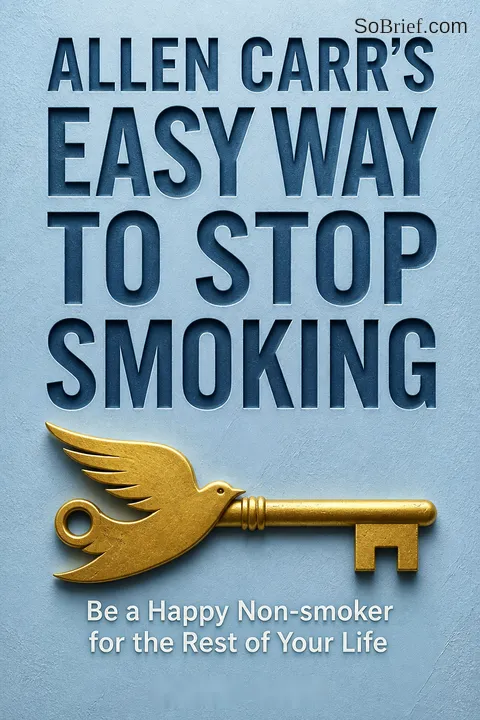
Allen Carr's Easy Way to Stop Smoking receives overwhelmingly positive reviews, with many readers crediting it for successfully helping them quit smoking. The book's approach focuses on changing the smoker's mindset rather than using willpower or scare tactics. Readers appreciate Carr's understanding of the smoker's psychology and his method of addressing common beliefs about smoking. While some find the writing style repetitive, most agree that the book's effectiveness outweighs any literary shortcomings. Many reviewers report quitting smoking easily and permanently after reading the book, even after multiple failed attempts using other methods.
People Also Read





Glossary
EASYWAY
Carr's quitting methodA smoking cessation approach that aims to change the smoker's beliefs about cigarettes before stopping. Instead of centering fear, sacrifice, or willpower, it asks what smoking actually provides and challenges the idea that cigarettes improve stress relief, concentration, or social enjoyment. Carr presents the method as a way to quit while feeling liberated rather than deprived.
Willpower Method
Quitting through resisted deprivationCarr's label for approaches to quitting that focus on enduring urges while feeling that smoking is a pleasure or support being given up. He argues that expecting misery and waiting for cravings to disappear intensify the sense of deprivation. The term describes his contrast with EASYWAY, not a standardized clinical category.
little monster
Nicotine withdrawal metaphorCarr's metaphor for the bodily component of nicotine dependence. It represents the empty, restless sensation that he says follows the decline of nicotine after a cigarette. In his explanation, smoking briefly quiets this sensation while renewing the cycle. The metaphor is intended to make the physical craving seem temporary and manageable.
big monster
Beliefs sustaining smokingCarr's metaphor for the psychological beliefs that reinforce smoking, including the ideas that cigarettes provide pleasure, confidence, relaxation, or a way to cope. He distinguishes this mental layer from the bodily nicotine dependence represented by the little monster. EASYWAY seeks to weaken these beliefs by questioning the apparent benefits of smoking.
moment of revelation
Recognition of freedom from smokingCarr's name for the point at which an ex-smoker recognizes that a situation once associated with cigarettes can be handled and enjoyed without them. He says this may arrive within days or weeks, but warns readers not to wait for it as proof that quitting has worked. The central claim is that a person can adopt the non-smoker identity from the final cigarette.
FAQ
What's "Allen Carr's Easy Way to Stop Smoking" about?
- Overview: "Allen Carr's Easy Way to Stop Smoking" by Allen Carr is a self-help book designed to help smokers quit smoking without feeling deprived or needing willpower.
- Method: The book introduces the EASYWAY method, which focuses on removing the psychological dependence on smoking by addressing the fears and misconceptions that keep people addicted.
- Goal: The ultimate goal is to help smokers become happy non-smokers, enjoying life more without the need for cigarettes.
- Approach: It emphasizes understanding the nature of nicotine addiction and the brainwashing that perpetuates it, rather than relying on scare tactics or substitutes.
Why should I read "Allen Carr's Easy Way to Stop Smoking"?
- Proven Success: The EASYWAY method boasts a high success rate, with over 90% of attendees at Allen Carr's clinics reportedly quitting smoking successfully.
- No Willpower Needed: Unlike other methods, it claims to help smokers quit without relying on willpower, making the process easier and more enjoyable.
- Comprehensive Support: The book is part of a broader support system that includes clinics, DVDs, and other resources to aid in quitting smoking.
- Positive Approach: It focuses on the positive aspects of quitting, such as improved health and freedom from addiction, rather than the negative consequences of smoking.
What are the key takeaways of "Allen Carr's Easy Way to Stop Smoking"?
- Nicotine Addiction: Smoking is primarily a nicotine addiction, not just a habit, and understanding this is crucial to quitting.
- Brainwashing: Smokers are brainwashed into believing they need cigarettes for stress relief, relaxation, and enjoyment, which are all illusions.
- No Sacrifice: Quitting smoking is not about giving up something; it's about gaining freedom from addiction and improving quality of life.
- Immediate Benefits: The book emphasizes that life becomes more enjoyable and less stressful without cigarettes, and these benefits can be felt immediately after quitting.
How does the EASYWAY method work?
- Understanding Addiction: The method involves understanding the nature of nicotine addiction and how it creates a false sense of need.
- Removing Fear: It focuses on removing the fear of quitting by addressing the misconceptions and brainwashing that keep smokers hooked.
- Positive Mindset: Encourages a positive mindset by highlighting the benefits of being a non-smoker and the freedom it brings.
- No Substitutes: Advises against using nicotine substitutes or other crutches, as they prolong the addiction.
What are the main reasons people fail to quit smoking according to Allen Carr?
- Fear of Quitting: Many smokers fear the process of quitting and the perceived loss of pleasure or stress relief.
- Misunderstanding Addiction: Smokers often misunderstand the nature of their addiction, thinking it's a habit rather than a drug dependency.
- Social Influence: The influence of other smokers and social situations can trigger cravings and lead to relapse.
- Lack of Commitment: Without a firm commitment to quit and a positive mindset, smokers may struggle to overcome the addiction.
What are the advantages of being a non-smoker according to "Allen Carr's Easy Way to Stop Smoking"?
- Improved Health: Non-smokers enjoy better health, with reduced risks of smoking-related diseases and improved physical fitness.
- Increased Energy: Quitting smoking leads to increased energy levels and a greater ability to enjoy physical activities.
- Financial Savings: Non-smokers save a significant amount of money that would otherwise be spent on cigarettes.
- Freedom and Confidence: Being a non-smoker brings freedom from addiction and boosts self-confidence and self-respect.
What are the best quotes from "Allen Carr's Easy Way to Stop Smoking" and what do they mean?
- "There is nothing to give up." This quote emphasizes that quitting smoking is not about losing something but gaining freedom and health.
- "The only reason you smoke is to feed the little monster." It highlights the idea that smoking is purely about satisfying nicotine addiction, not enjoyment.
- "Isn't it marvellous that I am a non-smoker!" Encourages a positive mindset and celebration of the decision to quit smoking.
- "The greatest gain is to be free from that fear." Refers to the liberation from the fear of quitting and the perceived need for cigarettes.
How does Allen Carr address the fear of quitting smoking?
- Understanding Fear: Carr explains that the fear of quitting is based on misconceptions about smoking's benefits and the difficulty of quitting.
- Positive Framing: He reframes quitting as a positive, liberating experience rather than a sacrifice or loss.
- Focus on Gains: Emphasizes the immediate and long-term benefits of quitting, such as improved health and freedom from addiction.
- Supportive Approach: Provides reassurance and support through the book and additional resources like clinics and workshops.
What role does brainwashing play in smoking addiction according to Allen Carr?
- Cultural Conditioning: Society conditions individuals to believe that smoking provides pleasure, stress relief, and social acceptance.
- Self-Deception: Smokers convince themselves that they enjoy smoking and need it, despite the negative consequences.
- Breaking the Illusion: The EASYWAY method aims to break this brainwashing by exposing the myths and lies about smoking.
- Empowerment: By understanding and rejecting the brainwashing, smokers can empower themselves to quit successfully.
What is the "moment of revelation" in "Allen Carr's Easy Way to Stop Smoking"?
- Definition: The "moment of revelation" is the point when a smoker fully realizes they no longer need or desire cigarettes.
- Timing: It typically occurs within a few days to three weeks after quitting, as the brainwashing and nicotine addiction fade.
- Significance: This moment marks the true freedom from smoking, where the ex-smoker feels liberated and empowered.
- Experience: Many ex-smokers describe it as a profound and joyful realization that enhances their confidence and happiness.
How does Allen Carr suggest dealing with withdrawal symptoms?
- Understanding Symptoms: Withdrawal symptoms are mild and primarily psychological, similar to hunger pangs.
- Positive Mindset: Encourages viewing withdrawal as a positive sign of the body healing and becoming free from nicotine.
- No Substitutes: Advises against using nicotine substitutes, as they prolong the addiction and delay true freedom.
- Focus on Benefits: Reminds ex-smokers of the benefits of quitting and the temporary nature of withdrawal symptoms.
What advice does Allen Carr give to non-smokers to help smokers quit?
- Empathy and Support: Non-smokers should offer empathy and support, understanding the challenges smokers face.
- Avoid Pressure: Avoid pressuring smokers to quit, as it can increase their stress and resistance.
- Positive Reinforcement: Highlight the benefits of quitting and share success stories of ex-smokers.
- Encourage Reading: Suggest reading "Allen Carr's Easy Way to Stop Smoking" to gain a new perspective on quitting.
About the Author
Other books by Allen Carr





Download PDF
Download EPUB
.epub digital book format is ideal for reading ebooks on phones, tablets, and e-readers.








