

Summary Unavailable
This book is not suitable for a summary (it may be a textbook, workbook, cookbook, reference book, or collection). However, you can still explore the FAQs, about author, and other metadata below!
Key Takeaways
Quit by dismantling the belief that cigarettes give you something worth missing.
A change in interpretation. Allen Carr describes smoking for 33 years, sometimes as many as 100 cigarettes a day, and repeatedly failing to quit through sheer resolve. During a visit to a hypnotherapist, he heard smoking described as an addiction. That idea changed the question: instead of asking what pleasure cigarettes provided, he began to see them as something he felt compelled to use. He built the Easyway around changing that interpretation, not enduring a life of deprivation.
Freedom over resistance. Carr argues that willpower leaves two motives fighting: the wish to stop and the belief that cigarettes offer comfort or pleasure. His method aims to remove the second motive. He presents his own sudden relief as an example, not proof that everyone will experience quitting in the same way.
What's striking is the method's focus on how a person interprets an urge. Cognitive therapies also distinguish an event from the meaning assigned to it: a craving can feel like a command, or it can be understood as a temporary signal. That shift may reduce panic and make action easier. Still, a changed belief is not a complete account of dependence. Nicotine alters the brain's reward systems, and social conditions shape access and relapse risk. Reframing can be powerful without being the only tool someone needs.
A cigarette quiets a craving that nicotine itself keeps restarting.
A self-renewing loop. Carr says each cigarette supplies nicotine quickly, then nicotine levels fall. He cites levels dropping to about half within 30 minutes and to a quarter within an hour. The next cigarette can therefore feel like relief, even though the previous one helped create the craving.
Two named forces. The “Little Nicotine Monster” is Carr's label for the body's small withdrawal signal. The “Big Monster” is his label for the learned belief that smoking is necessary for calm, focus, or pleasure. He argues that the signal prompts the belief, which prompts another cigarette, and the cycle repeats. The apparent reward is relief from discomfort, not a lasting improvement in wellbeing.
This is a useful account of negative reinforcement: a behavior becomes compelling because it removes an unpleasant state. That mechanism also appears in compulsive checking and other forms of dependence. The distinction between relief and pleasure helps explain why a smoker may report enjoying a cigarette while also wishing to stop. Carr, however, sharply minimizes the bodily side of addiction. Nicotine withdrawal is real, and its intensity varies. Recognizing the loop need not mean treating every physical symptom as imaginary.
Separate real-life stress from the extra alarm nicotine dependence creates.
Fear feeds the cycle. Carr describes smokers as caught between knowing cigarettes are harmful and fearing that life without them will be unbearable. He argues that this fear can make quitting seem more dangerous than continuing, even when a smoker is already worried about health, money, or control. In his account, nicotine withdrawal can produce an unsettled feeling that the mind interprets as needing a cigarette.
The signal is not the solution. Carr asks readers to consider that a cigarette may briefly settle withdrawal-related unease without resolving the original stress. A work problem or bereavement remains after smoking; the cigarette has not solved it. His practical instruction is to identify the source of distress instead of assuming nicotine is the remedy.
The distinction between a problem and the alarm layered over it is psychologically useful. Anxiety often grows when an uncomfortable sensation is interpreted as evidence of danger, creating a feedback loop between attention and distress. Yet it would be too simple to say nicotine only causes fear or that quitting removes ordinary stress. People can face genuine anxiety, grief, or medical symptoms while stopping. A more balanced use of Carr's idea is to question whether a cigarette addresses the actual problem, while still taking difficult symptoms seriously.
Test cigarette benefits against the moments they supposedly improve.
A belief can impair performance. Carr once believed he could not concentrate without smoking. During a quit attempt, he postponed a short payroll task for weeks, then smoked and completed it quickly. He took this as evidence that cigarettes helped. Yet he also recalls completing a high-pressure accountancy exam without smoking. He concludes that doubt and preoccupation, rather than cigarette absence itself, had interrupted his focus.
Question the special occasions. Carr applies the same test to cigarettes after meals, with drinks, or during breaks. He argues that these can feel unusually satisfying because they follow a period without nicotine, not because the cigarette adds genuine pleasure. Ask what the cigarette actually changes in the situation, rather than accepting the familiar explanation.
The payroll story captures a self-fulfilling expectation: believing that performance requires a cigarette can make its absence distracting, and smoking then appears to confirm the belief. It also shows why personal experience is easy to misread. The exam offers a counterexample, but it does not prove that nicotine never affects attention. For a dependent smoker, nicotine can temporarily relieve withdrawal-related concentration problems. The useful test is whether smoking improves functioning beyond that short-term relief.
Quit smoking without abandoning meals, friends, or ordinary routines.
Keep life in view. Carr argues against avoiding social events, meals, or stressful situations after quitting. Avoidance may leave a person expecting those settings to be impossible without cigarettes. He recounts a client who imagined that a sunny Paris café, wine, and music required a cigarette, despite never having visited Paris or smoked the French brand he pictured. Carr later visited a café without a cigarette and found the scene enjoyable on its own.
Prepare, then participate. The point is not that every difficult moment becomes pleasant. Carr asks readers to anticipate familiar smoking situations and notice that the meal, conversation, or problem remains separate from nicotine. He recommends keeping ordinary routines rather than reorganizing life around the idea that quitting means giving something up.
This resembles exposure learning: meeting a cue without performing the old response can weaken the expectation that the cue is dangerous or incomplete. The Paris fantasy also shows how cultural images can become personal memories that never actually happened. Still, exposure should be paced to the person. Avoidance can be counterproductive, but someone in acute distress need not treat every social situation as a test. Support and gradual practice can serve the same learning goal.
Do not cut down or save room for one supposedly harmless cigarette.
Half-measures can sharpen attention. Carr argues that cutting down makes each cigarette seem more valuable because the smoker spends more time waiting for it. He recounts a man with throat cancer who reduced his use from about 40 roll-ups a day to five over a year, describing the effort as exhausting and frightening. Carr uses the story to show how counting cigarettes can leave smoking at the center of a person's day.
One cigarette is not a neutral experiment. The book warns that occasional smoking can restart the cycle, especially when a former smoker still believes cigarettes offer a reward. Its recommended goal is to stop, rather than maintain a daily negotiation over how many cigarettes are allowed.
Carr's account makes a strong point about the mental burden of constant rationing. A rule that requires repeated decisions can keep attention fixed on the substance. But the book turns that observation into a universal claim that cutting down cannot help, which is too categorical. Smoking reduction may be a step toward cessation for some people, and clinical approaches vary. The practical distinction is between a deliberate plan with support and an open-ended bargain that preserves the belief that cigarettes are a necessary reward.
Reject substitutes that preserve nicotine or turn quitting into deprivation.
Carr's objection to substitutes. The book rejects nicotine gum and patches because they continue nicotine exposure, and it also discourages sweets, gum, or other replacements because they may reinforce the feeling that quitting leaves a hole. Carr links weight gain after quitting to replacing cigarettes with food, and says his own final attempt ended with weight loss rather than gain. Those claims reflect his method and personal experience, not a guarantee for every reader.
Separate smoking from support. Carr's core concern is that a substitute may keep the person focused on what they supposedly lack. He therefore presents stopping nicotine altogether, without a replacement ritual, as the route to feeling free.
The warning about replacing one automatic response with another is worth considering, particularly when food becomes a way to manage stress. The blanket rejection of nicotine replacement is not supported by current medical consensus: nicotine replacement products can help people quit smoking, and they avoid exposure to the many toxic substances in cigarette smoke. Weight changes also vary and can reflect more than snacking. Carr's distinction between cigarettes and perceived deprivation is useful, but it should not be mistaken for individualized treatment advice.
Treat smoking as a learned trap, not a defective personality.
The story starts socially. Carr describes young smokers learning to regard cigarettes as grown-up, glamorous, or useful by watching friends, relatives, celebrities, and fictional heroes. He recalls that first cigarettes often taste unpleasant, but repetition and social messaging can make the experience seem normal. In his view, these influences help explain why people begin smoking without having a deep personal desire for it.
Addiction is not a character flaw. Carr rejects the idea that smokers have a special “addictive personality.” He points instead to nicotine's addictive properties and to differences in circumstances, such as whether someone can afford to smoke or is allowed to smoke at work. The distinction shifts the problem from personal weakness to a drug and a learned pattern.
This account rightly resists moralizing addiction. Social learning helps explain why behavior can spread through families, peer groups, and media even when its costs are widely known. The book's rejection of an all-purpose addictive personality is also useful because it avoids labeling the person as fundamentally flawed. However, inherited differences can affect vulnerability to dependence, and social conditioning is not the whole story. A fairer model combines drug effects, individual biology, access, and learned expectations.
Make the last cigarette a decision, not the start of a lifelong test.
Choose a clear stopping point. Carr presents the final cigarette as a moment to recognize that smoking has ended, rather than a promise to wait and see whether life becomes tolerable. His final instructions include not postponing the decision for a symbolic date, not keeping cigarettes close by, and not interpreting a passing thought about smoking as a command.
Respond to the thought differently. Carr advises readers not to suppress thoughts of smoking. Instead, he asks them to notice the thought and remember their reasons for stopping. His named checklist, “RATIONALISED,” is a recap of the book's central reminders: quitting is not a sacrifice, nicotine should not be maintained through substitutes, and doubt can revive the old bargain.
A clear decision can reduce the fatigue of repeatedly renegotiating an intention. The instruction not to suppress thoughts is also psychologically plausible: trying to ban a thought can make it more salient. But the book's all-or-nothing tone has a risk. If a lapse occurs, readers may see it as total failure and give up. In relapse prevention, a lapse is better treated as information and a reason to resume support promptly, not as evidence of weak character.
Analysis
This is a self-help argument built as a conversion story. Carr begins with his own history of heavy smoking and failed attempts, then presents a single insight, that smoking is addiction rather than pleasure, as the key that changes the reader's understanding. Repetition is deliberate: the book returns to pleasure, fear, concentration, social cues, and withdrawal because its target is not simply lack of information. It is the smoker's conflicted interpretation of familiar sensations.
The method's strongest contribution is its account of relief as a misleading reward. A cigarette can feel helpful because it eases discomfort that dependence has helped create. The examples of the postponed payroll task and the imagined Paris café make that argument concrete: expectations and cultural images can be mistaken for direct benefits. Carr also avoids framing smokers as stupid or morally weak, a humane counter to stigma.
Its weakness is the certainty with which it dismisses physical withdrawal, nicotine replacement, and gradual reduction. Nicotine dependence has both pharmacological and learned components. Withdrawal can include irritability, restlessness, low mood, and trouble concentrating, with substantial variation among people. Evidence-based cessation care includes nicotine replacement and other supports for many smokers. Those tools do not make Carr's focus on beliefs irrelevant; they make it incomplete as a universal prescription. Likewise, weight change after quitting is variable, not reliably prevented by a particular mindset.
The book's most useful practical lesson is therefore narrower than its strongest claims: examine what a cigarette appears to solve, notice how cues and expectations sustain the desire, and choose a cessation plan that fits the person's needs. Its confidence may help readers who feel doomed to struggle, but confidence should not require rejecting medical support. The provided text concerns cigarette smoking; despite the edition's broader title, it does not develop a distinct method for vaping.
Last updated:
Report IssueReview Summary
Allen Carr's Stop Smoking Now has received overwhelmingly positive reviews, with an average rating of 4.44 out of 5. Many readers report successfully quitting smoking after reading the book, often describing it as their last resort after trying other methods. The book's approach is praised for its unique perspective on addiction and its ability to change readers' mindsets. Some criticisms include repetitiveness and a lack of scientific backing. Overall, most readers found the book effective, easy to understand, and life-changing, recommending it to others struggling to quit smoking.
People Also Read









Glossary
Allen Carr's Easyway
Belief-focused cessation methodA smoking cessation approach that aims to remove the belief that cigarettes provide pleasure, comfort, or support. Carr presents understanding the addiction as more important than relying on willpower, cutting down, or using substitutes. The book asks readers to keep smoking normally while reading, then treat the final cigarette as a deliberate end to the cycle.
Little Nicotine Monster
Nicotine withdrawal signalCarr's name for the bodily discomfort he associates with nicotine levels falling after a cigarette. He describes this signal as mild and argues that smokers often interpret it as a need for another cigarette. In his explanation, nicotine temporarily quiets the sensation while setting up the next cycle of withdrawal.
Big Monster
Learned belief in smokingCarr's term for the mental beliefs and expectations that make smoking seem necessary for pleasure, confidence, concentration, or stress relief. In his account, the bodily signal of falling nicotine levels becomes more powerful when the mind interprets it as proof that a cigarette is needed. The method aims to undo these learned beliefs.
Nicotine trap
Self-reinforcing addiction cycleCarr's name for the cycle in which nicotine creates withdrawal discomfort, a cigarette briefly relieves it, and falling nicotine levels produce the next urge. The trap also includes learned beliefs that smoking provides a benefit. Carr argues that smokers remain caught when they mistake temporary relief for genuine pleasure or support.
RATIONALISED
Quit-readiness review checklistThe book's named recap checklist for reviewing its main instructions before stopping. It prompts readers to confirm that they understand quitting as a gain rather than a sacrifice, avoid postponement and nicotine substitutes, reject the idea of a harmless occasional cigarette, and commit without continuing to doubt the decision.
FAQ
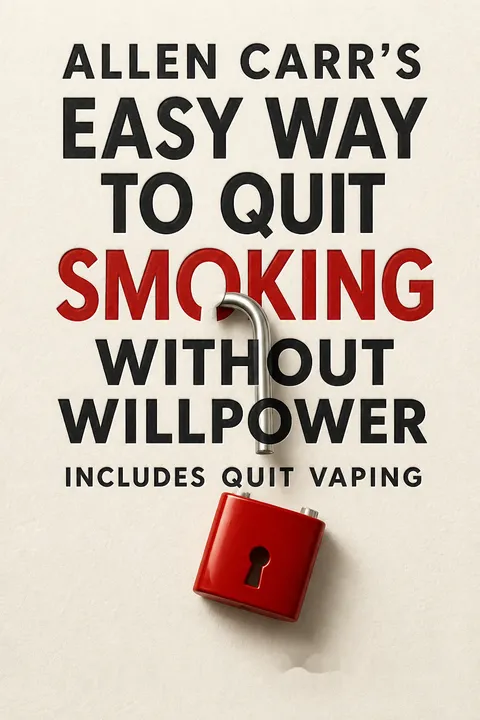
1. What is "Allen Carr's Easy Way to Quit Smoking Without Willpower" by Allen Carr about?
- Revolutionary quit method: The book presents Allen Carr’s Easyway method, a unique approach to quitting smoking that claims to require no willpower and promises an easy, enjoyable process.
- Focus on psychological addiction: Carr argues that smoking is 99% a mental addiction, not just a physical one, and that understanding this is key to quitting.
- Dispelling myths: The book systematically dismantles common misconceptions about smoking, such as the belief that it relieves stress or is difficult to quit.
- Step-by-step guidance: Readers are guided through a process of changing their mindset, culminating in a final cigarette and a new, smoke-free life.
- Global impact: The method has helped millions worldwide, with clinics and books available in many languages, and is endorsed by celebrities, doctors, and former smokers.
2. Why should I read "Allen Carr's Easy Way to Quit Smoking Without Willpower"?
- Proven high success rate: The Easyway method boasts a success rate of over 90% at its clinics, with a money-back guarantee if you don’t quit.
- No willpower required: Unlike traditional methods, Carr’s approach claims you won’t feel deprived or need to rely on willpower to resist cravings.
- Addresses root causes: The book focuses on removing the psychological desire to smoke, not just the physical addiction.
- Avoids common pitfalls: It helps readers avoid weight gain, misery, and the sense of sacrifice often associated with quitting.
- Endorsed by experts and celebrities: The method is recommended by doctors, praised by the media, and credited by celebrities like Ellen DeGeneres and Ashton Kutcher for their success in quitting.
3. What are the key takeaways from "Allen Carr's Easy Way to Quit Smoking Without Willpower"?
- Smoking is a trap: Smokers are caught in a cycle of addiction, maintained by fear and misconceptions, not genuine pleasure.
- No real benefits: Cigarettes do not relieve stress, aid concentration, or provide true enjoyment; these are illusions created by addiction.
- Withdrawal is mostly mental: Physical withdrawal from nicotine is minor and short-lived; the real challenge is overcoming mental conditioning.
- No need for substitutes: Nicotine replacement therapies and other substitutes only prolong addiction and reinforce the sense of deprivation.
- Freedom is immediate: Once you understand and accept Carr’s principles, you can quit easily, feel liberated, and enjoy life more as a non-smoker.
4. How does Allen Carr’s Easyway method work to help people quit smoking?
- Removes brainwashing: The method systematically dismantles the myths and illusions that keep smokers hooked, such as the belief that smoking is pleasurable or necessary.
- Focuses on mindset: Carr emphasizes changing your frame of mind so you no longer desire cigarettes, rather than relying on willpower to resist them.
- Encourages continued smoking: Readers are instructed to keep smoking as usual until they finish the book and are ready to quit, reducing anxiety about stopping.
- Final cigarette ritual: The process culminates in a conscious, celebratory final cigarette, marking the end of addiction.
- No substitutes or gradual reduction: The method discourages cutting down or using nicotine replacements, as these reinforce the addiction.
5. What are the main myths about smoking that Allen Carr debunks in his book?
- Smoking relieves stress: Carr explains that smoking actually causes stress by creating withdrawal symptoms, which are then temporarily relieved by the next cigarette.
- Smoking is a habit, not an addiction: He clarifies that smoking is a powerful drug addiction, not just a habit, and that understanding this is crucial to quitting.
- Quitting is difficult and requires willpower: The book argues that quitting is easy if you remove the desire to smoke, and that willpower is only needed if you feel deprived.
- Smoking helps control weight: Carr shows that smoking does not keep you slim; in fact, many heavy smokers are overweight due to constant cravings and lack of energy.
- Occasional or casual smokers are in control: He demonstrates that all smokers, even those who smoke infrequently, are trapped by addiction and not truly in control.
6. What is the "Little Nicotine Monster" and the "Big Monster" in Allen Carr’s Easyway method?
- Little Nicotine Monster: This refers to the minor physical withdrawal symptoms caused by nicotine leaving the body, which Carr describes as a slight itch or empty feeling.
- Big Monster: The Big Monster is the psychological addiction—the brainwashing and beliefs that smoking is a pleasure, crutch, or necessity.
- 1% physical, 99% mental: Carr emphasizes that the physical aspect of addiction is tiny compared to the mental component, which is fueled by misinformation.
- Destroying the monsters: The Easyway method focuses on eliminating the Big Monster (mental addiction) by removing illusions, making the Little Monster easy to ignore.
- Key to freedom: Once both monsters are defeated, the desire to smoke disappears, and quitting becomes effortless.
7. Why does Allen Carr say quitting smoking does not require willpower?
- No deprivation: Carr argues that if you remove the desire to smoke, there’s nothing to resist, so willpower isn’t needed.
- Willpower method fails: Traditional willpower-based quitting leads to feelings of sacrifice and deprivation, making relapse likely.
- Change in mindset: The Easyway method changes your perception so you see smoking as pointless and undesirable, eliminating internal conflict.
- Strong-willed people struggle too: Carr notes that even strong-willed, intelligent people fail to quit with willpower because they still believe they’re giving up something valuable.
- Enjoyment of quitting: With the right understanding, quitting becomes a positive, liberating experience rather than a struggle.
8. How does "Allen Carr's Easy Way to Quit Smoking Without Willpower" address weight gain after quitting?
- Weight gain is a myth: Carr explains that smoking does not keep you slim; many heavy smokers are overweight due to constant cravings and inactivity.
- Substitution causes weight gain: People who quit with willpower often substitute food for cigarettes, leading to weight gain, but this is not necessary.
- No deprivation, no substitution: The Easyway method removes the sense of loss, so there’s no urge to replace cigarettes with food or other substances.
- Improved wellbeing: After quitting, most people experience increased energy and confidence, making it easier to maintain or achieve a healthy weight.
- Additional resources: Carr has also written "Easyweigh to Lose Weight" for those who want further guidance on weight control.
9. What does Allen Carr say about nicotine replacement therapies and other quitting aids?
- Substitutes prolong addiction: Carr argues that nicotine patches, gum, and other substitutes keep the addiction alive and reinforce the belief that quitting is difficult.
- No physical need for nicotine: The physical withdrawal is minor and short-lived, so there’s no need to wean off nicotine gradually.
- Psychological problem: The real challenge is mental, not physical, and substitutes do not address the psychological addiction.
- Pharmaceutical industry interests: Carr criticizes the medical and pharmaceutical industries for promoting nicotine products, which he sees as profit-driven and ineffective.
- Only one solution: The book insists that the only way to quit successfully is to remove the desire to smoke, not to replace cigarettes with other forms of nicotine.
10. How does Allen Carr’s Easyway method help prevent relapse and ensure long-term freedom from smoking?
- Removes desire completely: By eliminating the belief that smoking provides any benefit, the method ensures you don’t feel deprived or tempted.
- No "just one" mentality: Carr warns that even a single puff can reignite addiction, so the method emphasizes never craving or having another cigarette.
- Prepares for triggers: The book helps readers anticipate and mentally prepare for situations that might trigger cravings, such as stress or social occasions.
- No need for substitutes: Without a sense of loss, there’s no urge to replace cigarettes with food, gum, or other habits, reducing relapse risk.
- Ongoing support: Allen Carr’s clinics and support services are available for those who need additional help or reassurance after quitting.
11. What are the most powerful quotes from "Allen Carr's Easy Way to Quit Smoking Without Willpower" and what do they mean?
- “It is easy to stop if you go about it in the right way.” — Emphasizes that quitting is not inherently difficult; the right mindset makes it simple.
- “The only pleasure or crutch smokers receive when they light up is the perceived relief of the empty, insecure feeling of the body withdrawing from nicotine which non-smokers don’t suffer from anyway.” — Highlights that smoking only relieves withdrawal symptoms it creates, not real stress or problems.
- “You are not in control of your smoking. The cigarette controls you.” — Underscores the reality of addiction and the illusion of choice.
- “There is no such thing as just one cigarette or occasional cigarettes. See it as it really is: the whole filthy lifetime’s chain.” — Warns against the danger of believing in moderation or occasional smoking.
- “You become a non-smoker the moment you extinguish your final cigarette.” — Encourages immediate self-identification as a non-smoker, reinforcing confidence and commitment.
12. What practical steps and instructions does Allen Carr give for quitting smoking using the Easyway method?
- Keep smoking until ready: Readers are told to continue smoking as usual until they finish the book and fully understand the method.
- Follow all instructions: Carr stresses the importance of following his guidance exactly, without skipping steps or making exceptions.
- Celebrate the final cigarette: The process includes a ritual of consciously smoking and extinguishing the last cigarette, marking the end of addiction.
- Avoid substitutes and lifestyle changes: Do not use nicotine replacements or alter your routine; simply enjoy your new freedom.
- Maintain a positive mindset: Focus on the benefits of being a
About the Author
Allen Carr was a British author and founder of the Allen Carr's Easyway method, which has helped millions quit smoking and overcome other addictions. A former heavy smoker, Carr developed his approach after quitting in 1983, focusing on removing the fear of giving up rather than using willpower or substitutes. His bestselling book, "The Easy Way to Stop Smoking," was published in 1985 and translated into over 45 languages. Carr's method expanded globally through clinics, books, and multimedia resources. He died of lung cancer in 2006, but his legacy continues through his organization, which has reached over 50 million people worldwide.
Other books by Allen Carr

Download PDF
Download EPUB
.epub digital book format is ideal for reading ebooks on phones, tablets, and e-readers.








