

Key Takeaways
Stop mistaking overeating for pleasure, and the diet battle changes shape
The central distinction. Carr’s method, which he calls Easyway, applies his approach to quitting smoking to weight control: change the belief that keeps a behavior compelling, rather than relying on prolonged willpower. He argues that eating can be pleasurable, while overeating often ends in discomfort, guilt, and frustration. The two are not the same thing, even if they have become linked in a person’s mind.
A squirrel starts the argument. Carr recalls watching a squirrel eat peanuts in his garden, then stop and bury some. The sight made him question why he could not stop himself from eating snacks. He came to see overeating not as an excess of genuine enjoyment, but as a learned pattern reinforced by food, habit, and a sense of deprivation.
The useful move is to separate a basic human need from a behavior that may no longer feel rewarding. That distinction can reduce shame and make habits easier to examine: what is enjoyable, what is automatic, and what is driven by discomfort? The squirrel makes a vivid prompt, not proof that humans should eat exactly like wild animals. Human appetite is shaped by biology, culture, medication, stress, and food access. The metaphor opens a question worth asking, but it cannot settle the physiology.
Use hunger and satisfaction as cues, not the clock or a clean plate
Read the body’s signals. Carr calls instinctive guidance for choosing, timing, and stopping food intake Nature’s Guide. He describes the Sensor as the senses that help judge food, and the Gauge as hunger and satisfaction signals. His practical rule is to eat when hungry and stop when hunger has eased, rather than eating automatically at set times or finishing whatever someone else served.
Make meals more attentive. Carr recommends eating slowly, so there is time to notice taste and recognize satisfaction. He warns that boredom, stress, and advertising can be mistaken for hunger. His example is a restaurant portion: the diner may keep eating because food remains, not because appetite remains. The aim is to make eating responsive rather than automatic.
This advice overlaps with mindful eating, an approach that trains attention to taste, pace, and internal cues rather than imposing a menu of forbidden foods. It can help distinguish appetite from habit. Yet hunger signals are not perfectly reliable or equally accessible to everyone. Stress, sleep loss, illness, medication, and past restrictive eating can affect them. A flexible cue-based approach is more realistic than treating the body as an infallible instrument or judging people whose signals are difficult to read.
Question which food preferences came from habit, advertising, and family rules
Preferences are learned. Carr argues that food choices are shaped early by parents, school meals, social rituals, advertising, and what is available. People may learn to associate sweets with rewards, snacks with entertainment, or finishing a plate with good manners. These associations can make a familiar food feel like a personal favorite even when eating it regularly brings little lasting satisfaction.
Notice the conditioning. Carr uses acquired tastes such as coffee or blue cheese to show that preferences can change through repeated exposure. He also describes a childhood attachment to brightly colored jelly that faded when it was no longer treated as a special prize. His point is not that taste is imaginary, but that familiarity and expectation can influence what seems appealing.
This account is strongest when it treats preference as partly learned rather than as a fixed identity. Behavioral science likewise distinguishes a food’s sensory properties from the cues and rewards attached to eating it. That distinction can help readers spot patterns without blaming themselves. Still, marketing is not the only influence, and repeated exposure can create genuine liking, not merely false desire. Culture, family traditions, convenience, and pleasure all matter. The task is to examine preferences, not assume that every commercially popular food is secretly disliked.
Build meals around whole plant foods without turning every other food into contraband
Start with less processing. Carr’s preferred foods are fresh fruit, vegetables, nuts, and seeds, with some grains and pulses. He favors foods eaten close to their natural state and argues that water-rich produce is easy to digest and satisfying. He urges readers to make such foods a larger part of meals, rather than treating vegetables as decoration beside a much larger portion of processed food.
Keep flexibility in view. Carr calls the allowance for less ideal foods the Junk Margin: his term for a supposed margin that lets people eat some foods he considers inferior without immediate harm. He also argues against meat and dairy, claiming humans are not designed to eat them. Those categorical claims are the author’s position, not a necessary part of choosing more whole foods.
The practical core, eating more fruits, vegetables, nuts, and minimally processed foods, can be separated from Carr’s sweeping claims about human design. His chimpanzee and wild-animal comparisons help make the case memorable, but they do not establish a human dietary prescription. Nutritional needs can be met through different eating patterns, and meat or dairy are not automatically harmful for every person. A plant-forward emphasis is more useful when it expands satisfying options rather than creating a new test of purity.
Treat refined sugar as a craving loop, not a character flaw
The apparent reward. Carr describes refined sugar as an addictive substance that can temporarily relieve the low, restless feeling created as its effects wear off. In his account, that short-lived relief is mistaken for pleasure, encouraging another serving. He contrasts this cycle with sugar in whole fruit, which arrives with water and fiber and, he argues, is used differently by the body.
Look for hidden sources. Carr asks readers to check ingredient lists because he says processed sugar appears in products not usually thought of as sweet, including some breads and savory foods. He also warns about sweetened drinks and sugar substitutes. His broader point is to notice how a product’s ingredients and marketing may encourage repeated consumption, rather than interpreting every craving as a personal failure.
The craving-loop framing can be compassionate: repeated eating is not necessarily evidence of weak character, and highly palatable foods can be hard to stop eating. It also invites practical attention to cues and product design. But Carr presents refined sugar as uniformly addictive and treats its effects as a single mechanism. That is too broad. Responses differ across people and foods, and the book’s dramatic analogy between sugar processing and hard drugs does not establish equivalence. A measured account can recognize reinforcement without turning ordinary eating into pathology.
Judge progress by health and daily function, not an arbitrary scale target
Avoid false precision. Carr rejects choosing a target weight from a chart or calculator. He argues that a single number cannot capture body shape, energy, or fitness. In his view, a person can monitor change using clothes, a mirror, and how daily activities feel, while weighing occasionally rather than becoming ruled by the scales.
Track without postponing life. Carr shares how making new holes in a belt as his weight changed gave him a visible sense of progress. He urges readers not to wait for a final number before feeling that a change is worthwhile. His emphasis is on a gradual process and on noticing improvements as they occur, rather than treating life as suspended until a target is reached.
The warning against letting a number define success is valuable, especially because weight does not reveal fitness, health, or well-being by itself. Function, energy, and comfort can be meaningful outcomes. However, appearance in a mirror is also subjective and can be a poor guide for people vulnerable to body-image distress. Clinical measures can matter in some contexts, while weight alone can mislead. A sound approach uses relevant health information without making either the scale or appearance the sole judge.
Exercise for energy and capability, not as punishment for eating
Separate fitness from weight loss. Carr argues that exercise can increase energy use while also increasing appetite, so more activity does not guarantee a lower scale reading. He recounts a man who trained for the London Marathon for a year, finished the race, and weighed about the same as before. The runner had become fitter, but his increased hunger led him to eat more.
Move for its own benefits. Carr is not against exercise. He presents it as valuable for health, mood, circulation, and physical capability, and encourages activity that feels enjoyable rather than like a penalty. He also notes that gaining muscle while losing fat may change body composition without producing the scale change someone expects.
This distinction helps loosen the common bargain that exercise only counts if it makes the body smaller. Training can improve strength, endurance, mood, and health even when weight stays stable. The marathon story makes that point more memorable than a calorie calculation. At the same time, exercise can contribute to weight management for some people, and appetite responses vary. The more durable message is not that activity cannot affect weight, but that its value should not be reduced to the number it changes.
Separate useful food habits from Carr’s unsupported digestion rules
Know what the book prescribes. Carr’s Plastic Bag Syndrome names what he sees as faulty nutrient logic: assuming a food is suitable simply because it contains a nutrient the body needs. He applies the idea to meat and dairy, and also argues that particular foods should not be combined. His rules classify foods as proteins, starches, or neutral, recommend keeping proteins apart from starches, and say fruit should be eaten separately from other foods.
Do not confuse confidence with evidence. Carr presents these rules as a way to improve digestion and weight. They are distinct from his more general advice to eat slowly, notice hunger, and include more produce. Readers can understand the framework without treating every prescribed combination or timing rule as established nutrition science.
The Plastic Bag Syndrome is a memorable warning against equating nutrient content with suitability, but Carr extends that warning into claims that do not follow from the metaphor. Human digestion routinely processes mixed meals, and the book offers no adequate evidence that separating protein from starch or eating fruit alone produces the promised weight effects. This matters because elaborate food rules can make eating more anxious and restrictive. The broader invitation to question simplistic nutrition claims is useful; these particular rules deserve independent scrutiny.
Begin now, but make the change flexible enough to survive ordinary life
Do not wait for a perfect date. Carr calls New Year’s Day, birthdays, and other chosen start dates meaningless when they merely postpone action. He argues that delaying until life is quiet leaves the person worried about the next dinner, holiday, or stressful week. His alternative is to begin while ordinary social life continues, so change is not dependent on avoiding every temptation.
Keep the aim livable. Carr’s final message is to avoid framing the process as a sacrifice. He discourages rigid meal plans and recipes that make a person feel trapped, and encourages finding enjoyable foods and routines. His checklist, NATURALISED, recaps the book’s themes: no deprivation, heed nature, eat preferred foods, savor them, and start promptly.
Starting without waiting for ideal conditions can reduce the endless cycle of postponement. The strongest version of this advice is a manageable experiment, not an all-or-nothing declaration. Flexibility matters because eating takes place amid budgets, care responsibilities, health needs, and social life. Carr’s anti-deprivation stance is a useful corrective to punitive dieting, but his own dietary rules can become restrictive if applied rigidly. A change is more likely to last when it can accommodate real meals, imperfect days, and individual needs.
Analysis
Carr builds his case as a conversion story. A person trapped in repeated diets sees a squirrel stop eating, then reinterprets overeating through the lens of addiction. The narrative is effective because it replaces a moral diagnosis, weak will, with a causal question: what belief or cue is keeping the behavior alive? His most useful contribution is psychological. Deprivation can magnify desire, while shame can make eating problems harder to examine. Separating eating for nourishment and pleasure from eating that ends in distress gives readers a more humane starting point.
The book’s weakness is that it often treats a persuasive analogy as proof. Wild animals are not direct models for human food choice, and claims that meat, dairy, sugar, or mixed meals violate a universal natural design are stronger than the evidence presented. Its dismissal of professional nutrition advice also risks discouraging readers from seeking individualized guidance. The food-combining rules, in particular, should not be mistaken for established digestive physiology.
A careful reading can preserve the helpful behavioral insights without adopting every biological claim. Readers can notice emotional and environmental triggers, eat more minimally processed foods if suitable, and pursue movement for well-being, while remaining open to medical, cultural, and personal differences. Weight regulation is not determined by willpower alone, but neither is it reducible to a single food category or instinctive signal. The book is most valuable as a challenge to shame-driven dieting and least reliable when it presents its own simple model as a universal explanation.
Review Summary
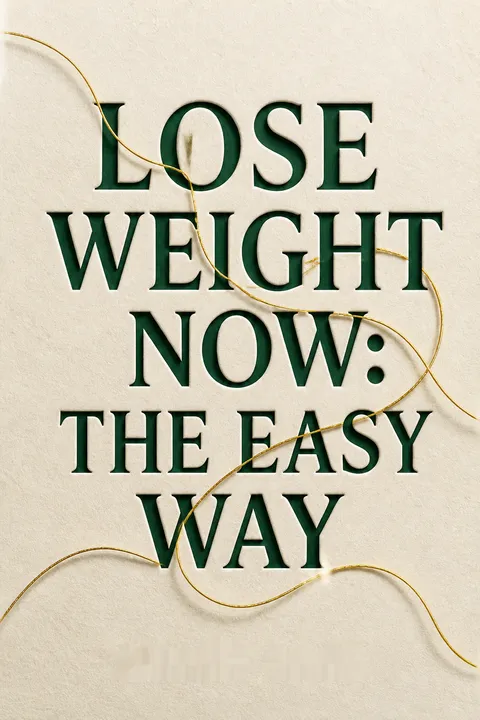
Lose Weight Now receives mixed reviews. Some praise its effectiveness in changing mindsets about food and promoting healthier eating habits. Others criticize it as simplistic, vague, and repetitive. The book advocates a plant-based diet, eating only when hungry, and avoiding processed foods. Many readers find Carr's approach similar to his successful smoking cessation book, but some feel it lacks the same impact for weight loss. Critics argue that the book's claims are unsupported and its tone preachy. Overall, opinions are divided on whether the method works for sustainable weight loss.
People Also Read



Glossary
Easyway
belief-focused behavior changeCarr’s named method for changing a behavior by understanding the beliefs and perceived rewards that sustain it, rather than relying on prolonged willpower and a sense of sacrifice. In this book, he applies the approach to overeating by challenging the idea that overeating itself provides lasting pleasure and by encouraging different food choices without framing them as punishment.
Nature’s Guide
instinctive eating signalsCarr’s name for the presumed inborn guidance that helps living creatures identify suitable foods and know when and how much to eat. He argues that human habits and food marketing can obscure this guidance, and that attending to hunger, satisfaction, and the senses can help restore it. The term expresses his framework, not a formal clinical system.
Sensor
senses for judging foodCarr’s term for the combined role of sight, smell, hearing, touch, and taste in assessing food. In his account, these senses help distinguish appealing, appropriate foods from spoiled or unsuitable ones. He argues that learned preferences and advertising can distort their guidance, so people should pay attention when a food’s appearance, smell, texture, or taste repels them.
Gauge
hunger and satisfaction cuesCarr’s term for the body’s signals that indicate when to eat and when to stop. Hunger represents a need for food, while a feeling of satisfaction indicates that eating can end. He argues that routines, social expectations, and foods that fail to satisfy can make people ignore these cues.
Junk Margin
room for less ideal foodsCarr’s label for his proposed margin of tolerance for foods he considers second-rate or processed. He uses the idea to say that people need not treat every such food as absolutely forbidden, provided their eating is mainly based on foods he considers natural and suitable. The term is meant to soften rigid prohibition, though the book’s definition of junk is unusually broad.
Plastic Bag Syndrome
nutrient content is not suitabilityCarr’s name for the reasoning error of assuming that a food is suitable simply because it contains a nutrient the body needs. He illustrates it by comparing that logic to putting plastic in a car’s fuel tank because both plastic and fuel are derived from crude oil. He uses the concept to question common arguments for meat and dairy.
NATURALISED
method-recap checklistCarr’s mnemonic checklist for reviewing the book’s instructions and mindset. Its letters prompt ideas including avoiding deprivation, questioning advice that conflicts with his Nature framework, beginning promptly, understanding the method, enjoying preferred foods, savoring them, and deciding to act. It condenses his closing guidance rather than offering a separate evidence-based dietary protocol.
FAQ
What's "Allen Carr's Easyweigh to Lose Weight" about?
- Overview: "Allen Carr's Easyweigh to Lose Weight" by Allen Carr presents a method for losing weight without dieting, using willpower, or feeling deprived. It focuses on understanding and reversing the brainwashing around food.
- Method: The book applies the principles of Carr's successful stop-smoking method to weight loss, emphasizing the importance of eating natural foods and listening to one's body.
- Goal: The aim is to help readers achieve their ideal weight by eating as much of their favorite foods as they want, whenever they want, without gaining weight.
- Philosophy: It challenges conventional dieting wisdom and encourages a return to instinctual eating habits, similar to those of wild animals.
Why should I read "Allen Carr's Easyweigh to Lose Weight"?
- Unique Approach: Unlike traditional diets, this book offers a method that doesn't rely on willpower or deprivation, making it easier to maintain long-term.
- Proven Success: The method is based on the principles of Carr's stop-smoking clinics, which boast a high success rate and have helped millions worldwide.
- Holistic Benefits: It promises not only weight loss but also increased energy, improved health, and a more enjoyable relationship with food.
- Empowerment: The book empowers readers to take control of their eating habits by understanding and reversing the brainwashing around food.
What are the key takeaways of "Allen Carr's Easyweigh to Lose Weight"?
- Natural Foods: Emphasizes eating foods in their natural state, such as fruits, vegetables, nuts, and seeds, which are easier to digest and provide necessary nutrients.
- Hunger as a Guide: Encourages eating only when hungry and stopping when satisfied, using hunger as a natural gauge for food intake.
- Brainwashing Reversal: Focuses on reversing the brainwashing that leads to overeating and addiction to processed foods and sugars.
- No Willpower Needed: Promises weight loss without the need for willpower, dieting, or feeling deprived, by aligning eating habits with natural instincts.
How does Allen Carr's method differ from traditional diets?
- No Dieting: Unlike traditional diets, Carr's method does not involve calorie counting, food restrictions, or meal plans.
- Focus on Instincts: It encourages listening to natural hunger signals and eating instinctively, similar to wild animals.
- No Willpower Required: The method claims to eliminate the need for willpower by removing the psychological dependence on junk food.
- Enjoyment of Food: It promotes enjoying food without guilt, focusing on the pleasure of eating natural, nutrient-rich foods.
What is the "Plastic Bag Syndrome" mentioned in the book?
- Concept Explanation: The "Plastic Bag Syndrome" refers to the illogical practice of consuming foods that are not naturally suited for human digestion, similar to putting plastic bags in a car's fuel tank.
- Nutrient Misconception: It highlights the misconception that certain foods are necessary for nutrients, like eating meat for protein, when these nutrients can be obtained from plant sources.
- Digestive Impact: Consuming inappropriate foods leads to digestive issues and weight gain, as the body struggles to process them.
- Solution: The book advocates for eating foods that are naturally designed for human consumption, such as fruits and vegetables.
What role does sugar play in weight gain according to the book?
- Addictive Nature: Processed sugar is described as an addictive substance that creates a cycle of craving and withdrawal, leading to overeating.
- Illusion of Pleasure: Sugar provides a temporary high, but ultimately leaves the body feeling low and craving more, perpetuating the addiction.
- Health Impact: It disrupts the body's natural insulin balance, leading to weight gain and other health issues.
- Natural Alternatives: The book suggests satisfying sweet cravings with natural sugars found in fruits, which do not have the same negative effects.
How does "Allen Carr's Easyweigh to Lose Weight" address emotional eating?
- Understanding Triggers: The book identifies emotional eating as a response to stress, boredom, or other emotions, rather than true hunger.
- Brainwashing Influence: It explains how marketing and societal norms have conditioned people to associate food with comfort and reward.
- Reversing Habits: By understanding these triggers and the brainwashing behind them, readers can break free from emotional eating patterns.
- Focus on Hunger: Encourages eating only when genuinely hungry, using natural hunger signals as a guide.
What are the best quotes from "Allen Carr's Easyweigh to Lose Weight" and what do they mean?
- "Eat as much of your favorite foods as you want, whenever you want, as often as you want, and be the exact weight you want to be, without dieting, special exercise, using willpower or feeling deprived." This quote encapsulates the book's promise of freedom from dieting and deprivation, emphasizing a natural approach to eating.
- "The foods that taste best are the best for you." This challenges the common belief that healthy foods are less enjoyable, suggesting that natural foods are both delicious and beneficial.
- "Hunger is not a problem, it’s the inability to satisfy hunger that’s the problem." Highlights the importance of understanding true hunger and satisfying it with the right foods, rather than fearing it.
How does the book suggest dealing with cravings for processed foods?
- Understanding Cravings: Cravings for processed foods are often a result of addiction and brainwashing, rather than genuine hunger.
- Natural Substitutes: The book recommends replacing processed foods with natural alternatives that satisfy cravings without negative health impacts.
- Mindset Shift: By changing the perception of processed foods from desirable to harmful, cravings can be reduced.
- Focus on Benefits: Emphasizes the positive effects of eating natural foods, such as increased energy and improved health, to motivate change.
What is the "Junk Margin" and how does it apply to eating habits?
- Definition: The "Junk Margin" refers to the allowance for consuming a small amount of processed foods without significant negative impact, as long as the majority of the diet consists of natural foods.
- Flexibility: It provides flexibility in eating habits, acknowledging that occasional indulgence is acceptable within a balanced diet.
- Avoiding Deprivation: Helps prevent feelings of deprivation by allowing some leeway in food choices.
- Balance: Encourages maintaining a diet primarily of natural foods while understanding that occasional processed foods won't derail progress.
How does "Allen Carr's Easyweigh to Lose Weight" propose to reverse the brainwashing around food?
- Awareness: The first step is becoming aware of the brainwashing and how it influences eating habits and perceptions of food.
- Education: The book educates readers on the natural foods designed for human consumption and the negative effects of processed foods.
- Mindset Change: Encourages a shift in mindset to see natural foods as desirable and processed foods as harmful.
- Practical Steps: Provides practical steps and instructions to help readers implement these changes in their daily lives.
What is the significance of the squirrel anecdote in the book?
- Natural Instincts: The squirrel anecdote illustrates how wild animals instinctively know when to stop eating, highlighting the natural balance that humans have lost.
- Lesson in Moderation: It serves as a lesson in moderation and listening to one's body, rather than external cues or societal pressures.
- Inspiration: The story inspires readers to reconnect with their natural instincts and trust their body's signals regarding hunger and fullness.
- Symbol of Simplicity: Represents the simplicity and effectiveness of following nature's guide to achieve and maintain a healthy weight.
About the Author
Other books by Allen Carr







Download PDF
Download EPUB
.epub digital book format is ideal for reading ebooks on phones, tablets, and e-readers.








