


Plot Summary
The Cell and the Cord
Alexandra Andros, newly Awakened as the Apollyon, paces a god-forged cell while the bond with Seth fills her thoughts with his plans for their reunion. Aiden St. Delphi, the pure-blood Sentinel who loves her, admits he put her on the Elixir to sever that connection, but the drug only erased her sense of self. Alex resents him and clings to Seth’s promises to free her father and the enslaved half-bloods.
Aiden reminds her that Poseidon destroyed Deity Island and that a war between Seth, Lucian, and the gods could kill thousands. When he invokes Caleb’s death and Alex’s guilt, she recoils, then retreats into the bond. Her memories still flicker beneath Seth’s influence, but she cannot yet tell which desires are truly hers.
The opening makes captivity psychological as well as physical. Alex can command extraordinary power, yet the bond supplies her with a ready-made account of what she wants, while the cell prevents her from testing that account against the world. Aiden’s rescue attempt is compromised by his own decision to use the Elixir, so his love cannot simply function as moral authority. The scene instead establishes competing forms of influence: Seth’s intimate certainty, Aiden’s appeals to consequence, and the memories that keep interrupting Alex’s obedience. Her predicament is not merely choosing between two men. It is recovering the ability to choose at all.
The Price of Seth’s Plan
As the Titan-blood wards suppress her powers, Alex discovers they were made with Phoebe’s blood and are designed to contain her. Seth eventually reaches her through the bond and describes how Lucian used daimons and captured pure-bloods as leverage, engineering attacks that distracted the Councils and helped clear a path to Alex.
Seth treats the casualties as necessary, but Alex cannot dismiss the servants, Guards, and Sentinels slaughtered in the Catskills. Though exposing him could damage his plans, she tells Aiden what she has learned and explains that she will not support using innocent people as bait.
Seth is not surprised by her disclosure. Instead, he shares memories of his unloved childhood and his mysterious birth on Andros, while withholding the identity of his father.
This turn gives Alex a moral foothold that the bond cannot absorb. Her opposition does not come from sudden loyalty to Aiden; she acts because the dead matter to her, including people Seth has classified as expendable. The disclosure also complicates Seth without excusing him. His childhood offers a history of deprivation, but his willingness to reproduce that disregard for others remains his choice. The withheld paternal identity turns personal history into another instrument of control: Seth shares enough vulnerability to deepen intimacy, while preserving information that might challenge the destiny he claims they share.
Caleb’s Last Warning
Caleb, Alex’s dead best friend, appears as a shade sent by Apollo and warns that Seth’s power could drain her if she transfers it to him. Alex refuses to accept that a bond she trusts could destroy them both. Later, Olivia visits the cabin’s basement despite Aiden’s restrictions.
Alex tells her Caleb is at peace and passes along a private message that makes Olivia understand he remembers her. Unable to leave without reaching Seth, Alex uses compulsion to make Olivia help wrench the cell door while Alex kicks its weakened lock.
She escapes, then orders Olivia to wait for rescue and not blame herself. Upstairs, Lea, Deacon, Luke, and other Sentinels try to stop her. Alex hurls Luke aside with air and races through the sunroom into the woods before Aiden can catch her.
Caleb and Olivia bring relationships into the cell that Seth’s bond has pushed to the margins. Caleb offers a warning grounded in knowledge of Alex’s grief, while Olivia’s visit reminds her what friendship looks like outside the fused identity she shares with Seth. Yet Alex’s escape repeats the very violation she resents: she compels Olivia and makes her an instrument of her own urgency. Her freedom is therefore not yet recovery. It is a change in location, won through power Alex has not learned to govern ethically.
The Rose Breaks the Bond
Aiden pursues Alex through the forest, and she uses the creek to hurl a wall of water between them. When he catches up, they fight with the habits of former training partners. Alex believes she must reach Seth and attacks with increasing force, while Aiden keeps defending himself.
As she gathers akasha to kill him, Aiden refuses to protect his own life and tells her that love is not weakness. The crystal rose at Alex’s throat catches her attention.
Its connection to Aiden unlocks memories that Seth’s influence had stripped of feeling: his patience, his protection, and the love they chose freely. Alex builds mental shields and breaks the bond. The power and rage recede; she collapses in horror at what she nearly did, and Aiden holds her as she begins to cry.
The rose matters because it does not defeat Seth by force or by a superior prophecy. It returns emotional texture to Alex’s memories, allowing her to distinguish remembered events from the feelings imposed on them. Aiden’s refusal to strike back gives that recognition its moral pressure: he accepts vulnerability without making submission a condition of love. The recovery remains painful rather than triumphant. Once Alex can see clearly, she must confront her own actions and the damage done by the bond, including the possibility that the self she remembers is not automatically restored just because the connection has been cut.
Thanatos Comes Calling
Alex and Aiden have barely begun rebuilding trust when godly power ripples through the woods. Thanatos arrives with two furies and insists Alex must be neutralized to prevent war. Aiden fights beside her despite their recent battle, while Marcus and the Sentinel Solos join the struggle.
Alex kills one fury with a blade and uses akasha against another, but Thanatos strikes her with a god bolt. Apollo appears, clashes with Thanatos, and prevents him from continuing the attack. He orders Aiden to keep the cabin wards in place and prepare for battle.
Back inside, Alex reunites with the others, including Olivia and Laadan. The group explains that a month has passed and that earthquakes, fires, a tsunami, and other disasters have devastated the mortal world as the gods retaliate.
The attack tests Alex’s return by placing her in danger before she can settle into ordinary remorse. Aiden’s protection is now reciprocal: she fights to save him, and he fights beside her without treating her as an enemy. Apollo’s intervention offers safety, but not certainty, since he acknowledges that the gods remain divided and may still choose violence. The global disasters widen the story’s moral scale. Alex’s private struggle has become entangled with mass suffering, so recovery cannot mean simply returning to a romance or a familiar group. The world she helped destabilize is waiting outside the cabin.
A Father Silenced
Laadan tells Alex that her father, Alexander, resisted the Elixir’s compulsion and remained close to her in the Catskills, though he could not safely reveal himself. The Masters had removed half his tongue, leaving him unable to speak.
He now helps servants whose Elixir has worn off, while remaining at the New York Covenant during the upheaval. Alex’s anger at the Breed Order deepens into a broader recognition that she had once accepted half-blood suffering when it did not touch her personally.
Marcus later explains that he knew Alexander as a skilled Sentinel, believed him dead for years, and refused Lucian’s offer to trade Alex for political advancement. Their conversation softens the distance between uncle and niece. Alex also learns that Laadan loves her father, adding a tender, unresolved thread to the family’s history.
Alexander’s injury turns the abstract hierarchy between pure-bloods and half-bloods into a bodily fact. His silence is both literal and political: the system has punished him for resisting the role assigned to him, while Alex has benefited from not looking closely at the same system. Marcus’s confession shifts their relationship from authority and resentment toward kinship based on shared memory of Rachelle, Alex’s mother. The scene marks a change in Alex’s anger. She still wants to retaliate, but she begins to understand that structural injustice cannot be repaired by one impulsive act of violence.
Seth Finds a Back Door
During training, Alex works on controlling akasha while she and Aiden cautiously rebuild their closeness. Seth reaches her through Hermes, who draws her into a vivid mental encounter where she confronts Seth about his manipulation and alliance with Lucian.
The contact gives Seth no access to her thoughts, but it proves that the broken bond can still be exploited when she is weakened. Aiden admits that his guilt over using the Elixir has kept him emotionally distant; Alex insists that he remain present rather than punish himself.
Apollo then explains that Alex may be able to reach Solaris, the earlier Apollyon, in the Underworld. Solaris may know how to stop Seth from taking Alex’s power. Alex and Aiden decide to find her, despite Apollo’s warning that the route is dangerous.
Seth’s intrusion demonstrates that separation is not the same as safety. Alex has regained her judgment, but the old bond remains a channel that can be reopened at vulnerable moments, giving her autonomy a physical condition: fatigue matters. Her conversation with Aiden addresses a different breach. He has confused accountability with self-punishment, and she asks for partnership rather than absolution from a distance. The mission to find Solaris grows naturally from these limits. Alex cannot rely on willpower alone to stop Seth; she needs knowledge from someone who has faced the same transfer of power and survived its consequences.
Stull’s Hidden Gate
Alex and Aiden drive to Stull Cemetery in Kansas, where Apollo says a concealed entrance leads to the Underworld. Two skeletal guards attack them with burning blades, but the pair dispatches them quickly, only to face a three-headed hellhound. Alex uses akasha to bring it down when ordinary weapons fail.
The spirits guarding the gate then take the shape of Alex’s mother and Aiden’s parents, exploiting the losses each carries. Alex recognizes the false version of her mother and destroys it herself.
Aiden faces his parents’ accusations about his Sentinel career, his choices, and his ability to protect Alex and his brother. He admits the accusations touch fears he has long held, then cuts down the shades. With their emotional defenses passed, Alex and Aiden open the concealed portal and step into the Underworld together.
The gate’s defenses convert private grief into an obstacle, forcing each traveler to distinguish love from the image used to manipulate it. Alex’s first encounter with her mother’s shade echoes her earlier struggle to accept that love can survive without possession or denial. Aiden’s encounter is less about a false image than about the harsh judgments he already directs at himself. He recognizes that the shades are voicing his own fears, then chooses to continue. Their passage depends on emotional discernment, not simply combat skill, and leaves both of them carrying the words they had to reject.
The Fields Below
The portal leaves Alex and Aiden in the Asphodel Fields, where countless dead wander without understanding that they have died. Alex sees a small child drawing in the mud and wants to help, but Aiden reminds her that Apollo warned them not to interfere.
Rain soaks their clothes as they cross toward the tunnels. On a steep hill, they discover that the black shapes in the trees are enormous spiders, not fruit. Their powers are weakened, so they use fire to clear a path and climb through a narrow opening.
In a cavern, Alex finds a warm spring that eases her aches. While Aiden keeps watch, she rests and later hears Seth through the surviving connection. He asks about her mission, but she gives him no useful information and ends the exchange when his insistence turns to anger.
The Underworld tests Alex’s impulse to intervene in suffering she can see but cannot repair. The child in the field is not a puzzle she can solve with power; respecting the boundary forces her to experience helplessness without turning it into a reason for reckless action. The spiders make that restraint materially dangerous, since the pair must conserve the abilities that once seemed limitless. Seth’s contact in the cavern adds another pressure: even their moments of refuge are not fully private. Alex can care about him and still withhold access to her plans.
Caleb’s Underworld Welcome
After crossing the Vale of Mourning, where the dead grieve lost or unreturned love, Alex and Aiden reach the Plain of Judgment and find Caleb among the souls. Guards surround them, but Caleb’s friend Persephone, Queen of the Underworld, has been expecting him and dismisses her guards. She leads the group to the Calling Waters, a basin that can summon any soul, but allows only one use.
Alex and Aiden could call their own loved ones, yet choose Solaris because her knowledge may prevent catastrophe. Solaris appears and explains that she once loved the First Apollyon. Caleb accompanies Alex and Aiden through this meeting, while his reunion with Alex gives her a brief return to the friendship she feared she had lost forever.
The Vale places the living couple among people trapped by love’s absence, making their own bond feel precious but not automatically virtuous. The Calling Waters sharpen that tension into a choice: a single summons could offer personal comfort or knowledge with consequences for many others. Alex and Aiden choose the second, while Caleb’s presence prevents the decision from becoming coldly utilitarian. Persephone’s help also complicates assumptions about divine indifference. She acts through friendship and curiosity, suggesting that even within Olympus, care can motivate intervention where formal power has failed.
Solaris Names the Transfer
Solaris explains that her First became unstable as he drew on akasha and eventually took her power, despite her attempt to stop him. She never completed the countermeasure, but tells Alex how it works: Alex must touch Seth and invoke four Apollyon marks in their original order before he can transfer power from her.
The method could make Alex the God Killer, a transformation Solaris warns may also consume her. Before leaving, Caleb asks Alex not to tell Olivia that she saw him, so Olivia can grieve and continue living.
Back in the mortal world, Apollo confirms that the gods need Alex to take Seth’s power and defeat the god behind the war. Alex understands that the Olympians may then treat her as a threat, but hides the full danger from Aiden.
The solution is deliberately intimate: Alex must get close enough to Seth to touch him, then use the same mechanism that threatens her as a weapon. Knowledge removes ignorance but not danger. Solaris’s experience offers neither a reliable happy ending nor a simple warning; it shows how love and power can become inseparable without becoming safe. Caleb’s request introduces another form of care, one that requires absence rather than reassurance. Alex’s decision to conceal her likely fate from Aiden repeats a protective impulse that may spare him immediate fear while undermining the trust they have just rebuilt.
The Roadside Ambush
Apollo reports that surviving pure-bloods, Guards, and Sentinels are gathering at the University in South Dakota, which could provide an army against Lucian. Alex’s group sets out from Illinois, hoping her father may be among those evacuated from New York.
Near the University, two Hummers pursue them and open fire. Alex stops their advance with a blast of air that flips one vehicle, then joins the others in fighting the Sentinels who emerge. Olivia makes her first kill while protecting the group.
Aiden and Marcus execute two captured attackers after they refuse to reveal who commands them. One warns that Alex has misunderstood the larger conflict. The survivors continue toward the University, carrying fresh injuries and the unnerving sense that Lucian’s side is being directed by someone beyond Seth.
The ambush forces the group to translate solidarity into violence, and it strips away the reassuring idea that every Sentinel serves the same cause. Olivia’s first kill makes the cost of becoming a fighter immediate, while Aiden and Marcus’s executions show that protection can require acts they will not easily forget. The attackers’ warning broadens the conflict without clarifying it, keeping the group’s knowledge painfully incomplete. Alex’s power can stop a vehicle, but it cannot tell her who is shaping the war or prevent the moral damage of surviving it.
Lea Falls at the Wall
The road to the University is lined with burned vehicles and the charred bodies of refugees, including Council members who never reached sanctuary. Hephaestus’s automatons attack the group with fire. Alex destroys several using akasha, but the effort leaves her nearly powerless.
Lea, once Alex’s bitter childhood rival, helps protect her and is killed when an automaton breaks her neck. Alex cannot save her. The survivors bury Lea beneath two juniper trees, using gold coins from Laadan’s necklace to pay for her passage in the Underworld.
At the campus gates, armed Sentinels initially mistake the group for enemies. Alex identifies herself as the Apollyon, and Dominic Hyperion lets them enter after hearing what they have endured. Inside, she tells the University leaders that stopping Seth requires an army.
Lea’s death refuses the fantasy that Alex’s new mastery can protect everyone around her. Her last act is especially painful because it is a choice to help someone she once fought, making their unfinished reconciliation part of the loss. The burial gives the survivors a concrete duty when they cannot reverse what happened: they make sure Lea is not abandoned without passage. Alex’s declaration at the gates is different from her earlier self-importance. She names her power not to demand admiration, but to persuade frightened people that accepting her may be their best chance to survive.
Romvi Unmasked
At the University, Alex’s group is admitted after explaining that the automatons attacked refugees and that Alex can stop the First. They learn that the campus is damaged and its people are under pressure to defend themselves.
Instructor Romvi arrives, and Alex recognizes him as a member of the Order of Thanatos, the organization trained to kill Apollyons. His remarks about war, along with clues from Persephone’s description of Ares’s trophies, make Alex realize that Romvi is the god of war in disguise.
She throws a dagger into his chest, but he survives and changes back into Ares. The god demands that she connect with Seth so Seth can take her power. Alex refuses, and Ares turns his attention to the people she loves, forcing her to act before he can reach them.
The revelation depends on details Alex has carried forward rather than on a new explanation dropped into the climax. Romvi’s old lessons, Persephone’s account of Ares, and the god’s fixation on war converge into a pattern Alex can finally read. Her attack is brave but also exposes the limits of conventional resistance: a dagger cannot settle a conflict with a god. Ares’s demand reframes Alex’s body as contested territory, something he wants to deliver to Seth. Her refusal becomes meaningful precisely because she understands the coercion and chooses the risk anyway.
Ares Breaks Alex
Ares kills the University Dean and several defenders, while Alex uses air to push Aiden and Marcus out of the room so he cannot slaughter them in front of her. Unable to compel or kill an Apollyon outright, Ares beats her, breaks her spine and limbs, and cuts her repeatedly until she begs inwardly for death. The surviving connection carries her pain and fury to Seth.
Aiden and Marcus break through the doors and attack Ares, but the god throws them aside when another divine presence enters. Alex loses consciousness as someone carries her away. The assault leaves her physically shattered and psychologically exposed, while the people who tried to protect her are scattered and their condition unknown.
Ares’s violence attacks more than Alex’s body. He turns her strength into a trap by making her conscious of every injury and by forcing her to experience the gap between power and control. Her wish for death marks a limit, not a moral failure, though she will later struggle to see it that way. The bond makes suffering communal even while it violates privacy: Seth feels what happens to her, but that does not make him her rescuer. The scene ends with uncertainty about Aiden and Marcus, keeping Alex’s survival from becoming a clean victory.
A Mother’s Real Embrace
Alex wakes near Olympus, still in agony, while Thanatos watches over her and Apollo brings his son Asclepius to heal her. Asclepius restores her shattered body, but the experience leaves Alex ashamed that Ares made her want death.
Apollo then arranges a meeting with her mother, Rachelle, whose presence is real rather than the cruel shade that guarded the Underworld gate. Rachelle embraces Alex, tells her the losses and the bond’s damage were not hers to carry as guilt, and urges her to release the memory of Ares’s torture.
She also affirms Alex’s love for Aiden and asks her to keep hope. Alex drinks a healing nectar and begins to grow drowsy; her mother promises that she will wake back in the mortal world, though the larger war remains unresolved.
The ending offers intimacy rather than resolution of the external conflict. Asclepius repairs Alex’s body, but the book acknowledges that physical healing cannot immediately undo humiliation, fear, or the memory of pain. Her mother’s real arrival answers a long-standing emotional need while directly challenging Alex’s habit of treating every death and failure as her personal responsibility. The final gift is not certainty that Alex will survive or win. It is permission to continue without confusing suffering with guilt, and to imagine a future beyond the immediate machinery of war.
Analysis
Apollyon makes power inseparable from questions of consent. Alex’s Awakening gives her command over the elements, but the bond with Seth turns that gift into a means of eroding her agency. The Elixir, intended as protection, produces another form of imposed identity. These are not equivalent harms, yet their parallel forces Aiden and Alex to confront how easily care can become control when fear dictates the available choices.
The novel also links private relationships to political structures. Alex’s father is silenced and subordinated by the Breed Order; Seth’s hunger for recognition makes him susceptible to Lucian; the gods treat mass mortal suffering as collateral in their struggle for authority. Alex’s moral development emerges through specific refusals: she exposes the daimon plot because innocents have died, learns not to intervene in every Underworld sorrow, and accepts an alliance without claiming that everyone must follow her. Her growing judgment is not a loss of anger. It is anger disciplined enough to identify the system producing harm.
Love offers an alternative to possession, but the story refuses to make love a cure-all. Aiden’s commitment helps Alex recover her memories, yet he must face his own guilt and accept that protecting her does not mean deciding everything for her. Alex’s affection for Seth remains meaningful even as she opposes him. This emotional complexity matters because the method for stopping him requires renewed physical closeness and the transfer of power itself.
The ending gives Alex a mother’s embrace after Ares’s torture, not a victory over the war. That choice makes comfort consequential without confusing it with closure. Rachelle helps Alex separate responsibility from omnipotent guilt, while Solaris’s warning and Apollo’s agenda keep the cost of Alex’s next decision visible. The novel’s central question is therefore not whether power can save everyone, but whether Alex can use it without allowing grief, destiny, or other people’s needs to erase the self doing the choosing.
Review Summary
Apollyon received overwhelmingly positive reviews, with readers praising its intense action, compelling romance, and character development. Many considered it the best book in the series so far, noting Alex's growth and Aiden's unwavering support. The mythology and world-building were highly appreciated. Some readers found parts of the book slow-paced, but most were captivated by the plot twists and emotional depth. The cliffhanger ending left fans eagerly anticipating the final installment, Sentinel.
People Also Read




Characters
Alexandra Andros
The divided ApollyonKnown as Alex, she is a half-blood Sentinel who becomes an Apollyon, a rare figure able to wield all four elements and the more powerful akasha. Her instinct is to charge toward danger, often before she has considered the consequences, and humor helps her disguise fear. She is fiercely loyal to friends and family, yet she has grown up inside a society that teaches half-bloods to accept unequal treatment. Alex is drawn to people others underestimate, and she measures justice by whether vulnerable people are protected. Her central psychological struggle is learning to distinguish her own wishes from powerful external pressures, without losing the irreverence and defiance that make her feel like herself.
Aiden St. Delphi
The steadfast SentinelAiden is a pure-blood Sentinel, a skilled fighter shaped by discipline, duty, and the murder of his parents. He loves Alex without regarding her half-blood status as a reason for distance, and he treats her as an equal even when he must oppose her choices. His composure makes him a natural protector, but it also lets guilt harden into self-punishment. Aiden’s care is practical: he prepares weapons, watches the perimeter, and notices when Alex is exhausted. Beneath that vigilance is a man who wants a life beyond endless conflict, though he struggles to believe he is entitled to one. His relationship with Alex tests whether responsibility can coexist with tenderness.
Seth
The bonded FirstSeth is the First Apollyon, Alex’s counterpart in a bond capable of combining their extraordinary power. Charismatic, vain, quick-witted, and intensely perceptive, he can make emotional closeness feel like destiny. His childhood was marked by neglect and a desperate hunger for acceptance, which helps explain his attachment to power and to Lucian’s approval. It does not erase the danger of his choices. Seth is both Alex’s mirror and her foil: he shares her sharp humor and rebelliousness, but his drive to possess what he wants can eclipse concern for everyone else. His connection with Alex makes affection, attraction, and influence difficult to separate.
Apollo
The watchful sun godApollo is Alex’s divine ancestor and one of the Olympian gods involved in the struggle surrounding the Apollyons. He can be sardonic, impatient, and startlingly casual about events that would terrify anyone else. Yet he repeatedly intervenes when Alex is in danger and uses his influence to open routes that would otherwise remain inaccessible. Apollo values outcomes, and his willingness to withhold information makes it hard for Alex to know whether he is protecting her or preparing her for a purpose. Their relationship is affectionate in flashes but never simple. He embodies the tension between divine power and personal trust.
Caleb
Alex’s grounding friendCaleb was Alex’s closest friend and remains an important presence after death. He knows her impulsive streak well enough to challenge her without confusing bluntness for cruelty. His humor keeps their friendship recognizable even when they meet under impossible circumstances, while his concern for Alex gives him the resolve to warn her about Seth. Caleb also shares a tender history with Olivia, which makes him attentive to the difference between offering comfort and keeping someone from living. He represents the steadiness of chosen family, the kind that neither power nor distance can easily erase.
Marcus Andros
Alex’s guarded uncleMarcus is Alex’s uncle, a former Sentinel who now serves as a Covenant Dean. Formal and politically cautious, he initially struggles to show affection, but his reserve conceals grief for his sister and concern for Alex. He understands the Covenant’s hierarchies from the inside and knows how dangerous it can be to challenge them openly. Marcus’s loyalty is clearest when he must choose between advancement and protecting family. His relationship with Alex gradually moves from authority and mistrust toward a more candid form of kinship.
Olivia
The loyal half-bloodOlivia is Alex’s half-blood friend, warm-hearted and brave enough to visit her even when Aiden forbids it. Her compassion does not make her passive: when danger arrives, she takes responsibility and learns to act decisively. Olivia is deeply affected by her connection to Caleb, and she wants a future that does not require forgetting him. Her friendship with Alex is tested by the consequences of Alex’s escape, but it rests on genuine attachment rather than perfect behavior.
Laadan
The family’s quiet anchorLaadan is a poised pure-blood who has long offered Alex care and counsel. She knows the history between Alex’s parents and helps make that history understandable without pretending it was simple. Her empathy is unusual in a society trained to value rank over vulnerability. Laadan’s calm manner can steady a room, but her compassion is active: she shares what she knows, supports the half-bloods around her, and steps into danger when needed. Her feelings for Alexander give her a personal stake in the family story.
Deacon St. Delphi
Aiden’s irrepressible brotherDeacon is Aiden’s younger brother, sociable, funny, and often more serious than others assume. His jokes lighten tense moments, but his easygoing manner masks grief and a history of self-destructive coping after his parents’ deaths. He resists being protected as if he were incapable of choosing danger for himself. Deacon’s relationship with Aiden is loving but strained by Aiden’s instinct to shield him from every risk. His willingness to train reflects a desire to contribute, not simply to follow his brother.
Luke
The quick-thinking SentinelLuke is a half-blood fighter in Alex’s circle, practical under pressure and capable of using humor without mistaking it for safety. He helps protect the group during travel and combat, and his connection with Deacon develops through mutual care rather than grand declarations. Luke’s first response to danger is often tactical, but he is not emotionally detached. He understands that survival requires both physical skill and the willingness to rely on other people.
Solos
The scarred SentinelSolos is an experienced Sentinel with a visible facial scar and a trainer’s blunt, practical manner. He pushes Alex to build physical skills rather than relying entirely on her supernatural abilities. His discipline can sound impatient, but it comes from knowing how quickly power can fail in a fight. Solos is also a dependable ally to Marcus and the others, willing to patrol and defend people who are less experienced than he is.
Lea
Alex’s rival in armsLea is a half-blood fighter with a sharp tongue, fierce pride, and a history of rivalry with Alex. Their hostility grew from childhood cruelties and competing ideas about what it meant to belong in a society that devalued half-bloods. Lea is skilled, determined, and more vulnerable than her combative manner suggests. She can recognize strength in others even when she dislikes them, and she expects to be judged by what she does rather than by old labels.
Lucian
The calculating stepfatherLucian is Alex’s stepfather and a powerful pure-blood politician whose ambitions extend beyond his family. He is adept at exploiting fear, political disorder, and other people’s vulnerabilities. Alex has long distrusted him, and his influence over Seth places him at the center of the emerging conflict. Lucian’s public arguments about changing society do not make his methods benevolent. He is difficult to read because he can present domination as reform and self-interest as a cause.
Ares
The strategist of warAres is the Olympian god associated with war and conflict. He is formidable, confident in his ability to anticipate an opponent, and treats violence as a direct instrument of political control. Unlike a careless brute, he understands that intimidation can be as useful as battle. His interest in the Apollyons links divine rivalries to the lives of half-bloods and mortals. Ares represents a vision of order built through domination, in which the power to injure becomes proof of the right to rule.
Solaris
The earlier ApollyonSolaris is a former Apollyon whose history offers Alex a rare account of what can happen when two beings of their kind unite. She is gentle and composed, but grief remains close to the surface when she remembers the First she loved. Solaris has learned that memory, prophecy, and lived experience do not always align. Her guardedness is not indifference; it comes from knowing that knowledge can arrive too late to prevent a tragedy. She is a witness to the costs Alex is trying to avoid.
Persephone
The curious queen belowPersephone is Queen of the Underworld and Hades’s wife. Curious, playful, and more approachable than Alex expects from a goddess, she notices when Caleb’s routine changes and uses that clue to help the living visitors. Her interest in the mortal world’s crisis is real, though she remains alert to the political consequences of divine action. Persephone’s history gives her a personal understanding of divided loyalties and difficult choices.
Alexander
Alex’s hidden fatherAlexander is Alex’s half-blood father and a former Sentinel whose relationship with her mother defied the rules separating pure-bloods from half-bloods. He is resourceful, strong-willed, and committed to helping servants resist the Elixir’s control. Years of punishment have limited his ability to communicate, but he continues to serve people who need leadership. His history connects Alex’s private search for family to the wider injustice of the Breed Order.
Rachelle
Alex’s fiercely loving motherRachelle is Alex’s mother, a warm and protective woman whose love shaped Alex’s understanding of family. She once tried to shield her daughter from the dangers attached to being an Apollyon, even when that protection led her toward painful choices. Her relationship with Alexander was constrained by the rules of their society, and her bond with Alex is marked by fierce devotion. She is the emotional measure against which Alex often judges her own choices.
Thanatos
The god of peaceful deathThanatos is an Olympian associated with peaceful death and the Order that bears his name. He views the Apollyons as a threat to divine stability and is willing to use force when he believes catastrophe is imminent. His calm authority makes his interventions more unsettling, not less. He represents the gods’ readiness to turn fear of a future disaster into justification for present violence.
Hermes
The boundary-crossing messengerHermes is the swift Olympian messenger, clever enough to find paths others overlook and fond of mischief. His ability to move between boundaries makes him useful to gods with competing agendas. He is not defined solely by malice or loyalty; his choices can be impulsive, self-interested, or shaped by the rivalries surrounding him.
Dominic Hyperion
The wary gatekeeperDominic is a Sentinel stationed at the University, responsible for judging whether newcomers are a threat or potential allies. He is cautious because the campus has become a refuge under attack, but he listens to evidence rather than acting only on fear. His measured welcome gives Alex’s group access to the people and resources they need.
Instructor Romvi
The severe combat instructorRomvi is a demanding combat instructor who helped train Alex at the Covenant. He favors discipline and blunt correction, and his relationship with Alex has always been marked by friction. His lessons emphasize the persistence of conflict, whether or not his students are ready to hear them.
Hephaestus
The maker of automatonsHephaestus is the Olympian craftsman associated with metalwork and powerful creations. His inventions shape the physical defenses around the Covenants, including machines designed for battle. His technical influence makes him relevant whenever divine politics become material threats.
Diana
The principled MinisterDiana is a Minister from the Catskills Covenant who has shown a willingness to oppose unjust political decisions. She is connected to Dean Elders and shares a history of working within the Covenant system. Her presence offers Marcus both a familiar ally and a reminder that political authority can be used to protect people.
Plot Devices
The Apollyon bond
Connection and coercionThe bond links Alex and Seth as the two Apollyons, allowing emotion, memory, and power to pass between them. While Alex is Awakened, the bond can blur the distinction between her desires and Seth’s, making his plans feel like their shared destiny. Breaking the active connection restores her independent judgment, but a residual link remains. Seth can sometimes reach her when she is exhausted or emotionally overwhelmed, and his suffering can echo through the same channel. The bond therefore functions as both a supernatural mechanism and a dramatization of intimacy without secure consent.
The Elixir
A chemical restraintThe Elixir is a substance used to compel servants and suppress resistance. Aiden has Alex given it in an attempt to interrupt her connection with Seth, but it leaves her mentally altered and dependent rather than free. The decision deepens Aiden’s guilt and becomes a central test of their trust after Alex recovers. The Elixir also exposes the Covenant’s larger system of coercion: it is not merely a personal danger to Alex, but a tool used to keep half-blood servants obedient.
The crystal rose
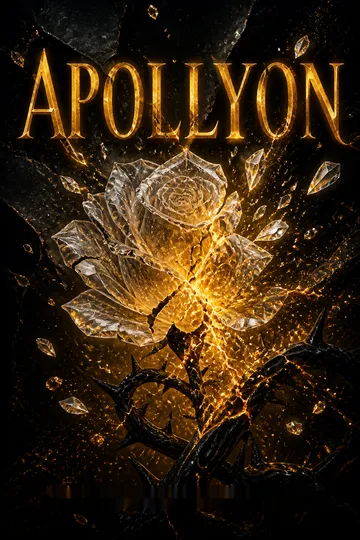
A memory’s anchorAiden gives Alex a crystal rose that she wears as a necklace. While Seth’s influence has drained the emotion from Alex’s memories of Aiden, the rose helps her reconnect those memories to the love and care that shaped them. It does not break the bond by magical force. Instead, it gives Alex a concrete focus through which she can recognize her own past and rebuild the mental boundary Seth has overwhelmed. The rose represents affection chosen freely, in contrast to the bond’s merging of need, identity, and power.
Titan-blood wards
Power held in checkThe cell’s bars and ceiling marks are reinforced with Titan blood, including blood from Phoebe, and suppress Alex’s Apollyon abilities. The wards prevent her from simply forcing her way out, while the weakening protection eventually creates an opportunity for her escape with Olivia’s help. Apollo later gives Alex a talisman made from Hermes’s helmet that hides her energy from most gods, allowing her to use power without immediately revealing her position. Both devices make supernatural power dependent on context and preparation rather than limitless force.
The four Apollyon marks
A dangerous reversalSolaris teaches Alex that she can stop Seth from taking her power by touching him and invoking four Apollyon marks in their original order. The sequence reverses the transfer that would make Seth the God Killer, but it requires Alex to approach him at close range while he remains powerful and dangerous. If successful, the power would pass to Alex, with consequences she cannot safely predict. The marks turn the climactic objective into a precise physical and linguistic action, while keeping its cost unresolved.
Covenant Series



About the Author
Other books by Jennifer L. Armentrout




Download PDF
Download EPUB
.epub digital book format is ideal for reading ebooks on phones, tablets, and e-readers.








