

Plot Summary
Prologue
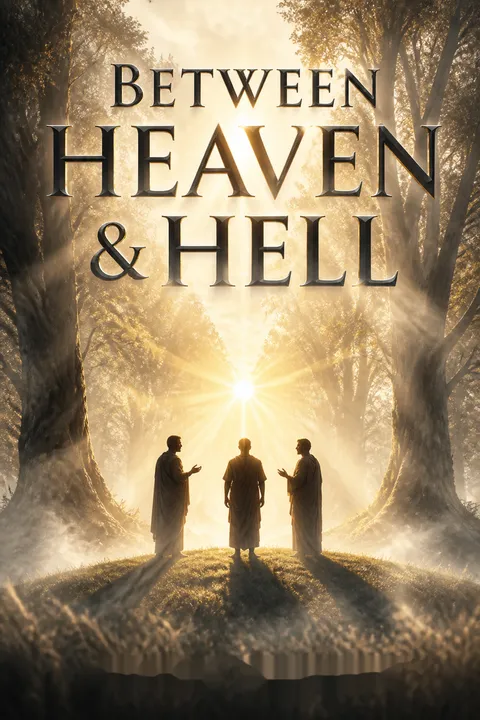
The book imagines C. S. Lewis, John F. Kennedy, and Aldous Huxley meeting beyond death on November 22, 1963, the day all three died. Its premise is not a claim about what the men actually believed or said: the author deliberately casts them as representatives of traditional Christian theism, modern humanistic Christianity, and Eastern pantheism. Their imagined meeting turns the afterlife into a setting for a dispute over Jesus, truth, and the authority of religious claims.
The opening treats coincidence as a literary invitation: three deaths become a miniature gathering of competing accounts of reality. The characters are not offered as documentary portraits, especially Kennedy, whose private beliefs the author acknowledges he is imagining. That qualification matters because the dialogue's purpose is argumentative rather than biographical. By placing the men after death, the book removes the comfort of treating heaven, judgment, and revelation as remote abstractions. They must reason about claims whose consequences may already concern them, while the reader watches philosophical positions acquire personal stakes.
Three Deaths, One Waiting Room
Kennedy arrives in an unknown afterlife and recognizes that he has died; Lewis, who has also just arrived, doubts that the pleasant place is either heaven or hell. When Huxley joins them, he declares that the place must be heaven because, in his view, every place can be heaven to an enlightened mind.
Lewis presses him on whether that makes hell impossible or part of heaven. Kennedy interrupts their metaphysical sparring to ask how any of them can know what lies beyond death. That demand shifts the encounter from competing guesses about their location to a shared problem of method: what counts as evidence for an unseen world?
The setting immediately converts abstract disagreement into a problem of orientation. Kennedy's first concern is practical, where they are and how anyone could know; Lewis answers through distinctions, while Huxley begins from a mystical intuition that location depends on perception. Their different habits are already visible in action. The afterlife also levels the participants: political office, literary reputation, and philosophical confidence cannot tell them where they stand. The scene's dramatic engine is therefore epistemic insecurity. Each man must defend not only a conclusion but the way he believes conclusions can be reached.
Hell Becomes a Choice
Kennedy objects that a loving God could not condemn people to eternal torment, especially if heaven and hell are merely rewards and punishments. Lewis rejects that moral ledger. He describes heaven as the completion of a life turned toward goodness, and hell as the completion of a will that refuses God, truth, and light.
Kennedy struggles to imagine anyone choosing misery, so Lewis suggests that the place may be purgatory, where the dead learn to read their earthly lives more honestly. Their exchange also exposes Kennedy's unease with Lewis's belief in hell: he suspects the belief reflects cruelty rather than concern. Lewis answers by distinguishing a warning about danger from a desire to see someone harmed.
Lewis's account relocates judgment from an external tribunal to the direction of a person's choices. This makes damnation less like an arbitrary sentence and more like a chosen culmination, though the severity of the consequence remains. Kennedy's resistance is ethical, but Lewis interprets it as partly psychological: the doctrine feels threatening because of what it suggests about human freedom. Purgatory then offers a provisional frame for their meeting, not as a second chance to erase decisions but as an education in their meaning. The debate begins to connect theology with self-interpretation.
The Author Enters His Story
Kennedy questions why Lewis trusts church teaching and Scripture, while Lewis describes faith as an initial trust that can be examined through reason rather than a surrender of thought.
Huxley, who shares Kennedy's suspicion of institutional authority but values his own broad mystical tradition, listens before joining the dispute. Lewis then draws a boundary around the discussion: he will defend the authority of Christ rather than settle Protestant and Catholic disagreements.
Kennedy says he accepts Jesus as a model of love but rejects the idea that authority belongs to him. Lewis asks what Jesus is, and Kennedy answers that he was an exemplary human being whom followers elevated to divine status. Their disagreement now has a precise center.
This turn distinguishes authority as power from authority grounded in identity. Lewis does not ask Kennedy to trust every institution indiscriminately; he argues that the central question is whether Jesus has the right to command belief. Kennedy's appeal to Jesus as an ethical example preserves admiration while withholding submission. That position makes the debate less about religion in general and more about the difference between following a teacher and accepting a revelation. Huxley's pause is significant too: he does not simply echo Kennedy, but waits to see whether the Christian claim can withstand scrutiny.
The Four Verdicts on Jesus
Lewis calls Kennedy's picture a modern form of an old dispute over Christ's nature, then asks them to examine what Jesus claimed about himself. He argues that if Jesus presented himself as divine, he could not be merely a good teacher: a sincere but mistaken claimant would be deluded, while a deliberate claimant would be deceitful.
Kennedy resists the stark alternatives, so Lewis reviews Gospel claims that Jesus shares the Father's identity, grants life beyond death, forgives sins, and speaks with God's unique authority. The title Son of God, Lewis argues, implies more than moral excellence. Kennedy recognizes the force of the inference but asks whether the texts accurately preserve Jesus's own words.
The argument compresses Christology into a decision about credibility. Lewis's formulation is designed to block the comfortable middle position in which Jesus remains admirable while his most radical claims are discarded. The pressure comes from a mismatch between the scope of the reported claims and the modest role Kennedy wants to assign their speaker. Yet the argument depends on two unsettled questions: whether Jesus made those claims and whether the alternatives exhaust the possibilities. Huxley's later intervention grows directly from this vulnerability. The section's force lies in forcing the dispute into the open, not in making every premise self-evident.
A Sage Unlike the Others
To support the claim that Jesus was neither deluded nor deceitful, Lewis compares him with recognized sages such as Buddha, Socrates, and Moses. He identifies practical wisdom about human nature, self-giving love, and creative unpredictability as marks of a sage. By contrast, Lewis describes people with a delusion of divinity as self-absorbed, unoriginal, and unable to respond to others as distinct persons.
Kennedy agrees that Jesus belongs among the sages, but that classification cannot settle the problem because Jesus also claimed divine status. Lewis places him in a category no other sage occupies. Kennedy admits he cannot easily dismiss the case, though he still does not feel convinced by it.
Lewis's defense shifts from syllogism to character judgment. Instead of treating Jesus's claim in isolation, he asks whether the person presented in the Gospels resembles a deluded claimant. This makes trust relational: a hearer's assessment of a teacher's wisdom and care becomes part of the evidence. The move is persuasive within the dialogue because Kennedy accepts the portrait of Jesus as a sage, but it also exposes a methodological tension. The argument relies on interpreting a textual portrait before the reliability of that portrait has been established. The debate's next stage tests precisely that dependency.
Truth Against Comfort
Kennedy asks why an apparently unanswerable argument should compel belief if he remains unconvinced. Lewis separates the proof's logic from the will's resistance and challenges Kennedy to prefer truth even when it costs comfort. He recalls his own earlier hostility toward a God who could enter human life and challenge human autonomy, admitting that he had once wanted to remain his own master.
Kennedy does not confess that he shares this motive, but he agrees that self-deception can shape reasoning and resolves to examine himself more seriously. Before he can pursue that reflection, Huxley interrupts. He argues that Lewis's case has an escape: perhaps Jesus never claimed divinity at all.
The dialogue turns inward without reducing every disagreement to bad faith. Lewis presents motive as a possible influence on reasoning, not a substitute for examining evidence, and uses his own history to make the accusation less one-sided. Kennedy's discomfort marks a change in the encounter: he is no longer only testing Lewis's premises but considering how his own preferences might affect judgment. Still, the timing matters. Huxley insists that introspection cannot repair an argument whose historical foundation is uncertain. The book thus resists a simple victory by rhetoric and reopens the question at the level of evidence.
The Gospel Texts on Trial
Huxley argues that Lewis cannot use Jesus's reported claims unless the Gospels reliably preserve them. Lewis compares Gospel testimony with ordinary historical records, asking why readers accept accounts of Caesar while dismissing Christian accounts because they include miracles.
Huxley answers that miracle stories make the Gospels mythical. Lewis identifies the circularity: Huxley rejects the texts because they report miracles, then calls the reports mythical because miracles cannot happen.
He also points to the Gospels' names, dates, mundane details, and psychological observations as features unlike conventional legends. Huxley's challenge is weakened but not resolved; he says the literary case remains inconclusive and offers another interpretation that can accept Jesus's divinity claim.
This dispute exposes how prior assumptions shape judgments of evidence. Lewis argues that a naturalistic rule against miracles can predetermine the classification of a text before its form is examined. Huxley, however, raises a legitimate distinction between a report and the event it reports, which the dialogue does not settle through textual scholarship alone. The argument therefore moves from history toward metaphysics: the same narratives can be treated as testimony or myth depending on what a reader believes possible. Huxley's next proposal avoids denying the reported words and instead changes what he thinks they mean.
The Guru Hypothesis
Huxley proposes that Jesus may have claimed divinity in the sense used by Eastern mystics: not as a unique Creator, but as one who recognizes that all beings share the divine. He presents Jesus as a Jewish teacher of the perennial philosophy, whose followers mistook mystical insight for a claim of exclusive divine identity. Lewis asks whether this view fits the actual teachings attributed to Jesus.
Their first contrast concerns God and the world: Huxley's ultimate reality is an impersonal unity, while Lewis says Jesus speaks of a personal God distinct from creation. The second concerns time. Huxley's mysticism treats time as ultimately unreal; Lewis argues that biblical faith depends on real events and a future shaped by God's promises.
Huxley's proposal is not simply disbelief; it is an act of translation that preserves Jesus by absorbing him into a larger religious synthesis. Lewis objects that this translation may erase the very differences that make the traditions intelligible. Their disagreement concerns more than vocabulary: if God is identical with all things, creation, history, and personal relationship change meaning. By using the Gospels as common ground, the men avoid debating mystical experience in the abstract and instead ask whether Jesus's recorded teaching supports Huxley's interpretation. The hypothesis now faces a test of fit rather than a dispute over whether the words were spoken.
Six Divides Remain
Lewis completes his case by contrasting Jesus's teaching with pantheism on six fronts: God is personal, creates a distinct world, reveals himself through public events, is morally good, offers divine life by grace, and permits rejection with the consequence of hell. Huxley treats these divisions as surface language masking an inner unity, but Lewis argues that the interpretation has no clear textual basis.
It also makes Jesus an ineffective guru, since his public teaching would have steered followers away from the supposed mystical truth for centuries. Huxley pushes back, and Kennedy notices that the sky has brightened above them. The light comes from overhead, not the horizon, as their argument seems to reach a pause.
The six contrasts make the debate's deepest disagreement visible: whether reality is ultimately unified or structured by real relationships and distinctions. Lewis treats difference as essential to love, moral choice, and historical revelation; Huxley sees it as a provisional veil over unity. Their conflict is therefore not a minor interpretive dispute but a clash over what persons, actions, and salvation can mean. The unexplained dawn does not settle the argument. Instead, it gives the scene a physical counterpart to an intellectual limit: the speakers have reasoned as far as they can, yet something appears to approach that their theories cannot contain.
Dawn Without a Verdict
Huxley returns to the reliability of the New Testament, arguing that later writers may have added Jesus's divine claims. Lewis answers that this theory makes the writers either too ignorant to understand their Jewish tradition or deliberate fabricators who gained no obvious advantage from a story that brought persecution.
He then asks what might lead modern readers to soften Jesus's distinctiveness. Lewis suggests that social belonging can make exclusive religious claims uncomfortable, while Kennedy warns him against judging others' motives too quickly.
Lewis includes himself among those vulnerable to dishonesty and recalls a prayer against trusting clever arguments more than God. As the light intensifies, the three turn toward it; Lewis understands it as Christ's arrival, but the book leaves their response unresolved.
The ending refuses the clean closure of a debate won by one side. Lewis offers a final psychological explanation for resistance, but the exchange also exposes the danger of using motive analysis to discredit an opponent. His admission that he too can misuse argument partially answers that danger: self-critique must accompany critique of others. The approaching light then changes the scale of the scene. The question is no longer only which account of Jesus survives scrutiny, but whether the speakers will submit to what they take to be truth. The threshold remains open, making response, rather than victory, the final dramatic issue.
Epilogue
The epilogue turns the imagined meeting into an appeal to readers. It urges people to begin the judgment of belief with themselves, to admit error when new truth exposes it, and to treat intellectual honesty as a willingness to change.
The author presents Christ as more than a subject of debate: divine life is described as an entrance into human life that can remake a person from within. The final image is not of a finished argument but of minds and lives being broken open enough to grow.
The epilogue reframes the dialogue's unresolved ending as an invitation rather than a failure of plot. The men have not supplied a recorded verdict about what they chose; the reader instead inherits the question of whether reasoning will lead to changed commitments. The language of new life also gathers the book's central tensions: truth must be public enough to make claims, personal enough to demand a response, and disruptive enough to alter the person who accepts it. By insisting that judgment begin at home, the conclusion restrains the temptation to use apologetics only as a weapon against other people's beliefs.
Analysis
The book stages apologetics as a conflict among three ways of deciding what counts as real. Lewis grounds belief in revelation and argues that reason can test, clarify, and defend it. Kennedy begins from ethical admiration and human judgment, while Huxley grants spiritual experience but interprets religious differences as outer forms of an underlying unity. Their disagreement over Jesus therefore becomes a disagreement about personhood, history, morality, and the possibility of salvation.
The dialogue's central strength is its insistence that interpretations have consequences. If Jesus is only a teacher, his teachings may inspire, but they do not necessarily supply divine life; if God is identical with the world, history and separation from God take on different meanings than they do in Christian theism. The appended world without Easter makes this contrast concrete by showing a faith left with memory and ideals but uncertain of power over death.
The work also treats belief as more than an intellectual verdict. Lewis argues that desire can steer thought, and his admission of his own former resistance prevents the issue from belonging only to his opponents. Yet the dialogue leaves a productive tension: psychological explanations of disbelief may reveal self-protection, but they can also risk replacing evidence with judgments about motive. The final light does not erase that tension or record a conversion. It places all three speakers before a possible encounter and leaves the reader with the same demand the book has made throughout: examine both the argument and the will that responds to it.
Review Summary
Between Heaven and Hell is a fictional dialogue between C.S. Lewis, JFK, and Aldous Huxley, who all died on the same day. The book explores Christian apologetics through their conversation in the afterlife. Readers appreciate the engaging format and Lewis's arguments, but some find it biased towards Christianity. Critics note the characters don't always sound authentic, and the dialogue can be one-sided. Despite these criticisms, many readers find the book thought-provoking and a good introduction to Christian philosophy and apologetics.
People Also Read





Characters
C. S. Lewis
The Christian questionerIn the dialogue's imagined version, Lewis represents traditional Christian theism and approaches disagreement through patient distinctions and pointed questions. He treats faith as trust that invites rational investigation, not as permission to stop thinking. His central concern is whether Jesus is merely an exemplary man or God incarnate, and he follows that issue through history, theology, and psychology. Lewis is confident in argument but not presented as immune to self-deception: he recalls his own resistance to a God who could intrude on human independence. That admission gives his rigor a personal cost. He wants truth to prevail over the debater's wish to win, and he repeatedly turns a question back toward the motives of the person asking it.
John F. Kennedy
The humanist skepticThe book openly imagines Kennedy as a representative of modern humanistic Christianity, rather than claiming to reproduce his private theology. He values Jesus as a moral exemplar but is wary of supernatural claims, church authority, and rigid either-or reasoning. His political experience makes him alert to the misuse of power, which shapes his suspicion that religious authority can become a way of surrendering independent judgment. Kennedy is not a passive foil: he asks how anyone can know what lies beyond death, presses Lewis to justify his premises, and recognizes the psychological danger of self-deception. His temperament favors humane complexity, yet the debate pushes him to consider whether complexity can sometimes conceal an unwillingness to face a difficult conclusion.
Aldous Huxley
The mystical challengerHuxley represents the book's version of Eastern pantheism and the idea that mystical experience reveals a unity beneath the differences among religions. He is open to spiritual reality but distrusts claims that one tradition possesses exclusive authority or that Jesus's divinity must mean a unique incarnation. At first he lets Kennedy and Lewis test their positions, then intervenes with challenges about Gospel reliability and the meaning of Jesus's claims. His alternative is not to dismiss Jesus but to understand him as a Jewish expression of a universal mystical wisdom. Huxley's wit and intellectual flexibility make him more than a second skeptic; he offers a coherent competing framework, though Lewis argues that the framework conflicts with Jesus's recorded teachings.
Jesus
The disputed centerJesus does not participate in most of the dialogue as a speaking character; the three men examine what he said and what those sayings mean. Lewis understands him as God entering human history, Kennedy as a supremely wise human teacher, and Huxley as a mystic whose language expresses a universal unity. His reported claims to forgive sins, give life, and speak with divine authority make these interpretations impossible to treat as interchangeable. The Gospel portrait is therefore the central evidence and the object of competing loyalties. In the book's Christian framework, Jesus is not merely the answer to a historical puzzle but the person toward whom the entire debate is moving.
Mara
The grieving ChristianMara appears in the appendix's imagined world without Easter, where she meets Rabbi Nathan while carrying a Christmas tree. She is a Christian trying to preserve Jesus's memory while living with uncertainty about miracles, resurrection, and the source of moral strength. Her attachment to Jesus is sincere, but she cannot explain how his ideals might become a living power rather than an unreachable standard. Through her questions, the appendix gives emotional form to the book's central concern with whether Christianity depends on a real resurrection.
Rabbi Nathan
The Jewish interlocutorRabbi Nathan is an elderly Jewish teacher in the appendix's counterfactual setting. His concern for Mara begins with practical kindness, but his questions expose the gap between preserving Jesus as an ideal and believing that God acted in history. He represents a tradition grounded in public events, scripture, and hope for a Messiah, while also acknowledging the difficulty of evil and the need for divine help. His patient questioning draws Mara into stating what she longs for, even when she cannot yet make her beliefs cohere.
Plot Devices
The afterlife meeting
Makes belief immediateThe imagined meeting place removes the debate from ordinary earthly circumstances and gives its participants direct reason to care about claims concerning death, heaven, and hell. Kennedy cannot dismiss the afterlife as a remote abstraction once he finds himself in an unknown realm; Lewis and Huxley must also admit that their theories do not automatically tell them where they are. The setting functions as a pressure chamber for ideas. It does not prove any doctrine by itself, but it makes each position answerable to the possibility that its consequences are real.
Socratic cross-examination
Turns claims into choicesLewis advances the discussion by asking each man to define terms, identify assumptions, and follow conclusions rather than retreat into labels. The method gives Kennedy room to challenge the premises and lets Huxley introduce alternatives, so the debate develops through objections instead of speeches alone. Questions also reveal motives: a dispute about hell becomes a question about justice, and a dispute about proof becomes a question about whether a person wants truth. The method is dramatic because every answer narrows the available positions, even when it does not compel agreement.
The four-way test
Presses Jesus's identityLewis's argument asks readers to classify Jesus as an ordinary person, a trustworthy sage, a deluded claimant, or the divine figure he is said to claim to be. Its familiar core contrasts divine truth with deliberate deceit or sincere delusion, while the sage comparison supplies a character-based test of credibility. The device creates the dialogue's central pressure by challenging the compromise that Jesus was only a good teacher. Its force depends on whether the Gospel claims are reliable and whether the categories are exhaustive, questions Huxley later uses to challenge Lewis's conclusion.
The approaching light
Makes argument a thresholdThe sky brightens while the men are still debating, and its unexpected light gives the final scene a physical event that neither can explain within the conversation. The light does not function as a proof that resolves every disputed premise. Instead, it shifts the stakes from interpreting Jesus at a distance to facing the possibility of his presence. Lewis reads its approach in Christian terms, while the other men are left at the edge of response. The image makes the ending suspenseful without claiming that any character has definitively accepted the conclusion.
The world without Easter
Tests resurrection's consequencesA separate appendix imagines a world in which Christianity has survived as a faint memory but Jesus did not rise bodily from the dead. In that setting, Mara's uncertain faith meets Rabbi Nathan's insistence that religious hope concerns God's actions in history, not only ideals or inward symbols. Their exchange tests the practical consequences of removing the resurrection: whether Jesus's moral teaching can supply power, whether sin can be forgiven, and whether death can be overcome. This counterfactual is distinct from the main afterlife dialogue, but it dramatizes the book's claim that Easter is not an optional metaphor.
About the Author
Other books by Peter Kreeft
Download PDF
Download EPUB
.epub digital book format is ideal for reading ebooks on phones, tablets, and e-readers.








