

Key Takeaways
Study theology as a map for living toward God, not merely knowing about God.
A map, not an archive. Kreeft presents Aquinas’s theology as practical guidance for becoming holy, not as information to collect. Its destination is union with God, understood as the completion of human happiness. Theology therefore joins contemplation, the search for truth, to action, the shaping of a life around that truth.
Reason has a horizon. Human reason can infer that God exists and consider what follows, but it cannot comprehend God’s essence. Revelation supplies a guide beyond reason’s reach, while reason helps readers understand and live that guidance. Kreeft’s selection of Aquinas’s questions aims to show how abstract ideas about God, freedom, and goodness bear on ordinary choices.
The map metaphor captures a useful distinction between understanding a belief and being formed by it. In practical philosophy, knowledge matters partly because it helps people deliberate about ends, not just select efficient means. The account also has a clear boundary: revelation can function as authoritative guidance for believers, but it cannot serve as shared evidence for every reader. That limitation need not erase the ethical questions Aquinas raises about purpose, responsibility, and the shape of a good life.
Stop asking finite goods to satisfy an infinite desire.
Good things have ranks. Aquinas distinguishes goods that are good in themselves, goods that are pleasant, and goods that are useful as means. Wealth, honor, fame, power, bodily health, and pleasure can answer real needs, but none can provide complete happiness. Even virtue is not the final destination, because the human soul remains oriented beyond itself.
The final good. The Beatific Vision means direct knowledge of God in Heaven. Aquinas argues that only God, the source of all goodness, can fulfill the human desire for complete truth and goodness. Created things are not worthless distractions: they reflect real perfections. The danger is expecting a finite reflection to do the work of the reality it reflects.
This framework distinguishes enjoyment from fulfillment without treating ordinary pleasures as shameful. It resembles a familiar problem in philosophy of well-being: immediate satisfaction and a life judged worthwhile are related, but not identical. The stronger claim, that human desire is ultimately directed toward God, depends on Aquinas’s account of human nature and cannot be established merely by observing that people want more. Still, the distinction helps readers ask whether a desired good meets a need or has been asked to become a whole life.
Treat chosen sin as worse than pain suffered unwillingly.
Evil damages the good. Aquinas argues that everything God creates has being and is therefore good; evil is a real defect or corruption in something good, not a rival substance created by an evil power. Blindness, for example, is a lack in a good eye. Sin is a disorder of the will, while pain is a harm suffered by the body or feelings.
The Cross reframes suffering. In Kreeft’s account, Christ’s crucifixion shows how an evil act can be made the occasion of a greater good. This does not explain why any particular person suffers, and it does not make suffering desirable. It distinguishes enduring pain from choosing to harm oneself or another, while leaving room for compassion and relief.
The distinction between suffering and wrongdoing is morally important: it prevents pain from becoming the only measure of harm. It also supports care for people in distress without treating them as blameworthy. The theological claim that providence brings good from evil can offer hope, but it should not be used to explain away abuse, atrocity, or preventable suffering. A sound application holds both ideas together: evil does not have the final word, and people still have duties to resist and relieve it.
Train reason to lead passion, and freedom becomes more than impulse.
Freedom needs judgment. Natural law, in Aquinas’s specialized sense, is the moral order that human reason can recognize in human nature. Reason can compare particular attractions against a broader idea of the good. That capacity makes human choice possible, but the appetites and emotions can resist reason rather than obey it automatically.
Virtue is practiced. The four cardinal virtues are prudence, justice, temperance, and fortitude. Prudence judges what to do; justice orders dealings with others; temperance moderates desire; fortitude sustains action despite difficulty. Repeated choices form habits, so moral change is gradual. Aquinas does not ask people to hate emotion. He asks them to educate it, so feelings can support rather than sabotage sound judgment.
This view avoids two common reductions of human behavior: treating people as machines driven by causes, or treating every impulse as an authentic command. Contemporary moral psychology likewise gives attention to the interaction of deliberation, emotion, and habit, even when it uses different explanations. Aquinas’s account is strongest when reason means practical understanding, not cold calculation. Its challenge is that judgments about human nature can be contested, so claims about what reason requires need argument rather than mere appeal to nature.
Make love visible through help, forgiveness, and honest correction.
Charity means willing good. In Aquinas’s technical vocabulary, charity is not simply affection or generosity. It is love that seeks another person’s true good and, in its Christian form, participates in God’s love. That is why love must become action: feeding someone, forgiving an injury, teaching, comforting, or carefully correcting harmful behavior.
Care includes truth. The instruction to love a sinner does not require approval of the sin, which Aquinas treats as damage to the person. Correction is therefore a possible act of care, but its timing and manner matter. Public wrongdoing may require public warning to protect others; private faults generally call for private correction. Mercy goes beyond what justice demands, but it does not pretend justice is unnecessary.
This account connects compassion with responsibility. Care is not merely a warm attitude; it can include material assistance, boundaries, and difficult speech. That has affinities with restorative approaches that aim to repair harm while preserving a person’s dignity. The danger is that a corrector may mistake personal certainty for moral authority. Aquinas’s emphasis on prudence, restraint, and concern for the person’s welfare offers a needed check: correction that humiliates or controls may serve the corrector more than the one being corrected.
Order ordinary work toward one end, and daily life gains coherence.
Purpose links small acts. Teleology is explanation in terms of an end or purpose. Aquinas argues that human actions, whether or not a person is consciously thinking about God, are directed toward some final good. The task is to recognize the end that organizes those choices rather than letting status, pleasure, or convenience take its place.
Contemplation belongs in life. Kreeft presents the practice of God’s presence as attention to God in ordinary knowledge, work, nature, and relationships. Science can be understood as learning about a world created by God; routine acts can be offered toward a larger purpose. This does not make every task sacred by magic. It gives daily work a direction, while contemplation keeps action from becoming mere busyness.
A unifying purpose can make a crowded life intelligible, much as a narrative gives separate events a shared meaning. The framework also resists the modern assumption that only measurable outputs count as worthwhile. A caution follows: if every act is valued only as a step toward a final goal, intrinsic goods such as friendship, play, and scientific curiosity can be diminished. Aquinas’s own classification of pleasant and virtuous goods helps prevent that mistake: some things are worth enjoying, not merely using.
Receive grace through bodily signs, especially the Eucharist.
A sacrament acts as well as signifies. In Catholic theology, a sacrament is a visible, material sign that conveys sacred grace. That fits Aquinas’s view of human beings as bodily and spiritual, gaining knowledge through the senses. Baptism uses water; the Eucharist uses bread and wine. Transubstantiation is the Catholic doctrine that, at consecration, bread and wine become Christ’s Body and Blood while their sensory appearances remain.
The Eucharist gathers the story. Aquinas describes it as recalling Christ’s Passion, expressing present communion with Christ and the Church, and anticipating future glory. It is the central sacrament because, in Catholic belief, it contains Christ himself, not only a symbol of him. Kreeft also stresses that God’s grace is not confined to sacraments, even though the sacraments are the Church’s appointed means of receiving it.
The account makes an embodied claim about religion: belief is not only thought, but also touch, taste, gesture, and shared ritual. Those forms of practice can give a community a durable identity and make abstract commitments concrete. The Catholic claim that the Eucharist is Christ’s actual presence, however, is a matter of doctrine and faith, not a conclusion that sensory inspection can verify. Readers can distinguish appreciation of ritual’s human significance from agreement about what the ritual metaphysically accomplishes.
Repent by changing direction, not merely by feeling remorse.
Repentance is a choice. Aquinas distinguishes sorrow for sin from repentance itself. Feelings of regret may help, but repentance is an act of the will: turning away from sin and intending amendment. A person can feel bad about consequences while still planning to repeat the action; that is not genuine repentance.
Grace enables a free response. Grace means God’s help and, in its deepest sense, God’s life shared with the soul. Aquinas holds that this help comes first but does not cancel human freedom. Confession gives repentance a sacramental form, and repeated failure does not prove earlier repentance was false. Yet a deliberate plan to continue wrongdoing contradicts repentance. The practical test is whether the person is willing to make a real change, not whether the person can produce the right emotion on demand.
This distinction is useful beyond religious practice because it separates remorse from behavioral commitment. Apologies become credible when paired with changed conduct and repair, not simply intense emotion. The framework also avoids making feelings the sole test of sincerity, which matters for people whose emotional responses are muted or shaped by distress. At the same time, responsibility should be assessed with attention to coercion, addiction, and impaired capacity. A person’s freedom is real in this account, but not every choice is equally unconstrained.
Prepare for eternal life by treating bodies and neighbors as sacred.
Salvation is embodied. Aquinas rejects the idea that the soul’s final happiness means escaping the body. The resurrection restores the whole person, and Christian hope includes a renewed creation. The body matters now because it is part of the person, not disposable equipment. The same principle grounds his account of marriage, care for the dead, and respect for human life.
No one journeys alone. The communion of saints is the spiritual bond among Christians across earthly life, Purgatory, and Heaven. Purgatory, in Catholic teaching, is purification for those destined for Heaven, not a second route out of Hell. Prayer and good works can aid others, including the dead, because charity joins people in a shared spiritual life. The future hope therefore shapes present duties toward neighbors.
This ending resists two powerful cultural instincts: treating the body as either a possession to optimize or an obstacle to transcend, and treating death as a private event that ends every obligation. Its emphasis on embodied personhood supports practical respect for care, disability, grief, and the dead. The afterlife claims remain theological rather than empirically testable. Even without settling them, readers can see the ethical consequence: a person’s dignity does not depend on productivity, independence, or visible strength.
Analysis
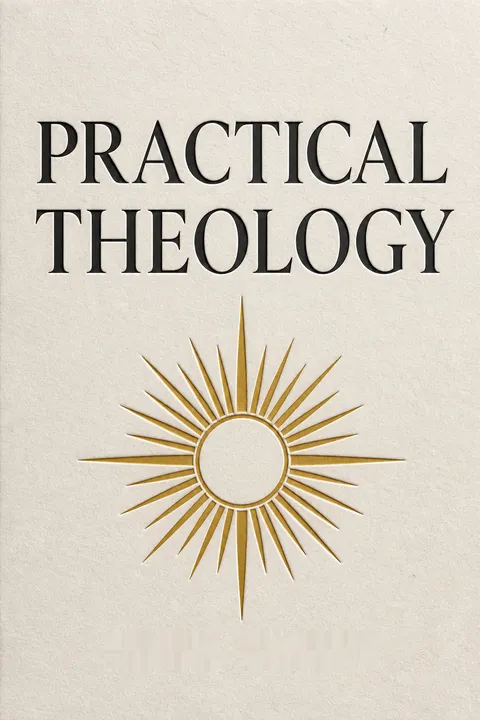
Practical Theology is a devotional anthology organized as questions, not a single linear argument. Its 358 selections move from God and human knowledge through freedom, virtue, Christ, sacraments, death, and the afterlife. The architecture itself makes a claim: metaphysics is practical because beliefs about being, purpose, and personhood shape choices. Kreeft’s central interpretive move is to read Aquinas not as a remote system builder but as a spiritual director whose distinctions are meant to redirect the will.
The strongest connective thread is participation. Creation participates in divine goodness; reason participates in divine order; grace enables participation in divine life; sacraments join bodily signs to that life; charity joins persons to one another. This gives the book unusual coherence across topics that could otherwise look like a grab bag. Its account of human beings is also consistently embodied. The body is not a disposable shell, and religious life is not reduced to private belief.
The method has limits. Kreeft often moves quickly from a Thomistic premise to a strong moral conclusion, especially about natural law, sexuality, providence, and ecclesial authority. Readers who reject the premise that nature has built-in purposes will not find those conclusions established by assertion. His appeal to providence also needs pastoral restraint: saying that suffering can serve a good does not reveal why a particular person suffered, and should not replace efforts to prevent harm. The book’s best use is therefore neither uncritical assent nor dismissal. It offers a rigorous map of how Catholic theology connects truth, freedom, love, institutions, and hope, while inviting readers to examine which premises they accept and what follows from them.
Review Summary
Practical Theology by Peter Kreeft offers spiritual direction from St. Thomas Aquinas, presenting 358 insights from the Summa Theologiae. Readers appreciate Kreeft's clear explanations of complex theological concepts, making Aquinas accessible to laypeople. The book is praised for its depth, humor, and practical applications. Many found it best read slowly, one topic per day, as a devotional. While some struggle with Catholic-specific doctrines, most reviewers highly recommend it for those seeking to deepen their understanding of Christian theology and grow in holiness.
People Also Read










Glossary
Beatific Vision
direct vision of GodAquinas’s term for the ultimate happiness of the blessed in Heaven: knowing God directly, rather than only through created things, faith, or analogy. It is not merely intellectual information. The vision unites knowledge, love, and joy, and completes the human desire for truth and goodness.
Natural law
reason’s share in moral orderThe moral order that human reason can recognize in human nature and its purposes. Aquinas describes it as the rational creature’s participation in eternal law, meaning divine reason. Its basic precept is to pursue good and avoid evil, while further judgments apply that principle to human needs and actions.
Charity
supernatural love willing goodIn Aquinas, charity is more than a feeling of affection or an act of generosity. It is the theological virtue by which a person loves God and wills the true good of others for God’s sake. Charity is also described as participation in divine love and the life of God in the soul.
Sanctifying grace
God’s life in the soulThe transforming gift by which a person participates in divine life. In Kreeft’s presentation of Aquinas, sanctifying grace is not merely God’s favorable attitude or external assistance. It is God’s presence in the soul, making a person capable of supernatural life, charity, and eventual union with God.
Teleology
explanation by purposeThe account of things in terms of the ends or purposes toward which they are directed. Aquinas applies teleology both to human choices and to nature: actions aim at goods, and natural beings have characteristic activities. His ethics depends on the claim that human nature has purposes reason can recognize.
Sacrament
sign that conveys sacred graceA sacred, sensible sign instituted by Christ that signifies and, in Catholic teaching, effects what it signifies. Sacraments join visible actions or materials, such as water, bread, and wine, to spiritual effects. They suit human beings because human knowledge ordinarily begins through bodily senses.
Transubstantiation
bread and wine become ChristThe Catholic doctrine that in the Eucharist the substance of bread and wine becomes the Body and Blood of Christ, while the sensory appearances remain. In Aquinas’s account, this is a supernatural change caused by divine power, not a change detectable through ordinary observation.
Communion of saints
shared spiritual life across the ChurchThe spiritual unity of Christians across earthly life, Purgatory, and Heaven. Aquinas holds that members of Christ’s mystical body can aid one another through prayer and works of charity. The idea grounds practices such as praying for the dead and asking saints in Heaven to intercede.
Purgatory
purification before heavenly gloryIn Catholic teaching presented by Aquinas, Purgatory is the postmortem purification of those who are destined for Heaven but are not yet fully purified. It is not Hell and does not offer a new choice of salvation after death. Its purpose is to complete the removal of sin’s remaining effects.
Cardinal virtues
four foundations of moral characterAquinas’s name for prudence, justice, temperance, and fortitude. Prudence judges what should be done; justice orders relations with others; temperance regulates desire; and fortitude sustains action through difficulty. They are called cardinal because other moral virtues depend on these central capacities.
About the Author
Other books by Peter Kreeft



Download PDF
Download EPUB
.epub digital book format is ideal for reading ebooks on phones, tablets, and e-readers.








