

Key Takeaways
Recover moral reality before technological power outruns self-command
Power needs moral direction. Kreeft argues that modern societies have gained extraordinary control over nature while losing confidence about what is good. When morality becomes personal preference or whatever a society happens to approve, ethical debate can continue without shared standards for judging its conclusions. Technical skill then grows faster than the character needed to use it responsibly. The book's central warning is not that technology is evil, but that power without self-restraint puts everyone at risk.
Morality is a map. Kreeft frames human life as a choice between ways of living that lead toward or away from human flourishing and, in his Christian account, God. Virtue matters because it trains people to choose well, not merely to discuss what choices might be acceptable.
The link between capability and restraint remains powerful. Modern institutions often build rules around what can be done before deciding what ought to be done, a gap visible in debates about weapons, biotechnology, and artificial intelligence. Still, moral disagreement does not automatically mean that people deny every shared good. Secular traditions also defend dignity, fairness, and harm reduction. Kreeft's strongest challenge is therefore practical: what habits and institutions make those commitments durable when convenience, profit, or fear push the other way?
Reconnect the Greek search for reason with the Hebrew demand to act
A divided inheritance. Kreeft tells Western history as a struggle between two strengths. Greek philosophy emphasizes reasoned understanding of virtue; the Hebrew tradition emphasizes fidelity, choice, and obedience in practice. Medieval Christianity, in his account, brought these strands into a working unity. The Renaissance and Reformation then pulled them apart in different directions, while the Enlightenment elevated calculation and Romanticism elevated feeling.
Return without nostalgia. Kreeft uses this history to explain a present-day imbalance: people may analyze ethics endlessly while lacking shared convictions that guide action. His remedy is not to copy an earlier century, but to recover the combined work of thinking clearly, willing the good, and acting faithfully. The goal is an integrated character, not a preference for head or heart.
This history is best treated as an interpretive map, not a complete account of Western thought. Greek philosophy includes practical and political concerns, while Hebrew texts contain deep reflection as well as commands. The distinction still helps diagnose a familiar failure: insight alone does not guarantee conduct, and action without reflection can become zeal without judgment. Contemporary moral psychology similarly distinguishes knowing a norm from being motivated and equipped to follow it. The synthesis is more useful than choosing one side.
Use justice, prudence, courage, and temperance as tests of character
Virtue is inner health. The four cardinal virtues are justice, prudence, fortitude, and temperance. Kreeft calls them cardinal because other virtues depend on these central habits. Prudence helps a person judge what is fitting; fortitude sustains action despite fear; temperance governs appetite; and justice orders the self and its relations with others. Justice is more than paying debts: it also means bringing reason, will, and desire into a sound relationship.
A classroom rediscovery. Kreeft describes students who tried to invent an ethical system from scratch. They independently arrived at ideas associated with Plato's Republic, including justice as harmony, courage as moral resolve, and moderation as freedom from greed. The story suggests that old moral frameworks can feel relevant when they answer enduring questions about what people need to live well.
The virtues work as a diagnostic set because each corrects a different failure: poor judgment, fear, impulsiveness, or unfairness. Modern psychology often studies these traits in separate domains, such as self-regulation or moral reasoning, while virtue ethics asks how they form a coherent person. That broader view is illuminating, though virtue labels do not settle every dilemma. Justice can conflict with mercy, and courage can serve destructive causes. The virtues need practical wisdom to interpret one another in context.
Let faith, hope, and love carry natural virtue beyond self-reliance
A further horizon. Kreeft distinguishes the cardinal virtues from the theological virtues: faith, hope, and charity, or love. Natural virtue can make a person more just, wise, courageous, and self-controlled, but it cannot, in his Christian account, bring salvation. It prepares the ground for a relationship with God, while grace enables a life that exceeds what unaided effort can achieve.
Three connected acts. Faith is not only agreement with religious propositions; it is personal commitment to God. Hope trusts God's promises about the future. Agape, the Greek term for self-giving love, seeks another's good without treating the other as a tool for personal satisfaction. Kreeft presents these as mutually supporting: faith opens the relationship, hope gives it direction, and love becomes its visible fruit.
The distinction between moral effort and grace prevents a simplistic choice between earning goodness and waiting passively for it. It also invites a broader question: what enables people to act well when habits and intentions are not enough? Religious believers answer through grace; others may point to relationships, institutions, or shared commitments. These explanations are not identical, but they recognize dependence beyond individual willpower. The account is specifically Christian, and its theological claims should not be mistaken for conclusions every reader must accept.
Seek blessedness, not passing happiness, through the Beatitudes
A different kind of good. Kreeft reads the Beatitudes, Jesus' blessings in the Sermon on the Mount, as a guide to blessedness rather than a promise of pleasant feelings. Blessedness is an objective and enduring good grounded in God, so grief or hardship does not automatically cancel it. The sermon is not merely an ideal society's policy manual or advice reserved for spiritual heroes. Kreeft sees it as the shape of a new life made possible through Christ.
Virtue against vice. The Beatitudes also provide a counter-map to the seven deadly sins: humility confronts pride, mercy confronts greed, mourning opposes envy, meekness and peacemaking oppose wrath, hunger for righteousness opposes sloth, purity opposes lust, and fidelity under persecution opposes gluttonous self-indulgence. Together, they describe a character formed by allegiance to God.
The distinction between feeling happy and living well is philosophically useful. A person can experience sorrow while acting with courage, love, or integrity, and a comfortable life is not necessarily a meaningful one. The Beatitudes press that distinction into a religious claim about what ultimately counts as flourishing. Yet describing hardship as compatible with blessedness must not be used to excuse preventable suffering or silence people seeking justice. A spiritual interpretation of pain should deepen care for sufferers, not diminish it.
Replace pride's self-rule with the receptive strength of humility
Humility is not weakness. Kreeft treats pride as the root vice because it places the self above God and turns life into a contest for control. Humility, or poverty of spirit, is not self-hatred or timidity. It is recognizing dependence and becoming willing to receive what the self cannot command. In this account, the poor in spirit are free from the demand to make worldly success their ultimate measure.
Let go of the grip. Kreeft uses the image of a monkey unable to withdraw its fist from a narrow opening because it will not release a piece of food. The point is that attachment can imprison the person holding on. Detachment does not condemn material things; it loosens their power to dictate identity and choice, leaving room for love, generosity, and trust.
Humility is often confused with low self-esteem, but the distinction matters. A person can recognize real strengths without claiming total independence or superiority. Research on intellectual humility likewise suggests that acknowledging limits can improve learning and dialogue. The harder question is how to distinguish humility from submission to abusive authority. Kreeft's focus on God rather than worldly power gives the virtue a moral center, but in practice, humility should not require surrendering basic dignity or refusing to challenge injustice.
Treat wealth as a means to give, not a shield against fear
Greed promises safety. Avarice is excessive desire for possessions, whether the urge is to acquire more or to keep what one already has. Kreeft argues that money is especially tempting because it can buy many things and appears to protect against uncertainty. The error is not using or enjoying possessions; it is treating them as the final source of security and happiness.
Giving changes the relationship. The alternatives are contentment and generosity. Kreeft points to Saint Francis embracing poverty and to a couple deliberately damaging a prized new car to weaken their anxious attachment to it. More centrally, he describes mercy as costly forgiveness: when a real debt is released, someone bears the loss. In Christian theology, Christ's sacrifice is the fullest example. Mercy exceeds justice without pretending the debt was imaginary.
The distinction between wealth as a tool and wealth as emotional insurance remains relevant in consumer economies, where advertising repeatedly links possessions to safety and status. Giving can also create trust and reciprocal care, benefits that are social as well as spiritual. Still, voluntary simplicity is not a universal prescription, and security is a legitimate need, especially for people living with scarcity. The moral question is not whether anyone should want resources, but whether acquiring and protecting them crowds out obligations to others.
Turn envy into shared sorrow and gratitude for another's good
Envy resents another's good. Kreeft distinguishes envy from aspiration. Admiring someone's skill and hoping to grow is not envy; wishing that person had less is. Envy makes another's happiness feel like one's own loss, even when the good in question could be shared. Kreeft contrasts it with mourning: instead of resenting another's joy, a person can share another's suffering and remain grateful for the good that exists.
Sorrow can hold hope. The Beatitude about mourners does not claim that pain feels pleasant. It says sorrow can coexist with a deeper good, especially when it opens a person to compassion, dependence, or comfort in God. Kreeft's account makes gratitude the practical opposite of envy: attention shifts from what another has to the possibility of solidarity and shared goods, such as friendship and knowledge.
Envy is especially corrosive because comparison turns another person's success into evidence against the self. Social media can intensify this by making curated achievements unusually visible, while hiding the costs and ordinary circumstances behind them. Gratitude and shared celebration can interrupt that comparison, but they should not be used to deny real inequality. Some resentment points toward unfair arrangements rather than personal malice. The useful distinction is whether another's good is being begrudged simply because it is theirs, or whether an injustice needs repair.
Make anger answer to justice before it hardens into hatred
Anger is not automatically sin. Kreeft separates the emotion of anger from willing an unjust response. Anger can be fitting when it recognizes harm and seeks correction; it becomes vicious when the will consents to disproportionate punishment or wishes harm for its own sake. The danger is that anger can harden into hatred, which rejects the good of the other person.
Meekness takes strength. In Kreeft's reading, meekness is not cowardice but the disciplined refusal to cause harm, including harm through inaction. Peacemaking follows from this restraint. Drawing on Augustine, the book describes peace as more than the absence of conflict: it is a rightly ordered relationship with God and others. External peace, on this view, cannot be separated from the character of those trying to establish it.
This distinction helps avoid two bad responses to anger: treating every strong emotion as immoral, or treating anger as permission to retaliate. Psychology also distinguishes an emotion's arrival from the actions chosen in response, although emotion regulation is not always easy or immediate. The call to meekness is compelling when it restrains revenge, but it must not turn into passive acceptance of harm. Effective peacemaking can require boundaries, truthful confrontation, and protection for those at risk.
Break sloth by seeking God instead of hiding in busyness
Sloth is not ordinary laziness. Kreeft defines it as sorrow or resistance toward spiritual good, especially toward God as the highest good. A busy person can still be slothful if activity keeps difficult questions about purpose and mortality at a distance. He connects modern restlessness with attempts to fill inner emptiness through constant tasks, distractions, or pleasures.
Start by seeking. Kreeft draws on Pascal's distinction among people who have found God, are seeking God, or refuse to seek. The critical divide is not simply certainty versus doubt, but willingness to search versus indifference. Hungering for righteousness means desiring goodness and holiness, not settling for comfort alone. In the book's Christian framework, seeking is already a movement away from spiritual apathy and toward the possibility of being filled.
The contrast between busyness and purpose is recognizable in contemporary life, where activity can function as both achievement and avoidance. But depression, fatigue, and lack of spiritual interest should not be casually reduced to a moral failing. Mental illness, poverty, caregiving, and other pressures can drain motivation without expressing contempt for the good. Kreeft's language is most fruitful as a question about what attention is serving, not as a diagnosis of anyone who feels numb or overwhelmed.
Unify desire through love rather than feeding lust's divided attention
Desire is not the same as lust. Kreeft defines lust as a willful desire for sexual conduct he considers wrong, not as every sexual feeling or appreciation of beauty. The distinction matters because desire can be part of loving, committed intimacy, while lust treats pleasure as an end detached from fidelity and responsibility. He emphasizes that repeated indulgence can become addictive, making sheer resolve an unreliable remedy.
Purity means a whole heart. Purity of heart is a unified orientation toward God rather than a divided will pulled among competing ultimate loyalties. Kreeft's proposed response to lust is not contempt for the body, but a turn toward deeper love, grace, and disciplined attention. In his account, a person becomes freer not by declaring desire evil, but by refusing to let desire dictate what people are worth.
The emphasis on consent, intention, and responsibility is more useful than treating sexuality itself as shameful. Contemporary discussions of compulsive behavior also recognize that repeated actions can persist despite a person's stated aims, which complicates advice based on willpower alone. At the same time, the book's moral boundaries reflect a specific Christian sexual ethic, not a neutral definition shared by all readers. Its broader challenge still travels: does desire recognize the other as a full person, or reduce that person to a source of gratification?
Choose sacrifice over consumption when conscience demands courage
Gluttony reaches beyond food. In its traditional sense, gluttony is excessive eating or drinking, including refined demands and insistence on immediate gratification. Kreeft extends the idea to a wider habit of consuming what the world offers in the hope that more will fill inner emptiness. He connects this to addiction, excessive drinking, and society's careless use of nature. Fasting, in his account, is not merely dieting; it can be a spiritual practice that loosens dependence on consumption.
Accept the cost of conviction. The opposing Beatitude blesses those who suffer social hostility for doing what is right. Kreeft does not present persecution as something to seek for its own sake. He argues that fidelity may carry a cost because a society can reject convictions that challenge its comforts. The point is to value integrity more than approval, while trusting that worldly rejection does not have the final word.
The connection between appetite and wider consumption invites useful questions about advertising, resource use, and the pursuit of status. Fasting can make habits visible, though it should be practiced with care and is not appropriate for everyone, particularly people vulnerable to disordered eating. Likewise, being criticized does not prove that a person is morally right. The stronger test is whether a conviction protects human dignity and withstands honest scrutiny, rather than merely offering the emotional reward of feeling persecuted.
Analysis
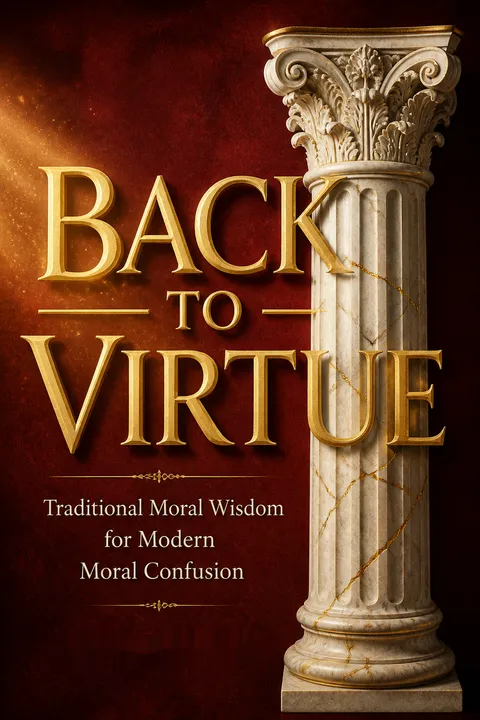
Back to Virtue is both a Christian moral argument and a compact history of how the author believes the West lost its moral bearings. Its central claim is that ethical conversation cannot substitute for a shared account of human goodness. Character, not merely a list of rules, determines whether people can use power responsibly. The book's architecture reinforces that claim: it moves from cultural diagnosis to natural virtues, then to Christian virtues, and finally to the Beatitudes as a counter-image to entrenched vice.
Its strongest contribution is the insistence that moral life concerns both action and formation. The cardinal virtues make this concrete: judgment, courage, self-command, and justice are capacities to be practiced, not positions to announce. The links between vice and its countervirtue also give readers a usable vocabulary. Envy can be examined as resentment of another's good; sloth as refusal of spiritual purpose rather than mere inactivity; and humility as freedom from self-rule rather than low self-worth.
The book's limits arise from the same confidence that gives it force. It often treats secular moral thought as though it cannot ground obligation, and it compresses a complicated history into a contrast between Greek reason and Hebrew practice. Those formulations illuminate a real problem but understate the variety within both traditions. Likewise, claims about society's decline or religion's necessity for moral life are argued from a Christian worldview, not established as neutral historical conclusions.
Read most productively, the book is not a proof that every moral question has an easy answer. It is a challenge to ask what kind of person a moral answer produces, what desires govern that person, and what source of hope makes difficult goodness sustainable. Readers can debate the theology while still engaging its central test: does an ethic form people capable of justice, restraint, mercy, and courage when those virtues cost them something?
Review Summary
Back to Virtue receives mostly positive reviews, praised for its insightful analysis of virtues, vices, and the Beatitudes. Readers appreciate Kreeft's clear writing style, philosophical depth, and connections to Christian thought. Many find the book thought-provoking and relevant to modern moral issues. Some criticisms include outdated references and occasional sweeping generalizations. Several reviewers note the book's density and suggest it benefits from slow, careful reading. Overall, it's considered a valuable resource for understanding virtue ethics and Christian morality.
People Also Read





Glossary
Cardinal virtues
Foundational moral habitsThe four cardinal virtues are justice, prudence, fortitude, and temperance. Kreeft presents them as foundational habits that support other forms of moral excellence. They guide fair relationships, sound judgment, perseverance through difficulty, and the governance of appetite. The term comes from a Latin word for hinge, suggesting that other virtues turn on these.
Theological virtues
Virtues directed toward GodFaith, hope, and charity are called theological virtues because, in Christian teaching, they relate the person directly to God. Kreeft describes faith as commitment to God, hope as trust in God's promises, and charity as self-giving love. They do not replace the cardinal virtues; they complete and deepen moral life through divine grace.
Agape
Self-giving divine loveAgape is the form of love Kreeft distinguishes from affection, desire, and friendship. It gives itself for another's good rather than arising primarily from need or attraction. In his Christian account, agape is most fully revealed in Christ's self-sacrifice and becomes possible in human life through God's grace.
Beatitudes
Jesus' blessings on the virtuousThe Beatitudes are the blessings with which Jesus begins the Sermon on the Mount. They describe people who are poor in spirit, merciful, mourning, meek, hungry for righteousness, pure in heart, peacemaking, or persecuted for righteousness. Kreeft reads them as a guide to Christian character and blessedness, not simply as promises of pleasant circumstances.
Blessedness
Enduring good in GodBlessedness is Kreeft's term for an objective and lasting good grounded in relationship with God, distinct from temporary happiness or favorable circumstances. A person can experience grief or hardship and still be blessed. The Beatitudes reveal this counterintuitive account of human flourishing, in which virtue and closeness to God matter more than comfort.
Seven Deadly Sins
Root vices of characterThe Seven Deadly Sins are pride, avarice, envy, wrath, sloth, lust, and gluttony. Kreeft uses this traditional Christian list to describe recurring dispositions that generate further wrongdoing. He pairs each vice with a contrasting Beatitude or virtue, making the list a moral diagnostic rather than a catalogue of isolated acts.
Natural law
Morality knowable through human natureNatural law, as Kreeft uses the term, is moral order grounded in human nature and accessible in part through human reason, rather than known only through religious revelation. It provides common ground for moral discussion among people with different beliefs. Kreeft argues that human nature is damaged by sin but not erased, so reason can still recognize real moral goods.
FAQ
What's "Back to Virtue" about?
- Author's Aim: "Back to Virtue" by Peter Kreeft aims to address the moral confusion of modern times by revisiting traditional moral wisdom.
- Core Focus: The book explores the importance of virtues, both classical and theological, as a means to restore moral habits in society.
- Structure: It is divided into two main parts: the first discusses the societal need for virtue, and the second focuses on personal virtue.
- Historical Context: Kreeft provides a spiritual history of Western civilization to explain how we arrived at our current moral state.
Why should I read "Back to Virtue"?
- Moral Clarity: The book offers a clear understanding of virtues and vices, which is essential for personal and societal well-being.
- Practical Guidance: Kreeft provides practical advice on how to cultivate virtues in everyday life.
- Cultural Critique: It offers a critique of modern Western culture, highlighting the dangers of moral relativism and secularism.
- Spiritual Insight: The book connects moral virtues to spiritual growth, making it valuable for those interested in deepening their faith.
What are the key takeaways of "Back to Virtue"?
- Virtue's Importance: Virtues are essential for both personal happiness and societal survival.
- Role of Faith: Faith is foundational to understanding and practicing virtues effectively.
- Cultural Diagnosis: Modern society suffers from a lack of moral direction, which Kreeft attributes to the abandonment of traditional virtues.
- Call to Action: The book encourages readers to actively cultivate virtues as a means to counteract moral decay.
How does Peter Kreeft define virtue in "Back to Virtue"?
- Moral Excellence: Virtue is defined as moral excellence and right living.
- Cardinal Virtues: Kreeft discusses the four cardinal virtues: justice, wisdom, courage, and moderation.
- Theological Virtues: He also covers the three theological virtues: faith, hope, and love.
- Practical Application: Virtue is not just theoretical but should be actively practiced in daily life.
What are the four cardinal virtues according to "Back to Virtue"?
- Justice: Defined as harmony and fairness in relationships, both personal and societal.
- Wisdom (Prudence): The ability to make sound judgments and decisions.
- Courage (Fortitude): The strength to face challenges and difficulties with resolve.
- Moderation (Temperance): The practice of self-control and balance in desires and actions.
What are the three theological virtues in "Back to Virtue"?
- Faith: A deep trust and belief in God, going beyond mere intellectual assent.
- Hope: The confident expectation of eternal life and God's promises.
- Love (Charity): The highest form of love, characterized by selflessness and a desire for the good of others.
How does "Back to Virtue" address modern moral confusion?
- Critique of Relativism: Kreeft argues against moral relativism, emphasizing the need for objective moral standards.
- Return to Tradition: He advocates for a return to traditional virtues as a solution to moral confusion.
- Spiritual Diagnosis: The book provides a spiritual analysis of Western culture's decline in moral values.
- Practical Solutions: Kreeft offers practical steps for individuals to cultivate virtues in their lives.
What is the significance of the Beatitudes in "Back to Virtue"?
- Moral Blueprint: The Beatitudes are presented as a guide to living a virtuous life.
- Contrast with Sins: Each Beatitude is contrasted with a corresponding deadly sin, highlighting the path to blessedness.
- Spiritual Depth: The Beatitudes are seen as a deeper expression of the virtues, leading to spiritual fulfillment.
- Christ's Teaching: They are central to understanding Jesus' moral teachings and their application today.
How does Peter Kreeft view the relationship between virtues and happiness in "Back to Virtue"?
- Virtue Equals Happiness: Kreeft argues that true happiness is found in living a virtuous life.
- Misconceptions: He challenges the modern misconception that virtue is opposed to happiness.
- Fulfillment: Virtues lead to a fulfilling and meaningful life, both personally and socially.
- Spiritual Joy: The ultimate happiness is spiritual joy, which comes from aligning one's life with God's will.
What are the best quotes from "Back to Virtue" and what do they mean?
- "Ethics without virtue is illusion." This quote emphasizes that moral discussions are meaningless without the practice of virtue.
- "We must love one another or die." It highlights the necessity of love and virtue for the survival of civilization.
- "The only way to a good society is through good individuals." This underscores the importance of personal virtue in achieving societal well-being.
- "Virtue is simply health of soul." Kreeft equates virtue with the well-being of the soul, essential for a fulfilling life.
How does "Back to Virtue" connect virtues to spiritual growth?
- Foundation of Faith: Virtues are seen as the foundation for spiritual growth and a deeper relationship with God.
- Moral and Spiritual Link: Kreeft links moral virtues to spiritual virtues, showing their interdependence.
- Path to Holiness: Practicing virtues is presented as a path to holiness and spiritual maturity.
- Role of Grace: The book emphasizes the role of divine grace in cultivating virtues and achieving spiritual growth.
What practical advice does "Back to Virtue" offer for cultivating virtues?
- Self-Examination: Kreeft encourages regular self-examination to identify areas for growth in virtue.
- Community Support: He highlights the importance of community and accountability in fostering virtues.
- Daily Practice: The book advocates for the daily practice of virtues in small, consistent ways.
- Prayer and Reflection: Kreeft emphasizes the role of prayer and reflection in seeking God's guidance and strength to live virtuously.
About the Author
Other books by Peter Kreeft

Download PDF
Download EPUB
.epub digital book format is ideal for reading ebooks on phones, tablets, and e-readers.








